Key takeaways
- A tracker that reports numbers is not the same as a program that changes them. Most "my tool stopped delivering" complaints are really execution gaps.
- Before blaming the tool or the agency, check whether the AI engine itself changed. Citation counts and fan-out behavior move on their own.
- Test your existing SEO agency on dated work samples before hiring a second vendor. Switch tools only if the data is wrong, stale, or missing a layer you need.
- Hire a specialist for a defined gap you can name, not for a label like "GEO."
- The cleanest setup is one measurement layer you own plus an owner for each fix.
First, work out what actually broke
A tracker that "stops delivering" can mean four very different things, and each one has a different fix.
- The data is wrong or stale. Prompts no longer reflect what buyers ask, or the tool is not reading real AI interfaces.
- The data is fine but nobody acts on it. You have a score. Nobody owns the pages that would move it.
- The engine changed. Your numbers dropped because ChatGPT or Google changed retrieval behavior, not because your work got worse.
- The metric was never tied to revenue. The dashboard goes up, pipeline does not.
Only the first one is a reason to switch tools. The second and fourth are reasons to look at who is doing the work. The third is a reason to wait a week and check again.
I have seen teams burn two quarters swapping dashboards when the real issue was that no one had been assigned to rewrite a single page. A new tool gives you a new chart. It does not give you a new owner.
Rule out engine noise before you blame anyone
This step is cheap and people skip it. AI engines shift under you.
Promptwatch's Average Sources Per Response data shows how different the engines are. ChatGPT cites roughly 5 sources per web-search answer, and that average drifts with model and retrieval updates. Google AI Overviews cites about 10 and stays steady. Perplexity sits almost exactly at 10 every day. Copilot swung from under 2 sources to nearly 17 within a few weeks and then settled low.
Two practical takeaways:
- Citation slots are scarce, and a drop in your number can be the engine rather than your content. Judge Copilot on monthly trends, not weekly snapshots.
- Perplexity is a decent test bench for your own changes because its citation count barely moves. If your pickup there changes after you edit a page, the edit probably did it.
There is a second source of false alarms: your prompt set. Promptwatch's ChatGPT query fanout data shows the average number of searches per response fell from about 2.15 in December to about 1.84 by early March, and average query length dropped from roughly 117 characters to the high 80s, then to about 53 once fan-outs returned in April. A tracker running long conversational prompts can look stale without being broken, because ChatGPT is searching with shorter queries than your prompts imply.
And ChatGPT's behavior keeps moving. Promptwatch's data on the site: operator shows ChatGPT jumped from about 0.4% to about 17% site: queries among fan-outs on August 8, 2026, with searches per response nearly doubling. If your tracker's trend line bent around then, that is the engine, not the vendor.
The diagnostic: tool problem or execution problem?
Answer these honestly before spending anything.
| Symptom | Likely cause | Right move |
|---|---|---|
| Numbers dropped suddenly across all brands in your category | Engine or model change | Wait, re-check in 7 to 14 days |
| Tool shows mentions but you cannot tell which page earned them | Missing citation layer | Switch or upgrade tool |
| Prompt list is 6+ months old and nobody edited it | Stale monitoring | Refresh prompts first, keep the tool |
| Dashboard is accurate but visibility is flat for 90+ days | Execution gap | Assign owners or hire help |
| Visibility is up, leads are not | Wrong prompts or no attribution | Fix prompt selection and traffic tracking |
| Agency report shows only rankings and visits | Reporting blind spot | Ask the agency for AI answer work samples |
| You cannot export or verify the raw responses | Trust problem | Switch tool |
If most of your answers land in the execution rows, a different tracker will not help.
When switching tools is the right call
Switch when the measurement itself is the problem. Concretely:
- You cannot see which of your pages get cited, only whether the brand name appeared.
- The tool relies on API outputs only, while buyers use the actual interfaces, where answers and citations can differ.
- There is no way to tell whether AI crawlers can even read your site, so you cannot separate an access problem from a content problem.
- No link between AI visibility and traffic or conversions.
- Locations and languages you sell in are not supported.
- You pay per seat or per project and the cost forces you to watch only a sliver of your market.
There is also a plain-spoken counterpoint worth hearing. A consultant answering on Quora argued that dashboards in this market "mostly count appearances," and that appearing in an answer and being recommended in it are different things that most tools record the same way. That is a fair criticism of cheap trackers. It is a reason to demand tone and claim-level data, not a reason to avoid measurement entirely.
If you do switch, shortlist on what you were missing. A few categories exist in the market:
| Category | What it does | Examples in our catalog |
|---|---|---|
| Monitoring-only trackers | Prompts, mentions, share of voice | Otterly.AI, Peec AI, Rankscale |
| Enterprise monitoring suites | Deeper monitoring, higher price | Profound, Scrunch |
| SEO suites with AI add-ons | AI tracking next to rankings | Semrush One, Ahrefs Brand Radar, SE Ranking |
| Optimization platforms | Monitoring plus content and fixes | Promptwatch, Relixir, GEOforge |
| Managed services with a tool | Humans run it for you | PilotDeck, Passionfruit Labs |
See Otterly.AI, Peec AI and Profound if you only need a straight monitoring comparison.



For a wider scan, the GEO software directory at bestgeosoftware.com lists far more options than any one article can cover.
When the problem is the work, not the dashboard
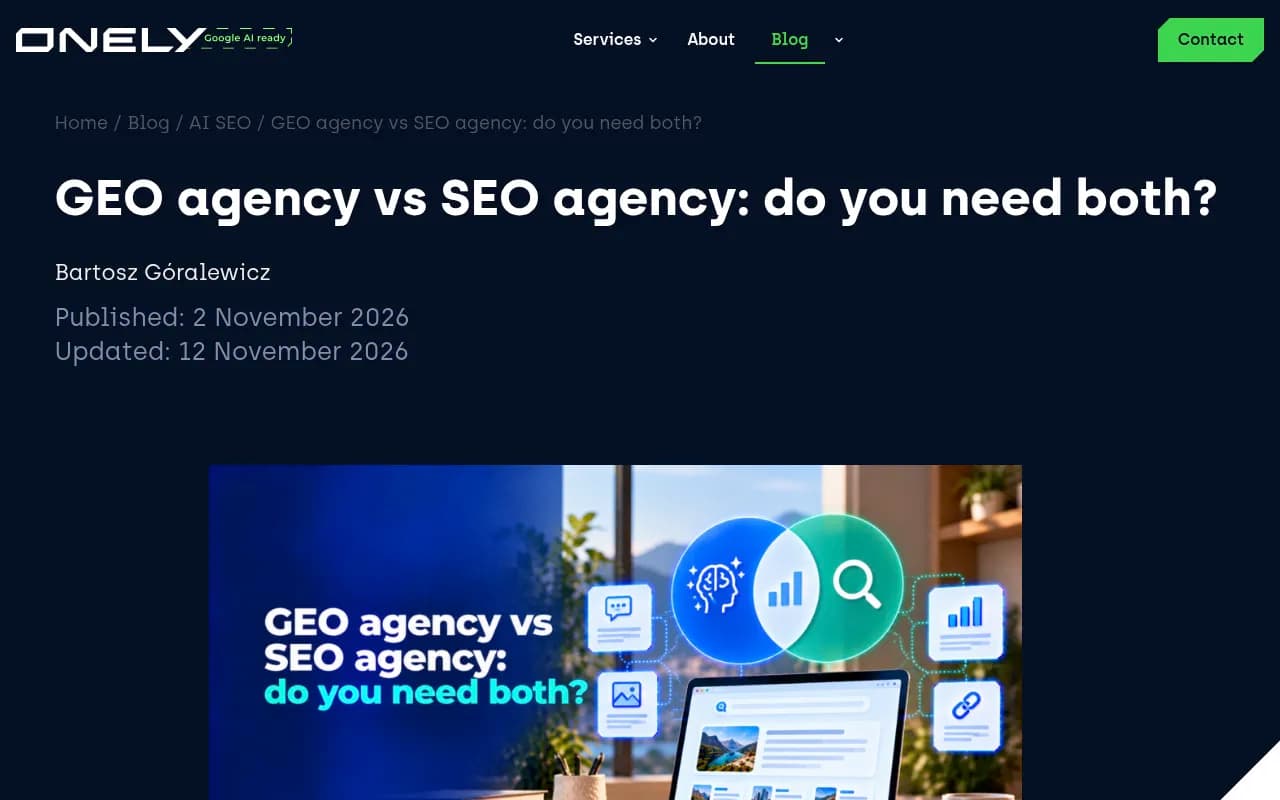
Here is the question the better agency write-ups keep returning to. Onely's piece on GEO agency vs SEO agency frames it as a test: before hiring a second provider, check whether your current SEO agency can own the AI answer work. Their line is blunt, that a missed form of visibility does not automatically justify another retainer. Onely sells GEO work and says so, which makes the advice more credible, not less.
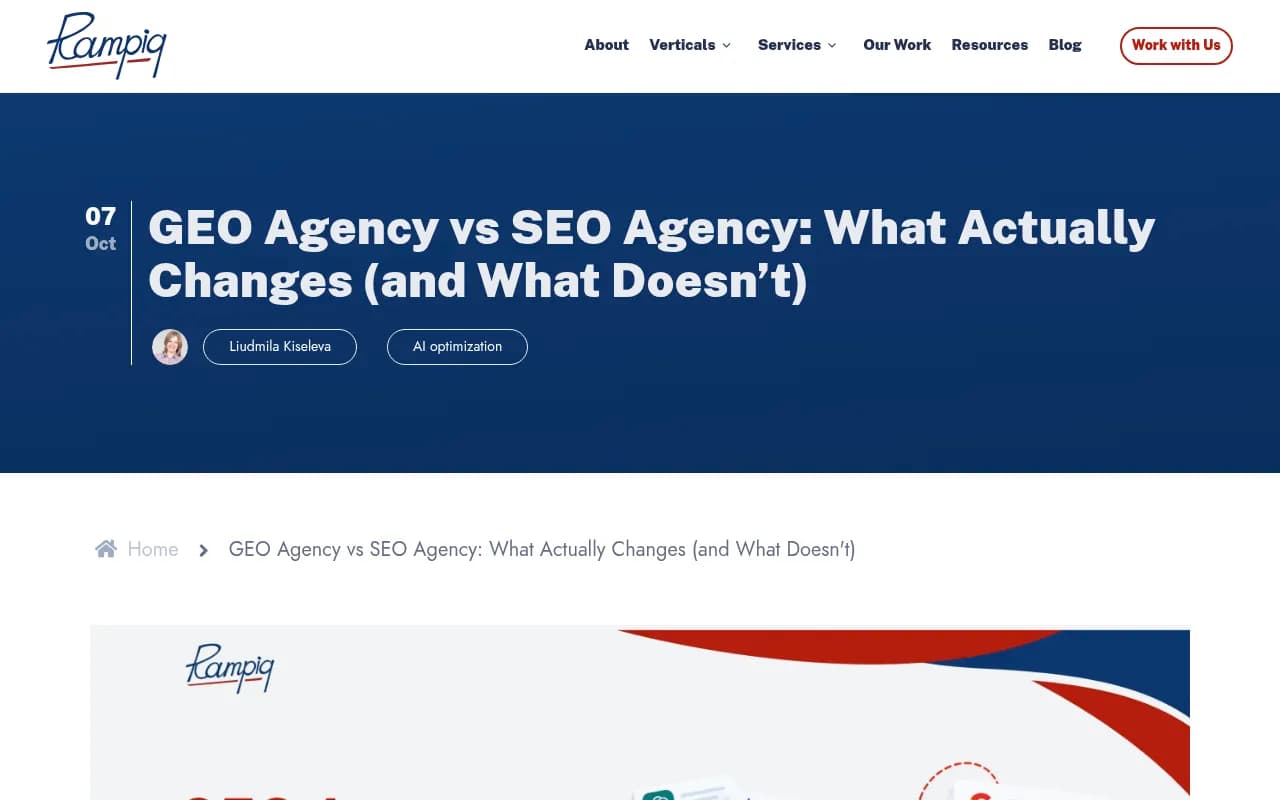
RampIQ makes a similar point with a concrete number: only 38% of pages cited in Google AI Overviews also rank in the top 10 for the same query, down from about 76% in July 2025, according to an Ahrefs study of 863K keyword SERPs. An agency reporting only rankings is reporting on the smaller half of the picture.
The shared conclusion across these sources is practical. Judge deliverables, not labels.
The incumbent test
Ask your current SEO agency for these, with dates, within two weeks:
- A saved AI answer where a competitor is cited and you are not, with the cited sources.
- A proposed fix for that gap, naming the page and the person who approves it.
- A before and after check of the same prompts after the fix shipped.
- An explanation of any gap between organic rankings and AI citations.
If they can do that for another client, they can probably do it for you. If "AI search" appears only as a new heading on the same scope of work, you have a rebranded SEO retainer.
Red flags in any agency, new or old
- They cannot demo a client showing up in ChatGPT or Perplexity live on the call.
- They report one screenshot or one position instead of a share across many runs.
- Nobody names who approves content changes.
- The method is secret. Google's own advice on hiring an SEO warns about companies that are secretive or will not explain what they intend to do.
- They push GEO before your basic technical SEO is in order.
- They guarantee first-page rankings in a few months.
Do you need one agency or two?
| Option | Works when | Trade-off |
|---|---|---|
| Incumbent SEO agency with real GEO capability | It passes the incumbent test | Lowest switching cost, but GEO can become a side project |
| Dedicated GEO specialist alongside your SEO agency | SEO is healthy and you need AI visibility fast | Two vendors touch the same pages, so someone owns handoffs |
| One agency that does both | You are consolidating | Check that the SEO half is not neglected |
| In-house with a platform | You have people with hours to spare | Slow to hire, and one person rarely covers strategy, content and technical fixes |
| Wait | Buyers in your category do not yet use AI tools to shortlist | Re-check every quarter |
There is a real case for waiting. If you ask ChatGPT, Gemini and Perplexity your customers' actual questions a few times each and get generic essays or only national brands, your category may not be live locally yet. Keep doing the classic work and check again in three months.
Who should hire help, and when
Teknicks' guide to timing gives a useful short list of signs. Hire when:
- Competitors appear in AI answers for 10 to 15 buyer questions and you do not
- Organic traffic is flat but demo requests are falling
- Buyers mention AI tools on sales calls
- Leadership wants pipeline proof this planning cycle
It is too early when your product is still finding its market, your SEO basics are shaky, nobody can share analytics or CRM data, or you need revenue in 30 to 60 days. GEO builds over time. It is not a quick win.
The first 90 days with a decent partner usually follow three moves: map the buyer questions and record where you stand, build or improve the pages AI tools pull from (comparisons, alternatives, best-of lists), and start earning mentions on the review sites, publications and communities AI tools trust.
What a good setup looks like
Whatever you choose, the setup that tends to work has four parts.
- A measurement layer you own, so you are not dependent on an agency's PDF to know what is happening.
- A buyer-question list with an owner for each question.
- A named approver for every content change.
- A before and after check on every shipped fix.
On the measurement layer, an end-to-end platform helps because it closes the gap between seeing and doing. Promptwatch tracks the real interfaces of ChatGPT, Gemini, Perplexity, Google AI Overviews and others, then connects that to IP-verified AI crawler logs, citation data per page, visitor analytics and a prioritized Action Board. Its Content Agent can write and publish pages against the gaps, and then check whether the page got crawled, cited and clicked. That loop is the difference between a dashboard and a program.

It also fits both sides of this decision. If you keep your agency, give them access, since crawler logs and citation data settle arguments about whether a page was read or ignored. If you go in-house, the Action Board and Agent Chat cover a lot of what an extra hire would do. Pricing starts at $95/mo for Essential and $579/mo for Business, which is the first plan with the Content Agent. Confirm current numbers at promptwatch.com/pricing, and the 7-day free trial or the free AI visibility report lets you check your baseline before any call.
Other tools worth a look depending on your situation:
- Semrush One if your team already lives in a Semrush workflow and wants AI tracking beside rankings.
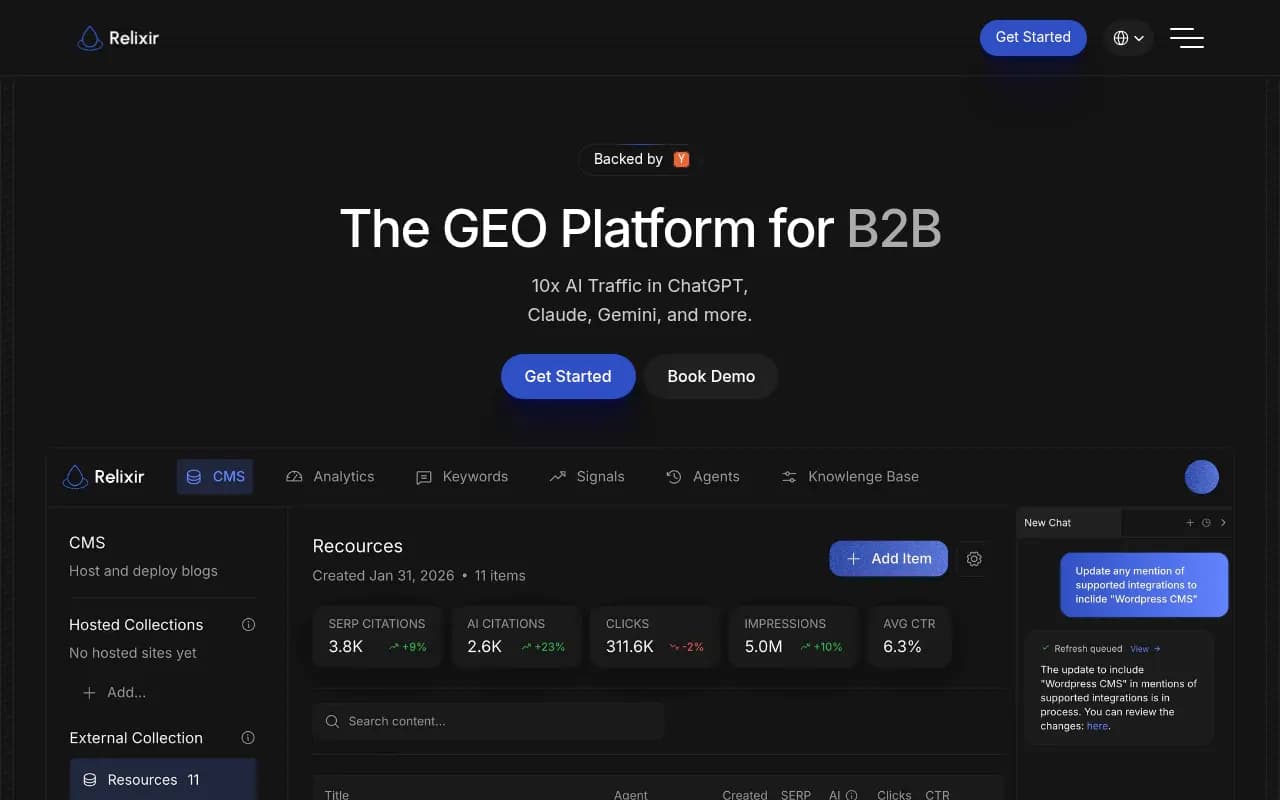
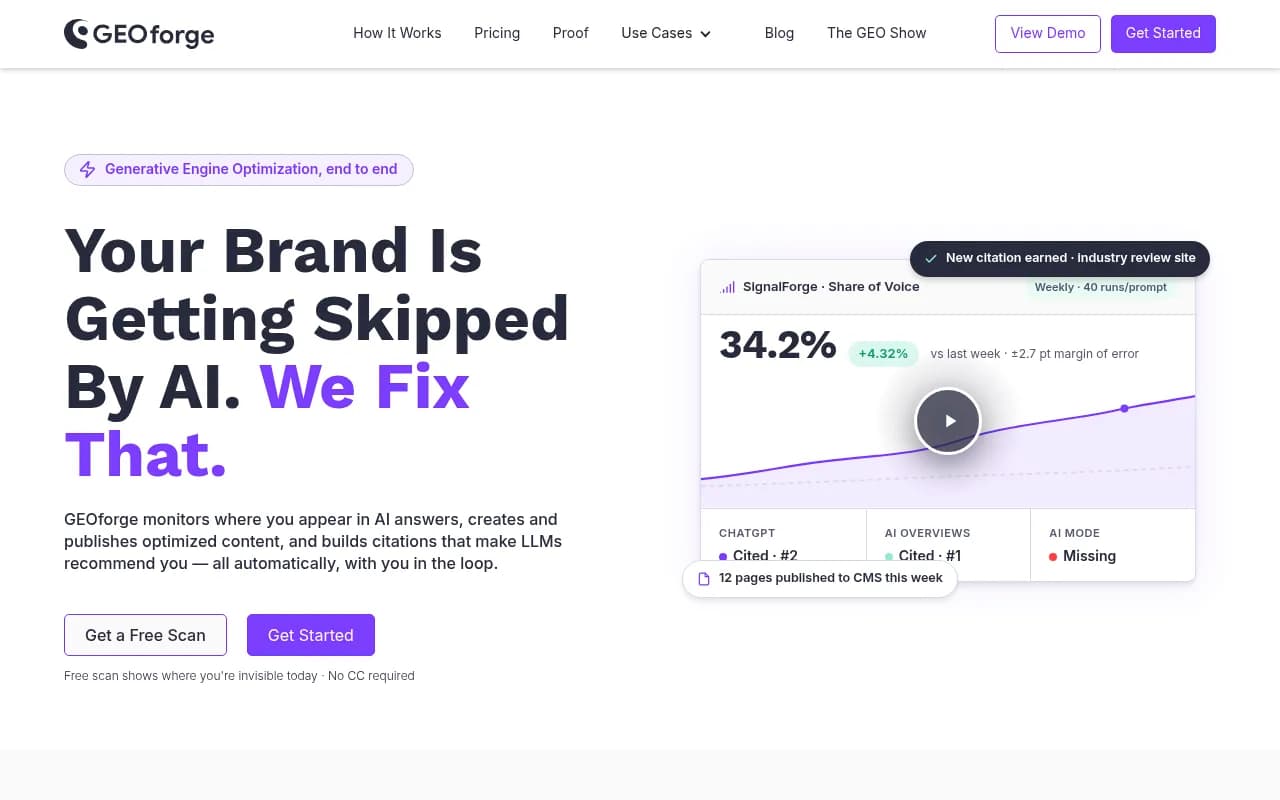
- Relixir or GEOforge if you want monitoring tied to content execution.
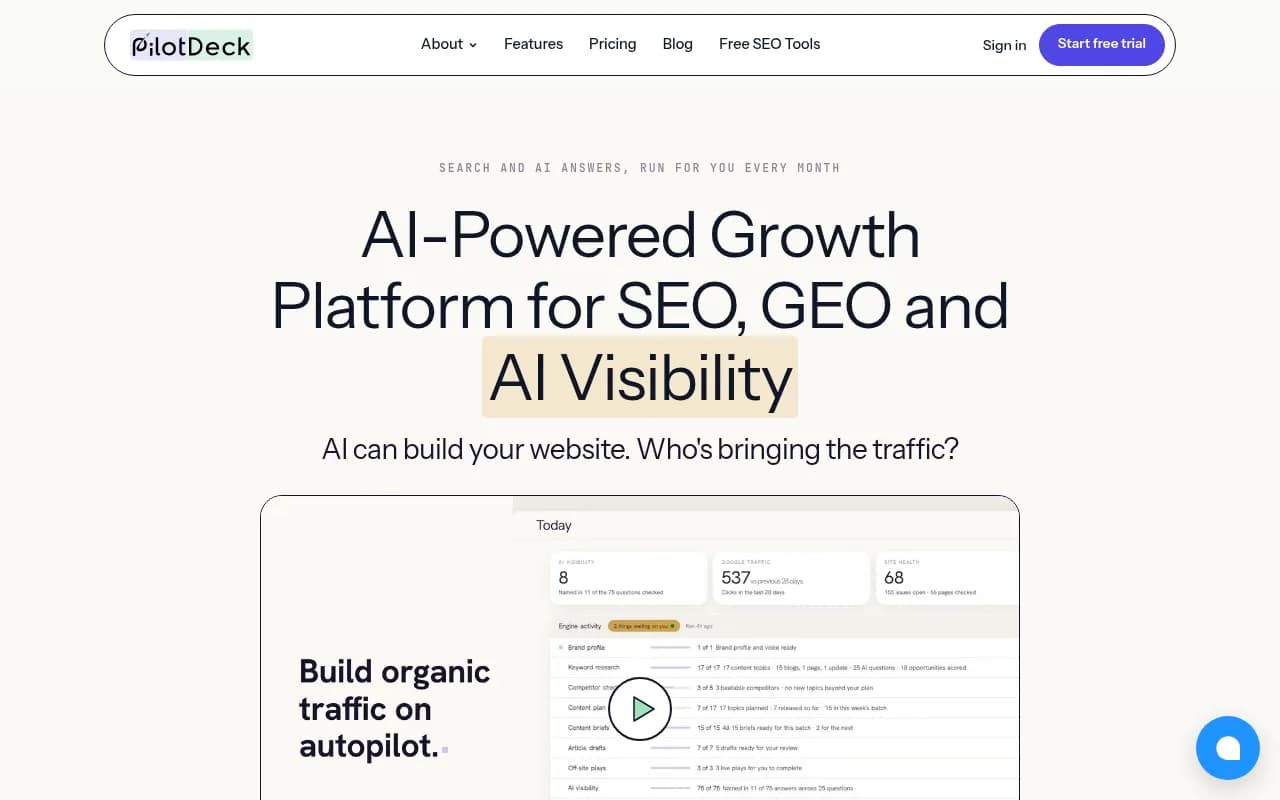
- PilotDeck if you want citation tracking with managed optimization.
Measure your baseline before any vendor call
This is the step that saves the most money. Without it you cannot judge any answer you hear.
- Write 15 buyer questions in the words customers use. Include comparison and "best for" phrasings.
- Run each in ChatGPT, Perplexity and Google AI Mode. Run them more than once.
- Record who is named, who is cited, and which pages are the sources.
- Check whether AI crawlers can reach your site. Promptwatch's free Agentic Readiness Check and AI crawler URL inspector do this without a login.
- Pull rankings for the same topics and note where you rank but are not cited.
That last comparison is the clearest evidence of what an SEO-only program is missing. It is also what a good agency should hand you unprompted.
If you are comparing agencies rather than tools, ask the same set of questions of each: which prompts would you track and why, what pages will you change in month one, who approves, how do you measure visibility across many runs, and what happens to the content and data if we leave.
A note on where an agency fits
Some teams do not have the hours to run any of this, tool or not. That is the legitimate case for outside help. 1001 SEO Media, which publishes this site, runs technical SEO, content, digital PR and GEO work for clients with no long-term contracts and uses Promptwatch for AI visibility measurement. We are an interested party, so apply the same tests above to us as to anyone: ask for dated work samples, a named fix owner and a before and after check.
A simple decision path
- Numbers dropped suddenly everywhere: wait two weeks, then recheck.
- Data is wrong, stale or missing citation and crawler layers: switch or upgrade tools.
- Data is right and flat for 90 days: run the incumbent test on your SEO agency.
- Incumbent fails the test and the gap is clear: hire a specialist for that gap only.
- Nobody has hours to execute: hire a managed service, but keep read access to the data.
- Buyers do not use AI to shortlist yet: keep the classic SEO work and re-check next quarter.
For more tracker options by category, the AI rank tools directory is a good place to compare. Whatever you pick, the order is the same: baseline first, owner second, tool third.