Summary
- AI search is now mainstream: Google AI Overviews reach 2 billion users monthly, ChatGPT serves 800 million weekly users, and Perplexity processes hundreds of millions of queries. Getting cited by these engines is no longer optional.
- GEO is optimization, not just monitoring: The best strategies focus on content gap analysis, structured data, citation-worthy content, and continuous measurement -- not passive tracking.
- Technical accessibility comes first: AI crawlers need clean robots.txt rules, fast load times, and clear content structure before any optimization work pays off.
- Measurement drives improvement: Track citation frequency, sentiment, source attribution, and traffic from AI engines to understand what's working and iterate.
- Tools accelerate results: Platforms like Promptwatch combine gap analysis, content generation, and citation tracking in one workflow -- turning visibility insights into action.

What is generative search optimization and why it matters now
Generative search optimization (GEO) is the practice of structuring and optimizing content so AI models cite your brand when generating answers. Traditional SEO aimed for Page 1 rankings. GEO aims for being the source AI engines reference in their responses.
The shift happened fast. Gartner predicted traditional search volume would drop 25% in 2026 as users move to AI-powered answer engines. That prediction is playing out in real time. Google's AI Overviews now reach more than 2 billion monthly users. ChatGPT serves 800 million users each week. Perplexity processes hundreds of millions of queries every month.
People don't want a list of links anymore. They want direct answers. AI engines provide those answers by synthesizing information from multiple sources -- and citing the ones they trust. If your brand isn't in that citation set, you're invisible.
The core difference between SEO and GEO
SEO optimizes for rankings in a list of blue links. GEO optimizes for being cited in a synthesized answer. The mechanics are different:
- SEO: Keywords, backlinks, domain authority, click-through rate
- GEO: Extractability, structured data, citation-worthiness, source credibility, semantic clarity
SEO still matters -- many AI models use search results as part of their training and retrieval process. But GEO adds a new layer. You need content that AI models can easily parse, trust, and attribute.
Strategy 1: Ensure technical accessibility for AI crawlers
AI models can't cite content they can't access. The first step in any GEO strategy is making sure AI crawlers can reach and read your pages.
Check your robots.txt file
Many sites accidentally block AI crawlers. OpenAI's GPTBot, Anthropic's ClaudeBot, Google's Google-Extended, and Perplexity's PerplexityBot all respect robots.txt directives. If you've blocked them, you're invisible.
Review your robots.txt file and remove any blanket disallow rules that block these user agents. If you want to be cited, you need to be crawled.
Optimize page speed and structure
AI crawlers prioritize fast-loading, well-structured pages. Slow sites with messy HTML get skipped. Use semantic HTML (proper heading hierarchy, clean paragraph tags, descriptive alt text on images). Remove unnecessary JavaScript that blocks content rendering.
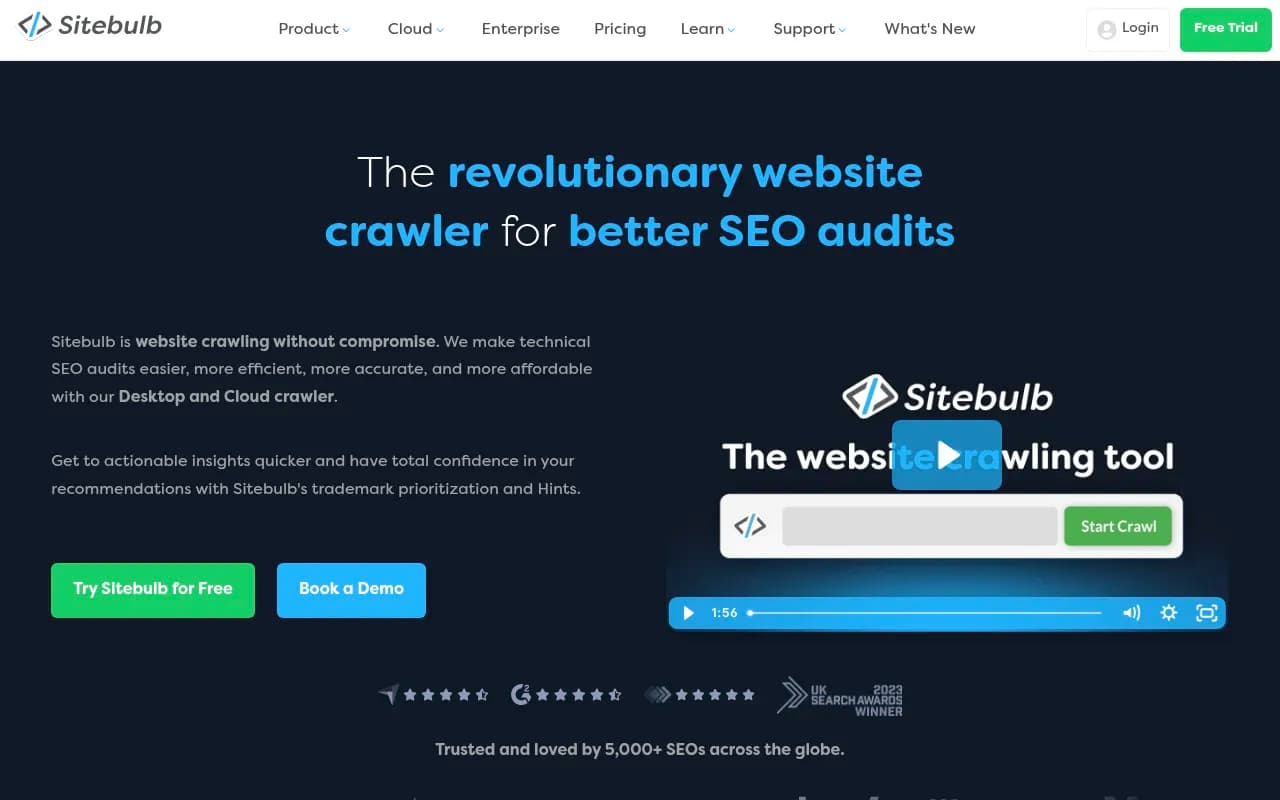
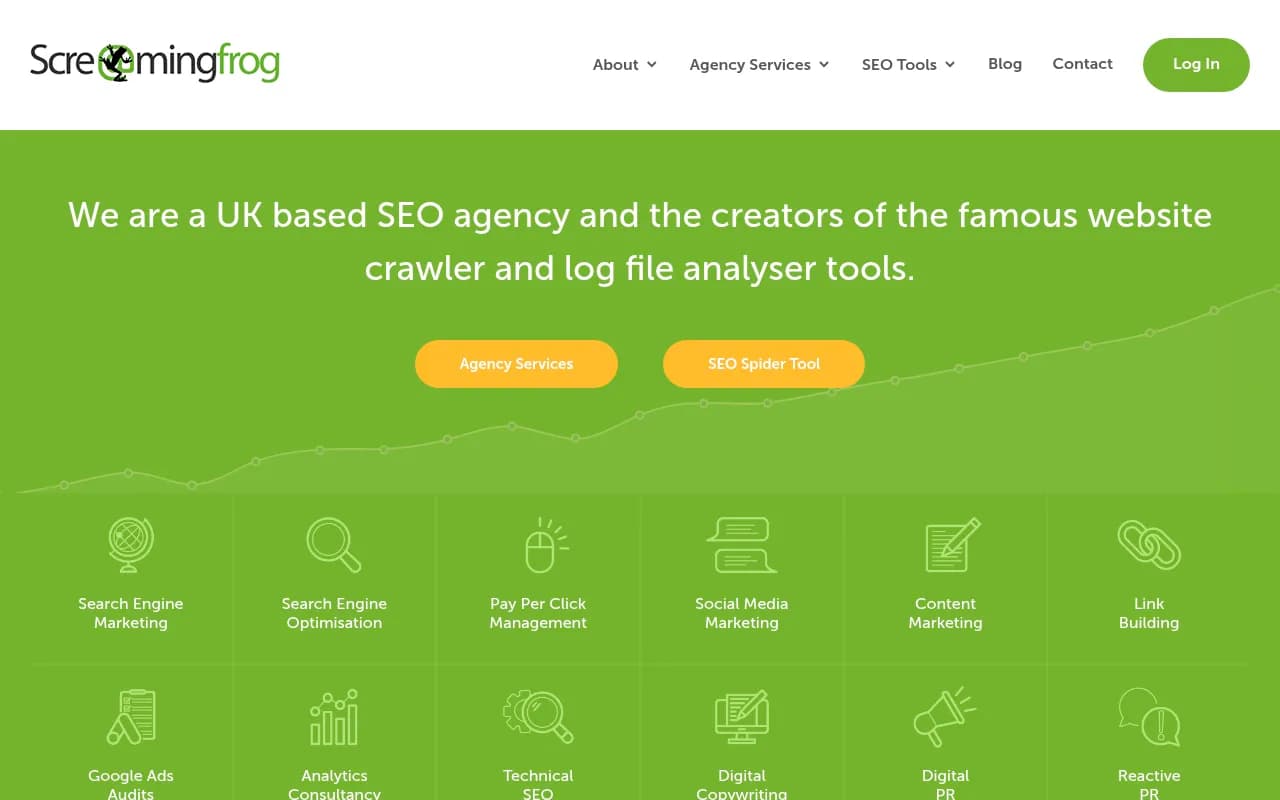
Tools like Sitebulb and Screaming Frog can audit your site for technical issues that hurt both SEO and GEO.
Monitor AI crawler activity
You need to know which AI engines are visiting your site, which pages they're reading, and how often they return. Promptwatch provides real-time AI crawler logs that show exactly which pages ChatGPT, Claude, Perplexity, and other models are accessing. You can spot errors, track crawl frequency, and understand how AI engines discover your content.
Other tools like DarkVisitors also track AI bot activity across your site.

Strategy 2: Optimize for extractability
AI models need to extract clean, unambiguous information from your pages. If your content is buried in complex layouts, hidden behind JavaScript, or written in vague marketing language, it won't get cited.
Write in clear, declarative sentences
AI models prefer direct statements over flowery prose. Instead of "Our innovative solution leverages cutting-edge technology to deliver unparalleled results," write "Our software reduces processing time by 40% using automated workflows."
Specificity beats vagueness. Numbers, dates, and concrete facts are easier for AI to extract and cite.
Use structured content formats
Lists, tables, and FAQ sections are highly extractable. AI models can pull bullet points and table rows directly into their responses. When you're explaining a process, use numbered steps. When comparing options, use a table.
Example:
| Feature | Tool A | Tool B | Tool C |
|---|---|---|---|
| Free tier | Yes | No | Yes |
| AI features | Basic | Advanced | Basic |
| Best for | Small teams | Enterprise | Freelancers |
This format is easy for both humans and AI to parse.
Add schema markup
Structured data (schema.org markup) helps AI models understand the type of content on your page. Use schema for articles, FAQs, how-tos, products, reviews, and events. Google's Structured Data Testing Tool can validate your markup.
Schema doesn't guarantee citations, but it makes extraction easier.
Strategy 3: Build citation-worthy content
AI models cite sources they perceive as authoritative, trustworthy, and comprehensive. You need content that meets those criteria.
Answer specific questions with depth
AI users ask specific questions. "How do I optimize for ChatGPT?" "What are the best GEO tools in 2026?" "How does Perplexity choose sources?"
Your content should answer these questions directly and thoroughly. Shallow listicles don't get cited. In-depth guides with examples, data, and step-by-step instructions do.
Include original data and research
AI models prefer citing primary sources. If you publish original research, case studies, or proprietary data, you're more likely to be cited than sites that just summarize other people's work.
Example: A study analyzing 1.1 billion citations (like the data Promptwatch has processed) is more citation-worthy than a blog post summarizing that study.
Demonstrate expertise and authority
Author credentials matter. AI models look for signals of expertise -- bylines from recognized experts, citations from reputable sources, and content that demonstrates deep knowledge.
If you're writing about a technical topic, include your credentials. If you're citing data, link to the original source. If you're making a claim, back it up with evidence.
Update content regularly
Stale content gets deprioritized. AI models favor recent information. Update your guides and articles regularly with new data, examples, and insights. Add a "Last updated" date to signal freshness.
Strategy 4: Close content gaps with AI-driven analysis
The most effective GEO strategy is finding the prompts your competitors rank for but you don't -- then creating content to fill those gaps.
Identify high-value prompts you're missing
Promptwatch offers Answer Gap Analysis that shows exactly which prompts competitors are visible for but you're not. You see the specific topics, angles, and questions AI models want answers to but can't find on your site.
This isn't guesswork. It's data-driven prioritization. You focus on creating content that has proven demand and proven citation potential.
Generate content grounded in citation data
Once you know the gaps, you need to fill them. Promptwatch's AI writing agent generates articles, listicles, and comparisons based on real citation data (880M+ citations analyzed), prompt volumes, persona targeting, and competitor analysis.
This isn't generic SEO filler. It's content engineered to get cited by ChatGPT, Claude, Perplexity, and other AI models.
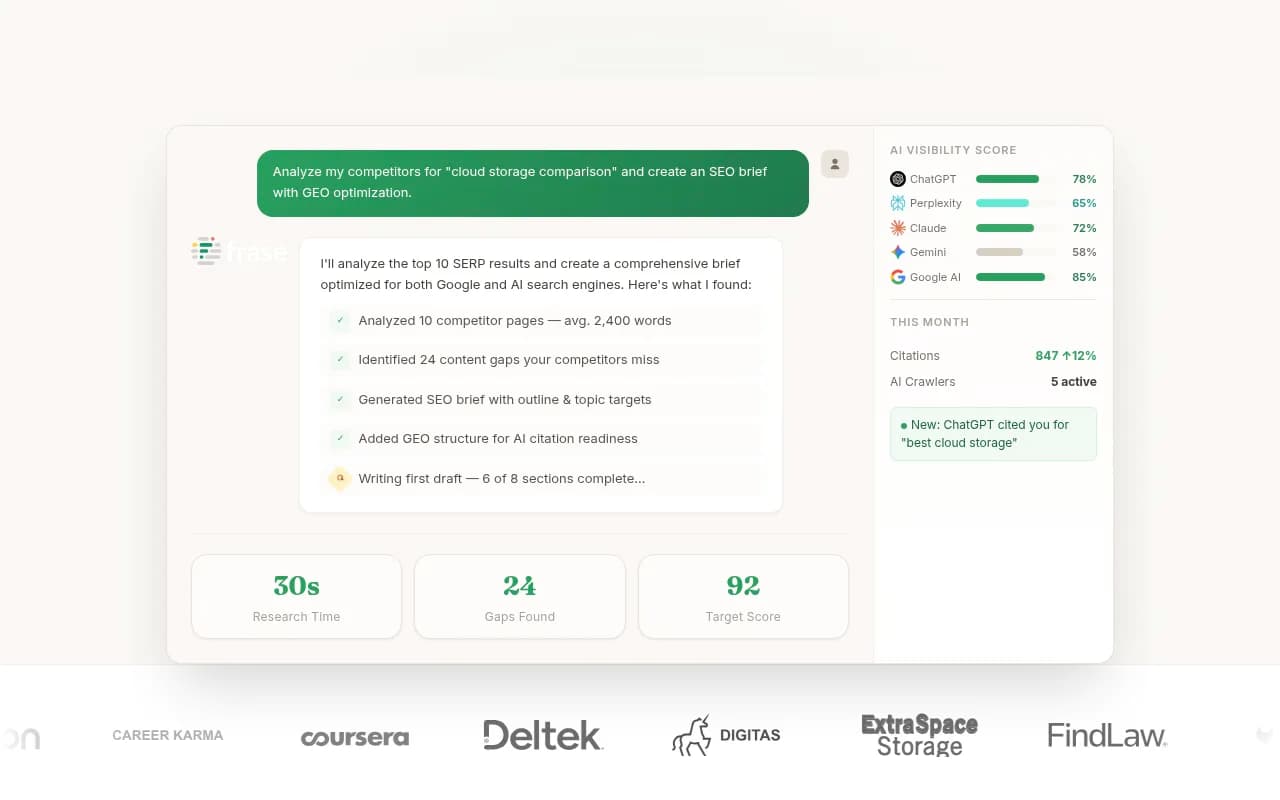
Other tools like Frase and Clearscope also help optimize content for AI search, though they focus more on traditional SEO metrics.

Track which content gets cited
After publishing, track results. Promptwatch provides page-level citation tracking that shows exactly which pages are being cited, how often, and by which models. You can see which topics and formats work best, then double down on what's working.
Strategy 5: Leverage structured data and schema markup
Structured data is the bridge between your content and AI models. It makes information machine-readable.
Implement key schema types
Focus on these schema types for GEO:
- Article: For blog posts and guides
- FAQPage: For FAQ sections
- HowTo: For step-by-step instructions
- Product: For product pages
- Review: For reviews and comparisons
- Organization: For your company information
Use Google's Rich Results Test to validate your schema implementation.
Add entity markup
AI models understand entities (people, places, organizations, products) better than keywords. Use schema to define entities on your pages. Mark up your brand name, product names, author names, and related entities.
This helps AI models understand the relationships between concepts on your site.
Strategy 6: Build topical authority with content clusters
AI models favor sites with deep expertise in a specific domain. Instead of writing random blog posts, build content clusters around core topics.
Create pillar pages and supporting content
A pillar page is a comprehensive guide on a broad topic (e.g. "Complete Guide to GEO in 2026"). Supporting content dives deeper into subtopics (e.g. "How to Optimize for ChatGPT," "Best GEO Tools," "Schema Markup for AI Search").
Interlink these pages to signal topical authority. AI models recognize sites with coherent, interconnected content on a subject.
Cover topics comprehensively
Don't just write one article on a topic. Cover it from multiple angles. Write how-to guides, comparison posts, case studies, and opinion pieces. The more comprehensive your coverage, the more likely AI models will cite you as the authoritative source.
Strategy 7: Optimize for multi-modal and conversational queries
AI search is conversational. Users ask questions in natural language, often with follow-ups. Your content needs to match this pattern.
Use natural language and question-based headings
Instead of "GEO Best Practices," use "What are the best GEO strategies in 2026?" This matches how people actually prompt AI engines.
Structure your content around common questions. Use tools like Promptwatch to see the exact prompts people are using, then create content that answers them.
Include conversational FAQs
Add FAQ sections to your pages with questions phrased the way users actually ask them. AI models often pull FAQ content directly into their responses.
Strategy 8: Monitor and improve sentiment
AI models don't just cite you -- they describe you. The sentiment of those descriptions matters.
Track how AI engines describe your brand
Tools like Promptwatch provide net sentiment scores that show whether AI models describe your brand positively, negatively, or neutrally. You can see the exact language AI engines use when mentioning you.
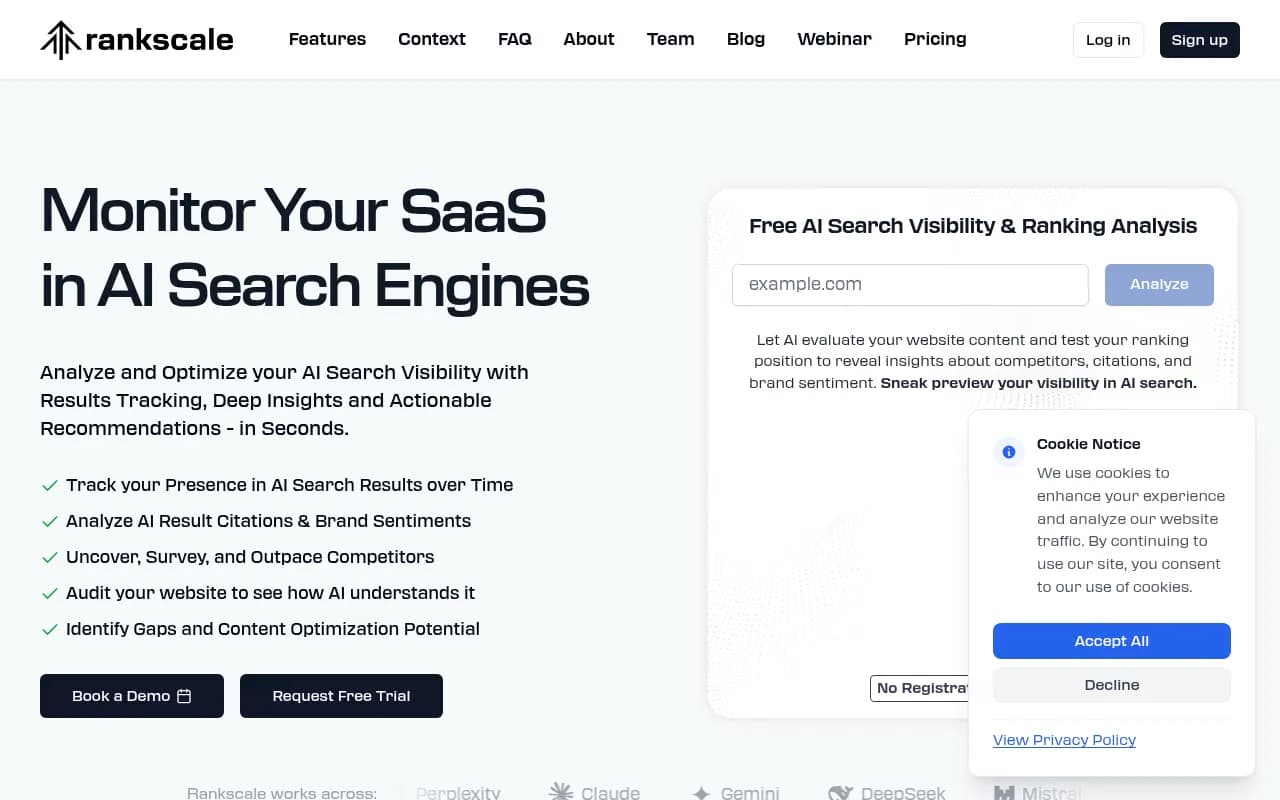
Other platforms like GetCito and Rankscale also offer sentiment tracking.

Address negative sentiment at the source
If AI models cite negative reviews or outdated information, you need to fix it at the source. Respond to negative reviews, update old content, and publish new content that corrects misconceptions.
AI models update their training data regularly. Fixing the source eventually fixes the citation.
Strategy 9: Leverage Reddit, YouTube, and community platforms
AI models increasingly cite Reddit threads, YouTube videos, and community discussions. These platforms are goldmines for GEO.
Participate authentically in relevant communities
Find subreddits and forums where your target audience asks questions. Provide helpful, detailed answers. Link to your content when it's genuinely relevant.
AI models cite Reddit threads because they contain real user experiences and opinions. Being part of those conversations gets you cited.
Create YouTube content that answers common questions
YouTube videos are highly citable. AI models pull information from video transcripts. Create videos that answer common questions in your niche, then optimize the title, description, and transcript for the questions you're targeting.
Monitor Reddit and YouTube mentions
Promptwatch surfaces Reddit discussions and YouTube videos that directly influence AI recommendations. You can see which threads and videos AI models cite, then participate in or create similar content.
Strategy 10: Measure, iterate, and scale
GEO is not a one-time project. It's a continuous optimization loop.
Track core GEO metrics
Monitor these metrics:
- Citation frequency: How often AI models cite your brand or content
- Visibility score: Your overall presence across AI engines
- Source attribution: Which pages get cited most often
- Sentiment score: How positively AI models describe you
- Traffic from AI engines: Actual visitors coming from ChatGPT, Perplexity, etc.
Promptwatch tracks all of these metrics in one dashboard. You can see your visibility scores improve as AI models start citing your new content, track page-level citations, and connect visibility to actual revenue with traffic attribution (code snippet, Google Search Console integration, or server log analysis).
Other tools like AthenaHQ, Otterly.AI, and Peec AI offer similar tracking capabilities, though most focus on monitoring rather than optimization.



Run experiments and measure results
Test different content formats, topics, and optimization techniques. Publish a new guide, track citation changes, and see what works. Double down on high-performing formats and topics.
Scale what works
Once you identify winning strategies, scale them. If in-depth comparison posts get cited more than listicles, create more comparison posts. If certain topics drive more citations, expand your coverage of those topics.
Comparison: Top GEO platforms in 2026
Here's how leading GEO platforms compare:
| Platform | Key Strength | AI Engines Covered | Content Generation | Starting Price |
|---|---|---|---|---|
| Promptwatch | Action loop: gap analysis + content generation + tracking | 10+ (ChatGPT, Perplexity, Claude, Gemini, etc.) | Yes (AI writing agent) | $99/mo |
| AthenaHQ | Prompt volume tracking, ecommerce integration | 8+ | No | $295/mo |
| Otterly.AI | Affordable monitoring | Major LLMs | No | ~$50/mo |
| Peec AI | Multi-language tracking | Major LLMs | No | ~$100/mo |
| Rankscale | Citation source mapping, sentiment analysis | Major LLMs | No | $20/mo |
| GetCito | Open-source transparency, regional tracking | Major LLMs | No | $299/mo |
The core difference: most platforms are monitoring-only dashboards that show you data but leave you stuck. Promptwatch is built around taking action -- it shows you what's missing, then helps you fix it with content gap analysis and AI-generated articles grounded in real citation data.
Common GEO mistakes to avoid
Mistake 1: Treating GEO like SEO
GEO and SEO overlap, but they're not the same. Keyword stuffing doesn't work in GEO. AI models prioritize semantic clarity and citation-worthiness over keyword density.
Mistake 2: Ignoring technical accessibility
You can't optimize content AI models can't access. Fix robots.txt issues, page speed problems, and crawl errors before worrying about content optimization.
Mistake 3: Creating shallow content
AI models don't cite thin content. A 300-word blog post won't compete with a 3,000-word comprehensive guide. Invest in depth.
Mistake 4: Monitoring without acting
Tracking citations is useful, but it's not enough. You need to identify gaps, create content to fill them, and measure the impact. Monitoring-only tools leave you stuck at step one.
Mistake 5: Ignoring Reddit and YouTube
AI models cite community platforms heavily. If you're not participating in relevant Reddit threads or creating YouTube content, you're missing a major citation source.
The future of GEO: What's coming in 2026 and beyond
GEO is evolving fast. Here's what to watch:
More AI engines entering the market
New AI search engines launch regularly. DeepSeek, Grok, and regional players are gaining traction. Your GEO strategy needs to cover multiple engines, not just ChatGPT and Perplexity.
Increased importance of real-time data
AI models are starting to pull real-time information from the web. Sites that publish fresh, timely content will have an advantage.
Shopping and product recommendations
ChatGPT's shopping features and product carousels are expanding. E-commerce brands need to optimize for AI-driven product discovery. Tools like Promptwatch already track ChatGPT Shopping mentions.
Voice and multimodal search
Voice queries and image-based search are growing. Your content needs to work across modalities -- text, images, video, and audio.
Getting started with GEO in 2026
Here's a practical 30-day plan:
Week 1: Audit and accessibility
- Check robots.txt for AI crawler blocks
- Run a technical SEO audit with Sitebulb or Screaming Frog
- Set up AI crawler monitoring with Promptwatch or DarkVisitors
Week 2: Baseline measurement
- Sign up for a GEO tracking tool (Promptwatch, AthenaHQ, or Otterly.AI)
- Track current citation frequency and visibility scores
- Identify which pages are already being cited
Week 3: Content gap analysis
- Use Promptwatch to identify prompts competitors rank for but you don't
- Prioritize high-volume, low-difficulty prompts
- Create a content calendar targeting those gaps
Week 4: Create and optimize
- Publish 2-3 comprehensive guides targeting high-priority prompts
- Add schema markup to existing high-performing pages
- Update old content with fresh data and examples
Then repeat the cycle: measure, identify gaps, create content, track results.
Final thoughts
GEO is not a replacement for SEO. It's an extension. Traditional search still drives traffic, but AI search is growing fast. Brands that optimize for both will win.
The key difference between winners and losers in GEO: winners take action. They don't just track citations -- they identify gaps, create content to fill them, and measure the impact. Tools like Promptwatch make this action loop possible by combining gap analysis, content generation, and citation tracking in one platform.
Start with technical accessibility, focus on citation-worthy content, measure everything, and iterate. The brands that move now will dominate AI search for years to come.