Key takeaways
- The biggest difference between AI visibility tools in 2026 is where the data comes from. Real user interface capture shows what people actually see. API calls show what a model says from training data, and the two can differ.
- Promptwatch is the strongest overall alternative if you want interface data plus the tooling to act on it: content gaps, a Content Agent, crawler logs, and AI traffic attribution.
- Profound, Scrunch, Peec AI, Otterly.AI, and AthenaHQ are credible picks, but each has a clear gap. Price, engine coverage, or no content execution are the usual culprits.
- Compare pricing by unit, not headline. Prompts, credits, and domains are not the same thing, and entry plans often cover fewer engines than the homepage suggests.
- Visibility scores are not comparable across vendors. Pick one tool and watch trends, not absolute numbers.
Why people look for GetMint alternatives
GetMint tracks visibility across AI answers and reports citations, sentiment, and share of voice. It also compares competitors prompt by prompt and turns lost prompts into content briefs. That is a reasonable feature set. GetMint is a legitimate product, and I am not going to pretend otherwise.
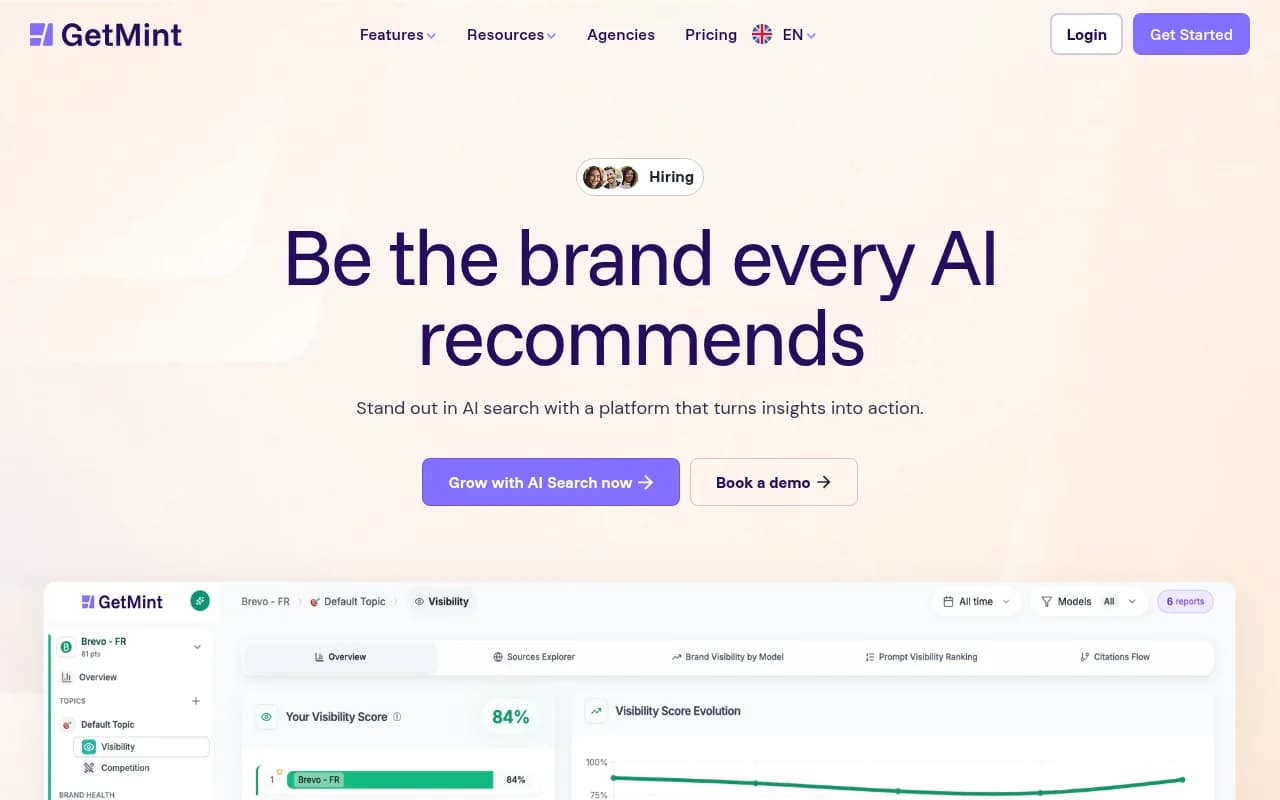
The reasons teams start shopping around are usually boring and practical:
- Price per prompt. A third-party comparison from DeepSmith (published October 26, 2026, and vendor-authored, so recheck on GetMint's site) lists Starter at $80/mo for 50 prompts and 2 topics, and Growth at $349/mo for 300 prompts and 5 topics. Enterprise and Agency are custom.
- Unclear data collection. I could not verify whether GetMint collects answers from real interfaces or through APIs. If you care about that, ask them directly.
- A need for more than briefs. Briefs are a start. Many teams want the article written, published, and then measured.
- Crawler and traffic data. Knowing whether AI bots can read your pages, and whether AI sends visitors, is a different layer from monitoring.
Interface data vs API tracking, and why it matters
This is the question I would put first on any evaluation sheet.
An API call to a model returns what the model says, usually from training data, often without live web search or the same citation behavior. The consumer product in the browser or app is a different system. It runs retrieval, picks sources, shows shopping cards, and sometimes shows ads. User-facing answers and citations can differ from API outputs, sometimes a lot.
A few points from Promptwatch's own data show why this matters for how you measure:
- ChatGPT cites about 5 sources per web-search answer, while Google AI Overviews cites about 10 and Perplexity almost exactly 10, according to Promptwatch's average sources per response data. Those are retrieval behaviors you only see in the live product.
- In the week of Sep 28 to Oct 4, 2026, 47.6% of ChatGPT responses with citations cited 10 or more unique domains, per Promptwatch Data on unique domains per response. One prompt tells you little. You need many prompts, plus position and description inside the answer.
- ChatGPT started using the site: operator at scale on August 8, 2026, jumping from about 0.4% to about 17% of fanout queries (Promptwatch Data). A tool that does not capture query fan-outs will miss shifts like that.
So the filter is simple. Ask each vendor whether it captures the real interface of each engine, in which countries and languages, and whether it records fan-out queries and citations, not just the final text. Among the tools I could check, Promptwatch, Profound (front-end response capture), and AIclicks (10+ engines through real user interfaces, per Profound's own agency guide) make explicit interface claims. Most others I could not confirm either way.
Quick comparison of the alternatives
Prices below come from vendor-authored comparisons and the tool owners' own listings. Verify on each pricing page before buying.
| Tool | Entry price | Data collection | Acts on gaps? | Best for |
|---|---|---|---|---|
| Promptwatch | $95/mo (Essential) | Real interfaces plus API models | Yes, content gaps, Content Agent, CMS publishing | Teams that want to fix, not just watch |
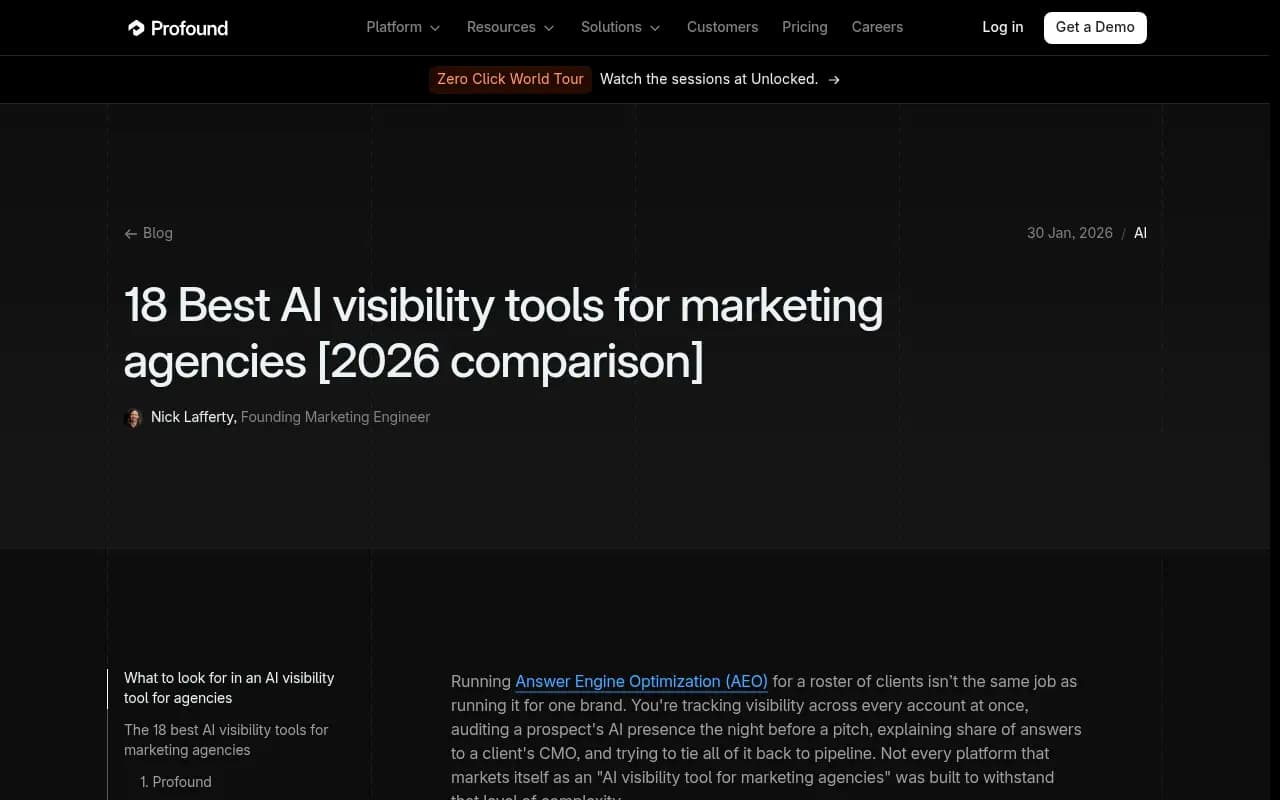
| Profound | $99/mo billed yearly (ChatGPT only at entry) | Front-end capture, real-user prompt volume | Content creation, higher tiers | Enterprise and large agencies |
| Scrunch | $250/mo | Configured prompts | No content generation yet | Agencies, enterprise |
| Peec AI | $95/mo | Not verified | Limited | Simple tracking, European agencies |
| Otterly.AI | $29/mo | Not verified | Briefs and recommendations | Small budgets |
| AthenaHQ | Free tier, Starter $295/mo | Not verified | Action Center | Broad engine coverage |
| Semrush AI Visibility Toolkit | $99/mo per domain, annual | Fixed prompt sets | Limited | Existing Semrush users |
| Rankscale | From $20/mo | Not verified | Limited | Tight budgets |
Promptwatch: the best alternative if you want to fix visibility, not just report it
Promptwatch is the one I would put first for most teams leaving GetMint, mainly because it closes the loop. Monitoring is the easy part. What most teams lack is the ability to see why they are missing and then do something about it.

The data comes from the real interfaces of ChatGPT, Google AI Overviews, Google AI Mode, Gemini, Perplexity, Microsoft Copilot, Amazon Alexa, and Meta AI, in each country and language you pick. API models like Claude, DeepSeek, Mistral, and Grok are tracked alongside, so you see what models believe from training data next to what users actually get. It also covers coding agents (Codex, Claude Code, OpenCode), which matters if you sell to developers.
What sets it apart in practice:
- Prompt intelligence. Monthly volumes, difficulty scores, and query fan-outs per model, so you choose prompts that matter instead of guessing.
- Brand Narrative. It pulls the individual claims AI makes about you ("affordable for small teams", "mobile app lacks features") and groups them by theme, with Fact Check on higher plans to find which of your pages teaches AI the wrong thing.
- Crawler logs. IP-verified logs of GPTBot, ClaudeBot, PerplexityBot and other bots show whether AI can read your pages at all. That separates an access problem from a content problem. See Promptwatch's AI crawler logs.
- Visitor analytics. AI-referred traffic and conversions, which matter more now that ChatGPT stopped sending a referrer on October 8, 2026 (an optional setting counts utm_source=chatgpt.com visits).
- Content Agent and the Action Board. A prioritized to-do list, plus an agent that writes and publishes to WordPress, Webflow, or Framer, then tracks whether the page gets crawled, cited, and clicked. It is on Business and Enterprise.
- Reddit, YouTube, LinkedIn, and Instagram citation reports, which many trackers skip.
Pricing, per promptwatch.com/pricing: Essential $95/mo (50 prompts), Professional $245/mo (150 prompts), Business $579/mo (350 prompts, Content Agent, faster-than-daily tracking, state and city tracking). Annual billing gives 12 months for the price of 10. There is no free plan, but there is a 7-day free trial on monthly billing and a free AI visibility report.
Fair caveat: Essential has no crawler logs or AEO articles. If you want those, you need Professional or above, and the Content Agent starts at Business. That is a real jump if you are price-sensitive.
If you are directly comparing, there is a Promptwatch vs GetMint page.
Profound
Profound is the other heavyweight. It was an early mover, and according to a write-up on Tim Soulo's blog it has front-end response capture, real-user prompt volume data, and an Amazon Rufus shopping module that most competitors lack.

The catch is price and packaging. The entry plan listed at $99/mo billed yearly covers ChatGPT only, with 50 prompts and one seat. The same Tim Soulo piece puts a plan that adds more engines at $399/mo. If you need Claude, Gemini, and Grok, expect to pay more. Profound also does not cover Reddit tracking or ChatGPT Shopping the way Promptwatch does. See Promptwatch vs Profound.
Scrunch
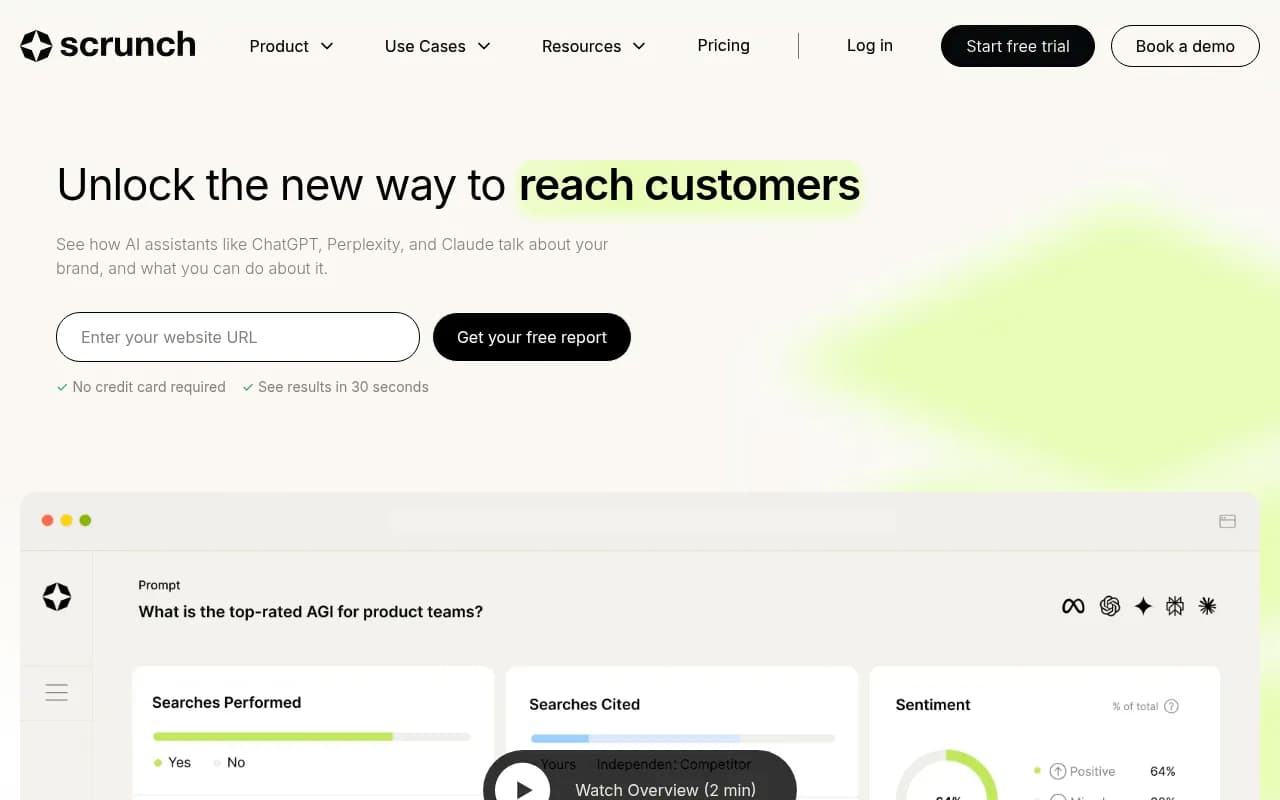
Scrunch is built for agencies and enterprises. Its Agent Experience Platform serves AI-optimized pages to crawlers, which is a distinct idea. The downsides per Profound's agency comparison: no content generation yet, and prompts are configured rather than pulled from real conversations. Entry is listed at $250/mo for 125 prompts and 4 LLMs.
Peec AI
Peec AI is simple and clean. Entry is $95/mo for 50 prompts, 1 project, 3 models, 1 country, and daily tracking. That three-model limit is the thing to check. It is fine for a small team that wants a scoreboard, and weaker if you need crawler logs, visitor analytics, or content creation.

Otterly.AI
Otterly.AI is the budget pick. Tiers listed by one comparison site: Lite $29 (15 prompts), Standard $189 (100 prompts), Premium $489 (400 prompts). Fast setup and clear recommendations, but per Profound's agency guide it has no real prompt-volume data and no in-platform content generation.

AthenaHQ
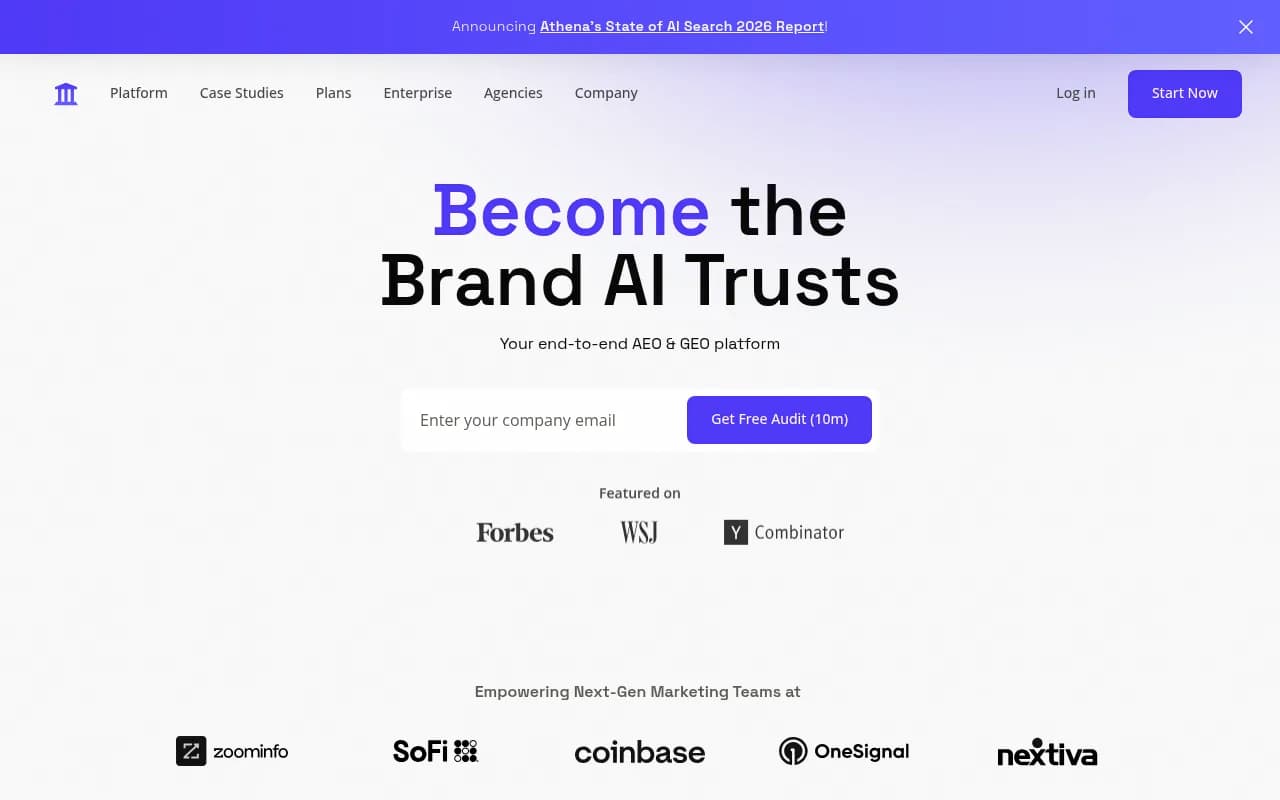
AthenaHQ has a free Essential tier, which is nice for trying a real tracker. Starter is $295/mo with 3,600 credits and 10 models. Its Action Center turns data into next steps. The reported weak spots are an undisclosed prompt-volume model and AI content that often needs heavy editing.
Other tools worth a look
- Semrush AI Visibility Toolkit: $99/mo per domain billed annually, 25 tracked prompts. Makes sense if your team already lives in Semrush, though prompt sets are fixed.
- Rankscale: from $20/mo, Pro at $99/mo with 1,200 credits.
- ZipTie: deep analysis and reporting, often recommended for analysts.
- AIclicks: claims 10+ answer engines through real user interfaces, updated daily. That is vendor-authored, so test it.
- Rankability: agency-focused, bundles SEO and AI visibility.
For a wider scan of the category, the GEO software directory at bestgeosoftware.com and the rank tracker list at ai-rank-tools.com are good places to browse.
How to choose without getting burned
Compare units, not sticker prices
Vendors price by prompts, credits, or domains. Fifty prompts on one tool is not fifty prompts on another, especially if one runs each prompt on one engine and another runs it on ten. Divide the monthly price by responses per month if the vendor publishes it. Promptwatch's Essential plan, for example, includes 6,000 responses at $95/mo.
Check what the entry plan actually covers
Profound's entry plan is ChatGPT only. Peec's is three models. DeepSmith's Pro covers ChatGPT only. The homepage might list ten engines. The plan you can afford might cover one.
Do not compare scores across vendors
Prompt sets, collection method, geography, cadence, and weighting all differ. DeepSmith itself says no independent head-to-head accuracy study exists. Pick one tool, hold the prompt set steady, and watch the trend.
Test with your own prompts
Run a trial with 20 to 30 prompts you know well, in your real market. Check whether the answers match what you see when you ask ChatGPT in a browser. If they do not, ask why.
Decide whether you need monitoring or execution
If someone on your team will do the work anyway, a tracker is fine. If you are short on writers or time, favor a platform that drafts and publishes content and then measures it. For SEO agencies that want help with the strategy side too, 1001 SEO Media runs AI search and GEO work for clients and uses Promptwatch as its platform.
A simple switching checklist
- Export your current prompts, topics, and competitors from GetMint.
- Pick two candidates and run a trial on the same 25 prompts.
- Compare answers against what you see in the live ChatGPT, Gemini, and Google interfaces.
- Check whether the tool captures query fan-outs and citations.
- Confirm AI crawler access on your site with a free check like the Agentic Readiness Check.
- Look at the unit cost at the volume you will actually run.
Verdict
If you want interface data and the means to act on it, start with Promptwatch. If your budget is tiny, Otterly.AI or Rankscale will get you a scoreboard. If you are an enterprise with a big budget, Profound deserves a demo. And whichever you choose, ask the vendor in writing how it collects answers. That one question sorts most of this market.
Prices in this guide come from vendor-authored comparisons and may have changed, so confirm on each pricing page before you commit.