Key takeaways
- For commercial prompts like "best internet provider", ChatGPT sends roughly 70% of citations to product pages, landing pages, listicles and comparisons (Promptwatch Data, Sep 28 to Oct 4, 2026). Your plan pages matter more than your blog.
- Telecom answers are unstable. In one vendor study, only 44.6% of the brand list stayed the same when the same question was asked twice. Pick a tool that samples repeatedly across several engines.
- Monitoring-only tools tell you that a rival beats you. Telecom teams usually need the next step too: content fixes, crawler access checks and AI traffic measurement.
- Location matters. ISP buyers ask "fiber near me" questions, so check whether a tool tracks by country, city or exact coordinates before you pay.
- Most GEO listicles are written by vendors ranking themselves first. Treat them, and this guide's own recommendations, with that in mind and run a trial.
Why telecom and ISPs have a particular GEO problem
Telecom is a strange category for AI search. The buying question is local ("what's the best internet at my address?"), the facts change constantly (promos, speeds, coverage), and customers complain loudly in places AI engines read. An answer engine can get a tariff wrong, recommend a competitor whose page is simply easier to parse, or cheerfully name a brand that was retired a decade ago.
That last one is real. A Brantial Research report on Turkish telecom (October 2026, 500 unbranded questions, 2,999 answers across six engines) found that Avea and TTNET, both retired in 2016, still showed up in 58 answers. 94.8% of those came from engines that don't search the web. Brantial sells a competing tool, so read it as vendor research, and it covers Turkey only. Still, the pattern is plausible anywhere there have been mergers and rebrands.
The same report found that 34.3% of sources cited by ChatGPT, Gemini and Perplexity were the operators' own sites. In other words, for tariff and coverage questions, AI mostly reads what you publish. That is good news. It means the work is in your hands.
It also found a gap between being recommended and being cited. Superonline was recommended in 234 home internet answers but its site was cited in only 67. TurkNet was recommended 159 times and cited 99 times. The brand whose page actually answers the question becomes the source, and sources get the click.
What AI engines cite for ISP-style prompts
Before comparing tools, it helps to know what you are trying to move. Promptwatch Data's content-type report (Sep 28 to Oct 4, 2026) breaks down what ChatGPT cites by prompt type.
| Prompt type | Example | Top cited formats |
|---|---|---|
| Commercial | "best internet provider" | Product pages 26.0%, landing pages 20.6%, listicles 15.0%, comparisons 7.9% |
| Informational | "fiber vs DSL vs cable" | Product pages 19.1%, landing pages 13.9%, listicles 13.6%, how-tos 10.7% |
| Branded | "is [ISP] good?" | Product pages 23.3%, landing pages 22.8%, reviews 5.6%, FAQ pages 4.8% |
Across all prompts, product pages get 22.4% of classified ChatGPT citations and landing pages 16.8%. That is 39% of citations going to pages describing what a company sells. News gets 5.7%, and Promptwatch's content half-life data shows news pages losing half their citations in roughly five weeks, while landing pages and docs keep most of theirs for months. So a press release about a new fiber rollout decays quickly. A well-built plan page doesn't.
Social is a different story depending on the engine. In Promptwatch's social citation data for the same week, social platforms were 0.46% of ChatGPT citations but 12.2% of Google AI Overviews citations. YouTube was 4.28% there, Facebook 2.38%, Reddit 2.15%. If your buyers lean on Google, installation and speed-test videos on YouTube are worth more than a Reddit strategy. See also the Reddit decline in ChatGPT.
What to look for in a GEO tool as a telecom marketer
Generic GEO checklists (engine coverage, mention tracking, sentiment, share of voice) are fine as a baseline. These are the extras that matter for ISPs and carriers.
Location-aware tracking
"Best internet provider" has no single answer. It has one per city, sometimes per street. Check whether the tool can run prompts as if asked from a specific place. Country-only tracking will blur everything together, which is a real limit for regional fiber players and multi-market carriers. I couldn't verify location features for most tools from public material, so ask for a demo and test your own postcode.
Repeated sampling
If one answer can differ from the next, a single snapshot is noise. The Brantial data showed the first brand named stayed the same only 60% of the time across repeat runs, and all six engines agreed on a brand for only 22.6% of questions. A tool that runs prompts daily across many engines and averages them gives you a number you can trust.
Real interface data
Answers from the consumer interface of ChatGPT or AI Overviews can differ from API outputs, including citations and shopping-style recommendations. Ask each vendor how they collect data.
Crawler visibility and traffic attribution
If AI engines cite your competitor's coverage page and not yours, is that content or access? Without crawler logs you are guessing. And since ChatGPT stopped sending a referrer on October 8, 2026, attribution needs more care than it used to.
Sentiment and complaint sources
In the Turkish study, the regulator BTK was named in 217 answers and a complaint site, sikayetvar.com, was the most cited source for customer-service questions. Telecom reputation is shaped by third parties. A tool with claim-level analysis of what AI says about your brand (pricing, support, reliability) is more useful than a single sentiment number.
Comparison of GEO tools for telecom teams
Pricing changes often and most vendors hide it, so confirm on each official page. Details below reflect what is publicly known; where I couldn't verify something, I say so.
| Tool | Type | Strength for telecom | Watch out for |
|---|---|---|---|
| Promptwatch | Monitor + optimize | Location targeting, crawler logs, content agent, claim-level brand narrative | More depth than a small team may need |
| Profound | Enterprise monitoring | Deep citation benchmarking, competitor analysis | Higher price, custom quotes |
| Peec AI | Monitoring | Clean dashboards, multi-language | Monitoring only |
| Otterly.AI | Monitoring | Cheap entry point (from about $29/month per ReachLLM's comparison) | Basic, no crawler or traffic data |
| Scrunch | Enterprise monitoring | Prompt and citation analysis | Custom pricing |
| AthenaHQ | Monitoring | Why content gets cited | Monitoring-focused |
| Semrush AI toolkit | SEO suite add-on | Fits existing Semrush workflow | Fixed prompt sets, shallower AI data |
| Conductor | Enterprise SEO + AEO | Ties GEO into SEO workflows | Custom pricing, suite-heavy |
The tools, one by one
Promptwatch
Promptwatch is the one I'd put first for telecom, and I'm biased: 1001 SEO Media, which publishes this site, uses it. The reasons are specific to this category, though.

First, local targeting. On Business and above you can pin a monitor to exact coordinates (accuracy 20 m to 5 km), so ChatGPT, AI Overviews and AI Mode answer as if asked from that spot. State and city tracking sit on the same tiers. For "fiber near me" prompts that is the feature that matters. Second, it collects data from the real interfaces of ChatGPT, AI Overviews, AI Mode, Gemini, Perplexity, Copilot and others, with every plan tracking all supported models and daily runs.
Third, Brand Narrative pulls out the individual claims AI makes about you ("slow support", "expensive after promo") and scores themes like Pricing and Support against competitors. Fact Check, on Business and up, then finds the pages on your site that state a wrong claim. That speaks directly to stale tariffs and outdated names. Fourth, IP-verified AI crawler logs show whether GPTBot, ClaudeBot and friends can actually read your coverage and plan pages, and the Content Agent writes and publishes the comparison and FAQ pages the citation data says you are missing, to WordPress, Webflow or Framer.
Pricing (confirm at promptwatch.com/pricing): Essential $95/mo, Professional $245/mo, Business $579/mo. Local targeting, Fact Check and the Content Agent start at Business. Agencies serving carriers have Kick-off $199, Growth $399 and Scale $799. There is a 7-day free trial on monthly billing, and a free AI visibility report if you only want a first look.
Honest limit: Essential and Professional lack the local targeting and Content Agent, so a regional ISP with a small budget gets monitoring, crawler access on Professional, and Agent Chat, not the full loop.
Profound

Profound is strong on citation benchmarking and competitor comparison, and it suits large carriers with analyst time. Pricing is custom. Per Promptwatch's own comparison it lacks Reddit tracking, ChatGPT Shopping and agentic execution, which is a vendor claim worth checking. See Promptwatch vs Profound for that side of the argument.
Peec AI

Peec AI is a tidy monitoring dashboard with multi-language support, useful for operators in several countries. It tracks visibility, position and sentiment but doesn't write content or log crawlers.
Otterly.AI

The budget starting point. If you are a small regional provider who just wants to know whether you show up, it is a low-risk first purchase. Expect to outgrow it once you want to fix things.
Scrunch and AthenaHQ
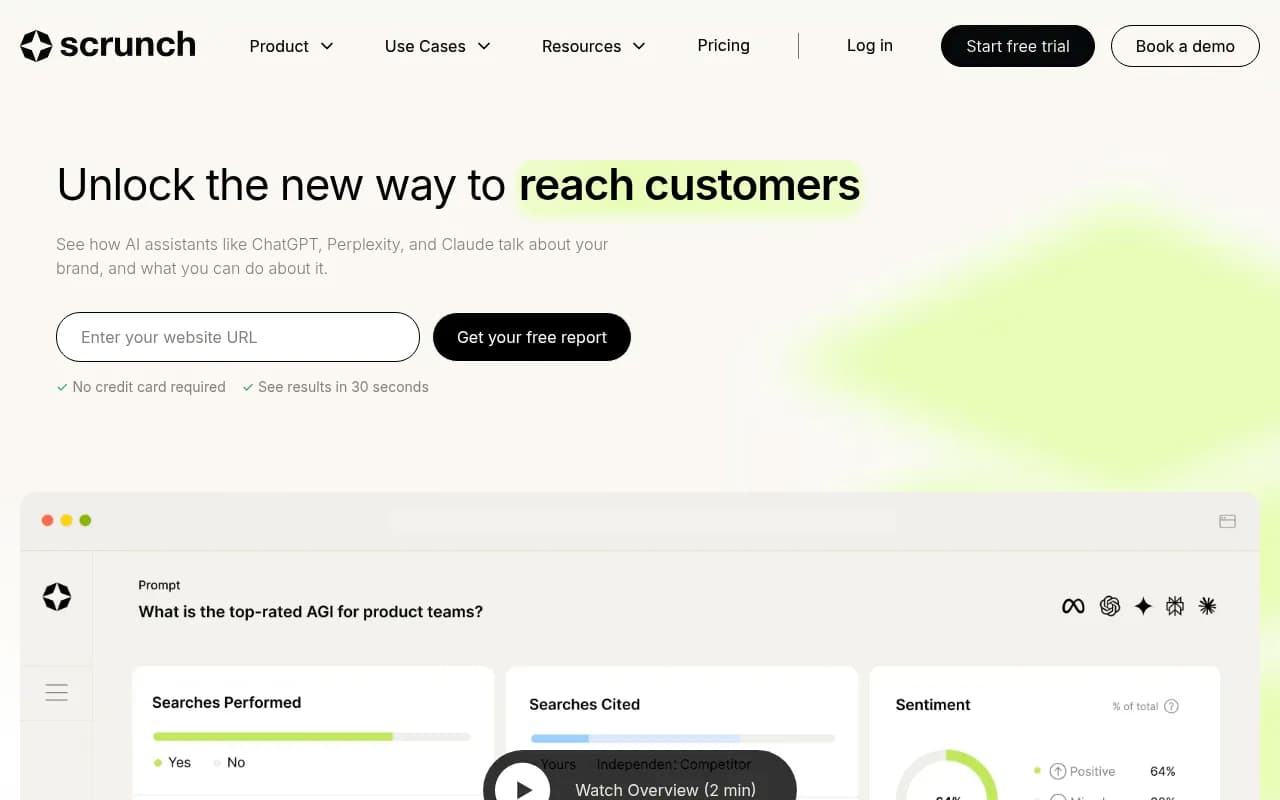
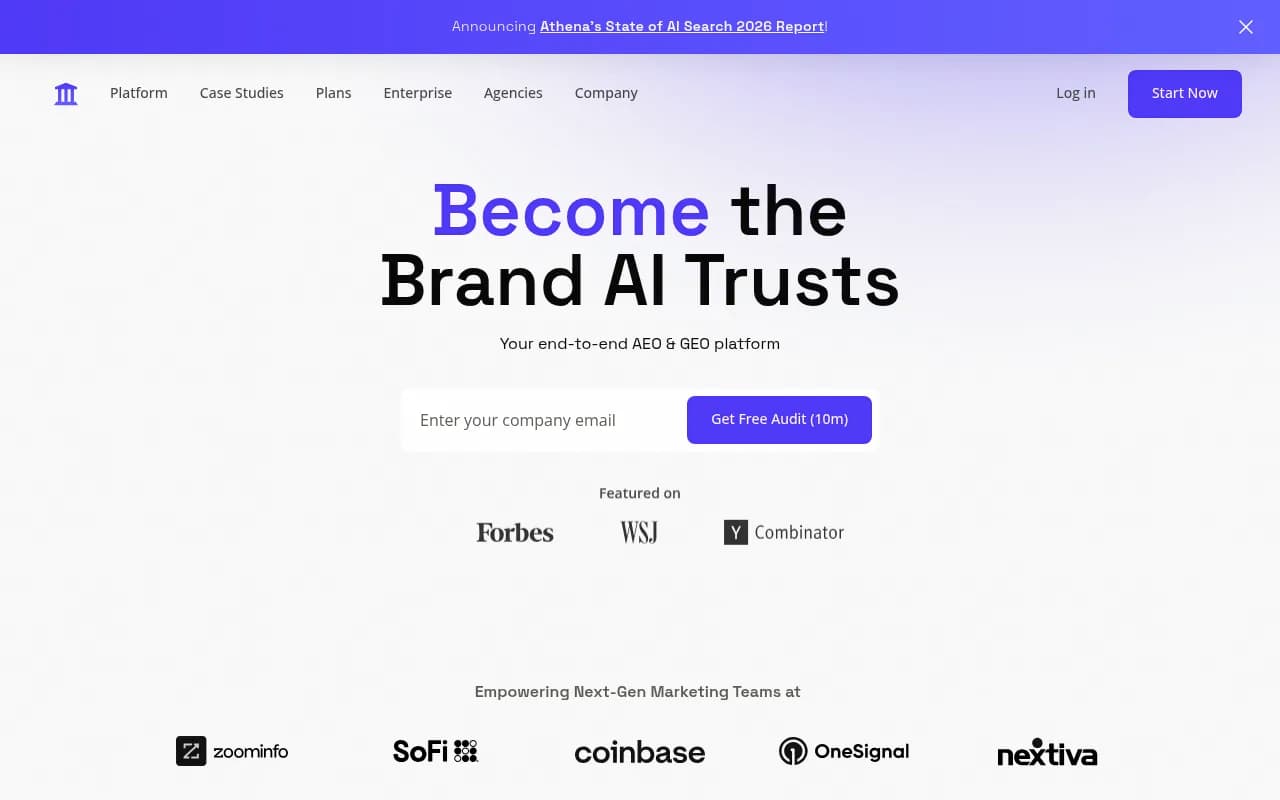
Both are monitoring-first. Scrunch emphasises prompt-level analysis for enterprises, and AthenaHQ focuses on citation patterns. Reasonable for a large brand team that already has content capacity, less so if you need the tool to help produce the pages.
Semrush and Conductor
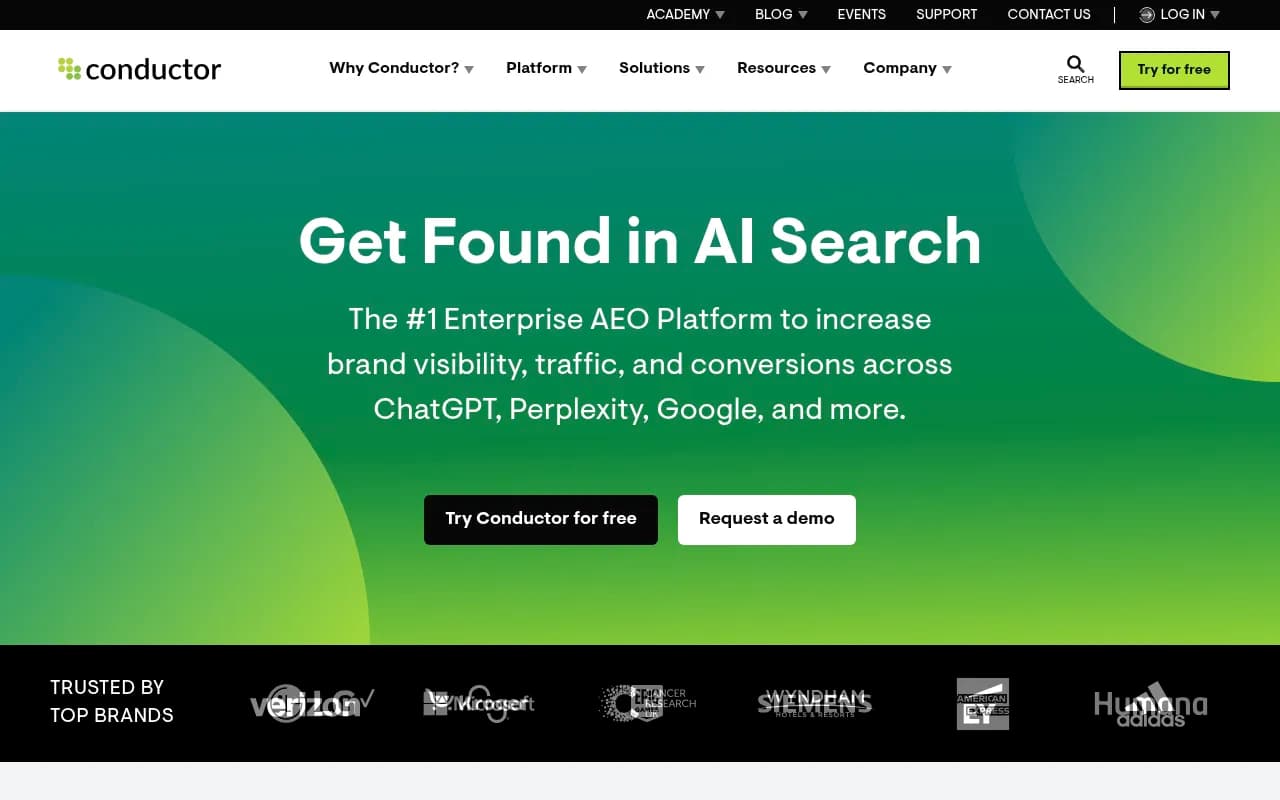
If your telecom marketing team already lives in Semrush or Conductor, the AI add-ons are the lowest-friction way to get a first read. Just know that suite add-ons tend to use fixed prompt sets and shallower AI-specific data.
A practical rollout plan
Build a telecom prompt set
Start with prompts your buyers actually type. Wellows, a vendor, suggests "best internet providers in my area", "top ISPs for remote work", "fiber vs DSL vs wireless" and city-specific fiber availability. Add branded prompts ("is [your ISP] good?"), competitor comparisons, and complaint-style queries like "[ISP] outage compensation". Tag them by city or region.
Fix what AI reads first
Given that product and landing pages dominate commercial citations, audit those before writing anything new:
- Plan tables with speeds, data limits and prices in plain HTML, not images or JavaScript widgets
- A public FAQ on availability, installation cost, contract length and static IPs
- Structured data for Organization, Service, Offer and Location
- Public, crawlable docs and help pages
- One comparison page per main rival
The free Agentic Readiness Check shows which AI crawlers can reach your site, and the AI crawler URL inspector tests a single page.
Clean up entities
If your brand has merged or renamed, publish a clear "formerly known as" statement on key pages and keep third-party profiles consistent. Engines that don't search the web will keep repeating old names until training data catches up, so this is slow work.
Handle the complaint layer
Track which review and complaint sites AI cites for support questions. You can't edit them, but you can answer reviews, fix the underlying problems and publish a support page that gives AI a better source.
Measure traffic, not only mentions
Set visitor analytics and a UTM rule for chatgpt.com so AI-referred signups are visible. Percepture, a GEO agency, claims AI referrals are up 800% year over year and suggests aiming for mentions in 50%+ of answers. Those are marketing figures, so set your own baseline first and review quarterly.
Which should you pick?
- Regional or multi-city ISP that wants the loop closed: Promptwatch Business, for location targeting plus content and crawler data.
- Large national carrier with a strong content team: Profound or Scrunch for benchmarking, possibly alongside Promptwatch for execution.
- Small provider on a tight budget: Otterly.AI to start, upgrade when you need fixes.
- Already deep in an SEO suite: Semrush or Conductor to get a baseline, then test a dedicated tool.
- Agency serving telecom clients: Promptwatch's agency plans have unlimited projects and country, state and city tracking.
To explore more options, the GEO software directory at bestgeosoftware.com lists dozens of alternatives.
A note on the listicles you'll find
Most best-GEO-tools posts are written by vendors who rank themselves first. ZipTie's, Scrunch's and Evertune's do, and Shadow's guide frames tools by workflow fit rather than ranking. This guide isn't neutral either, given the Promptwatch tie. Whatever you shortlist, run a two-week trial using your own city-level prompts, check whether answers stay stable across runs, and see whether the tool can tell you why a competitor wins, not just that it does.
If you want help turning the findings into a plan, 1001 SEO Media runs GEO programs for brands, but the tools above are usable without an agency.