Key takeaways
- Several solid AI visibility trackers exist at $0-$99/month -- enough to get started without a big budget
- Free tiers are real but limited: expect caps on prompts, models, or update frequency
- The gap between "monitoring" and "optimization" is where most budget tools fall short -- they show you data but don't help you act on it
- For teams that need to close the loop (find gaps, fix content, track results), a mid-tier platform like Promptwatch at $99/month covers considerably more ground than most cheap alternatives
- Pick based on your actual use case: solo blogger, startup marketing team, and agency all have different needs
AI search is no longer a niche concern. When someone asks ChatGPT which project management tool to use, or asks Perplexity for the best accounting software for freelancers, the brands that get mentioned win mindshare -- and increasingly, revenue. The brands that don't get mentioned might as well be invisible.
The problem is that most AI visibility platforms are priced for enterprise budgets. Profound starts at $499/month. Scrunch AI is around $300/month. Evertune targets Fortune 500 teams. If you're a startup, a small agency, or a solo marketer, those numbers don't work.
The good news: the budget end of this market has gotten genuinely useful in 2026. Here's what's actually worth your time.
What to look for before spending anything
Before comparing tools, it helps to know what you actually need. AI visibility tracking covers several distinct things, and not every tool does all of them:
- LLM mention tracking: Does your brand appear when someone asks ChatGPT or Perplexity about your category? How often? In what context?
- Citation/URL tracking: Which of your pages are being cited as sources in AI-generated answers?
- Competitor benchmarking: Where are competitors showing up that you aren't?
- Content gap analysis: What questions are AI models answering without citing you -- and what content could change that?
- Traffic attribution: Are AI mentions actually sending visitors to your site?
Budget tools typically cover the first two well. The last three are where you start needing to pay more -- or choose carefully.
Free and freemium options worth trying
Otterly.AI
Otterly.AI is consistently recommended as one of the most accessible entry points for AI visibility tracking. It monitors brand mentions across ChatGPT, Perplexity, and Google AI Overviews, and the free tier is functional enough to get a real sense of where you stand.
It won't give you deep competitor analysis or content recommendations, but for a solo founder or a small team just getting started, it's a reasonable first step.

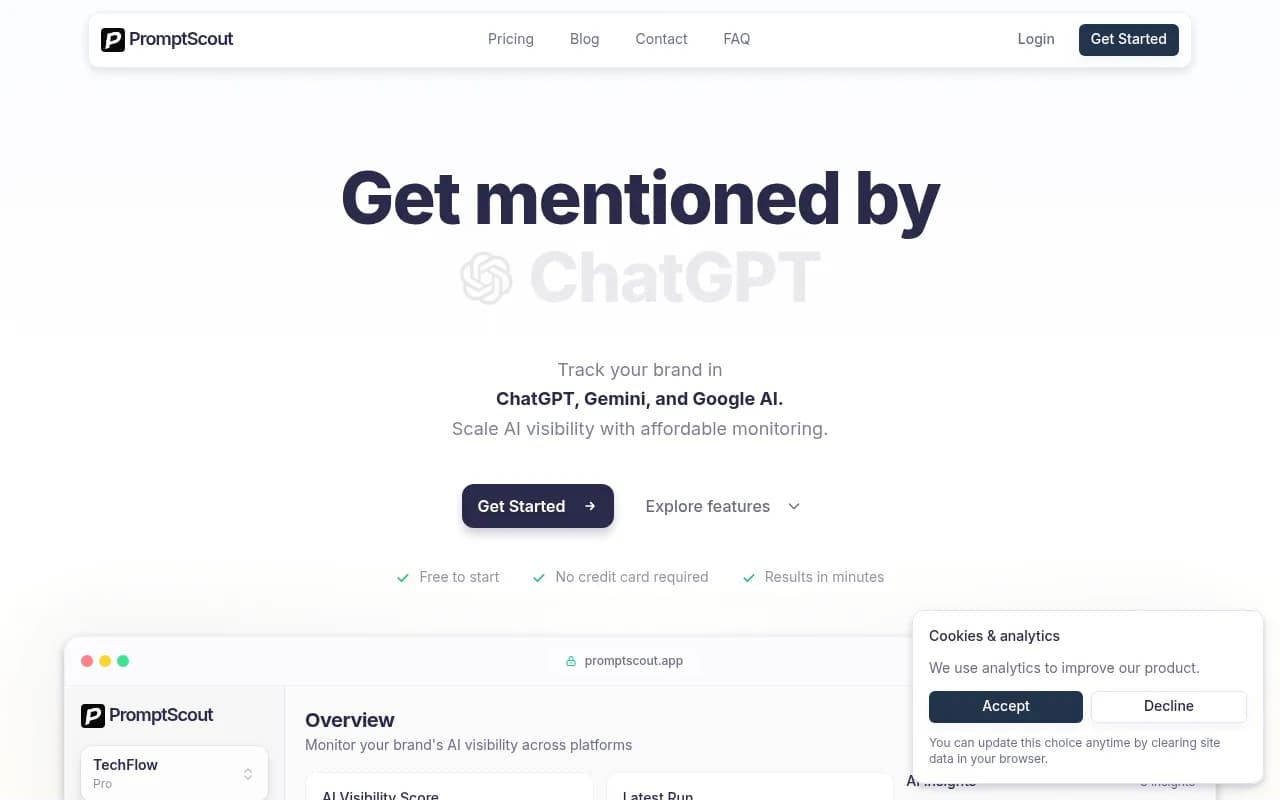
Promptscout
Promptscout tracks how ChatGPT, Gemini, and Google AI mention your brand across a set of prompts you define. The interface is simple, the setup is fast, and there's a free tier that covers basic monitoring.
Good for: getting a quick snapshot of your AI visibility without committing to a paid plan.
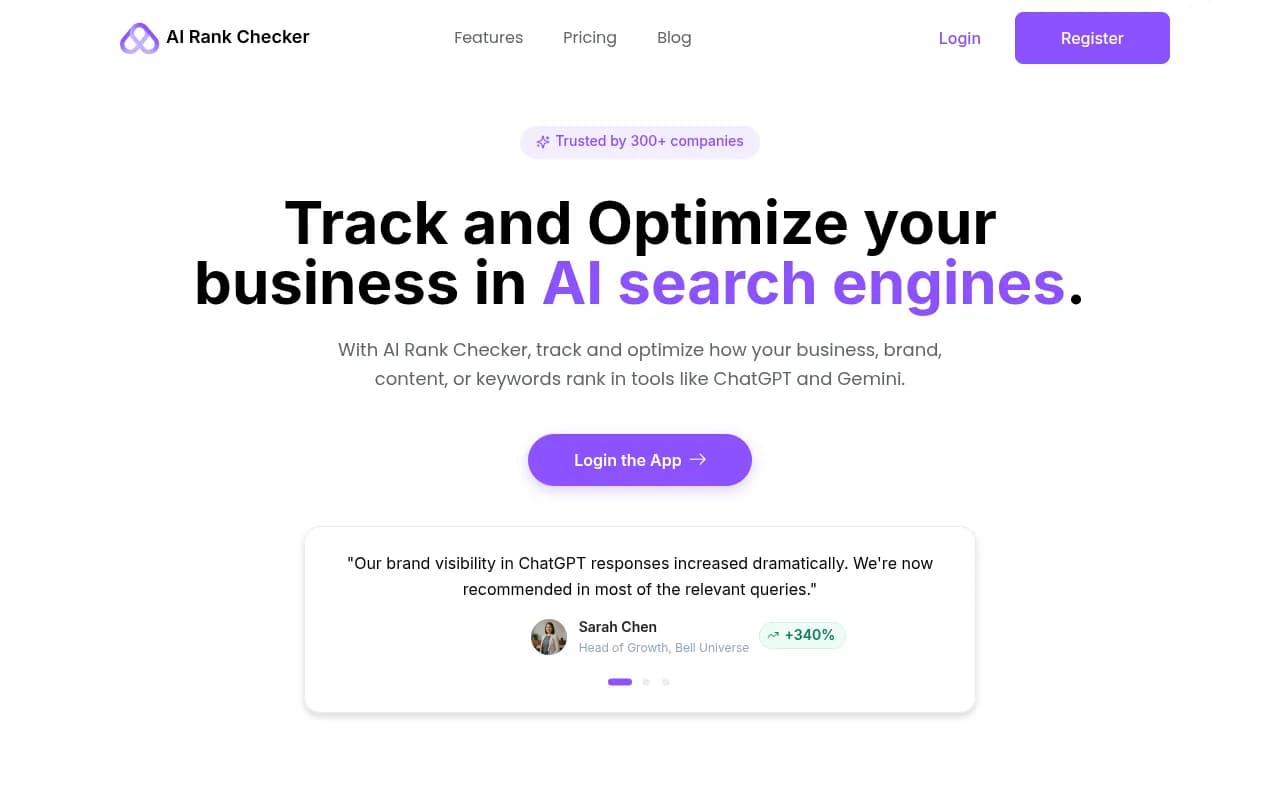
AI Rank Checker
A lightweight tool that does exactly what the name says -- checks where your brand ranks in AI search results. No frills, no content tools, just data. Useful for a quick sanity check.
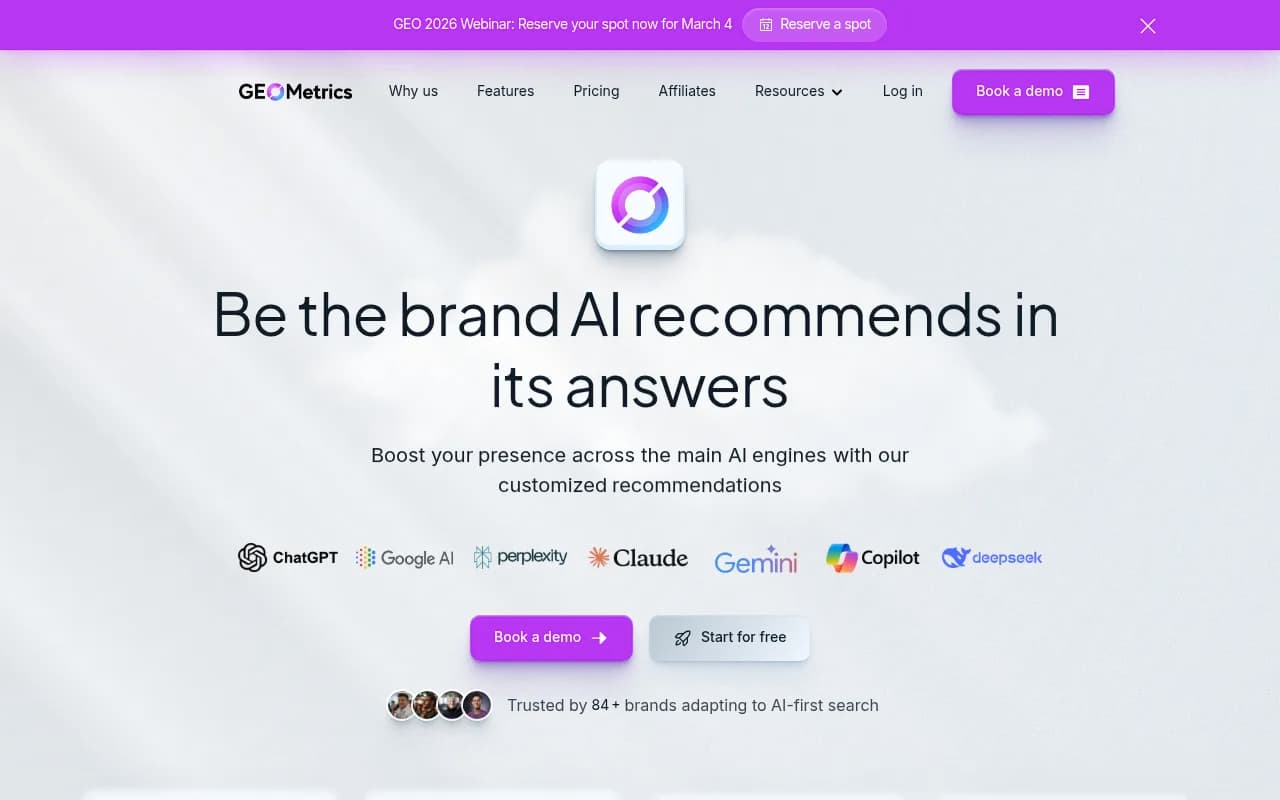
GEO Metrics
GEO Metrics tracks how ChatGPT, Gemini, and other AI engines mention your brand. It's newer and leaner than some alternatives, but the free tier covers enough prompts to be useful for early-stage monitoring.
Mentions.so
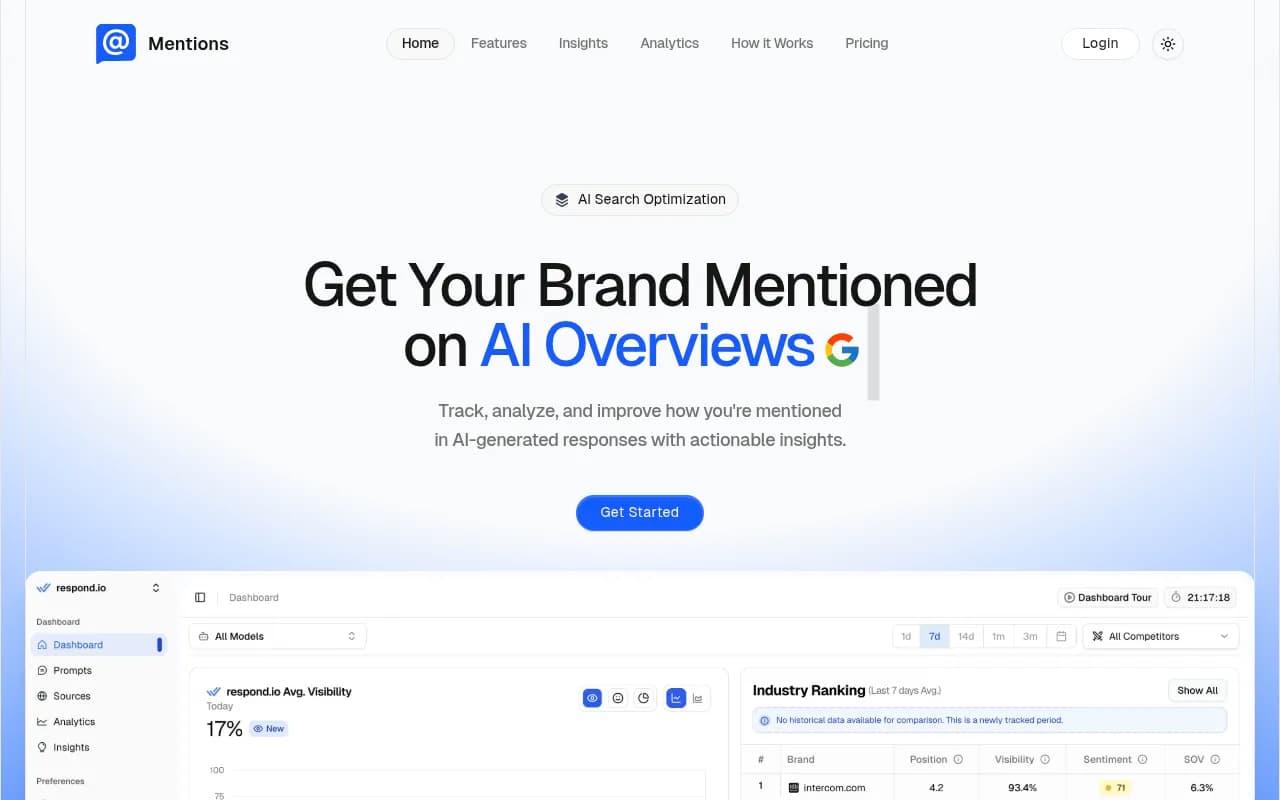
Mentions.so focuses specifically on brand mention tracking in AI responses. Simple, focused, and free to start.
Best paid options under $150/month
This is where things get interesting. Several tools in the $50-$150 range offer genuine depth -- not just mention counts, but citation tracking, competitor comparisons, and some degree of actionability.
Promptwatch ($99/month)
Promptwatch is worth calling out specifically because it's the only platform in this price range that goes beyond monitoring into actual optimization. At $99/month (Essential plan), you get one site, 50 prompts, and 5 AI-generated articles per month -- plus access to Answer Gap Analysis, which shows you exactly which prompts competitors are visible for that you're not.
Most tools at this price just show you a dashboard. Promptwatch shows you the dashboard and then helps you do something about it. The built-in AI writing agent generates content grounded in real citation data, not generic SEO filler. That's a meaningful difference if you're trying to actually improve your visibility, not just measure it.
Promptwatch also tracks 10 AI models (ChatGPT, Perplexity, Claude, Gemini, Grok, DeepSeek, Copilot, Meta AI, Google AI Overviews, and Google AI Mode) -- broader coverage than most tools at any price point.

Peec AI (~$99/month)
Peec AI is a solid monitoring-focused option with multi-language support and decent competitor tracking. It's been mentioned positively in agency circles for its research depth. The trade-off: it's primarily a monitoring tool. You'll see where you stand, but the "what to do about it" part is largely up to you.

LLMrefs (~$79/month)
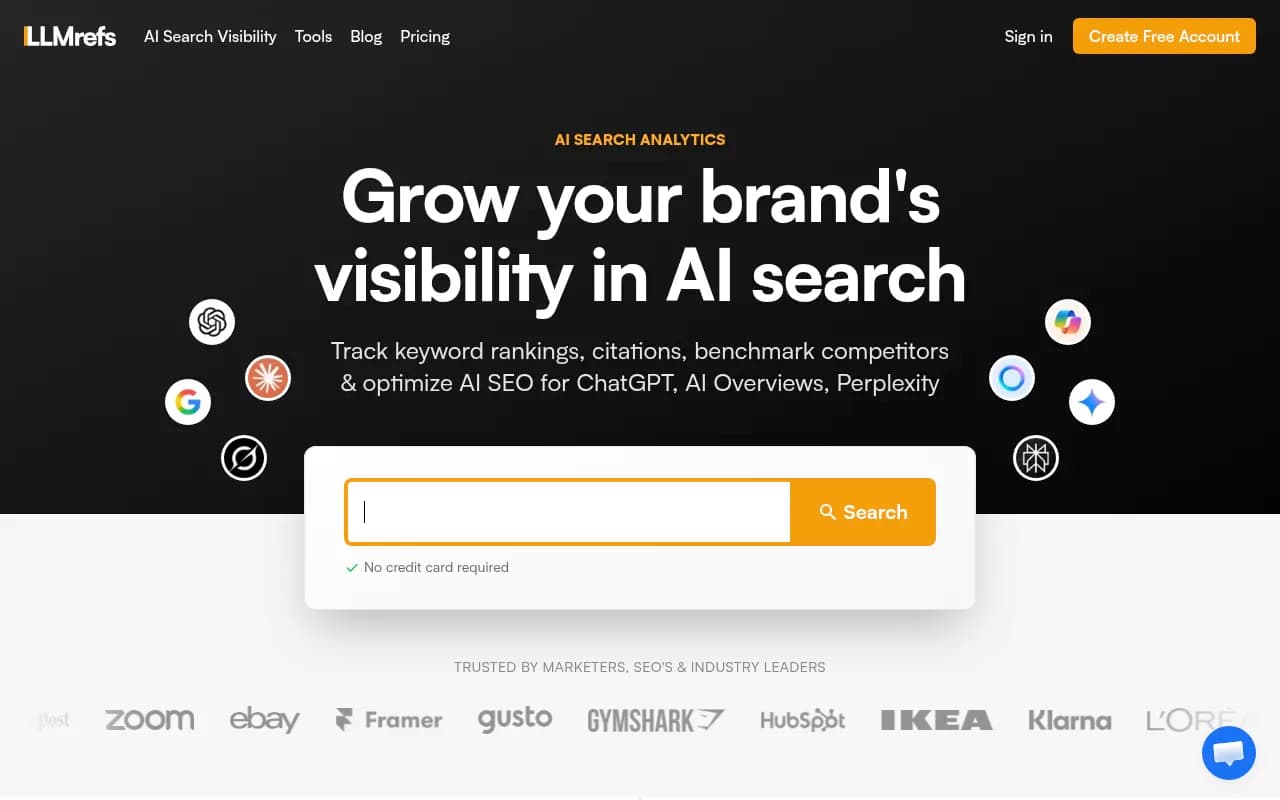
LLMrefs tracks your brand's visibility across ChatGPT, Perplexity, and other models at one of the lowest price points in the category. It's bootstrapped, which means it moves fast and stays lean. Good for teams that want solid data without paying for features they won't use.
Airefs
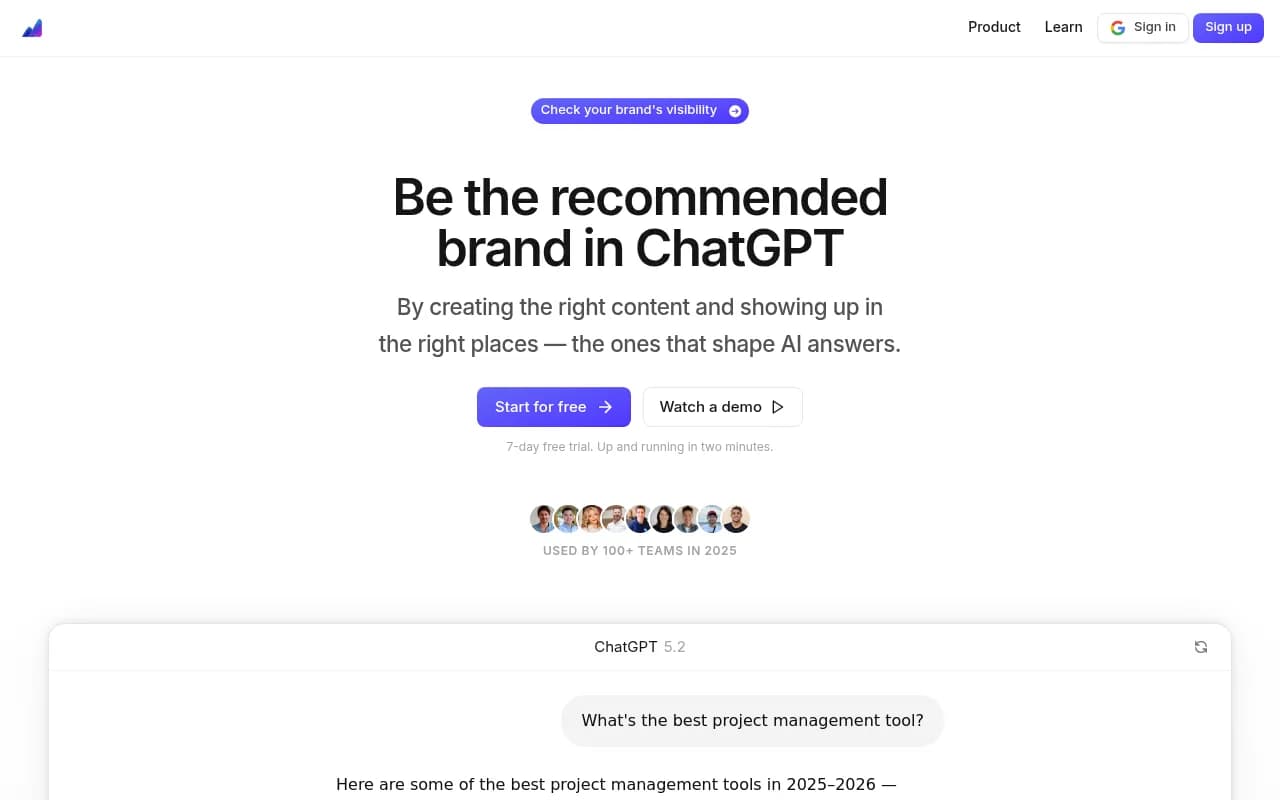
Airefs positions itself as an affordable AI search visibility tracker. Worth evaluating if you're comparing options in the sub-$100 range.
Rankshift
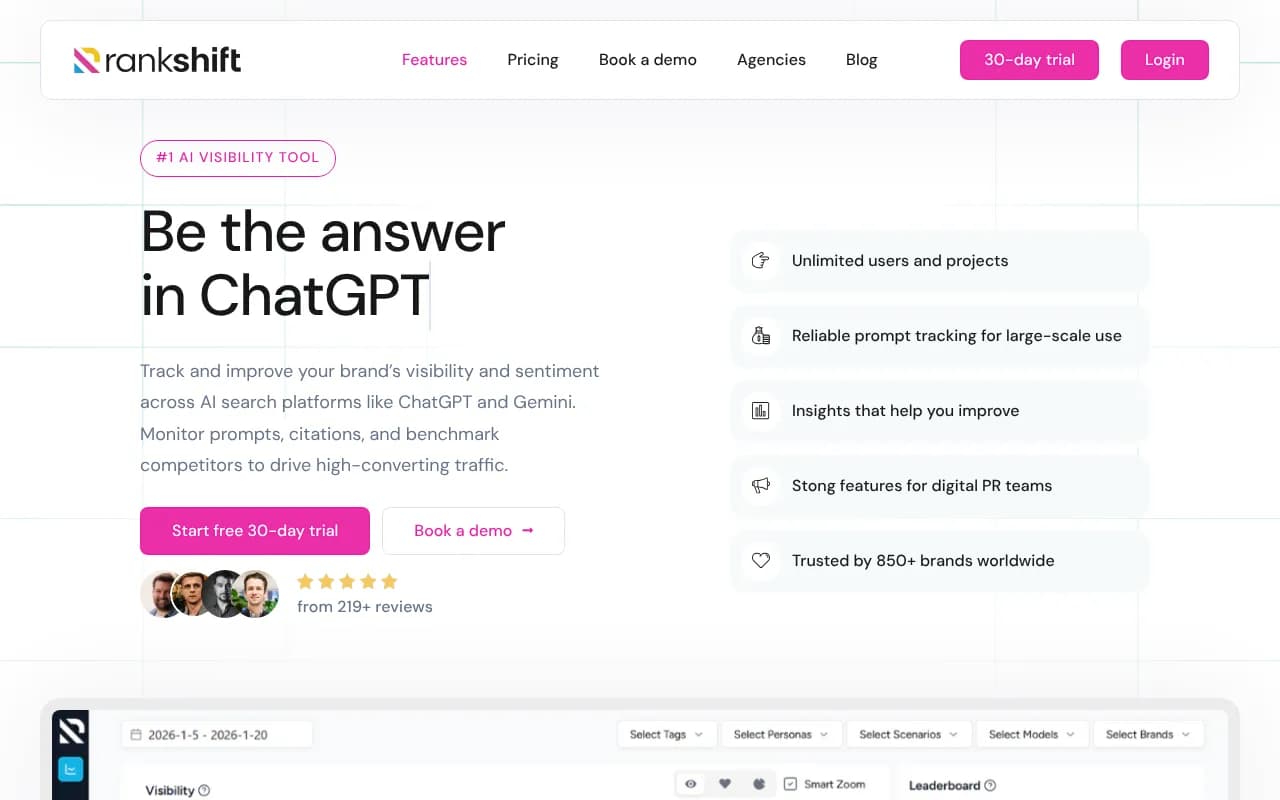
Rankshift focuses on LLM tracking for GEO and AI visibility. It's a newer entrant but has been getting attention for its clean approach to tracking visibility changes over time.
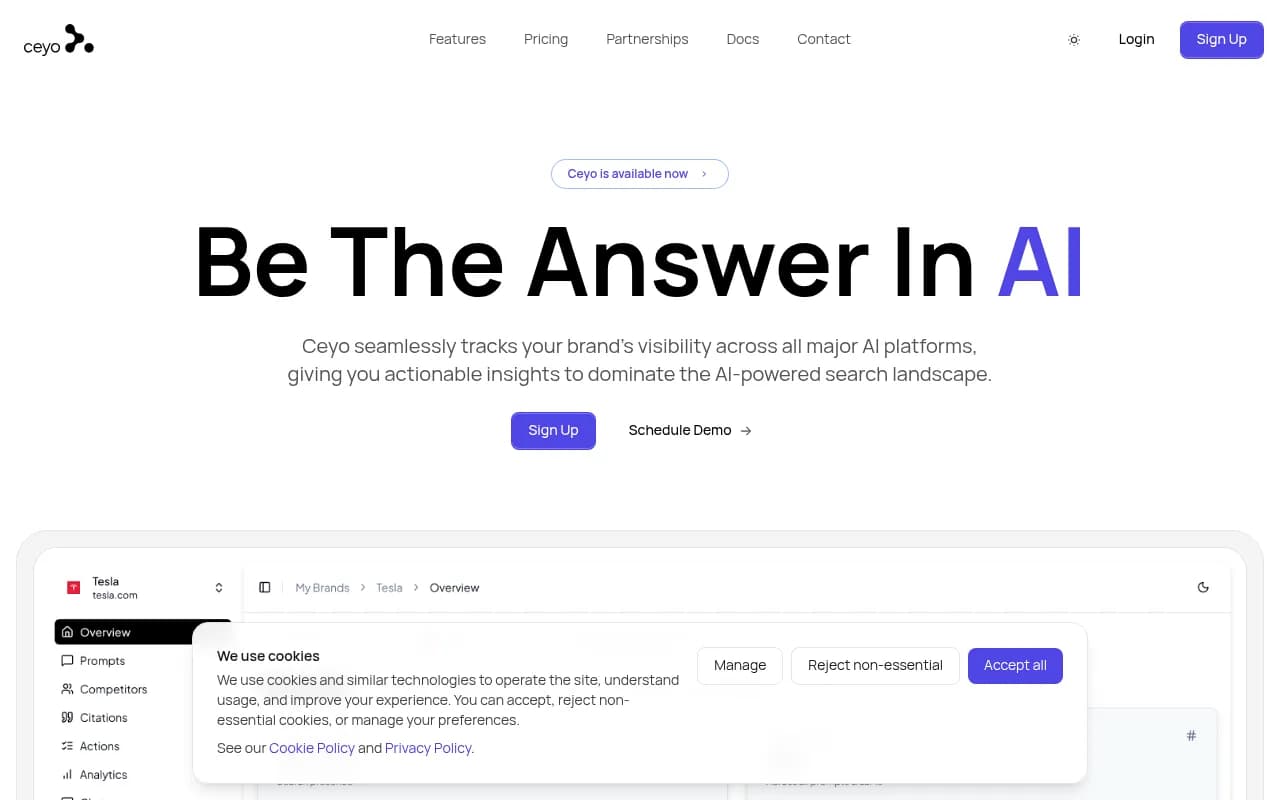
Ceyo AI
Ceyo AI monitors your brand across ChatGPT, Perplexity, Claude, and Gemini. Straightforward monitoring with a clean interface.
Meteoria
Meteoria tracks and helps optimize your brand's visibility in AI search engines. Worth a look for teams that want a bit more than pure monitoring.
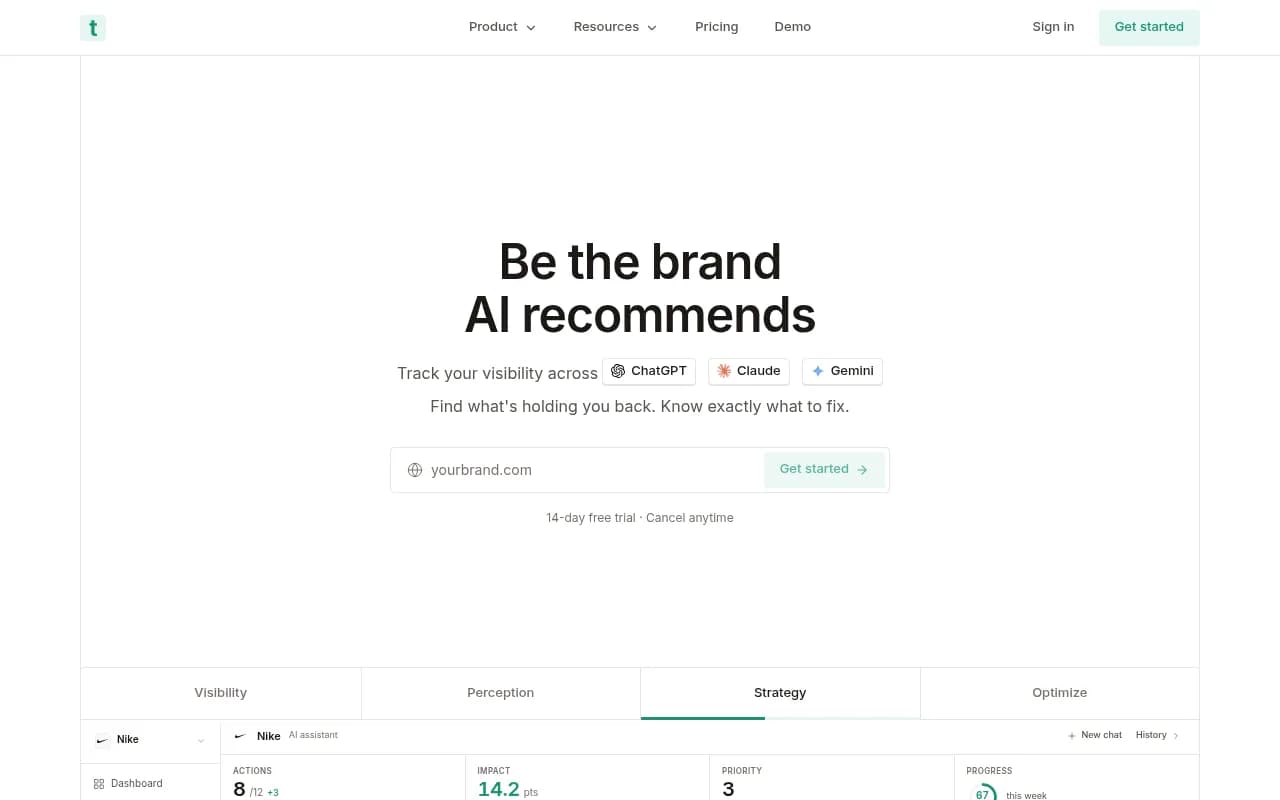
Trakkr.ai
Trakkr.ai tracks brand visibility across ChatGPT, Claude, Perplexity, and others. Positioned as an accessible option for marketing teams that are new to AI visibility tracking.
Mid-range options ($150-$300/month) for growing teams
Once you're past the early "just figure out where we stand" phase, you'll probably want more: more prompts, more models, more actionability, maybe multi-site tracking.
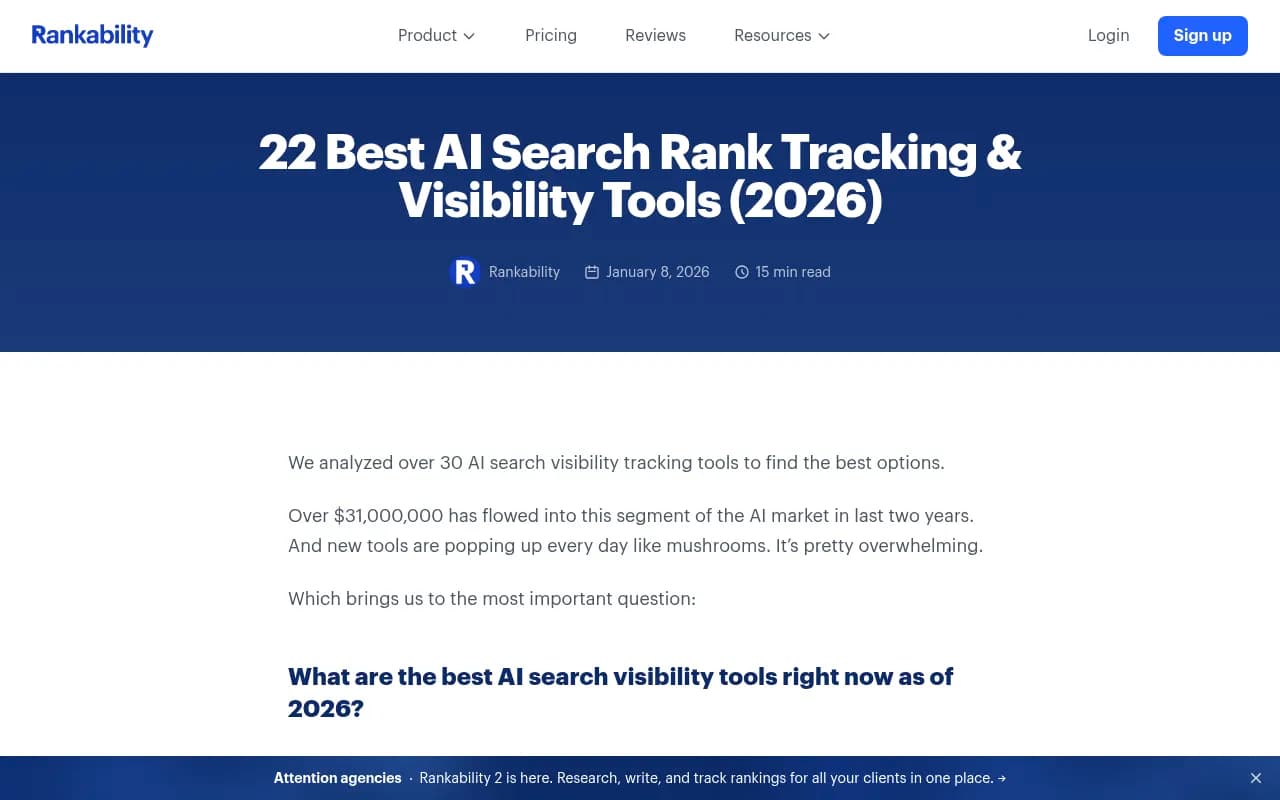
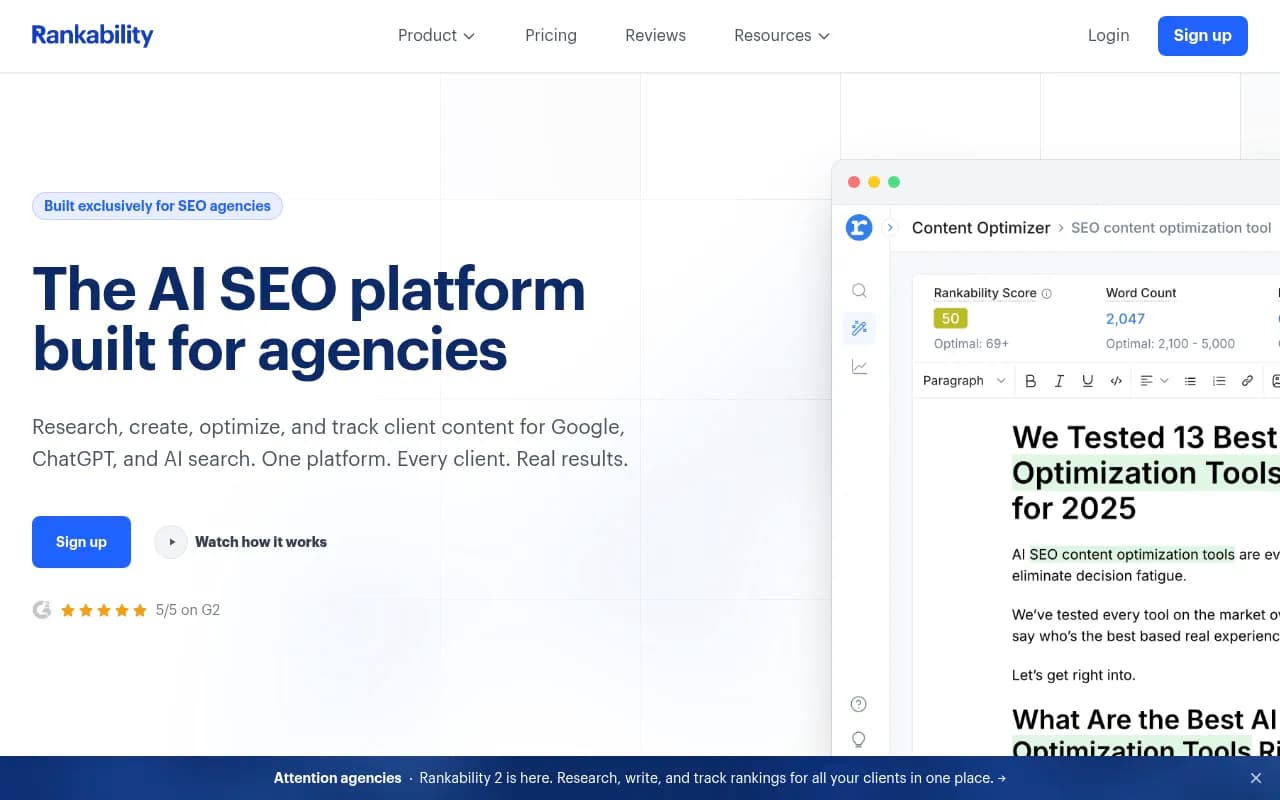
Rankability (~$149/month)
Rankability's Reporter product has been recognized as a strong price-to-value option in this category. It covers comprehensive monitoring across the major AI platforms and is particularly well-suited for agencies managing multiple clients.
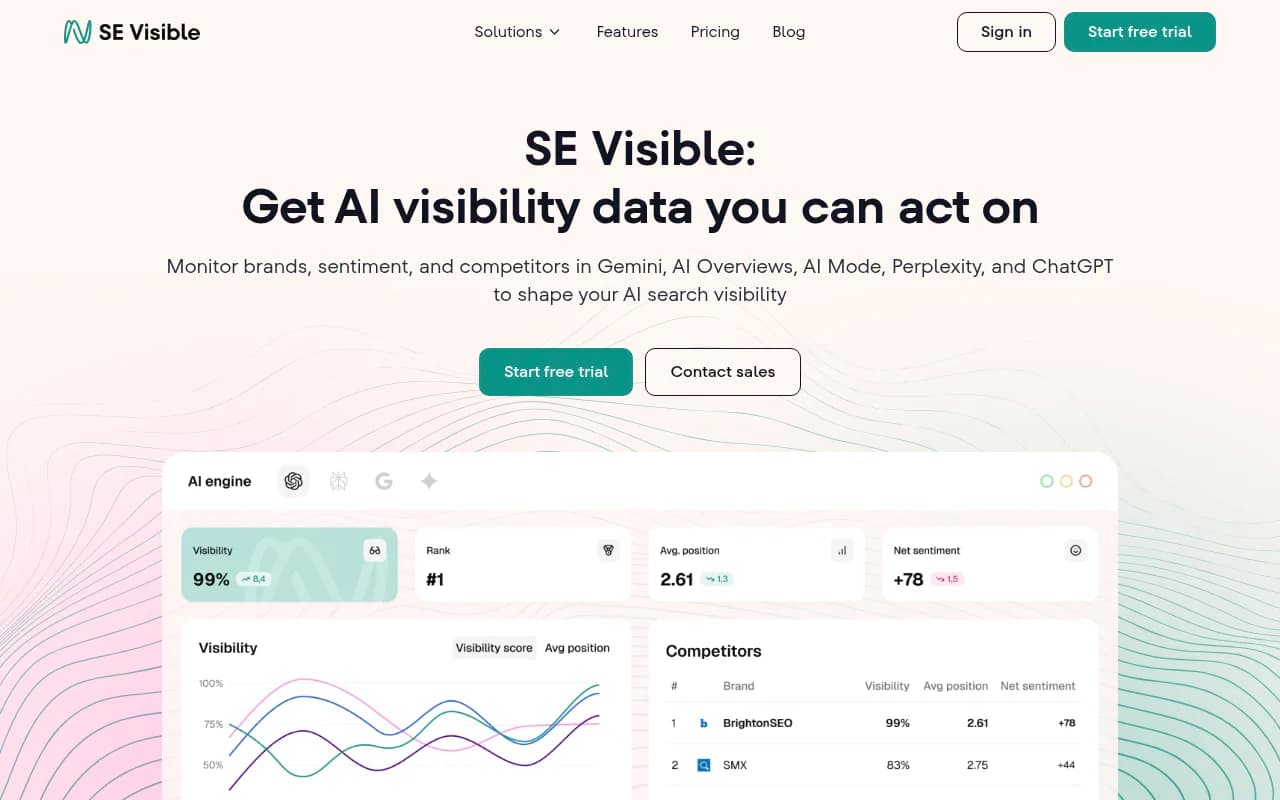
SE Visible
SE Visible (from SE Ranking) offers user-friendly AI visibility tracking with a clean interface. If you're already using SE Ranking for traditional SEO, this is a natural extension.
Promptwatch Professional ($249/month)
For teams that have outgrown the Essential plan, Promptwatch's Professional tier adds crawler logs (showing which AI bots are visiting your site and when), state/city-level tracking, 150 prompts, and 15 articles per month across 2 sites. The crawler logs feature is particularly rare -- most competitors don't offer it at any price.
AthenaHQ
AthenaHQ tracks your brand across 8+ AI search engines with a monitoring-first approach. Solid data, though it's less focused on helping you act on what you find.
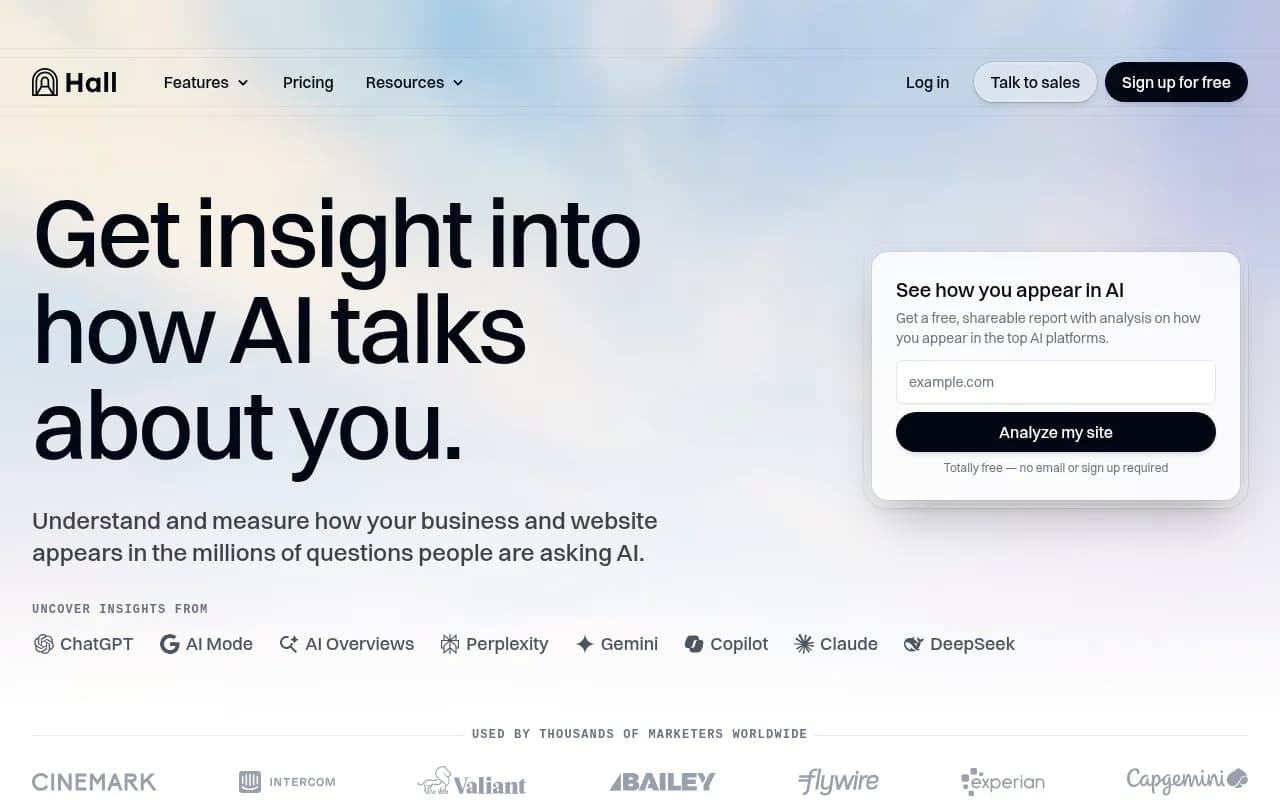
Hall AI
Hall AI tracks how AI platforms cite and talk about your brand. Good for teams that want to understand the narrative around their brand in AI responses, not just mention counts.
Comparison table: free and budget AI visibility tools
| Tool | Starting price | Free tier | Models covered | Content tools | Best for |
|---|---|---|---|---|---|
| Otterly.AI | Free | Yes | ChatGPT, Perplexity, Google AIO | No | Getting started |
| Promptscout | Free | Yes | ChatGPT, Gemini, Google AI | No | Quick snapshots |
| AI Rank Checker | Free | Yes | Limited | No | Sanity checks |
| GEO Metrics | Free | Yes | ChatGPT, Gemini | No | Early monitoring |
| LLMrefs | ~$79/mo | No | ChatGPT, Perplexity | No | Lean data tracking |
| Airefs | Low | Limited | Multiple | No | Budget monitoring |
| Peec AI | ~$99/mo | No | Multiple, multi-language | No | Agency research |
| Promptwatch | $99/mo | Free trial | 10 models | Yes (AI writing agent) | Full optimization loop |
| Rankshift | Low | Limited | Multiple LLMs | No | GEO tracking |
| Rankability | ~$149/mo | No | Major AI platforms | No | Agency use |
| SE Visible | Varies | Limited | Multiple | No | SE Ranking users |
| AthenaHQ | Mid-range | No | 8+ engines | No | Brand monitoring |
What free tools can't do (and when to upgrade)
Free and low-cost tools are genuinely useful for a specific phase: understanding your baseline, identifying which AI models mention you at all, and getting a rough sense of how you compare to competitors.
But they hit walls quickly. The most common ones:
Prompt limits. Free tiers typically cover 5-20 prompts. If your product category has 50+ relevant questions people ask AI, you're only seeing a fraction of the picture.
No content gap analysis. Knowing you're invisible for a prompt is one thing. Knowing exactly what content to create to fix it is another. Most budget tools stop at the former.
No traffic attribution. You can't connect AI mentions to actual website visits or revenue without more sophisticated tooling. This matters a lot once you're trying to justify budget.
Stale data. Some cheaper tools run queries infrequently -- weekly or even less often. AI model behavior changes fast, and weekly snapshots miss a lot.
Single-model coverage. A tool that only tracks ChatGPT misses Perplexity, Gemini, Claude, and the others. In 2026, users are spread across multiple AI platforms.
The upgrade decision usually comes down to this: if you're actively trying to improve your AI visibility (not just monitor it), you need a tool that helps you act. That's where the gap between monitoring-only tools and optimization platforms becomes real.
How to get the most out of a budget tool
If you're starting with a free or low-cost option, here's how to make it count:
Start with your highest-value prompts. Don't spread 20 prompt slots across everything. Pick the 10-15 questions that, if you appeared in the answer, would most directly drive leads or sales. "Best [your category] for [your target customer]" is usually a good starting point.
Track competitors from day one. Even if you only have a few prompt slots, include competitor names in some of them. Knowing that a competitor appears in 80% of responses to your core prompts while you appear in 10% is more actionable than just knowing your own number.
Document your baseline. Screenshot or export your initial data. Visibility scores change, and without a baseline you can't tell if things are improving.
Cross-reference with your actual content. When a tool shows you're not being cited for a prompt, go look at whether you have content that answers that question. Often the gap is obvious once you look.
Upgrade when you're ready to act. Free tools are fine for awareness. Once you're ready to systematically improve your visibility, the cost of a proper optimization platform is usually justified by the first piece of content it helps you create.
A note on the broader market
The AI visibility tool market has grown fast -- Rankability's analysis counted over 30 tools, with more than $31 million in funding flowing into the segment in the last two years. That's a lot of options, and honestly, a lot of noise.
The tools that will matter long-term are the ones that help you do something, not just see something. Monitoring is table stakes. The question is: after you see the data, what happens next?
For most teams, the practical answer is: start free to understand the landscape, then invest in a platform that closes the loop between visibility data and content action. The tools in the $99-$249/month range -- particularly those that include content generation and gap analysis -- tend to deliver the best return for non-enterprise teams.
The brands that figure this out early will have a real advantage. AI search isn't slowing down, and the window to establish visibility before your category gets crowded is narrower than it looks.