Key takeaways
- Several genuinely useful AEO tools exist at free or sub-$50/month price points, covering basic brand mention tracking, one-off visibility checks, and Google AI Overviews monitoring.
- Free tools are best for validating whether AEO matters for your brand before committing budget — not for running a full optimization program.
- The main gap at the free tier: you get monitoring data but no guidance on what to do with it. Content gap analysis, prompt intelligence, and AI-native content generation are almost exclusively paid features.
- For teams ready to move from "watching" to "fixing," mid-tier paid tools ($99–$249/month) unlock the features that actually move the needle.
The honest state of free AEO tools in 2026
Let me be direct: most free AEO tools are either limited trials, one-trick checkers, or stripped-down versions of paid platforms designed to get you hooked. That's not a criticism — it's just how software works. But it does mean you need to go in with realistic expectations.
That said, "limited" doesn't mean "useless." If you're a solo marketer, a small business owner, or someone who just needs to answer the question "are we even showing up in ChatGPT?" before requesting budget, free tools can absolutely get you there.
The real question isn't "which free tool is best?" It's "what do I actually need to do right now, and what's the cheapest way to do it?" This guide is organized around that question.
What AEO tools actually do (and what costs money)
Before diving into specific tools, it helps to understand what capabilities exist at each price tier.
| Capability | Free tier | Low-cost ($20–$99/mo) | Mid-tier ($100–$300/mo) |
|---|---|---|---|
| One-off brand visibility check | Yes | Yes | Yes |
| Basic mention tracking (a few prompts) | Sometimes | Yes | Yes |
| Google AI Overviews monitoring | Limited | Yes | Yes |
| Multi-LLM tracking (ChatGPT, Claude, Perplexity, etc.) | Rarely | Sometimes | Yes |
| Prompt volume / difficulty scoring | No | Rarely | Yes |
| Content gap analysis | No | No | Yes |
| AI-native content generation | No | No | Yes |
| Crawler log analysis | No | No | Yes |
| Competitor heatmaps | No | Rarely | Yes |
| Traffic attribution from AI | No | No | Yes |
The pattern is clear: monitoring gets cheaper every month as more tools enter the market. But optimization — the part where you actually improve your visibility — still costs real money.
Free and freemium tools worth your time
Quick one-off visibility checks
If you just want to know whether your brand appears in AI search results without signing up for anything, a few tools let you do exactly that.
AI Product Rankings (built by Y Combinator founders) lets you paste in your website URL and immediately see how you appear across AI search engines — no account needed. It's genuinely useful for a first look. The limitation is obvious: it's a snapshot, not ongoing monitoring.
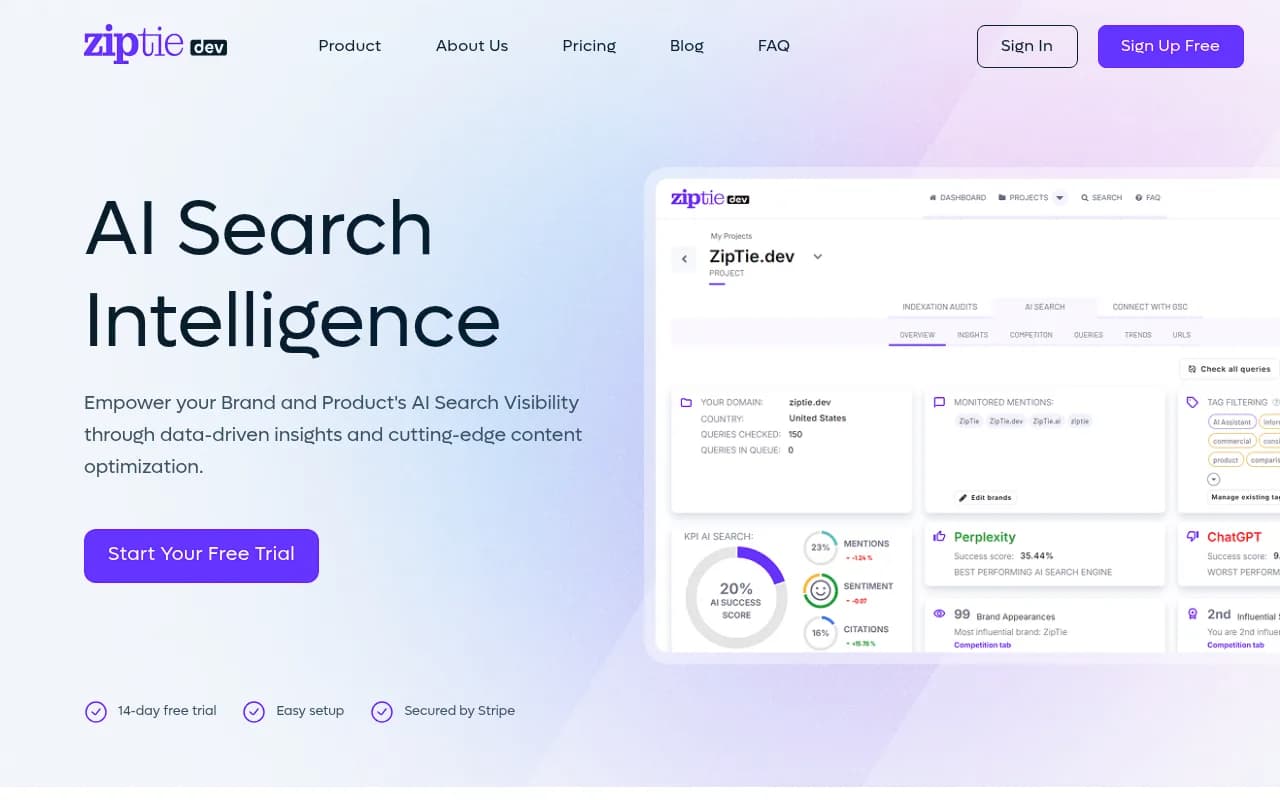
Ziptie.dev is a solo diagnostic tool that runs a quick AI visibility audit. Good for a one-time sanity check.
GPT Rank Tracker offers a free tier for monitoring how your brand appears in ChatGPT responses specifically. The free plan is limited to a handful of prompts, but it's enough to get started.

Google AI Overviews monitoring on a budget
Google AI Overviews is arguably the highest-priority AI search surface for most brands right now, because it directly affects organic traffic. Several tools track this at low or no cost.
SE Ranking has an AI Overviews tracking feature built into its broader SEO platform. It's not free, but at its entry price point it's one of the more affordable ways to monitor Google AI Overviews alongside traditional rank tracking.
Thruuu is specifically built for content teams monitoring AI Overviews. It's more affordable than enterprise platforms and focuses on the Google side of AI search.
Advanced Web Ranking has been around for 20+ years and added AI search tracking. Its pricing is reasonable for what you get, and the SERP accuracy is solid.
Low-cost multi-LLM trackers
This is where the market has gotten genuinely competitive in 2026. Several tools now offer multi-LLM monitoring (ChatGPT, Perplexity, Claude, Gemini) at price points that don't require a business case.
Otterly.AI is probably the most commonly recommended entry-level AEO tool. It focuses on brand mention tracking and alerts, it's easy to set up, and it's affordable. The trade-off: it's monitoring only. You'll see where you're mentioned (or not), but the tool won't tell you what to do about it.

Peec AI offers multi-language AI visibility tracking and is often cited as a good entry point for e-commerce brands that need competitive intelligence without a large budget.

Airefs positions itself as an affordable alternative to the bigger platforms. Good for teams that need basic citation tracking across LLMs without paying enterprise prices.
LLMrefs tracks brand visibility across ChatGPT, Perplexity, and other AI engines. Worth checking if you're comparing affordable options.
Rankshift is an LLM tracking tool aimed at GEO practitioners who want straightforward visibility data without a lot of complexity.
Promptmonitor covers AI visibility tracking and monitoring at a price point accessible to smaller teams.
SE Visible (from SE Ranking) is a user-friendly AI visibility tracker that's worth looking at if you want something simple.
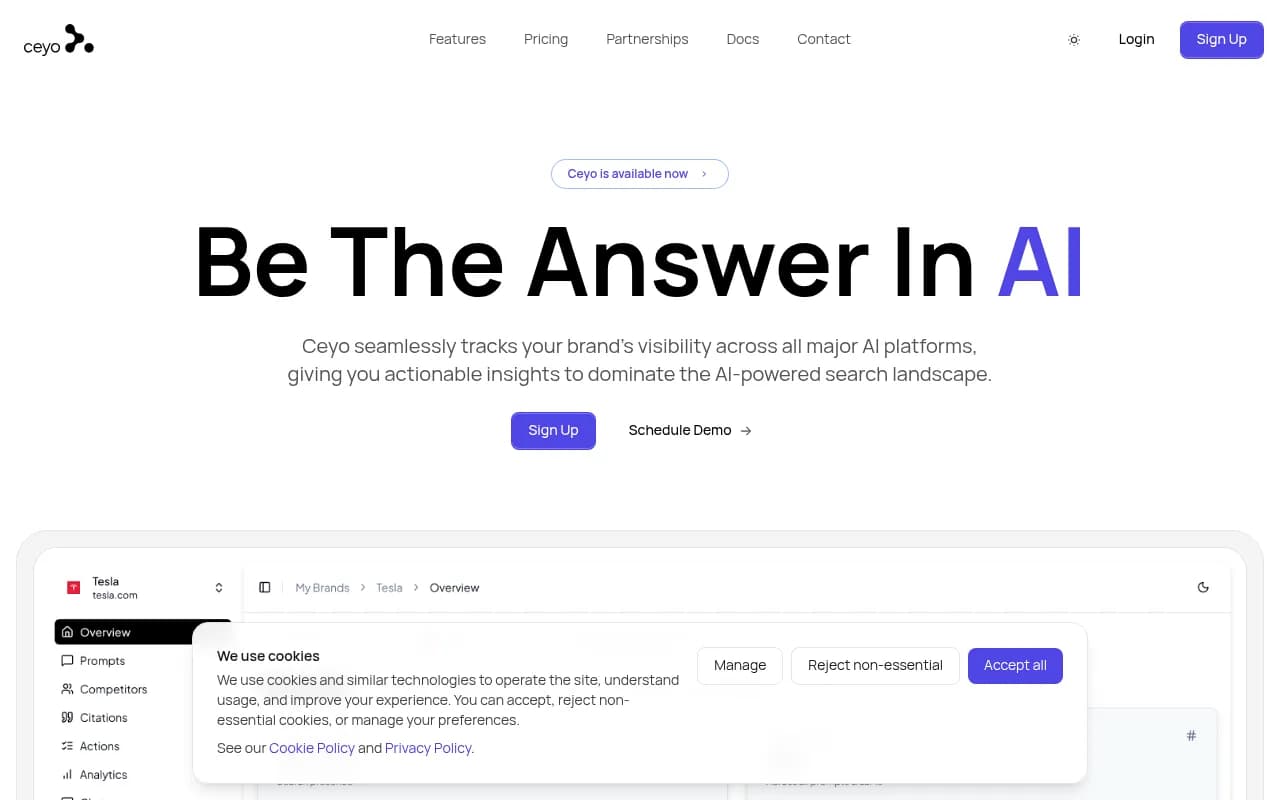
Ceyo AI monitors your brand across ChatGPT, Perplexity, Claude, and Gemini. One of the newer entrants but worth evaluating.
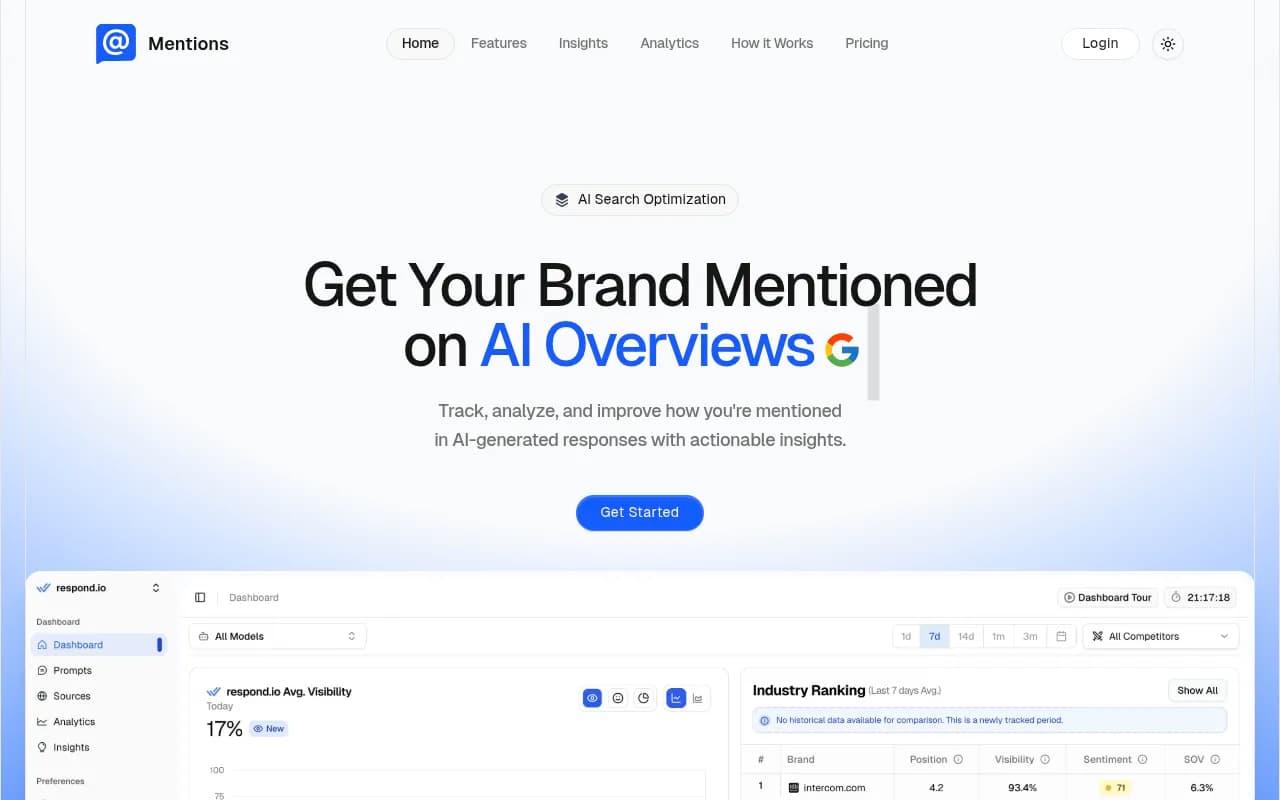
Mentions.so focuses specifically on brand mention tracking in AI responses. Narrow scope, but does that one thing cleanly.
What you can realistically accomplish at each budget level
$0 — The "prove it first" stage
At zero budget, you can answer one question: "Does my brand show up in AI search results at all?"
Use AI Product Rankings or Ziptie.dev for a one-time check. Manually query ChatGPT, Perplexity, and Claude with prompts relevant to your category and note what comes up. This takes maybe two hours and costs nothing.
What you can't do at this stage: track changes over time, monitor competitors systematically, or understand which content is driving citations.
$20–$50/month — The "monitoring" stage
At this price point, you can set up ongoing tracking for a handful of prompts across one or two AI engines. Tools like Otterly.AI, Airefs, or Peec AI fit here.
This is genuinely useful for catching regressions (if you suddenly stop appearing somewhere you used to appear) and for building a basic baseline before you have budget for something more comprehensive.
The honest limitation: you're still just watching. These tools tell you your visibility score went down. They don't tell you why, and they don't help you fix it.
$99–$249/month — The "optimization" stage
This is where AEO work actually starts. At this tier, you get:
- Tracking across all major LLMs (not just one or two)
- Prompt volume and difficulty data so you can prioritize
- Content gap analysis showing which topics competitors rank for that you don't
- Some form of content generation or optimization guidance
Promptwatch sits in this tier (Essential at $99/month, Professional at $249/month) and is one of the few platforms that covers the full loop: find gaps, create content, track results. Most tools at this price point still stop at monitoring.

Profound is another option worth evaluating at this tier, with strong answer engine insights and prompt volume data.

AthenaHQ covers monitoring across 8+ AI search engines and is worth comparing.

The gap nobody talks about: monitoring vs. optimization
Here's the thing that most "best free AEO tools" roundups skip over: monitoring your visibility and improving your visibility are two completely different problems.
Knowing that you appear in 12% of relevant ChatGPT responses is interesting. Knowing which specific content gaps are causing you to miss the other 88% — and having a way to close those gaps — is what actually moves the needle.
Almost every free tool, and most tools under $100/month, stops at the first part. They give you a number. They might even show you a competitor comparison. But they leave you staring at a dashboard wondering what to write next.
This is why the "just use free tools" advice has a ceiling. It's fine for the discovery phase. It's not a long-term strategy.
If you're at the point where you've validated that AI search matters for your business and you're ready to actually do something about it, the jump to a mid-tier paid platform is usually worth it. The content gap analysis alone tends to pay for itself quickly if you're producing content anyway.
A practical starting point for teams with no budget
Here's a concrete workflow you can run for free before committing to any paid tool:
- Pick 10–15 prompts that represent how your customers search for what you sell. Think "best [category] for [use case]" style queries.
- Run each prompt manually in ChatGPT, Perplexity, and Google (to trigger AI Overviews). Note whether your brand appears, which competitors appear, and what sources are cited.
- Use a free tool like GPT Rank Tracker or Ziptie.dev to cross-check your manual findings.
- Document your baseline in a spreadsheet: prompt, LLM, your visibility (yes/no), competitors mentioned, sources cited.
- Repeat monthly.
This gives you a real baseline. It's tedious, but it works. And when you eventually pitch for budget, you'll have actual data showing where you're invisible and who's beating you.
Comparing the most accessible paid options
For teams that have a small budget and want to move beyond manual tracking, here's how the most accessible paid tools compare:
| Tool | Starting price | LLMs tracked | Content generation | Gap analysis | Best for |
|---|---|---|---|---|---|
| Otterly.AI | ~$29/mo | 4–5 | No | No | Simple mention alerts |
| Peec AI | ~$49/mo | 5+ | No | Limited | E-commerce competitive intel |
| Airefs | Low-cost | 4–5 | No | No | Budget citation tracking |
| SE Ranking (AI add-on) | ~$65/mo | Google AI Overviews focus | No | No | Google AI Overviews + traditional SEO |
| Promptwatch | $99/mo | 10+ | Yes | Yes | Full optimization loop |
| Profound | Custom/higher | 6+ | Limited | Yes | Enterprise-leaning teams |
| AthenaHQ | Mid-tier | 8+ | No | Limited | Monitoring-focused teams |
The jump from the sub-$100 tier to Promptwatch's Essential plan is meaningful in terms of capability. If you're serious about improving visibility (not just tracking it), the gap between $49/month and $99/month is worth it.
Which tool should you actually start with?
It depends on where you are:
- Just curious whether AI search matters for your brand? Use a free checker like AI Product Rankings. Spend an afternoon doing manual queries. Don't pay for anything yet.
- Ready to monitor consistently but not ready to invest heavily? Otterly.AI or Peec AI will get you tracking without breaking the budget. Go in knowing you're buying a dashboard, not a strategy.
- Ready to actually improve your AI visibility? You need a platform that does gap analysis and content generation, not just monitoring. Promptwatch's Essential plan at $99/month is the most accessible entry point that covers the full loop.
The free tools in this space are genuinely useful for what they are. They're just not a substitute for a real optimization workflow once you've decided AI search is worth investing in.