Key takeaways
- AI engines cite third-party pages far more than brand-owned blogs, so outreach for placements (roundups, comparisons, trade press) is the lever, not more posts on your own site.
- Promptwatch Data (Nov 3-16, 2026) shows domains at DR 31-75 earn roughly 59-66% of citations across engines. You do not need a DR 90 placement to get cited.
- Roundups and comparisons last longer in ChatGPT than news. Half of cited news pages drop out within about 36 days.
- Most published "tested campaign results" are vendor claims. Treat them as leads for your own test, and measure with an AI visibility platform before and after.
- The tool stack has three parts: finding targets, running outreach, and measuring whether placements get cited.
A note on "tested results" before we start
The title of this guide promises tested campaign results. I want to be straight about what exists. I could not find independently verified, audited campaign data for any digital PR tool in this category. What exists is mostly vendor-published case studies, and some of those are interesting, but they are still self-reported.
Two examples. OutreachBloom says one client went from 0% to 20% ChatGPT visibility after eight roundup placements and related work. The same article ranks OutreachBloom first and discloses that its founder wrote it. LinksThatRank says the same article earns a 34% citation rate when placed as earned media versus 8% when published on the brand's own site, and that brand mentions correlate 0.664 with AI visibility against 0.218 for backlinks. Useful directional claims. Not a controlled experiment.
So this guide does something slightly different. It uses first-party citation data to tell you where to aim, compares the tool categories honestly, and gives you a test design so you produce your own results.
Why digital PR matters for AI search
The mechanism is simple. AI search engines build answers from retrieved web pages, and the pages they retrieve are mostly not yours. A 2025 academic study (Chen et al., on arXiv) found AI search shows a systematic bias toward earned media in the sources it cites. Green Flag Digital's founder describes the same pattern from reading citations day to day: the answers mirror the listicles they pulled from, and they like data points.
That changes what PR is for. The old goal was a link for authority. The AI-era goal is a mention on a page the model already trusts for your category. Links still help, but the mention itself is the asset.
What the citation data says about targeting
Before buying any outreach tool, decide who you are pitching. Two Promptwatch Data reports are directly useful here.
Domain rank: aim for the middle
Promptwatch's domain rank distribution report (Nov 3-16, 2026) found the median cited domain is DR 57 in ChatGPT and Perplexity, and DR 56 in AI Overviews and AI Mode. Share of citations by band:
| Domain rank band | ChatGPT | Perplexity | AI Mode | AI Overviews |
|---|---|---|---|---|
| DR 31-75 | ~61% | 66% | 65% | 59% |
| DR 61-90 | 41.2% | 40.1% | 34.8% | 25.6% |
| DR 91+ | 3.0% | 3.6% | 8.2% | 17.9% |
Two takeaways. First, the top tier of publications is overrated as a target for ChatGPT and Perplexity. Promptwatch's own advice is to aim PR and guest content at DR 61-90 sites for those engines. Second, DR 1-30 sites still hold 10.9-12.2% of citations in every engine, so niche blogs are not worthless.
The DR 100 peak in AI Overviews (13.7%) comes from social platforms like YouTube, Facebook and Reddit. A separate Promptwatch report on social media citations (Oct 11-Nov 9) found social platforms earned 13.16% of AI Overviews citations, against 1.94% for Perplexity and 0.64% for ChatGPT. If Google's surfaces matter to you, video and social belong in the plan alongside press.
Content type: get into roundups
Promptwatch's content type report (Sep 28-Oct 4, 2026) shows ChatGPT citations by format: product pages 22.4%, landing pages 16.8%, listicles 13.6%, how-tos 8.7%, documentation 7.5%, comparisons 5.9%, news 5.7%, reviews 1.7%.
For commercial prompts like "best CRM for small businesses," product pages, landing pages, listicles and comparisons make up almost 70% of citations. Listicles alone are 15.0%. Promptwatch's advice: get listed in the best-of roundups ChatGPT already cites for your category. For branded prompts, reviews jump to 5.6%, more than three times their overall share, so review sites matter once people are already asking about you.
Decay: not all placements last
The content half-life report tracked pages ChatGPT cited on July 6, 2026 for 90 days. Half of news pages dropped out within about 36 days, and almost a quarter were never cited again after day 0. Comparisons held 63% at day 60, listicles 60%, and landing pages 69%.
The PR implication is practical. A press hit gives a short burst. A roundup or comparison placement keeps working for months. Budget for both, but do not expect a news hit to carry you.
The three jobs your tool stack has to do
No single product covers everything. Think in three layers.
- Find which pages AI already cites for your category (target discovery).
- Pitch the people behind those pages (outreach execution).
- Check whether the placement got crawled, cited and clicked (measurement).
Most teams skip layer 3, which is why "results" end up as anecdotes.
Layer 1 and 3: finding targets and measuring outcomes
This is where an AI visibility platform earns its keep. You want to see which URLs are cited for your tracked prompts, and then watch whether your placements join that list.
Promptwatch
Promptwatch is the platform I would start with for this part of the job. It tracks how ChatGPT, Gemini, Claude, Perplexity, Google AI Overviews and others cite brands, and its citation and Offsite Mentions reports show which third-party pages name you or your competitors, ranked as outreach opportunities. Page Tracker lets you watch a placement URL and see which prompts and responses cite it, which closes the loop that most PR reporting leaves open. Visitor analytics then show whether the traffic arrives. It also covers Reddit, YouTube and LinkedIn citations, which matters given the AI Overviews social numbers above.
It is not a PR pitching tool, so pair it with something from the next section. Plans start at $95/mo (Essential), and you can confirm current pricing at promptwatch.com/pricing. The free AI visibility report is a no-cost way to get a baseline first.

Other trackers worth a look for the measurement layer, depending on budget, include Profound and Peec AI, which are monitoring-focused. For a broader list, the GEO software directory at bestgeosoftware.com is a decent starting point.


Layer 2: outreach and PR execution tools
Here is where I have to be careful, because I did not verify current pricing for most tools in this category. Treat the figures below as the ones reported in sources I could check, and confirm on each vendor's site.
SearchEye
Positioned around getting brands into third-party articles selected for search and AI visibility. One roundup lists it from $49 per month plus publisher spend (per Tekpon), with a seven-day free trial. That pricing model, a platform fee plus the cost of the placement, is common in this category and worth modeling before you commit. Best fit: agencies running publisher-placement campaigns across several clients.
Medialyst
A PR-focused tool covering media list building, real-time monitoring, campaign analytics with bot filtering, and an API for AI agent workflows. Starting at $149/mo with no annual contract, according to a Notably PR roundup. Note that the source calling it "best overall" is itself a vendor-adjacent review, so test it against your actual workflow.
Respona
A link building and outreach platform with a built-in AI mention tracker. It suits teams who want prospecting, email sequences and mention tracking in one place.

CrowdReply
Listed in our catalog as citation outreach for AI search. This one is Reddit-oriented, and given Promptwatch's finding that reddit.com's share of ChatGPT citations fell from roughly 4% to 0.5% on August 14, 2026 (see the Reddit citations report), I would be cautious about leaning on any Reddit-first strategy for ChatGPT. AI Overviews and AI Mode declined more gradually, so the case is stronger there.
Supernewsroom.AI
An agentic PR tool aimed at AI visibility through news. Given the half-life data, news-led visibility is the shortest-lived of the formats, so use it for launches and announcements rather than as a steady-state strategy.
Media monitoring and PR suites
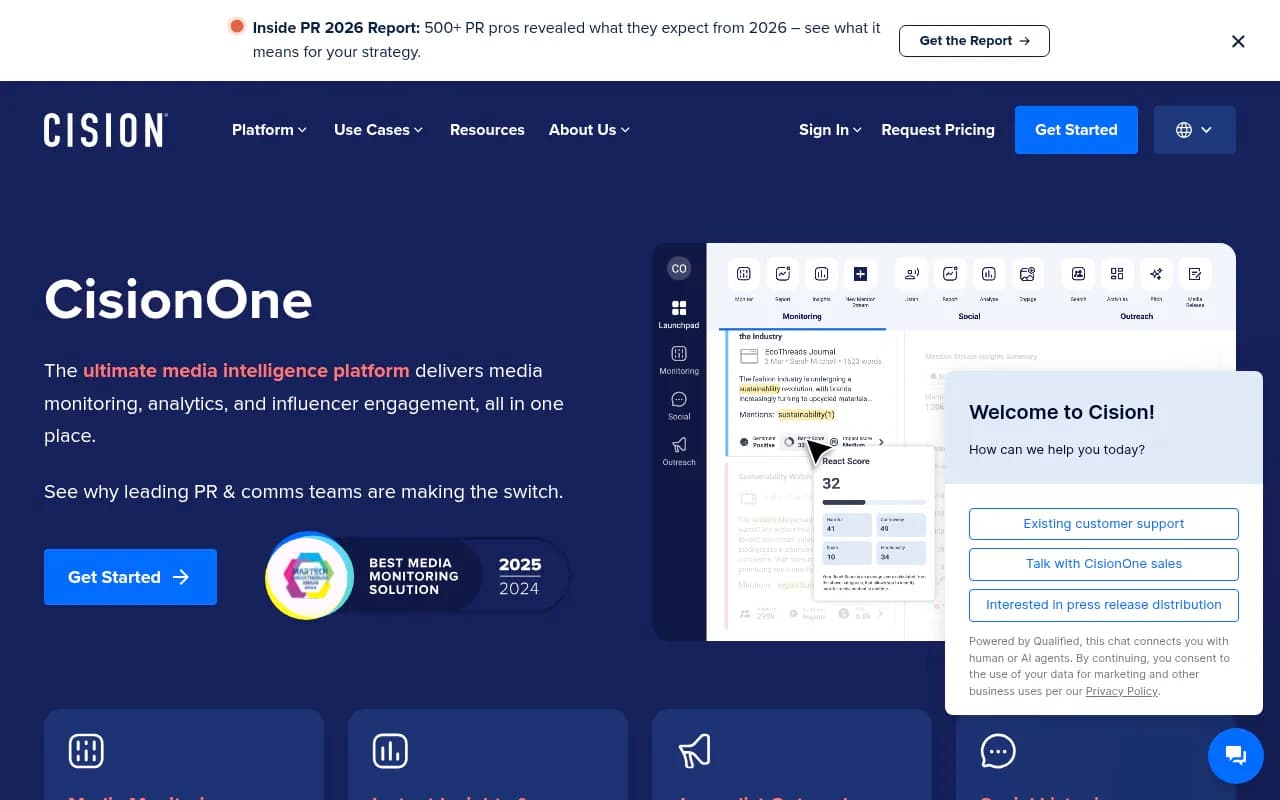
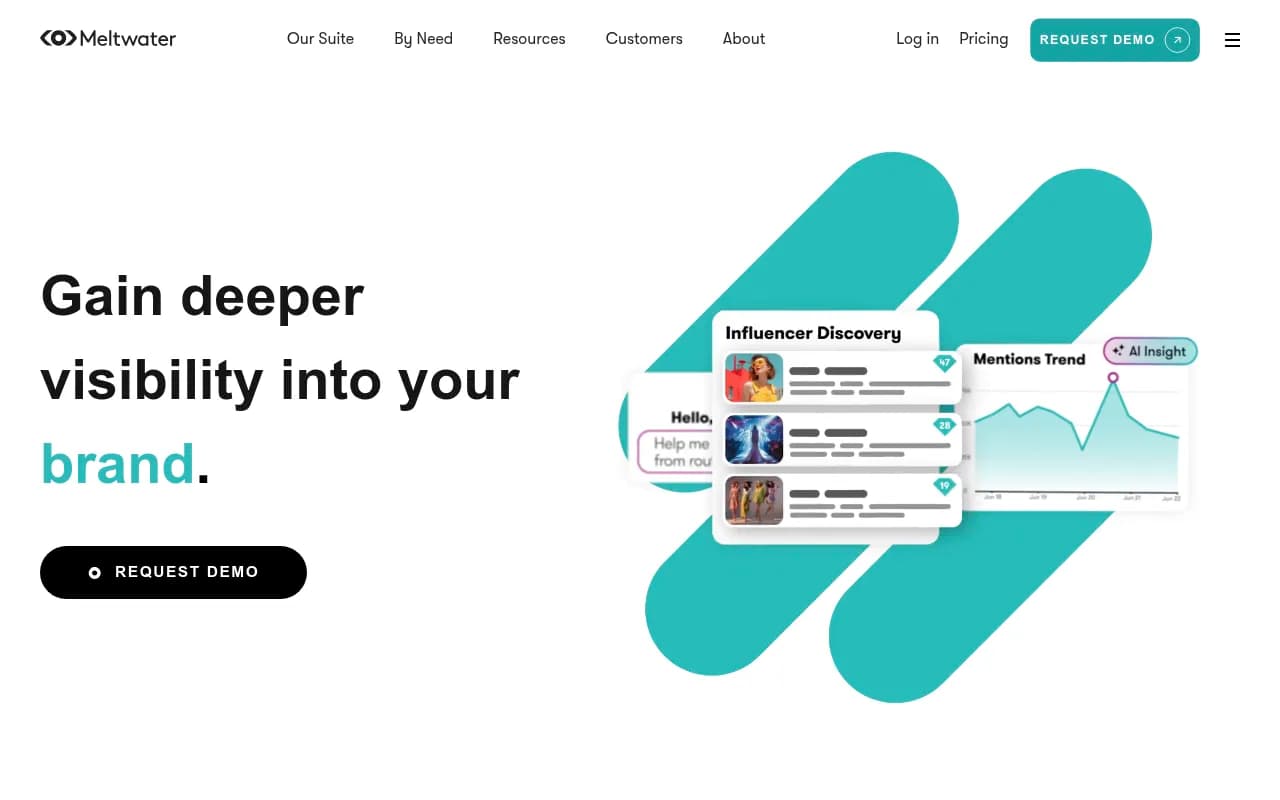
For enterprise PR teams, CisionOne and Meltwater handle media databases, distribution and monitoring. They were built for traditional PR and do not tell you whether an AI engine cited the result, so they are a layer-2 tool at best.
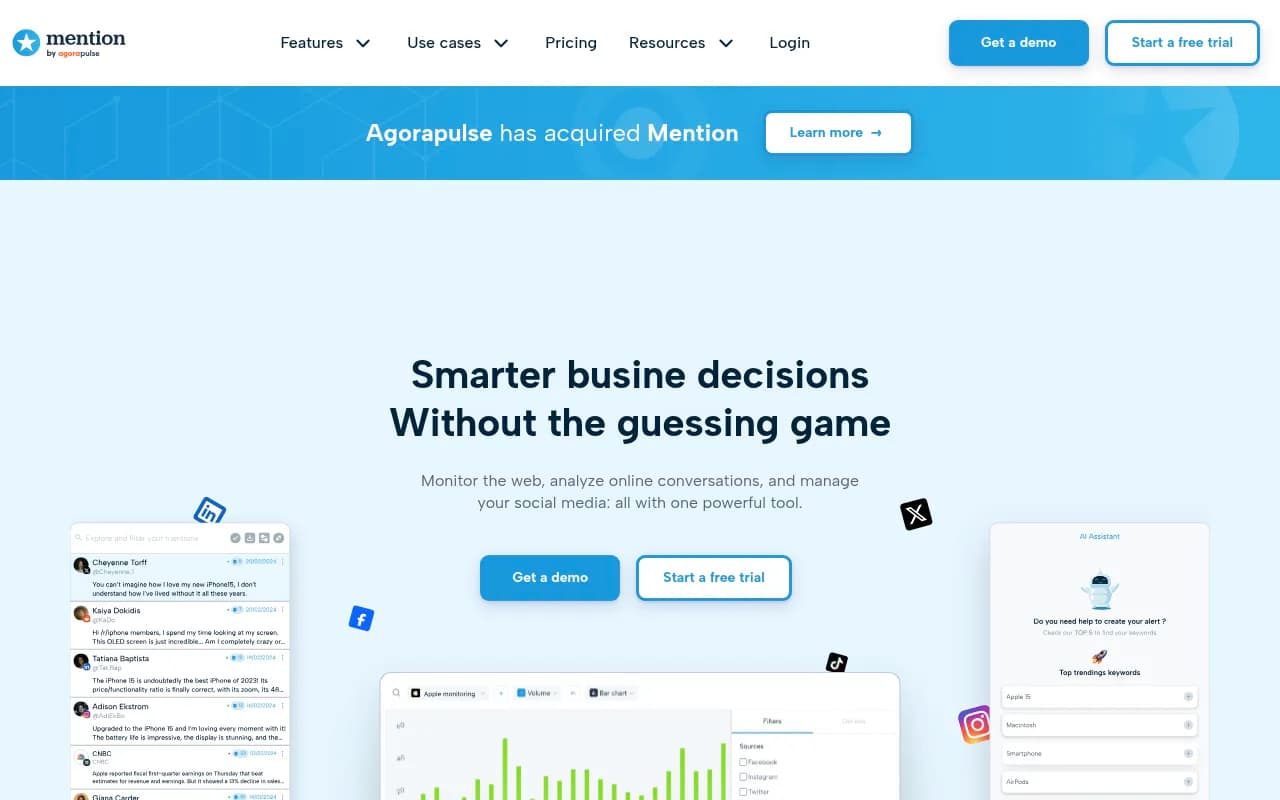
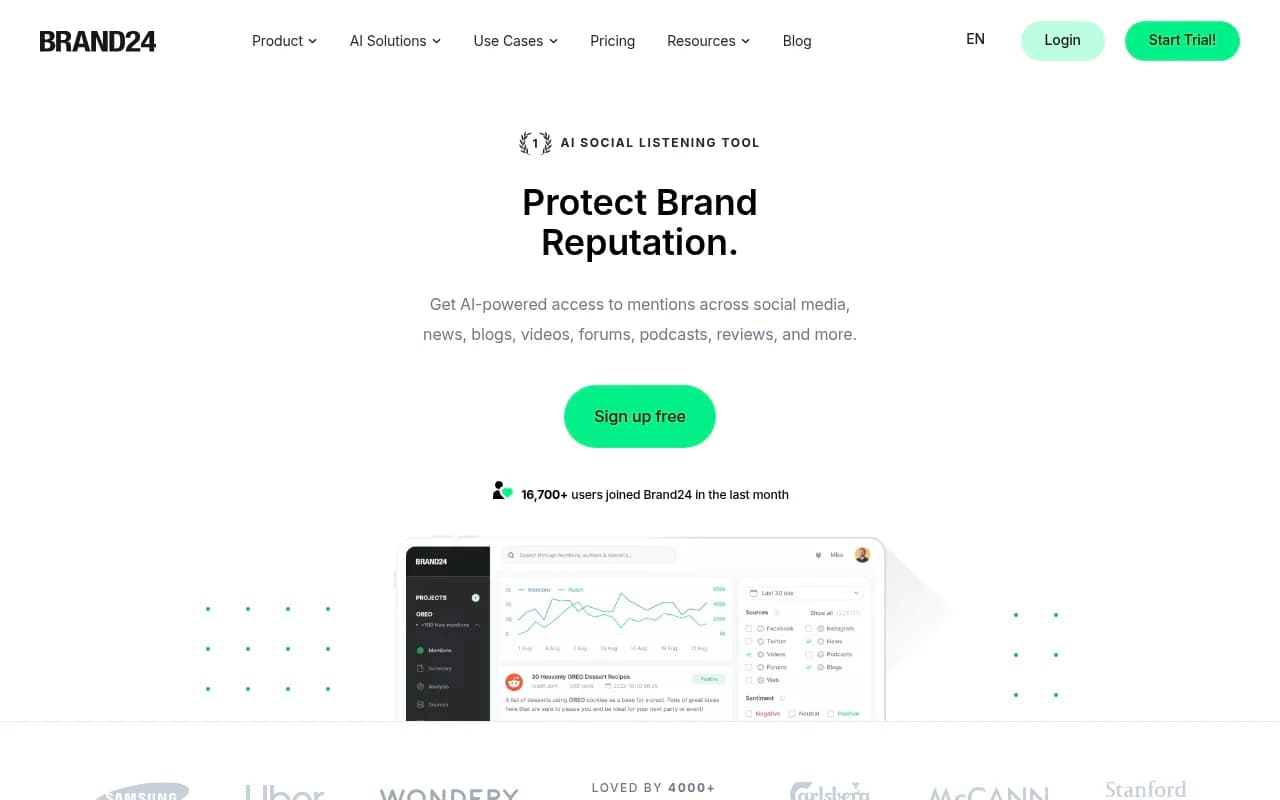
For lighter mention tracking, Mention and Brand24 cover brand monitoring across the web, which is a cheap way to catch unlinked mentions.
Agencies, if you would rather not run it yourself
OutreachBloom's list ranks seven agencies: OutreachBloom, Fractl (data journalism), Green Flag Digital (VC- and PE-backed B2B software), Siege Media, Reboot Online, Digitaloft and Omniscient Digital. Only OutreachBloom and Omniscient showed starting prices in the material I reviewed ($4,900/mo for OutreachBloom's AI SEO service; Omniscient's was cut off in my source). Green Flag Digital sells digital PR for AI search priced in points, similar to buying AI tokens, with monthly visibility into spend. If you are weighing outside help for the broader SEO and GEO program, 1001 SEO Media is the agency behind this directory and combines digital PR with technical and AI search work.
Tool comparison at a glance
| Tool | Primary job | Reported starting price | Tells you if AI cited the placement? |
|---|---|---|---|
| Promptwatch | Targets and measurement | $95/mo | Yes |
| SearchEye | Publisher placements | $49/mo plus publisher spend | Verify |
| Medialyst | Media lists, monitoring, API | $149/mo | Verify |
| Respona | Outreach and link building | Check vendor | Built-in mention tracker |
| CrowdReply | Reddit-style citation outreach | Check vendor | No |
| Cision / Meltwater | Enterprise PR suites | Custom | No |
| Mention / Brand24 | Mention monitoring | Check vendor | No |
How to run your own tested campaign
Since independent results are thin, generate your own. A simple design that works for a single brand:
- Pick 30-50 prompts your buyers actually ask. Include commercial ones like "best X for Y."
- Record baseline visibility, share of voice and which URLs get cited. Do this for at least two weeks so you have a stable number.
- Pull the cited roundups, comparisons and listicles. Filter to DR 40-90 sites where the pitch is realistic.
- Run outreach for 8-10 placements. Prioritize roundups and comparisons over news. Give editors something citable, such as original data, since Green Flag Digital's observation that models like listicles and data points matches what the citation data shows.
- Track each placement URL individually. Note first crawl, first citation and whether it persists past day 30 and day 60.
- Compare against a control set of prompts where you did no outreach, so you can separate your effect from model drift.
One caution on step 6. Citation behavior moves on its own. ChatGPT began using the site: operator at scale on August 8, 2026, per Promptwatch's site: operator report, and that kind of shift can change visibility with no action from you. A control group is the only way to tell.
Common mistakes
- Chasing the highest DR available. For ChatGPT, DR 91+ sites earn about 3% of citations.
- Reporting links instead of citations. A link can exist while the page is never cited. Separate links, AI citations and business results, as Percepture's source strategy guide also argues.
- Treating press hits as durable. Plan refresh cycles for news, and invest in roundups and comparisons that persist.
- Ignoring your own site. Placements point readers back to you, and your owned pages still need to be crawlable. State your facts cleanly on-site, then earn the third-party mentions that carry them into answers.
- Trusting vendor case studies as proof. Use them as hypotheses.
Verdict
If you buy one thing, buy visibility into which pages AI cites and whether your placements join them. Without that, outreach results are guesswork, and any tool, including the ones above, looks like it works. Then add an outreach layer that fits how you work: SearchEye or Respona if you run campaigns in-house, an agency if you want it done for you. Aim at DR 31-75 roundups and comparisons, give editors real data, and judge the whole thing on 60-day citation persistence rather than the number of links. For more options in the tracking category, browse the AI rank tracking tools directory.