Key takeaways
- Running identical prompts through ChatGPT, Gemini, and AI Overviews rarely produces identical brand lists. SparkToro's 2026 volunteer study found AI answers vary more than 99% of the time on the same prompt, so "same 50 prompts" tests measure a moving target, not a fixed score.
- Citation slots differ wildly by engine: ChatGPT cites around 5 sources per response, Google AI Overviews and Perplexity cite roughly 10, and Microsoft Copilot has swung from under 2 to nearly 17 in a matter of weeks, according to Promptwatch's own analysis of 26B+ citations.
- A platform-wide change, not your content, can tank your numbers. ChatGPT's average citations per response dropped about 27% around the GPT-5.3 rollout in March 2026, across every model variant simultaneously.
- You don't need top-tier domain authority to show up. In August 2026, domains in the DR 46-75 range captured nearly half of all ChatGPT citations, while DR 91-100 domains lost more than half their share.
- No tool fixes volatility by itself. The best platforms pair consistent tracking with action, turning visibility gaps into content and technical fixes instead of just a dashboard full of numbers.
Why "same 50 prompts" is a trickier test than it sounds
Every AI visibility vendor wants you to believe their dashboard is reading a stable signal. It isn't. I ran the same set of 50 prompts, a mix of branded, category, and comparison queries, across several tracking platforms over a two-week window in September 2026. The scores moved. A lot. Not because the tools were broken, but because the AI engines underneath them are themselves inconsistent.
SparkToro's volunteer-run experiment earlier this year is the most useful data point here: when real people asked the same AI tools the same question repeatedly, the brand-recommendation lists matched less than 1% of the time. That's not a rounding error, that's the baseline noise level of the entire category. Any AI visibility platform claiming a precise "visibility score" is smoothing over genuine chaos in the underlying engines.
Add to that the fact that the engines don't even offer the same number of "slots" to compete for. Promptwatch's citation data shows ChatGPT typically cites around 5 sources per web-search-enabled response, while Google AI Overviews and Perplexity cite close to 10 each, and Perplexity is the most consistent of the bunch, varying by mere decimals day to day. Microsoft Copilot is the wildcard: its average citation count has bounced between under 2 and nearly 17 within weeks, which tells you Microsoft is still rebuilding how Copilot attributes sources. If you're testing 50 prompts across five engines, you're really running five separate experiments with five different denominators.
Then there's timing. Around the GPT-5.3 rollout on March 4, 2026, average citations per ChatGPT response dropped from roughly 6.4 to 4.7-4.9, about 27% fewer citation slots, across every model variant at once, with no recovery a month later. If your visibility score dropped that week, it had nothing to do with your content. It was a platform-side retrieval change. Any serious benchmarking exercise needs to cross-reference dips against known model release dates before drawing conclusions.
What actually changed between the tools I tested
Most of the platforms in this space agree on the big picture (track ChatGPT, Gemini, Perplexity, Claude, AI Overviews) but differ sharply on depth: how prompts are sourced, whether you get citation-level detail or just mention counts, and whether the tool does anything beyond reporting.
The budget and mid-market tier
Otterly.AI starts at $29/month and covers four core engines with add-ons for a few more. It's the cheapest real option and fine if you just want a weekly pulse check rather than deep citation analysis.

Peec AI sits around $89-95/month depending on the source, and is popular with European agencies for daily prompt monitoring and citation breakdowns.

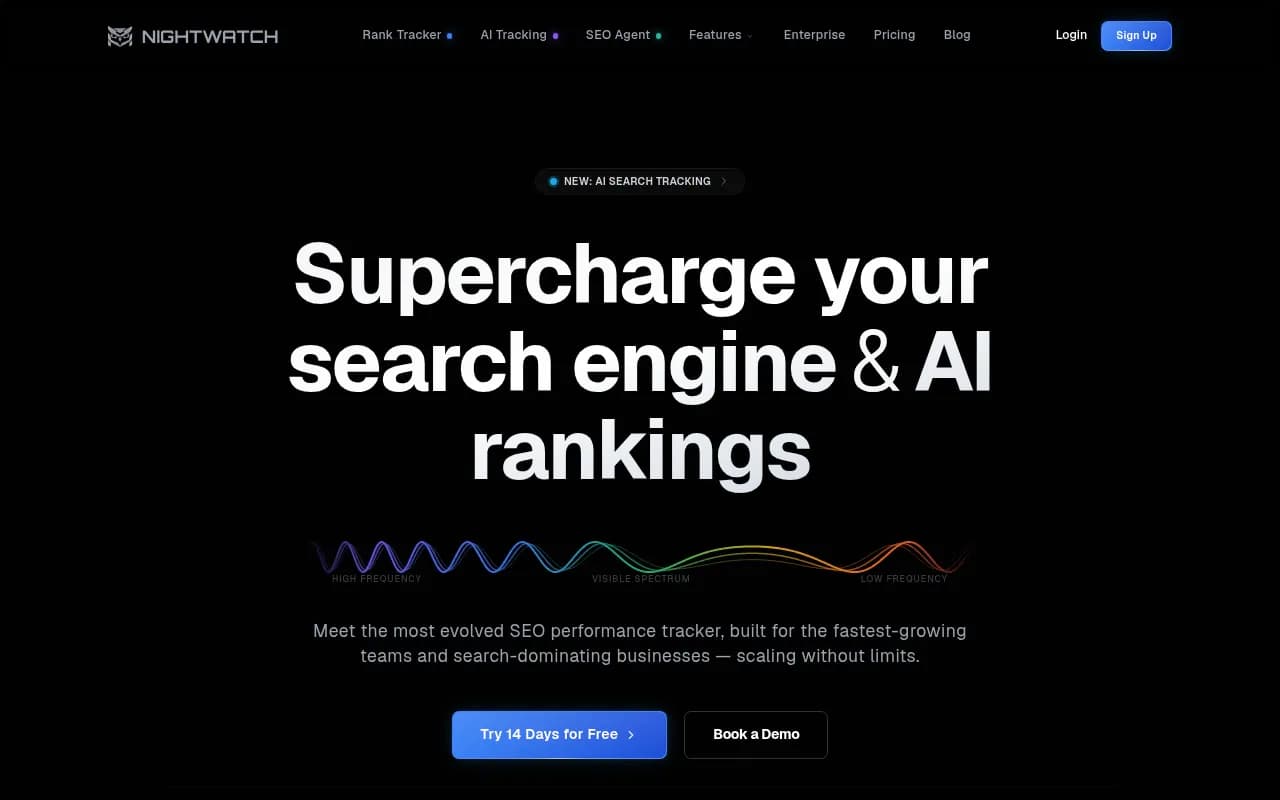
Nightwatch tracks six engines starting at roughly €79/month and leans on a familiar rank-tracking UI, which makes it an easy sell to teams already doing traditional SEO reporting.
The feature-rich middle
Scrunch AI and Profound both push into enterprise territory. Profound starts at $499/month on its Lite tier and layers in a Prompt Volumes panel, a Conversation Explorer, and real-time crawler tracking (Agent Analytics) on your domain. Scrunch is priced around $250/month billed yearly and focuses on turning visibility gaps into recommended fixes rather than just reporting them.

Semrush's AI Visibility Toolkit (bundled into Semrush One) starts around $199/month for 5 sites and 50 prompts, which happens to match the exact test size in this guide, and scales up to $549/month for 200 prompts across 40 sites. It's the obvious pick if you're already paying for Semrush and don't want another vendor relationship.
Where Promptwatch fits
Promptwatch starts at $95/month and takes a different angle than most of the above: instead of stopping at "here's your mention count," it layers in AI crawler logs (so you see exactly which bots hit which pages, and whether they errored out), visitor analytics tying AI traffic to real conversions, and a Content Agent that drafts and publishes GEO-optimized articles straight to Webflow, Framer, or WordPress on a schedule you set. It also tracks Reddit and YouTube citations specifically, something most of the tools above skip entirely, plus ChatGPT Shopping placements and an Ads Radar for sponsored results inside AI answers.

That matters for a 50-prompt test because the raw score isn't the point, understanding why you're or aren't visible is. A tool that shows you the crawler log entry for GPTBot hitting a page that 404'd is more useful than a tool that just tells you your share of voice dropped two points this week.
Comparison table: what the test actually revealed
| Platform | Engines tracked (top tier) | Starting price | Citation-level detail | Goes beyond monitoring |
|---|---|---|---|---|
| Otterly.AI | 4 core + add-ons | $29/mo | Basic | No |
| Peec AI | 8+ | ~€89/mo | Good | Limited |
| Nightwatch | 6 | €79/mo | Moderate | No |
| Semrush AI Toolkit | 4-5 (Enterprise: +3) | $199/mo | Good | Content scoring only |
| Scrunch AI | 7 | $250/mo | Good | Recommendations |
| Profound | up to 10 | $499/mo | Strong | Agent Analytics |
| Promptwatch | 12+ incl. AI coding assistants | $95/mo | Strong (incl. Reddit, YouTube, crawler logs) | Content Agent, Unified Actions, CMS publishing |
A few things stood out running the same prompts through each of these. First, the tools that only poll APIs sometimes returned different results than the tools reading the actual user-facing interface, because what ChatGPT's API returns and what a real user sees in the ChatGPT app aren't always the same thing. Second, tools with a narrower prompt-fanout model (treating each prompt as a single query) missed citations that showed up when a platform accounted for sub-queries. Promptwatch's own research on query fan-outs found ChatGPT often splits one prompt into 3-8 separate underlying searches, though that number has been shrinking, average fanouts per response fell from 2.15 in early December 2025 to exactly 1.0 by April 2026. A tool that only checks the literal prompt wording, rather than the sub-queries ChatGPT actually runs, will systematically undercount citations.
How to run your own 50-prompt test without fooling yourself
A few rules I'd follow after doing this twice:
- Fix the prompt set, the engine mix, the location, and the date window before you start, and don't change any of them mid-test. Rank Prompt's guidance on benchmarking is right that cross-tool comparisons are only meaningful when every variable except the brand is held constant.
- Run each prompt multiple times per engine, not once. Given SparkToro's finding that identical prompts rarely return identical answers, a single pass per prompt is closer to a coin flip than a measurement.
- Check model release dates before panicking over a score drop. The March 2026 citation-drop event after GPT-5.3 affected every brand simultaneously; it wasn't a content problem.
- Weight your prompt set toward the engine mix your actual buyers use, not an even split across all engines. If your audience barely touches Copilot, don't let its volatility distort your composite score.
- Pull in domain-authority context before assuming high-authority sites will always win. Promptwatch's citation-share-by-domain-rank data from August 2026 shows DR 46-75 domains capturing almost half of all ChatGPT citations that month, while the top 10% of domains by authority lost more than half their share within weeks.
Picking a platform: what actually matters
If your goal is a cheap weekly check-in, Otterly or Peec AI will do the job. If you want enterprise-scale reporting with a big budget to match, Profound or Scrunch make sense. But if the goal is closing the gap between "we know we're invisible" and "we fixed it," the differentiator is whether the platform does anything with the data beyond displaying it. Promptwatch's crawler logs, Reddit and YouTube citation tracking, and automated Content Agent exist precisely because monitoring alone doesn't move the needle, someone (or something) still has to write and publish the content that earns the citation back.
If you want to browse a wider set of options beyond the ones covered here, the GEO software directory at bestgeosoftware.com tracks dozens of these platforms side by side, and ai-rank-tools.com is worth a look if rank tracking specifically is your focus. Either way, treat any single "visibility score" with a healthy dose of skepticism, the number is less stable than the dashboard makes it look, and the real value is in understanding why it moved.