Key takeaways
- Ads in AI answers and organic AI answers are separate systems. Google states that paid advertising does not influence the organic responses its AI generates, and the reverse is true too.
- SE Ranking's AI Mode study found that about 88% of advertisers weren't cited for the keyword they bid on, and about 85% didn't rank organically for it.
- Promptwatch Data shows ads in an average of 20.1% of ChatGPT search responses between May 20 and Aug 17, 2026, and above 30% since July 1.
- The practical audit is simple: list your ad claims, collect the claims AI makes about you organically, and flag every mismatch.
- Fixing a mismatch means editing the pages AI reads, not buying more ads.
Why this comparison matters now
For years, an ad and an organic result lived on different parts of the page. Your landing page promised "setup in 5 minutes" and the search results said whatever they said. Nobody was synthesizing both into one paragraph.
AI answers changed that. A user asks ChatGPT or Google AI Mode a commercial question and gets a written answer with a sponsored unit sitting inside or beside it. The answer describes your category and probably names you or a competitor. The ad makes a pitch. If the two disagree, the reader sees both in the same view.
That is the gap this guide is about. Your ad copy says one thing. The organic narrative AI has assembled from reviews, docs, forums and your own pages may say something else. I think most teams haven't looked at the two side by side, because paid and organic usually sit in different teams with different dashboards.
How ads and organic answers are separated
Start with how the platforms describe themselves. Google's help page on ads in AI-powered experiences is direct about it.
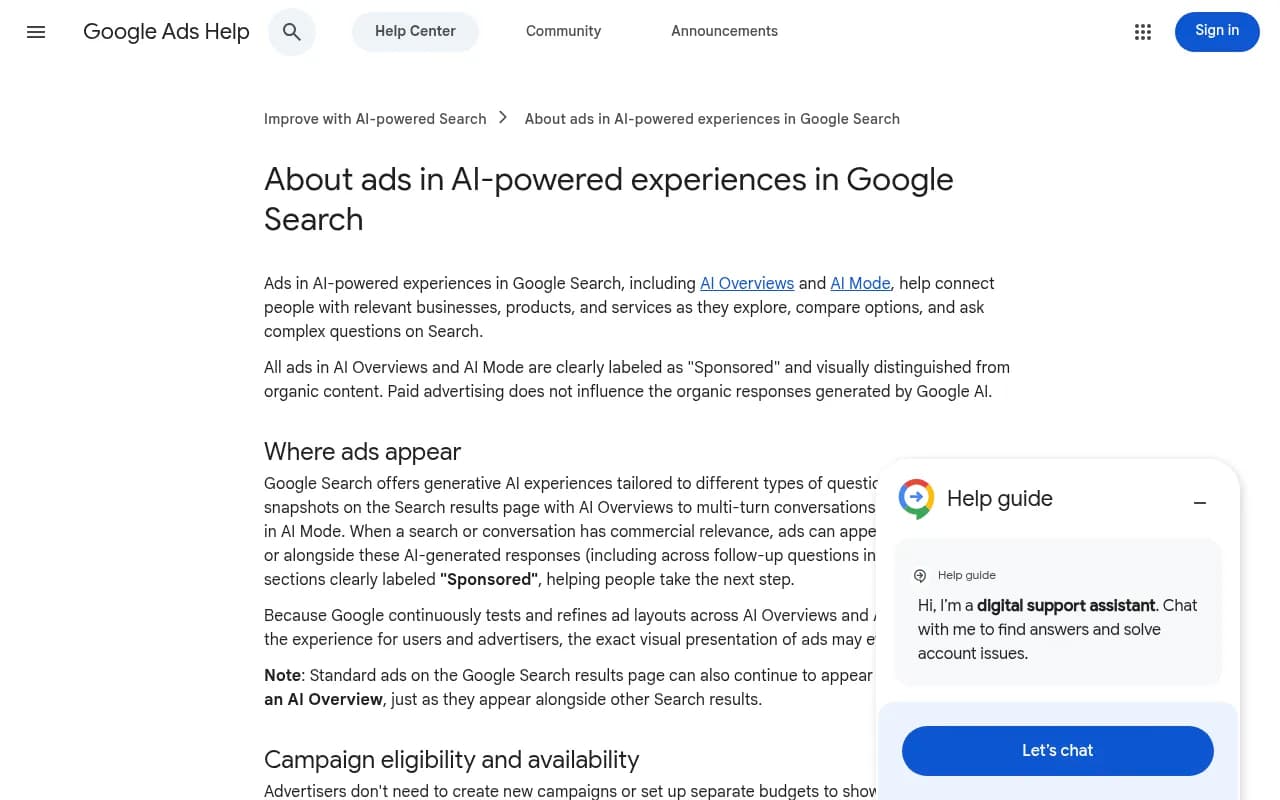
The key points from that page:
- All ads in AI Overviews and AI Mode are labeled "Sponsored" and visually distinguished from organic content.
- Buying ads doesn't influence organic AI answers, and being cited organically doesn't affect your ad auction eligibility.
- Existing Search, Shopping and Performance Max campaigns are automatically eligible. Ads match either the user's query directly or the query plus the AI response.
That last point matters for this audit. When Google matches an ad contextually to the AI response, the organic answer is literally an input to which ad shows. So the organic narrative isn't a parallel universe. It is the context your ad lands in.
What the data says about overlap
SE Ranking's study of AI Mode ads looked at whether advertisers also showed up in the answer itself. The result was lopsided:
- For about 88% of ad keywords, the advertiser's page or domain wasn't in the source list AI Mode generated.
- For about 85% of ad keywords, the advertiser wasn't in organic results at all.
- Only 2.32% of advertised URLs also ranked organically for the same keyword.
- Compared with non-advertisers of similar domain strength, advertisers were cited no more often.
- About 7 in 10 ad results sat next to a competitor.
The takeaway from the study: paying buys the slot, nothing more. Being cited is an authority-and-content play. I'd treat the SE Ranking numbers as one study's findings rather than settled fact, but they match what Google's documentation says.
ChatGPT is moving the same way
ChatGPT served no ads until late May 2026. According to Promptwatch Data on ChatGPT ads over time, ads appeared in 1.69% of eligible responses on May 27, crossed 30% on July 1 and stayed there, peaking at 43.9% in a day. Across the 90 days to Aug 17, the average was 20.1%. The base is ChatGPT responses that ran a web search, returned at least one citation and completed ad extraction.
By prompt type, 73.3% of ad-bearing responses came from organic prompts, 18.0% from brand-specific prompts and 8.6% from competitor-comparison prompts. The report is careful to say this is a volume mix, not the likelihood that each prompt type triggers an ad.
So the surface you're auditing is no longer rare. One in three responses on some days is a lot of exposure for a claim that might contradict what the answer says.
The mindset: authority drives visibility, ads ride on top
Debra Aho Williamson's six-part series on AI media budgets makes a point I agree with. In AI discovery, four components make up a flywheel: authority, organic visibility, paid media and measurement. Authority drives visibility.
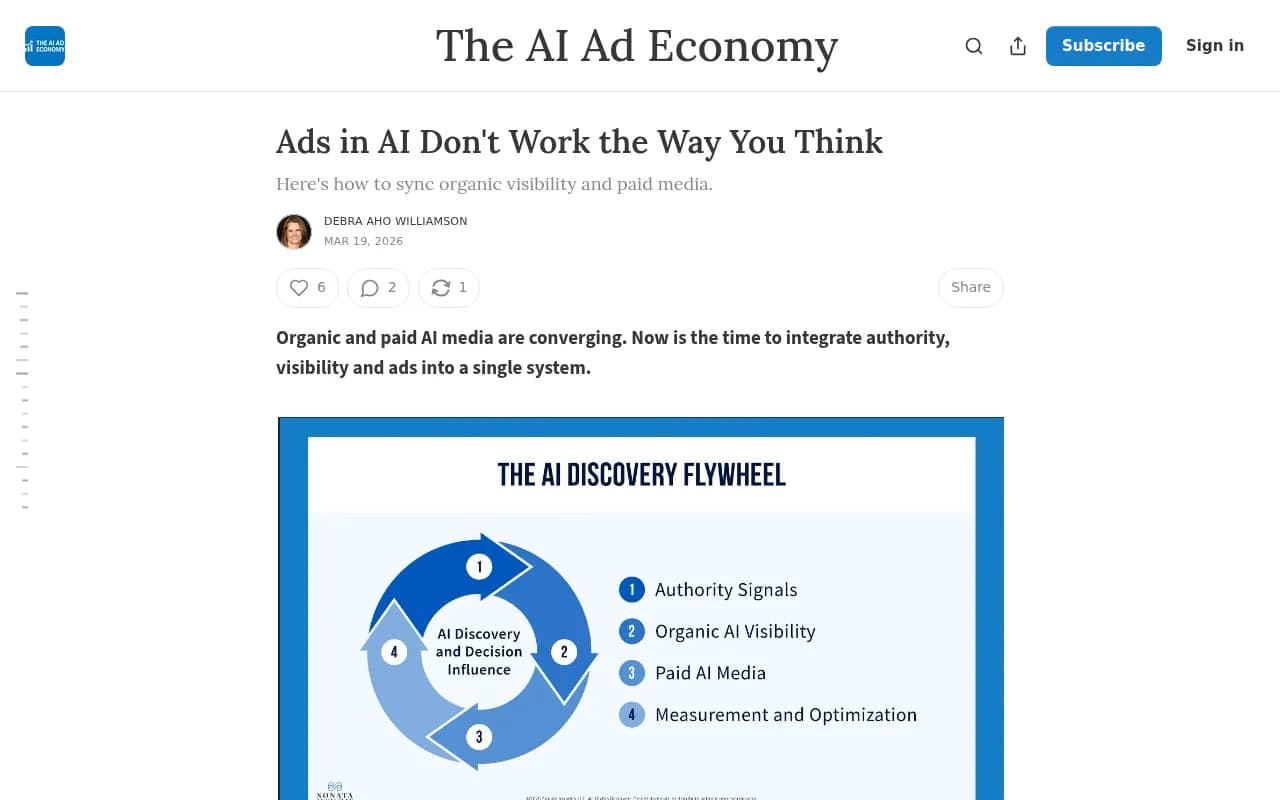
New media environments usually start with an organic presence and then layer paid on top. If your organic narrative is weak or wrong, ads in AI inherit that problem. The ad can win the slot and still lose the reader, because the paragraph next to it tells a different story.
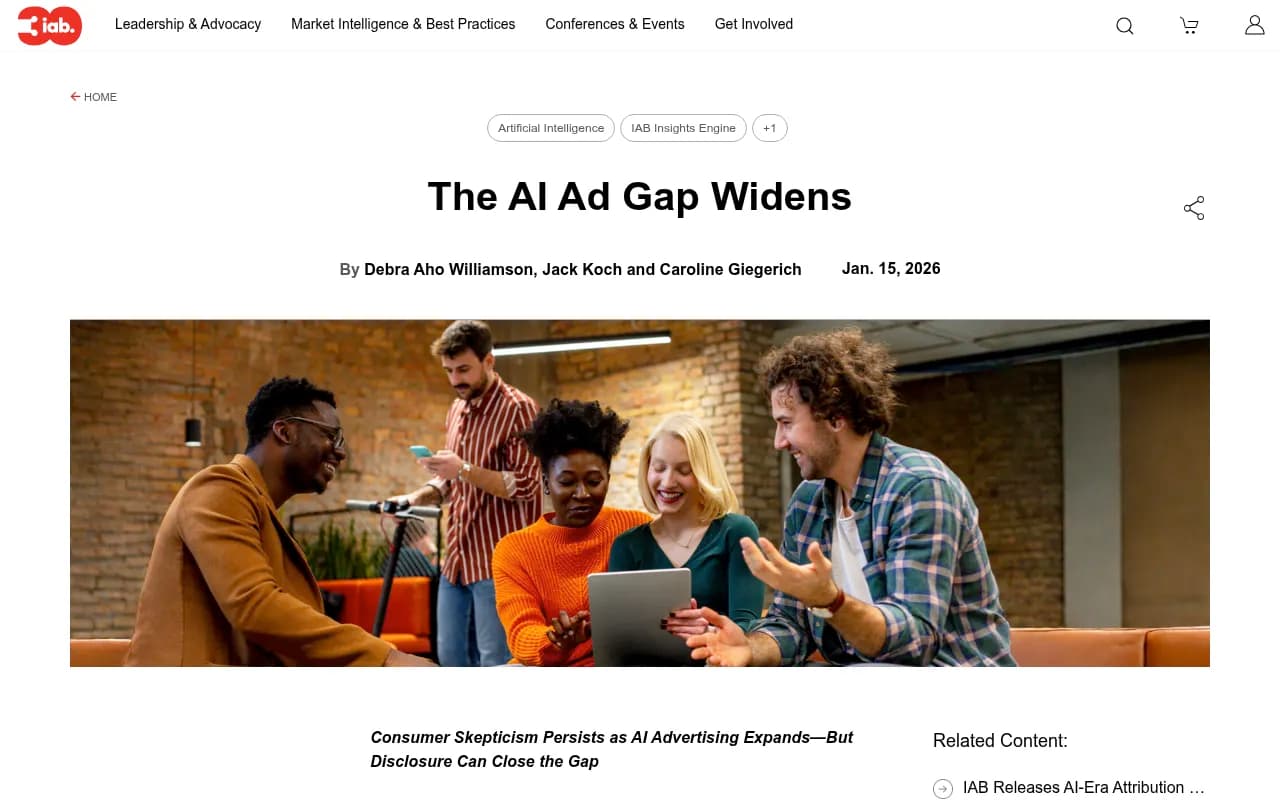
There is a trust angle too. IAB's January 2026 report with Sonata Insights surveyed more than 500 Gen Z and Millennial consumers and 100 ad executives. It found 83% of ad executives say their company has deployed AI in the creative process, up from 60% in the 2024 study, and a perception gap between advertisers and consumers persists. Many consumers said knowing an ad used AI would raise their purchase likelihood, yet fewer than half of advertisers always disclose. A separate Fast Company-shared study reports trust in an ad falling from 48% to 13% once people learn it was made entirely by AI. Different studies, different methods, but the direction is the same: claims that don't hold up cost you more than they used to.
The audit: ad claims versus organic narrative
Here is a workflow you can run in an afternoon with a spreadsheet, then automate later.
Step 1: Inventory your ad claims
Pull every claim from active ads and their landing pages. Include headlines, descriptions, shopping feed attributes, and any promise on the landing page the ad points to. Tag each claim by theme:
- Pricing and discounts ("from $29", "free shipping")
- Features and specs
- Speed and ease ("live in minutes")
- Quality and reputation ("rated #1", "trusted by thousands")
- Audience fit ("built for small teams")
Also check each claim against verified information. Product features, prices, discounts and testimonials should all be traceable to a source. This is the same hygiene advice used for spotting fake or AI-generated ads, applied to your own copy.
Step 2: Build the prompt set that matches the ad keywords
Take the keywords you bid on and turn them into the questions people actually ask an AI. "Best project management tool for agencies" instead of "project management software agencies". Include three types:
- Organic category prompts (these carried most ad-bearing volume in the ChatGPT data)
- Brand-specific prompts ("is Brand X good for...")
- Competitor comparisons
Run them across ChatGPT, Google AI Overviews, AI Mode and Perplexity at minimum. Use the real interfaces, since API outputs can differ from what users see. Repeat across several days. The Promptwatch report on ad rates warns that a single run can land on an outlier day.
Step 3: Extract the organic claims
For each response, write down the claims AI makes about you and your competitors. "Affordable for small teams." "Limited integrations." "Customer support is slow." Group repeats and note which model said what. This is the brand narrative.
Doing this by hand works for 20 prompts and falls apart at 200. Platforms that pull claims out of tracked responses and group them by theme do this at scale. Promptwatch has a Brand Narrative feature that does exactly that, filing claims under themes like Pricing, Features, Support and Reputation with a score per theme you can compare against competitors.

Step 4: Capture the ads that show up
On the same prompts, record which advertisers appear, their copy and their landing pages. The ad rate tells you how often a slot appears. The ad details tell you who wins it. Promptwatch's Ads Radar tracks sponsored placements on your prompts, by ad or by prompt, which is useful for seeing the competitor sitting next to you. Ads Radar is on the Business plan, every agency plan and Enterprise; check pricing for current details.
Step 5: Score each mismatch
Put ad claims in one column and organic narrative in the next. Then mark each row.
| Ad claim | What AI says organically | Match? | Likely cause | Action |
|---|---|---|---|---|
| "Starts at $29/mo" | "Pricing starts around $49" | No | Old pricing page or third-party listing | Update pricing page, fix listings |
| "Built for small teams" | "Better suited to enterprise" | No | Case studies skew large | Publish SMB content |
| "Live in 5 minutes" | Not mentioned | Gap | No supporting doc | Add setup doc and FAQ |
| "Top-rated support" | "Support is responsive" | Yes | Reviews align | Keep collecting reviews |
Three outcomes come up again and again. A direct contradiction. A gap where AI says nothing about a claim you push hard. And a confirmation. Contradictions are the urgent ones.
Diagnosing why the narrative differs
Once you know where the mismatch is, find the source. AI builds answers from pages it can read and chooses to cite.
Promptwatch Data on ChatGPT citation share by content type (Sep 28 to Oct 4, 2026) helps here. Product pages were 22.4% of ChatGPT citations and landing pages 16.8%, so about 39% of citations are pages describing what a company sells. For commercial prompts, product pages, landing pages, listicles and comparisons make up almost 70% of citations. For branded prompts, reviews made up 5.6%, more than three times their share across all prompts.
That tells you where to look:
- If AI states the wrong price or feature, check your own product and landing pages first, since ChatGPT quotes them directly.
- If the claim comes from a listicle or comparison, you need to find that page and either get it corrected or publish something stronger.
- If the claim is about reputation, look at reviews on trusted sites in your category.
- If nothing is said about a claim, you probably have no page that states it plainly.
Freshness matters too. In Promptwatch's content half-life data, news pages lost half their citations in about five weeks, while landing pages and docs kept most of theirs for months. An old pricing announcement can fade, but a stale landing page can mislead for a long time.
Also rule out access problems. If AI crawlers can't read the page that holds your correct claim, it can't cite it. IP-verified AI crawler logs separate a crawl failure from a content problem. The free Agentic Readiness Check is a quick way to see which AI crawlers can reach your site.
Fixing the gap
When the ad is wrong
Sometimes the organic answer is right and your ad is overselling. Change the ad. This is the cheapest fix and the one teams resist most. "Best in class" copy that AI contradicts a line later is worse than no claim.
When the organic narrative is wrong
Fix the source. In rough order of effort:
- Correct your product, pricing and landing pages so specs and prices are complete and factual.
- Add a plain-language FAQ answering what people ask about you: pricing, features, who it's for.
- Update or retire old pages that state outdated facts.
- Collect reviews on trusted sites in your category.
- Publish content aimed at the prompts where you're absent, then re-run the prompt set.
For step 5, the Content Agent in Promptwatch can plan, write and publish against visibility gaps to WordPress, Webflow or Framer, and then track whether the page gets crawled and cited. Its Fact Check feature lets you mark a claim inaccurate and find which pages on your site state it. Both sit on the Business plan and above.
When AI is silent
If AI never mentions a claim your ad leans on, don't assume the ad is fine. Silence means the claim isn't part of your organic narrative, so any reader who cross-checks won't find support. Publish a page that backs it up, with evidence.
Keep paid and organic in one loop
SE Ranking's finding that paid and organic don't move each other is, in their words, freeing. You can't buy your way into the answer, and you don't need to rank organically to run ads. But the flip side is that someone has to own the whole picture. Assign one person or a shared review to compare both views monthly.
Tools that help with each part of the audit
No single tool does everything here, and several in the catalog are monitoring-only. Match the tool to the job.
| Job | What to look for | Example tools |
|---|---|---|
| Extract organic claims and sentiment | Claim-level narrative, themes, competitor comparison | Promptwatch, Profound |
| Track ads in AI answers | Advertiser, copy and landing page per prompt | Promptwatch Ads Radar, KIME |
| Track mentions and citations | Per-prompt visibility across models | Peec AI, Otterly.AI, Scrunch |
| Fix pages and publish | Content gap analysis, CMS publishing | Promptwatch, AirOps |
| Check traditional rankings against ads | Organic rank for bid keywords | SE Ranking, Semrush |
A few notes on the options:

Profound is a strong monitoring platform for brand visibility across AI engines, though it sits at a higher price point and is monitoring-led. See Promptwatch vs Profound for a side-by-side.

Peec AI is a prompt tracker with multi-language support, useful if you only need to see mentions across countries.

Otterly.AI offers affordable monitoring. It won't give you crawler logs or content generation.
SE Ranking is worth having for the organic side of this comparison, since it can show whether you rank for the keywords you bid on.
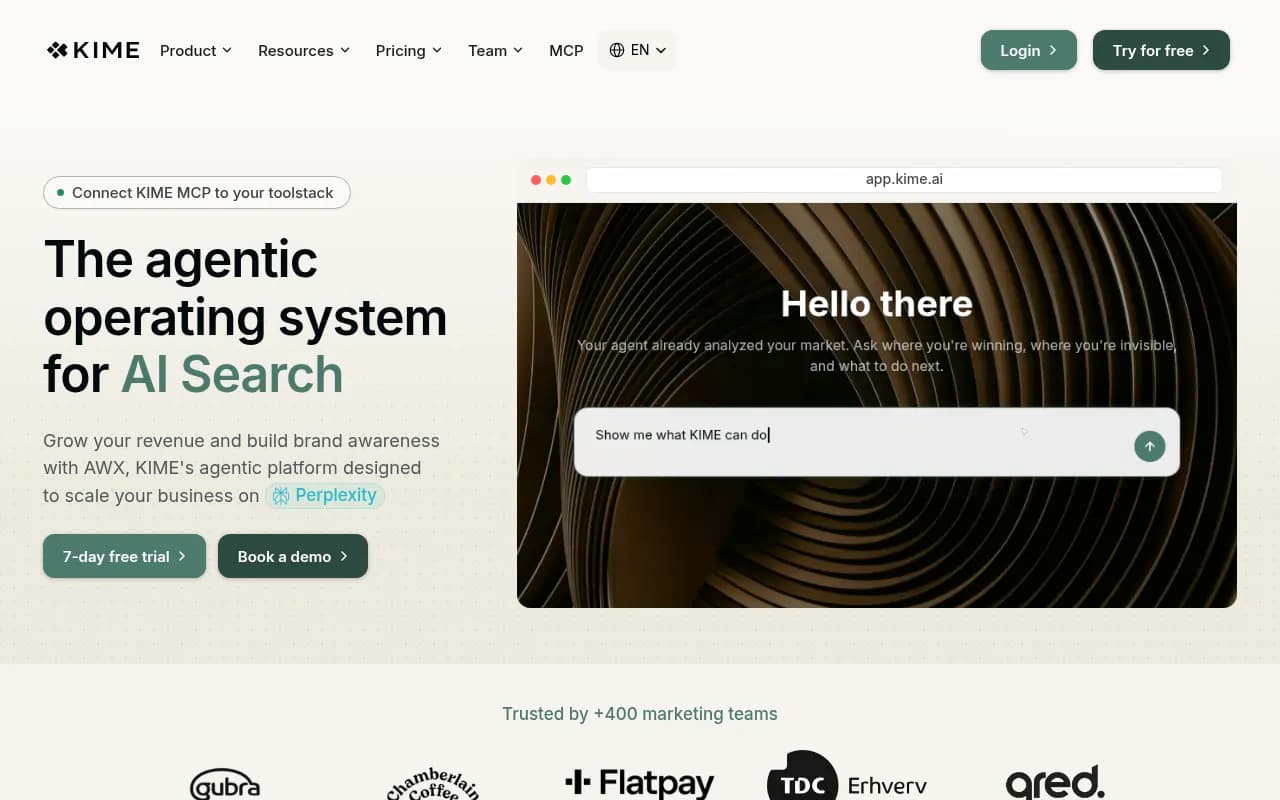
KIME tracks visibility across nine engines with ad insights, which is relevant if ads are your main concern.
For a wider view of options, the GEO software directory at bestgeosoftware.com lists many more.
A monthly routine that doesn't take over your week
- Week 1: refresh the claim inventory when campaigns or pricing change.
- Week 2: run the prompt set across models and countries. Use multiple days.
- Week 3: update the mismatch table, assign fixes.
- Week 4: publish page fixes, adjust ad copy, then re-check.
Track three numbers over time: the share of ad claims confirmed by organic answers, the number of direct contradictions, and your self-citation rate on the prompts where you advertise. If contradictions fall and confirmation rises, the work is paying off.
Disclosure is part of the claim
One more item belongs on the list. If you use AI to make creative, the IAB data suggests consumers respond better to disclosure than advertisers expect, and consistent disclosure matters most for AI video and images. Treat "was this made with AI" as another claim the audience may check. Check what your ads say about it, and make sure your site is consistent.
What to do this week
- Export your top 20 ad headlines and landing page promises.
- Write 30 prompts that match the keywords behind them.
- Run them in ChatGPT and Google AI Mode on three different days.
- Fill in the mismatch table.
- Fix the three worst contradictions first, starting with your own pages.
If you'd rather automate steps 2 to 4, Promptwatch's free AI visibility report gives a quick read on how ChatGPT, Gemini and Perplexity describe you, and the 7-day trial covers the narrative and ad tracking. If you need hands-on help with the SEO and GEO side, 1001 SEO Media runs this kind of audit for clients.
Ads can win the slot. Only the organic narrative decides whether the reader believes what the ad said.