Key Takeaways
- Promptwatch - Best for brands that need AI visibility tracking alongside traditional attribution. Unique in monitoring how your brand appears in ChatGPT, Claude, and Perplexity -- a channel most attribution tools completely ignore.
- Triple Whale - Best all-in-one platform for ecommerce brands running complex multi-channel campaigns. Combines attribution, analytics, AI insights, and activation tools in one interface.
- Hyros - Best for info products, SaaS, and call-based businesses with long customer journeys. Tracks conversions that standard pixels miss and feeds superior data back to ad platforms.
- RedTrack - Best for performance marketers dealing with iOS14 and ad blocker problems. Server-side tracking captures 100% of conversions and syncs enriched data via CAPI.
- Northbeam - Best for DTC brands and agencies optimizing large ad budgets ($100k+/month). Combines multi-touch attribution, MMM, and incrementality testing with infinite lookback windows.
Cometly is a solid attribution platform, but it's not the only option. If you're spending $199-$999/month on attribution and still can't prove which campaigns actually drive revenue, you're probably missing something. The problem isn't always the tool -- it's that attribution alone doesn't tell the full story anymore.
Most marketers looking for Cometly alternatives fall into one of three camps: you need better data accuracy (iOS14 broke your tracking), you want a platform that does more than just report numbers (activation, optimization, content generation), or you're tracking channels Cometly doesn't cover well (AI search, Reddit, YouTube, call tracking).
This guide covers the best alternatives across all three scenarios. I've used or evaluated each platform, and I'm focusing on what actually matters: data accuracy, feature depth, pricing transparency, and whether the tool helps you take action or just shows you dashboards.
Promptwatch

Most attribution platforms tell you what happened on Meta, Google, and TikTok. Promptwatch tells you what's happening in the places your competitors aren't even monitoring yet: ChatGPT, Claude, Perplexity, Gemini, and other AI search engines.
Here's why this matters for attribution. Your customers are asking AI models "best [your category] tools" or "[competitor] alternatives" before they ever click an ad. If your brand isn't being cited in those responses, you're invisible at the top of the funnel. Traditional attribution tools can't see this channel at all.
Promptwatch tracks your visibility across 10 AI models, shows you exactly which prompts competitors rank for but you don't, then helps you fix it with AI-powered content generation. The platform analyzes 880M+ citations to understand what content gets cited, generates articles optimized for AI search, and tracks the results as your visibility improves.
What sets it apart from monitoring-only competitors (Otterly.AI, Peec.ai, AthenaHQ): Promptwatch doesn't just show you the problem. It gives you the tools to solve it -- Answer Gap Analysis reveals missing content, the AI writing agent creates citation-worthy articles, and page-level tracking shows which content is driving AI visibility.
Additional capabilities: AI crawler logs (see when ChatGPT/Claude/Perplexity crawl your site), prompt intelligence (volume estimates and difficulty scores), Reddit and YouTube tracking (surface discussions that influence AI recommendations), ChatGPT Shopping monitoring, competitor heatmaps, and multi-language/multi-region support.
Best for: Marketing teams that want to get ahead of the AI search shift. If you're already doing traditional attribution with Cometly or another tool, Promptwatch complements it by covering the AI visibility layer.
Pricing: Essential $99/mo (1 site, 50 prompts, 5 articles), Professional $249/mo (2 sites, 150 prompts, 15 articles, crawler logs), Business $579/mo (5 sites, 350 prompts, 30 articles). Free trial available.
Trade-offs: This isn't a replacement for traditional ad attribution -- it's a new layer. You'll still need something like Cometly, Triple Whale, or Hyros to track Meta/Google performance. But if you're only tracking paid ads and ignoring AI search, you're missing a massive channel.
Triple Whale
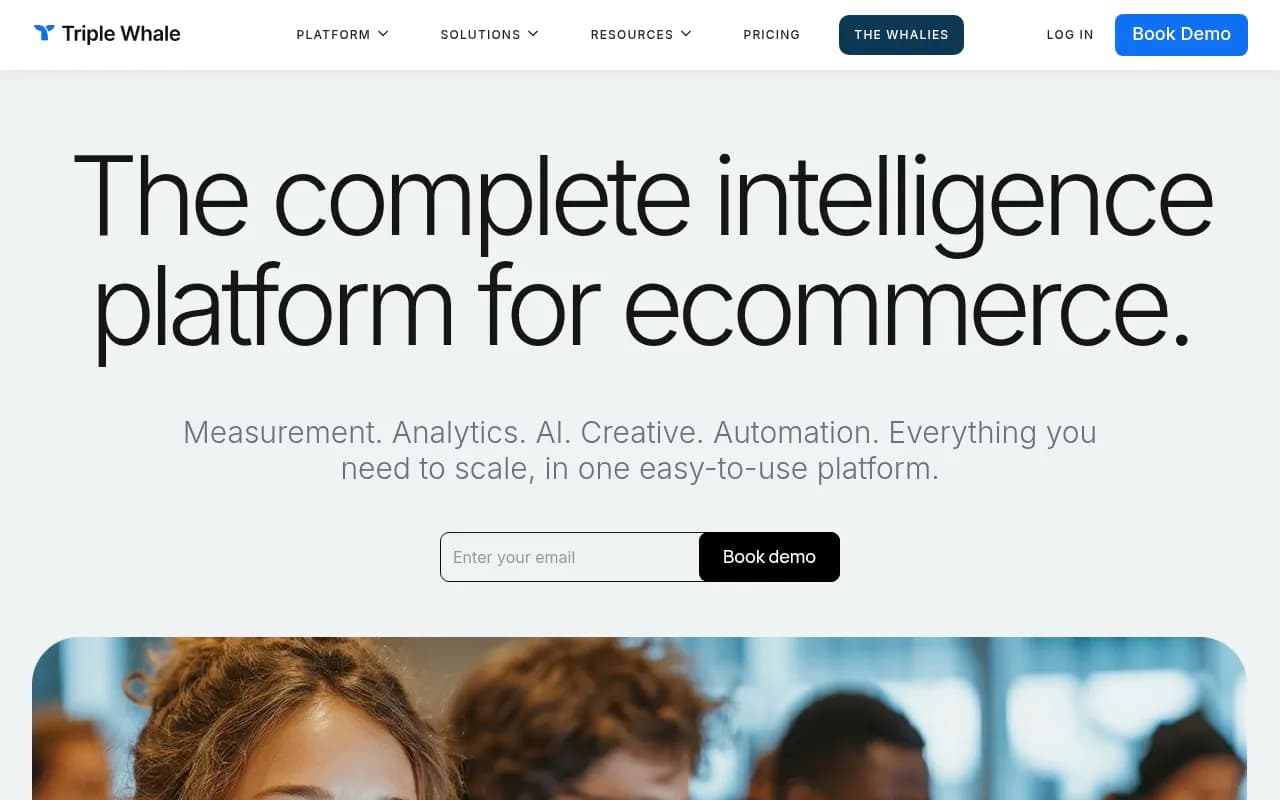
Triple Whale is what you get when you combine attribution, analytics, AI insights, creative analysis, and automation into one platform. Used by 50,000+ brands, it's the most complete ecommerce intelligence system on this list.
The core difference vs Cometly: Triple Whale unifies marketing, sales, and operations data into a single source of truth, then gives you AI agents (Moby) that surface insights and recommendations automatically. You're not just looking at dashboards -- the platform tells you what to do next.
Attribution methodology: Unified measurement combining MTA (multi-touch attribution), MMM (marketing mix modeling), and incrementality testing. This matters because no single attribution model is perfect. Triple Whale shows you where methods align and where they diverge, so you can make decisions with confidence.
Key features Cometly doesn't have: Sonar Send (automated email/SMS sequences that drive 10x ROI on the subscription cost), creative analytics (see which ad creatives drive revenue, not just clicks), AI-powered insights via Moby agents, and instant activation tools that let you act on data without leaving the platform.
Integrations: 60+ connections across ecommerce and retail, including Shopify, WooCommerce, BigCommerce, Meta, Google, TikTok, Klaviyo, Attentive, Gorgias, and more.
Best for: Ecommerce brands ($1M-$5M+ GMV) running multi-channel campaigns who want a complete intelligence platform, not just attribution. Especially strong for DTC brands that need to unify marketing and operations data.
Pricing: From $549/mo (scales with GMV: $1M-$2.5M brands). Higher tiers for $5M+ brands. Free trial available.
Trade-offs: More expensive than Cometly, and the feature set can be overwhelming if you just need basic attribution. But if you're running a serious ecommerce operation, the unified data and AI insights justify the cost.
Hyros
Hyros is built for one thing: tracking every sale to its true source across complex customer journeys. If you sell SaaS, info products, coaching, or anything with a long sales cycle, Hyros catches conversions that standard pixels miss.
The core problem Hyros solves: Someone clicks your ad, doesn't buy, comes back two weeks later via organic search, books a call, then converts three months later. Standard attribution tools credit "organic" or "direct." Hyros credits the original ad.
How it works: AI-powered tracking that uses server-side data, first-party cookies, and cross-device matching to follow users through every touchpoint. Then it feeds this superior data back to Meta, Google, and TikTok via CAPI (Conversions API) to improve ad targeting.
What makes it different from Cometly: Hyros is specifically engineered for long customer journeys and high-ticket products. It tracks demos, free trials, subscriptions, MRR, LTV, call bookings, call quality, and pipeline stages. Cometly is more ecommerce-focused.
Real results: Brands report 15%+ increases in ad ROI just from better tracking accuracy. Tony Robbins' team scaled ad spend by 43% using Hyros. Alex Hormozi (Acquisition.com) and Sam Ovens (Skool.com) both use it.
Best for: SaaS companies, info products, coaching businesses, and call-based funnels with customer journeys longer than 30 days. If you're selling something over $500 with multiple touchpoints, Hyros is worth the premium.
Pricing: From $379/mo (custom pricing based on ad spend and features). Growth plan ~$799/mo, Scale plan $1,500+/mo. No free trial -- you book a call first.
Trade-offs: More expensive than Cometly, and the sales process involves a demo call (no self-serve signup). But if you're losing revenue to attribution gaps, the ROI is there.
RedTrack
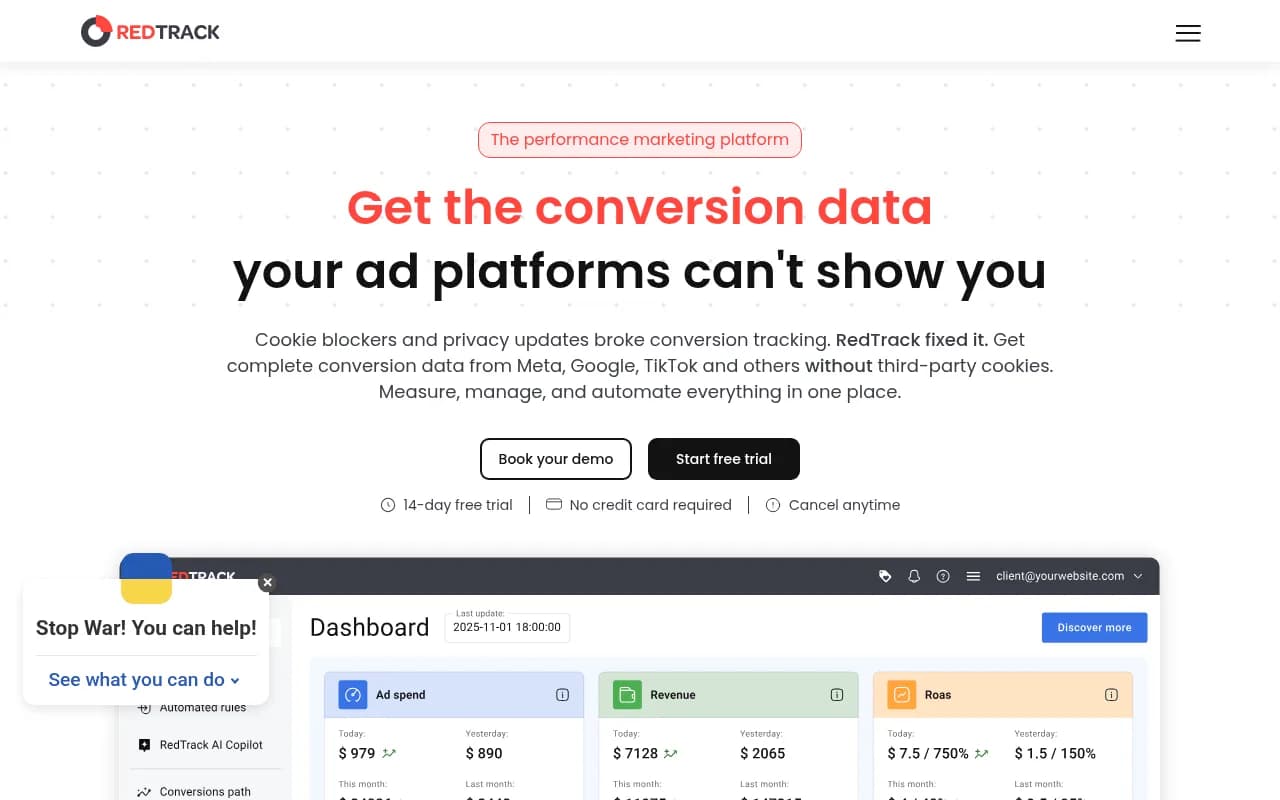
RedTrack solves the iOS14 problem that broke everyone's tracking in 2021. It captures 100% of conversions using server-side tracking and first-party cookies, then sends enriched data back to ad platforms via CAPI.
The core issue: Cookie blockers, iOS privacy updates, and ad blockers mean standard pixel tracking misses 30-50% of conversions. Your ad platforms think campaigns are underperforming when they're actually profitable. RedTrack fixes this.
How it's different from Cometly: RedTrack is built specifically for performance marketers running campaigns across 20+ ad networks (not just Meta/Google/TikTok). It tracks affiliate offers, media buying campaigns, and complex multi-network setups that ecommerce-focused tools struggle with.
Key features: Server-to-server tracking (bypasses ad blockers entirely), CAPI integration for Meta/Google/TikTok/Bing, 200+ integrations including affiliate networks and call trackers, centralized Ads Manager with automation rules, and 5-minute cost updates across all networks.
Real-world use: 1,053 media buying teams use RedTrack at least twice per week. They've tracked $621M in revenue and 1B+ conversions in 2025. The platform is especially popular with affiliates and agencies running campaigns on networks like Taboola, Outbrain, PropellerAds, and MGID.
Best for: Performance marketers, affiliates, and agencies running campaigns across multiple ad networks. If you're dealing with iOS14 attribution gaps or running traffic outside the Meta/Google/TikTok ecosystem, RedTrack is the fix.
Pricing: From $48/mo (Launch plan, billed annually). Growth plan $199/mo. Free Relay product for CAPI-only use. 14-day free trial, no credit card required.
Trade-offs: The interface is more technical than Cometly -- it's built for performance marketers who understand tracking parameters and postback URLs. If you just need simple ecommerce attribution, Triple Whale or Northbeam are easier.
Northbeam
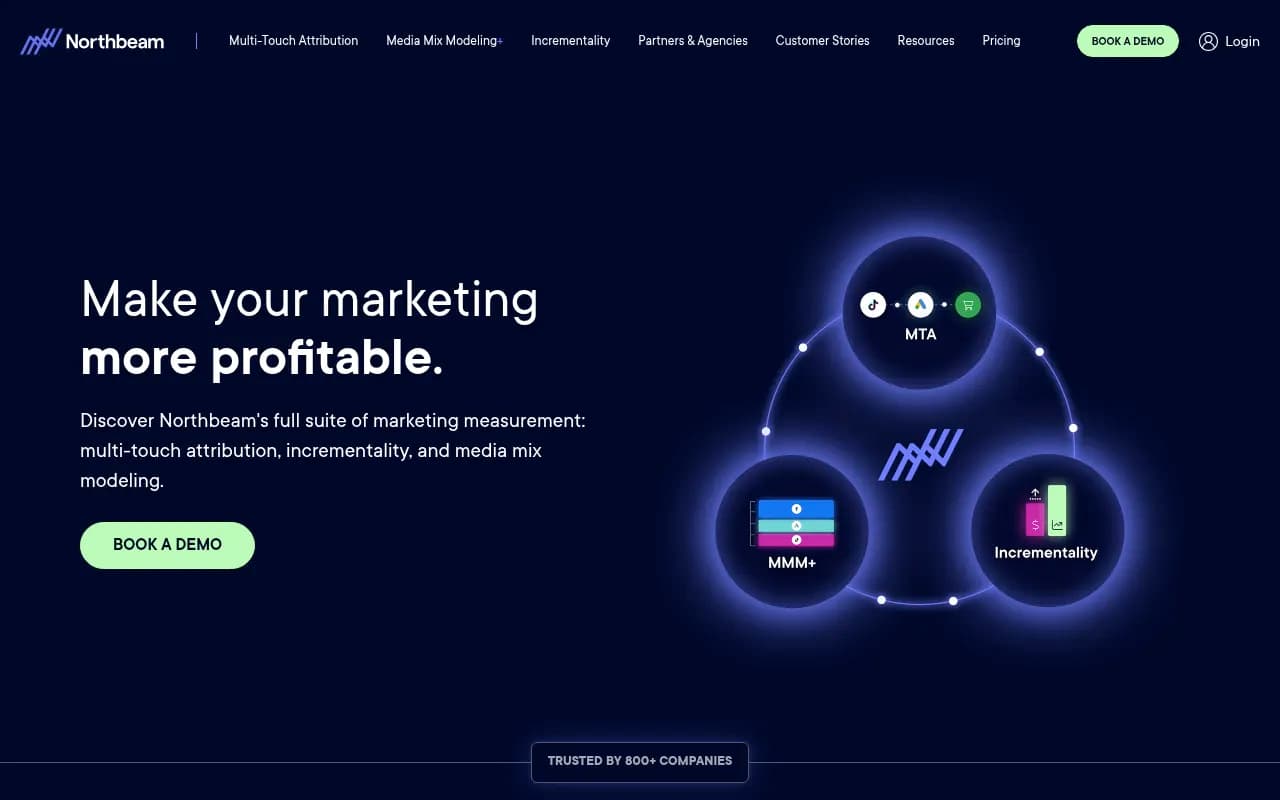
Northbeam is the attribution platform for brands and agencies optimizing serious ad budgets. It combines multi-touch attribution (MTA), marketing mix modeling (MMM), and incrementality testing into one system.
The key insight: No single attribution model tells the whole truth. MTA shows you touchpoint-level detail but can over-credit digital channels. MMM shows you channel-level impact but lacks granularity. Incrementality testing shows you true causation but takes time to run. Northbeam gives you all three, so you can see where they agree and where they diverge.
What this means in practice: You can attribute revenue to top-of-funnel ads with infinite lookback windows, understand the true impact of brand campaigns and offline channels (TV, radio, podcasts), and run incrementality tests to validate your assumptions.
Used by 800+ companies tracking $10B+ in ad spend, including major DTC brands and agencies. The platform is specifically built for brands spending $100k+/month on ads who need enterprise-grade measurement.
Vs Cometly: Northbeam is more sophisticated and more expensive. Cometly focuses on real-time attribution for ecommerce. Northbeam adds MMM and incrementality testing for brands that need to understand the full marketing mix, including offline channels.
Best for: DTC brands and agencies spending $100k+/month on ads who need to optimize across channels and prove incrementality. If you're running brand campaigns, TV, podcasts, or other hard-to-measure channels, Northbeam is worth the investment.
Pricing: Custom pricing based on ad spend. Starts at ~$400/month for brands spending under $100k/month. Professional tier ~$1,000-$2,500/month. Enterprise tier (for $500k+/month spend) requires custom quote. Annual contracts standard.
Trade-offs: Expensive and requires an annual commitment. Overkill if you're just running Meta and Google ads with simple attribution needs. But if you're optimizing a complex marketing mix, it's the most complete platform available.
HockeyStack
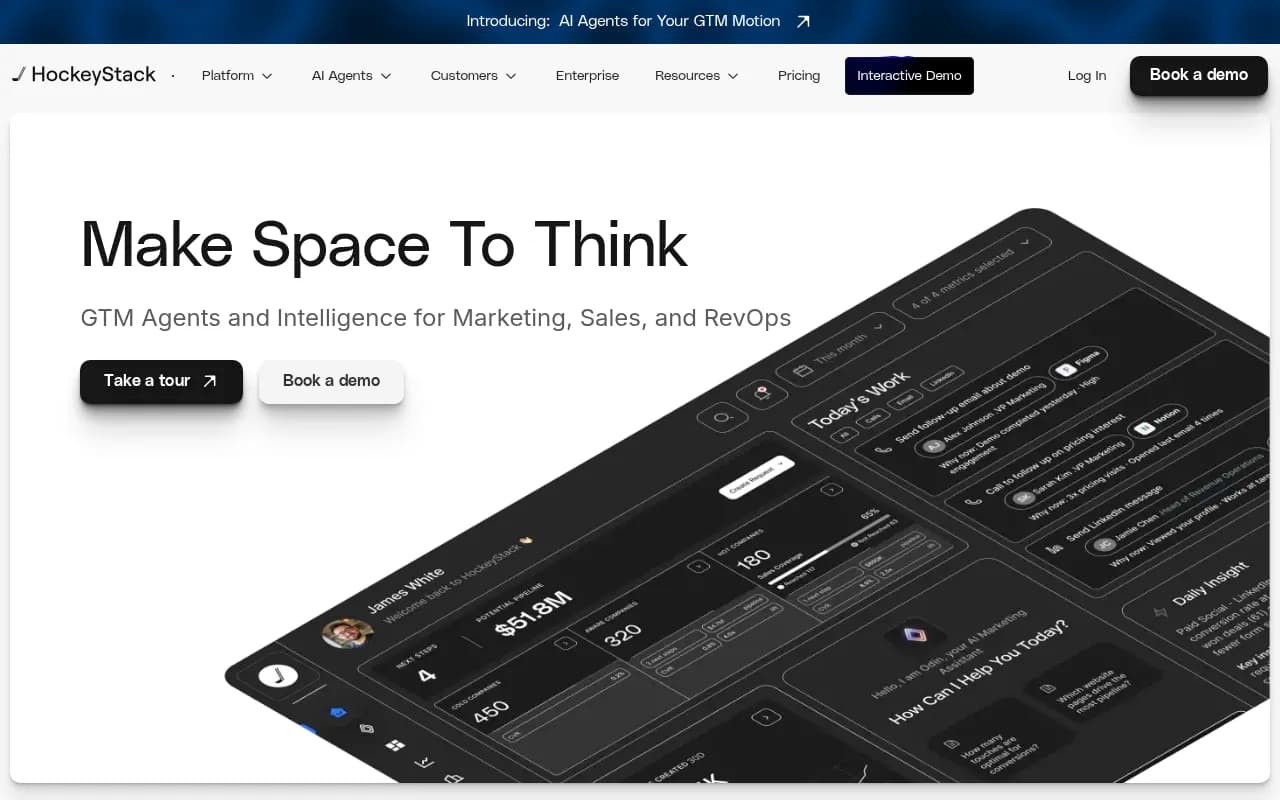
HockeyStack is a B2B revenue intelligence platform that unifies marketing, sales, and product data into visual buyer journeys and AI-powered insights. It's built for B2B companies, not ecommerce.
The core difference vs Cometly: HockeyStack tracks account-level journeys across months or years, not just individual conversions. It shows you every touchpoint from first website visit to closed deal, including product usage data for PLG (product-led growth) companies.
Key features: AI agents that surface insights and automate workflows, predictive account scoring, attribution modeling (MTA + MMM), page-level tracking, and integrations with CRMs, marketing automation, product analytics, and data warehouses.
What makes it unique: HockeyStack bridges PLG and sales-led motions. If you have a free trial or freemium product, it tracks product usage signals alongside marketing touchpoints to identify high-intent accounts. Most attribution tools can't do this.
Vs Cometly: Completely different use case. Cometly is for ecommerce brands tracking ad performance. HockeyStack is for B2B SaaS companies tracking pipeline and revenue across long sales cycles.
Best for: B2B SaaS companies, especially those with PLG motions or complex sales cycles. If you're selling to businesses and need to understand the full buyer journey from first touch to closed deal, HockeyStack is purpose-built for this.
Pricing: Custom pricing starting from $599-$1,399/mo (revised late 2023). Scales based on traffic, integrations, and features. Startup pricing available for <$5M ARR companies. Free trial offered.
Trade-offs: Not for ecommerce. If you're selling physical products or running DTC campaigns, use Triple Whale or Northbeam instead. HockeyStack is B2B-only.
Rockerbox
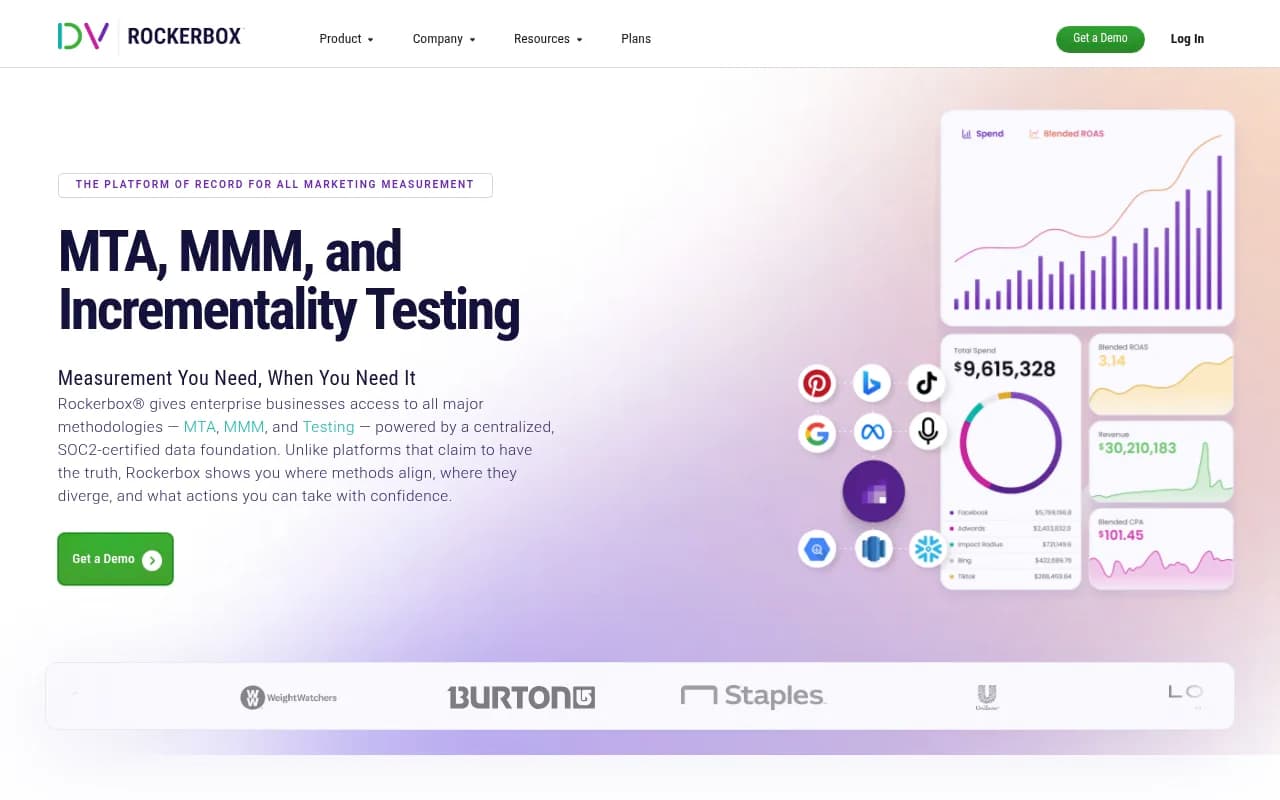
Rockerbox is an enterprise marketing measurement platform that unifies MTA, MMM, and incrementality testing into a single SOC2-certified system. Used by Unilever, Weight Watchers, FIGS, and other major brands.
The positioning: Rockerbox doesn't claim to have "the truth" about attribution. Instead, it shows you where different measurement methods align, where they diverge, and what actions you can take with confidence.
How it works: The platform centralizes data from 100+ channels (paid, organic, email, partnerships, referrals, offline), then runs multiple attribution models simultaneously. You see MTA results, MMM results, and incrementality test results side by side, so you can make decisions based on convergent evidence.
Vs Cometly: Rockerbox is enterprise-grade and enterprise-priced. Cometly is built for mid-market ecommerce brands. Rockerbox adds MMM and incrementality testing, which most brands don't need until they're spending $500k+/month on ads.
Key features: Multi-method measurement (MTA + MMM + testing), centralized data foundation, SOC2 certification, 100+ channel integrations, and custom reporting.
Best for: Enterprise brands and agencies managing $500k+/month in ad spend across multiple channels. If you need to prove marketing impact to a CFO or board, Rockerbox provides the rigor and certification to back it up.
Pricing: From $2,000/month (custom enterprise pricing based on marketing spend and features).
Trade-offs: Expensive and requires enterprise-level commitment. Overkill for most mid-market brands. But if you're at scale and need bulletproof measurement, it's one of the best options.
Dreamdata
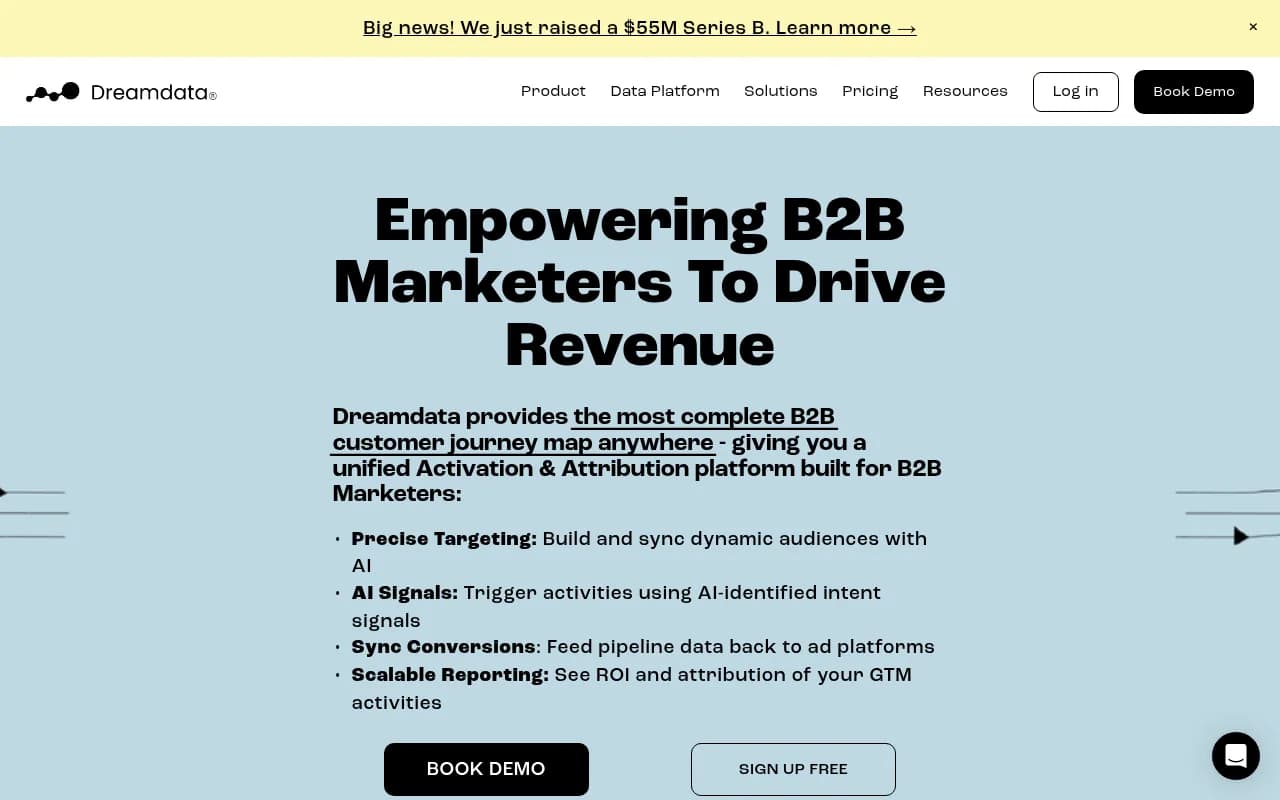
Dreamdata is a B2B activation and attribution platform that maps complete customer journeys across 70+ touchpoints. It's built for B2B marketers who need to prove marketing's impact on revenue.
The core value: Dreamdata provides the most complete B2B customer journey map available. It tracks every interaction from first anonymous website visit to closed deal, then attributes revenue using AI-powered models.
Key features: Precise audience building (create and sync dynamic audiences with AI), AI signals (trigger activities using AI-identified intent signals), conversion syncing (feed pipeline data back to ad platforms), and scalable reporting (see ROI and attribution of all GTM activities).
What makes it different: Dreamdata integrates with 70+ tools including ad platforms, CRMs, marketing automation, product analytics, and data warehouses. It's specifically designed for B2B companies with long sales cycles and multiple stakeholders.
Vs Cometly: Different market. Cometly is for ecommerce. Dreamdata is for B2B companies selling to other businesses. If you're tracking deals, pipeline, and revenue (not just ecommerce orders), Dreamdata is the better fit.
Best for: B2B marketing teams that need to prove marketing's impact on pipeline and revenue. Especially strong for companies with complex buyer journeys involving multiple touchpoints and stakeholders.
Pricing: Free tier available. Paid plans from $599/mo (Starter), $1,499/mo (Professional), Enterprise custom pricing. Free trial included.
Trade-offs: Not for ecommerce. If you're selling products online, use Triple Whale or Northbeam. Dreamdata is B2B-only.
SegMetrics

SegMetrics is a marketing attribution and analytics platform that connects data from ads, email, CRM, and payment systems to show you the true lifetime ROI of every campaign.
The core problem it solves: Most attribution tools only track first purchase. SegMetrics tracks lifetime value. It shows you which campaigns bring in customers with the highest LTV after 3, 6, and 12 months -- not just which campaigns get the most clicks.
How it works: SegMetrics integrates with your ad platforms, email systems, CRMs, and payment processors, then tracks customer journeys across months or years. You can see which email sequence turned a lead into a customer six months after they first clicked an ad.
Best for: Digital marketers, course creators, and agencies running complex funnels with long customer journeys. If you sell subscriptions, memberships, or high-ticket products, SegMetrics shows you which marketing actually drives revenue over time.
Vs Cometly: SegMetrics focuses on lifetime value and long-term attribution. Cometly focuses on real-time attribution for ecommerce. If your customer journey spans months and you need to track LTV, SegMetrics is the better choice.
Key features: Lifetime value tracking, cohort analysis, funnel optimization, email attribution, and integrations with major ad platforms, CRMs, and payment processors.
Best for: Digital marketers, course creators, membership sites, and agencies running complex funnels. If you need to track lifetime value and long-term attribution, SegMetrics is purpose-built for this.
Pricing: From $95/mo (Essentials) to $295/mo (Professional). 14-day free trial. Enterprise plans available.
Trade-offs: The interface is less polished than Triple Whale or Northbeam. But if you're focused on lifetime value and long-term attribution, the feature set is hard to beat at this price point.
WhatConverts
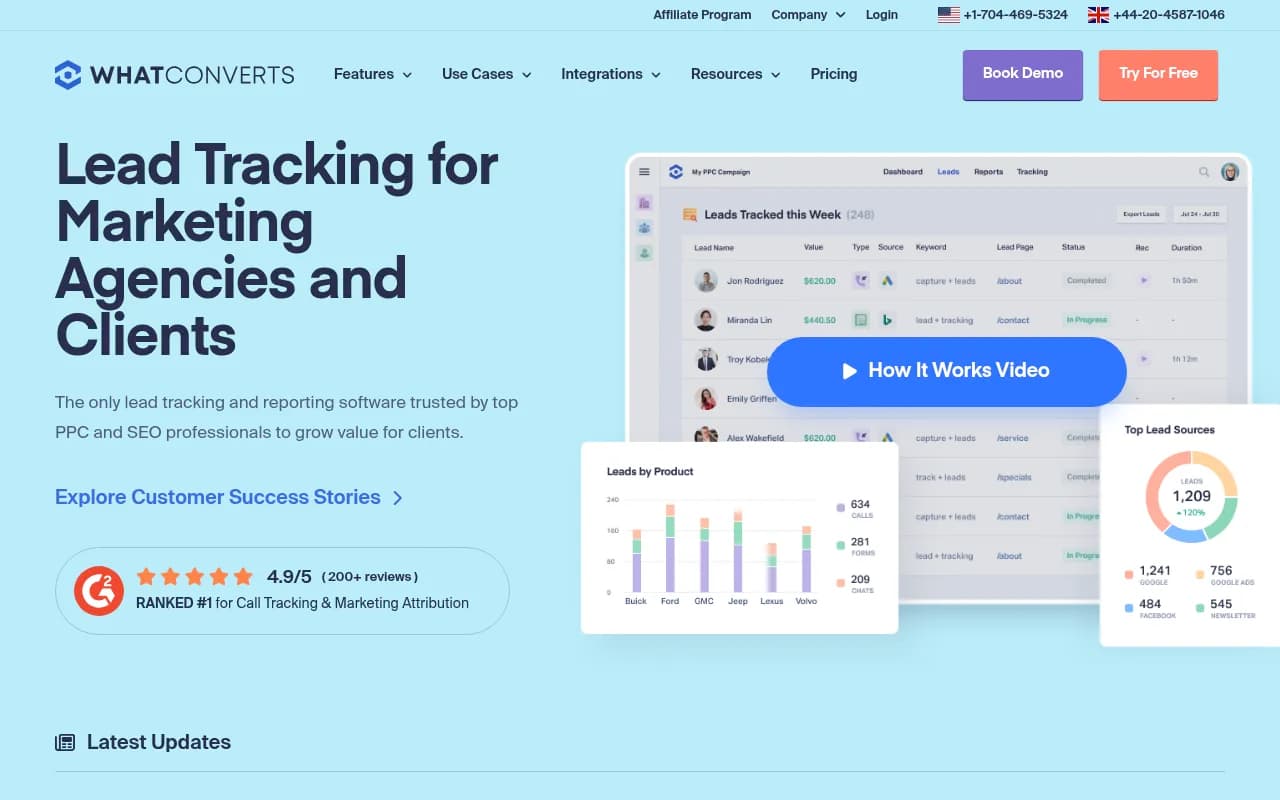
WhatConverts is a comprehensive lead tracking and attribution platform that captures calls, forms, chats, and eCommerce transactions, connecting each lead back to its marketing source.
The key differentiator: WhatConverts is one of the few platforms that tracks phone calls as first-class conversions. If you run a business where phone calls matter (law firms, home services, healthcare, B2B), this is critical.
How it works: The platform provides tracking numbers for call tracking, captures form submissions, monitors chat conversations, and tracks eCommerce transactions. Every lead is connected back to the specific ad, keyword, landing page, or campaign that generated it.
Best for: Agencies, marketers, and businesses running multi-channel campaigns where phone calls are a primary conversion type. Especially strong for local businesses, service businesses, and B2B companies.
Vs Cometly: WhatConverts is built around call tracking. Cometly is built around ecommerce attribution. If phone calls are a significant part of your conversion funnel, WhatConverts is the better choice.
Key features: Call tracking with recording and transcription, form tracking, chat tracking, eCommerce tracking, lead qualification, and custom reporting.
Best for: Agencies and businesses where phone calls are a primary conversion type. If you're running PPC campaigns for law firms, home services, healthcare, or B2B companies, WhatConverts is purpose-built for this.
Pricing: From $30/mo for individuals (Call Tracking plan), $60/mo for full tracking (Plus plan). Agency plans from $500/mo with unlimited client accounts. 14-day free trial. Usage-based costs for tracking numbers and call minutes.
Trade-offs: Less sophisticated than Northbeam or Rockerbox for ecommerce attribution. But if call tracking is your priority, WhatConverts is one of the best options at this price point.
How to choose the right Cometly alternative
Start with your use case. If you're an ecommerce brand running Meta/Google/TikTok ads, Triple Whale or Northbeam are the most direct Cometly alternatives. If you're selling SaaS, info products, or high-ticket services with long sales cycles, Hyros is the better fit. If you're a B2B company tracking pipeline and revenue, HockeyStack or Dreamdata are purpose-built for this.
If you're dealing with iOS14 attribution gaps or running campaigns across multiple ad networks, RedTrack solves the server-side tracking problem. If phone calls are a primary conversion type, WhatConverts is the best call tracking platform. If you need to track lifetime value over months or years, SegMetrics is built for this.
And if you want to get ahead of the AI search shift -- tracking how your brand appears in ChatGPT, Claude, Perplexity, and other AI models -- Promptwatch is the only platform that covers this channel.
The right choice depends on your budget, tech stack, and what you're actually trying to optimize. Most brands don't need enterprise-grade MMM and incrementality testing. But if you're spending $500k+/month on ads, the investment in Northbeam or Rockerbox pays for itself.
Pricing reality: Cometly starts at $199/mo. Triple Whale starts at $549/mo. Hyros starts at $379/mo. RedTrack starts at $48/mo. Northbeam starts at $400/mo but scales quickly. Promptwatch starts at $99/mo for AI visibility tracking.
The best approach: Start with a free trial or demo. Most platforms offer 7-14 day trials. Test the interface, check the integrations, and see if the data matches what you're seeing in your ad platforms. Attribution is only valuable if you trust the numbers.