Key takeaways
- Hall AI built a loyal early user base for brand mention tracking in AI search, but users are increasingly citing gaps in content optimization, crawler data, and multi-model coverage as reasons to switch
- The most common destinations are platforms that go beyond monitoring: tools with content gap analysis, AI crawler logs, and actual optimization workflows
- Monitoring-only tools (including some Hall AI alternatives) have the same core problem -- they show you data but don't help you act on it
- The right replacement depends heavily on your use case: agency reporting, enterprise brand tracking, content-led GEO, or budget-conscious solo monitoring all point to different tools
- Promptwatch is the most commonly cited upgrade path for teams that want to move from tracking to actually improving their AI visibility
Why Hall AI users are looking elsewhere
Hall AI carved out a real niche early in the GEO space. It was one of the first tools to make AI citation tracking feel accessible -- you could see how ChatGPT and Perplexity were talking about your brand without needing an enterprise contract or a data science team.
But the AI search landscape has moved fast. What felt comprehensive in 2024 feels thin in 2026. The community feedback pattern is consistent: users aren't leaving because Hall AI is broken. They're leaving because the category has grown up around it.
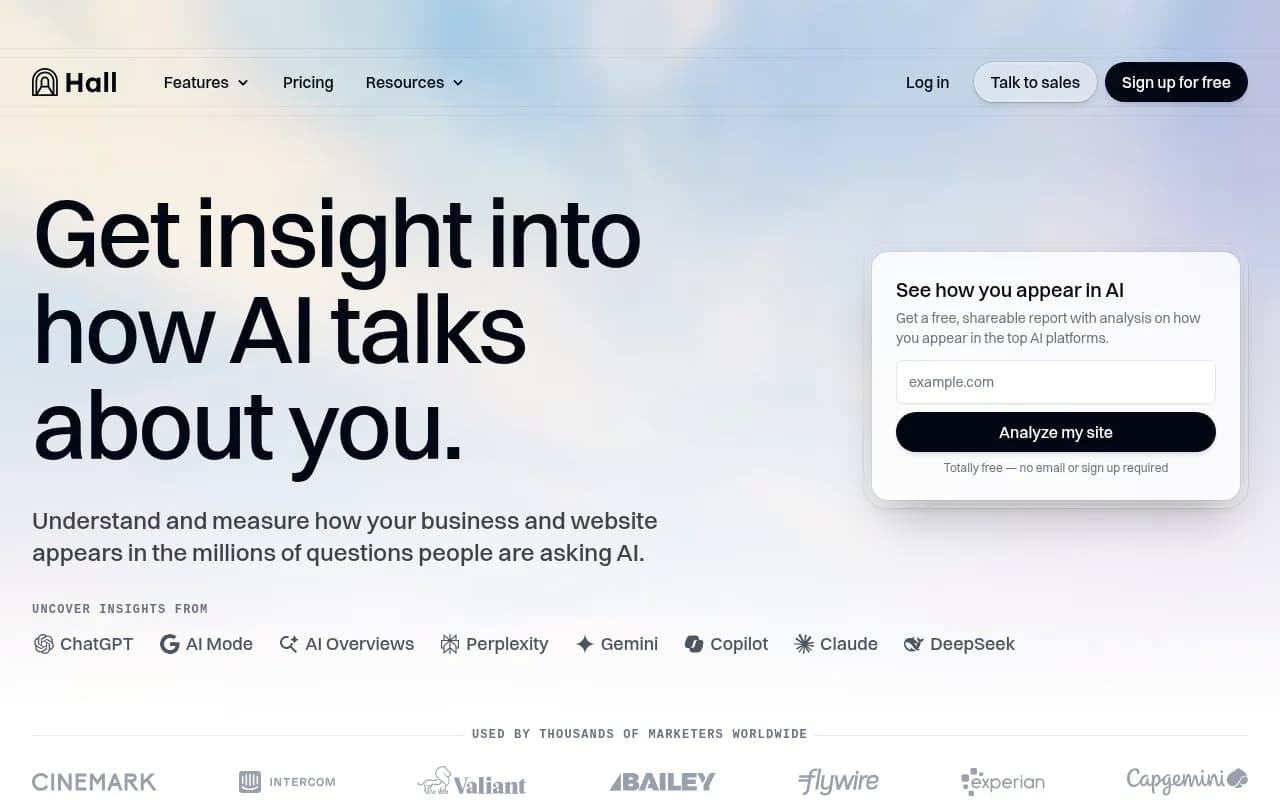
The specific complaints that keep surfacing in community discussions and review threads:
- Coverage gaps across newer models (Grok, DeepSeek, Meta AI, Google AI Mode)
- No crawler log data -- you can see citations but not why pages are or aren't getting cited
- No content generation or optimization workflow -- it's a dashboard, not a system
- Limited prompt intelligence (volume estimates, difficulty scoring, query fan-outs)
- Reporting that's hard to share with clients or stakeholders who aren't already bought in on GEO
None of these are fatal flaws for every user. But for teams that have moved past "is AI mentioning us?" and into "how do we get AI to mention us more?" -- Hall AI runs out of road.
The platforms users are actually switching to
For teams that want the full optimization loop
The most common upgrade path in community discussions is toward platforms that treat GEO as a workflow, not just a dashboard. The core ask: show me the gaps, help me create content that fills them, then show me if it worked.
Promptwatch is the platform that comes up most often in this context. It covers 10 AI models (ChatGPT, Claude, Gemini, Perplexity, Grok, DeepSeek, Copilot, Meta AI, Mistral, Google AI Overviews), but the real differentiator is what happens after the monitoring. Answer Gap Analysis shows which prompts competitors are visible for that you're not. Content Agents then generate articles, listicles, and briefs grounded in that prompt data. AI Crawler Logs show you which pages AI crawlers are actually reading, how often they return, and when a page moves from crawled to cited.
That last piece -- crawler logs -- is something almost no other tool in this space offers, and it's the thing that explains why your content isn't getting cited even when you think it should be.

For agencies that need client-ready reporting
Agency teams have a slightly different problem. They need to show clients something that makes sense to someone who doesn't spend their days thinking about LLM citation patterns. Hall AI's reporting isn't built for that workflow.
A few tools that come up specifically for agency use:
Otterly.AI is lightweight and affordable, which makes it easy to spin up for multiple clients without a huge per-seat cost. The trade-off is that it's monitoring-only -- no content generation, no crawler data. Good for agencies that just need to show clients a visibility score and a trend line.

Profound has a stronger feature set and is often cited by mid-market agencies that need more depth. It covers more models than Hall AI and has better competitive benchmarking. Price point is higher, and it still skews toward monitoring rather than optimization.

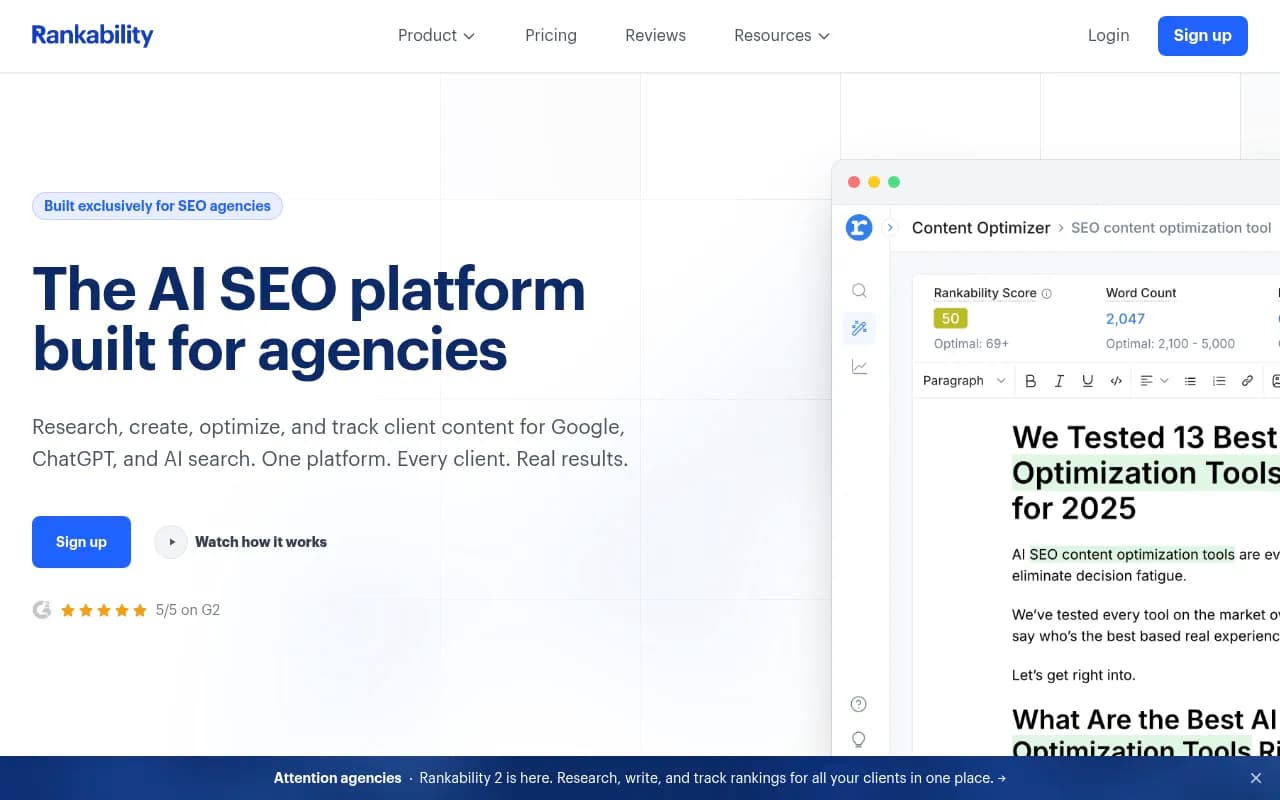
Rankability is worth a look for agency teams specifically -- it's built with agency reporting workflows in mind.
For budget-conscious solo users and small teams
Some Hall AI users are moving down-market, not up. If the use case is simple -- "I just want to know if my brand is showing up in ChatGPT and Perplexity" -- there are cheaper options.
Peec AI covers multiple languages and models at a price point that makes sense for small teams. It's monitoring-only, but if monitoring is all you need, that's fine.

Otterly.AI fits here too. It's probably the most common "I just need something basic" recommendation in community threads.
Airefs is another option that comes up for teams that want affordable AI search visibility tracking without enterprise pricing.
For enterprise teams with serious data needs
Larger organizations switching from Hall AI tend to have more specific requirements: multi-region monitoring, custom personas, API access, attribution to revenue, and integration with existing data infrastructure.
Scrunch AI handles enterprise-scale monitoring with solid competitive benchmarking.
AthenaHQ covers 8+ AI search engines and is often cited by enterprise brand teams. It's monitoring-focused, which is a limitation, but the depth of coverage is real.

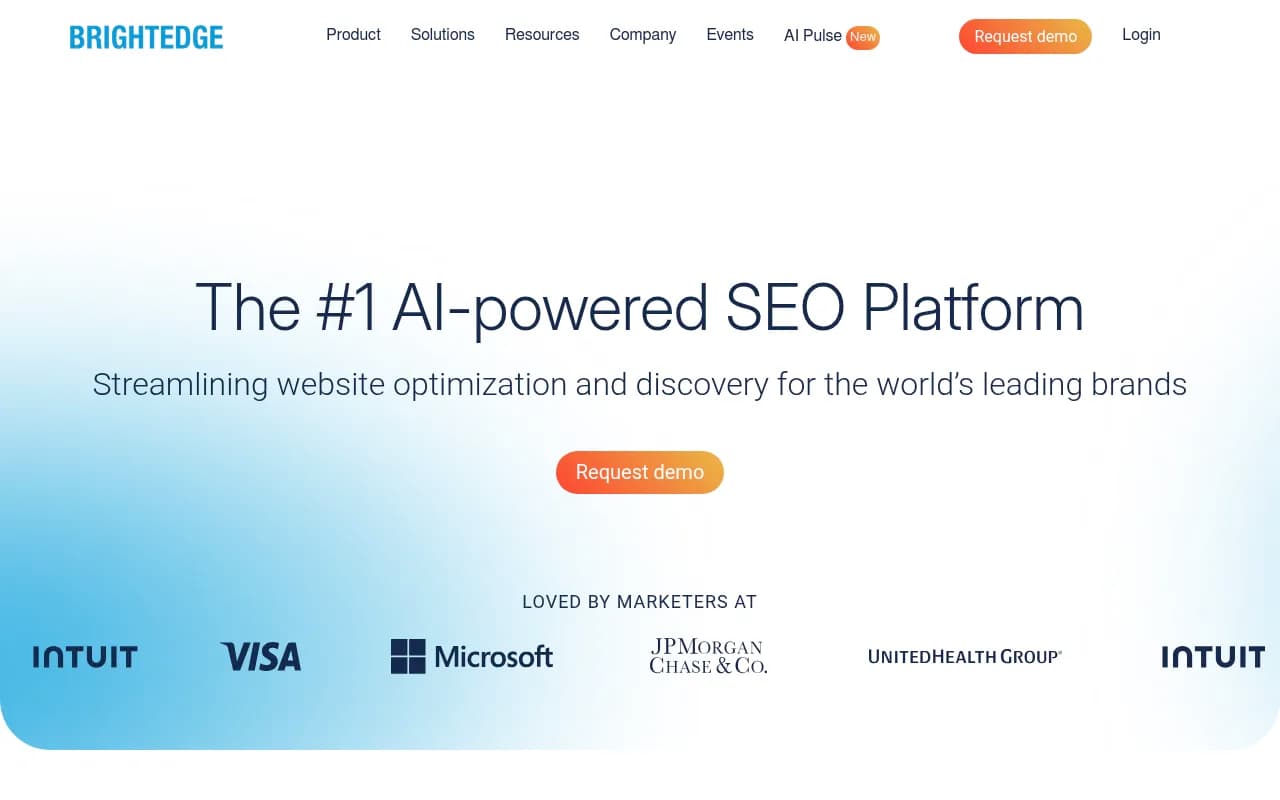
BrightEdge is the enterprise SEO platform that has been building AI visibility tracking into its existing suite. If your team is already in BrightEdge, the AI tracking layer is worth evaluating before switching to a standalone tool.
For teams that need the most complete picture -- including ChatGPT Shopping tracking, offsite citation analysis, Reddit and YouTube influence tracking, and traffic attribution -- Promptwatch is still the most complete option at the enterprise level.
Feature comparison: Hall AI vs. top alternatives
| Platform | Models tracked | Crawler logs | Content generation | Prompt intelligence | Starting price |
|---|---|---|---|---|---|
| Hall AI | ~5 models | No | No | Limited | ~$49/mo |
| Promptwatch | 10 models | Yes | Yes (Content Agents) | Yes (volume, difficulty, fan-outs) | $99/mo |
| Profound | 6+ models | No | No | Limited | ~$200/mo |
| Otterly.AI | 4-5 models | No | No | No | ~$29/mo |
| Peec AI | 5+ models | No | No | No | ~$49/mo |
| AthenaHQ | 8+ models | No | No | Limited | Custom |
| BrightEdge | 5+ models | No | Limited | No | Enterprise |
| Scrunch AI | 6+ models | No | No | No | Custom |
The pattern is clear: most alternatives to Hall AI are still monitoring-only. The gap between "we track your visibility" and "we help you improve it" is where most tools fall short.
What the switching process actually looks like
A few practical notes from teams that have gone through this:
Data migration is usually not the issue. Most teams aren't trying to port historical data from Hall AI -- they're starting fresh with a new prompt set anyway, because their old prompts were probably too generic.
The prompt setup is where you spend the most time. Whatever platform you move to, you'll need to think carefully about which prompts actually reflect how your customers search. This is harder than it sounds. Tools with prompt volume data (like Promptwatch) help you prioritize instead of guessing.
Give it 4-6 weeks before judging. AI crawlers don't index new content instantly. If you're switching platforms and also publishing new content, the timeline from publish to crawl to citation is typically 2-6 weeks. Platforms with crawler log data let you see this in real time instead of wondering what's happening.
Watch for model-specific behavior. ChatGPT, Claude, and Perplexity cite sources differently. A platform that only tracks one or two models will give you a skewed picture. The more models you can monitor, the better your sense of where you actually stand.
The monitoring-only trap
This is worth saying directly: a lot of Hall AI users switch to another monitoring-only tool and end up with the same problem six months later.
Knowing your AI visibility score is useful. Knowing which prompts you're missing is more useful. But neither of those things actually moves the needle -- only creating and optimizing content does that.
The tools that are gaining the most traction in 2026 are the ones that close this loop. Microsoft's 2026 Work Trend Index found that 66% of AI users say AI has allowed them to spend more time on high-value work. In the GEO context, that means less time manually auditing AI responses and more time acting on the gaps those audits reveal.
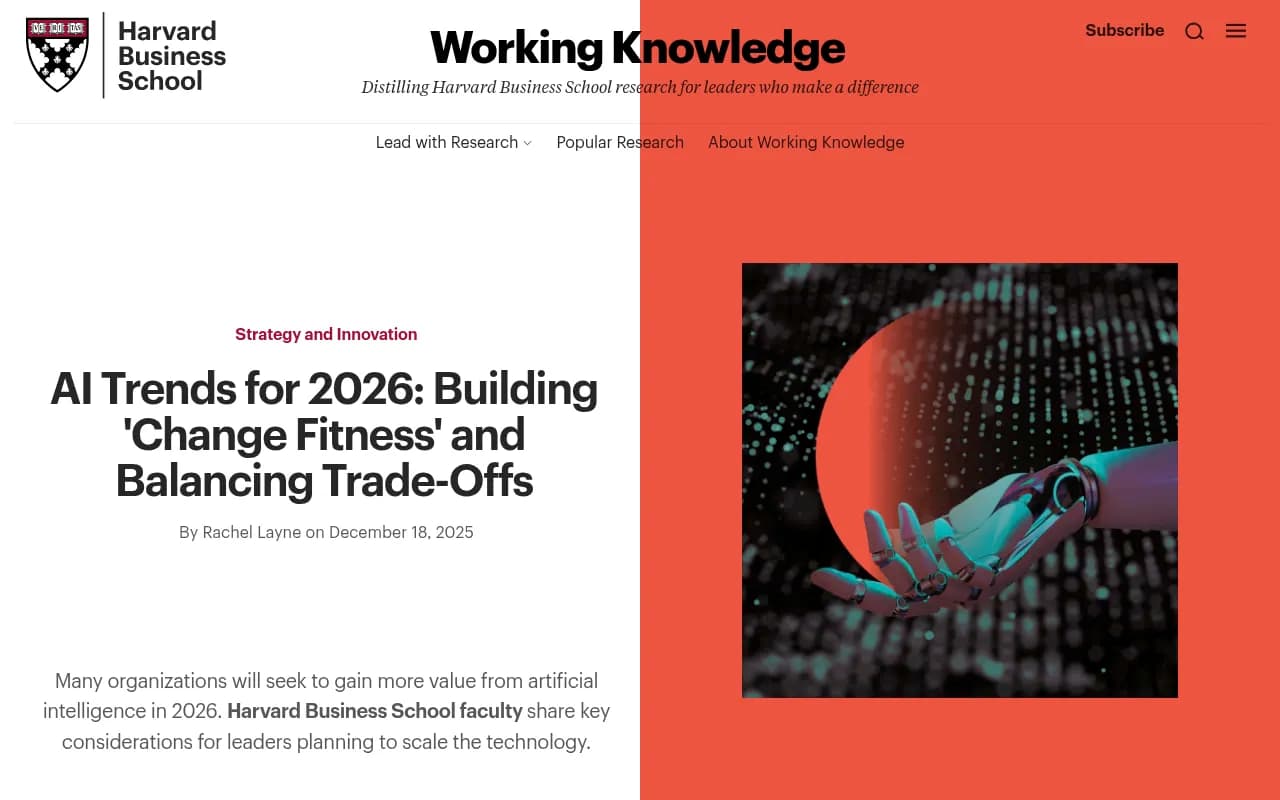
Harvard Business School faculty writing about AI trends for 2026 put it this way: AI is no longer an experiment on the side -- it's rewiring how work gets done. The same is true for AI search. Brands that are treating GEO as a monitoring exercise are already behind the ones treating it as an optimization workflow.
Which tool should you actually pick?
Here's a direct answer based on use case:
- You're a solo user or small team that just wants basic brand monitoring: Otterly.AI or Peec AI. Simple, affordable, does what it says.
- You're an agency that needs client reporting: Promptwatch (for full optimization capability) or Profound (for solid monitoring with better reporting than Hall AI).
- You're an enterprise brand team: Promptwatch for the complete stack, or AthenaHQ if you only need monitoring at scale.
- You want to actually improve your AI visibility, not just measure it: Promptwatch is the only platform in this comparison that covers the full loop -- gap analysis, content generation, crawler logs, and traffic attribution.
The honest answer is that most teams switching from Hall AI are ready to stop just watching their AI visibility and start doing something about it. That's a different category of tool than what most of the market offers.
If you're still evaluating, most of these platforms offer free trials. Run them in parallel for two weeks with the same prompt set and see which one gives you something to act on -- not just something to look at.