Key takeaways
- Neighborhood and city prompts are the core of local AI tracking for agents. ZIP code tracking is debated, so treat it as an experiment, not your backbone.
- Neighborhood prompts are "organic" prompts, which means crowded answers. Promptwatch Data found 52.5% of organic ChatGPT responses cite 10 or more domains.
- Group prompts by place, by transaction type (buy, sell, rent, relocate) and by prompt type (organic, brand-specific, competitor comparison). Read each group on its own.
- ChatGPT started running
site:searches at scale on August 8, 2026, so your neighborhood pages need to be crawlable and indexed. - Track position and description, not just mentions, and run enough prompts that one weird answer does not mislead you.
Why local prompt tracking is different for agents
A buyer who used to type "homes for sale Wicker Park" into Google now asks ChatGPT, "real estate agent who knows the Wicker Park market." The answer is a short list of names. Maybe yours. Probably a big brokerage and a portal.
Trackers built for SaaS brands measure one global number. That does not work for agents. Your business is a few square miles, and the answer changes completely between Wicker Park and Bucktown. One tracker aimed at agents puts it as visibility across neighborhood, transaction type, reviews, listings, referrals and local proof, all inside AI answers (that is Trakkr's framing).
So the job is not "track my brand." It is "track my brand in each place I want to win, for each kind of client."
What a local prompt actually looks like
Start from the questions your last ten clients really asked. Not keyword lists. Sentences.
| Prompt type | Example | What it tells you |
|---|---|---|
| Neighborhood discovery | "Is Kreuzberg a good area to rent for families?" | Whether AI treats you as a source on the area |
| Agent recommendation | "Best listing agent in South Austin" | Whether you get named at all |
| Agency comparison | "Keller Williams or Compass for first-time sellers in Austin" | How you are framed against competitors |
| Buyer intent | "Homes for sale near Zilker Park" | Whether listings and status are accurate |
| Relocation | "Moving to Austin with kids, which neighborhoods should I look at?" | Early-funnel influence |
| Investor | "Best neighborhoods for rental yield in [city]" | Whether you show up for the investor segment |
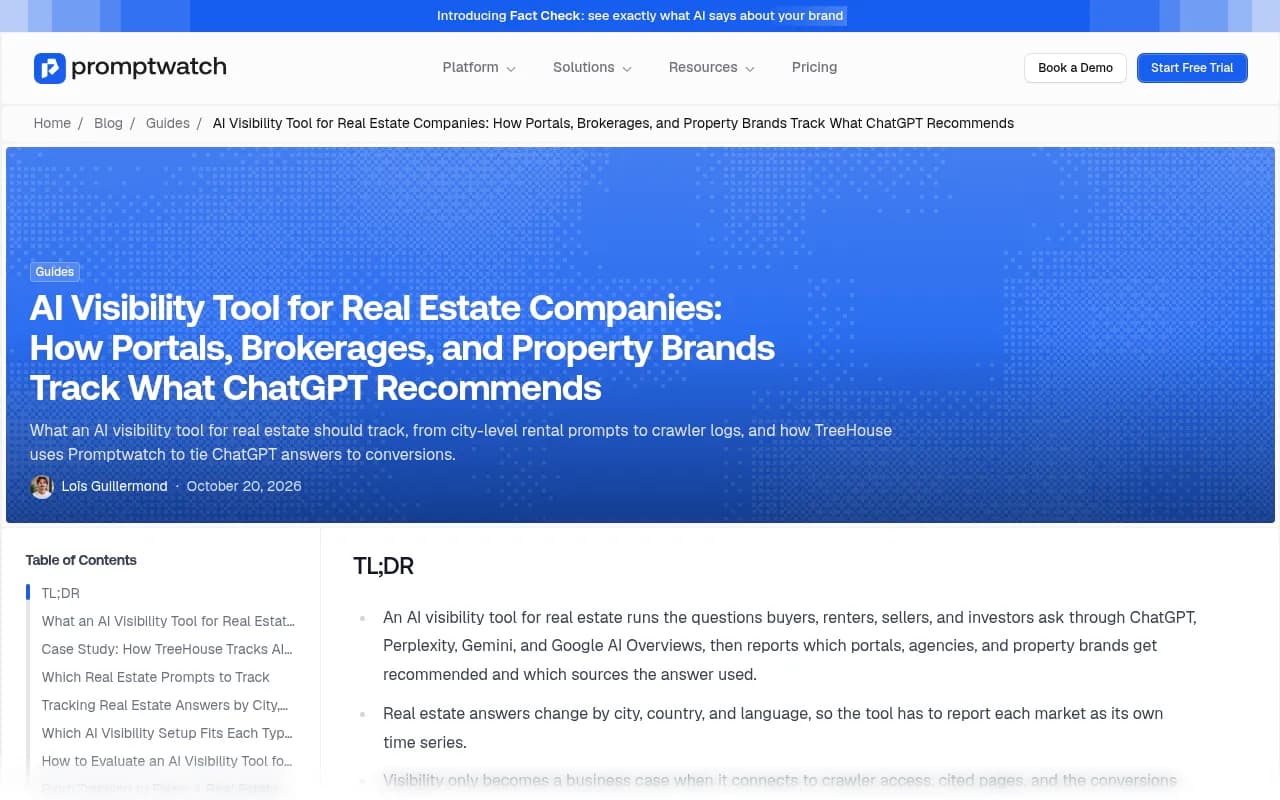
The neighborhood row in that table comes from Promptwatch's real estate guide, which also covers city-level rental prompts and how portals, brokerages and property brands set up their monitors.
Neighborhood, city or ZIP code: which should you track?
This is where the sources disagree, and I cannot settle it with data I have. Here are both sides.
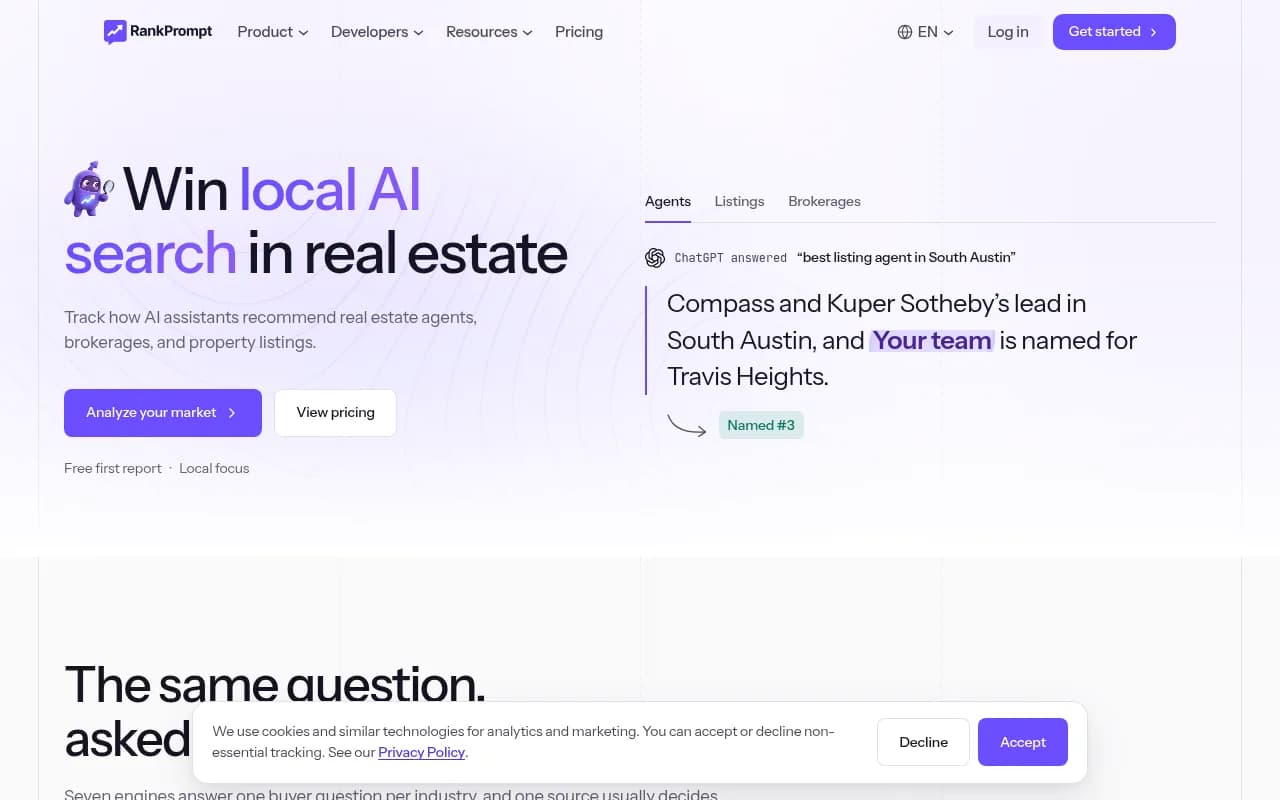
Rank Prompt says yes: create separate prompt groups for each neighborhood, ZIP code, city and property type you serve. A LinkedIn piece on the same question says you can track by city and neighborhood, but not usefully by ZIP code.
My read, for what it is worth: both can be true. People rarely type a ZIP code into a conversational question. They name places, schools, landmarks and commutes. A ZIP code is an administrative boundary, and AI models do not treat it as a stable concept the way they treat "Wicker Park." But some searchers do use them, especially for "homes for sale 60622" style queries, and a few prompts are cheap to try.
A practical split:
- Build your main groups around neighborhoods and cities. These are what people say out loud.
- Add a small ZIP code group (5 to 10 prompts) as a test. If the answers are thin or random, drop it. If they are stable and mention agents, keep it.
- Do not mistake a ZIP code in the prompt text for location targeting. Changing the words in a prompt is one thing. Making the AI answer as if you are standing in that spot is another (more on that below).
Two kinds of local: prompt text vs. searcher location
There are two separate levers, and mixing them up gives you misleading data.
- Place in the prompt. "Best agent in Travis Heights" names the place. This works in every tool.
- Place of the searcher. Google AI Overviews and AI Mode answer differently depending on where the person is. "Real estate agents near me" only means something if the tool can ask from a specific location.
For "near me" prompts, you need a tracker that supports location targeting. Promptwatch can pin a monitor to exact coordinates (accuracy radius from 20 m to 5 km) so ChatGPT, AI Overviews and AI Mode answer as if asked from that spot, which is aimed at franchises and multi-office brokerages. That is on the Business plan and above.

Also note that a monitor's language and location are fixed once created, so set up one monitor per market instead of one giant one.
How to structure your tracking
Here is a setup that scales from one agent to a small team.
Step 1: one monitor per market
If you work Austin and Round Rock, make two monitors. Mixed markets muddy every chart, because Share of Voice in one city drowns out the other.
Step 2: prompt groups by neighborhood
Inside each market, create a group per neighborhood. Ten to fifteen prompts each is plenty. Include a mix:
- 3 to 4 neighborhood questions (schools, commute, vibe, price range)
- 3 to 4 agent recommendation prompts ("best agent for first-time buyers in...")
- 2 to 3 transaction prompts (selling, listing, staging)
- 2 competitor comparisons naming the brokerages you actually lose to
Step 3: separate organic from branded
This matters more than it sounds. Promptwatch Data (Sep 28 to Oct 4, 2026) shows that organic prompts, the ones that do not name a brand, are the most crowded: 52.5% of ChatGPT responses cite 10 or more unique domains. Brand-specific prompts are narrower, with 21.3% citing 10 or more and 5 domains the most common count.
For an agent, "best agent in [neighborhood]" is organic. That is where you compete with portals, listicles, forums and other agents in a single answer. Branded prompts like "is [your name] a good agent" are about reputation. Report them separately, or the branded wins will flatter the organic losses.
Step 4: personas
A first-time buyer, a downsizing retiree and a relocating family ask different questions in different words. If your tool supports personas, use them. If not, write prompts in each voice.
Metrics worth reading
Mention counts are the least interesting number. Look at:
- Position: are you named first, third, or not at all?
- Description: does the AI call you "experienced with luxury condos" or something that is flat wrong?
- Citations: which sources did the answer lean on? Often a YouTube neighborhood walkthrough or a local guide decides it.
- Accuracy: stale listing status is a real problem. Rank Prompt's own example shows an AI calling a sold listing still for sale.
- Share of Voice by neighborhood: your slice of all agent mentions in that area.
The Promptwatch Data report on citations per response gives sensible advice here: plan on sharing every answer, track where you appear and how you are described, earn mentions on third-party listicles, reviews and forums, and measure across many prompts because a single prompt tells you little.
Make your neighborhood pages findable
Tracking tells you where you are missing. Fixing it starts on your own site.
On August 8, 2026, ChatGPT started using the site: operator at scale. Promptwatch Data reports these queries jumped from 0.37% to 16.8% of all fanout queries overnight, and average fanout queries per response rose from about 1.08 to 1.83. In practice, ChatGPT may now search site:youragency.com [neighborhood] directly.
For agents that means:
- Every neighborhood you serve needs its own crawlable, indexed page. Not a paragraph on a generic "areas" page.
- Thin category pages and broken internal search cost you answers.
- Anything you built from fanout analysis before August 8 is probably stale.
On the shape of those pages: Promptwatch's fanout data shows average fanout queries getting shorter, around 53 characters (6 to 8 words) in April 2026. Write headings like queries. "Wicker Park homes for sale 60622" and "Wicker Park vs Bucktown for families" match that better than "Our approach to the Wicker Park lifestyle." Build one focused page per sub-question rather than a single mega-page. That is also a sensible place to use ZIP codes: in headings and copy, not as a tracking pillar.
If your site is on WordPress, check crawler access too. A free option is the Agentic Readiness Check, which shows which AI crawlers can read your site.
Tool options for local real estate tracking
No tool is built only for agents with a single listing market. Here are realistic choices, from simple to broad. Verify current pricing on each site, since I did not research it.
| Tool | Local angle | Best for |
|---|---|---|
| Promptwatch | Country on every plan, state/city tracking and exact-coordinate targeting on Business and up; crawler logs; content agent | Brokerages and teams that want to fix gaps, not just see them |
| Rank Prompt | Prompt groups per neighborhood, ZIP, city, property type | Agents wanting a real estate-focused setup |
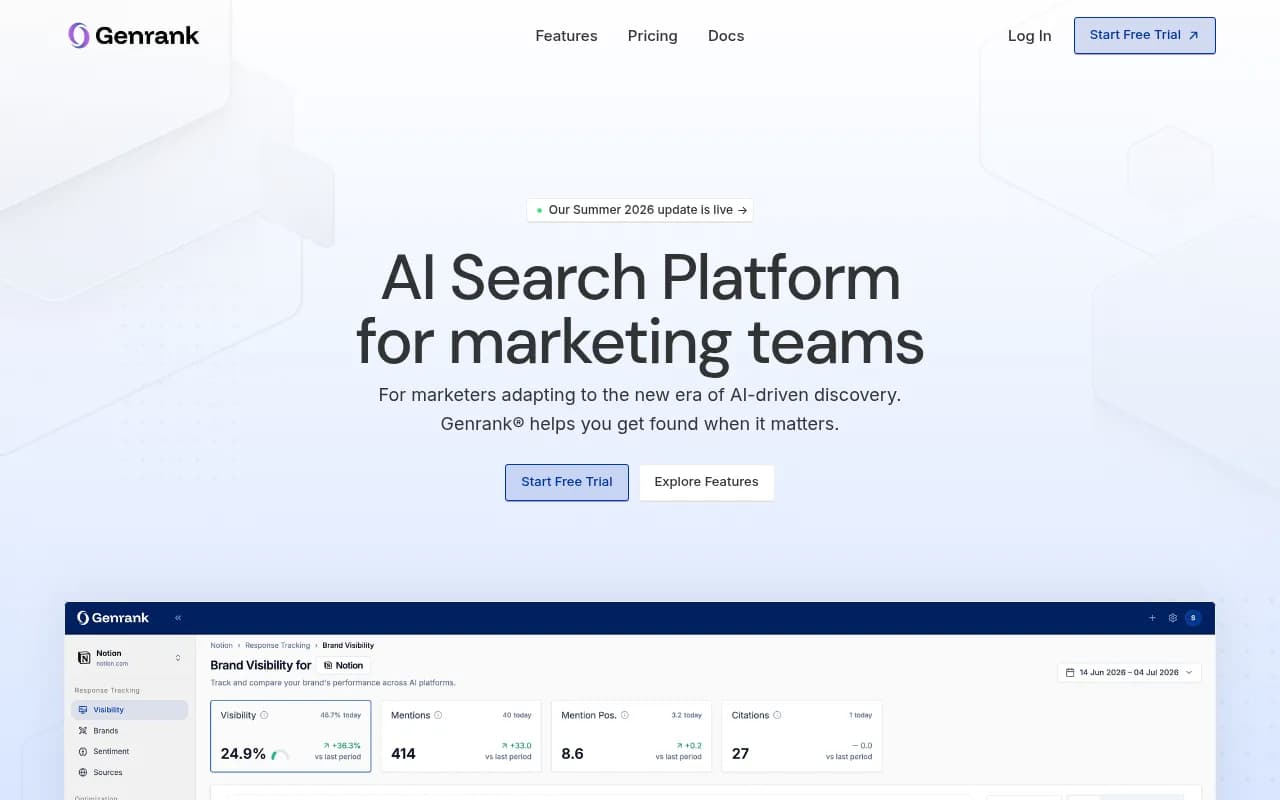
| GenRank | Separate projects per location, team access, downloadable reports | Agencies with several offices |
| Trakkr.ai | Real-estate-agent monitoring guides and tracking | Individual agents |
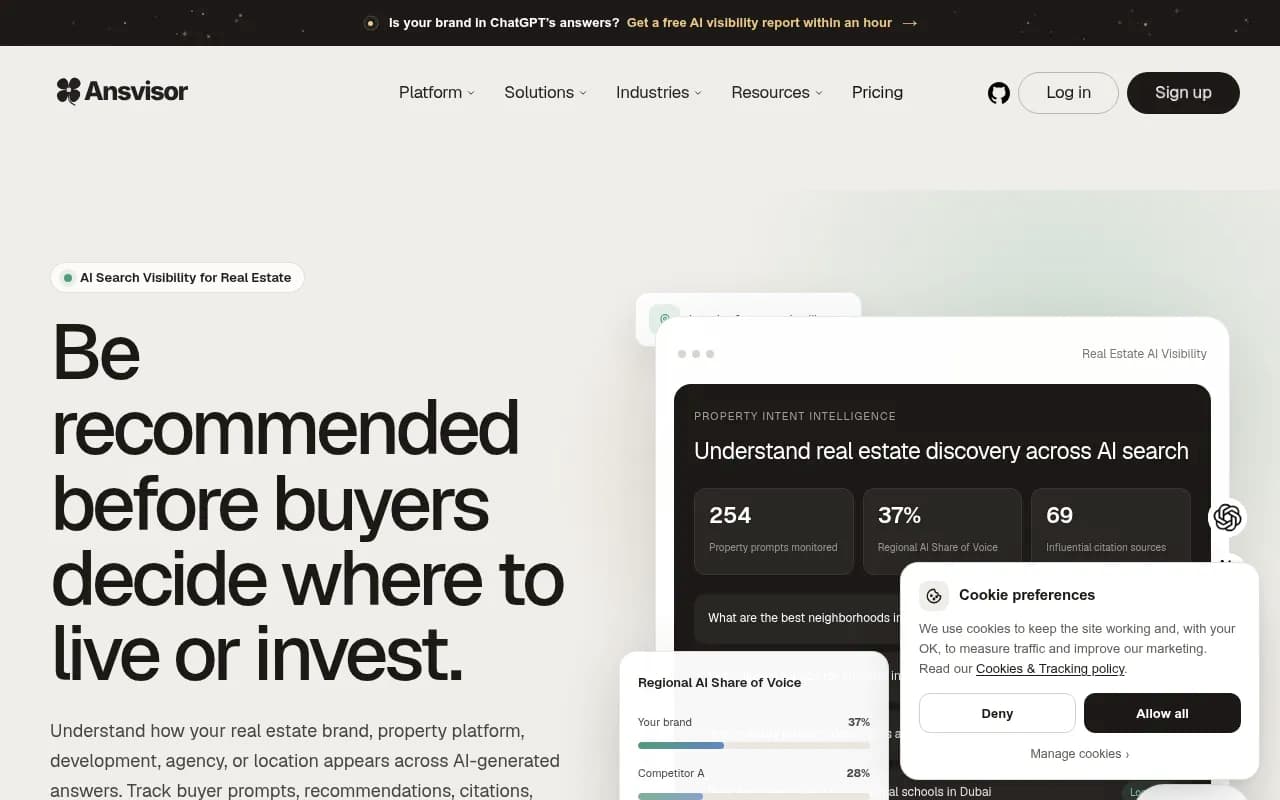
| Ansvisor | Property prompts, regional Share of Voice, citation sources | Developers, portals, international markets |
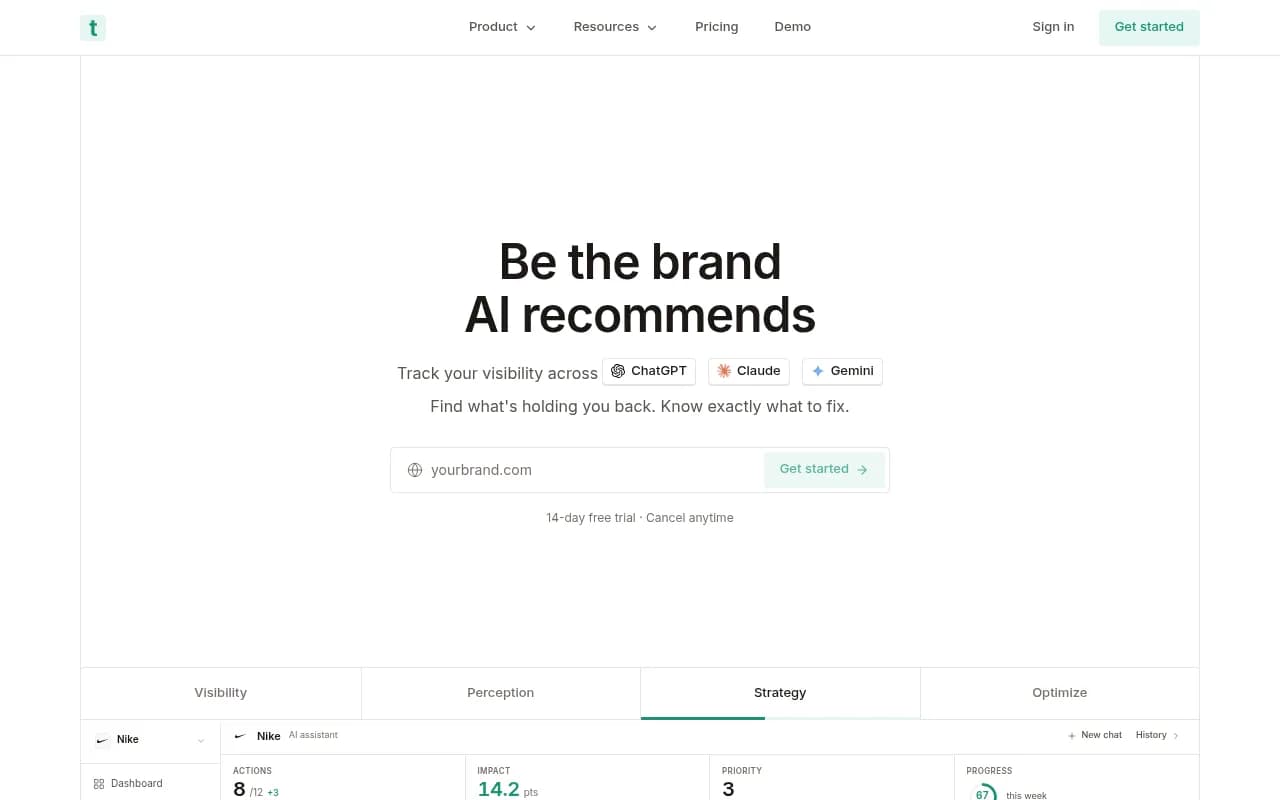
For a team or brokerage, the thing I would weigh is what happens after the dashboard. Promptwatch also logs which AI crawlers hit your site and whether those pages get cited, and its Content Agent can draft and publish neighborhood pages to WordPress, Webflow or Framer. Details are on the pricing page, and there is a 7-day free trial plus a free AI visibility report if you want a first look. TreeHouse, the company behind Pararius, uses it to tie ChatGPT answers to conversions, as described in the TreeHouse case study.
If you want to browse more options, the GEO software directory lists a wide range of trackers.
A simple weekly routine
- Check position and description for each neighborhood group. Note any wrong claims.
- Open the cited sources for your two weakest neighborhoods. Look for pages you could earn a mention on: local guides, listicles, forum threads.
- Publish or update one neighborhood page. Target one sub-question.
- Re-run after a couple of weeks. One answer proves nothing, a trend does.
- Once a month, review the ZIP code test group and decide whether to keep it.
Common mistakes
- Tracking one citywide prompt and calling it local tracking.
- Mixing organic and branded prompts in one score.
- Treating a single odd answer as a trend.
- Writing one giant "areas we serve" page.
- Ignoring listing accuracy. A wrong status in an AI answer costs real leads.
The bottom line
Start with your five most important neighborhoods and 10 to 15 prompts each. Separate organic from branded, add a small ZIP code test group, and fix the neighborhood pages ChatGPT can now search directly. That is a weekend of setup and a clearer picture of local AI visibility than most agents in your market have today.