Key takeaways
- Hall AI shut down in 2026, leaving its users without a platform for tracking brand visibility in AI search engines
- The three main alternatives -- Promptwatch, Profound, and Scrunch -- take genuinely different approaches: one is an end-to-end optimization platform, one is a monitoring-and-agents play, and one bets on serving AI-optimized content at the CDN edge
- If you just need a monitoring replacement, several options exist; if you want to actually improve your AI visibility, the shortlist gets shorter fast
- Pricing and feature depth vary significantly -- what you need depends on whether you're a solo marketer, an SEO team, or an enterprise with complex workflows
- Free trials are available for most platforms, so there's no reason to commit blind
Hall AI was one of the earlier tools to take AI search visibility seriously. It tracked how AI platforms cited and talked about brands, gave teams a dashboard to monitor their presence in ChatGPT and Perplexity, and built a small but loyal user base among marketers who recognized early that the old rank-tracking playbook was breaking down.
Then it shut down.
The LinkedIn post-mortems were predictable -- "a turning point for the AI visibility market," "a sign that monitoring alone isn't enough" -- but they weren't wrong. Hall's closure exposed a real tension in this space: tools that only show you data without helping you act on it are hard to sustain, and hard to justify paying for. Brands want to move the needle, not just watch it.
So if you were a Hall user, where do you go? This guide breaks down the three most-discussed alternatives: Promptwatch, Profound, and Scrunch. They're genuinely different products with different philosophies, and the right choice depends a lot on what you actually need.
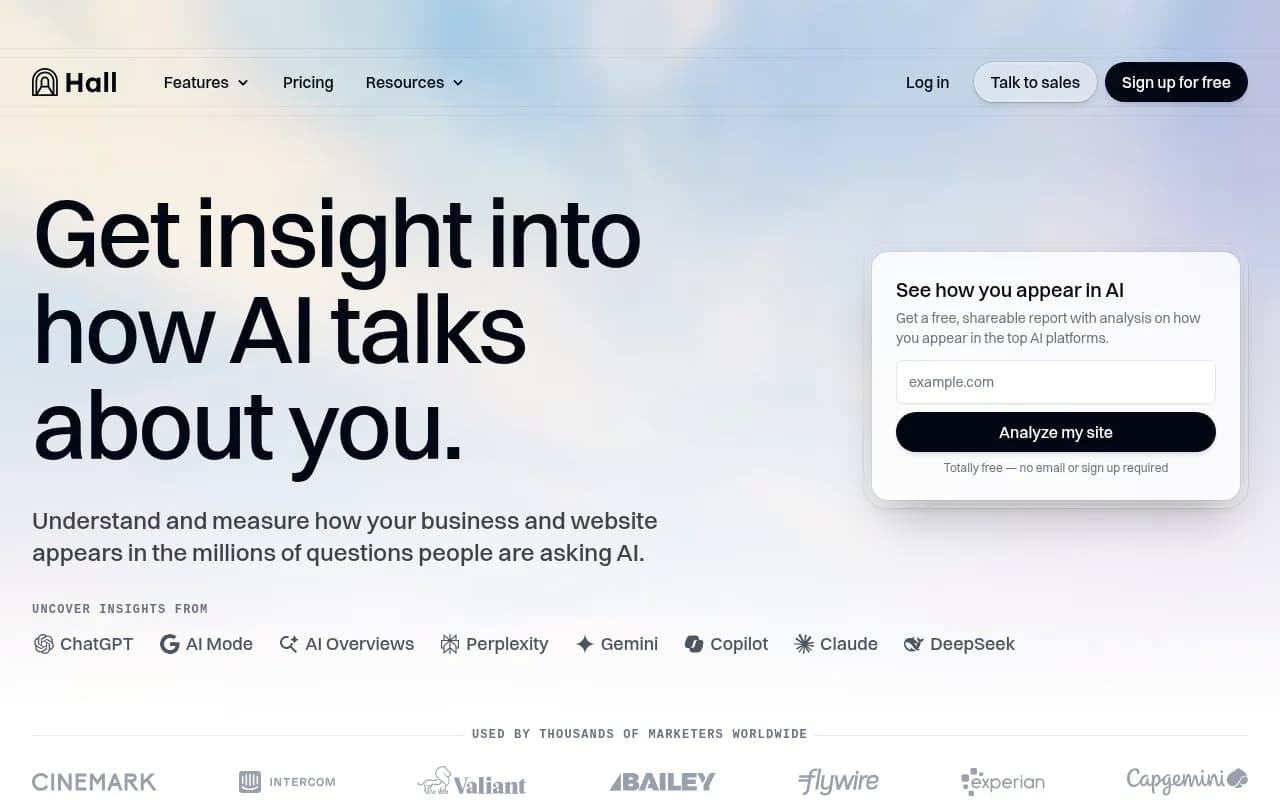
What Hall AI actually did (and what you're replacing)
Hall tracked brand mentions and citations across AI search engines. You'd set up your brand, configure some prompts, and get a dashboard showing how often you appeared in responses from ChatGPT, Perplexity, and similar tools. It was clean, relatively easy to use, and focused on monitoring.
That's the gap you're filling. But "monitoring" covers a wide range of sophistication -- from basic mention counting to prompt-level citation tracking, competitor heatmaps, and page-level attribution. Before picking a replacement, it's worth being honest about which of those things you actually used, and which you wish Hall had offered.
The three main alternatives
Promptwatch: the full-stack option
Promptwatch is the most comprehensive of the three. It tracks brand visibility across 10 AI models -- ChatGPT, Perplexity, Claude, Gemini, Google AI Overviews, Google AI Mode, Grok, DeepSeek, Copilot, and Mistral -- and goes well beyond monitoring into content generation and optimization.
The core loop is: find gaps, create content, track results. The Answer Gap Analysis shows you exactly which prompts your competitors are appearing for that you're not. Content Agents then generate articles, listicles, and comparisons grounded in that prompt data. And page-level tracking shows whether those new pages are getting crawled and cited.
What makes Promptwatch different from Hall isn't just feature count -- it's that the platform is built around taking action, not just observing. Hall showed you the problem. Promptwatch shows you the problem and helps you fix it.
A few things that stand out specifically for Hall refugees:
- AI Crawler Logs show which AI agents are hitting your pages, how often, and what errors they're encountering. Most platforms don't have this at all.
- Reddit and YouTube insights surface discussions that influence AI recommendations -- a channel that's easy to overlook but often drives citations.
- ChatGPT Shopping tracking monitors when your brand appears in product recommendations and shopping carousels.
- Prompt Intelligence includes volume estimates and difficulty scores, so you can prioritize which prompts are worth chasing.
Pricing starts at $99/month for the Essential plan (1 site, 50 prompts, 5 articles). Professional is $249/month and adds crawler logs, city/state tracking, and 150 prompts. Business is $579/month for 5 sites and 350 prompts. There's a free trial.

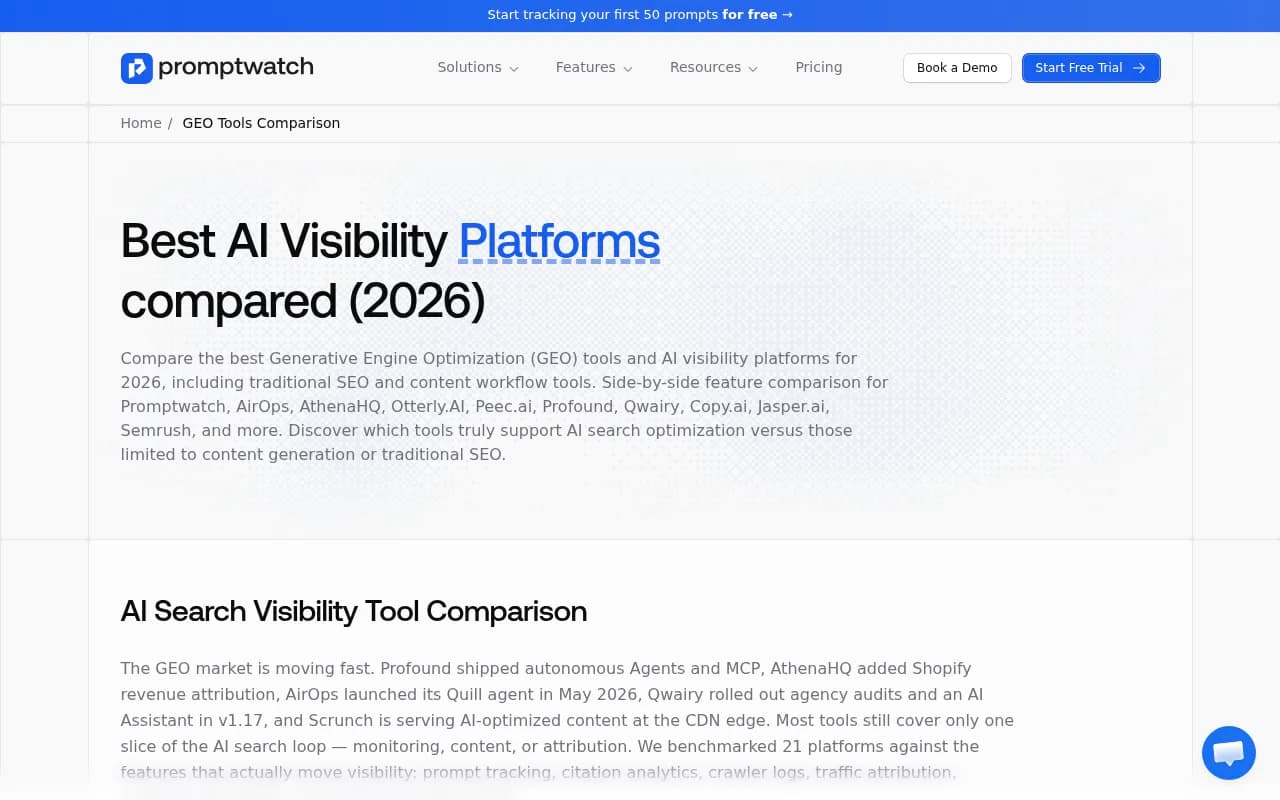
Profound: strong monitoring with autonomous agents
Profound is a purpose-built Answer Engine Optimization (AEO) platform with a solid feature set. It covers prompt volumes, answer engine insights, shopping visibility, and agent analytics. The "Agents" feature -- autonomous workflows that can run research and content tasks -- is genuinely interesting, and the platform has been shipping fast in 2026.
Where Profound shines is in enterprise-grade monitoring depth. The Profound Index gives you benchmark data across industries, and the AEO Report is a useful resource for understanding the broader landscape. The platform is well-suited to PR and brand teams who need to track narrative and sentiment across AI responses, not just citation counts.
The trade-offs: Profound is priced at the higher end of the market, and some capabilities that Promptwatch includes natively -- Reddit tracking, ChatGPT Shopping data, page-level visibility -- require workarounds or aren't available. It's a strong product, but it's more of a monitoring-and-insights platform than an optimization one.

Scrunch: the CDN-edge approach
Scrunch takes a different angle entirely. Its Agent Experience Platform (AXP) is designed to serve AI-optimized content directly to AI user agents at the CDN edge -- meaning it intercepts AI crawler requests and delivers structured, optimized content before the AI even processes your page.
This is an interesting architectural bet. Rather than just tracking what AI models say about you and hoping your content gets picked up, Scrunch tries to control what AI agents see when they visit your site. It also includes site auditing features and standard visibility monitoring.
The honest assessment: Scrunch is more of a technical infrastructure play than a marketing platform. If you have engineering resources and want to get aggressive about how AI agents experience your site, it's worth evaluating. If you're a marketing team that wants a dashboard, content tools, and clear reporting, it might feel like the wrong tool for the job.
Side-by-side comparison
| Feature | Hall AI (defunct) | Promptwatch | Profound | Scrunch |
|---|---|---|---|---|
| AI model coverage | Limited | 10 models | Multiple | Multiple |
| Brand mention tracking | Yes | Yes | Yes | Yes |
| Prompt-level tracking | Basic | Advanced | Advanced | Basic |
| Competitor heatmaps | No | Yes | Partial | No |
| AI crawler logs | No | Yes | Yes (Agent Analytics) | Via AXP |
| Content generation | No | Yes (Content Agents) | Yes (Agents) | No |
| Answer gap analysis | No | Yes | Partial | No |
| Reddit/YouTube insights | No | Yes | No | No |
| ChatGPT Shopping tracking | No | Yes | Yes | No |
| Page-level visibility | No | Yes | No | No |
| CDN-edge content delivery | No | No | No | Yes |
| Traffic attribution | No | Yes | Partial | No |
| Starting price | N/A | $99/mo | Higher | Custom |
| Free trial | N/A | Yes | Demo only | Demo only |
Which one is right for you?
This depends less on feature lists and more on what you're actually trying to do.
If you were using Hall primarily to monitor brand mentions and want a direct replacement with more depth, Promptwatch covers that and adds the optimization layer on top. The Essential plan at $99/month is a reasonable entry point, and the free trial means you can validate it against your actual use case before committing.
If you're at an enterprise with a PR or brand team that needs sophisticated narrative tracking and you have budget for a higher-priced platform, Profound is worth a serious look. The autonomous agents are genuinely useful for teams that run a lot of research workflows.
If you have engineering resources and want to take a more infrastructure-level approach to AI visibility -- controlling what AI crawlers see rather than just tracking what they say -- Scrunch's AXP is a genuinely different bet that might pay off.
If you're a solo marketer or small team on a tight budget, there are also lighter-weight options worth considering:


Both Otterly.AI and Peec.ai offer monitoring at lower price points, though neither has the content generation or gap analysis capabilities of the platforms above.
What the Hall shutdown actually tells us
The LinkedIn takes about Hall's closure being a "wake-up call" are a bit overwrought, but the underlying point holds. Monitoring-only tools face a real problem: once you know you're invisible in AI search results, you need a way to fix it. If your platform can't help with that, you're paying for a dashboard that makes you feel bad without giving you a path forward.
The platforms that are winning in 2026 are the ones that close the loop -- from "here's where you're missing" to "here's the content that will fix it" to "here's proof it worked." That's a harder product to build, which is probably why most tools still stop at step one.
For Hall refugees, the practical advice is: don't just replace Hall with another monitoring dashboard. Use this as an opportunity to upgrade to a platform that can actually move your AI visibility metrics, not just report on them.
A note on the broader landscape
The AI visibility tool market has exploded in 2026. There are now dozens of platforms claiming to track your brand across ChatGPT, Perplexity, and Google AI Overviews. Most of them are fine for basic monitoring. Very few of them help you do anything about what they find.
A few other tools worth knowing about, depending on your specific needs:

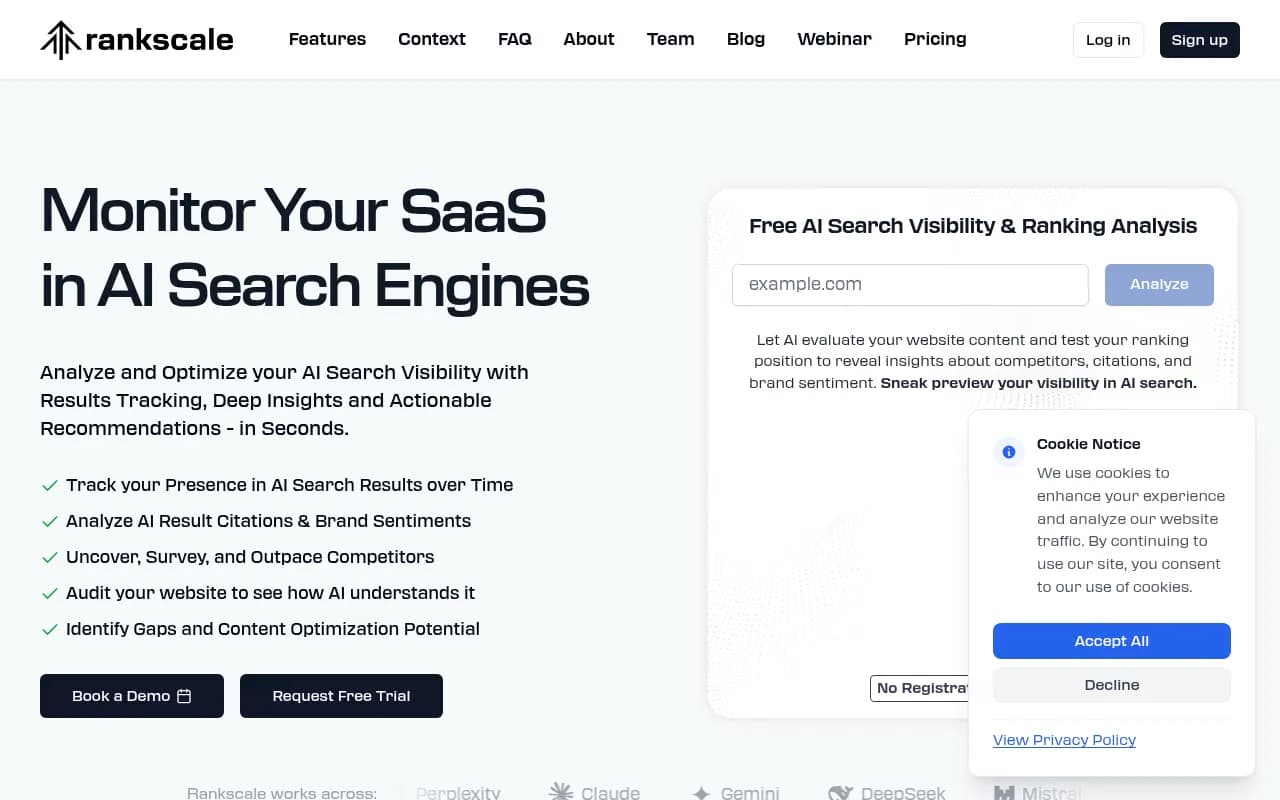
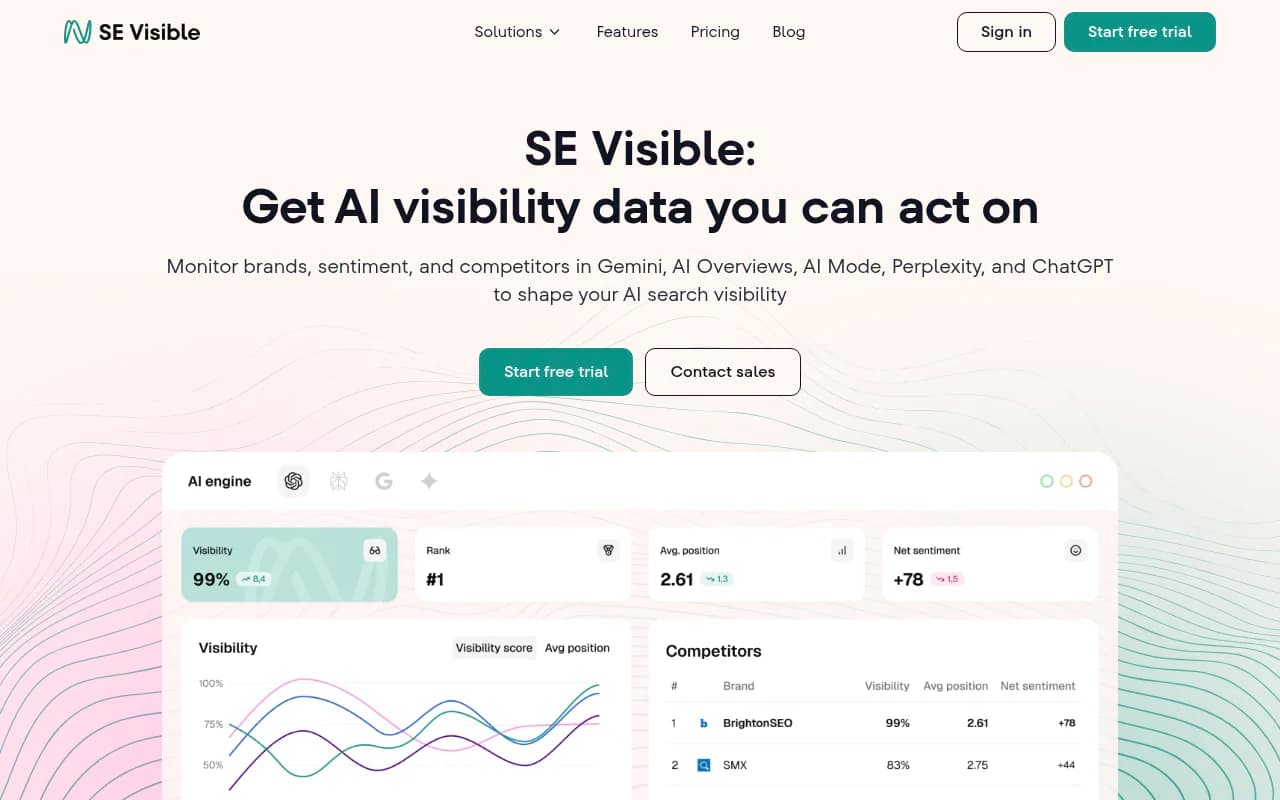
AthenaHQ has added Shopify revenue attribution and is worth a look for e-commerce brands. Rankscale and SE Visible are solid mid-market options if you need something between the basic tools and the enterprise platforms.
The honest summary: Promptwatch is the most complete platform for teams that want to go from monitoring to optimization without switching tools. Profound is the right call for enterprise teams that prioritize monitoring depth and have budget to match. Scrunch is a technical bet that makes sense for specific use cases. And if you just need basic monitoring while you figure out your strategy, the lighter-weight options are perfectly serviceable.
What you probably shouldn't do is pick whatever looks most like Hall and call it done. The market has moved, and the tools that will matter in 12 months are the ones that help you act, not just observe.