Key takeaways
- AI search engines like ChatGPT recommend brands based on authority signals, structured content, and third-party citations -- not traditional keyword rankings
- Agencies need a repeatable workflow: audit current AI visibility, identify content gaps, create answer-optimized content, then track results across models
- Third-party mentions (PR, Reddit, review sites, YouTube) carry significant weight in how AI models form brand recommendations
- Monitoring AI visibility requires different tooling than traditional SEO rank tracking -- most standard SEO platforms don't capture what's actually happening in LLM responses
- Publishing 12+ optimized content pieces per month can dramatically accelerate AI citation velocity, according to research from Brandi AI
If you're running an agency in 2026 and you're not thinking about ChatGPT visibility for your clients, you're already behind. Not because AI search is some distant future thing -- it's happening right now, and it's eating into the traffic and brand awareness that used to flow through Google.
The challenge is that most agencies are still running the same playbook: keyword research, on-page optimization, link building. That stuff still matters, but it doesn't directly translate to getting a brand mentioned when someone asks ChatGPT "what's the best project management tool for remote teams?" or "which accounting software do small agencies use?"
This guide is specifically for agencies trying to build a repeatable process for improving client brand visibility in AI search. We'll cover how AI models decide what to recommend, the strategies that actually move the needle, and the tools worth using.
How AI search engines actually decide what to recommend
Before you can optimize for something, you need to understand how it works. ChatGPT, Perplexity, Gemini, and other AI models don't rank pages the way Google does. They synthesize information from multiple sources to generate a response, and the brands that appear in those responses got there through a combination of factors.
Training data and web crawling
ChatGPT's base knowledge comes from its training data -- a massive snapshot of the web up to a certain cutoff. But in 2026, most AI models also do real-time web retrieval when answering questions. This means your client's content needs to be both historically present (built up over time) and currently crawlable.
When an AI model retrieves content to answer a query, it's looking for pages that clearly and authoritatively answer the question being asked. Thin content, vague landing pages, and marketing copy don't get cited. Detailed, structured, factual content does.
Entity recognition
AI models think in terms of entities -- brands, people, products, concepts -- and the relationships between them. If ChatGPT "knows" that a brand exists, what category it belongs to, and what it's known for, it's far more likely to surface that brand in relevant responses.
Building entity recognition means being consistently mentioned across authoritative sources: Wikipedia (if applicable), industry publications, review platforms, news coverage, and structured data on your own site. The more places an AI model encounters your client's brand in a consistent, positive context, the stronger that entity signal becomes.
Third-party citations and mentions
This is where a lot of agencies underestimate the work involved. AI models heavily weight third-party sources when forming recommendations. A brand that's mentioned in 50 relevant articles, Reddit threads, YouTube videos, and review sites will consistently outperform a brand with a technically perfect website but no external presence.
Research from Brandi AI found that brands publishing 12 or more new or optimized content pieces per month achieve up to 200x faster AI citation velocity. That's a striking number, but the underlying logic makes sense: more content means more surface area for AI models to encounter and cite your brand.
Content structure and extractability
AI models need to be able to extract clear, factual information from your content. Pages that answer specific questions directly, use clear headings, include concrete data points, and are structured for readability perform better than dense walls of text.
This is why FAQ sections, comparison tables, numbered lists, and "best for X" framing tend to get cited more often. The AI can pull a clean answer from that structure.
The agency workflow: from audit to citation
Here's the process we'd recommend for agencies taking on AI visibility work for clients.
Step 1: Audit current AI visibility
Before you can improve anything, you need a baseline. Run your client's brand name and relevant category queries through ChatGPT, Perplexity, Gemini, and Google AI Overviews. Document:
- Which queries mention the client brand?
- Which queries mention competitors but not the client?
- What sources are being cited?
- What language is the AI using to describe the brand (or the category)?
Doing this manually across 10+ AI models is painful. Tools built for this purpose make it much faster.
Promptwatch is worth looking at here -- it tracks brand visibility across 10 AI models simultaneously, shows you exactly which prompts competitors are winning that your client isn't, and surfaces the specific content gaps causing those misses.

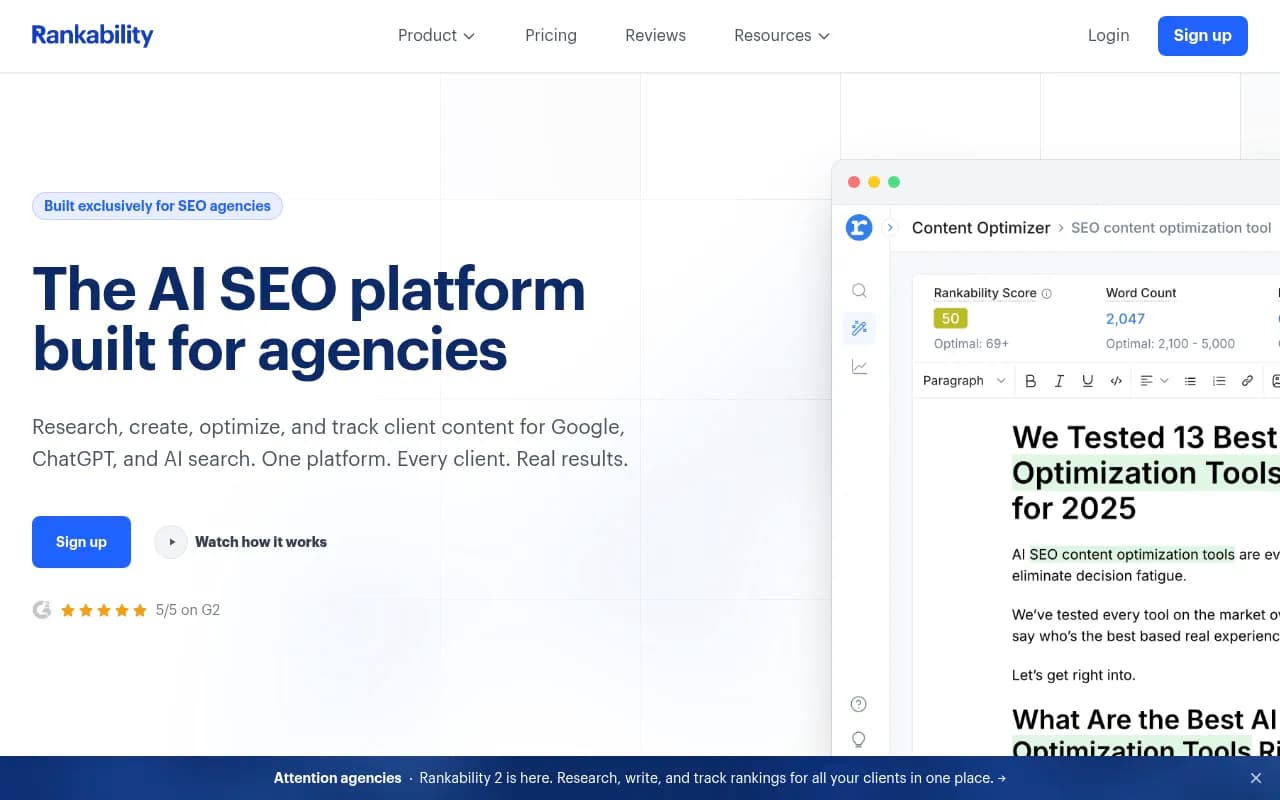
For agencies managing multiple clients, Rankability is built specifically for agency use cases with multi-client reporting.
Profound is another solid option with strong tracking across AI search engines.

Step 2: Identify content and entity gaps
Once you have a baseline, the next step is figuring out exactly what's missing. There are two types of gaps:
Content gaps: Queries where competitors are being cited but your client isn't. This usually means the client doesn't have content that directly answers those questions, or the content they have isn't structured in a way AI models can extract.
Entity gaps: The AI model doesn't have a strong enough signal about what the brand is, what category it belongs to, or what makes it distinct. This often shows up as the brand being mentioned vaguely or not at all, even in queries where it should logically appear.
For content gaps, the fix is creating answer-optimized content targeted at the specific queries where visibility is missing. For entity gaps, the fix is building more consistent third-party mentions and structured brand signals.
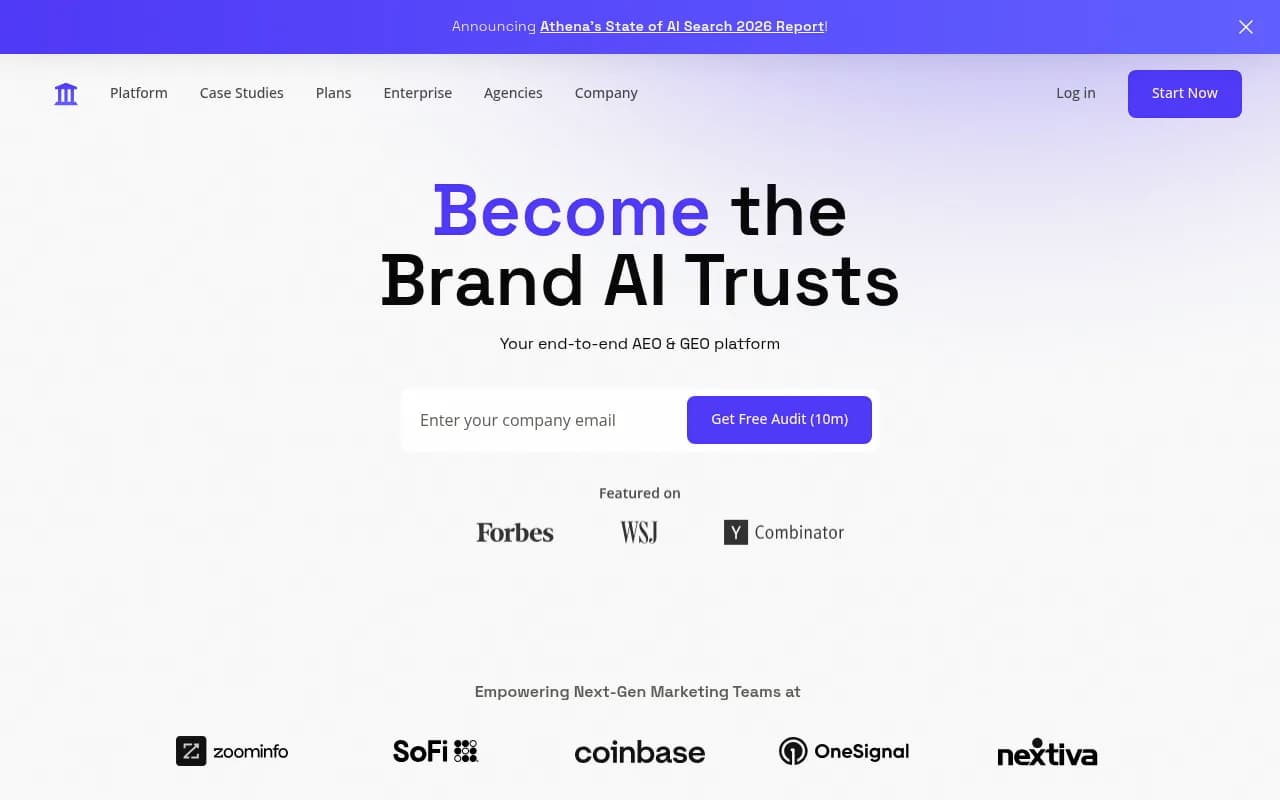
AthenaHQ does a good job of surfacing these gaps with actionable breakdowns.
Step 3: Create content engineered for AI citation
This is where the actual work happens, and it's different from traditional content marketing.
AI-optimized content needs to:
- Answer a specific question directly and completely
- Include concrete facts, data points, and comparisons
- Use clear structure (headings, lists, tables)
- Establish the brand's authority on the topic
- Be published on a domain with existing authority signals
The content types that tend to get cited most often are: comprehensive guides, comparison articles, "best X for Y" listicles, FAQ pages, and data-backed research pieces. Generic blog posts and thought leadership fluff rarely make it into AI responses.
One thing agencies often overlook: the content doesn't all have to live on the client's own site. Guest posts on relevant publications, contributions to industry roundups, and getting the brand mentioned in third-party comparison articles all count. AI models don't care whose domain the content is on -- they care whether it's authoritative and relevant.
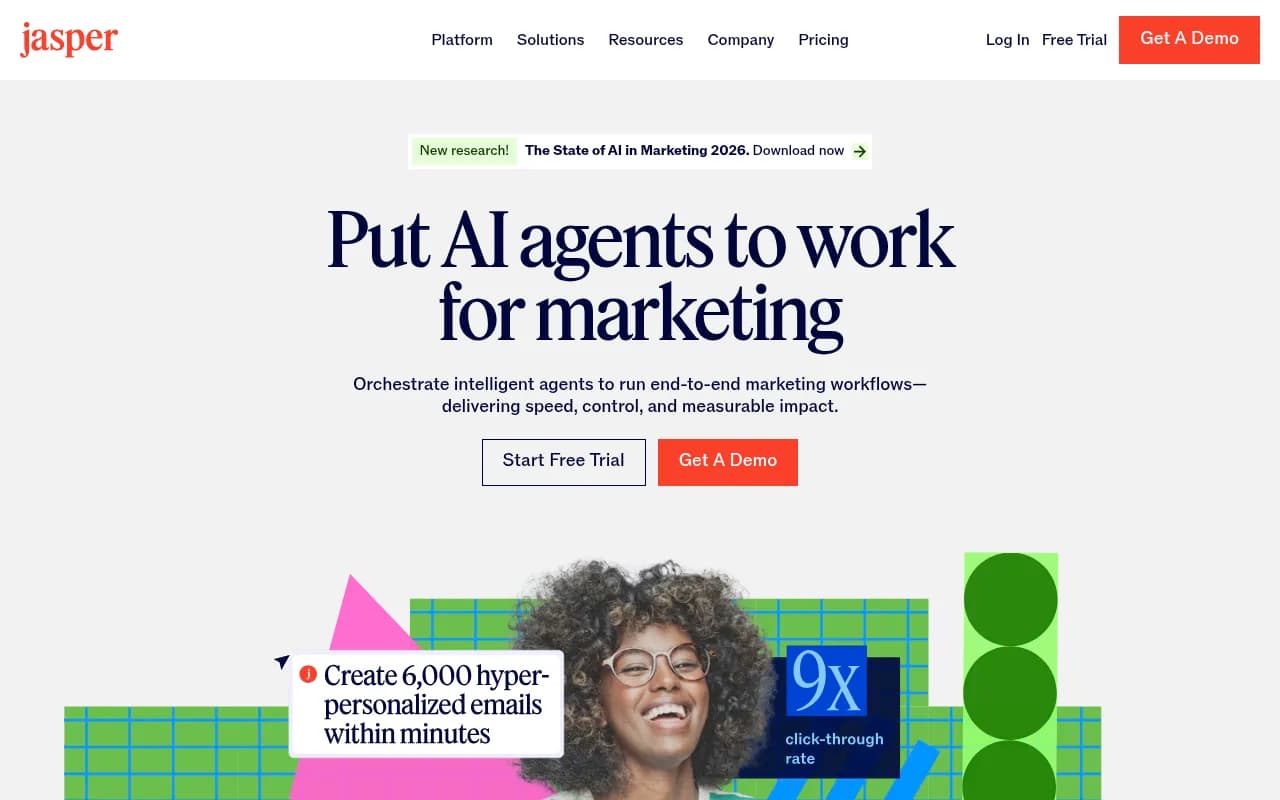
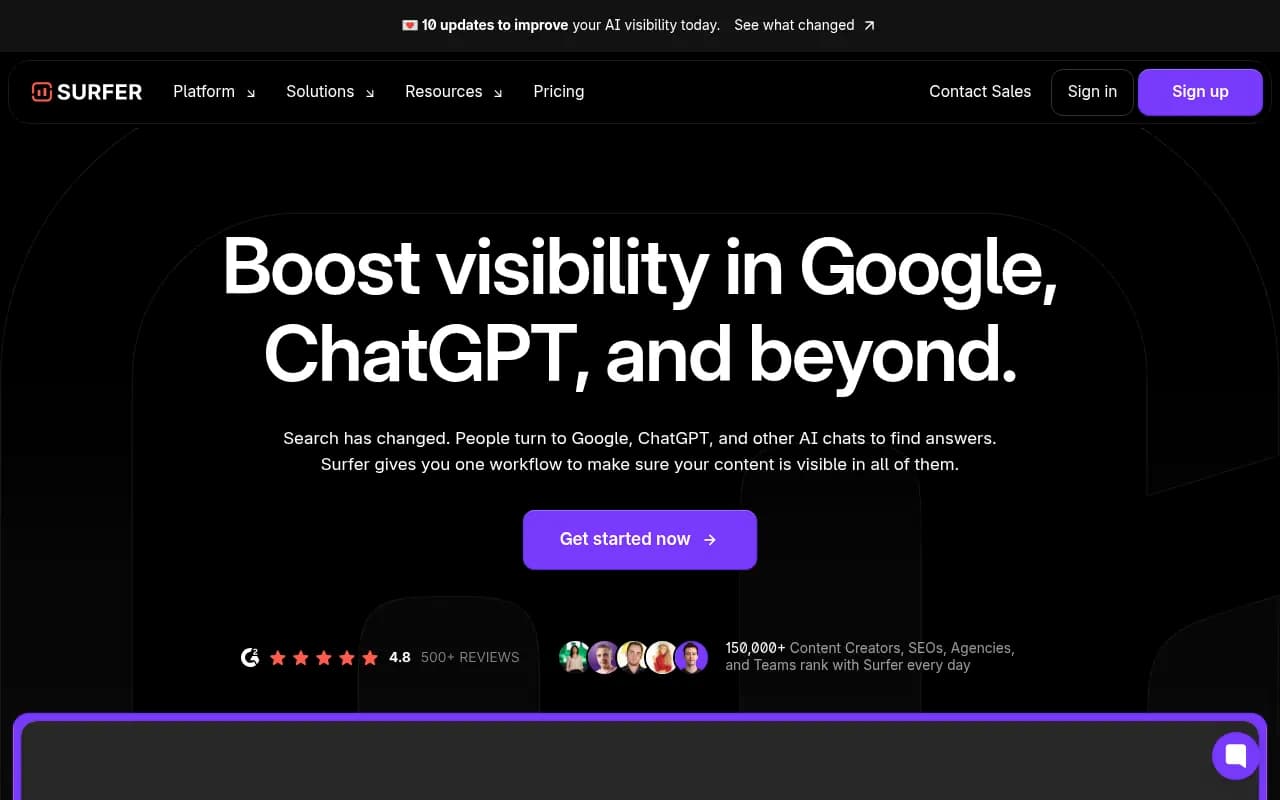
For content creation at scale, Jasper handles AI-assisted content workflows well, and Surfer SEO helps optimize content structure for both traditional and AI search.
Step 4: Build third-party citation signals
This is essentially a PR and digital authority play. The goal is to get the client's brand mentioned in the places AI models trust most.
High-value citation sources include:
- Industry publications and trade press
- Review platforms (G2, Capterra, Trustpilot, depending on the category)
- Reddit discussions in relevant subreddits
- YouTube videos from credible creators in the space
- Comparison and "best of" articles on established blogs
- News coverage (even brief mentions in relevant articles)
Reddit deserves special attention. AI models, especially Perplexity and ChatGPT, frequently cite Reddit discussions when answering "what do real users think about X" type queries. Getting authentic brand mentions in relevant subreddits -- through genuine participation, not spam -- can meaningfully improve AI visibility for certain query types.
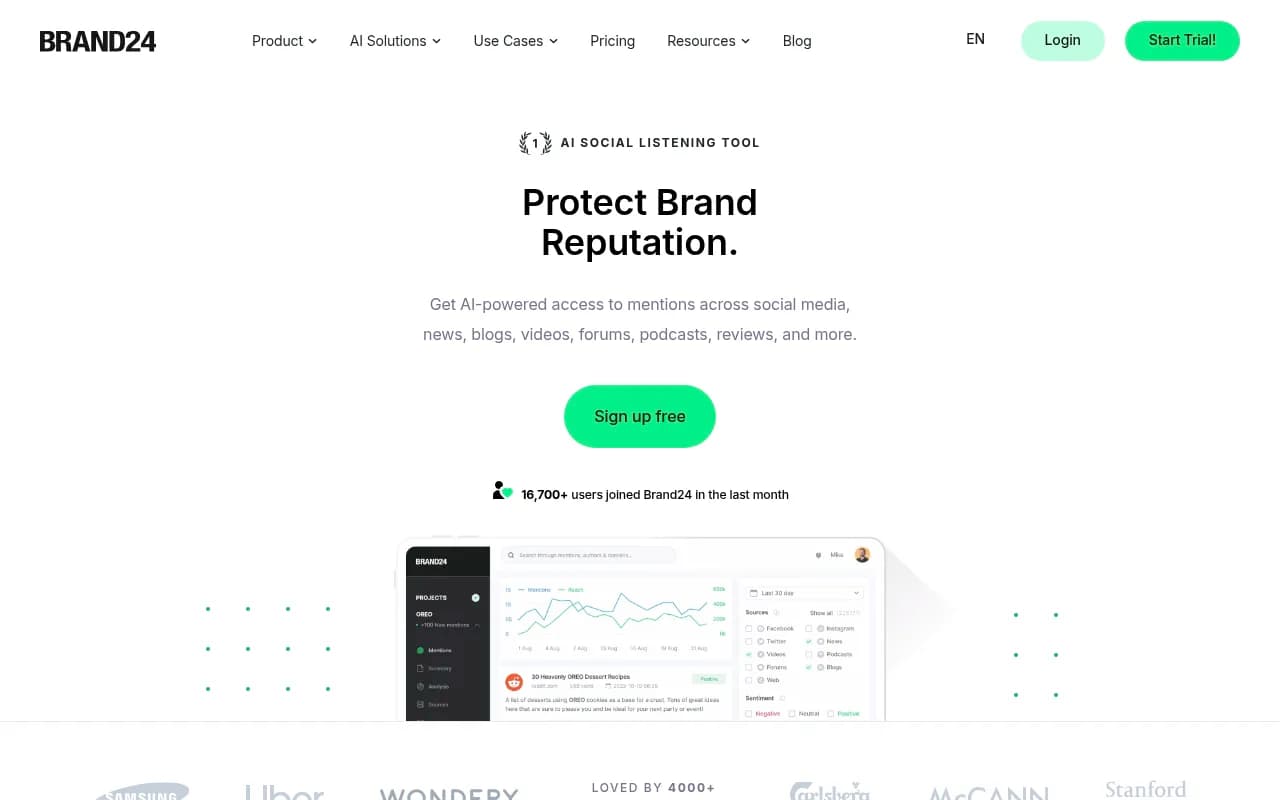
For tracking where the brand is already being mentioned externally, Brand24 covers a wide range of sources including social and forums.
Step 5: Track results and iterate
AI visibility isn't a one-time project. Models update, new competitors enter the picture, and the queries people ask shift over time. Agencies need ongoing monitoring to show clients progress and catch drops before they become problems.
The metrics worth tracking:
- Brand mention rate: what percentage of relevant queries include the client's brand?
- Citation share: how often is the client cited as a source vs. competitors?
- Model-by-model breakdown: visibility can vary significantly between ChatGPT, Perplexity, and Gemini
- Traffic from AI referrals: are AI citations actually driving clicks?
Tools worth having in your agency stack
Here's a practical comparison of the main tools agencies are using for AI visibility work in 2026:
| Tool | Best for | Monitoring | Content tools | Agency features | Approx. pricing |
|---|---|---|---|---|---|
| Promptwatch | End-to-end GEO (monitor + optimize) | 10 models | Yes (AI content agents) | Multi-client, white-label | From $99/mo |
| Profound | Brand tracking across AI engines | Strong | Limited | Yes | Higher price point |
| AthenaHQ | Gap analysis and monitoring | 8+ models | No | Yes | Mid-range |
| Rankability | Agency reporting and client management | Yes | Limited | Built for agencies | Agency pricing |
| Otterly.AI | Budget monitoring | Basic | No | Limited | Low cost |
| Peec AI | Multi-language tracking | Yes | No | Limited | Mid-range |
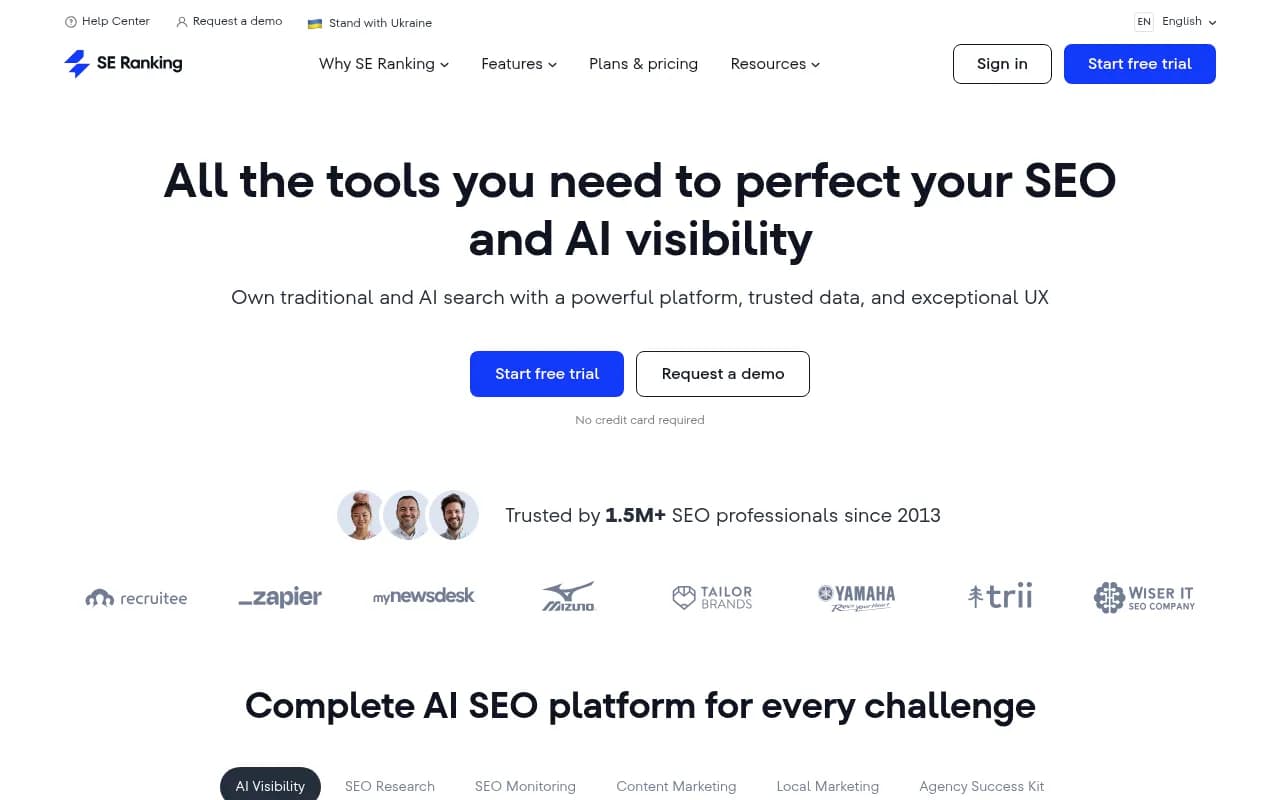
| SE Ranking | Combined SEO + AI visibility | Yes | Some | Yes | From ~$65/mo |


For agencies that want a single platform covering the full loop -- finding gaps, generating content, and tracking results -- Promptwatch is the most complete option available right now. Most other tools stop at monitoring, which tells you where you're invisible but doesn't help you fix it.
Common mistakes agencies make with AI visibility
Treating it like traditional SEO
The instinct to chase "AI rankings" the way you'd chase Google rankings leads agencies down the wrong path. There's no position 1 in ChatGPT. What you're optimizing for is inclusion -- being part of the set of brands the AI considers relevant and trustworthy for a given topic.
Ignoring offsite signals
Some agencies focus entirely on the client's own website and ignore the external citation ecosystem. But if a brand has no meaningful presence on Reddit, review sites, or third-party publications, it's going to struggle to appear in AI responses regardless of how good the website content is.
Not tracking the right models
ChatGPT and Google AI Overviews get most of the attention, but Perplexity is growing fast and often cites different sources than ChatGPT does. Gemini pulls heavily from Google's index. Each model has its own behavior patterns, and visibility can vary dramatically between them. Tracking only one model gives you an incomplete picture.
Expecting fast results
AI visibility builds over time. New content needs to be crawled, indexed, and incorporated into model training or retrieval systems. Agencies that promise clients dramatic results in 30 days are setting themselves up for difficult conversations. A realistic timeline for meaningful movement is 60-90 days for well-executed campaigns.
Not connecting visibility to revenue
Showing a client that their brand mention rate went from 12% to 34% is good. Showing them that AI referral traffic increased and those visitors converted at a higher rate is better. Agencies that connect AI visibility metrics to business outcomes retain clients. Those that report vanity metrics don't.
What to include in client reporting
Agency clients often don't have context for AI visibility metrics, so your reporting needs to do some education work alongside the data.
A solid monthly AI visibility report for clients should include:
- Visibility score trend over time (overall and by model)
- Top queries where the brand is being cited
- Competitor comparison -- who's winning the queries you're not
- Content published that month and its citation performance
- Traffic and conversion data from AI referrals
- Recommended actions for the next month
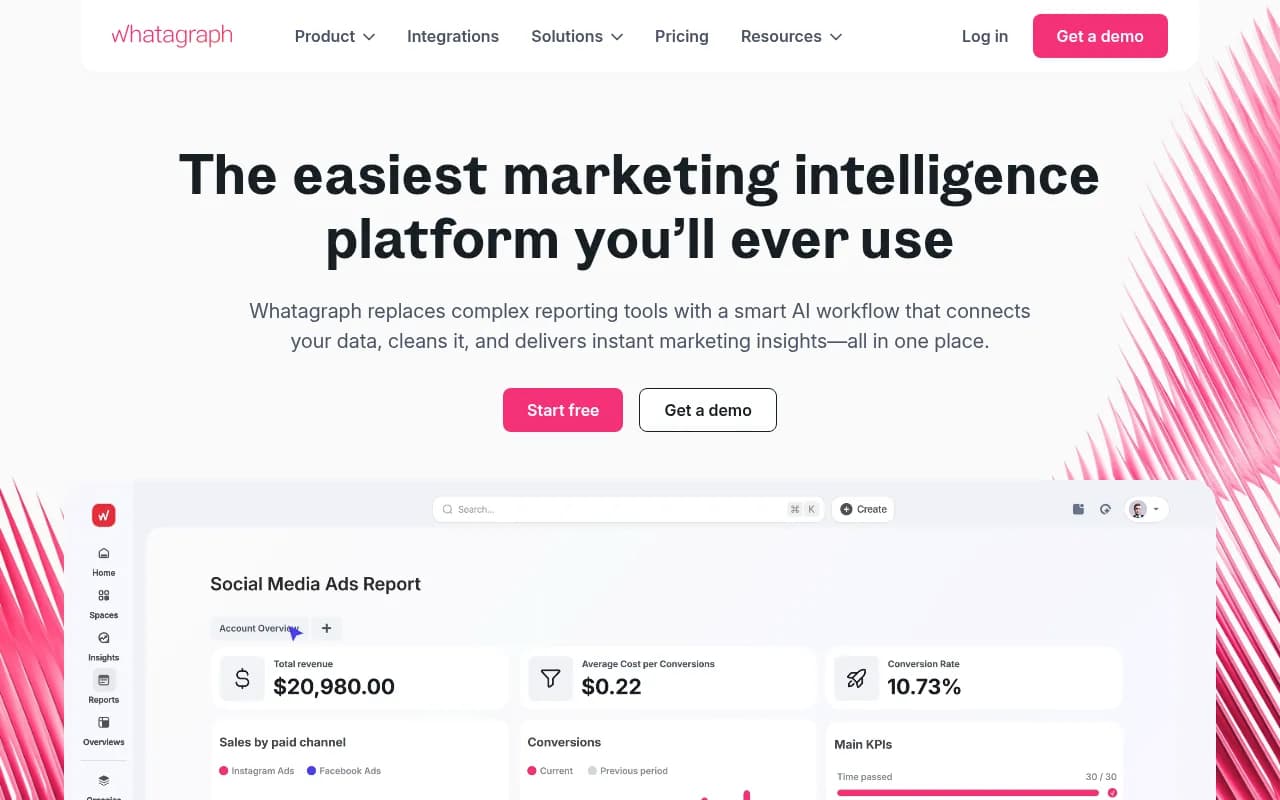
Whatagraph is useful for pulling together multi-source data into clean client-facing reports.
Cairrot is specifically built for agency AI visibility reporting, which is worth noting if you're managing multiple clients and want purpose-built tooling.
The PR angle agencies are underusing
One thing that's become clearer in 2026 is how much PR work feeds into AI visibility. When a brand gets covered in a credible publication, that article becomes a citation source for AI models. When a founder gets quoted in an industry roundup, that quote gets absorbed into how AI models understand the brand.
Traditional PR has always been about building authority and trust. It turns out those are exactly the signals AI models use to decide what to recommend. Agencies that have PR capabilities -- or that partner with PR firms -- have a real advantage here.
The specific PR tactics that drive AI visibility:
- Getting clients featured in "best of" and comparison articles in relevant publications
- Securing data-driven press coverage (AI models love citing statistics)
- Building thought leadership content that gets picked up and referenced elsewhere
- Managing review platform presence to ensure consistent, positive brand signals
CisionOne is the standard enterprise tool for PR distribution and monitoring if you're running serious PR campaigns for clients.
Structuring your agency's AI visibility service
If you're building this out as a formal service offering, here's a reasonable structure:
Tier 1 -- AI Visibility Audit: One-time engagement. Baseline measurement across key AI models, gap analysis, competitor benchmarking, and a prioritized action plan. This is a good entry point for clients who want to understand where they stand before committing to ongoing work.
Tier 2 -- Monthly Optimization Retainer: Ongoing content creation, third-party citation building, monitoring, and monthly reporting. This is where the real results happen -- AI visibility is a sustained effort, not a one-time fix.
Tier 3 -- Full GEO Management: Everything in Tier 2 plus PR support, technical implementation (schema markup, structured data, crawler optimization), and strategic consulting. For clients where AI visibility is a significant revenue driver.
Pricing these services is tricky because the market is still maturing. Audits typically run $2,000-$5,000 depending on scope. Monthly retainers for ongoing optimization range from $1,500 to $8,000+ depending on the number of AI models tracked, content volume, and client size.
The bottom line for agencies
AI search isn't replacing traditional search overnight, but it's already changing where brand discovery happens for a meaningful slice of your clients' potential customers. The agencies building competency in this area now are going to have a significant advantage as AI search continues to grow.
The core of the work isn't that different from what good agencies have always done: understand what your client's audience is asking, create content that genuinely answers those questions, build the brand's authority through credible external mentions, and measure what's actually working. The difference is the tooling, the specific content formats that get cited, and the need to think about third-party citation signals more systematically than most agencies have had to before.
Start with an audit. Find the gaps. Create content that fills them. Track the results. Repeat.