Key takeaways
- Searchable starts at $50/month and covers up to 7 AI models, but its monitoring capabilities leave teams without content optimization or crawler-level insights
- Several strong alternatives exist under $300/month in 2026, including platforms with 10-model coverage, content generation, and AI crawler logs
- The biggest differentiator between tools isn't price — it's whether they help you fix visibility gaps or just show you they exist
- Promptwatch is the only platform in this price range rated as a "Leader" across monitoring, content generation, and optimization — not just tracking

Searchable has carved out a reasonable niche. At $50/month, it covers up to 7 AI models and bundles in some basic content tools, which puts it ahead of the pure-monitoring crowd. For a solo marketer or a small team just getting started with GEO, it's a defensible choice.
But "defensible" isn't the same as "best fit." As teams grow, the gaps start to show. No AI crawler logs. Limited prompt intelligence. Content tooling that doesn't go deep enough to actually move the needle. And if you're running more than one brand or need to track regional variations, you'll hit ceilings fast.
The good news: the $50-$300/month range has gotten genuinely competitive in 2026. There are tools here that would have cost enterprise pricing two years ago. This guide covers the best of them.
What you actually need from an AI visibility tool
Before comparing tools, it's worth being honest about what "AI visibility" actually requires. The category has a lot of noise — dashboards that look impressive but don't help you do anything.
A useful AI visibility tool should do at least three things:
- Tell you where you're invisible (and why)
- Help you understand which prompts matter (volume, difficulty, competitor gaps)
- Give you a path to fix it — whether that's content briefs, generated articles, or specific optimization recommendations
Most tools in the under-$300 range do the first thing reasonably well. Fewer do the second. Almost none do the third. That gap is worth keeping in mind as you evaluate.
The best Searchable alternatives under $300/month
Promptwatch — best overall for teams that want to act, not just monitor
Promptwatch sits at $99/month for the Essential plan and $249/month for Professional. Both are under the $300 ceiling, and both include something most competitors in this range don't: content generation built directly into the platform.
The core workflow is a loop. Answer Gap Analysis shows you which prompts competitors are visible for that you're not. Content Agents then generate articles, listicles, and briefs grounded in that exact gap data — not generic SEO filler. Then page-level tracking shows you when those pages get crawled and cited by AI models.
The Professional plan ($249/month) adds AI crawler logs, which is a feature most tools don't offer at any price tier. You can see exactly which AI crawlers are hitting your site, which pages they're reading, and when a page moves from "crawled" to "cited." That's genuinely useful diagnostic data.
Model coverage spans 10 platforms: ChatGPT, Perplexity, Google AI Overviews, Google AI Mode, Claude, Gemini, Meta/Llama, DeepSeek, Grok, and Mistral. Searchable covers 7. That gap matters when your customers are using Grok or DeepSeek and you have no visibility into those channels.
Otterly.AI — best for the lowest entry price
Otterly.AI starts at $29/month, which makes it the cheapest option in this comparison. For teams that just need basic brand mention tracking across a handful of models, it's hard to argue with the price.
The tradeoff is depth. Otterly covers 4 models at the base tier, has no content generation, no crawler logs, and no prompt volume data. It's a monitoring dashboard, full stop. If you're testing the waters or just need to answer "are we being mentioned at all?", it works. If you need to actually improve your visibility, you'll outgrow it quickly.

Peec AI — best for flexible model selection
Peec AI starts at €85/month and lets you pick which AI models you want to track rather than forcing you into a fixed bundle. That's a genuinely useful design choice if your audience is concentrated in specific channels — say, you care deeply about Perplexity but not about DeepSeek.
It covers up to 10 models and has decent multi-language support. The monitoring data is solid. Like Otterly, though, it doesn't generate content or offer crawler-level insights. You're getting a good tracking dashboard, not an optimization platform.

SE Visible — best for multi-brand or agency use
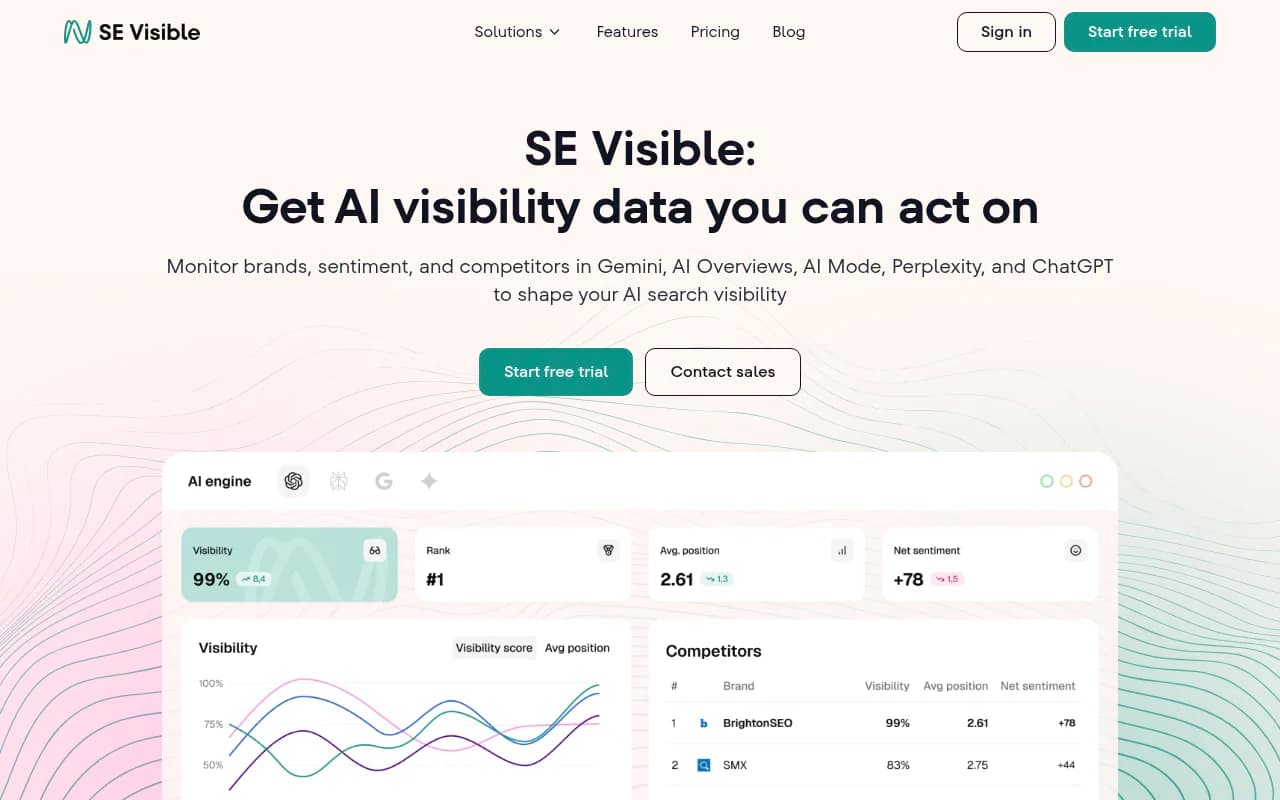
SE Visible from SE Ranking starts at $99/month and is built with multi-brand monitoring in mind. If you're an agency managing several clients or a brand with multiple product lines, the structure here is more practical than most alternatives.
It covers 5 AI models and integrates with SE Ranking's broader SEO toolkit, which is useful if you're already in that ecosystem. The AI visibility features are solid for the price — share of voice, sentiment tracking, citation analysis. No content generation, but the SEO integration means you at least have content tools nearby.
Nightwatch — best for combining traditional SEO with AI monitoring
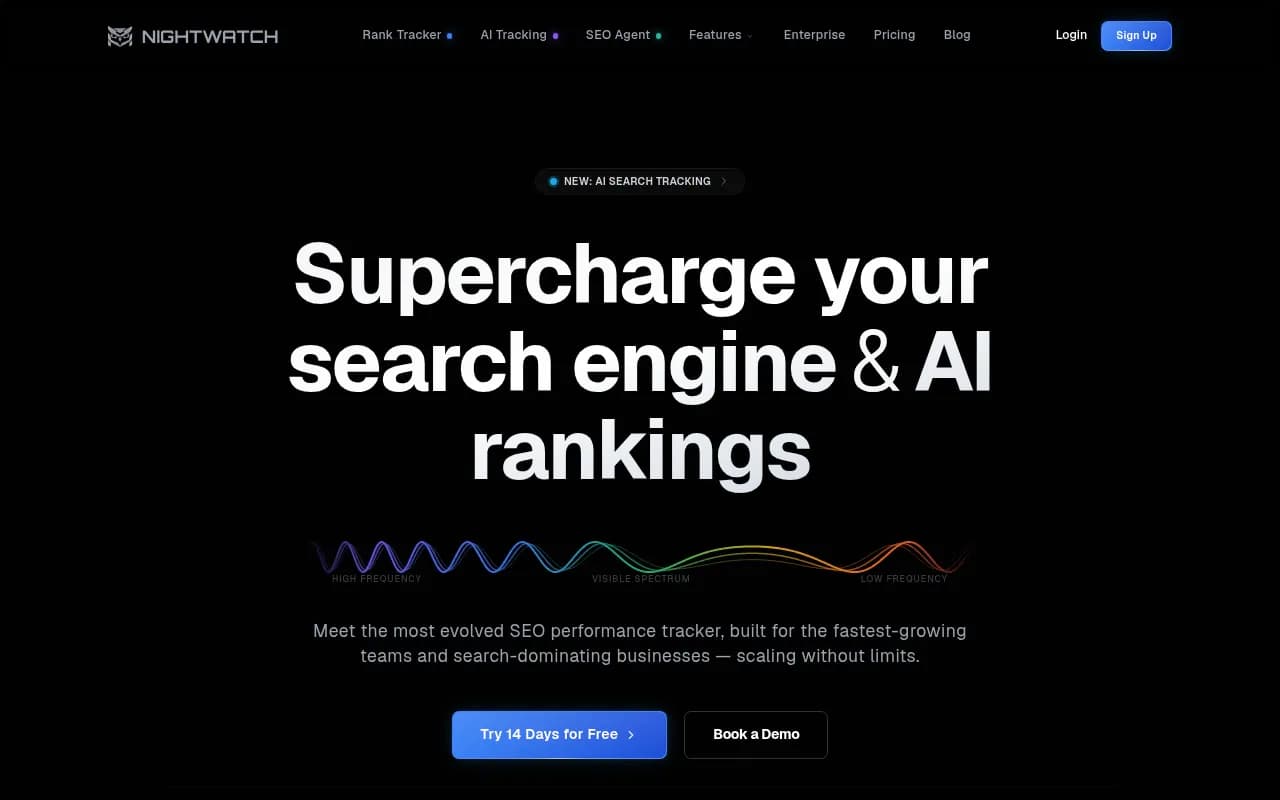
Nightwatch starts at $32/month for traditional rank tracking, with an AI monitoring add-on at $99/month. So the combined cost is $131/month for both, which is reasonable if you're managing SEO and AI visibility in parallel.
It covers 4 AI models, which is on the lower end. But if you're a team that still cares about Google rankings alongside AI visibility (which most teams should), having both in one tool reduces context-switching. The interface is clean and the rank tracking is genuinely good.
Scrunch AI — best for enterprise-grade data at a mid-market price
Scrunch AI is positioned slightly higher in the market, but worth mentioning because it's one of the few tools in this category with SOC 2 Type II certification and real-time AI bot crawling feeds. If you're in a regulated industry or need enterprise-grade security without enterprise pricing, it's worth a look.
The monitoring depth is strong. Like most competitors, it doesn't generate content. But the data quality and compliance posture set it apart from the lighter tools in this list.
Rankshift — best for LLM-specific tracking with a GEO focus
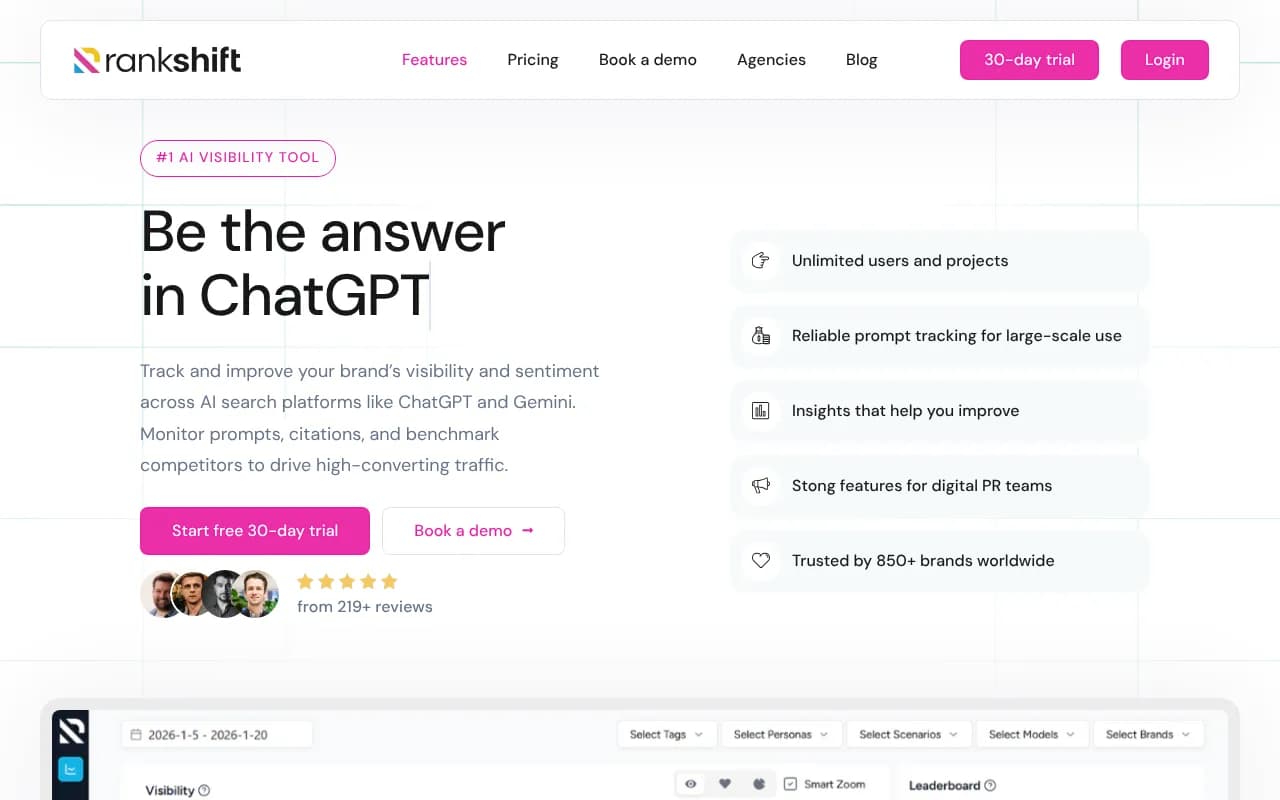
Rankshift is a focused LLM tracking tool built specifically for GEO practitioners. It's lighter than the full platforms but does one thing well: showing you how your brand ranks across AI models for specific prompts, with enough detail to inform optimization decisions.
Good for teams that already have content production handled and just need clean tracking data to prioritize their work.
LLM Pulse — best for comprehensive response monitoring
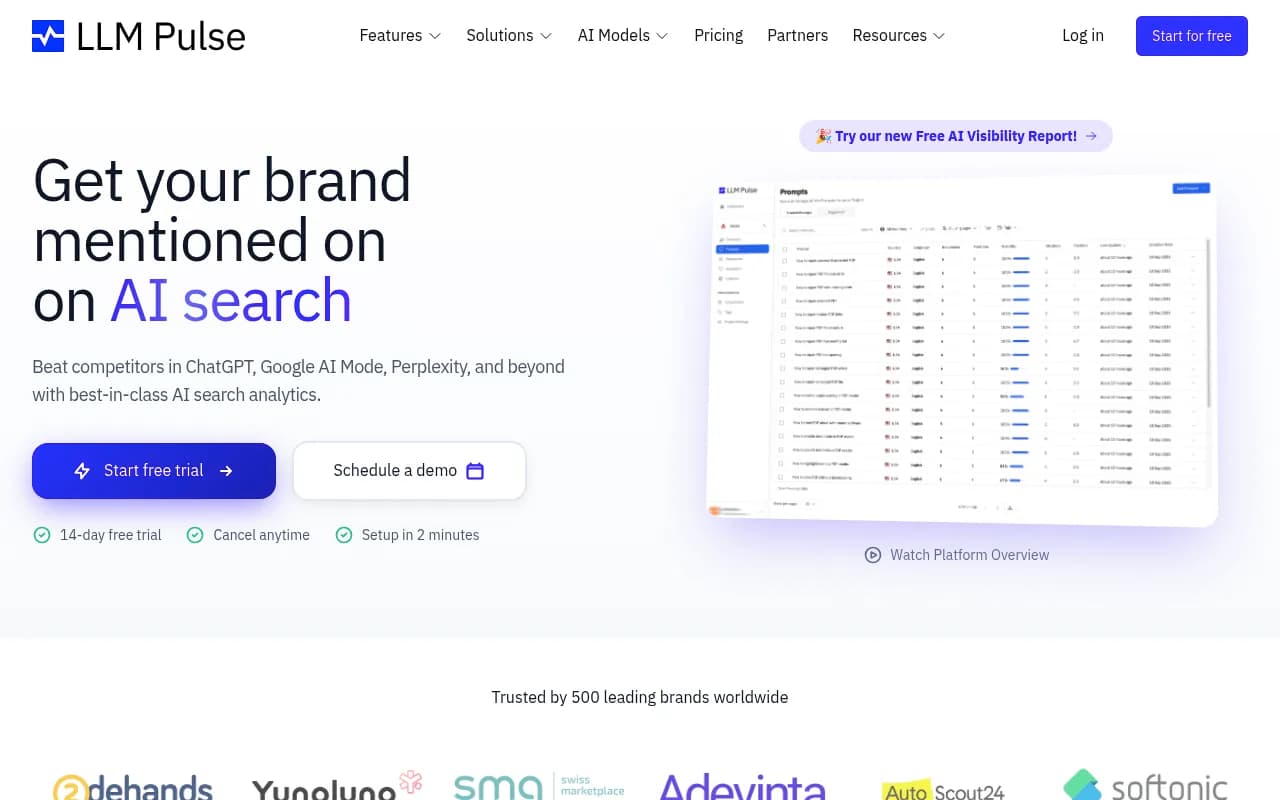
LLM Pulse tracks AI model responses at a level of detail that most lighter tools skip. It's particularly useful for understanding not just whether you're mentioned, but how you're mentioned — sentiment, placement, context, and how responses change over time.
If you're doing reputation management alongside visibility tracking, the depth here is useful.
Side-by-side comparison
| Tool | Starting price | AI models | Content generation | Crawler logs | Best for |
|---|---|---|---|---|---|
| Promptwatch | $99/mo | 10 | Yes (articles, briefs, listicles) | Yes (Professional+) | Full optimization loop |
| Searchable | $50/mo | Up to 7 | Basic | No | Entry-level monitoring + content |
| Otterly.AI | $29/mo | 4 (base) | No | No | Cheapest entry point |
| Peec AI | €85/mo | Up to 10 | No | No | Flexible model selection |
| SE Visible | $99/mo | 5 | No | No | Multi-brand / agency |
| Nightwatch | $131/mo (SEO + AI) | 4 | No | No | SEO + AI combined |
| Scrunch AI | Custom | Varies | No | Real-time bot feeds | Enterprise data quality |
| Rankshift | Varies | Multiple | No | No | GEO-focused LLM tracking |
| LLM Pulse | Varies | Multiple | No | No | Response depth / sentiment |
What Searchable does well (and where it falls short)
It's worth being fair here. Searchable isn't a bad tool. At $50/month with 7-model coverage and some content features, it offers more than the pure-monitoring tools at similar price points.
Where it struggles:
- No AI crawler logs, so you can't diagnose why AI models aren't citing your pages
- Content tooling is basic compared to platforms that generate full articles grounded in prompt gap data
- Prompt intelligence is limited — no volume estimates, no difficulty scoring, no query fan-outs
- No Reddit or YouTube tracking, which matters because AI models frequently cite these sources
For a team that's just starting to think about AI visibility and wants a low-commitment entry point, Searchable is fine. For a team that's serious about improving their AI search presence, the ceiling arrives quickly.
How to choose the right tool for your situation
The honest answer is that it depends on what stage you're at.
If you're just starting out and need to answer basic questions ("are we being mentioned in ChatGPT?"), Otterly.AI or Peec AI will do the job cheaply. You don't need a full platform yet.
If you're past the "are we visible?" question and into "why aren't we visible, and what do we do about it?", you need something with gap analysis and content tools. That's where Promptwatch earns its price — the Professional plan at $249/month includes crawler logs, content agents, and 15 generated articles per month. That's not just tracking; it's a workflow.
If you're an agency managing multiple clients, SE Visible's multi-brand structure is worth the $99/month. It's not the deepest tool, but the organizational model fits agency work better than most alternatives.
If you need both traditional SEO and AI monitoring in one place, Nightwatch at $131/month combined is a reasonable choice.
The one thing I'd push back on is the instinct to pick the cheapest tool and see what happens. The monitoring-only tools are cheap because they don't do the hard part. If you're investing time in AI visibility at all, the gap between a $29/month tracker and a $249/month optimization platform is smaller than it looks when you account for the actual work those tools save you.
The content generation question
One thing that separates the 2026 landscape from 2024 is that content generation has moved from "nice to have" to a real differentiator. The reason is simple: AI models cite content. If your content doesn't exist, or doesn't answer the right questions, no amount of monitoring will fix your visibility.
Tools like Promptwatch have built content generation directly into the gap analysis workflow. You find a prompt where a competitor is visible and you're not, generate a brief or full article targeting that gap, publish it, and track when AI models start citing it. That closed loop is what makes it an optimization platform rather than a dashboard.
Most tools in this price range don't offer this. They'll show you the gap; they won't help you close it. That's a real limitation worth factoring into your decision.
Final take
The under-$300/month AI visibility market in 2026 is genuinely good. You don't need enterprise pricing to get solid model coverage, prompt tracking, and competitive analysis.
But there's still a meaningful gap between tools that monitor and tools that optimize. If you're evaluating Searchable alternatives, the question to ask is: do I need to know where I'm invisible, or do I need to fix it? The answer determines which tier of tool is actually worth your money.
For most marketing teams past the initial exploration phase, the answer is both — and Promptwatch is the only platform under $300/month that handles both ends of that loop without requiring you to stitch together separate tools.