Key takeaways
- Semrush leads on marketing suite breadth and keyword database size (25B+ keywords), but it's the most expensive option and its AI search features are still maturing
- Ahrefs has the largest backlink index (40T+ links) and is the strongest pick for content research and technical SEO at the enterprise level
- SE Ranking offers the best value per dollar, comes with 10 projects and 2,000 tracked keywords at its entry tier, and has added AI visibility features including an MCP integration with Claude
- Moz remains a solid choice for foundational SEO but has fallen behind on AI search features compared to the other three
- None of these four tools fully replaces a dedicated AI search visibility platform -- they're SEO-first tools adding AI features on top, not the other way around
Traditional SEO tools are scrambling to add AI search features. That's not a criticism -- it's just the reality of where search is heading. ChatGPT, Perplexity, Google AI Overviews, and Gemini are now part of how people find things, and any serious SEO platform has to at least acknowledge that.
But "AI search features" means very different things depending on which vendor you ask. For some it means AI-assisted content writing. For others it means tracking how your brand appears in LLM responses. And for a few, it means both -- with varying degrees of depth.
This guide compares Semrush, Ahrefs, SE Ranking, and Moz on their actual 2026 capabilities: traditional SEO, AI search visibility, content tools, pricing, and where each one falls short. The goal is to help you pick the right tool for your situation, not to declare a universal winner.
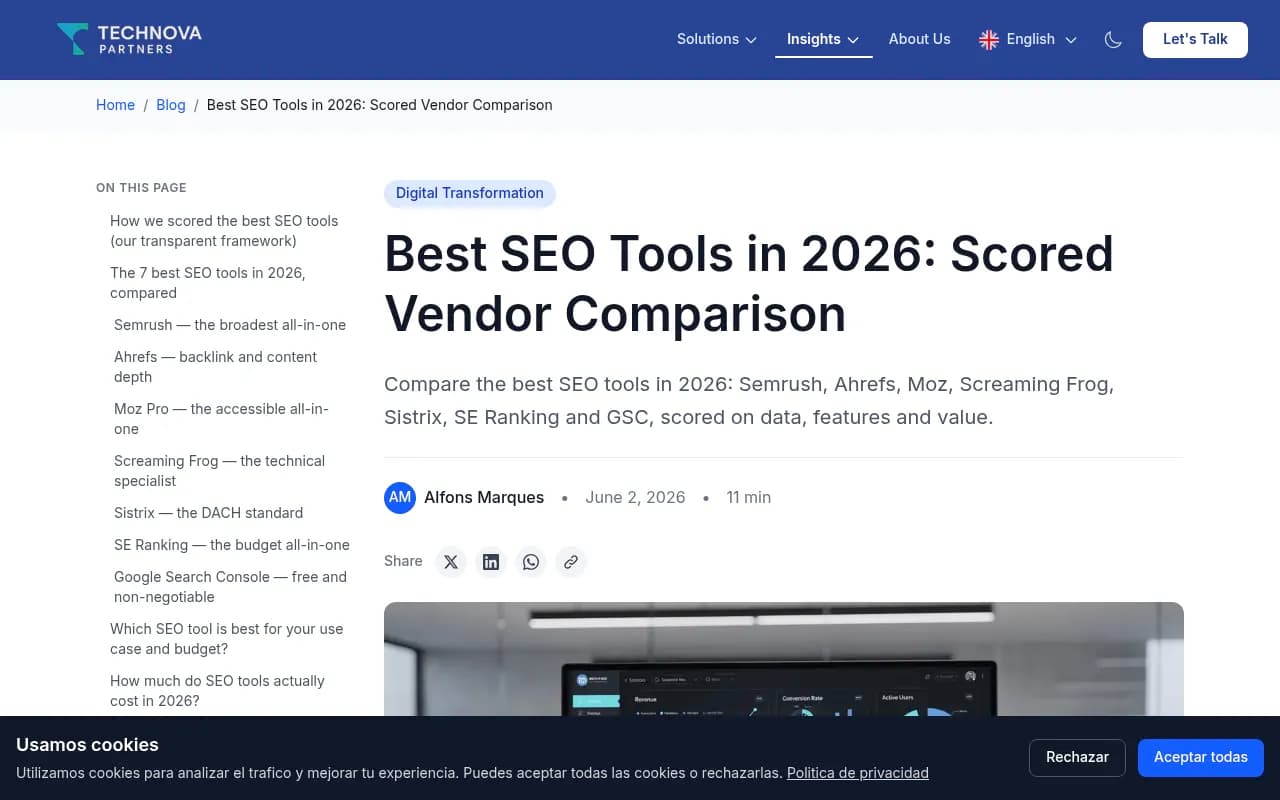
How these four tools compare at a glance
Before getting into the detail, here's a side-by-side view of the key dimensions:
| Semrush | Ahrefs | SE Ranking | Moz Pro | |
|---|---|---|---|---|
| Entry price (monthly) | $139.95/mo | $129/mo | ~$65/mo | $99/mo |
| Keyword database | 25B+ | Large (not published) | 5B+ | ~1.25B |
| Backlink index | Strong | 40T+ links (largest) | Good | Moderate |
| Projects at entry tier | 5 | 5 | 10 | 3 |
| Tracked keywords (entry) | 500 | 750 | 2,000 | 300 |
| AI content writing | Yes (ContentShake) | Limited | Yes (AI writer) | Limited |
| AI search visibility tracking | Basic (fixed prompts) | Basic (Brand Radar, fixed prompts) | Yes (SE Visible add-on) | Minimal |
| Technical SEO audit | Strong | Strong | Strong | Moderate |
| Reddit/YouTube insights | No | No | No | No |
| AI crawler logs | No | No | No | No |
| Best for | All-round marketing teams | Backlinks + content research | Value-focused teams, agencies | Foundational SEO |
A few things jump out immediately. SE Ranking wins on value -- 2,000 tracked keywords and 10 projects at the entry tier is significantly more than what Semrush or Ahrefs offer at comparable price points. Ahrefs wins on backlink data, which is genuinely unmatched. Semrush wins on breadth of marketing features. And Moz... is Moz. Still useful, but it's been outpaced.
Semrush: the marketing suite that does everything (at a price)
Semrush is the tool most marketing teams reach for first, and there are good reasons for that. The keyword database is enormous, the UI is polished, and the onboarding experience is better than most competitors. If you're running paid search alongside SEO, or you need competitive intelligence across multiple channels, Semrush has more surface area than any other tool here.
On the AI search side, Semrush has added features but they're not deep. The platform tracks brand visibility in AI responses, but it uses fixed prompt sets rather than letting you define the exact queries your customers are actually asking. That's a meaningful limitation -- AI search behavior varies enormously by industry and persona, and a fixed prompt library doesn't capture that nuance.
ContentShake AI, Semrush's content writing tool, is genuinely useful for drafting SEO content quickly. It's not a replacement for a skilled writer, but it's a reasonable starting point.
The main complaint about Semrush is pricing. The Pro plan at $139.95/month is the most expensive entry point of the four tools here, and the limits at that tier (500 tracked keywords, 5 projects) feel tight for agencies or anyone managing more than a handful of sites. You end up needing to upgrade sooner than you'd like.
Verdict: Semrush is the strongest all-round marketing platform, but its AI search features are surface-level and its pricing punishes small teams.
Ahrefs: still the best for backlinks and content research
If backlink analysis is central to your SEO work, Ahrefs is the honest answer. Its index of 40 trillion+ links is the largest available, and the quality of the data -- how it handles redirects, lost links, and link velocity -- is consistently better than competitors. For agencies doing link building or competitive link gap analysis, this matters a lot.
Ahrefs also has strong content research tools. Content Explorer lets you find high-performing content in any niche, and the keyword research workflow is clean and fast. The Site Audit tool is solid for technical SEO, though Screaming Frog is still the specialist choice for deep crawls.
On AI search, Ahrefs launched Brand Radar to track brand mentions in AI responses. Like Semrush, it uses fixed prompts, which limits how targeted the tracking can be. There's no AI traffic attribution, no crawler log analysis, and no content generation tied to AI visibility gaps. It's monitoring, not optimization.
The entry tier (Lite at $129/month) includes 750 tracked keywords and 5 projects. Better than Semrush's Pro tier on keywords, roughly equivalent on projects.
Verdict: Ahrefs is the right choice if backlink research and content analysis are your primary use cases. Its AI search features are real but limited.
SE Ranking: the value pick that's closing the gap fast
SE Ranking has been quietly building a strong platform while Semrush and Ahrefs have been trading headlines. The value proposition is hard to argue with: at roughly $65/month, you get 10 projects, 2,000 tracked keywords, and a full suite of SEO tools including keyword research, site audit, backlink analysis, and rank tracking.
The platform added an AI MCP integration with Claude in 2026, which lets you pull SE Ranking data directly into Claude workflows. That's a practical feature for teams already using Claude for content or research tasks.
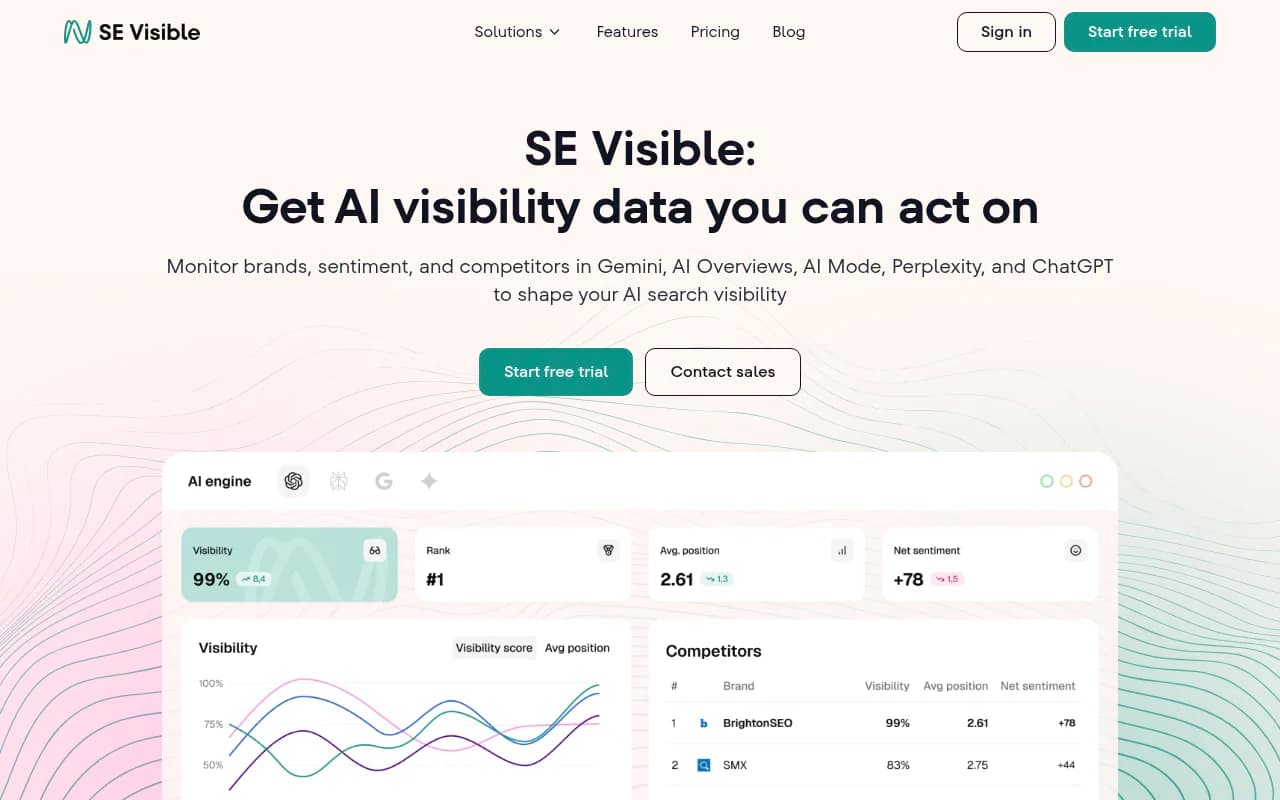
SE Ranking also has SE Visible, a separate AI visibility tracking add-on that monitors how your brand appears in AI search responses. It's more configurable than Semrush's or Ahrefs' built-in AI features, though it's still not as deep as a dedicated GEO platform.
The honest trade-off is data depth. SE Ranking's keyword and backlink databases are smaller than Semrush's or Ahrefs'. For most small-to-mid-size businesses and agencies, that gap doesn't matter in practice -- you're not going to exhaust SE Ranking's data. But for enterprise teams doing large-scale competitive analysis, the difference is real.
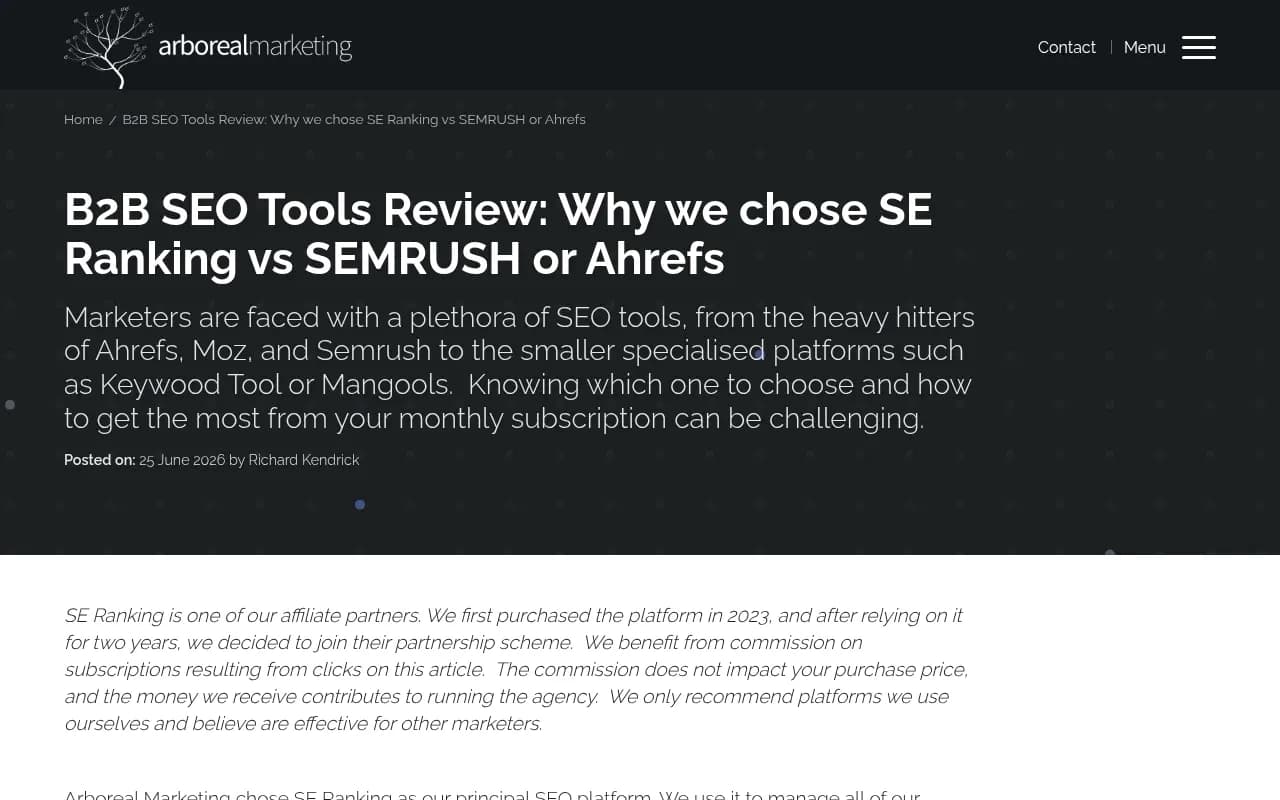
One B2B marketing agency that evaluated all three platforms (Arboreal Marketing) chose SE Ranking as their primary tool after comparing it against Semrush and Ahrefs, citing value, project limits, and ease of use as the deciding factors.
Verdict: SE Ranking is the best choice for agencies and teams that need to manage multiple clients or sites without paying Semrush prices. The AI features are a genuine addition, not just a checkbox.
Moz Pro: solid foundations, but falling behind
Moz built its reputation on Domain Authority, a metric that's still widely used even by people who don't use Moz. The platform has good keyword research, a clean rank tracker, and a site audit tool that's accessible for less technical users.
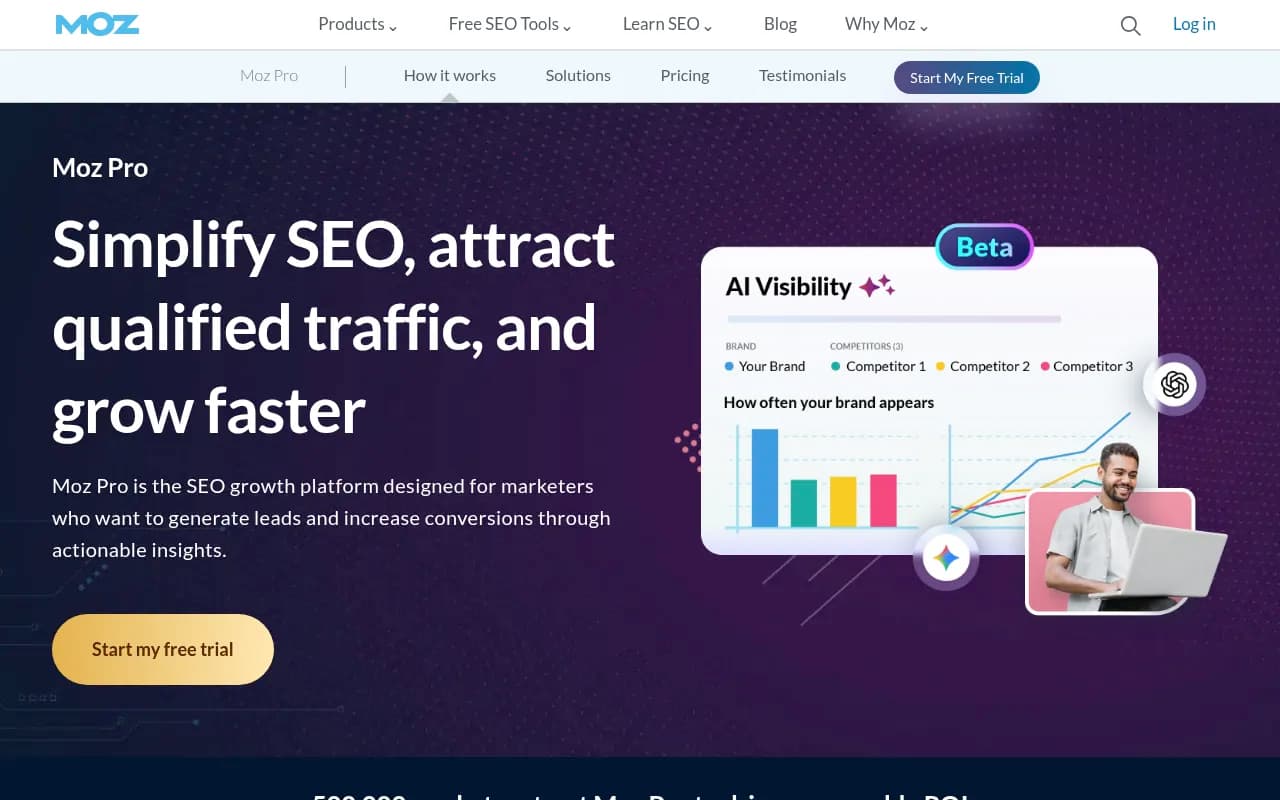
But in 2026, Moz is struggling to keep pace. Its keyword database (around 1.25 billion keywords) is significantly smaller than Semrush or Ahrefs. The backlink index is weaker. And on AI search features, Moz has the least to offer of the four tools here -- there's no meaningful AI visibility tracking, no AI content generation, and no integration with LLM workflows.
The $99/month entry price is reasonable, but you only get 3 projects and 300 tracked keywords. That's the worst value of the four at the entry tier.
Moz still makes sense for teams that are early in their SEO journey and want a tool that explains what it's doing -- the educational resources and UI are genuinely beginner-friendly. But if AI search visibility is a priority, Moz isn't the right tool.
Verdict: Moz is a decent starting point for SEO beginners, but it's not competitive on AI search features and the entry tier limits are too tight for most professional use cases.
The AI search gap these tools don't fill
Here's something worth being honest about: all four of these tools are SEO platforms first. They were built to track Google rankings, analyze backlinks, and audit websites. The AI search features they've added are real, but they're additions to an existing product, not the core of it.
That creates a specific gap. When Semrush or Ahrefs tracks your brand in AI responses, it's typically using a fixed set of prompts. You can't always define the exact queries your customers are asking, you can't see which specific pages AI models are citing, and you can't get crawler logs showing when ChatGPT or Perplexity last visited your site.
For teams where AI search visibility is becoming a significant concern -- and that's most marketing teams in 2026 -- a dedicated platform like Promptwatch fills that gap. It tracks how your brand appears across 10 AI models (ChatGPT, Perplexity, Claude, Gemini, Grok, and more), shows you exactly which pages are being cited, gives you AI crawler logs, and generates content specifically designed to close the gaps AI models are exposing. It's a different category of tool, not a replacement for Semrush or Ahrefs.

The practical answer for most teams is to run both: a traditional SEO platform for keyword research, backlinks, and technical audits, and a dedicated AI visibility platform for the LLM side. They don't overlap much in practice.
Which tool should you actually pick?
The right answer depends on what you're optimizing for:
Pick Semrush if you need the broadest marketing suite -- paid search, social, content, and SEO in one place -- and you're willing to pay for it. It's the best all-rounder but the worst value at the entry tier.
Pick Ahrefs if backlink research is central to your work, or you're doing serious content gap analysis at scale. The data quality on links is genuinely unmatched.
Pick SE Ranking if you're managing multiple sites or clients and need strong core SEO features without Semrush pricing. The 10-project, 2,000-keyword entry tier is the best deal in this comparison.
Pick Moz if you're new to SEO and want a tool that's easy to learn, or if Domain Authority is a metric your clients care about. Don't pick it if AI search features matter to you.
And if AI search visibility is a serious priority -- not just a nice-to-have -- consider adding a dedicated GEO platform alongside whichever SEO tool you choose. The traditional SEO platforms are catching up, but they're not there yet.
A note on pricing and what you actually get
One thing that doesn't show up in headline pricing comparisons: the gap between what you pay and what you can actually do at each tier.
Semrush's Pro plan at $139.95/month sounds competitive until you realize you're limited to 500 tracked keywords and 5 projects. Most agencies hit that ceiling fast. Ahrefs Lite at $129/month is slightly better (750 keywords, 5 projects) but still tight. SE Ranking's entry tier at around $65/month with 2,000 keywords and 10 projects is a fundamentally different offer.
The other cost to factor in is add-ons. Semrush in particular has a habit of putting useful features behind additional paywalls -- the Semrush One bundle, ContentShake AI, and various other tools are separate purchases. What looks like a $139.95/month tool can become significantly more expensive once you're using it properly.
Final comparison: scored across key dimensions
Using a framework similar to Technova Partners' 2026 scored comparison (weighted on data depth, feature breadth, value for money, and accessibility):
| Dimension | Semrush | Ahrefs | SE Ranking | Moz Pro |
|---|---|---|---|---|
| Data depth | 9/10 | 10/10 | 7/10 | 6/10 |
| Feature breadth | 10/10 | 8/10 | 8/10 | 6/10 |
| Value for money | 6/10 | 7/10 | 10/10 | 7/10 |
| AI search features | 5/10 | 5/10 | 6/10 | 3/10 |
| Accessibility (entry tier) | 5/10 | 6/10 | 9/10 | 7/10 |
| Overall | 7/10 | 7.2/10 | 8/10 | 5.8/10 |
SE Ranking comes out ahead on this framework primarily because of value -- it delivers more usable capability per dollar than any of the others. Ahrefs edges Semrush on data quality. Moz trails on almost every dimension that matters in 2026.
None of them score particularly well on AI search features, which is the honest takeaway from this comparison. These are excellent SEO tools. They're not yet excellent AI search visibility tools. That's a gap worth planning for.