Key takeaways
- A DerivateX study of 50 B2B SaaS companies found that 44% score below 50 in AI visibility, despite having active marketing teams -- the gap between the best and worst performer was 87 points.
- Hall AI tracks brand citations across AI platforms, but most alternatives in this space are monitoring-only tools that show you data without helping you act on it.
- The most effective platforms in 2026 combine citation tracking with content gap analysis and optimization -- finding what's missing and helping you fix it.
- B2B SaaS buyers now use ChatGPT, Perplexity, Google AI Overviews, Gemini, and Copilot interchangeably during research; visibility across all of them matters.
- Third-party validation (Reddit, G2, Capterra) and structured schema markup are among the highest-leverage tactics for winning AI buyer research queries.
Why B2B SaaS companies need more than Hall AI
Hall AI does one thing reasonably well: it shows you when and how AI platforms mention your brand. For teams just waking up to AI search as a channel, that's a useful starting point.
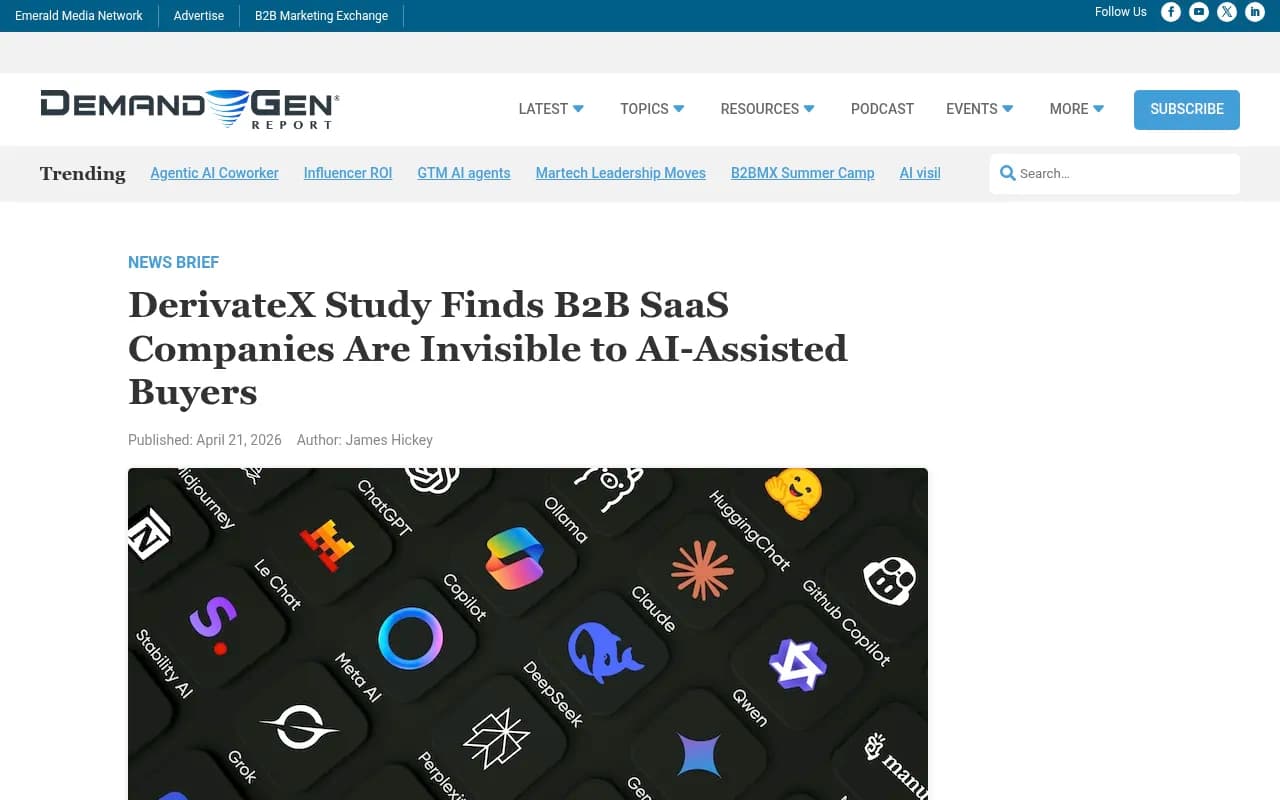
But here's the problem. Knowing you're invisible doesn't make you visible. And for B2B SaaS companies specifically, the stakes are unusually high. A DerivateX study published in April 2026 analyzed 50 B2B SaaS companies across ChatGPT, Perplexity, Claude, and Gemini, running 1,400 buyer-intent prompts. The average AI Presence Score was 56.9 out of 100. Nearly half the companies scored below 50. The gap between the top performer (Clio at 89) and the bottom (LeadSquared at 2) was 87 points -- and both companies operate in established software categories with active marketing teams.
That gap isn't explained by brand size or marketing budget. It's explained by whether companies have optimized for how AI models discover, evaluate, and cite content. Monitoring tools like Hall AI tell you the score. They don't help you change it.
This guide covers the best Hall AI alternatives for B2B SaaS in 2026 -- ranked by how much they actually move the needle on buyer research queries, not just how many dashboards they show you.
What B2B SaaS buyers actually do in AI search
Before picking a platform, it's worth understanding what you're optimizing for. B2B buyers don't use AI search the way they use Google. They're not clicking through ten blue links. They're asking ChatGPT "what's the best project management tool for a 50-person SaaS company" and reading the answer. They're asking Perplexity to compare two vendors. They're using Gemini to summarize a category before they ever visit a vendor website.
According to Onely's 2026 research on AI search strategies for SaaS companies, B2B buyers use ChatGPT, Perplexity, Google AI Overviews, Gemini, and Microsoft Copilot interchangeably during the research phase. Each model has different citation behavior. Claude, for instance, is the most selective -- it mentioned only 88% of tested brands in the DerivateX study, compared to 100% for ChatGPT and Gemini. That means content that gets you cited in ChatGPT might not be enough for Claude.
The implication: you need visibility data broken down by model, and you need to know which content gaps are causing you to miss citations. That's a much harder problem than "track mentions."
The best Hall AI alternatives in 2026
Promptwatch -- best for end-to-end AI visibility and optimization
Promptwatch is the most complete platform in this category. Where Hall AI stops at citation monitoring, Promptwatch runs a full loop: find the gaps, create content to fill them, track the results.
The Answer Gap Analysis shows exactly which prompts competitors are visible for that you're not -- not as a vague category observation, but as specific questions and topics that AI models are already answering using competitor content. From there, Content Agents generate articles, comparisons, and briefs grounded in real prompt data, citation volumes, and competitor analysis. Then page-level tracking shows when your new content starts getting cited, by which models, and how often.
For B2B SaaS specifically, the prompt intelligence features matter. Volume estimates and difficulty scores for each prompt let you prioritize high-value, winnable queries instead of guessing. Query fan-outs show how one buyer question branches into sub-queries -- useful for understanding the full shape of a buyer's research session.
It also tracks Reddit and YouTube, which is where a surprising amount of AI citation sourcing happens. Most competitors ignore these channels entirely.

AthenaHQ -- solid monitoring across 8+ AI engines
AthenaHQ tracks brand visibility across eight AI search engines with clean reporting and good multi-model coverage. It's a step up from Hall AI in terms of breadth -- you get a clearer picture of where you stand across ChatGPT, Perplexity, Claude, Gemini, and others.
The limitation is that it's primarily a monitoring tool. It surfaces the data but doesn't help you act on it. For teams that already have a content strategy and just need better visibility data to inform it, AthenaHQ works well. For teams that need to go from "we're invisible" to "we're cited," it's only half the solution.
Profound -- strong enterprise feature set
Profound has a strong feature set for enterprise teams. It covers prompt tracking, share of voice analysis, and competitive benchmarking at a level of depth that suits larger organizations with dedicated SEO or GEO teams.
The tradeoff is price. Profound sits at a higher price point than most alternatives, and it doesn't include Reddit tracking or ChatGPT Shopping monitoring -- two channels that matter more than most teams realize for B2B buyer research queries.

Peec AI -- multi-language tracking for global SaaS
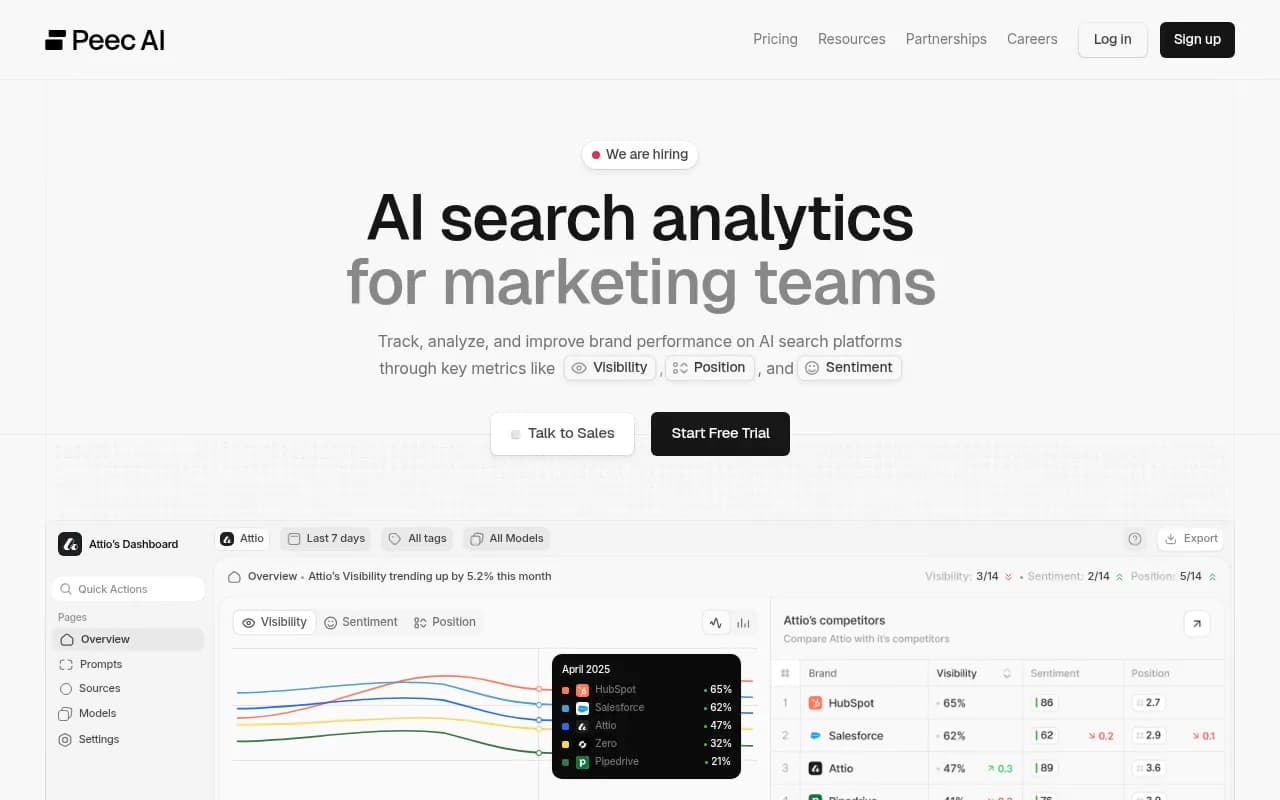
If your B2B SaaS product serves multiple markets, Peec AI's multi-language tracking is genuinely useful. Most platforms in this space are English-first (and often English-only). Peec AI handles monitoring across languages and regions, which matters if you're trying to understand AI visibility in German, French, or Spanish-speaking markets.
It's a monitoring-focused platform -- no content generation, no crawler logs -- but within that scope it does the job well.
Otterly.AI -- affordable entry-level monitoring
Otterly.AI is the most accessible entry point in this category on price. For early-stage B2B SaaS companies that want to start tracking AI visibility without a significant budget commitment, it covers the basics: brand mention tracking across major AI platforms, basic share of voice data.
The ceiling is low. No crawler logs, no visitor analytics, no content gap analysis. It's a starting point, not a long-term solution.
Rankscale -- AI search ranking and visibility
Rankscale focuses on rank tracking in AI search results, with a clean interface and decent coverage of the major models. It's more focused than some of the broader platforms, which makes it easier to get started but limits what you can do with the data.
Scrunch AI -- monitoring for modern brands
Scrunch AI offers AI search visibility monitoring with a modern interface. It's positioned for brand teams rather than SEO specialists, which makes it approachable but also means it lacks some of the technical depth that B2B SaaS marketing teams often need.
GetCito -- tracking and optimization
GetCito combines AI visibility tracking with some optimization guidance, making it a step above pure monitoring tools. The platform helps identify which content changes are likely to improve citation rates, though the content generation capabilities are more limited than Promptwatch's.
Feature comparison: Hall AI vs. top alternatives
| Platform | Citation monitoring | Content gap analysis | Content generation | Crawler logs | Reddit/YouTube tracking | Multi-model coverage | Pricing |
|---|---|---|---|---|---|---|---|
| Hall AI | Yes | No | No | No | No | Limited | Mid |
| Promptwatch | Yes | Yes | Yes | Yes | Yes | 10+ models | From $99/mo |
| AthenaHQ | Yes | Limited | No | No | No | 8+ models | Mid-high |
| Profound | Yes | Limited | No | No | No | Multiple | High |
| Peec AI | Yes | No | No | No | No | Multi-language | Low-mid |
| Otterly.AI | Yes | No | No | No | No | Major models | Low |
| Rankscale | Yes | No | No | No | No | Major models | Low-mid |
| Scrunch AI | Yes | No | No | No | No | Major models | Mid |
| GetCito | Yes | Some | No | No | No | Major models | Mid |
What actually wins buyer research queries in 2026
Tracking is necessary but not sufficient. Here's what the evidence says actually moves the needle for B2B SaaS companies trying to win AI-assisted buyer research queries.
High-volume content engineering
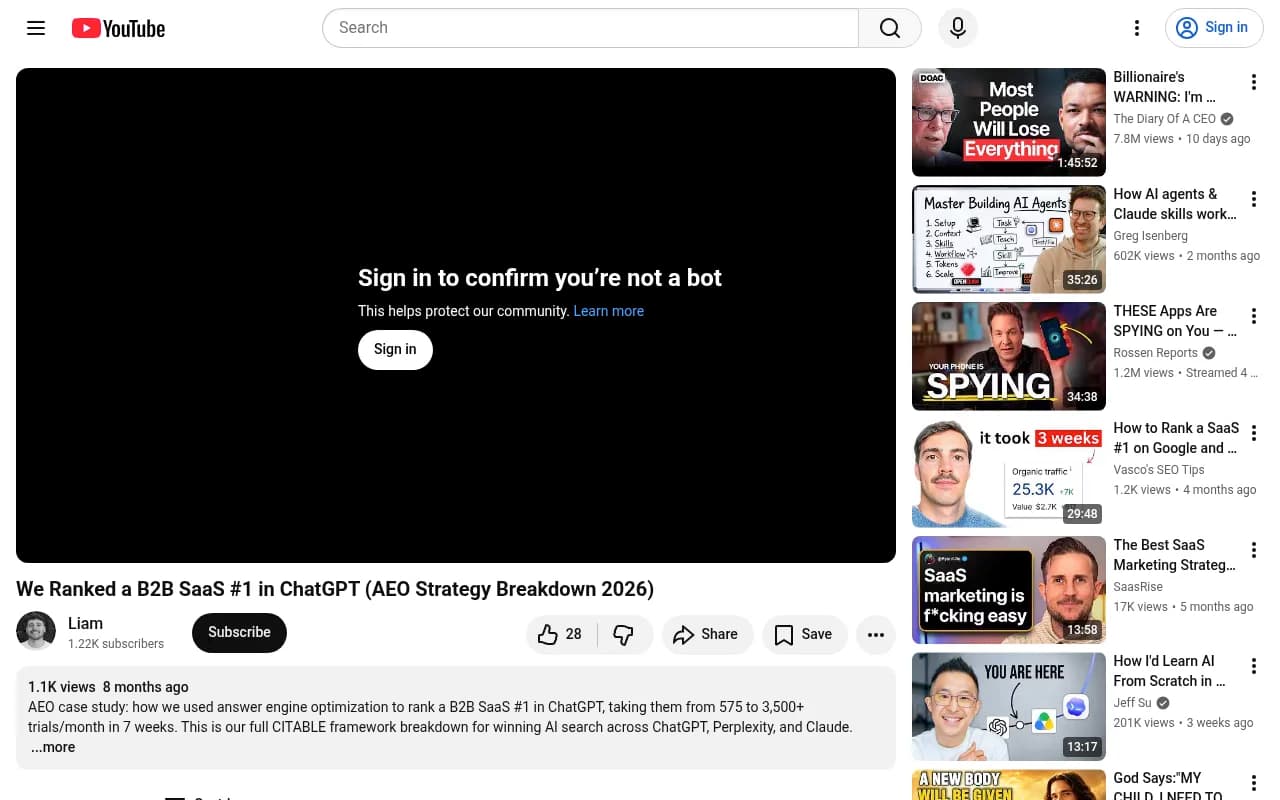
A case study from Discovered Labs (published October 2025) documented taking a B2B SaaS company from 575 trials per month to 3,500+ trials per month in seven weeks by ranking them #1 in ChatGPT. The core of the strategy was what they called "high-volume content engineering" -- creating content specifically structured to answer the questions buyers ask AI models, not just the queries they type into Google.
The distinction matters. AI models don't just look for keyword density. They look for content that directly, completely answers a question. That means longer, more specific content that addresses the full shape of a buyer's research session.
Third-party validation
The same case study identified third-party validation as one of the four pillars of their approach. Reddit discussions, G2 reviews, Capterra listings -- AI models cite these sources heavily when forming recommendations. A B2B SaaS company that's well-represented in these channels has a structural advantage over one that only publishes on its own domain.
This is why Reddit and YouTube tracking matters in a GEO platform. If you don't know which external discussions are driving (or failing to drive) AI citations, you can't influence them.
Technical optimization with schema markup
Organization, Product, and FAQ schema markup helps AI models understand what your product is, what category it belongs to, and what questions it answers. This isn't new advice -- it's been part of SEO best practices for years -- but its importance for AI citation has increased significantly.
Prompt intelligence and prioritization
Not all buyer queries are equal. Some prompts are asked frequently and are relatively easy to win; others are high-volume but dominated by established players. Tools that provide prompt volume estimates and difficulty scoring let you prioritize the queries where you can actually move from invisible to cited.
This is one of the areas where Promptwatch's approach differs most from monitoring-only tools. Knowing you're not cited for "best CRM for B2B SaaS" is less useful than knowing which specific, winnable prompts you're missing -- and having content briefs ready to fill those gaps.
How to choose the right platform for your B2B SaaS company
The right tool depends on where you are in the process.
If you're just starting to measure AI visibility and need to understand your baseline, any of the monitoring tools (Otterly.AI, Peec AI, Hall AI itself) will get you data. The cost of entry is low.
If you're past the measurement phase and need to actually improve your position, you need a platform that goes beyond monitoring. The gap between knowing you're invisible and becoming visible is a content and optimization problem, not a data problem.
For most B2B SaaS marketing teams, the practical question is: do you have the internal resources to take citation data and turn it into content strategy, or do you need the platform to help with that too? If it's the latter, Promptwatch's content generation and gap analysis capabilities are the most developed in the category.
For enterprise teams with dedicated GEO or SEO staff who just need better data, AthenaHQ or Profound may be sufficient. For global SaaS companies with multi-language requirements, Peec AI is worth a look.
The monitoring-only trap
One pattern worth naming directly: the monitoring-only trap. It's easy to spend months tracking your AI visibility score, watching it stay flat, and concluding that AI search is hard to influence. The companies that are winning buyer research queries in 2026 aren't just tracking -- they're running a continuous cycle of gap identification, content creation, and result measurement.
The DerivateX study found that companies with perfect sentiment scores (AI models say positive things about them when they do appear) still have low overall visibility because of distribution problems. The AI models aren't finding their content. Sentiment isn't the bottleneck -- discoverability is. That's a content and technical problem, and it requires more than a monitoring dashboard to solve.
For B2B SaaS companies serious about winning AI-assisted buyer research, the platform choice matters less than the process. But the right platform makes the process significantly easier to run at scale.
Bottom line
Hall AI is a reasonable starting point for teams new to AI visibility tracking. But for B2B SaaS companies that need to actually win buyer research queries -- not just observe that they're losing them -- the alternatives above offer meaningfully more.
The platforms that will matter most in 2026 are the ones that close the loop between measurement and action. Monitoring tells you the score. Optimization changes it.