Key takeaways
- BrightEdge, Conductor and Botify publish no prices. seoClarity publishes starting prices, but they are labelled "representative as of October 11, 2022", so treat them as a conversation starter only.
- Botify is the pick when crawl, render and indexation on a huge site is the problem. Conductor suits content-led teams across many markets. BrightEdge suits executive reporting. seoClarity suits data-heavy teams that want fewer limits.
- Every one of these suites now sells an AI visibility module, but the claims are vendor-stated. I have not benchmarked them side by side, and neither have the sources I read.
- The question that separates the AI bot analytics features is whether the vendor verifies bot IPs or just reads user-agent strings.
- If AI visibility is your main goal rather than a bolt-on, a dedicated platform may do more than the module inside an SEO suite.
A note on what this review is
The title says hands-on, so let me be straight about it. This guide compiles what each vendor publishes on its own site, plus third-party comparisons from TopCited, Alium Research, Search Engine Land and Searchmaxxed, and Reddit threads from SEOs who use these tools. I did not run all four on a live site. Where I give an opinion, it is a read of the evidence, not a lab result.
That matters because enterprise SEO software is sold on demos. The demo is built to look good. Ask for a pilot on your own site, with your own URLs, and treat anything below as a shortlist, not a verdict.
The four suites at a glance
| Platform | Best for | AI product (vendor-stated) | Published pricing | Scale notes |
|---|---|---|---|---|
| BrightEdge | Global brands, executive reporting | AI Catalyst, AI Hyper Cube, AI Agent Insights | Not published (demo or quote) | Multiple domains from one platform |
| Conductor | Content teams across markets | Tracks ChatGPT, Gemini, Copilot, Claude; AI bot crawl monitoring | Not published; usage-based | Enterprise plan: 60,000+ keywords, 10+ websites |
| seoClarity | Data-heavy teams, one source with a known price | Clarity ArcAI: citations, mentions, AI bot activity | From $2,500/mo (stale, 2022) | Unlimited users on Rankings, unlimited crawl pages on technical package, SOC 2 |
| Botify | Sites with very large page counts | GEO analytics, AI agent and bot analytics and management | Not published (demo) | Enterprise and growth companies |
One third-party estimate puts annual spend at $150K to $500K+ for BrightEdge, $75K to $250K for Conductor, $100K to $300K for seoClarity and $100K to $400K for Botify. Those ranges come from a single comparison and none of the vendors confirm them, so use them only to sanity-check a quote.
BrightEdge
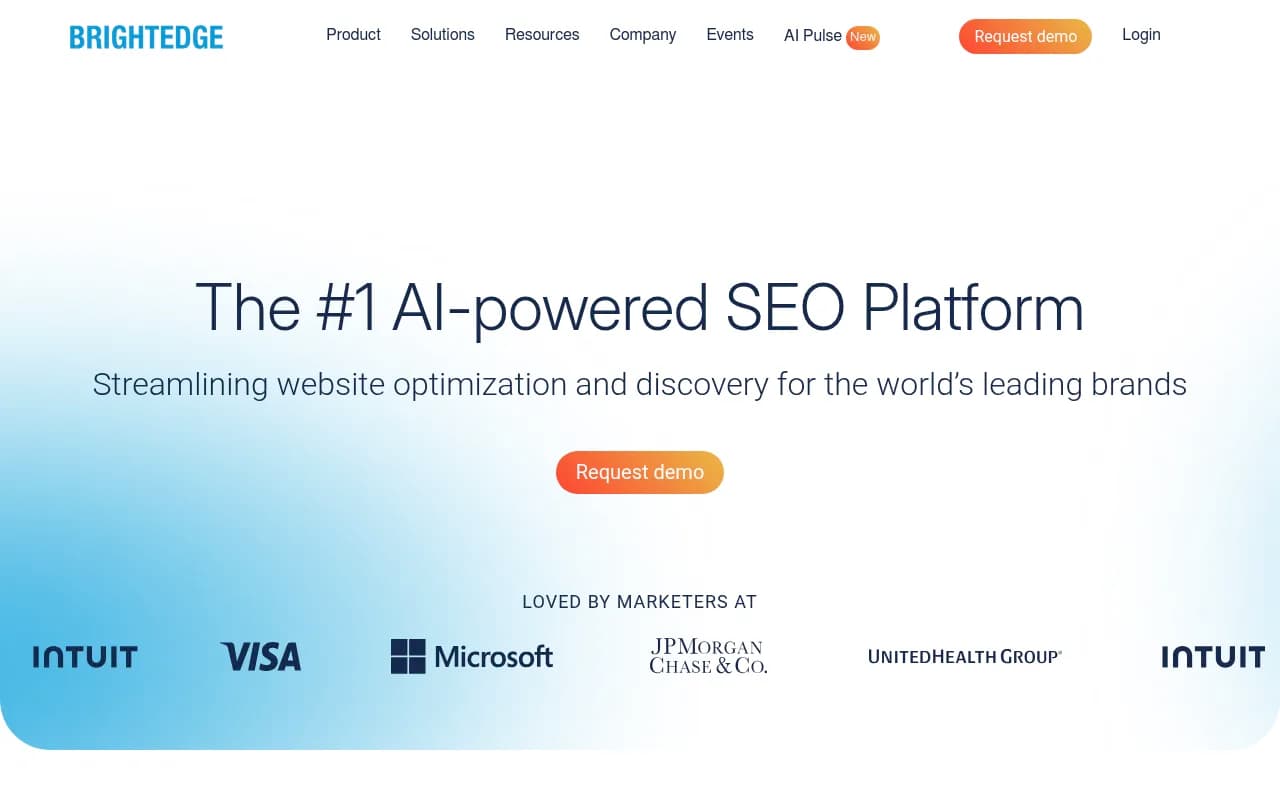
BrightEdge describes itself as one unified platform for Google, AI Overviews, ChatGPT and Perplexity. The older core is still what most buyers know: Data Cube X for keyword research (the vendor says over 4 billion data points and 10 years of history), ContentIQ for site audits, Share of Voice for competitor benchmarks, and StoryBuilder for reporting.
The AI features
AI Catalyst tracks mentions and citations across ChatGPT, Perplexity, Google AI Overviews, AI Mode and Gemini. It also rates each answer positive, neutral or negative for your brand and each tracked competitor, with reasoning. AI Hyper Cube shows how people search across ChatGPT and AI Overviews and which brands get mentioned or cited. AI Agent Insights tracks AI agent activity on your site, and an Autopilot feature handles automated on-site optimizations.
What I'd think about
StoryBuilder is the reason Fortune 100 teams buy it. It blends search data, web analytics and BrightEdge's own insights into dashboards for different audiences, which is exactly what a CMO wants on a Monday morning. The downsides come up repeatedly: a steep learning curve, an older interface, and a price that rules it out for some smaller companies.
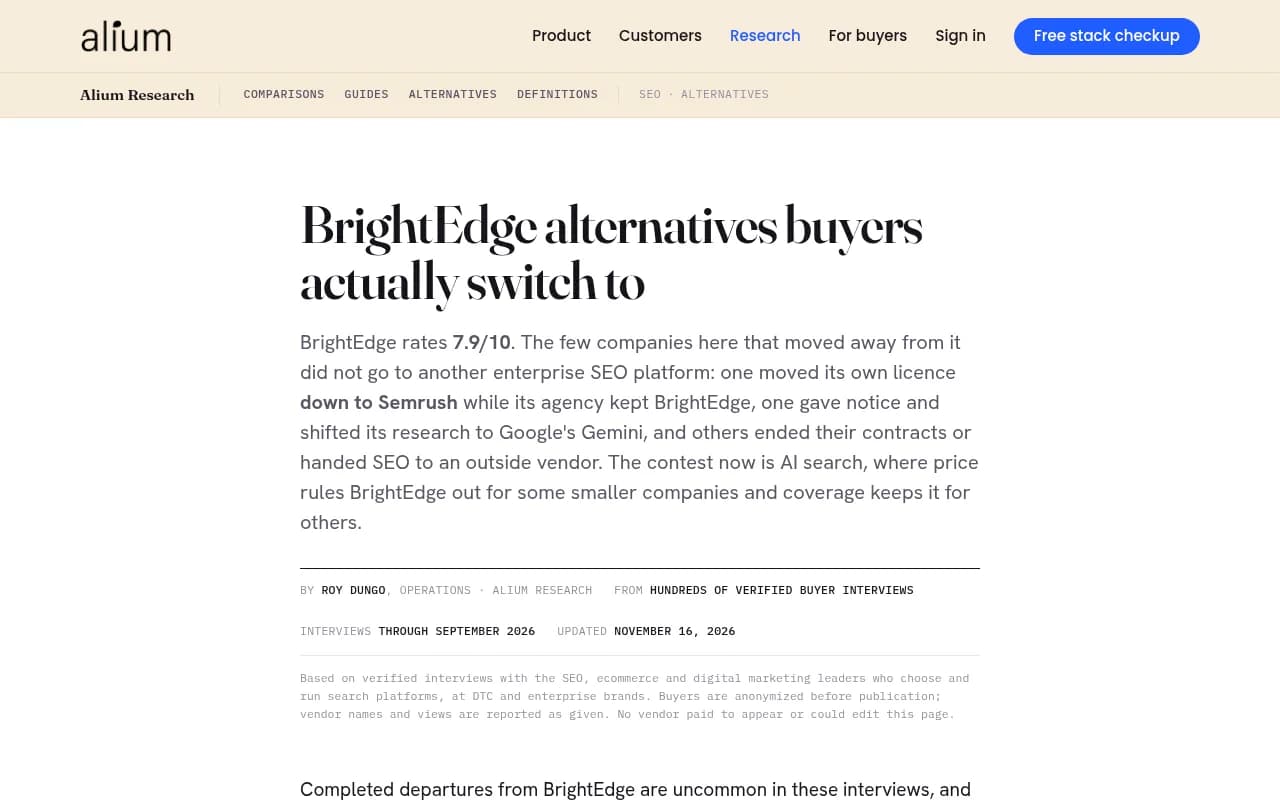
The Alium Research interviews are worth reading here. BrightEdge rates 7.9/10 among the buyers they spoke to, but the few companies that left did not move to Conductor, seoClarity or Botify. One moved its own licence down to Semrush while its agency kept BrightEdge. Another shifted research to Gemini. The new contest is AI search, and BrightEdge loses some of those on price and keeps others on coverage.
Ask them which modules the base contract covers, AI Catalyst included, and which are separate line items.
Conductor
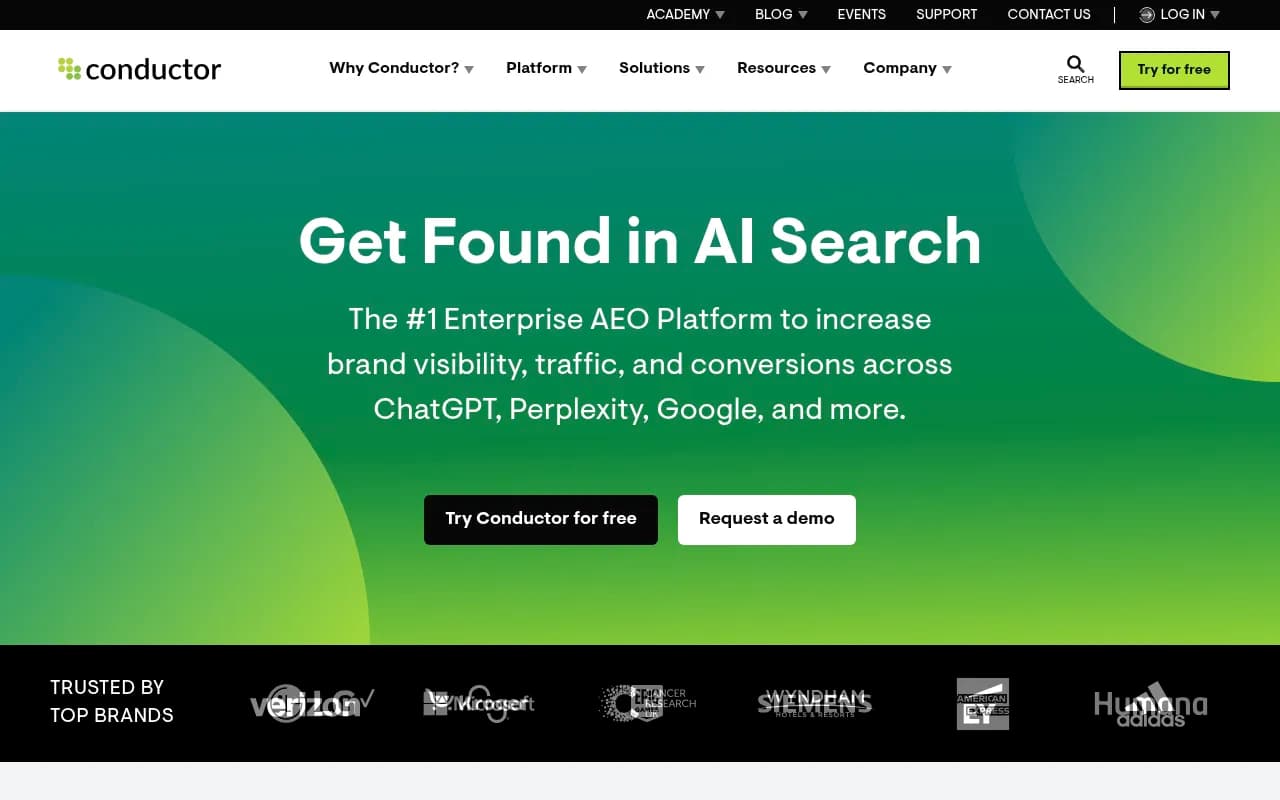
Conductor sells four products: Creator for content, Intelligence for visibility in traditional and AI search, Monitoring for website health, and AgentStack for API and MCP access. It says it tracks brand visibility across ChatGPT, Gemini, Copilot, Claude and traditional search, and that its monitoring tracks how AI bots crawl your site.
The nice thing about Conductor is that it publishes plan limits even though it hides prices:
- Essentials: 500 tracked keywords, 100,000 pages monitored, 3 tracked websites
- Growth: 5,000 tracked keywords, 500,000 pages monitored, 5 tracked websites
- Enterprise: 60,000+ keywords, monitoring for sites of any size, 10+ tracked websites
Pricing is described as usage-based, and one comparison notes that AI search credits influence the bill. That is worth pinning down. Usage-based pricing is fine until your prompt set doubles and the invoice follows it.
Conductor's reputation is workflow. It helps content teams decide what to create, optimizes existing pages and coordinates work across distributed teams. The common criticism is that technical SEO is weaker than Botify. On Capterra-style review counts in one comparison, Conductor had 8 ratings at 4.8, which is a tiny sample, so don't lean on it.
seoClarity
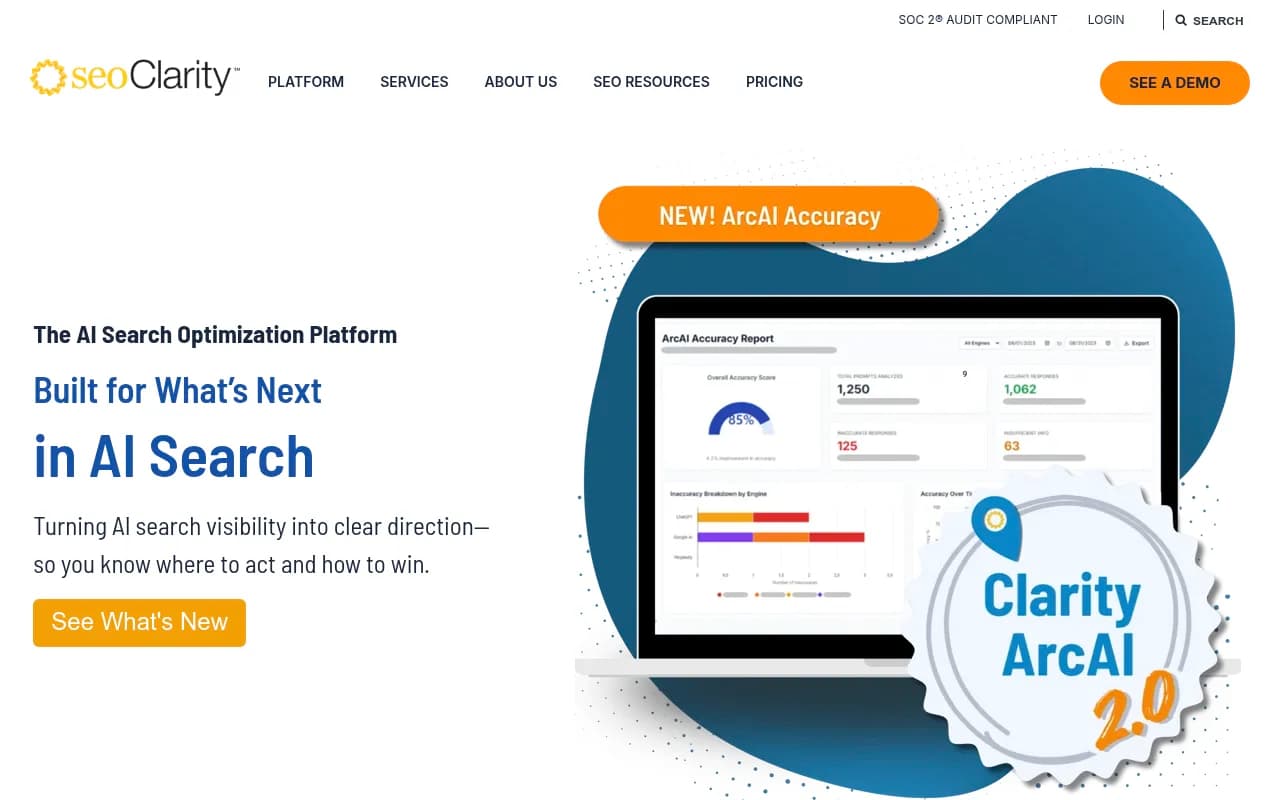
seoClarity is the only one of the four that publishes numbers. The tiers on its pricing page are:
- Rankings: custom by keyword queries (minimum 2,000), unlimited users
- Research & Content: from $2,500 a month
- Technical SEO with unlimited crawl pages, projects and log file analysis: from $3,200 a month
- Enterprise for global teams with 5,000+ keyword queries and multiple domains: from $4,500 a month
The catch is the footnote. The page says the prices are "representative as of October 11, 2022 and are subject to change." That is four years old. Use it to know the order of magnitude, then get a current quote.
On AI, Clarity ArcAI tracks brand citations and mentions in AI search and whether AI bots access your pages. On the work side, Clarity Automate lets SEO teams deploy on-page changes, internal links and schema updates and run split tests without a developer for each change. For many enterprise teams the bottleneck is not finding issues, it is getting them fixed, so this is a real selling point. Integrations include BigQuery, Amazon S3 and Redshift, Tableau and Power BI, plus GSC, GA4 and Adobe Analytics, and the vendor states SOC 2 compliance.
The skeptic's note: seoClarity's own comparison pages are marketing. The claims about no artificial limits or surprise charges are the vendor's, and they do come from a vendor selling against BrightEdge and Conductor. Still, unlimited users and unlimited crawl projects are concrete things you can check in a contract.
Botify
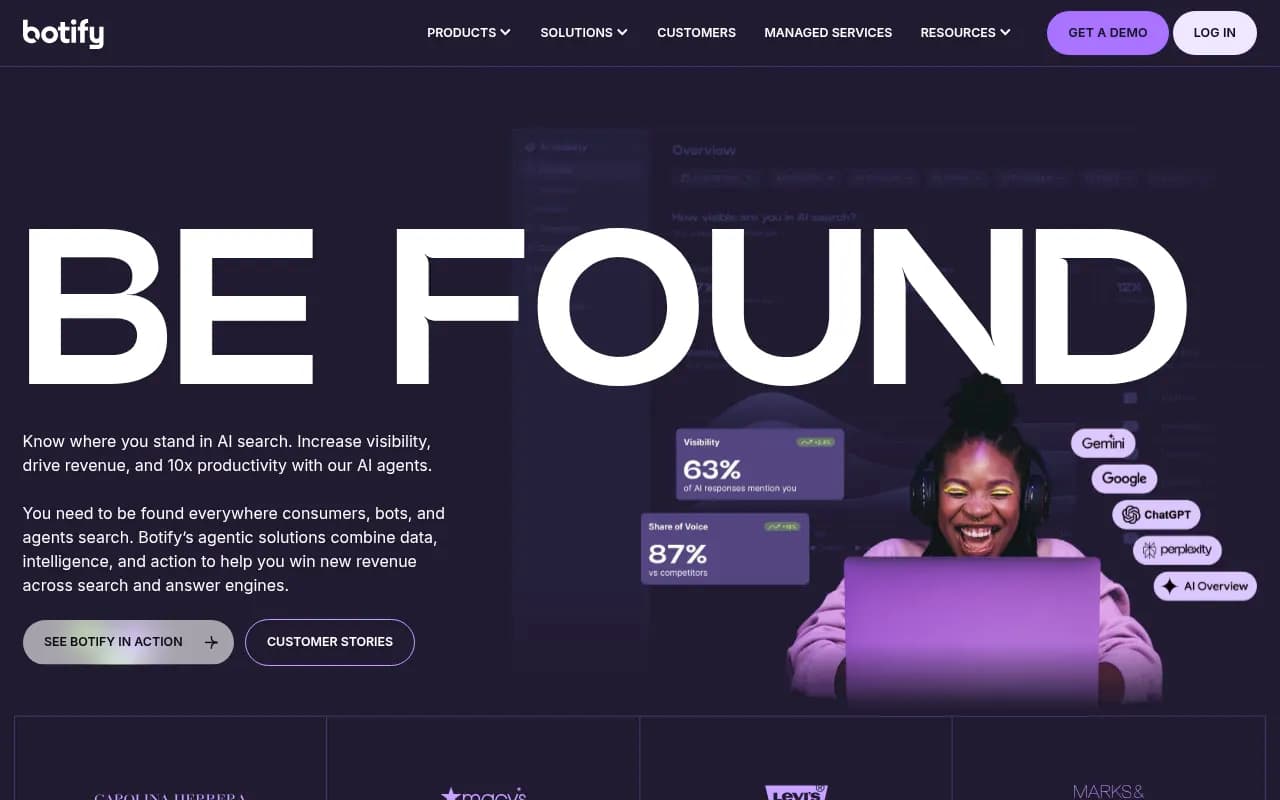
Botify calls itself an AI search optimization platform and splits the product three ways: AI Readiness (an AI-optimized catalog plus AI agent and bot management), AI Visibility (GEO, website, keyword and AI agent analytics) and AI Activation (AI-generated content, automation and deployment, indexation, internal linking).
Its pitch to retailers is blunt: reviews, prices and promotions are often rendered by JavaScript and invisible to agents. That is a real problem, and it is the area where Botify has the deepest history. One reviewer cites over 1,000 metrics per URL in its audits, and a Reddit thread on bigseo credits Botify with doing the best job of actually guiding technical SEO.
The weak spots people mention are content and competitive research, and an interface that suits technical users more than content marketers. One comparison rates its AI/LLM coverage as only partial, though Botify's own site lists GEO analytics and agent analytics. Another example of why you pilot it yourself.
If your site has millions of URLs, Botify is on the shortlist whatever else you pick. If it has 20,000, you are probably paying for headroom you will never use.
Which one fits which team
| Your situation | Shortlist first | Why |
|---|---|---|
| Millions of URLs, crawl and indexation trouble | Botify | Log analysis and JavaScript rendering are its core |
| Many content teams across markets | Conductor | Workflow and content prioritization |
| Fortune 500 reporting to a board | BrightEdge | StoryBuilder and executive dashboards |
| Want fixes shipped without a dev queue | seoClarity | Clarity Automate deploys changes directly |
| Want a published price to start from | seoClarity | Others publish none |
| SEO, ads and AI visibility in one suite | Semrush Enterprise | Broader marketing suite |
How to judge the AI features in a pilot
The AI modules are where the four suites sound most alike. All four say they track ChatGPT and Google AI surfaces. So the demo will not separate them. These questions will.
Are the AI bot logs verified?
Botify, Conductor and seoClarity all talk about AI bot analytics. The useful question is whether the vendor verifies requests against each operator's published IP ranges or trusts the user-agent string, which anyone can spoof. Promptwatch Data's AI crawler traffic report counts only IP-verified requests. In its June 8 to September 6, 2026 window, OpenAI's share of verified AI crawler requests fell from 94.8% to 79.8%, which shows how fast the mix moves. A tool that cannot tell real bots from fake ones will give you a noisy picture.
That report also suggests a simple self-check: compare your own logs to the market mix. A provider that is large in the market but near zero in your logs points to blocking in robots.txt, your CDN or your WAF.
Do they capture fan-out queries?
ChatGPT does not search with your prompt verbatim. Promptwatch Data's ChatGPT query fanouts report found about 2.15 web searches per response in early December 2025, easing to roughly 1.84 by early March 2026, with average query length falling from about 117 characters to the high 80s, and about 53 characters once fanouts returned in April. Separately, ChatGPT started using the site: operator at scale on August 8, 2026, jumping from about 0.4% to about 17% of fanout queries. Those are short, keyword-like searches. Ask each vendor whether its tracking reflects them or only long conversational prompts.
Is the data from the real interface?
API outputs and what users see in the ChatGPT or AI Overviews interface can differ. Ask how each vendor collects responses.
Does it tell you what to do?
A score on its own is not a plan. Ask to see the recommendation workflow and how a recommendation becomes a published change.
When a dedicated AI visibility platform makes more sense
The enterprise suites came from rank tracking and site audits, and the AI modules were added to that foundation. If the budget line is specifically AI search, compare against tools built for it. Promptwatch is one: it tracks ChatGPT, Gemini, Claude, Perplexity, Google AI Overviews and AI Mode from the real interfaces, logs AI crawler visits with IP verification, and has Content Agents that write and publish pages for the gaps it finds, then measures whether they get crawled and cited. Published plans start at $95 a month, so confirm current numbers at promptwatch.com/pricing.

Many teams end up running both: an enterprise suite for traditional SEO and reporting, and a dedicated GEO platform for AI search. If you want to browse that category, the GEO software directory at bestgeosoftware.com lists the options.
Other enterprise-minded alternatives worth a look in the catalog include [tool:lumar] for continuous crawling and pre-release QA, [tool:oncrawl] for log analysis, and [tool:semrush] for its enterprise tier with Enterprise AIO.
Questions to ask every vendor
- Which modules does the base contract include, and which are separate line items?
- How are AI prompts counted, and what happens to price when I add markets or languages?
- Are AI bot logs IP-verified?
- How are AI responses collected, and from which interfaces?
- What onboarding and support are in the contract, and who are the named people?
- Can I export raw data to BigQuery or my warehouse without limits?
- What is the exit process if I leave after year one?
Bottom line
Pick by bottleneck, not by brand. Huge site with crawl trouble: Botify. Content workflow across markets: Conductor. Executive reporting: BrightEdge. Fewer limits and a fixes-without-engineers workflow: seoClarity. None of them has proven it wins on AI search, because nobody has published a fair head-to-head. Run a four-week pilot on your own domain with the same prompt set in each, and let the data break the tie.