Key takeaways
- Google AI Mode is a distinct surface from AI Overviews -- most tools track one but not both, so check before you buy
- The gap between "monitoring" tools and "optimization" tools is wide; most platforms stop at showing you data without helping you act on it
- Coverage breadth matters: the best tools track 8+ AI engines simultaneously, not just ChatGPT or Perplexity
- Pricing ranges from free tiers to $500+/mo enterprise plans -- the sweet spot for most teams is $99-$250/mo
- Promptwatch is the only platform in this comparison rated as a "Leader" across all evaluation categories, largely because it closes the loop from gap analysis to content creation to traffic attribution
Google AI Mode rolled out broadly in 2025 and immediately created a problem for SEO teams: none of their existing tools could tell them what was happening inside it. Traditional rank trackers show you position 1-10. AI Mode doesn't work that way. It generates a synthesized answer, pulls from multiple sources, and either cites your brand or it doesn't.
That's a fundamentally different measurement problem. And it's why a whole category of AI search visibility tools has exploded in the last two years -- over $31 million in funding has flowed into this space, and new platforms are launching every few weeks.
The challenge now isn't finding a tool. It's figuring out which ones actually work for Google AI Mode specifically, versus which ones are primarily ChatGPT or Perplexity trackers that added "AI Mode" to their marketing copy.
This guide ranks 14 platforms by two things that matter most: coverage (do they actually monitor Google AI Mode?) and accuracy (is the data reliable enough to make decisions from?). We also factor in what you can do with the data, because a dashboard that shows you problems without helping you fix them has limited value.
How we evaluated these tools
Before the rankings, a quick note on methodology. We looked at five factors:
- Whether Google AI Mode (not just AI Overviews) is explicitly tracked
- How many total AI engines are covered
- Data collection methodology -- API pulls vs. UI scraping vs. repeat-prompt sampling
- Whether the platform helps you act on findings (content gaps, optimization suggestions)
- Pricing relative to what you actually get
Tools that only monitor without any path to optimization scored lower, even if their tracking is solid. The market has moved past pure monitoring.
The comparison at a glance
| Tool | Google AI Mode | AI engines covered | Content optimization | Starting price |
|---|---|---|---|---|
| Promptwatch | Yes | 10+ | Yes (built-in AI writer) | $99/mo |
| Profound | Yes | 8+ | Limited | $499/mo |
| AthenaHQ | Yes | 8+ | No | Custom |
| Scrunch AI | Yes | 6+ | No | $300/mo |
| Peec AI | Yes | 6+ | No | $99/mo |
| LLMrefs | Yes | 5+ | No | $79/mo |
| Rankability | Partial | 5+ | No | $149/mo |
| SE Ranking | Yes | 5+ | Limited | $65/mo |
| Otterly.AI | Partial | 4+ | No | $49/mo |
| Semrush | Yes | 3 | No | $140/mo |
| Ahrefs Brand Radar | Partial | 3 | No | Bundled |
| ZipTie | Yes | 4+ | No | Free tier |
| Rankshift | Partial | 4+ | No | Custom |
| Rankscale | Yes | 5+ | No | $79/mo |
The ranked platforms
1. Promptwatch
Promptwatch sits at the top of this list not because it has the flashiest interface, but because it's the only platform here that treats Google AI Mode tracking as part of a complete workflow rather than an endpoint.

Most tools show you that you're invisible in AI Mode for a given prompt. Promptwatch shows you that -- and then tells you exactly what content you're missing, generates a draft article engineered to get cited, and tracks whether your visibility score improves after you publish it. That loop (find gaps, create content, measure results) is what separates it from the rest of this list.
On coverage: Promptwatch monitors 10 AI engines including Google AI Mode, Google AI Overviews, ChatGPT, Claude, Perplexity, Gemini, Grok, DeepSeek, Copilot, and Meta AI. Its citation database has processed over 1.1 billion citations, which is what makes the content recommendations actually grounded rather than generic.
A few capabilities worth calling out specifically for Google AI Mode tracking:
- AI Crawler Logs: Real-time logs showing when Google's AI crawler hits your pages, which pages it reads, and any errors it encounters. This is rare -- most competitors don't offer it at all.
- Prompt Intelligence: Volume estimates and difficulty scores per prompt, plus query fan-outs showing how one search branches into sub-queries. Useful for prioritizing which AI Mode queries to target first.
- Answer Gap Analysis: Shows exactly which prompts competitors appear in that you don't. You see the specific content your site is missing -- not a vague "improve your content" suggestion.
Pricing starts at $99/mo (Essential: 1 site, 50 prompts, 5 articles). The Professional plan at $249/mo adds crawler logs, state/city tracking, and 150 prompts. Business is $579/mo for 5 sites.
The one honest caveat: if you only need basic monitoring with no interest in content optimization, there are cheaper options on this list. But for teams that want to actually move the needle on AI Mode visibility, Promptwatch is the most complete platform available.
2. Profound
Profound is a well-funded platform ($58.5M raised) with strong enterprise credentials. It covers Google AI Mode alongside 8+ other AI engines and has solid share-of-voice reporting. The data quality is generally reliable.
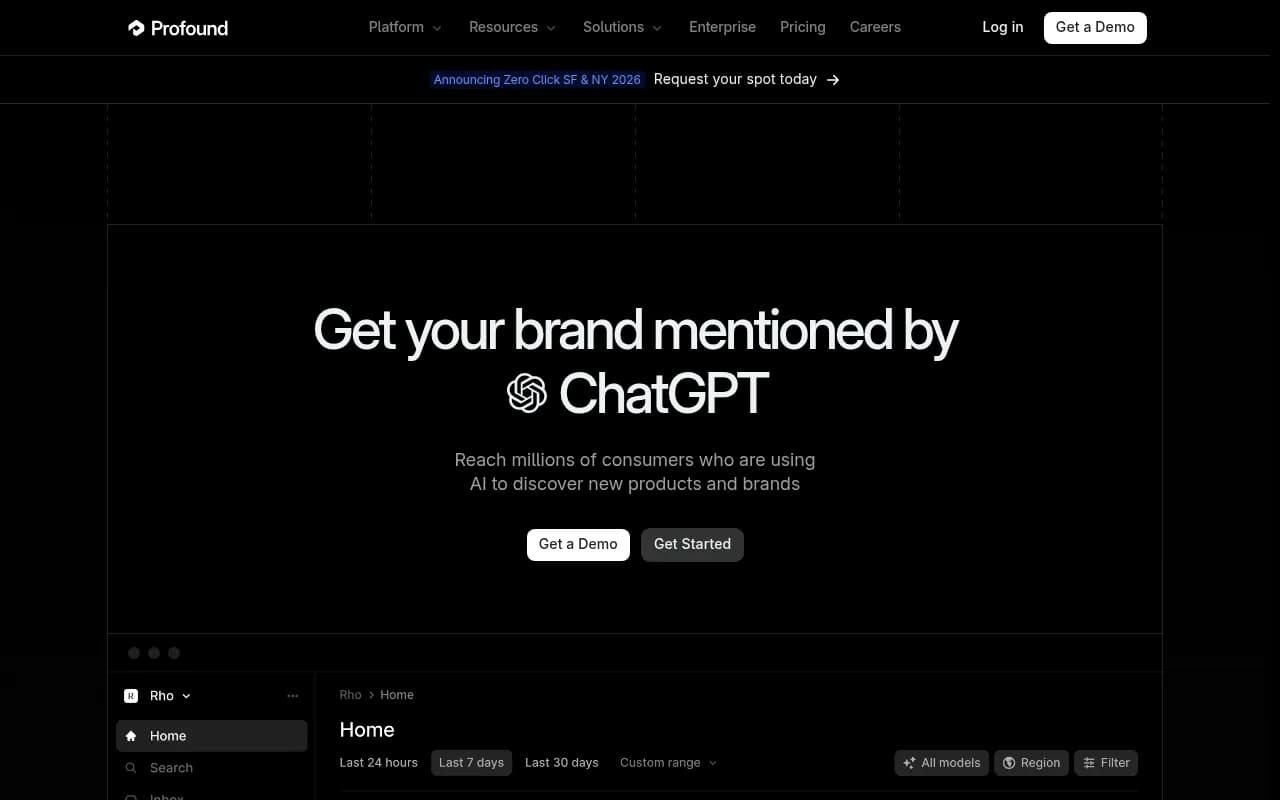
Where it falls short is the price-to-value ratio for smaller teams. Starting at $499/mo, it's priced for enterprise budgets. The optimization features are limited -- you get good monitoring data but not much help acting on it. For large brands with dedicated SEO teams who just need reliable tracking data, it's a legitimate choice. For everyone else, the cost is hard to justify when alternatives at $99-$249/mo offer comparable or better coverage.
3. AthenaHQ
AthenaHQ tracks 8+ AI engines and has built a reputation for clean, reliable data. Its interface is well-designed and the reporting is easy to understand.
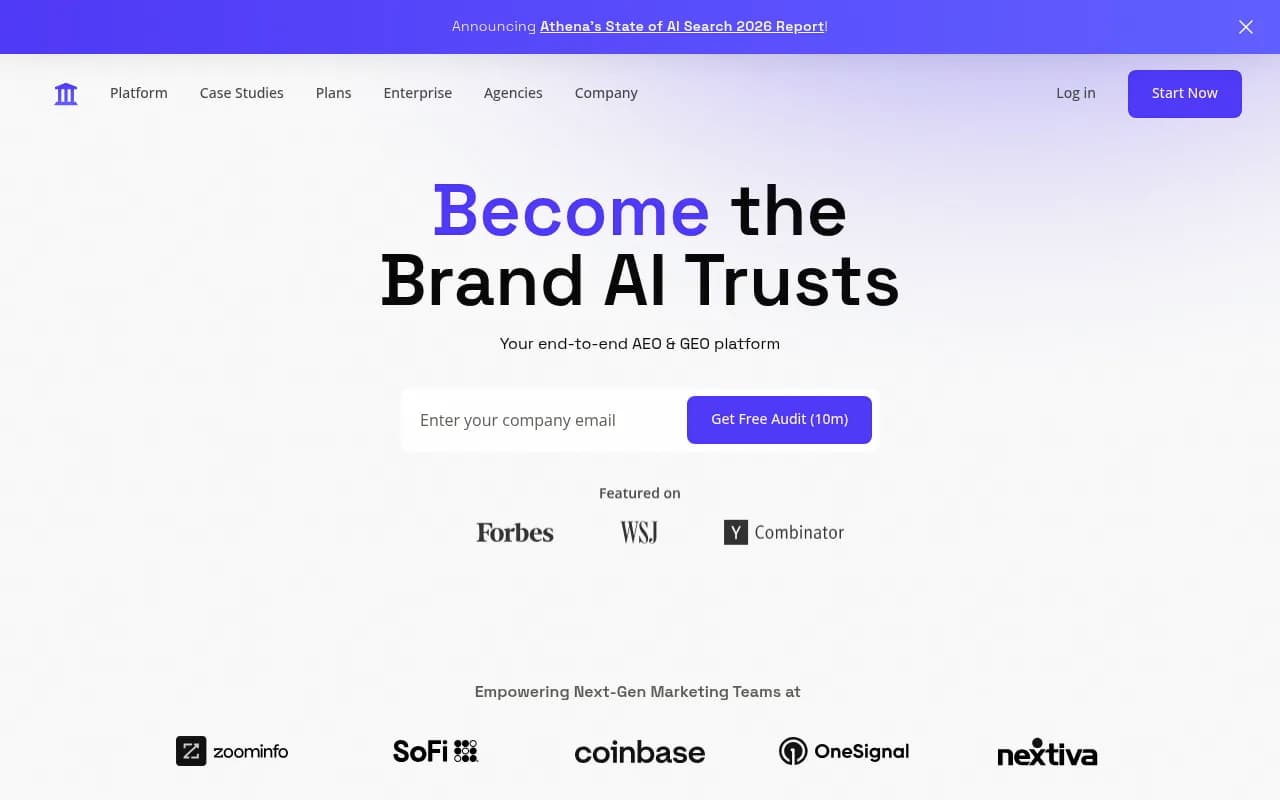
The limitation is the same one that affects most monitoring-only tools: it shows you where you stand but doesn't help you change it. No content gap analysis, no optimization suggestions, no built-in writing tools. It's a solid tracker, but you'll need to pair it with other tools to actually improve your AI Mode visibility.
Pricing is custom/enterprise, which makes it harder to evaluate for smaller teams.
4. Scrunch AI
Scrunch AI is a well-funded option ($19M raised) with good coverage across 6+ AI engines including Google AI Mode. The reporting is solid and the platform has matured quickly.
At $300/mo, it's priced in the middle of the market. Like AthenaHQ, it's primarily a monitoring tool -- you get good data on where your brand appears and where it doesn't, but the path from "I see the problem" to "I've fixed the problem" requires external tools. Worth considering for teams that already have strong content production workflows and just need reliable tracking data.
5. Peec AI
Peec AI punches above its weight at $99/mo. It covers 6+ AI engines, has multi-language support, and the data collection methodology is transparent. For teams on a budget who need reliable Google AI Mode tracking, it's one of the better options.

The honest limitation: it's monitoring-only. No content optimization, no crawler logs, no traffic attribution. But if your primary need is "show me where my brand appears in AI Mode responses," Peec AI does that reliably at a price that's hard to argue with.
6. LLMrefs
LLMrefs takes an interesting approach -- it builds prompts automatically from keywords you already track, which reduces the manual work of setting up monitoring. Coverage spans 5+ AI engines including Google AI Mode.
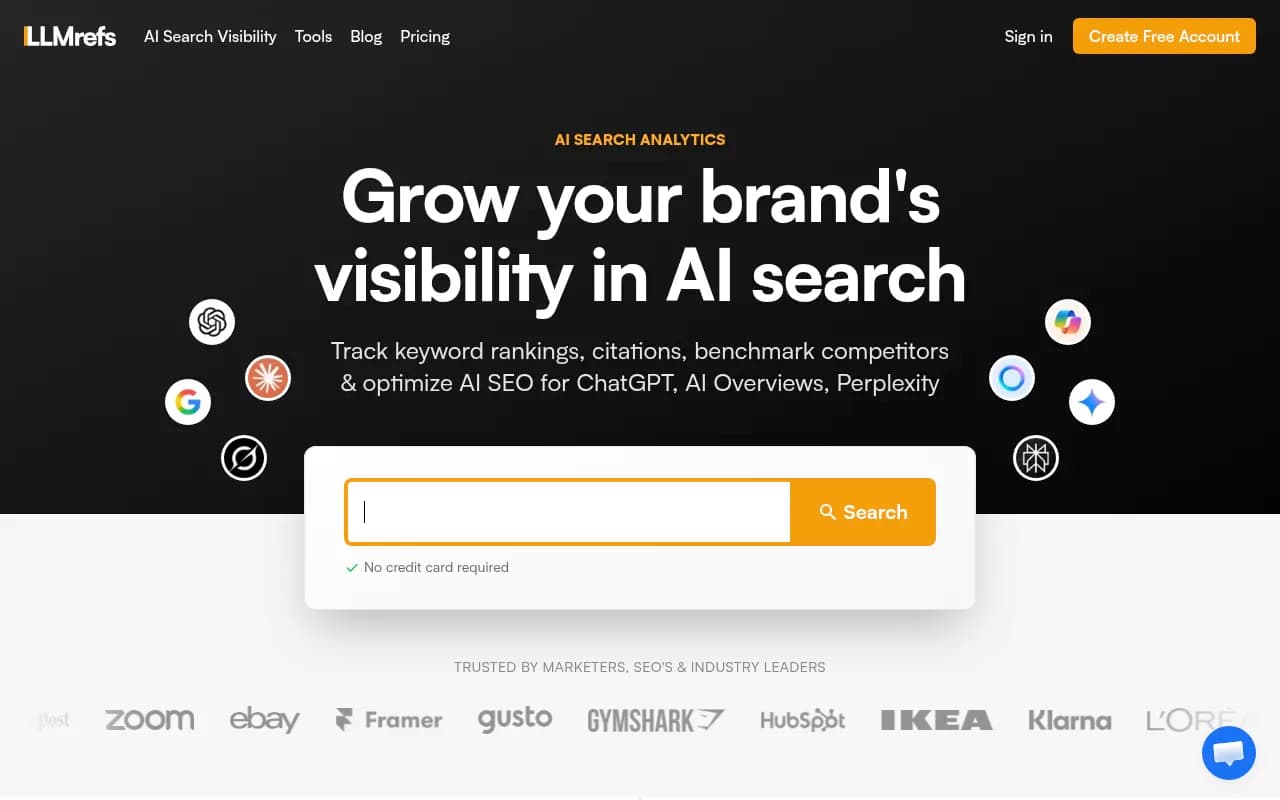
At $79/mo, it's one of the more affordable options with decent coverage. The share-of-voice and citation count metrics are well-implemented. Like most tools in this category, it stops at monitoring -- but the automated prompt generation is a genuine time-saver compared to tools that require you to manually input every query you want to track.
7. Rankability
Rankability's Reporter product is primarily aimed at agencies and has strong reporting capabilities. Coverage is solid for ChatGPT, Gemini, and Perplexity, with partial Google AI Mode support.
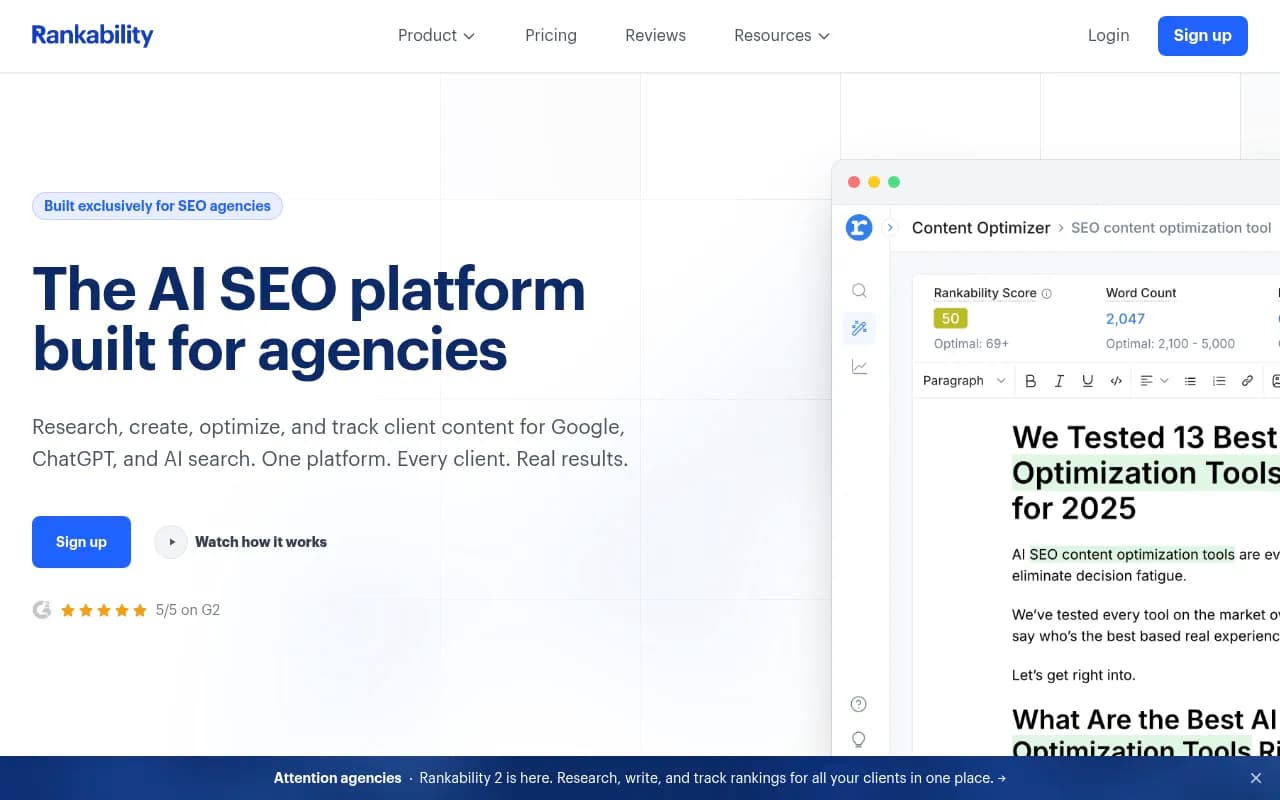
At $149/mo, it's reasonably priced. The agency-focused reporting features (white-label exports, client dashboards) are genuinely useful if you're managing multiple brands. The partial AI Mode coverage is the main gap -- if Google AI Mode is your primary tracking need, verify current coverage before committing.
8. SE Ranking
SE Ranking is an all-in-one SEO platform that added AI visibility tracking to its existing suite. It covers 5+ AI engines including Google AI Mode and AI Overviews.
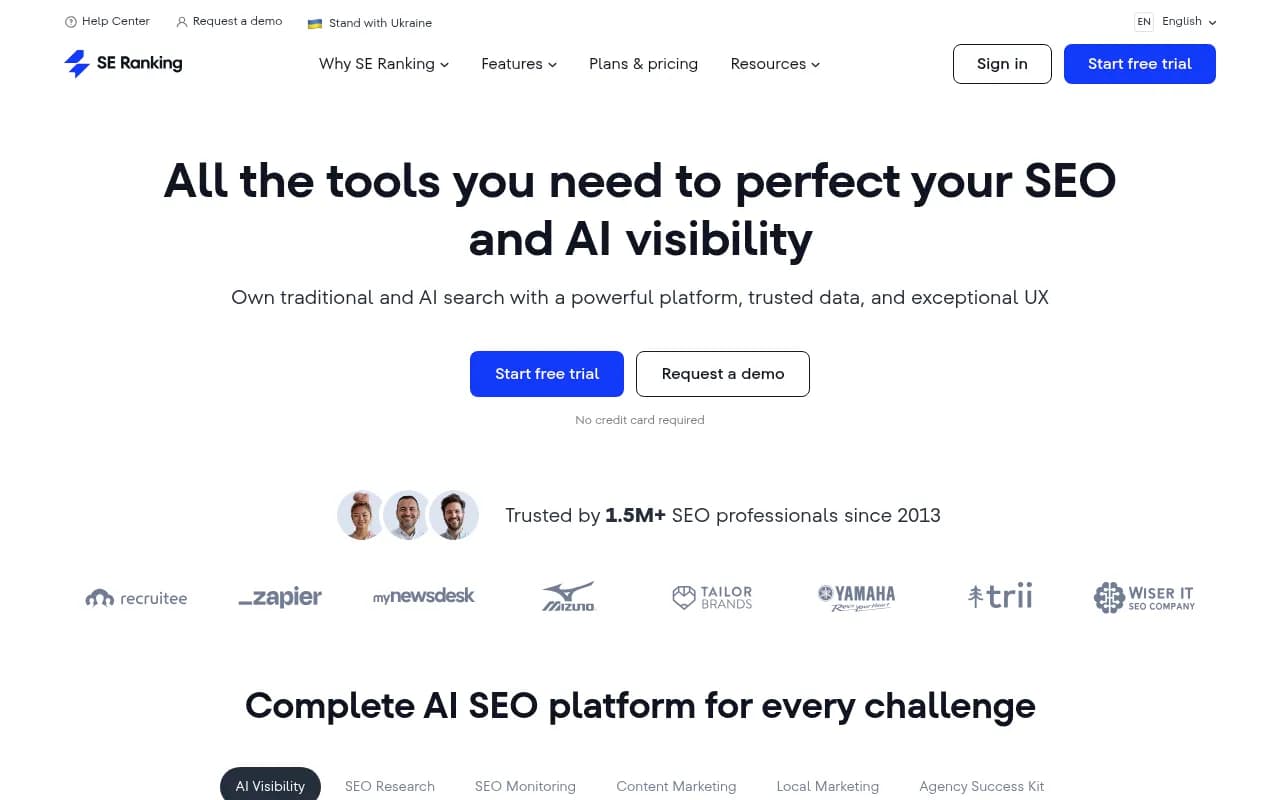
The advantage here is consolidation -- if you're already using SE Ranking for traditional SEO, the AI visibility features are a natural extension without adding another tool to your stack. The tracking isn't as deep as dedicated AI visibility platforms, but for teams that want "good enough" AI Mode coverage without a separate subscription, it's worth considering.
9. Otterly.AI
Otterly.AI is an affordable entry point at $49/mo. It covers 4+ AI engines with partial Google AI Mode support.

It's genuinely useful for small teams or individuals who want basic AI visibility monitoring without a significant budget commitment. The limitations are real though: no crawler logs, no content optimization, no traffic attribution, and the AI Mode coverage is less comprehensive than dedicated platforms. Think of it as a starting point, not a long-term solution for serious AI Mode tracking.
10. Semrush
Semrush added AI visibility tracking to its platform, covering Google AI Overviews and a few other engines. The Google AI Mode tracking exists but uses fixed prompts rather than custom query sets.
The fixed-prompt limitation is meaningful -- you can't track the specific queries that matter to your business, only the ones Semrush has pre-selected. For teams already deep in the Semrush ecosystem, the AI tracking features add some value. For teams whose primary need is AI Mode visibility, the lack of custom prompt flexibility is a real constraint.
11. Ahrefs Brand Radar
Ahrefs Brand Radar is bundled with Ahrefs subscriptions and covers a handful of AI engines. Like Semrush, it uses fixed prompts, which limits its usefulness for specific brand monitoring.
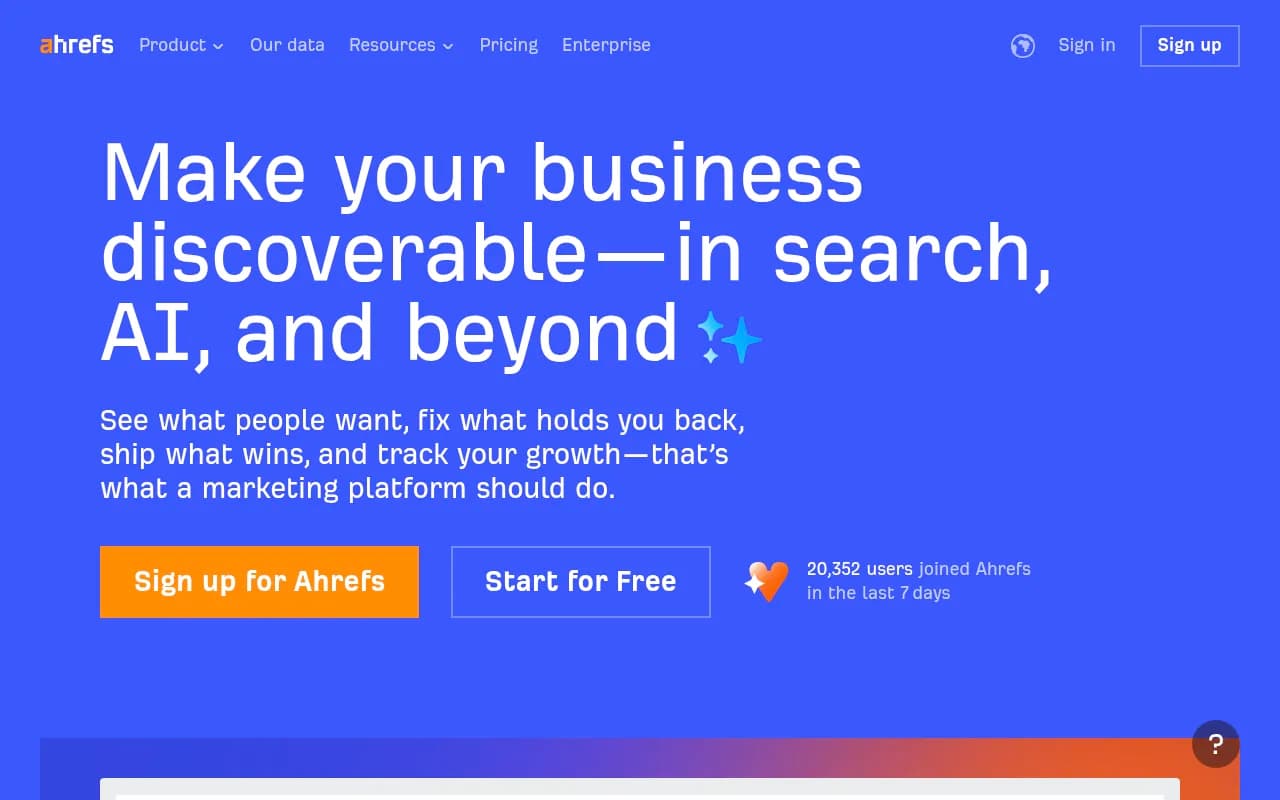
The data quality is generally reliable (Ahrefs has strong technical infrastructure), but the AI Mode coverage is partial and the fixed-prompt approach means you're tracking what Ahrefs thinks is relevant, not what's actually relevant to your brand. Useful as a supplementary data point if you're already an Ahrefs subscriber.
12. ZipTie
ZipTie offers a free tier, which makes it accessible for teams that want to experiment with AI visibility tracking before committing to a paid platform. It covers 4+ AI engines including Google AI Mode.
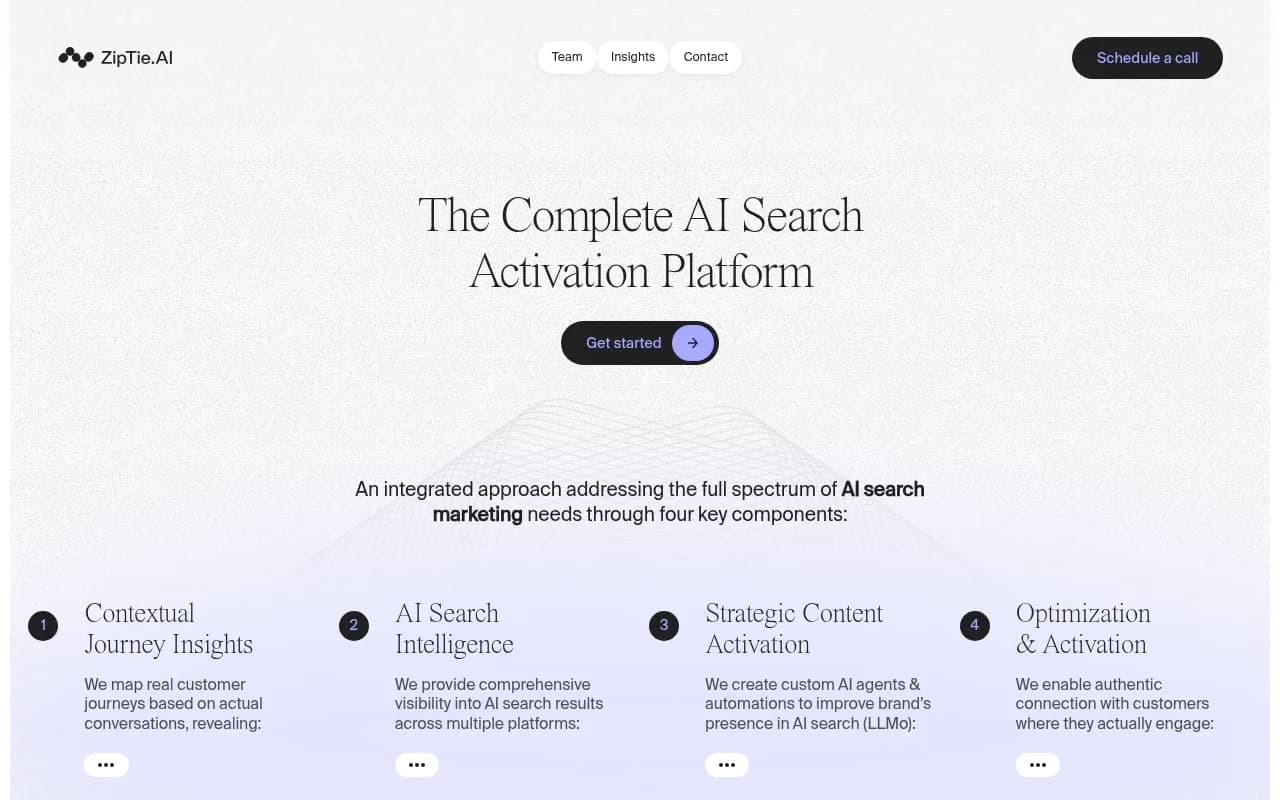
The free tier is genuinely functional, not just a teaser. For solo SEOs or small teams doing initial exploration, it's a reasonable starting point. The depth of data and reporting is limited compared to paid platforms, but the price-to-value ratio at the free tier is hard to beat.
13. Rankshift
Rankshift is built specifically for tracking visibility across ChatGPT and Gemini, with prompt-level granularity. Google AI Mode support is partial.
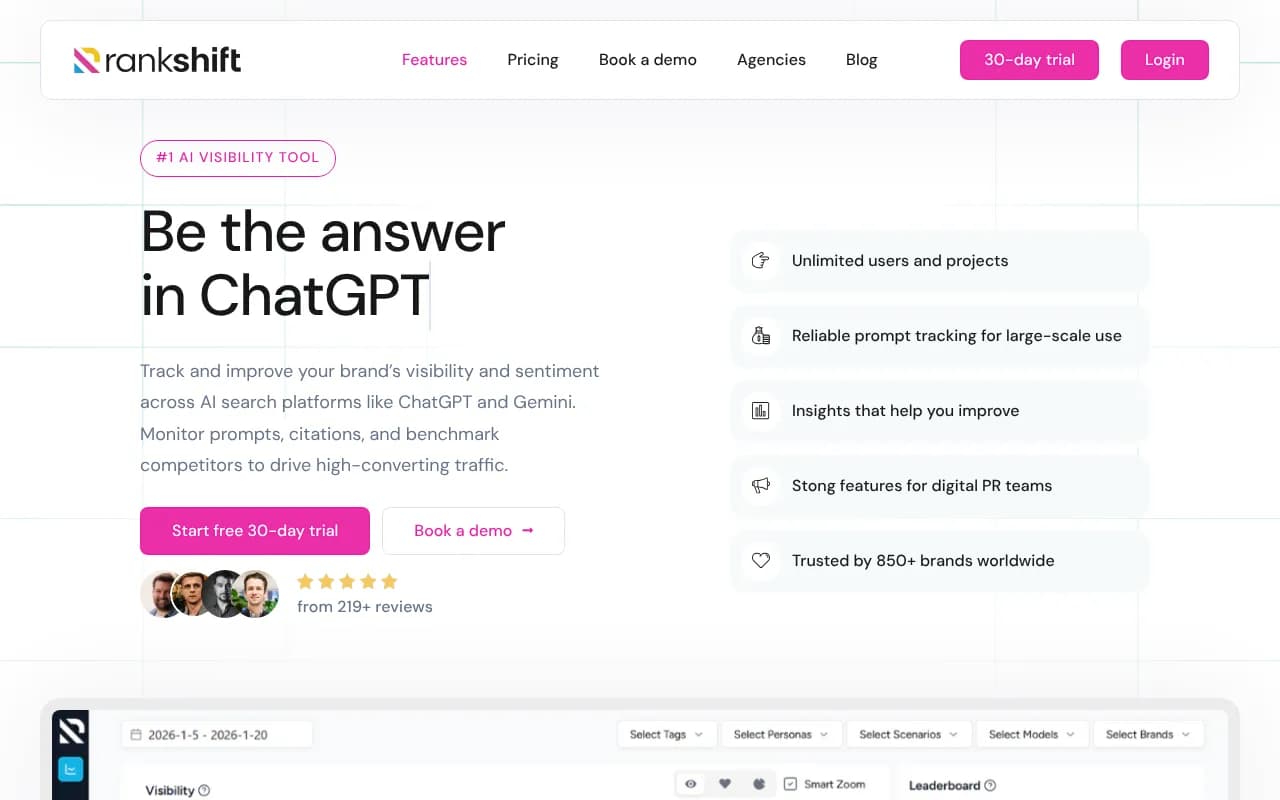
It's a newer entrant with a focused use case. The prompt-level detail is useful for understanding exactly which queries you're winning or losing. The main limitation for this guide's specific focus is the partial AI Mode coverage -- if you need comprehensive Google AI Mode tracking, Rankshift is better as a complementary tool than a primary one.
14. Rankscale
Rankscale covers 5+ AI engines and has reasonable Google AI Mode support at $79/mo. It's a solid mid-tier option.
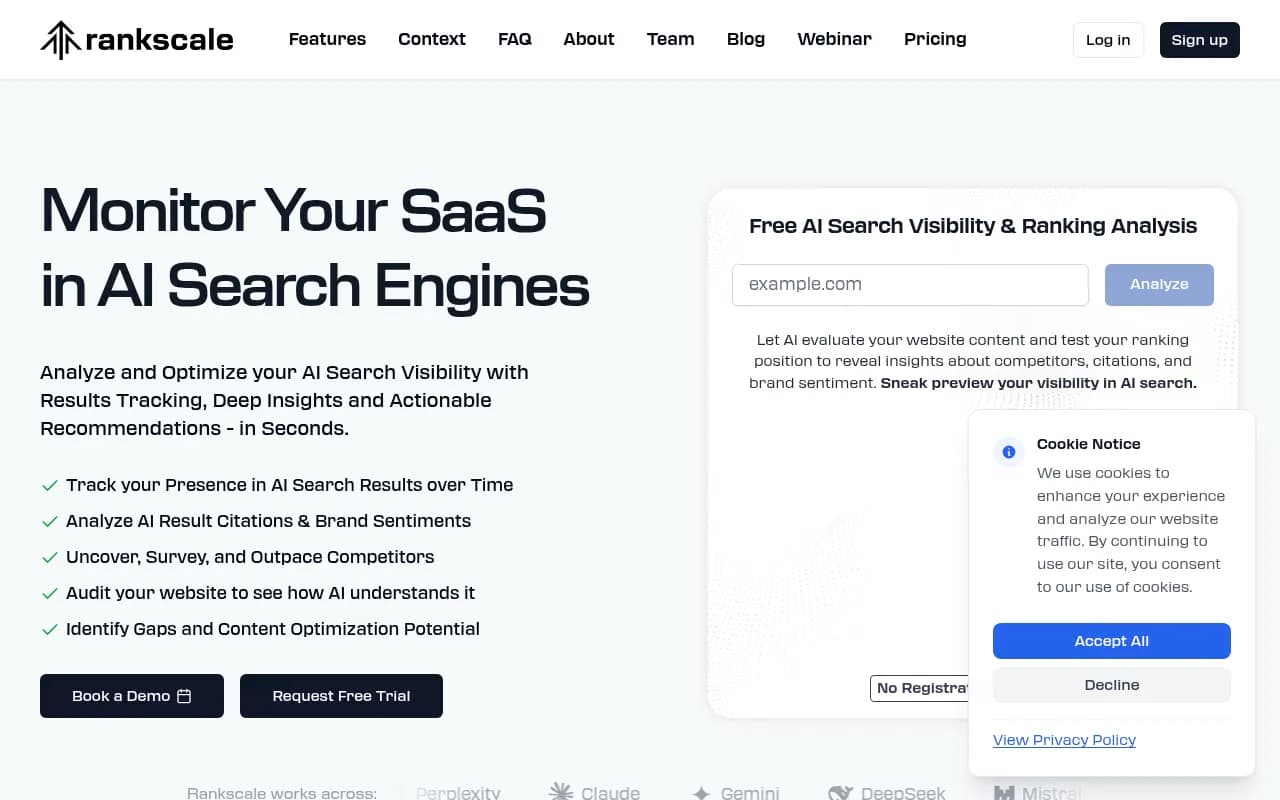
The platform is functional and the pricing is competitive. It doesn't stand out in any particular area, but it doesn't have glaring weaknesses either. For teams that want reliable tracking at a reasonable price without the complexity of enterprise platforms, it's worth evaluating.
What to actually look for when choosing
The comparison table above gives you the quick view, but a few things deserve more explanation.
Google AI Mode vs. AI Overviews -- they're not the same
Several tools in this category conflate Google AI Mode with Google AI Overviews. They're related but distinct surfaces. AI Overviews appear at the top of standard search results. AI Mode is a separate, conversational search experience that generates longer, more synthesized responses.
Before signing up for any platform, ask specifically: "Do you track Google AI Mode responses, or AI Overviews?" The answer tells you a lot about how carefully the team has thought about coverage.
Fixed prompts vs. custom prompts
Semrush and Ahrefs use fixed prompt sets -- you can't define your own queries. Every other platform on this list allows custom prompts. For most brands, the ability to track the specific questions your customers are actually asking is non-negotiable. Fixed prompts are fine for benchmarking but not for operational monitoring.
The monitoring-only problem
Ten of the fourteen platforms on this list are monitoring-only. They show you data. They don't help you change it. That's not a dealbreaker if you have a strong content team that can take visibility data and translate it into content strategy independently. But if you want a platform that closes the loop -- identifies gaps, suggests content, tracks improvement -- your options narrow quickly.
Promptwatch is the clearest example of a platform that goes beyond monitoring. A few others (Profound, Scrunch AI) have some optimization features, but they're limited compared to what Promptwatch offers with its built-in AI writing agent and citation-grounded content generation.
Crawler logs: underrated feature
Most teams don't think about AI crawler logs until they have a problem -- a page that should be getting cited isn't, and they can't figure out why. Knowing whether Google's AI crawler is actually visiting your pages, how often, and what errors it's encountering is genuinely useful diagnostic information. Very few platforms offer this. Promptwatch does. If technical AI indexing is a concern for your site, this feature is worth factoring into your decision.
Who should use what
If you're an in-house SEO team at a mid-size brand with a content team: Promptwatch gives you the full workflow from tracking to optimization. The built-in content generation means you can act on gaps without spinning up a separate content process.
If you're an agency managing multiple clients: Rankability's reporting features and Promptwatch's agency/enterprise plans are both worth evaluating. Promptwatch's multi-site plans start at the Business tier ($579/mo for 5 sites).
If you're a solo SEO or small team on a tight budget: Start with ZipTie's free tier or Peec AI at $99/mo to get baseline data. Upgrade when you have enough visibility data to justify the investment.
If you're an enterprise brand with a large budget: Profound and Scrunch AI are the established enterprise choices. Promptwatch's enterprise plan is also worth evaluating given its optimization capabilities -- monitoring data without the ability to act on it has limited value at any budget level.
The bottom line
Google AI Mode is not going away, and the brands that figure out how to appear in its responses will have a meaningful advantage over those that don't. The tools to track and improve that visibility exist now -- the question is which one fits your workflow and budget.
Most platforms on this list will tell you where you stand. Fewer will help you improve. If you're evaluating options, that distinction is worth spending time on before you commit to a subscription.