Key takeaways
- Most AirOps cancellations in 2026 aren't about dissatisfaction with AI search as a category -- they're about teams outgrowing the platform's specific workflow or finding the pricing hard to justify at their stage.
- The most common complaints center on content quality control, workflow rigidity, and the gap between AirOps' content generation features and actual AI citation outcomes.
- Teams that left generally fell into two camps: those who wanted deeper visibility tracking without the content layer, and those who wanted more action-oriented optimization without paying AirOps' price point.
- Several strong alternatives exist depending on your priorities -- from lightweight monitoring tools to full-stack GEO platforms that combine tracking, content generation, and crawler analytics.
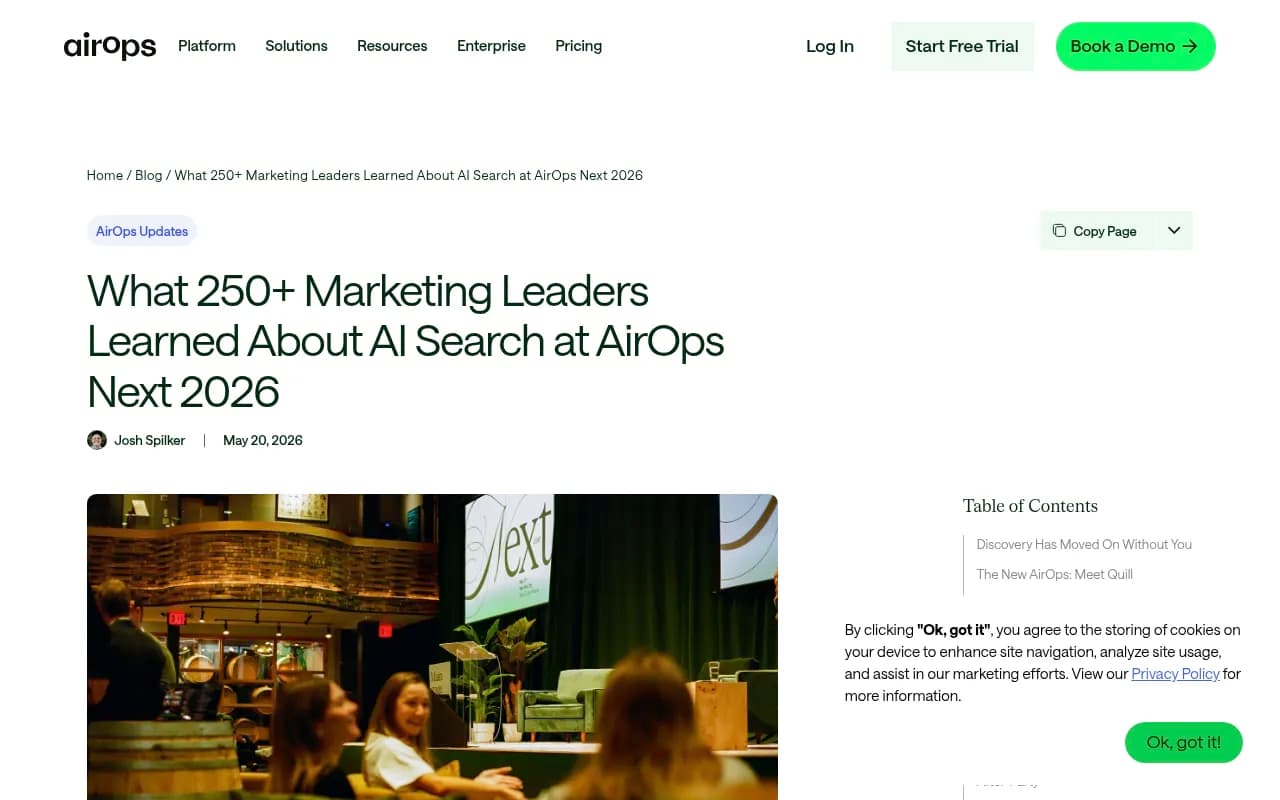
AirOps had a big 2026. Their Next conference in May drew 250+ marketing leaders to City Winery in Manhattan. They launched Quill, their AI agent captain, with early customers reportedly seeing up to 130% increases in citation rate. CEO Alex Halliday made a compelling case that buyers are no longer browsing their way to your brand -- they're delegating discovery to AI search engines.
And yet, quietly, teams are cancelling.
Not in droves. Not because AirOps is failing. But because the GEO and AI visibility space has matured fast, and "the platform we signed up for 12 months ago" looks different from "the platform we need right now." That's a normal part of any software market growing up -- and it's worth being honest about what's driving those decisions.
This guide is for teams that are on the fence, have already left, or are trying to figure out what comes next.
Why teams sign up for AirOps in the first place
AirOps positioned itself early as a growth platform for AI search, not just a tracker. The pitch was compelling: use AI-powered workflows to create content that gets cited by ChatGPT, Perplexity, and Google AI Overviews. The founder-led content webinars, the CMO series with Guillaume Cabane, the Quill agent launch -- all of it pointed toward a platform that helps you do something, not just watch dashboards.
That resonated. Especially with content teams who were already using AI writing tools and wanted something more purpose-built for AI search visibility.
The problem is that "doing something" means different things to different teams. And when the workflow doesn't match your actual process, you start looking elsewhere.
The most common reasons teams cancel
1. Content quality felt generic despite the AI search framing
This comes up repeatedly. AirOps generates content, but teams found the output required heavy editing before it was actually publishable -- or before it felt like something an AI model would want to cite. The promise of "content engineered for AI search" sometimes collided with the reality of content that needed the same amount of human polish as anything else.
For teams with small editorial bandwidth, that's a dealbreaker. You're paying for a platform that's supposed to save time, and instead you're spending it fixing AI drafts.
2. Workflow lock-in felt uncomfortable
AirOps is built around its own workflow system. That's a feature for teams that want an opinionated process. It's a frustration for teams that already have established content pipelines in Notion, Airtable, or custom CMS setups and don't want to rebuild everything inside a new platform.
The more a team had invested in their existing stack, the more friction they felt trying to make AirOps fit.
3. Visibility tracking wasn't deep enough for some use cases
Here's the irony: AirOps is primarily a content generation and workflow platform. Teams that came in expecting comprehensive AI citation monitoring -- page-level tracking, crawler logs, prompt volume data, competitor heatmaps -- often found the monitoring side thinner than expected.
If your main question is "which AI models are citing us, for which prompts, and why?" rather than "help me write content that gets cited," AirOps isn't really built for you.
4. Pricing pressure at the growth stage
AirOps isn't cheap. For a startup or a lean agency team that's still figuring out whether AI search visibility is even a meaningful channel for their business, committing to a platform at that price point is a hard sell -- especially when the ROI timeline is measured in months, not weeks.
Some teams cancelled simply because they needed to validate the channel first before investing in a full platform.
5. The Quill agent raised expectations it couldn't always meet
The 130% citation rate increase claim from early Quill customers was striking. But early access products have variance. Teams that signed up expecting those results and saw more modest outcomes felt the gap between the marketing and the reality.
What teams found on the other side
The good news: the alternatives have gotten genuinely better. Here's how different types of teams landed after leaving AirOps.
Teams that wanted deeper monitoring without the content layer
If your priority is understanding where you're visible, which prompts are driving citations, and how AI models are crawling your site, you need a platform built around that -- not one that treats monitoring as a secondary feature.
Promptwatch is the most complete option in this category. It tracks 10 AI models (ChatGPT, Perplexity, Claude, Gemini, Grok, DeepSeek, Copilot, Meta AI, Google AI Overviews, and Google AI Mode), gives you real crawler logs showing which pages AI agents are reading and when, and provides prompt volume and difficulty scoring so you can prioritize what to chase. The Answer Gap Analysis shows exactly which prompts competitors are visible for that you're not -- with the specific content gaps spelled out, not just a score.

What makes Promptwatch different from just a monitoring tool is that it closes the loop: find gaps, generate content to fill them, track whether that content gets cited. Most monitoring-only tools stop at step one. Promptwatch runs all three.
For teams that felt AirOps was too content-generation-heavy and not tracking-deep-enough, this is usually the right move.
Teams that wanted lightweight monitoring to validate the channel first
Not every team needs a full-stack platform. If you're a small team or agency trying to answer "does AI search even matter for our clients?" before committing budget, there are solid lightweight options.
Otterly.AI is affordable and gets you basic prompt monitoring across major AI models without a steep learning curve.

Peec AI covers multi-language monitoring, which matters if your market isn't English-first.

These tools won't give you crawler logs, content generation, or deep competitive analysis. But they'll tell you whether your brand is showing up -- and that's sometimes all you need to make the case internally for a bigger investment.
Teams that wanted more action-oriented optimization
Some teams left AirOps because they wanted more optimization capability, not less -- specifically, the ability to generate content that's grounded in real citation data and prompt intelligence, not just general AI search best practices.
Profound has strong tracking capabilities and a clean interface that enterprise teams tend to like.

AthenaHQ covers 8+ AI search engines and has a solid monitoring foundation, though it's more tracking-focused than action-oriented.

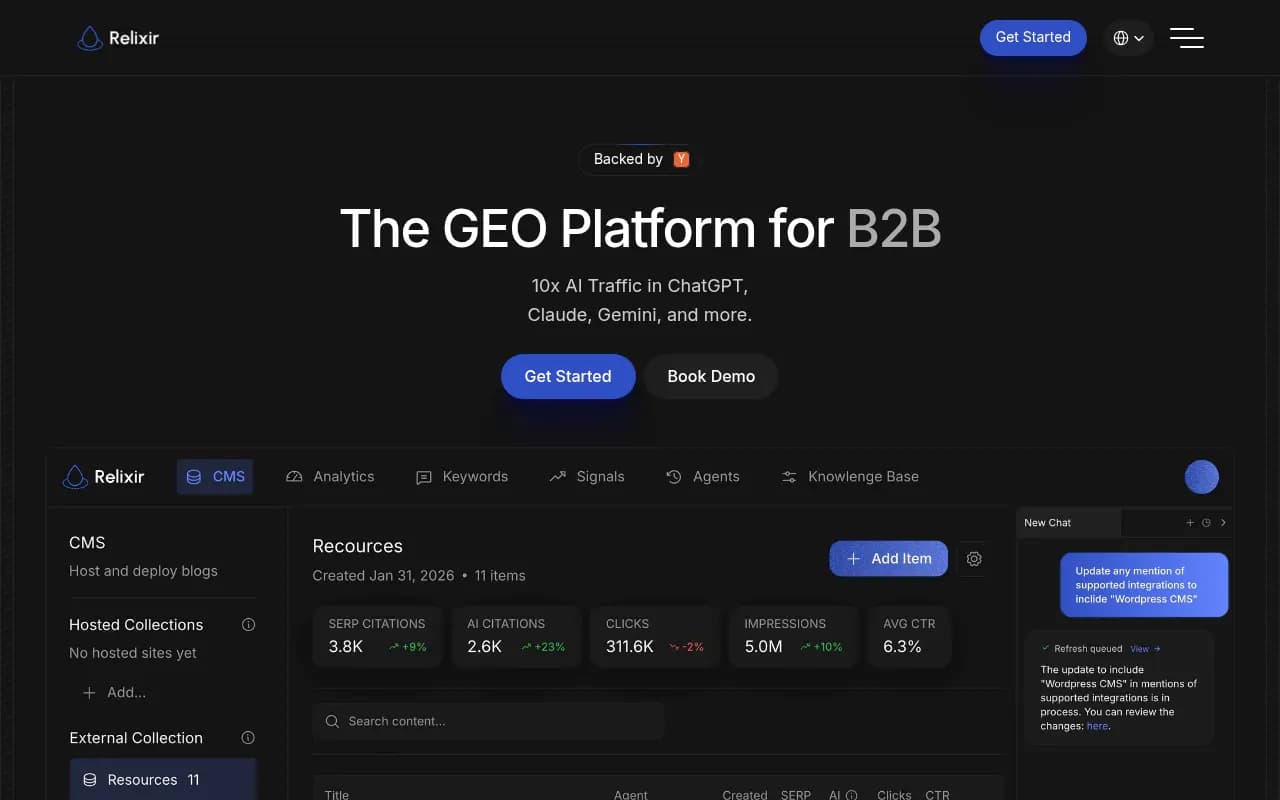
Relixir takes a more aggressive approach with an AI-native CMS and autonomous content generation -- worth a look if you want the content layer but with a different workflow philosophy than AirOps.
Teams that came from traditional SEO and wanted a familiar interface
A chunk of AirOps cancellations come from SEO teams who signed up because AI search felt adjacent to their existing work, but found AirOps' interface and workflow too foreign from what they knew.
Semrush has been building out AI visibility features, and for teams already living in Semrush, the incremental addition makes sense even if it's not as deep as a dedicated GEO platform.
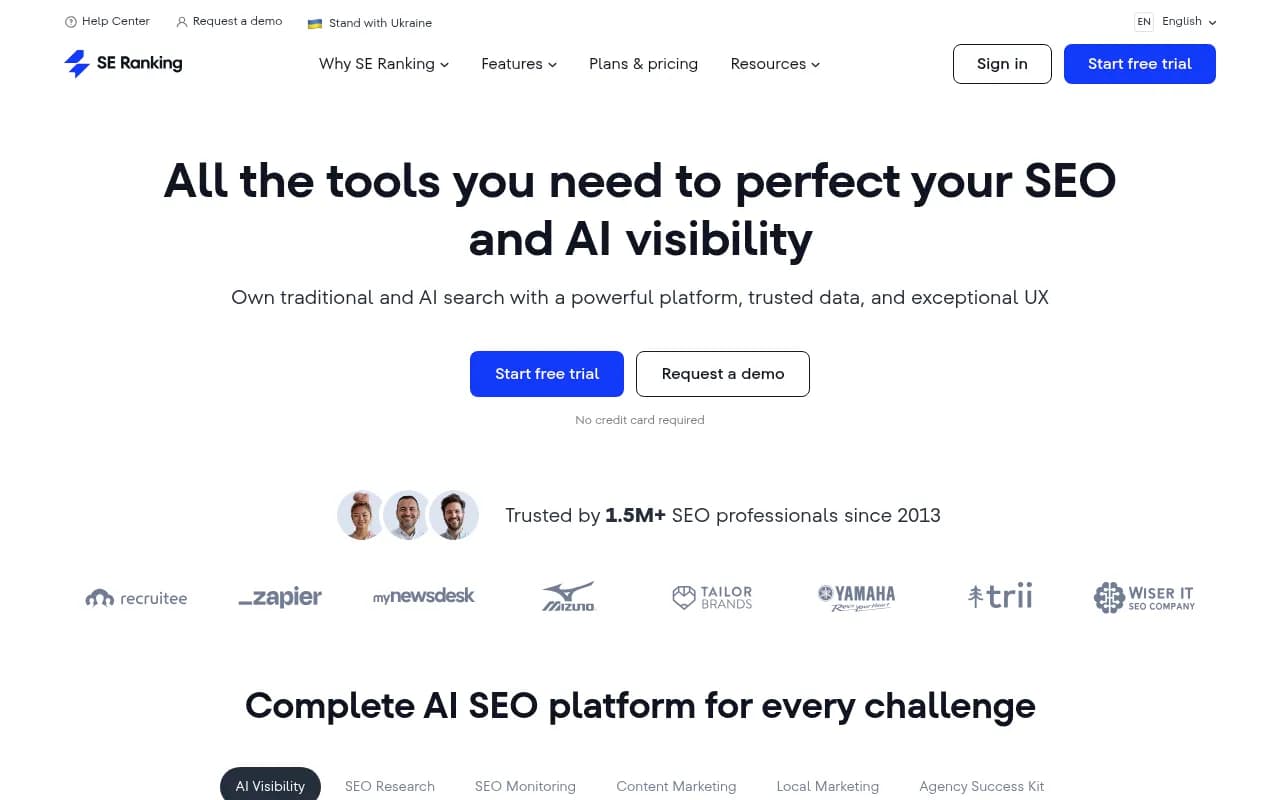
SE Ranking has a solid AI visibility toolkit that sits alongside traditional rank tracking, which is a comfortable transition for SEO-native teams.
The tradeoff: neither of these gives you the depth of a purpose-built GEO platform. Semrush uses fixed prompts, which limits how well it captures the actual variance in how users query AI models. But for teams that need one tool to rule everything, the consolidation is worth it.
A direct comparison of what you're choosing between
| Platform | Primary strength | Content generation | Crawler logs | Prompt volume data | Best for |
|---|---|---|---|---|---|
| AirOps | Content workflows for AI search | Yes (core feature) | Limited | Limited | Content teams wanting AI-native workflows |
| Promptwatch | End-to-end GEO (track + create + optimize) | Yes (Content Agents) | Yes | Yes | Teams wanting the full action loop |
| Profound | Enterprise monitoring | No | No | Limited | Enterprise brands tracking AI visibility |
| Otterly.AI | Lightweight monitoring | No | No | No | Small teams validating the channel |
| Peec AI | Multi-language monitoring | No | No | No | International brands |
| Relixir | AI-native CMS + content | Yes | No | No | Teams wanting autonomous content generation |
| Semrush | Traditional SEO + AI visibility | Limited | No | No | SEO teams wanting one platform |
| AthenaHQ | Multi-model monitoring | No | No | No | Monitoring-focused teams |
What to actually think about before switching
Cancelling a platform mid-contract or mid-strategy is disruptive. Before you pull the trigger, it's worth being honest about a few things.
Is the problem the platform or the strategy? A lot of teams that cancel AirOps (or any GEO tool) haven't actually committed to a prompt strategy. They signed up, set up a few prompts, and waited. AI search visibility doesn't work like that. If you haven't done the work of identifying which prompts matter for your business and what content gaps exist, switching platforms won't fix the underlying problem.
Are you measuring the right thing? Citation rate is one metric. But the question that actually matters is whether AI search visibility is driving traffic and revenue. If you're not tracking that connection, you don't have enough information to evaluate whether any platform is working.
What does your content workflow actually look like? The best GEO platform is the one your team will actually use. If AirOps' workflow felt like friction, ask yourself whether that friction was the platform or whether you'd feel it with any tool that requires consistent content output.
The honest verdict
AirOps built something real. The conference, the Quill launch, the CMO series with Guillaume Cabane -- these aren't the moves of a company coasting.
But the GEO space has gotten competitive fast, and the teams that are winning in AI search right now are the ones who can close the loop between visibility data and content action -- not just run one half of the equation. If AirOps' workflow fits how your team operates, stick with it. If it doesn't, the alternatives above are genuinely good.
The worst outcome is cancelling because you're frustrated, landing on a lighter tool that gives you even less to work with, and concluding that AI search visibility "doesn't work." It works. You just need a platform that matches how you actually operate -- and the discipline to use it consistently.
For teams that want the most complete picture of what's happening in AI search and the tools to actually act on it, Promptwatch is worth a serious look. It's the only platform in this space that handles monitoring, content generation, and crawler analytics in one place -- which is exactly the combination most teams discover they need after their first platform doesn't quite get them there.