Key takeaways
- Buyers ask AI which SaaS to shortlist before they ever visit your site, so what AI says about you is now part of your funnel.
- In ChatGPT, owned product pages and landing pages are the biggest citation levers. Promptwatch Data shows they make up about 39% of all citations (Sep 28 to Oct 4, 2026).
- Reddit and social posts matter far less in ChatGPT than the hype suggests, but YouTube is big in Google AI Overviews.
- Wrong pricing, outdated features and missing integrations in AI answers usually trace back to a specific page. Find it, fix it, re-measure.
- Treat AI perception as a loop: monitor, trace the sources, publish fixes, measure traffic.
Why AI perception is now a pipeline problem
A B2B buyer used to Google "best CRM for mid-market", open six tabs, and read G2. Now a lot of them type the same question into ChatGPT and get a shortlist of three names with a sentence on each. If you are one of the three, great. If you are described as "expensive, with a clunky mobile app", you are the cautionary tale, and you never find out why you lost the deal.
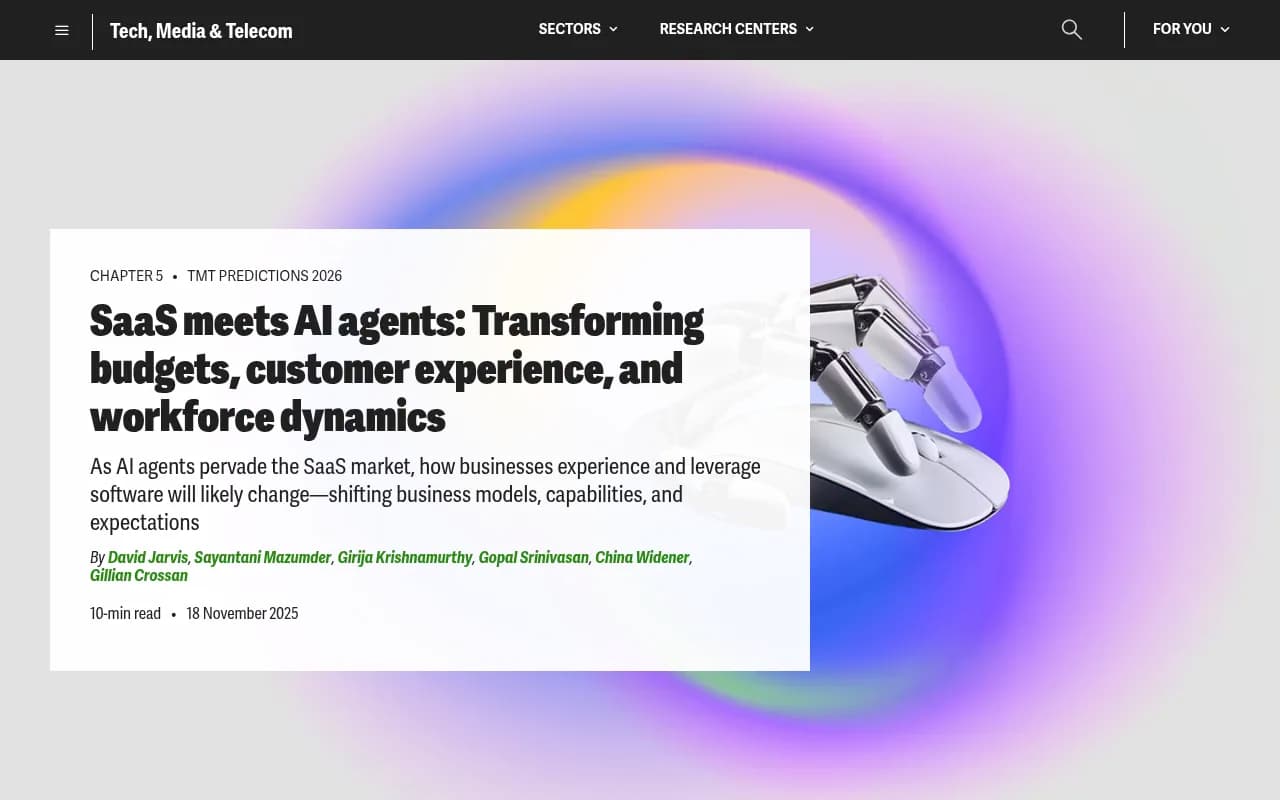
The broader industry is moving the same direction. Deloitte's SaaS meets AI agents analysis expects agentic capabilities to change how organizations buy and use software, with seat-based licensing giving way to usage and outcome-based pricing. Its 2025 Tech Value survey found 57% of respondents putting 21% to 50% of digital transformation budgets into AI automation. When software is evaluated and sometimes selected by agents, the facts those agents can find about you matter more than your homepage copy.
The CIO piece on the convergence of SaaS and AI makes a related point: SaaS is being rebuilt around AI, and customer expectations are shifting with it. That covers your product. This guide covers the other half, which is how AI describes your product to people who have not bought it yet.
What AI perception actually means
Perception is not one number. It is at least five separate things, and each one breaks in a different way.
- Presence: do you show up at all for the category prompts your buyers use?
- Position: are you named first or fifth?
- Claims: what does the answer say about pricing, features, support and security?
- Sentiment: is the tone recommending or warning?
- Sources: which pages does the model lean on to say all that?
Reading them together tells you where to work. Low presence is a coverage problem. Good presence with wrong claims is a content or crawlability problem. Good claims with weak tone is a reputation problem. Most teams only ever check the first one, by typing their brand name into ChatGPT once and screenshotting it. That tells you very little, because answers vary by model, country, persona and day.
Where AI gets its opinion of your SaaS
The uncomfortable finding from Promptwatch Data is how much of your perception is built from pages you control. The software prompts report covers ChatGPT citations for organic software prompts from Sep 28 to Oct 4, 2026. By source type, among the 23 listed domains:
| Source type | Share of software citations |
|---|---|
| Docs and help centers | 2.64% |
| Vendor sites | 2.01% |
| Review sites and analysts (G2, Gartner, Capterra, Software Advice) | 1.57% |
| GitHub | 1.2% |
| App stores | 0.47% |
Vendor pages plus docs earn 4.65%, about three times the share of review sites and analysts. GitHub (1.2%), learn.microsoft.com (0.98%) and G2 (0.73%) were the most cited individual domains, with Intercom at 0.28% and Zapier at 0.24% showing how mid-size vendors appear. These are small numbers per domain because ChatGPT spreads citations widely: almost half of responses cite 10 or more unique domains, according to the unique domains report.
The practical read: your own docs, help center and product pages are your main citation source. A locked-down docs portal or a JavaScript-only help center can quietly cost you recommendations.
Which content types get cited
The content type report breaks ChatGPT citations down for the same week:
| Content type | All prompts | Commercial prompts |
|---|---|---|
| Product pages | 22.4% | 26.0% |
| Landing pages | 16.8% | 20.6% |
| Listicles | 13.6% | 15.0% |
| Comparisons | 5.9% | 7.9% |
| Documentation | 7.5% | n/a |
| Reviews | 1.7% | n/a |
For commercial prompts like "best CRM for small businesses", product pages, landing pages, listicles and comparisons add up to almost 70% of citations. Branded prompts, such as "is HubSpot good for startups", lean on product pages (23.3%) and landing pages (22.8%), and reviews jump to 5.6%, more than three times their overall share.
So when a buyer asks about you by name, your own pages and your review profiles do most of the talking. When they ask about the category, listicles and comparison pages decide whether you make the shortlist.
Reddit is not the whole story
A lot of B2B GEO advice says Reddit dominance drives AI recommendations. Discovered Labs, for one, pushes that line. The data is more mixed. In the social media citations report for Oct 11 to Nov 9, 2026, social platforms made up:
- 13.16% of Google AI Overviews citations, with YouTube at 6.71% and Reddit at 2.10%
- 1.94% of Perplexity citations, with Reddit at 0.82% and LinkedIn at 0.66%
- 0.64% of ChatGPT citations, with Reddit at 0.40%
Caveat: the October report covered 7 days and this one covers 30, so compare directionally, not exactly. Still, ChatGPT is not a Reddit-driven channel right now. Promptwatch's Reddit citation drop report shows reddit.com falling from about 4% to 0.5% of ChatGPT citations on August 14, 2026. If Google AI Overviews matter to your buyers, YouTube deserves a real budget. For Perplexity, Reddit and LinkedIn are worth showing up on. For ChatGPT, fix your site first.
Recommended or cautionary tale: how to tell
Run this audit before you spend on anything.
1. Build a prompt set that sounds like buyers
Cover four prompt types: category ("best project management software for agencies"), comparison ("you vs competitor"), branded ("is you good for enterprise"), and problem-led ("how do I reduce churn in a subscription product"). Add personas, because a CFO and a developer get different answers. Run them across ChatGPT, Gemini, Perplexity, Claude and Google AI Overviews, in the countries you sell in.
2. Read the claims, not just the mentions
A mention is not a recommendation. Pull out the specific statements: "pricing is opaque", "integrates with Salesforce", "no SOC 2", "best for small teams". Group them by theme. Then check each one against reality. This is where the cautionary tales come from. A model repeating a 2023 pricing page or a competitor's biased comparison is more common than a model inventing things from nothing.
3. Trace every wrong claim to a page
Every claim has a source. It might be an old blog post on your own site, a stale G2 description, a third-party listicle, or a forum thread. Until you find the page, you are arguing with the model instead of fixing the cause.
4. Check that AI can actually read you
Look at crawler logs for GPTBot, ClaudeBot, PerplexityBot and friends. If your docs return errors to bots, or pricing sits behind a script-rendered widget, models fall back on what other people say about you. This is the cheapest fix with the biggest payoff, and most teams never check.
Tools for tracking AI perception
There are dozens of trackers now. You can browse the category in the GEO software directory at bestgeosoftware.com. The useful split is between tools that only report a score and tools that help you act on it.
Promptwatch is the one I would start with for B2B SaaS, mostly because it covers the full loop. It monitors the real interfaces of ChatGPT, Google AI Overviews, Gemini, Perplexity and others by country and language, extracts the individual claims AI makes about you in Brand Narrative, and (on Business and above) lets you mark a claim inaccurate and find the page teaching the model the wrong thing with Fact Check. IP-verified AI crawler logs show whether bots can read your docs, and visitor analytics show whether AI traffic converts. Its Content Agent then writes and publishes fixes to WordPress, Webflow or Framer. Pricing starts at $95/mo on Essential, with the Content Agent on Business at $579/mo; confirm current plans at promptwatch.com/pricing. There is also a free AI visibility report if you want a first look without signing up.

Other options depending on your setup:

Profound is a strong monitoring product, though at a higher price point and without the same execution layer.

Peec AI is a simpler multi-language tracker, fine if you only need prompt monitoring.

Otterly.AI is an affordable entry point for basic visibility monitoring.

AthenaHQ tracks visibility across several AI engines.
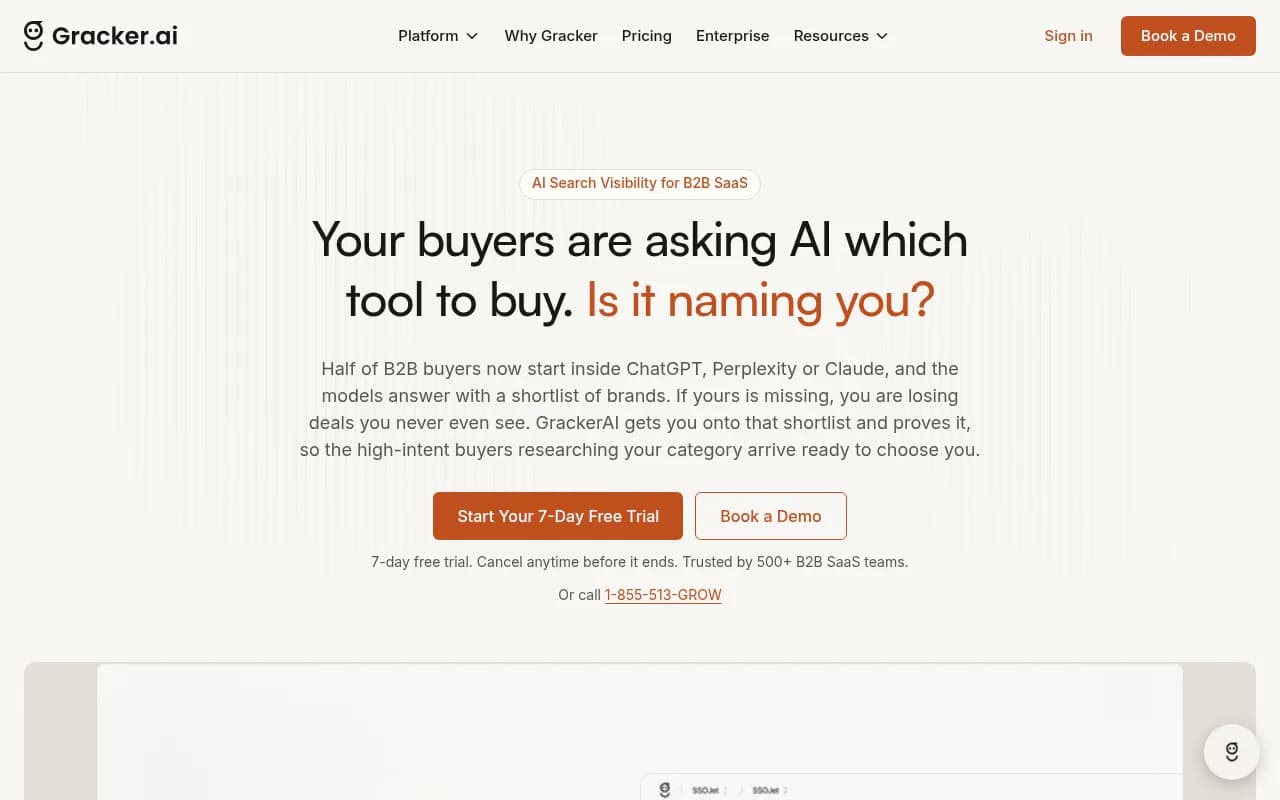
GrackerAI is aimed specifically at B2B SaaS marketing teams.
| Tool | Monitoring | Crawler logs | Content creation and publishing | Best for |
|---|---|---|---|---|
| Promptwatch | Yes, real UIs, many models | Yes, IP-verified | Yes, Content Agent with CMS publishing | Teams that want to fix, not just watch |
| Profound | Yes | Limited | No agentic execution | Enterprise monitoring |
| Peec AI | Yes | No | No | Lean prompt tracking |
| Otterly.AI | Yes | No | No | Budget monitoring |
| AthenaHQ | Yes | No | Limited | Monitoring-first teams |
| GrackerAI | Yes | Check vendor | Check vendor | B2B SaaS marketers |
For traditional suites that added AI tracking, look at Semrush or Ahrefs Brand Radar, but expect fixed prompt sets and no crawler data. More options are listed at ai-rank-tools.com.
Fixing a bad AI reputation, in order
Fix the facts on your own domain
Create one canonical pricing page in plain HTML. Publish integrations, security and compliance details as text, not PDFs or images. Keep a changelog. Make sure your feature descriptions match across your site, docs, G2 and Capterra. Inconsistent facts produce inconsistent answers.
Write the pages AI actually cites
Given that product, landing, comparison and listicle pages dominate commercial citations, build:
- A product page per major use case, written around buyer questions
- Honest comparison pages for your top competitors
- A "best X for Y" resource that names you and your rivals fairly
- Docs and FAQ content that answers implementation questions
Mind the shelf life. According to the content half-life report, landing pages and docs stay cited for months, while news loses half its pages in about five weeks. Invest in durable pages and refresh them, rather than relying on announcements.
Keep review profiles current
G2 and Capterra are 1.57% of software citations together with Gartner and Software Advice, small but they feed branded answers where reviews triple in share. Update descriptions, screenshots, pricing notes and categories. Ask recent customers for reviews so the sentiment is recent.
Add the right off-site channels
Pick by engine. YouTube for AI Overviews, Reddit and LinkedIn for Perplexity, and skip chasing social for ChatGPT. Honest participation beats seeding, and models tend to cite pages with real substance.
Open the door to crawlers
Check robots.txt for AI bots, make docs server-rendered, and consider an llms.txt file. The free LLMs.txt generator and robots.txt generator for AI cover the basics. One honest caveat: markdown files are only 0.05% of AI search citations, per the markdown report, so treat llms.txt as a courtesy for agents, not a ranking lever.
Measure whether it worked
Three checks, monthly at minimum:
- Visibility and position on your tracked prompts, by model and country.
- Claim accuracy: did the wrong statements disappear or shrink?
- AI-referred visits and conversions. Note that ChatGPT stopped sending a referrer on October 8, 2026, so tag links with utm_source=chatgpt.com where you can and use a tool that counts those visits. The attribution guide explains the setup.
Treat this as an operating rhythm. Crisp reported 2x higher conversion from AI traffic than from traditional channels after working this way, which is the kind of result that gets budget approved.
When to bring in help
If your team lacks the bandwidth to run the audit, rewrite the pages and track the outcome, an agency can carry it. 1001 SEO Media runs technical SEO, content and generative engine optimization programs for brands that want to rank in Google and get cited in ChatGPT, Perplexity and AI Overviews. They use Promptwatch for the monitoring side.
A short checklist
- Build 30 to 50 buyer-style prompts across category, comparison, branded and problem-led types.
- Record presence, position, claims and sentiment per model.
- Trace each wrong claim to its source page.
- Confirm AI crawlers can read docs, pricing and integration pages.
- Publish or refresh product, landing, comparison and docs pages.
- Update G2 and Capterra listings.
- Pick one off-site channel per engine that matters to you.
- Re-measure monthly and feed the misses back into the plan.
The brands getting recommended are mostly not doing anything exotic. They state their facts clearly on pages that models can read, keep them consistent everywhere, and check regularly what the answers say. The cautionary tales are the ones who never looked.