Key Takeaways
- Price difference is massive: Otterly.AI starts at $29/mo while Limy AI starts at $449/mo -- a 15x difference for entry-level plans
- Otterly is monitoring-focused: Strong at tracking brand mentions and citations across 6 AI engines, but stops there -- no content generation or optimization workflows
- Limy positions as B2A optimization: Claims to provide "step-by-step optimization actions" and revenue tracking, but limited public information on actual capabilities
- Otterly has GEO audit tools: Analyzes 25+ on-page factors to identify citation blockers, which most budget tools skip
- Limy targets enterprise: Pricing and positioning suggest it's built for larger teams with bigger budgets, while Otterly serves SMBs and agencies
- Both lack content generation: Neither tool helps you create the content that AI engines want to cite -- they show you the problem but don't help you fix it
Overview
Otterly.AI

Otterly.AI positions itself as the "#1 rated AI search monitoring platform" with a focus on affordability. It tracks brand mentions and website citations across ChatGPT, Perplexity, Google AI Overviews, Google AI Mode, Gemini, and Copilot. The platform includes AI keyword research to discover conversational search prompts, brand monitoring to see which competitors get recommended, and a GEO audit tool that analyzes 25+ on-page factors. Pricing starts at $29/mo for 15 prompts, making it one of the cheapest entry points in the AI visibility space. The company emphasizes "getting your team into action mode" but the action steps appear to be manual -- optimize your content, do media outreach, mobilize your community.
Limy AI
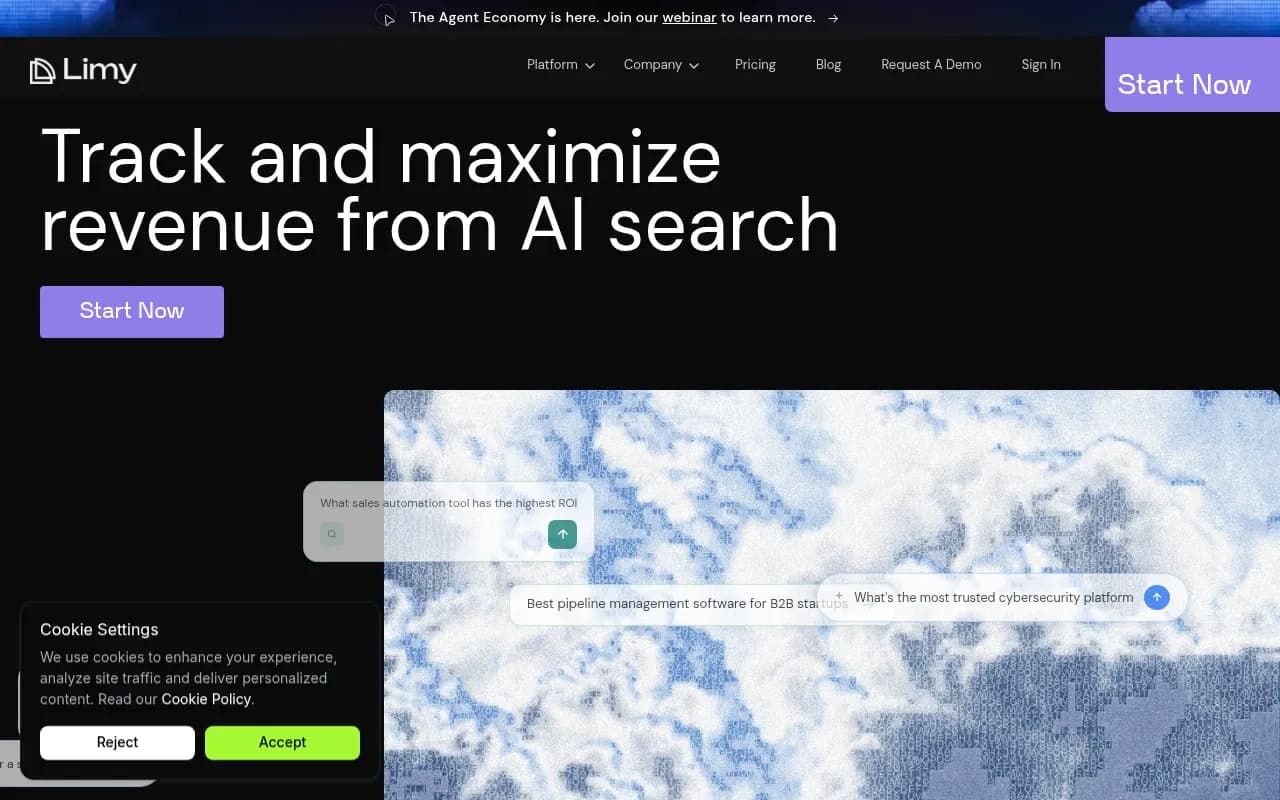
Limy AI calls itself a "B2A (Business-to-Agent) optimization platform" that helps brands monitor and improve how AI search engines recommend their products. It tracks ChatGPT, Perplexity, and Claude, with claims of providing "step-by-step optimization actions, sentiment analysis, and revenue tracking." The website emphasizes "infrastructure to own the market in AI search" and shows screenshots of various brand logos and prompt examples. Pricing starts at $449/mo, positioning it as an enterprise-grade tool. Public information on specific features is limited compared to Otterly -- the website focuses more on positioning and value props than feature breakdowns.
Side-by-Side Comparison
| Feature | Otterly.AI | Limy AI |
|---|---|---|
| Starting price | $29/mo (15 prompts) | $449/mo |
| Free trial | 14 days | Not specified |
| AI engines tracked | 6 (ChatGPT, Perplexity, AI Overviews, AI Mode, Gemini, Copilot) | 3 mentioned (ChatGPT, Perplexity, Claude) |
| Brand mention tracking | ✓ | ✓ |
| Citation tracking | ✓ | ✓ |
| Keyword research | ✓ (AI keyword discovery) | Not specified |
| GEO audit | ✓ (25+ factors) | Not specified |
| Sentiment analysis | Not specified | ✓ |
| Revenue tracking | Not specified | ✓ (claimed) |
| Optimization actions | Manual recommendations | "Step-by-step" (details unclear) |
| Content generation | ✗ | ✗ |
| Target audience | SMBs, agencies, budget-conscious teams | Enterprise, larger teams |
| Public feature docs | Detailed | Limited |
Pricing breakdown
| Plan | Otterly.AI | Limy AI |
|---|---|---|
| Entry tier | $29/mo (Lite: 15 prompts) | $449/mo (details not public) |
| Mid tier | $189/mo (Standard: 100 prompts) | Not specified |
| Enterprise | Custom (Premium: unlimited prompts) | Custom pricing likely |
| Free trial | 14 days | Not specified |
| Annual discount | Not specified | Not specified |
The pricing gap here is the story. Otterly's $29 entry point makes it accessible to solo marketers and small teams testing AI visibility for the first time. Limy's $449 floor signals it's built for companies with established budgets and a clear ROI case for AI search optimization.
Feature deep-dive
AI engine coverage
Otterly.AI explicitly lists 6 platforms: ChatGPT, Perplexity, Google AI Overviews, Google AI Mode, Gemini, and Microsoft Copilot. This is solid coverage of the major players, though it's missing Claude (which Anthropic is pushing hard into search) and newer entrants like DeepSeek or Grok.
Limy AI mentions ChatGPT, Perplexity, and Claude on its website but doesn't provide a complete list. The focus on Claude is interesting -- it's one of the few tools explicitly calling it out -- but the lack of transparency on total coverage is a red flag. If you're paying $449/mo, you want to know exactly which engines you're monitoring.
Verdict: Otterly wins on transparency and breadth. Six confirmed engines beats three mentioned ones.
Monitoring and tracking
Both tools do the core job: track when your brand gets mentioned or your website gets cited in AI responses. Otterly shows you which brands get recommended, which websites get cited, and where you stand relative to competitors. The interface appears dashboard-heavy with Share of Voice metrics.
Limy claims sentiment analysis and revenue tracking on top of basic monitoring. Sentiment analysis -- understanding whether AI engines are saying positive or negative things about your brand -- is genuinely useful, especially for reputation management. Revenue tracking is the holy grail: connecting AI visibility to actual dollars. But Limy's website doesn't explain how this works. Is it attribution modeling? UTM tracking? Integration with your CRM? Without details, it's hard to evaluate.
Verdict: Otterly is clearer about what you get. Limy's advanced features sound compelling but lack proof.
Keyword research and prompt discovery
Otterly includes "AI Keyword Research to identify the right Search Prompts" -- discovering what your audience is asking on ChatGPT, Perplexity, and Google. This is critical because AI search queries are conversational and different from traditional SEO keywords. Knowing which prompts to optimize for is step one.
Limy's website shows prompt examples in its UI screenshots but doesn't explicitly call out keyword research as a feature. It's possible the platform includes it but just doesn't market it prominently.
Verdict: Otterly makes this a clear selling point. If prompt discovery matters to you, it's the safer bet.
Optimization and action
This is where both tools fall short compared to platforms like Promptwatch, which not only shows you gaps but generates content to fill them.

Otterly's GEO audit tool analyzes 25+ on-page factors -- things like structured data, content depth, E-E-A-T signals, and technical SEO elements that influence whether AI engines cite your site. It tells you what's wrong and what to fix. But you still have to do the fixing manually. The platform pushes you toward three "levers": optimize on-page content, ramp up media outreach, mobilize your community. All valid, all manual.
Limy promises "step-by-step optimization actions" but doesn't show what those look like. Is it a checklist? Automated recommendations? Integration with your CMS? The vagueness is frustrating at this price point.
Verdict: Otterly at least gives you a concrete audit. Limy's claims need more evidence.
Sentiment and revenue tracking
Limy's differentiators -- if they work as advertised -- are sentiment analysis and revenue tracking. Sentiment matters because AI engines can mention your brand negatively ("X is expensive" or "users complain about Y"). Tracking that lets you respond.
Revenue tracking is even bigger. Most AI visibility tools show you metrics (mentions, citations, Share of Voice) but can't connect those to business outcomes. If Limy actually ties AI visibility to revenue, that's a game-changer. But again, no details on methodology.
Otterly doesn't mention either feature. It's purely a monitoring and audit tool.
Verdict: Limy has the more ambitious vision. Whether it delivers is unclear.
Ease of use and documentation
Otterly's website is detailed. You know what you're getting, how much it costs, and what the workflow looks like. The marketing is straightforward: track mentions, run audits, optimize manually.
Limy's website is slicker but vaguer. Lots of positioning language ("infrastructure to own the market") and screenshots of dashboards, but less concrete feature breakdown. For a $449/mo tool, I'd expect more transparency.
Verdict: Otterly is easier to evaluate before buying.
Pros and cons
Otterly.AI pros
- Affordable entry point ($29/mo) makes it accessible for small teams
- Tracks 6 major AI engines with clear coverage list
- GEO audit tool provides actionable on-page analysis (25+ factors)
- AI keyword research helps identify conversational prompts
- 14-day free trial lets you test before committing
- Transparent pricing and feature documentation
Otterly.AI cons
- No content generation -- you have to create optimized content manually
- No sentiment analysis or revenue tracking
- Optimization is manual (audit tells you what's wrong, you fix it)
- Lower prompt limits on cheaper plans (15 prompts on Lite tier)
- Missing some newer AI engines (Claude, DeepSeek, Grok)
Limy AI pros
- Sentiment analysis for reputation management (if it works as claimed)
- Revenue tracking to connect visibility to business outcomes (if implemented well)
- "Step-by-step optimization actions" suggest more guidance than competitors
- Tracks Claude, which many tools skip
- Positioned for enterprise with presumably more robust support
Limy AI cons
- Expensive ($449/mo starting price) with no public lower tiers
- Vague feature documentation -- hard to know what you're actually getting
- Unclear which AI engines are covered beyond ChatGPT, Perplexity, Claude
- No visible free trial or demo option
- No content generation despite optimization focus
- Limited public reviews or user feedback to validate claims
Who should pick which tool
Choose Otterly.AI if:
- You're a small team or agency with a limited budget ($29-$189/mo range)
- You want clear, transparent monitoring of brand mentions and citations
- You need a GEO audit to identify technical and content issues blocking citations
- You're comfortable doing manual optimization based on audit findings
- You want to test AI visibility tracking without a big commitment (14-day trial)
- You need coverage of Google AI Overviews and AI Mode specifically
Choose Limy AI if:
- You have an enterprise budget and $449/mo is not a concern
- Sentiment analysis is critical for your brand reputation strategy
- You need to prove ROI by connecting AI visibility to revenue
- You want more hand-holding with "step-by-step" optimization guidance
- Claude visibility is a priority for your industry
- You're willing to bet on a less-documented platform based on positioning
Consider alternatives if:
- You need content generation to actually fix the gaps these tools identify. Otterly and Limy both stop at showing you the problem. Tools like Promptwatch go further by generating AI-optimized content based on citation data and prompt analysis, then tracking the results.
- You want deeper competitor analysis, crawler logs, or Reddit/YouTube tracking -- neither Otterly nor Limy covers those angles comprehensively.
Final verdict
Otterly.AI wins on value and transparency. For most teams, especially those new to AI visibility or working with tight budgets, it's the smarter pick. You get solid monitoring, useful audits, and a clear understanding of what you're paying for. The $29 entry point is low-risk, and the GEO audit feature adds real diagnostic value.
Limy AI has an interesting vision -- sentiment analysis and revenue tracking could be genuine differentiators -- but the lack of public detail and the 15x price premium make it hard to recommend without seeing proof. If you're an enterprise team with budget to burn and a specific need for sentiment tracking, it might be worth a conversation. For everyone else, the value case isn't there yet.
Neither tool solves the core problem: they show you where you're invisible in AI search but don't help you create the content that fixes it. You're still on your own for the hardest part.