Key takeaways
- AI engines don't invent your brand story. They assemble it from review sites, Reddit threads, Wikipedia, editorial coverage and your own pages, and the third-party pieces often outweigh yours.
- Each engine leans on different sources. Per Promptwatch Data (Oct 11 to Nov 9, 2026), social platforms are 13.16% of Google AI Overviews citations but only 0.64% of ChatGPT's.
- Tracing a claim means working backwards: capture the exact statement, find the cited URLs, classify the source type, then check whether that page says what the AI says.
- Fix the source, not the answer. You can't edit ChatGPT, but you can correct a review profile, answer a Reddit thread or update the page that planted the claim.
Why AI perception is mostly built off your site
When someone asks ChatGPT whether your product is any good, the answer isn't your homepage copy read back to them. It's a summary of a handful of pages the engine trusts, and a lot of those pages belong to other people.
A May 2026 Muck Rack study, as summarized by Cognizo, looked at 25M+ links across ChatGPT, Claude and Gemini and found roughly 84% of cited sources were earned, meaning third-party. I'd treat that as directional since I only saw it secondhand, but it matches what anyone who audits citations sees: reviews, comparisons, editorial coverage and community threads dominate.
The mechanism that matters is consensus. If five independent review sites call your product "enterprise-grade" and your site says the same, the model repeats it. If only your site says it, the claim is weak. The same logic works in reverse, and that's the uncomfortable part. One persistent complaint repeated across a Reddit thread, two review profiles and a roundup can become "known for poor support" in every answer.
The AIVIS write-up on the third-party effect makes the same point, citing Stacker's 2025 study of 2,600+ prompts in which brands with earned media coverage were cited 239% more often than brands relying on owned content alone.
The main source types, and what each one tells AI
Not all third-party pages do the same job. Roughly:
- Community threads (Reddit, Quora): candid, first-person experience. They shape claims about real-world use, frustrations and "is it worth it".
- Review platforms (G2, Capterra, Trustpilot, Glassdoor): structured opinions with ratings. They shape claims about quality, pricing, support and, for employers, culture.
- Listicles and comparisons: "best X for Y" roundups. They decide whether you're included in a shortlist at all.
- Editorial and news coverage: authority signals, strongest for time-sensitive topics.
- Reference pages (Wikipedia, Wikidata): often the factual backbone for who you are and what you do.
- Your own pages: product pages, landing pages and docs, which still carry a lot of weight for factual claims.
Terakeet's January 2026 piece singles out Reddit, Wikipedia and Glassdoor as the big three for shaping what AI believes about a company, its leadership and its reputation. Reddit's licensing deals with Google and OpenAI are part of why its threads show up so often.
What the citation data says right now
Here is where I'd push back on blanket advice like "just get on Reddit." The numbers vary hugely by engine, and they move.
Social and community sources by engine
Promptwatch's social citations report for November 2026 covers Oct 11 to Nov 9, 2026 (30 days). Note it's compared with an October report that covered only 7 days, so treat the month-on-month change loosely.
| Engine | Social share of citations | Biggest platforms |
|---|---|---|
| Google AI Overviews | 13.16% | YouTube 6.71%, Facebook 2.34%, Reddit 2.10% |
| Perplexity | 1.94% | Reddit 0.82%, LinkedIn 0.66% |
| ChatGPT | 0.64% | Reddit 0.40%, LinkedIn 0.20% |
AI Overviews cites social about 20 times as often as ChatGPT, and YouTube alone (6.71%) is bigger than the other six platforms combined. Other vendors publish different figures. Profound, for example, reports roughly 15% for AI Overviews. Methodologies differ, so compare within a source, not across them.
Reddit has been volatile in ChatGPT
Reddit held a steady 3.83% average share of ChatGPT citations from Jul 18 to Aug 7, 2026, then fell below 1% on Aug 14. The Aug 14 to 17 average was 0.52%, according to Promptwatch Data on Reddit citations dropping in ChatGPT. Promptwatch notes the cause is unconfirmed and a data-collection issue can't be ruled out. AI Overviews eased from about 2.5% to 2.1%, and AI Mode fell from 2.22% to 1.54%. The November report shows Reddit back at 0.4% in ChatGPT, still far below the pre-August level.
So if your reputation work is aimed at ChatGPT, a Reddit-only plan is shaky. Reddit still matters for Perplexity and Google surfaces, and it still feeds the broader web conversation. For more on how often each engine uses it, see Promptwatch's Reddit in AI search data.
In ChatGPT, reviews and roundups matter for branded questions
Per Promptwatch Data on ChatGPT citations by content type (Sep 28 to Oct 4, 2026), product pages are 22.4% of classified citations, landing pages 16.8% and listicles 13.6%. Reviews are only 1.7% overall. But for branded prompts, the ones that name your company, reviews jump to 5.6% and social posts to 3.0%.
That's the pattern worth remembering. The moment someone asks "is [your brand] any good?", review pages carry more than three times their usual weight.
Content also ages at different rates. In Promptwatch's content half-life data, news lost half its cited pages within 36 days, while landing pages and docs lasted longer. A fresh press hit fades. A solid review profile or docs page keeps working.
How to trace a claim back to its source
This is the actual workflow. Do it for the claims that worry you, not for every answer.
Step 1: Capture the claim, word for word
Run the questions real buyers ask: "is X worth it", "X vs Y", "best tools for Z", "X pricing". Save the full response. Highlight each distinct claim, such as "expensive for small teams", "great integrations" or "support is slow". Repeated phrases across responses and engines are the ones that have hardened.
Use more than one engine. ChatGPT, Perplexity, Gemini and AI Overviews will give you different answers and different sources.
Step 2: Pull the cited URLs
Perplexity, Copilot and AI Overviews show their sources directly. ChatGPT Search shows citations too, though some pages it fetches never appear in the final source list. If the engine doesn't expose a source, you're inferring origin from the wording of the claim, which is less reliable. Treat those as hypotheses.
A free option for ChatGPT is the GEO Inspector Chrome extension, which shows fan-out queries and fetched versus cited sources locally.
Step 3: Classify each source
Sort every URL into a bucket: community, review, comparison, editorial, reference, owned. Count them. If six of ten citations behind a negative claim are one review platform, you've found your lever. If they're scattered across forums, the fix is slower and more about presence than correction.
Step 4: Read the page and check the claim
Open the page. Does it actually say what the AI said? Often it doesn't, quite. The AI compressed a nuanced thread into a flat verdict, or leaned on a three-year-old review about a feature you've since fixed. Note the date. Old complaints that stay cited are a common culprit.
This is also where you separate a source problem from an inaccuracy problem. If no page states the claim, it may come from model training data, which you influence slowly through wider coverage rather than a single edit.
Step 5: Decide the fix
| What you find | Likely fix |
|---|---|
| Outdated or wrong review | Respond publicly, update your profile, ask recent customers for fresh reviews |
| Negative Reddit thread | Reply transparently as a named company rep, add concrete facts, don't astroturf |
| Missing from key listicles | Pitch the authors with real data, product access or updated specs |
| Wrong facts on Wikipedia or directories | Correct through the platform's rules, with citations |
| Claim sourced from your own old page | Update it, add dates and specifics |
| No source found | Publish clear, well-structured pages that state the correct fact so there's something to cite |
Step 6: Re-check after changes
AI answers shift week to week, and a single run proves little. Re-run the same prompts over several weeks and watch whether the claim weakens and whether the cited URLs change.
Prioritizing where to spend effort
Don't spread yourself across every platform. Let the citation data in your category decide, as the Cognizo guide puts it: audit what AI already cites rather than guessing.
- Selling software? Promptwatch's software citations report shows GitHub, Microsoft's docs and G2 leading ChatGPT citations, with documentation and help centers taking the largest share. Docs and review profiles come first.
- In travel, booking and search sites earn more than half of ChatGPT citations (travel report). Presence on those aggregators beats a blog.
- In automotive, marketplaces like Autotrader and Cars.com outrank every car brand (automotive report).
- Health prompts lean on NIH, the FDA and the NHS (healthcare report), which tells you owned content alone won't carry you.
And the broad engine-level advice from the November social report: put YouTube first for Google audiences, focus on Reddit and LinkedIn for Perplexity, and don't count on social posts to reach ChatGPT. For ChatGPT, your own site and the listicles, guides and comparisons it cites matter more.
Tools that help with tracing
You can do a first pass by hand with a spreadsheet and a dozen prompts. It gets tedious fast, because you need to repeat it across engines, countries and weeks.
Promptwatch is the tool I'd look at first for this job. It pulls the individual claims AI makes about you into a Brand Narrative view, ties them to cited pages, and tracks Reddit, YouTube and LinkedIn citations separately. On Business plans, Fact Check lets you mark a claim inaccurate and finds which pages on your own site state it. It also tracks real interfaces rather than just APIs, which matters because user-facing citations can differ from API output.

Other tools in the catalog take different angles:
| Tool | Angle | Good for |
|---|---|---|
| Profound | Citation analysis by source bucket | Enterprise teams benchmarking brand vs earned vs social |
| Peec AI | Prompt and source tracking | Lighter multi-language monitoring |
| Otterly.AI | Affordable monitoring | Small teams starting out |
| Brand24 | Brand mentions across the web | Catching the Reddit and forum threads at the source |
| Meltwater | Media and social listening | PR teams tracking coverage |



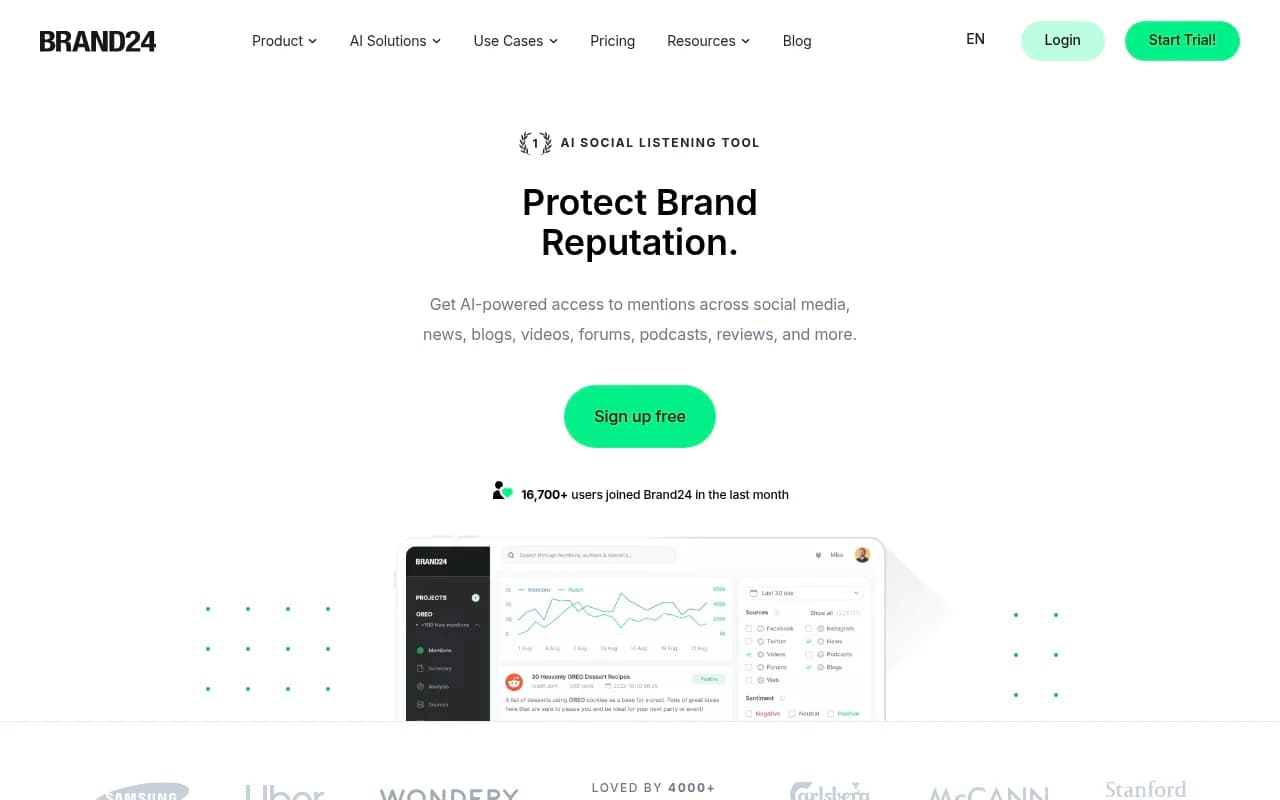
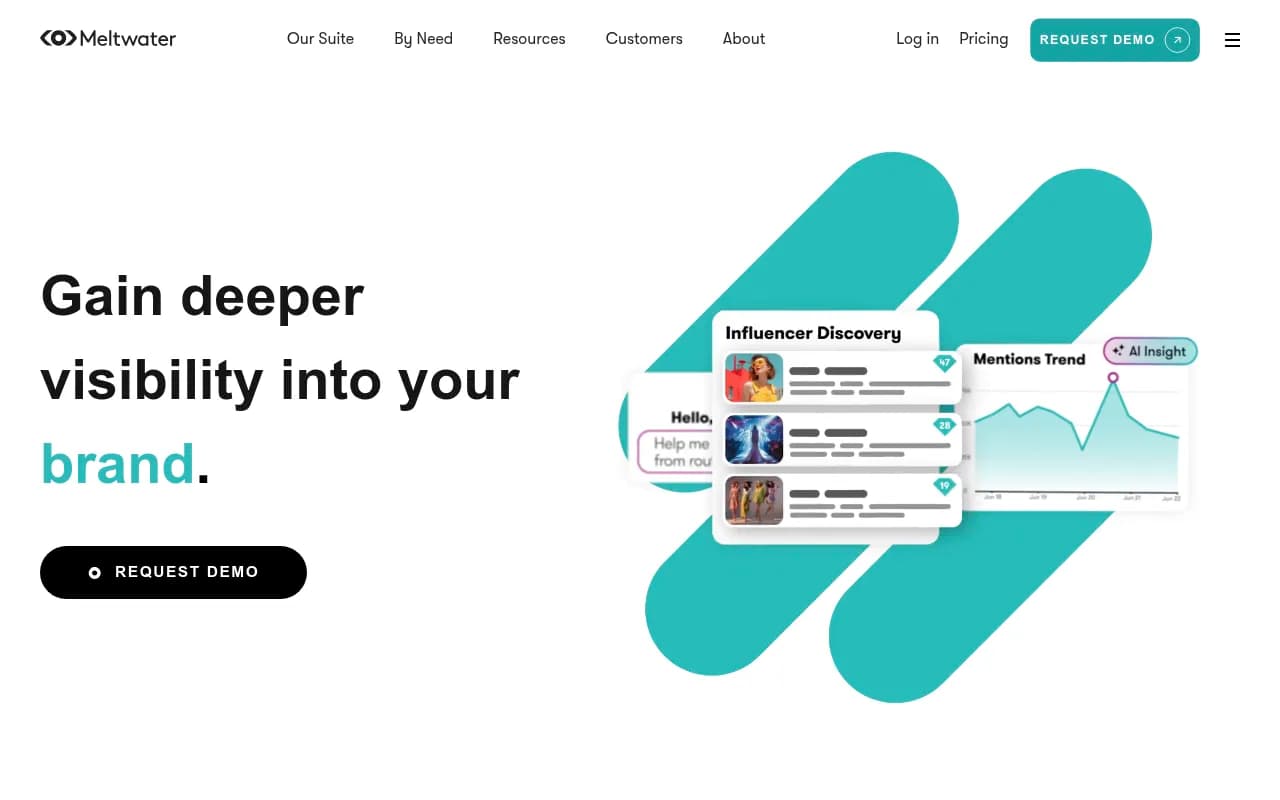
Brand-listening tools tell you what people say. AI visibility platforms tell you which of those statements AI actually repeats. You need the second view to prioritize. If you want to compare more options, the GEO software directory lists a wider set. If you'd like help from people who do this daily, 1001 SEO Media runs AI search and digital PR work for brands.
For a no-cost start, Promptwatch's free AI visibility report scans how ChatGPT, Gemini and Perplexity talk about your brand.
Common mistakes
- Treating one run as truth. Answers vary by run, engine and location. Look at patterns across many responses.
- Astroturfing Reddit. Fake accounts get spotted, banned and sometimes screenshotted. Engage as who you are.
- Ignoring dates. A stale review keeps shaping answers until something newer outranks it.
- Chasing a single engine. What works for AI Overviews (YouTube, Facebook) barely registers in ChatGPT.
- Skipping your own site. Product pages and landing pages are the biggest content types ChatGPT cites. Make sure they state facts plainly.
A simple 30-day plan
- Week 1: run 20 to 30 buyer prompts across four engines and log every claim and cited URL.
- Week 2: classify sources, count by type, and pick the two or three that drive your worst claims.
- Week 3: fix what you can directly (profiles, owned pages, corrections) and start outreach for listicles and reviews.
- Week 4: re-run the same prompts and compare. Keep a changelog so you know which fix moved which claim.
It's slow, unglamorous work. But AI perception isn't one big model opinion you can argue with. It's a pile of specific pages, and every one of them can be found, read and, usually, improved.