Key takeaways
- Most AI search visibility tools only track -- they show you where you're invisible but don't help you fix it
- A small number of platforms now combine rank tracking with content creation or publishing, making them far more useful for teams that want to improve, not just monitor
- The platforms below cover a range of use cases: from enterprise-grade suites to lean tools built for agencies and SaaS teams
- Pricing ranges from $29/month to $2,500+/month, so there's a real difference in what you get at each tier
- If you want one platform that does the full loop (track gaps, generate content, measure results), the options are narrower than the market noise suggests
There are now dozens of tools claiming to track your brand's visibility in AI search. Most of them do roughly the same thing: they run prompts through ChatGPT, Perplexity, Claude, or Gemini and tell you whether your brand showed up. That's useful, but it's also where most platforms stop.
The harder problem -- and the one most tools ignore -- is what you do after you see the data. You know you're invisible for a category of prompts. Now what? Do you open a separate content tool? Brief a writer? Guess at what to create?
This guide focuses on the platforms that go further. These are tools that combine AI search rank tracking with some form of content publishing, optimization, or generation. They're not perfect (no platform in this category is), but they're the ones worth evaluating if you want to actually move the needle, not just watch it.
What "combining tracking with content" actually means
Before getting into the list, it's worth being specific about what this combination looks like in practice, because platforms use the term loosely.
At the basic end, some tools track your visibility and then suggest topics you should write about. That's useful, but it's still just monitoring with a to-do list attached.
At the more useful end, you get tools that:
- Identify specific prompts where competitors appear and you don't (gap analysis)
- Generate draft content based on what AI models are actually citing
- Let you publish or export that content directly
- Then track whether your new content improved your visibility scores
That full loop is rare. Most platforms do one or two of those steps. The ones that do all four are worth paying attention to.
The 9 platforms worth evaluating
1. Promptwatch
Promptwatch is the most complete platform in this category right now. It's built around what they call the "action loop": find gaps, create content, track results.

The gap analysis is genuinely useful. It shows you specific prompts where competitors are getting cited and you're not -- not just "you're missing coverage in category X" but the actual prompt text and which competitors appear in the response. The built-in AI writing agent then generates articles, listicles, and comparisons grounded in citation data from 880M+ analyzed citations. You're not getting generic SEO content; you're getting drafts shaped by what AI models have actually cited before.
On top of that, Promptwatch tracks AI crawler activity (which pages ChatGPT, Claude, and Perplexity are reading on your site), prompt volumes and difficulty scores, and traffic attribution through a code snippet, GSC integration, or server log analysis. It monitors 10 AI models including Google AI Overviews, Google AI Mode, Grok, DeepSeek, and Meta AI.
Pricing starts at $99/month (Essential: 1 site, 50 prompts, 5 articles), $249/month for Professional (2 sites, 150 prompts, 15 articles, crawler logs), and $579/month for Business (5 sites, 350 prompts, 30 articles). Agency and enterprise plans are available. Free trial included.
It's a Dutch company with 6,700+ brands and agencies using it, including Booking.com and Center Parcs. For teams that want to stop monitoring and start optimizing, this is the most capable option in the market.
2. Writesonic
Writesonic started as an AI writing tool and has since built out a GEO (Generative Engine Optimization) tracking layer on top. The combination makes sense: they already had the content generation infrastructure, so adding visibility tracking was a natural extension.
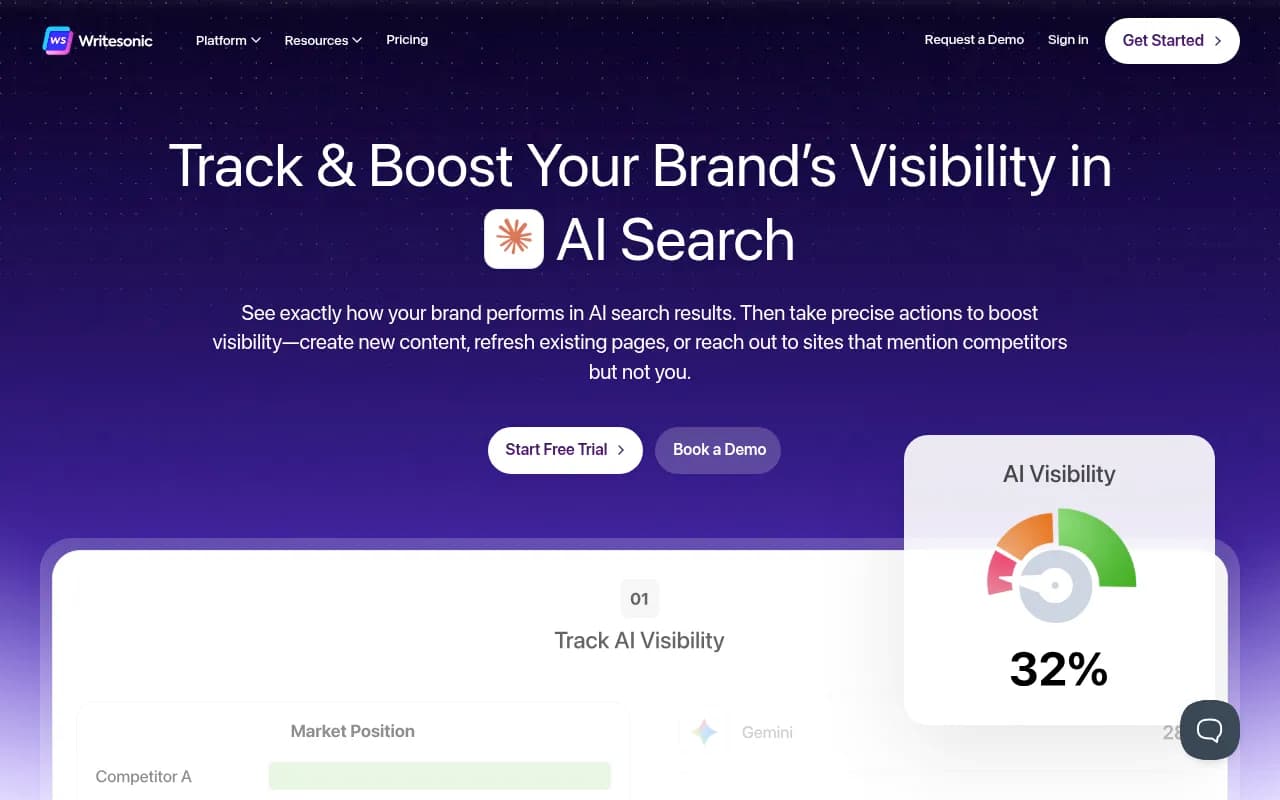
The platform tracks brand mentions across major AI engines and surfaces actionable recommendations for improving visibility. The content workflows are guided, which is helpful for teams that aren't sure where to start. Pricing starts at $199/month, which puts it in the mid-range.
The main limitation is that the tracking side is less deep than dedicated monitoring platforms. If you need granular prompt-level data or competitor heatmaps, you'll feel the gap. But if your team is primarily content-focused and wants visibility data to inform what you write, Writesonic's combination is genuinely practical.
3. Relixir
Relixir positions itself as an "AI-native CMS" with GEO built in. The idea is that content you publish through Relixir is structured from the start to perform well in AI search, rather than retrofitting existing content.
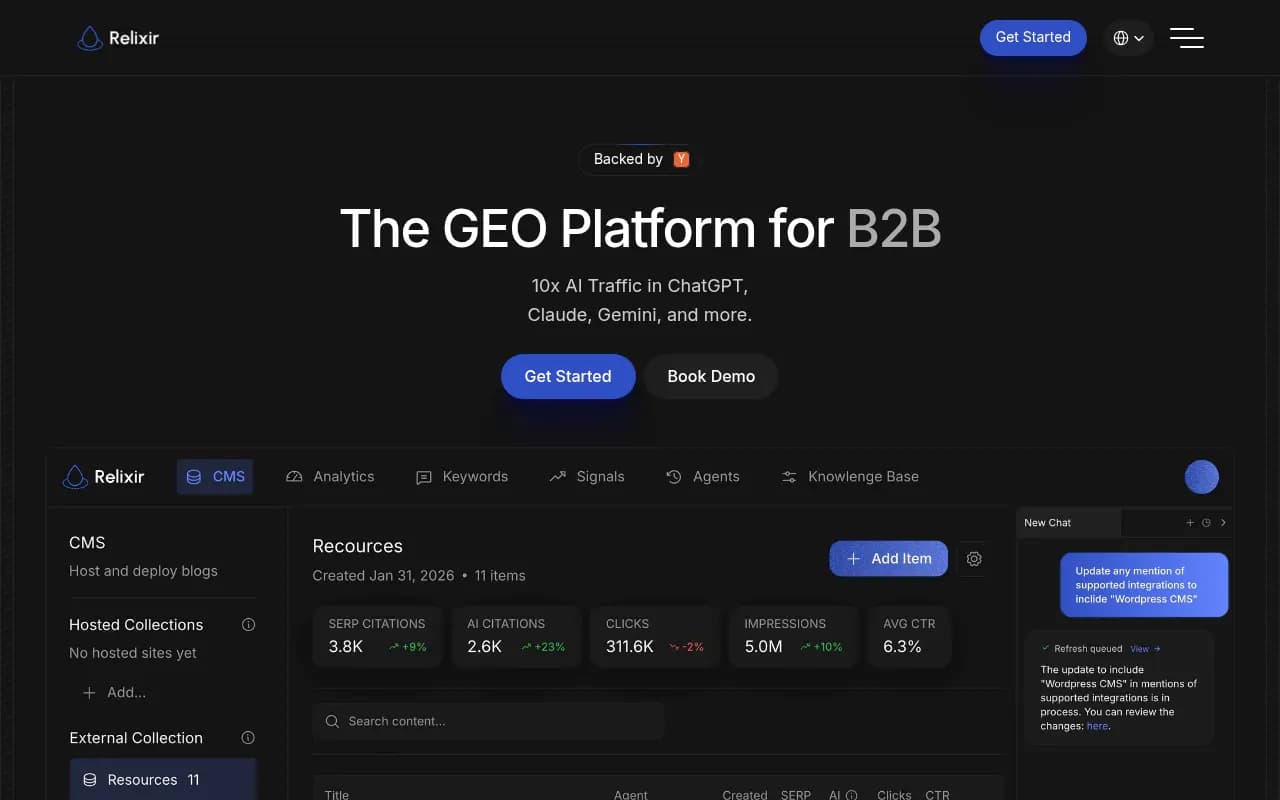
It includes autonomous content generation, meaning the platform can identify gaps and generate content without you having to manually brief each piece. For teams managing high content volumes, that level of automation is appealing. The platform is newer than some others on this list, so the tracking data depth is still maturing.
4. Searchable
Searchable combines AI search visibility monitoring with content optimization tools in a single interface.
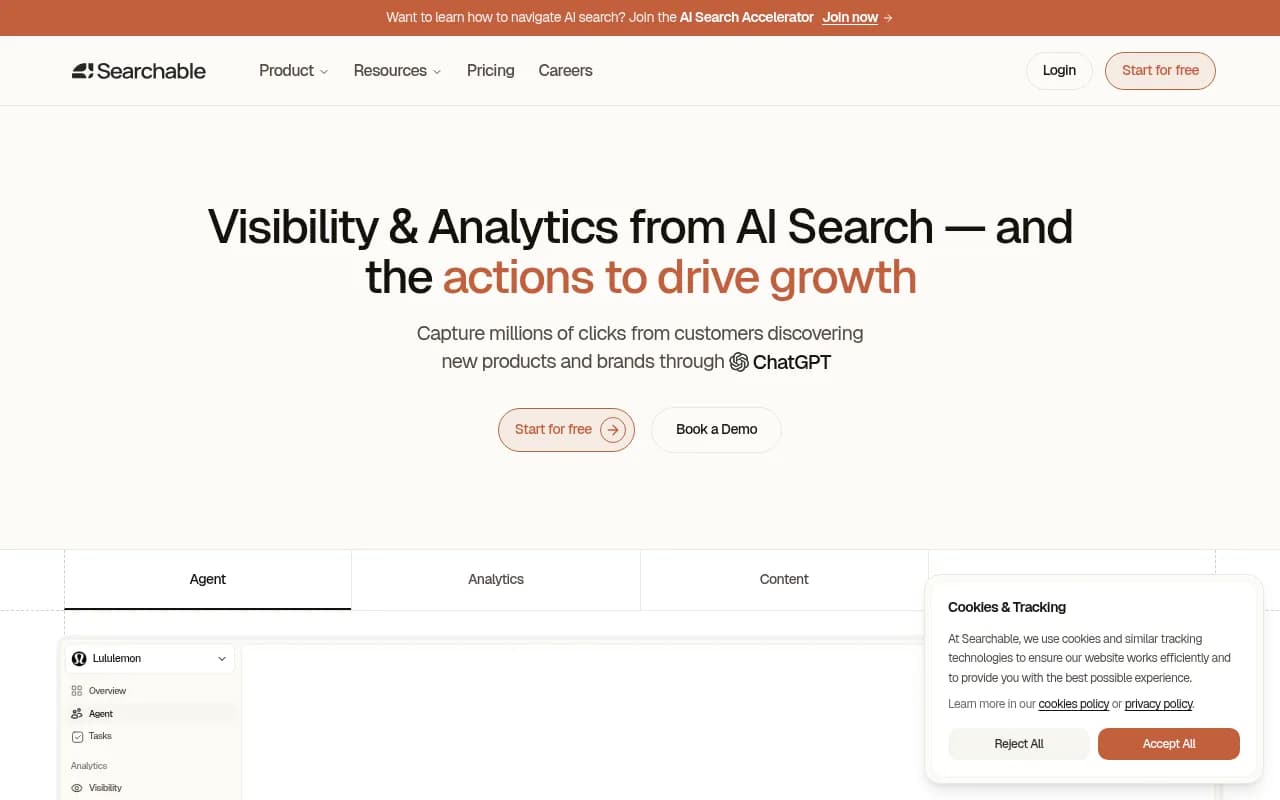
It's positioned for marketing teams that want to see their AI visibility data and act on it without switching between tools. The content side focuses on optimization rather than generation from scratch -- you bring the content, Searchable helps you improve it for AI citation. Useful if you have a content team already producing material and want to make it more AI-visible.
5. Profound
Profound is one of the better-funded platforms in this space ($58.5M raised) and has built a serious enterprise-grade product. It includes what they call a "read/write AI model" -- meaning it can both analyze your AI visibility and help you take action on it through content operations.

The automation capabilities are strong. Profound can run large-scale prompt monitoring and flag content gaps automatically. The content ops side is more workflow-oriented than a pure writing tool -- it helps you manage the process of creating and publishing content rather than generating it for you.
Pricing starts at $499/month, which is on the higher end. It's best suited for larger brands with dedicated content and SEO teams who need the scale and automation Profound provides.
6. Rankability
Rankability started as an agency-focused SEO content tool and has expanded into AI search visibility tracking. The combination is natural for agencies: they need to track client visibility across AI engines and produce content that improves those scores.
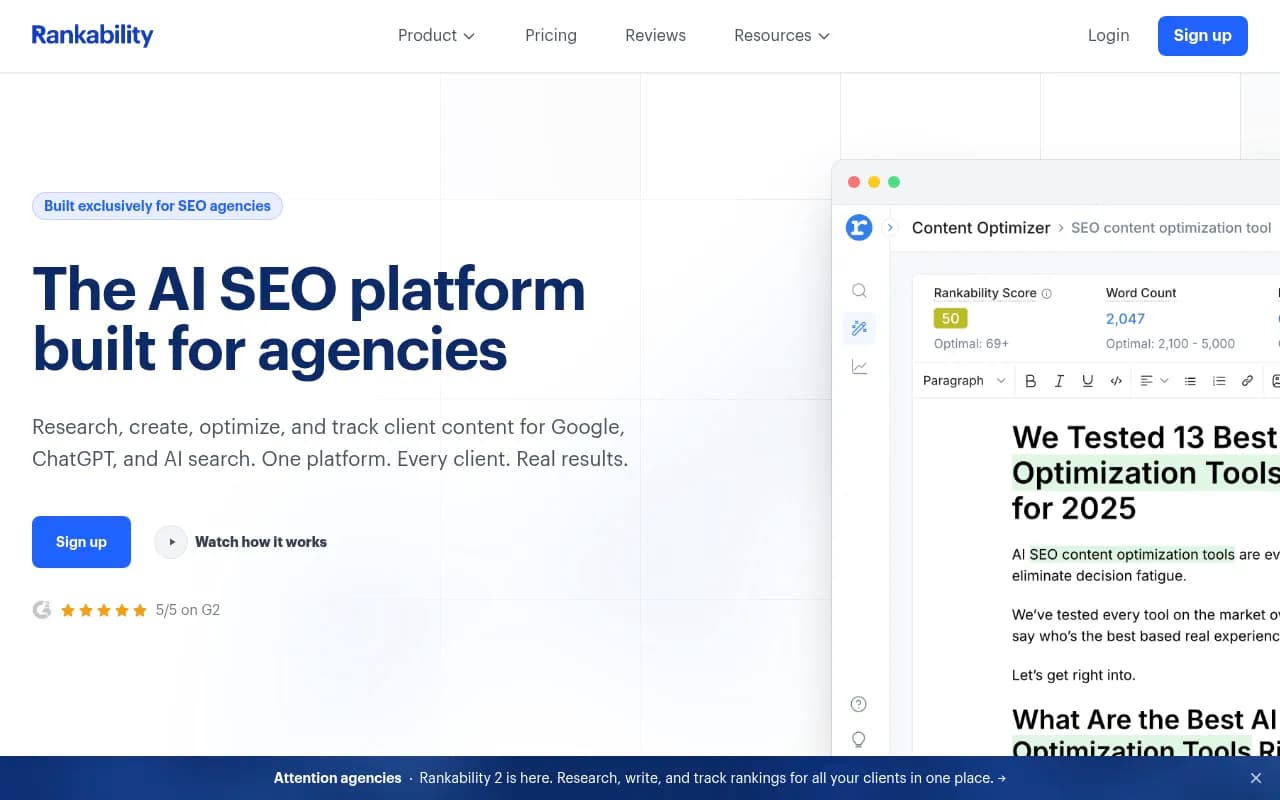
The Reporter product tracks brand visibility across ChatGPT, Gemini, Claude, and Perplexity. The content side includes brief generation and optimization tools. At $149/month, it's one of the more affordable options that genuinely does both things. Rankability's own analysis (they reviewed 30+ tools in this space) puts their price-to-value ratio among the best in the category.
The main trade-off: the tracking side is less comprehensive than dedicated monitoring platforms. You won't get crawler logs or prompt difficulty scoring here.
7. SE Visible
SE Visible is built by SE Ranking and focuses specifically on AI Mode tracking -- meaning Google's AI Mode and AI Overviews, rather than the broader LLM landscape.
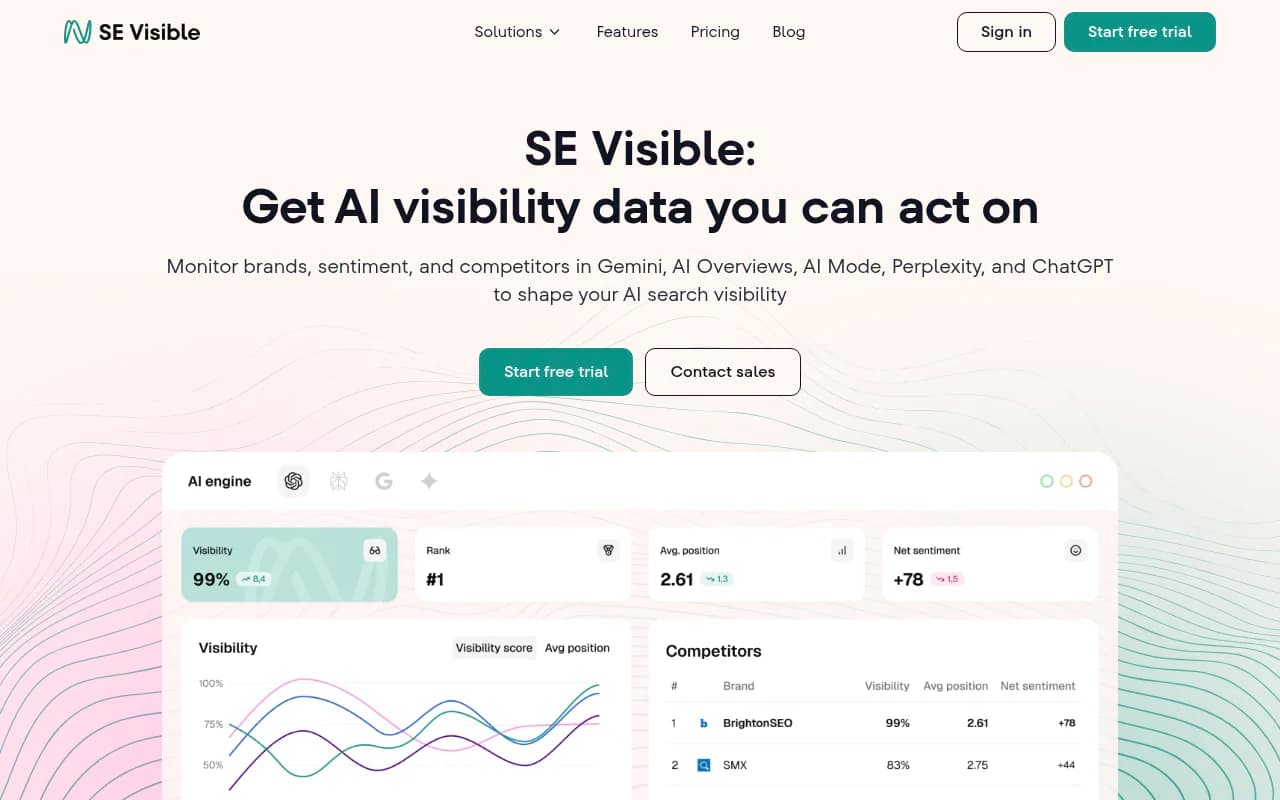
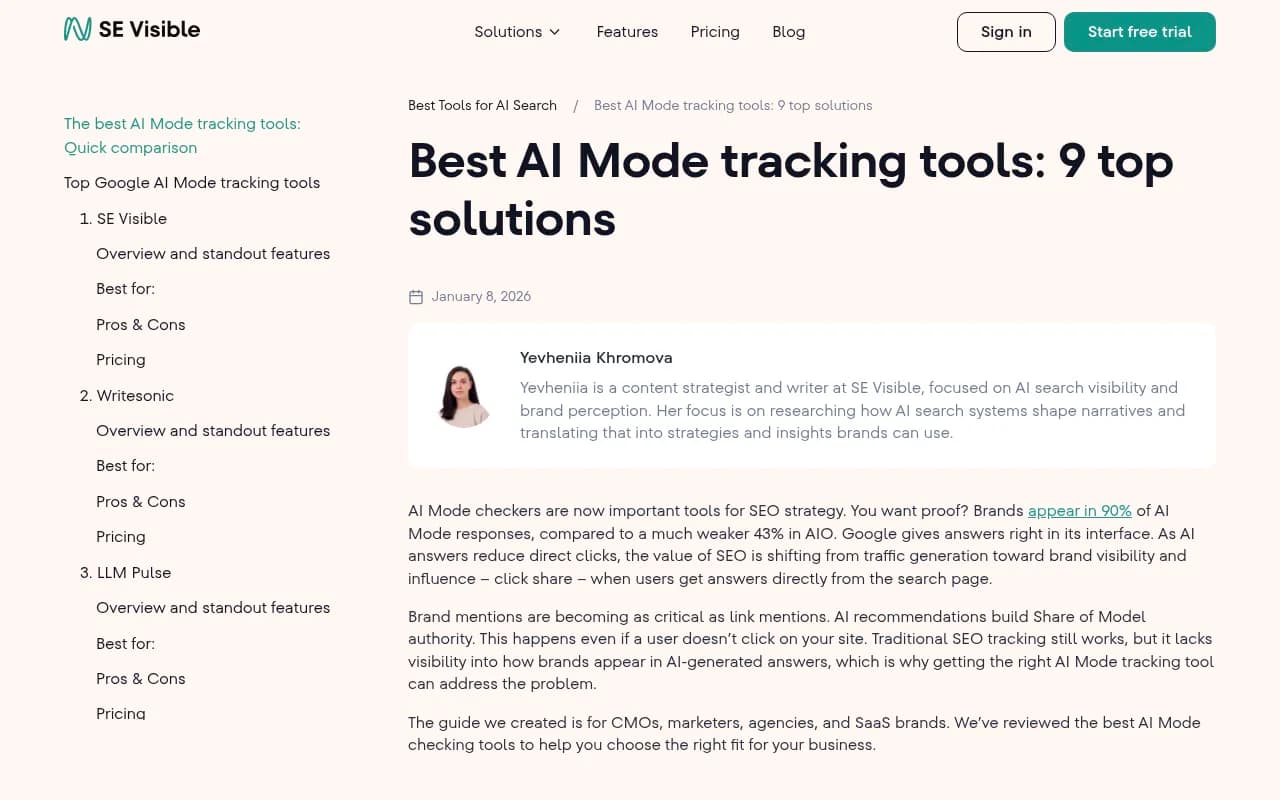
The tracking is precise and the interface is clean. SE Visible is a good choice if Google AI Mode is your primary concern and you're already in the SE Ranking ecosystem. The content side is less developed than some other platforms -- it leans more toward monitoring and reporting than active content generation. Starting price is $189/month.
8. Atomic AGI
Atomic AGI tracks both Google and LLM visibility in a single platform and includes automated content workflows.
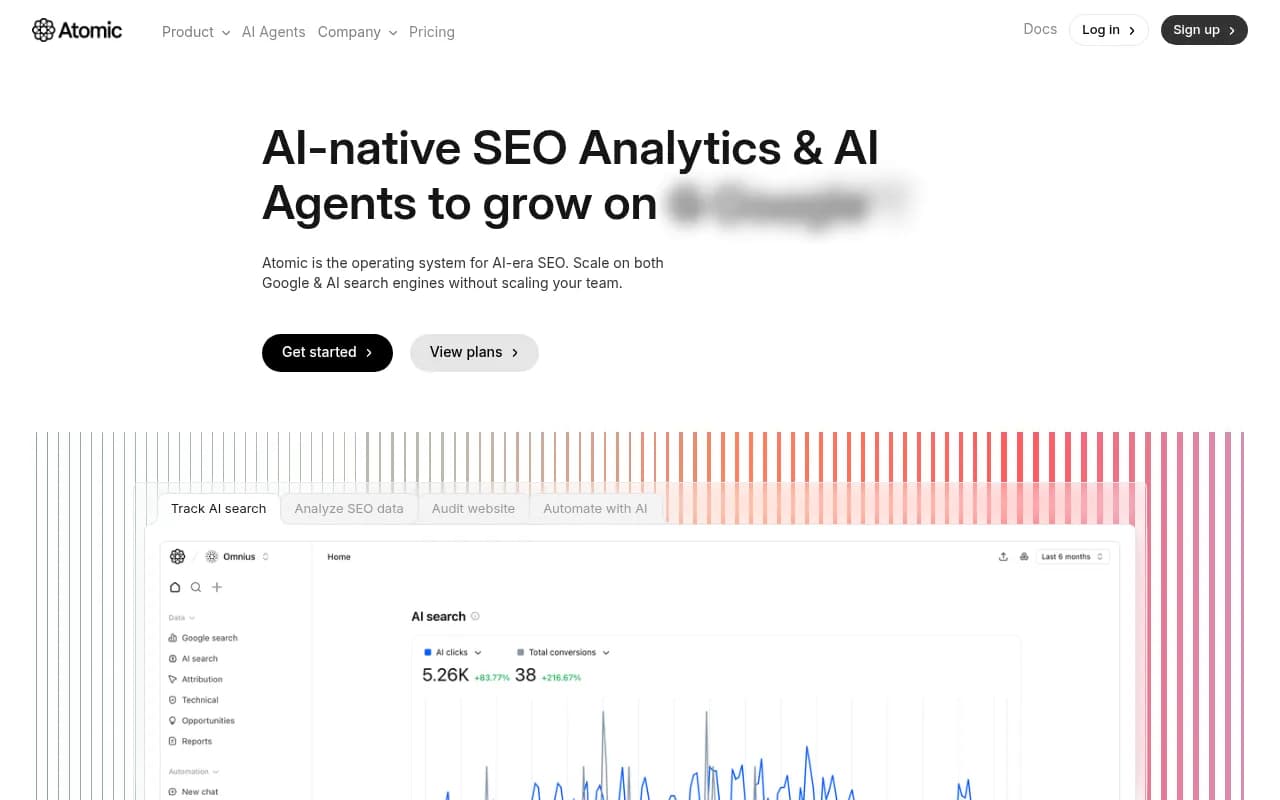
The "AI-native SEO" framing means the platform is designed from the ground up for the current search landscape rather than adapted from traditional SEO tools. The automated content side can generate and schedule content based on visibility gaps, which is useful for teams that want to reduce manual work. It's a newer platform, so the data history is shorter than established players, but the architecture is modern.
9. Whitebox
Whitebox describes itself as an "agentic GEO platform" -- meaning it doesn't just identify content gaps, it automatically generates and ships fixes.
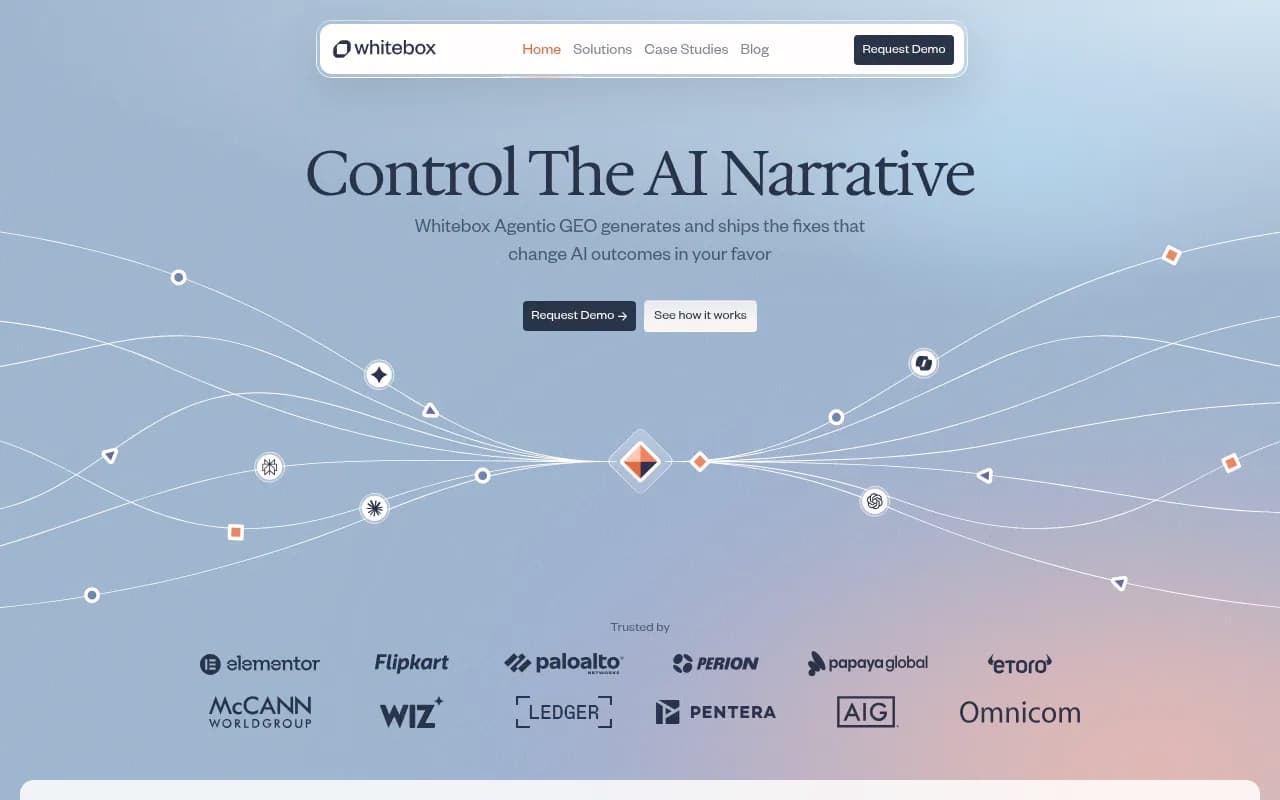
The agentic approach is interesting. Rather than flagging a gap and waiting for a human to act, Whitebox can generate and publish AI narrative fixes autonomously. For teams with high content velocity needs, this level of automation is genuinely different from what most platforms offer. It's early-stage, so the autonomy comes with the usual caveats about quality control, but the direction is compelling.
How the platforms compare
| Platform | Tracks AI engines | Content generation | Content publishing | Crawler logs | Starting price |
|---|---|---|---|---|---|
| Promptwatch | 10 (ChatGPT, Claude, Gemini, Perplexity, Grok, DeepSeek, Copilot, Meta AI, Google AIO, AI Mode) | Yes (AI writing agent) | Export/publish | Yes | $99/mo |
| Writesonic | Major LLMs | Yes | Yes | No | $199/mo |
| Relixir | Major LLMs | Yes (autonomous) | Yes (AI-native CMS) | No | Custom |
| Searchable | Major LLMs | Optimization only | No | No | Custom |
| Profound | Major LLMs | Workflow-assisted | Workflow-assisted | No | $499/mo |
| Rankability | ChatGPT, Gemini, Claude, Perplexity | Brief generation | No | No | $149/mo |
| SE Visible | Google AI Mode/AIO | No | No | No | $189/mo |
| Atomic AGI | Google + LLMs | Yes (automated) | Yes | No | Custom |
| Whitebox | Major LLMs | Yes (agentic) | Yes (autonomous) | No | Custom |
What most platforms still get wrong
Even among the platforms that combine tracking with content, there are gaps worth knowing about.
The most common problem: content generation that isn't grounded in citation data. A lot of tools will generate content based on keyword data or general SEO signals, but AI models don't cite based on keyword density -- they cite based on topical authority, source credibility, and how well a page answers a specific question. Content generated without understanding what AI models actually cite tends to underperform.
The second problem is attribution. You publish new content, your visibility score improves -- but did the content cause the improvement? Most platforms can't answer that question. Without traffic attribution (connecting AI citations to actual site visits and conversions), you're optimizing in the dark.
The third problem is prompt coverage. Many platforms let you track a fixed set of prompts. But the prompts people actually use in AI search are varied and constantly evolving. Platforms that let you track custom prompts at scale, with volume and difficulty data, give you a much more accurate picture.
How to choose
The right platform depends on what stage you're at:
If you're just starting to understand your AI visibility, a monitoring-focused tool like SE Visible or Peec AI is fine to begin with. Get the data, understand the landscape.
If you're ready to act on that data, you need a platform that goes beyond monitoring. Promptwatch, Writesonic, and Profound are the strongest options here, at different price points and with different strengths.
If you're an agency managing multiple clients, Rankability's price-to-value ratio is hard to beat. Promptwatch also has agency/enterprise pricing worth exploring at scale.
If you want maximum automation and are comfortable with an agentic approach, Whitebox and Atomic AGI are worth a closer look -- with the understanding that autonomous content publishing requires more oversight than manual workflows.
The category is moving fast. Platforms that were monitoring-only a year ago are adding content features. The gap between "tracker" and "optimizer" is narrowing, but it hasn't closed. The nine platforms above are the ones where the combination is real, not just a marketing claim.