Key takeaways
- AirOps is strong for AI-powered content workflows but leaves a gap when teams need to close the loop between content creation and AI search visibility tracking
- The best alternatives in 2026 combine content generation with monitoring across ChatGPT, Perplexity, Gemini, and other AI engines
- Some tools (like Promptwatch and Writesonic) are full-cycle platforms; others specialize in one side of the equation and pair well together
- Pricing varies widely: from $29/mo for lightweight trackers to $500+ for enterprise platforms with deep analytics
- The right choice depends on whether your team's bottleneck is content output, visibility data, or both
AirOps built its reputation on AI-powered content workflows. If you need to run prompts at scale, generate structured content from templates, or automate SEO tasks across a large content library, it does that well.
But teams in 2026 are asking a harder question: once we publish this content, how do we know if AI engines are actually citing it?
That's where AirOps starts to show its limits. It's primarily a content execution platform. The visibility tracking side, specifically understanding how your brand and pages appear in ChatGPT, Perplexity, Google AI Overviews, and other AI engines, isn't its core strength.
This guide covers 8 alternatives that take content generation seriously while also giving you real AI visibility data. Some are full-cycle platforms. Some are better trackers that pair well with a separate content tool. All of them are worth considering depending on where your team is stuck.
What to look for in an AirOps alternative
Before jumping into the list, it helps to know what actually matters here. The category is crowded and the marketing language blurs together fast.
The features that separate genuinely useful tools from dashboard-heavy noise:
- Content generation grounded in real prompt data (not just keyword lists)
- Tracking across multiple AI engines, not just ChatGPT
- Citation-level visibility: which pages are being cited, how often, by which models
- Answer gap analysis: prompts your competitors show up for but you don't
- Crawler logs or agent analytics: evidence that AI bots are actually reading your content
- Traffic attribution: connecting AI citations to actual visits and revenue
Not every tool on this list has all of these. But each one has a clear reason to exist in a modern content and AI visibility stack.
1. Promptwatch
Promptwatch is the most complete option on this list if your team needs both content generation and AI visibility tracking in one place.
Most tools in this space are monitoring dashboards. They show you where you're visible (or not) and leave you to figure out what to do about it. Promptwatch is built around the idea that tracking without action is just expensive anxiety.
The core loop: find the prompts where competitors are visible but you're not, generate content specifically engineered to fill those gaps, then track whether AI engines start citing the new pages. Page-level tracking shows which URLs are being cited, by which models, and how often. Agent analytics shows the timeline from publish to crawl to citation.
It monitors 10 AI engines including ChatGPT, Perplexity, Google AI Overviews, Claude, Gemini, Grok, DeepSeek, and Copilot. The prompt intelligence layer gives you volume estimates and difficulty scores for each prompt, so you can prioritize the gaps worth chasing. There's also Reddit and YouTube tracking, which matters because AI engines pull heavily from those sources when forming recommendations.
For teams that have been running AirOps for content generation but have no visibility into how that content performs in AI search, Promptwatch is the most direct upgrade path.
Pricing starts at $99/mo (Essential: 1 site, 50 prompts, 5 articles), $249/mo (Professional: 2 sites, 150 prompts, crawler logs), and $579/mo (Business: 5 sites, 350 prompts, 30 articles).

2. Writesonic
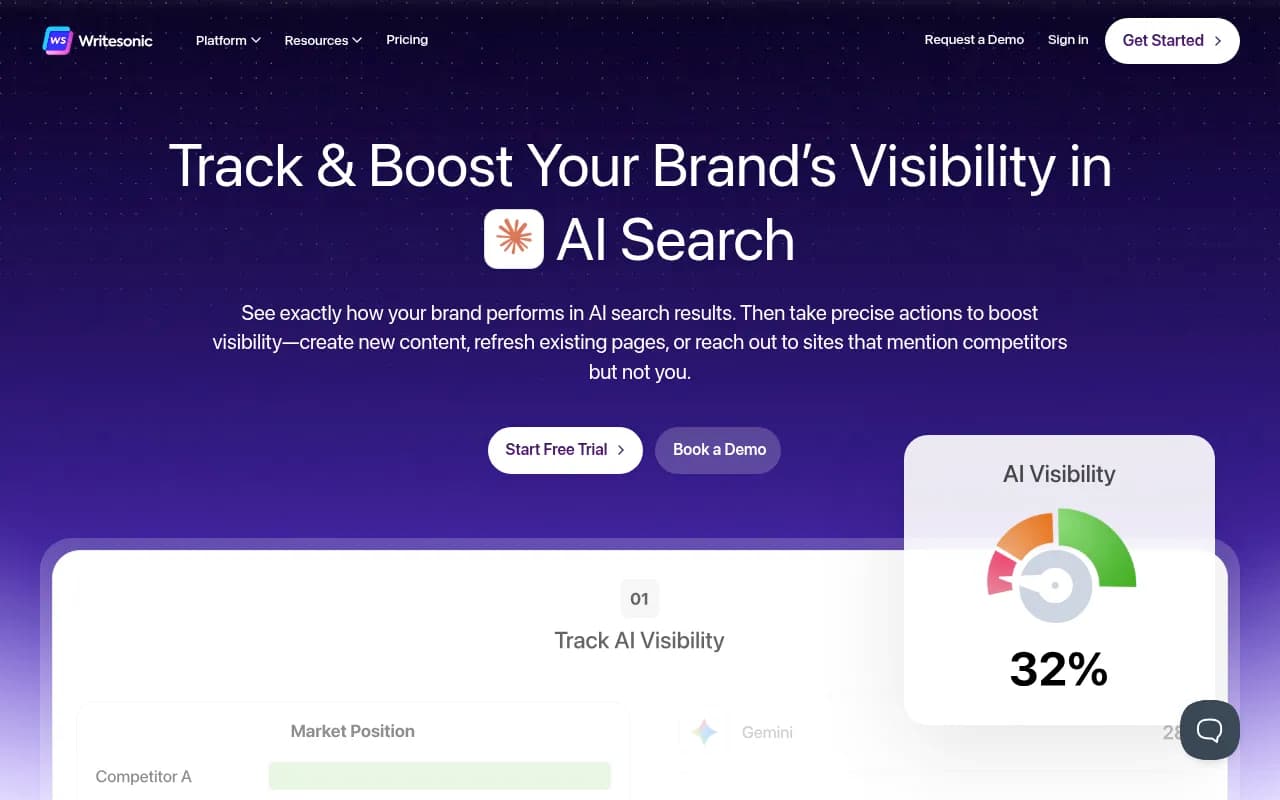
Writesonic has evolved well beyond its origins as a quick-draft tool. In 2026, it's a reasonably full-featured platform that combines AI content creation with SEO and AI search tracking.
The content generation side is solid: long-form articles, landing pages, product descriptions, and SEO-optimized drafts. The AI visibility side tracks how your brand appears in AI-generated answers and flags citation opportunities. It's not as deep as dedicated visibility platforms, but it's genuinely useful for content-first teams that want both capabilities without managing two separate subscriptions.
Where it works best: mid-sized content teams that need volume and want some visibility data without building a full GEO stack. Where it falls short: teams that need granular citation tracking, crawler logs, or multi-model visibility across 8+ AI engines will hit the ceiling quickly.
3. Scrunch AI
Scrunch AI focuses on AI search visibility monitoring with a clean interface that's easier to get into than some of the enterprise-heavy alternatives.
It tracks brand mentions and citations across major AI engines, surfaces which sources AI models are pulling from, and gives you a competitive view of who's winning for the prompts that matter to your category. The content generation side is lighter than AirOps, but Scrunch pairs well with a dedicated writing tool if you want to keep those workflows separate.
Good fit for: teams that want solid visibility data without a steep learning curve, and agencies managing multiple brand clients.
4. AthenaHQ
AthenaHQ tracks brand visibility across 8+ AI search engines and gives you a structured view of where you're appearing, what's being said, and how that compares to competitors.
The platform is monitoring-focused, which is worth being honest about. If you're coming from AirOps specifically because you want content generation built in, AthenaHQ won't fully replace that. But if your team already has a content workflow and what you're missing is the visibility layer, it's a strong option.
The competitive heatmaps are genuinely useful: you can see which competitors are dominating specific prompt categories and use that to prioritize your content roadmap.

5. Profound
Profound was one of the first platforms to take AI answer engine tracking seriously, and it still has some features that competitors haven't caught up to: real-user prompt volume data, front-end response capture (which can differ from API outputs), and an Amazon Rufus shopping module.
The pricing structure is a real consideration. The Starter plan at $99/mo only covers ChatGPT. Adding Perplexity and Google AIO bumps you to $399/mo. Full model coverage is enterprise-priced. For teams that need broad coverage from day one, that stacks up fast.
On the content generation side, Profound is primarily a tracking platform. It's not a replacement for AirOps' workflow automation capabilities, but it's a strong complement if visibility data is the gap you're trying to close.

6. Radarkit
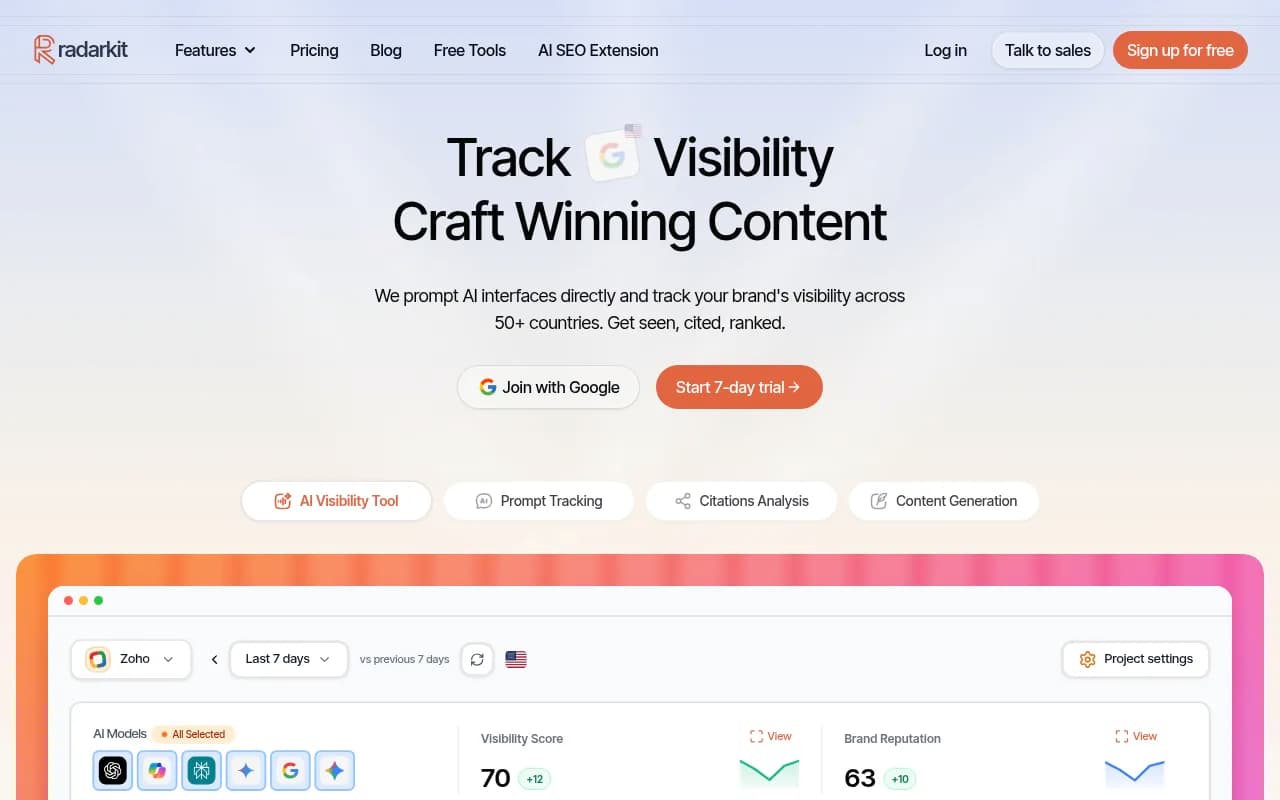
Radarkit tracks brand presence across ChatGPT, Gemini, Perplexity, Copilot, and Google AI Overviews, with a focus on turning AI visibility data into actionable content signals.
The query fanout feature is worth calling out: it shows how a single tracked prompt branches into sub-queries, which helps you understand the full surface area of a topic rather than just a single keyword. The content generation workflows use live citation signals and SERP data to suggest outlines designed to be cited by AI engines.
At around $29/mo to start, it's one of the more accessible options on this list, which makes it a reasonable entry point for smaller teams or startups that want to test AI visibility tracking without a major commitment.
7. SE Ranking
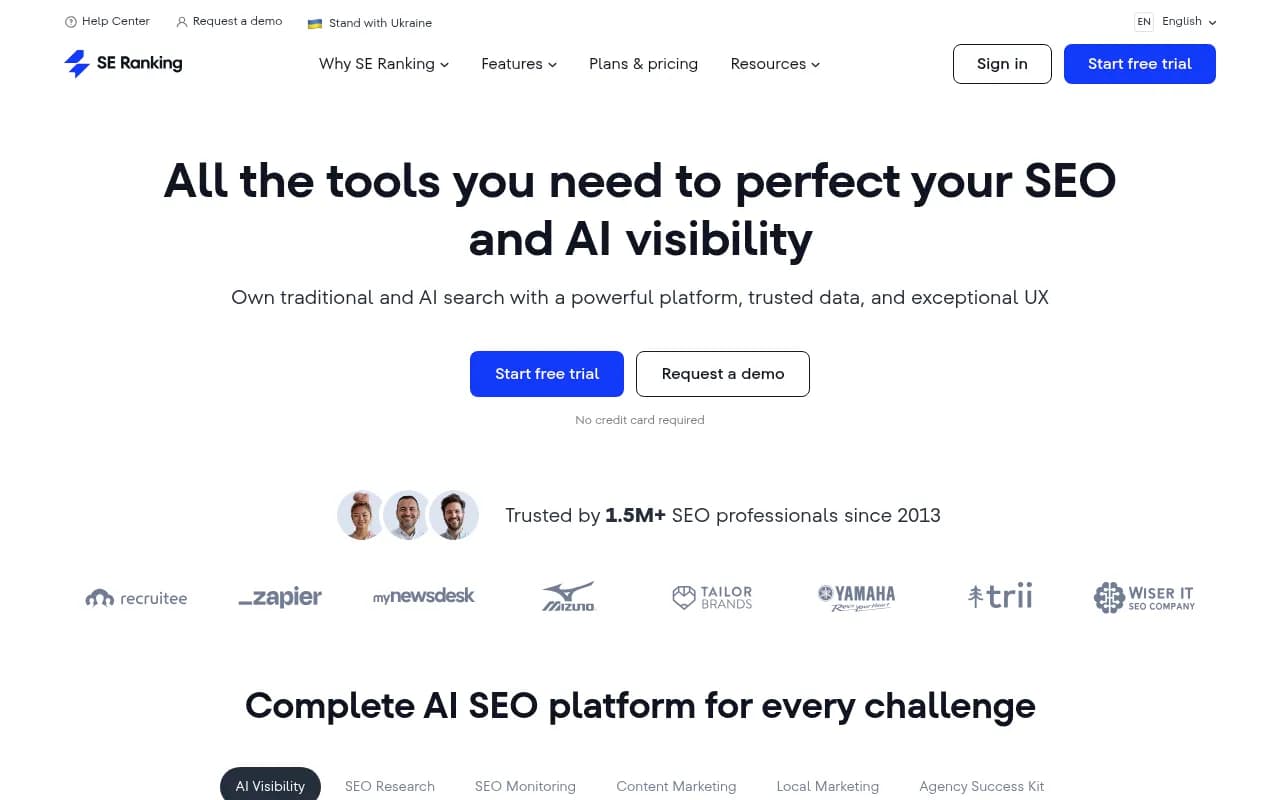
SE Ranking is an all-in-one SEO platform that has been steadily building out its AI visibility toolkit. It covers traditional rank tracking, site audits, and keyword research alongside newer features for monitoring how brands appear in AI-generated answers.
For teams that are already using SE Ranking for SEO and want to add AI visibility without switching platforms, it's a natural extension. The content generation tools are less specialized than AirOps but cover the basics: AI-assisted writing, content briefs, and optimization scoring.
The value proposition is consolidation. If you're paying for a traditional SEO tool plus a separate AI visibility tracker, SE Ranking lets you collapse those into one subscription.
8. Otterly.AI
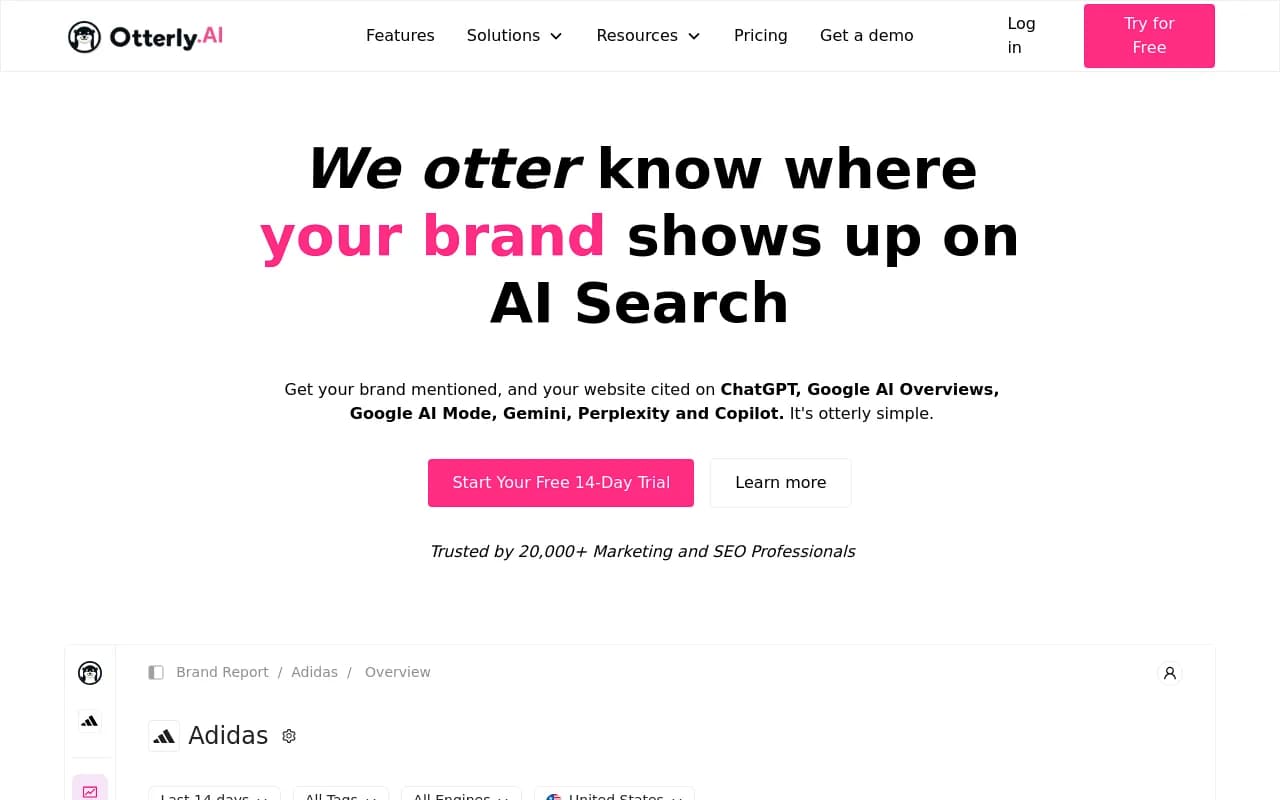
Otterly.AI is a lightweight AI visibility monitoring tool that tracks brand mentions across AI engines without the complexity or price tag of enterprise platforms.
It's honest about what it is: a monitoring tool, not a content generation platform. If you're looking for a direct AirOps replacement that also writes content, Otterly isn't it. But if your team's primary gap is visibility data and you want something affordable and easy to set up, it's worth a look.
The main limitation is the ceiling. Teams that grow into needing crawler logs, content gap analysis, or multi-model citation tracking will outgrow Otterly fairly quickly.
Comparison table
| Tool | Content generation | AI visibility tracking | AI models covered | Best for | Starting price |
|---|---|---|---|---|---|
| Promptwatch | Yes (AI content agents) | Yes (full-cycle, 10 models) | 10 | Teams that want to find gaps, create content, and track results in one platform | $99/mo |
| Writesonic | Yes (strong) | Yes (moderate) | 4-5 | Content-first teams wanting both in one tool | ~$49/mo |
| Scrunch AI | Light | Yes (strong) | 5+ | Agencies and teams wanting clean visibility dashboards | Custom |
| AthenaHQ | No | Yes (strong, 8+ models) | 8+ | Teams with existing content workflows needing a visibility layer | Custom |
| Profound | No | Yes (deep, real-user data) | ChatGPT+ (tiered) | Teams that prioritize data quality and real-user prompt signals | $99/mo |
| Radarkit | Yes (AI-assisted) | Yes (with query fanouts) | 5 | Startups and lean teams wanting affordable AI visibility | ~$29/mo |
| SE Ranking | Yes (basic) | Yes (growing toolkit) | 3-4 | Teams consolidating SEO + AI visibility in one platform | ~$65/mo |
| Otterly.AI | No | Yes (lightweight) | 4-5 | Small teams wanting simple, affordable monitoring | ~$29/mo |
How to choose
The honest answer is that your choice depends on which side of the equation is your actual bottleneck.
If you're generating plenty of content but have no idea whether AI engines are citing it, you need a visibility-first tool. Promptwatch, AthenaHQ, or Profound will give you the most signal.
If you're struggling to produce content at scale and want some visibility data alongside it, Writesonic or Radarkit are the more practical options.
If you want the full cycle, find gaps, create content to fill them, track whether it works, Promptwatch is the only tool on this list that's genuinely built around that loop rather than bolting one capability onto the other.
And if you're already invested in a traditional SEO platform, SE Ranking's expanding AI toolkit might be the path of least resistance.
The one thing worth avoiding: picking a monitoring-only tool and assuming the data will tell you what to do next. It usually doesn't. The gap between "here's where you're invisible" and "here's what to publish" is where most teams get stuck, and that's the gap worth solving for in 2026.