Key takeaways
- Most marketers start tracking AI visibility by monitoring the wrong metrics -- brand mentions without context, or rankings that don't reflect how AI models actually behave
- AI responses are highly inconsistent across models and even across repeated queries, which means snapshot-based tracking gives you a false sense of certainty
- 72% of marketers have seen AI describe their company inaccurately, and nearly a third are doing nothing about it
- Only 26% of marketing teams know which media outlets AI engines crawl in their specific market -- making most GEO investment essentially blind
- Tracking without acting is the biggest trap: monitoring dashboards that show you gaps but don't help you close them waste time and budget
The first 90 days of any new marketing initiative are usually where the worst habits form. You're figuring out the tool, building the reports, trying to show something to leadership. And in that rush, you make decisions that feel reasonable but quietly undermine everything that follows.
AI visibility tracking is no different. In fact, it might be worse -- because the category is new enough that most teams are copying each other's mistakes rather than learning from anyone who got it right.
Here's what actually goes wrong, and what to do instead.
Mistake 1: Treating AI visibility like traditional SEO rank tracking
The instinct makes sense. You've spent years tracking keyword rankings. You know position 1 beats position 3. You have dashboards, weekly reports, trend lines. When AI visibility tools appeared, many teams just... applied the same mental model.
The problem is that AI search doesn't work like a ranked list. There's no position 1 in a ChatGPT response. The model either mentions your brand or it doesn't. It either recommends you or it recommends a competitor. And critically, it might do both -- depending on how the question is phrased, which model is answering, what day it is, and what the user's apparent context is.
SparkToro's research found that AI models are highly inconsistent when recommending brands or products. The same prompt, asked twice, can produce different brand recommendations. That inconsistency isn't a bug you can optimize away -- it's a structural feature of how large language models work. If you're tracking a single "visibility score" and watching it go up or down week over week, you may be measuring noise.
What to track instead: citation frequency across a diverse prompt set, share of voice relative to competitors on specific topics, and which pages on your site are actually being cited. That last one matters more than most teams realize.
Mistake 2: Starting with too few prompts
Most teams pick 10-20 prompts when they start. They choose the obvious ones -- their brand name, their main product category, maybe a couple of competitor comparisons. It feels like enough.
It isn't.
AI models answer questions, not keywords. A customer asking "what's the best tool for tracking brand mentions in AI search" is a completely different prompt from "how do I know if ChatGPT is recommending my brand." Both are relevant to the same buyer. Both might produce different citations. If you're only tracking one of them, you're missing half the picture.
The other issue: the prompts you pick at the start tend to be the ones where you already have some visibility. You're measuring your strengths, not your gaps. That feels good but doesn't help you grow.
A better approach is to start with a broader prompt set that covers the full question space your buyers are actually asking -- including the prompts where competitors are visible but you aren't. That gap analysis is where the real opportunity lives.
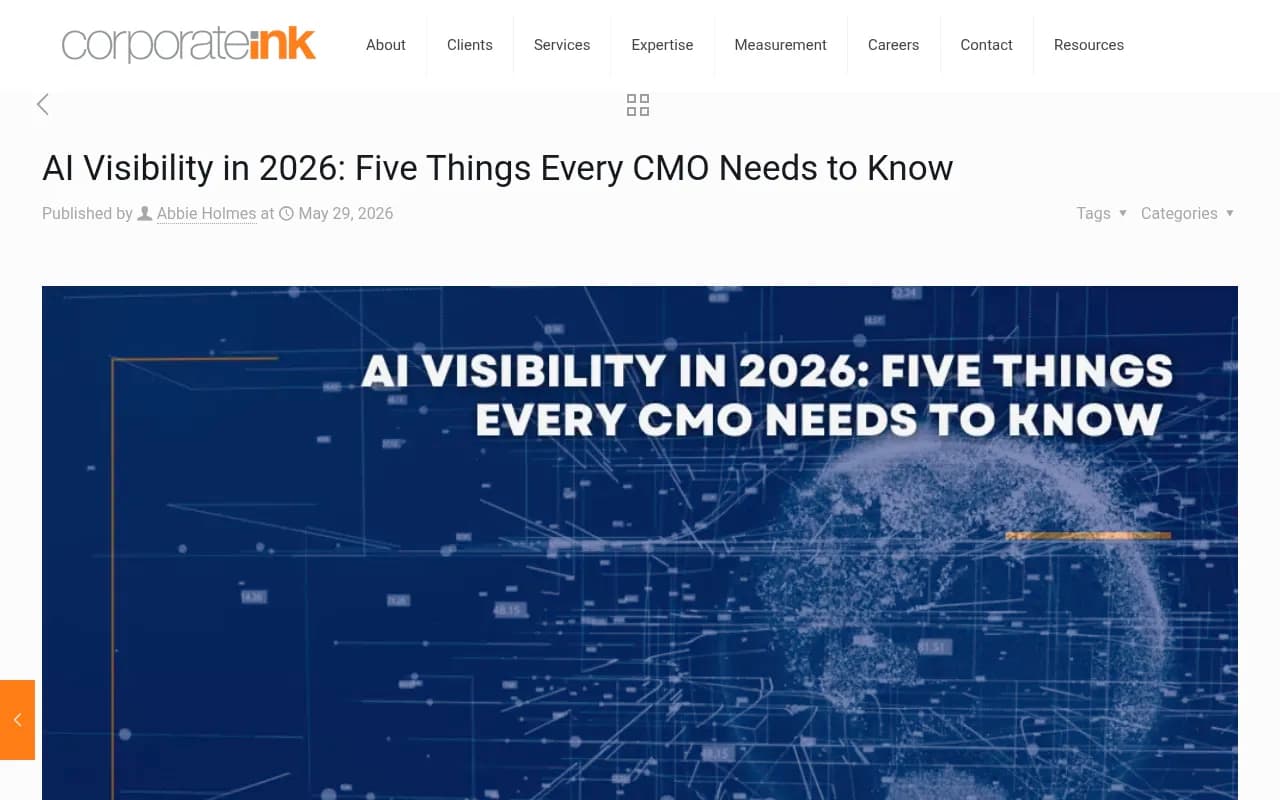
Corporate Ink's 2026 research found that only 36% of marketers know which specific content pieces they and their competitors have created that are currently being cited by AI engines. That's a significant blind spot when you're trying to figure out where to invest.
Mistake 3: Ignoring model-to-model differences
ChatGPT, Perplexity, Gemini, Claude, and Grok don't agree on much. They're trained on different data, updated at different intervals, and weighted toward different source types. A brand that's well-cited in Perplexity might be invisible in Google AI Overviews. A product that ChatGPT recommends confidently might not appear in Gemini's response to the same question.
Most teams pick one model to track -- usually ChatGPT because it's the most familiar -- and assume it's representative. It isn't.
This matters practically because your customers use different models. B2B buyers doing research might lean on Perplexity or Claude. Consumers might ask Google AI Overviews. If you're only tracking one model, you're making decisions based on a partial view of your actual AI search presence.
The fix is straightforward: track across multiple models from the start, even if you're only monitoring a small prompt set. The cross-model comparison often reveals that your visibility is much more uneven than you thought -- and that's useful information.
Mistake 4: Not knowing where AI models get their information
This is the one that surprises most marketers. They assume that if they publish good content on their website, AI models will find it and cite it. Sometimes that's true. Often it isn't.
Corporate Ink's 2026 research found that only 26% of marketing teams know which media outlets AI engines crawl in their specific market. Only 17% have earned coverage in those outlets in the past month. That means the vast majority of teams are investing in content and earned media without knowing whether any of it is reaching the sources that actually influence AI recommendations.
AI models don't just read your website. They pull from Reddit threads, YouTube videos, industry publications, review sites, and third-party listicles. A Reddit post from two years ago might carry more weight in a Perplexity response than your freshly published case study. A mention in a niche trade publication might matter more than your homepage.
If you don't know which sources AI models trust in your category, you're optimizing blind. Before you spend another dollar on content, figure out where the citations in your space are actually coming from.
Mistake 5: Measuring mentions without measuring sentiment or accuracy
Getting mentioned by an AI model isn't automatically good. The model might describe your product incorrectly. It might position you in the wrong category. It might mention you as a cautionary example rather than a recommendation.
Corporate Ink's research found that 72% of marketers have seen AI describe their company, category, or value proposition inaccurately. That's not a small number. And 29% of those marketers are doing nothing about it.
The cost of inaccurate AI descriptions is real -- it's deals you don't know you're losing because a prospect asked an AI about your product and got a wrong answer. You won't see that in your CRM. You won't see it in your analytics. It's invisible unless you're actively monitoring what AI models are actually saying about you.
When you set up tracking, don't just count mentions. Read the responses. Check whether the description of your product is accurate. Check whether the positioning matches how you want to be perceived. Check whether the AI is recommending you or just acknowledging you exist.
Mistake 6: Tracking without acting
This is the most expensive mistake, and it's the one that takes the longest to notice.
You set up a monitoring dashboard. You watch your visibility scores. You see that competitors are getting cited for prompts you're not. You note it in a report. You move on.
Three months later, nothing has changed -- because monitoring without action doesn't move the needle.
The reason this happens is that most AI visibility tools are built as dashboards. They show you data. They don't help you do anything with it. You see the gap, but there's no path from "we're not being cited for this prompt" to "here's the content we need to create to fix that."
The teams that actually improve their AI visibility in the first 90 days are the ones who close the loop: they find the gaps, they create content specifically designed to address those gaps, and they track whether the new content starts getting cited. That cycle -- find, create, track -- is what separates teams that make progress from teams that just have better dashboards.
Promptwatch is one of the few platforms built around this loop rather than just the monitoring piece. Most tools stop at showing you where you're invisible.

Mistake 7: Running market-agnostic strategies
GEO is not a universal playbook. What works for a SaaS company in the U.S. enterprise market won't necessarily work for a consumer brand in Germany or a B2B services firm in Southeast Asia. The outlets AI engines trust, the third-party sources they cite, and the credibility signals they weight all vary by market and category.
Corporate Ink's research found that among companies reporting actual pipeline growth from AI visibility, 55% know which channels have the strongest influence over LLMs in their market -- compared to just 15% of companies seeing no pipeline impact. That's a significant difference, and it's almost entirely explained by whether teams did the foundational work of mapping their specific landscape before investing in content.
If your GEO strategy is "publish more content and hope AI models notice," you're likely to get the same results as the 83% of marketers who don't know which outlets AI engines crawl in their market.
Mistake 8: Ignoring what's happening off your own website
Most AI visibility tracking focuses on your own domain. Which pages are being cited? What's your visibility score? How often does your brand appear?
That's necessary but not sufficient. A large portion of AI citations come from sources you don't control: Reddit threads, YouTube videos, review sites, industry publications, comparison pages. If a competitor is dominating a Reddit thread that Perplexity cites heavily, that matters for your visibility -- even though it has nothing to do with your website.
Teams that ignore offsite citations miss a significant part of the picture. They also miss opportunities: if you know which external sources are driving citations in your category, you can invest in getting mentioned there.
Mistake 9: Setting up tracking once and not revisiting the prompt set
AI search behavior changes. New questions emerge. Competitors shift their positioning. New product categories get created. The prompts that were relevant when you set up tracking six months ago may not reflect how buyers are actually asking questions today.
Most teams set up their prompt set in week one and never revisit it. That's a mistake. Your prompt set should evolve as your market evolves -- adding new prompts as new questions emerge, retiring prompts that no longer reflect real buyer behavior, and expanding into adjacent topics where you could realistically compete for citations.
A quarterly review of your prompt set is a reasonable minimum. More frequent if you're in a fast-moving category.
Mistake 10: Not connecting AI visibility to revenue
The final mistake is treating AI visibility as a vanity metric. You track it because leadership is asking about it, you report it in your monthly deck, and then it sits there disconnected from anything that actually matters to the business.
The companies seeing real results from AI visibility -- the ones in Corporate Ink's research reporting 10%+ growth in qualified inbound pipeline -- have connected their AI visibility work to pipeline and revenue. They know which AI-driven traffic converts. They know which prompts are driving actual inquiries. They can make the case for investment because they have the numbers.
If you can't connect your AI visibility to revenue, you'll eventually lose the budget for it. Build the attribution from the start, not as an afterthought.
Tools worth knowing about
The market for AI visibility tracking has grown fast, and the quality varies significantly. Here's a quick comparison of what different tools offer:
| Tool | Monitors multiple LLMs | Content gap analysis | Content generation | Crawler logs | Best for |
|---|---|---|---|---|---|
| Promptwatch | Yes (10+ models) | Yes | Yes | Yes | Full GEO optimization loop |
| Profound | Yes | Limited | No | No | Enterprise monitoring |
| Otterly.AI | Yes | No | No | No | Basic monitoring |
| Peec.ai | Yes | No | No | No | Multi-language monitoring |
| AthenaHQ | Yes | Limited | No | No | Monitoring-focused teams |
| Rankscale | Yes | No | No | No | Rank tracking |




A few other tools worth exploring depending on your specific needs:
What good looks like at 90 days
If you avoid the mistakes above, here's what your AI visibility program should look like at the end of the first 90 days:
- A prompt set of at least 50-100 prompts covering the full question space your buyers use, including prompts where competitors are visible but you aren't
- Tracking across at least 3-4 AI models, not just ChatGPT
- A clear map of which external sources (publications, Reddit threads, YouTube channels, review sites) AI models cite in your specific category
- At least one round of content created specifically to address identified gaps, with tracking in place to measure whether it gets cited
- Sentiment and accuracy monitoring, not just mention counting
- Some form of revenue attribution connecting AI visibility to pipeline or conversions
That's not a huge amount of work. But it requires being deliberate from the start rather than defaulting to the habits you built for traditional SEO.
The teams that get this right in 2026 will have a meaningful advantage. AI search is still early enough that the gap between brands with real visibility and brands that are invisible is growing fast -- and it's much easier to build visibility now than it will be once the category matures and the competition intensifies.