Key takeaways
- Most GEO platforms stop at monitoring -- they show you where you're invisible but don't help you fix it. That gap separates leaders from dashboards.
- Promptwatch is the only platform in this review rated as a "Leader" across all evaluation categories, including the critical "actionability" dimension.
- Profound is the strongest enterprise monitoring tool but costs significantly more than alternatives and lacks content generation.
- Otterly.AI and Peec.ai are solid entry-level options, but both hit a ceiling fast when you need to go beyond tracking.
- Semrush and Ahrefs cover AI visibility as add-ons to traditional SEO -- useful if you're already paying for them, but not purpose-built for GEO.
- The platforms that will matter most in 2026 are the ones that close the loop: find gaps, create content, track results.
The GEO platform market has exploded. Two years ago, there were maybe five tools worth evaluating. Now there are dozens, and most of them look nearly identical from the outside -- dashboards, prompt tracking, share-of-voice charts, competitor comparisons. The marketing copy is almost interchangeable.
So how do you actually tell them apart?
This report card grades 12 platforms across five dimensions: AI engine coverage, monitoring depth, content optimization, actionability, and pricing fairness. Each platform gets a letter grade per category, plus an overall grade. No fluff, no vendor-sponsored rankings.
Let's get into it.
How we graded
Five categories, each weighted equally:
- AI engine coverage: How many models does it track? Does it cover ChatGPT, Claude, Gemini, Perplexity, Grok, DeepSeek, Copilot, and others?
- Monitoring depth: Beyond basic mention tracking -- does it show citation sources, page-level data, prompt volumes, query fan-outs, crawler logs?
- Content optimization: Does the platform help you create content that gets cited, or just tell you what's missing?
- Actionability: Can you go from insight to published fix without leaving the platform?
- Pricing fairness: Does the price match the feature set? Are key features locked behind enterprise tiers?
Grades run A through F. A "C" isn't a bad tool -- it means average for the category. A "D" means the platform is genuinely weak in that area.
The report card
| Platform | AI coverage | Monitoring depth | Content optimization | Actionability | Pricing fairness | Overall |
|---|---|---|---|---|---|---|
| Promptwatch | A | A | A | A | A | A |
| Profound | A | A | C | C | C | B |
| Peec.ai | B | B | D | D | B | C+ |
| Otterly.AI | B | C | D | D | A | C |
| AthenaHQ | B | B | D | D | B | C |
| Search Party | B | C | C | C | C | C |
| Scrunch | B | B | D | D | C | C- |
| Semrush | B | C | B | C | B | C+ |
| Ahrefs Brand Radar | C | C | D | D | B | C- |
| Brandlight.ai | C | C | D | D | C | D+ |
| Bluefish | C | B | D | D | D | D+ |
| Searchable | C | C | C | C | C | C |
Platform-by-platform breakdown
Promptwatch -- Overall: A
Promptwatch is the only platform in this comparison that treats GEO as a full workflow rather than a reporting exercise. Most tools answer the question "where do you appear?" Promptwatch answers "where do you appear, why, what's missing, and here's the content to fix it."

The monitoring layer is genuinely deep. You get page-level citation tracking across 10+ AI models (ChatGPT, Claude, Perplexity, Gemini, Grok, DeepSeek, Copilot, Meta AI, Mistral, Google AI Overviews), real-time AI crawler logs showing which pages each model reads and how often, prompt volume estimates with difficulty scores, and query fan-outs that show how a single prompt branches into sub-queries.
The Answer Gap Analysis is the feature that separates Promptwatch from the field. It shows you exactly which prompts your competitors are visible for that you're not -- not just "you're missing coverage here" but the specific topics and questions AI models want answered that your site doesn't address. That's the gap. Then the built-in AI writing agent generates content to close it: articles, listicles, comparisons, all grounded in 880M+ citations analyzed. The content isn't generic -- it's engineered around what actually gets cited.
Traffic attribution closes the loop. You can connect AI visibility to actual revenue via a code snippet, Google Search Console integration, or server log analysis.
Pricing starts at $99/month for the Essential tier (1 site, 50 prompts, 5 articles). Professional is $249/month (2 sites, 150 prompts, 15 articles, crawler logs). Business is $579/month (5 sites, 350 prompts, 30 articles). Free trial available.
The one honest caveat: if you only need basic mention tracking and have no interest in content creation, you're paying for features you won't use. But for any team serious about growing AI visibility, not just measuring it, this is the platform.
Profound -- Overall: B
Profound is the enterprise standard for AI visibility monitoring. The data quality is strong, the interface is polished, and the AI engine coverage is broad. If your primary need is a reliable, audit-ready dashboard showing your brand's share of voice across AI models, Profound delivers.

The problem is that Profound stops at insight. It shows you where you're invisible. It doesn't help you become visible. There's no content generation, no gap-to-fix workflow, no writing tools. You get the diagnosis without the treatment.
Pricing is also a real issue. At $499/month for the base plan (per one analysis from discoveredlabs.com), Profound costs significantly more than most alternatives with comparable monitoring features. Enterprise features like SOC 2 Type II compliance and real-time monitoring are genuinely valuable for large organizations, but smaller teams often find themselves paying for enterprise infrastructure they don't need.
Grade breakdown: A for AI coverage, A for monitoring depth, C for content optimization (it's monitoring-only), C for actionability, C for pricing fairness.
Peec.ai -- Overall: C+
Peec.ai's standout feature is multi-language support -- 115+ languages, which is genuinely rare in this space. If you're running international campaigns and need AI visibility data across multiple markets, Peec.ai is worth a serious look.

Beyond that, it's a solid mid-market monitoring tool. Clean interface, reasonable accuracy, good competitor comparison views. The pricing is more accessible than Profound, which makes it attractive for teams that need depth without enterprise-level spend.
The ceiling hits fast, though. Like most competitors, Peec.ai is monitoring-only. There's no content creation, no gap analysis that leads to a fix, no crawler logs. You see the data; you figure out what to do with it yourself.
Grade breakdown: B for AI coverage, B for monitoring depth, D for content optimization, D for actionability, B for pricing fairness.
Otterly.AI -- Overall: C
Otterly.AI is the budget entry point for GEO monitoring, starting at $29/month. For teams that are just starting to track AI visibility and need something functional without a significant budget commitment, it works.

The GEO Audit feature is a nice differentiator -- it gives you a structured snapshot of your AI visibility posture at a point in time, which is useful for client reporting or internal benchmarking. The interface is clean and approachable.
The limitations are predictable at this price point. Monitoring depth is shallower than Profound or Promptwatch. No content generation. No crawler logs. Prompt volume data is limited. It's a good starting point, but most teams outgrow it within a few months once they realize they need to act on the data, not just read it.
Grade breakdown: B for AI coverage, C for monitoring depth, D for content optimization, D for actionability, A for pricing fairness.
AthenaHQ -- Overall: C
AthenaHQ tracks 8+ AI search engines and has a reasonably clean monitoring interface. It's positioned as a monitoring-focused platform, and it delivers on that promise at a mid-market price.

The honest assessment: AthenaHQ is competent but not differentiated. It does what most monitoring tools do, without the depth of Profound or the action layer of Promptwatch. No content optimization, no crawler logs, no traffic attribution. If you're evaluating it against Peec.ai, the choice mostly comes down to interface preference and which AI engines matter most to you.
Search Party -- Overall: C
Search Party takes a different approach -- it's more agency-oriented, with a focus on workflow integration and client management features. For agencies managing multiple brands, that structure has real value.
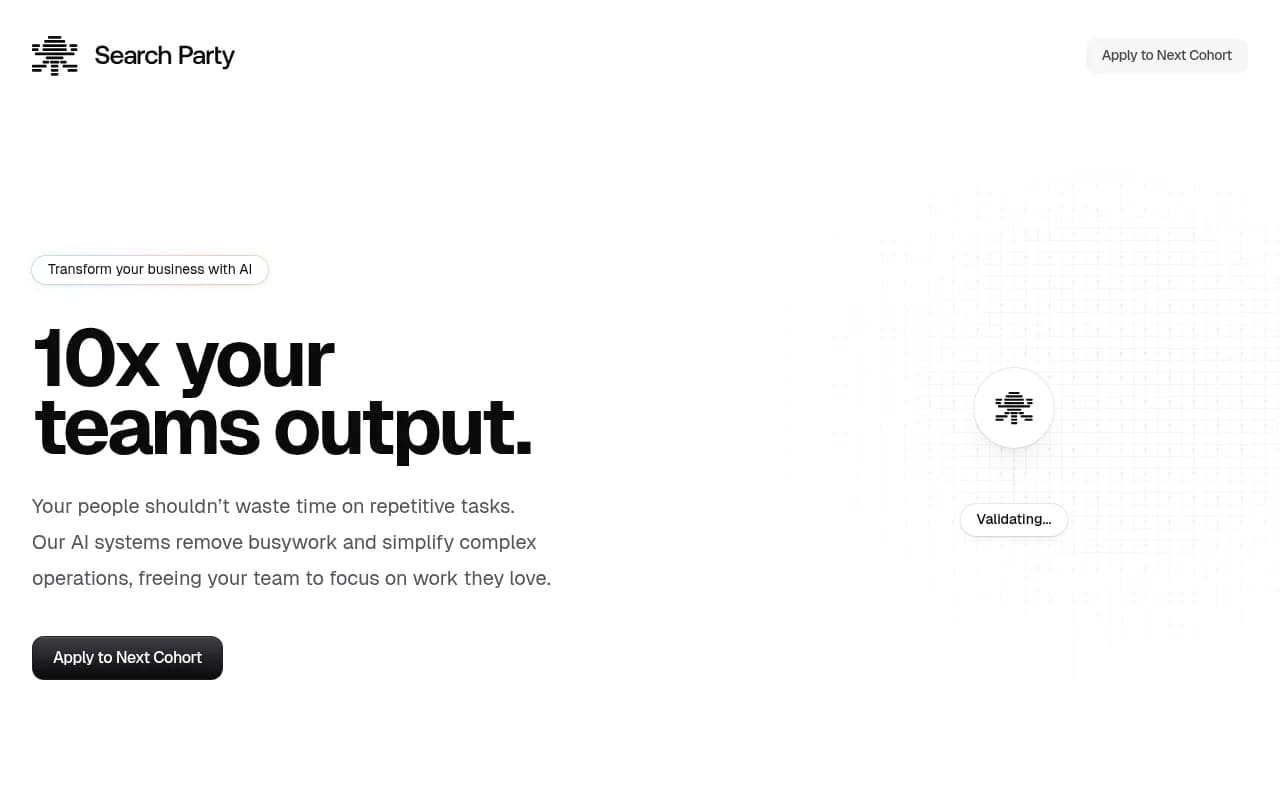
The trade-off is depth. Prompt metrics are limited compared to Promptwatch or Profound. There's no content gap analysis. The monitoring is functional but not granular. If you're an agency that needs a tool to show clients their AI visibility score and generate reports, Search Party is reasonable. If you need to actually move the needle on visibility, it falls short.
Scrunch -- Overall: C-
Scrunch has decent AI visibility tracking and a clean interface. The monitoring covers the major models and the competitor comparison views are useful.
Where it loses points: pricing relative to features, and the complete absence of content optimization tools. It's a monitoring dashboard, nothing more. At its price point, you'd expect more. The C- reflects a platform that does its core job adequately but doesn't justify its position in the market when better-priced alternatives exist.
Semrush -- Overall: C+
Semrush is the most interesting case in this comparison because it's not a GEO-native tool. It's a traditional SEO platform that has added AI visibility features -- specifically, AI Overview tracking and some brand monitoring capabilities.
If you're already paying for Semrush, the AI visibility features are worth using. The data quality is solid, and the integration with keyword research and backlink data gives you context that pure-play GEO tools don't have. The content creation tools (ContentShake, Writing Assistant) are also genuinely useful.
The limitation is that Semrush uses fixed prompts for AI monitoring -- you can't customize the prompt set to match how your actual customers search. That's a significant constraint for GEO work, where prompt specificity matters a lot. It's a B-tier GEO tool attached to an A-tier SEO platform.
Ahrefs Brand Radar -- Overall: C-
Similar story to Semrush: Ahrefs has added AI brand monitoring as an extension of its core SEO product. The Brand Radar feature tracks mentions across AI models, but it uses fixed prompts and has no AI traffic attribution.
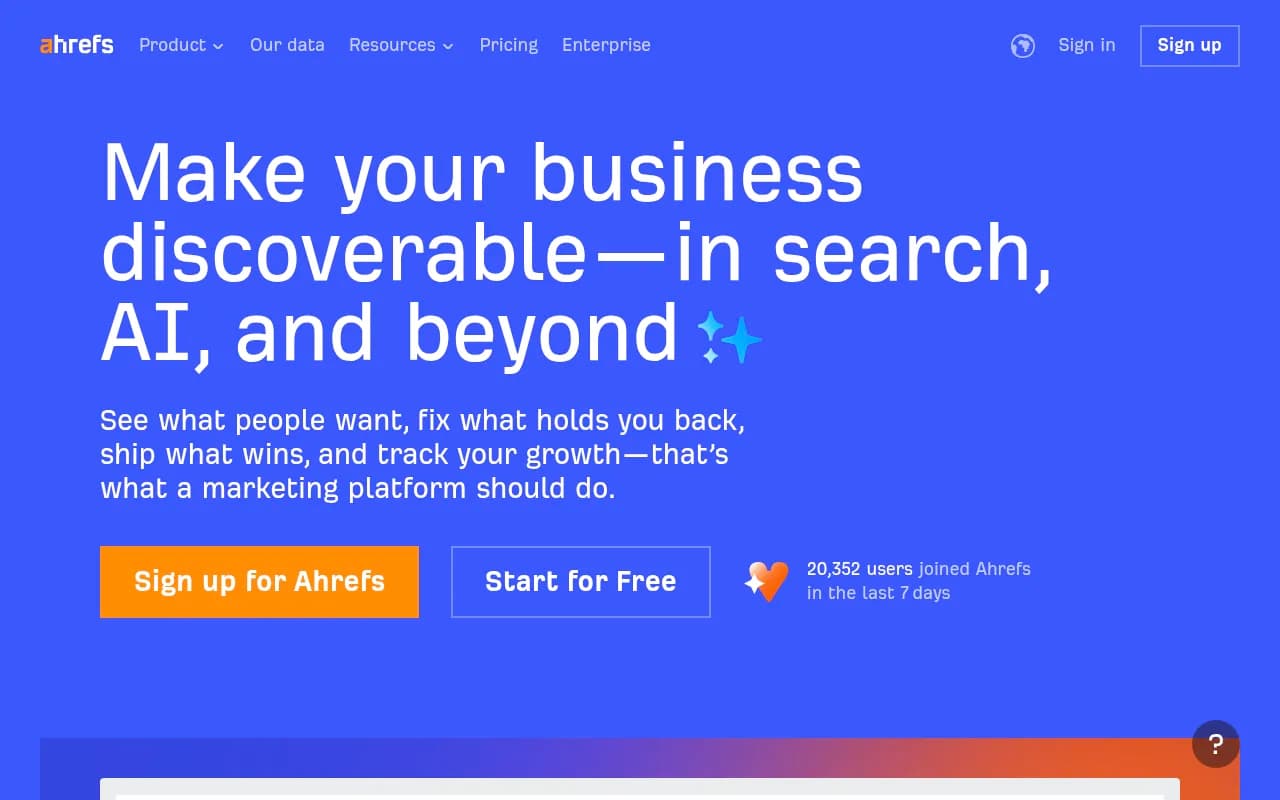
For existing Ahrefs users, it's a useful addition. As a standalone GEO tool, it's not competitive. The fixed prompt limitation is particularly frustrating -- GEO optimization requires understanding how your specific customers prompt AI models, and you can't do that with a predetermined set of queries.
Brandlight.ai -- Overall: D+
Brandlight.ai covers the basics of AI brand monitoring but lacks several capabilities that have become table stakes: no crawler logs, no content generation, limited prompt customization.
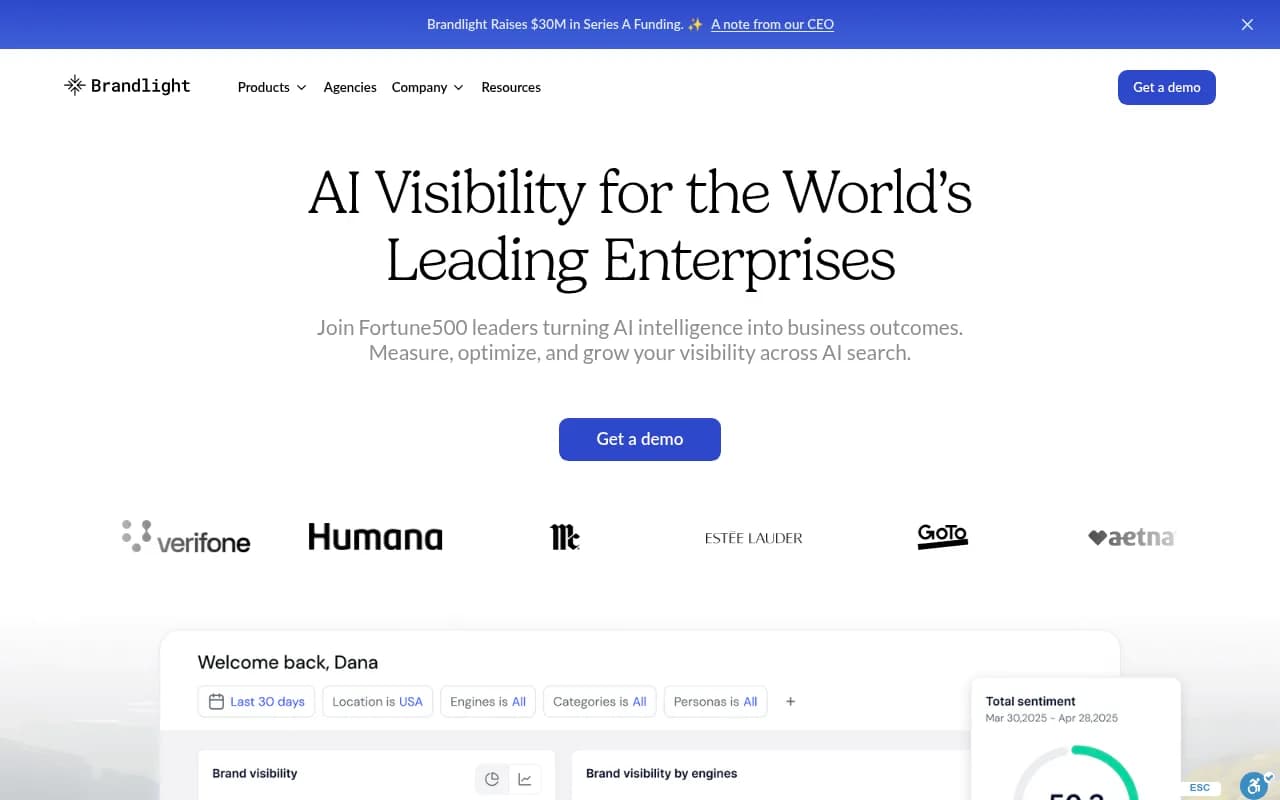
The platform is functional for basic mention tracking, but at its price point, there are better options. The D+ reflects a tool that isn't broken but isn't competitive with the current state of the market.
Bluefish -- Overall: D+
Bluefish is positioned as an enterprise AI marketing platform, primarily targeting Fortune 500 brands. The monitoring depth is reasonable for its target market, but the pricing is enterprise-only and the feature set doesn't justify the cost for most teams.
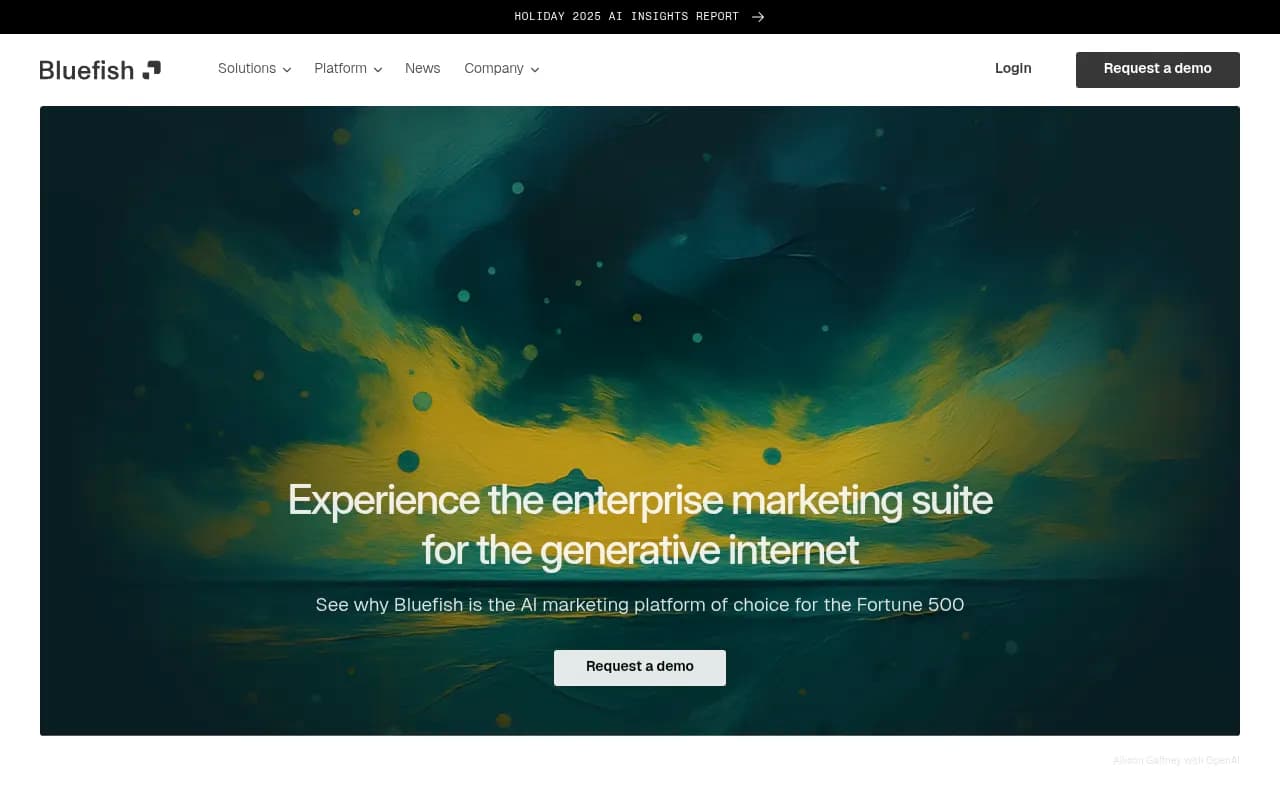
No content optimization, no content generation, no traffic attribution. For a platform targeting large enterprises, the absence of a full-cycle workflow is a significant gap. Enterprise buyers increasingly want platforms that help them act, not just report.
Searchable -- Overall: C
Searchable sits in the middle of the pack -- monitoring with some optimization tools, reasonable AI coverage, mid-market pricing. It's not exceptional in any category, but it's not weak either.
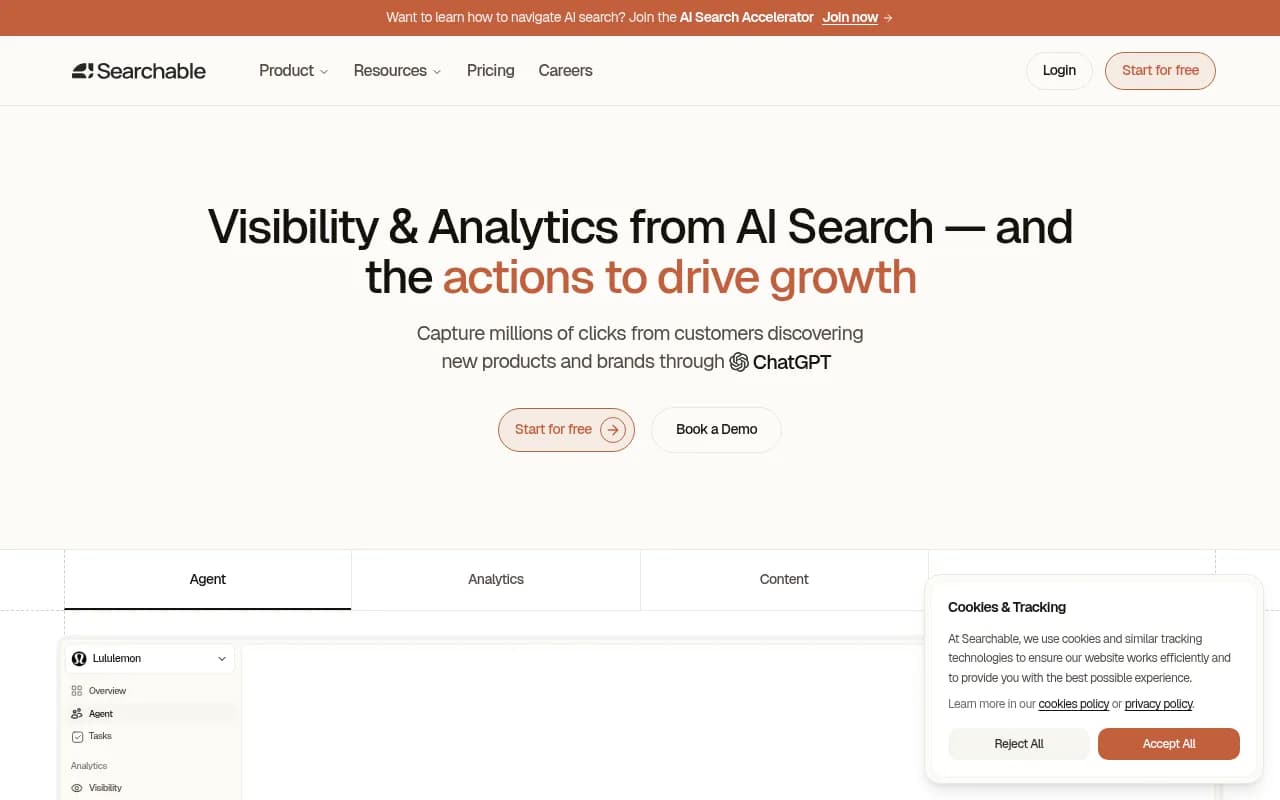
If you're evaluating it against Peec.ai or Otterly.AI, Searchable offers slightly more on the content side. If you're evaluating it against Promptwatch, the gap in actionability is significant.
What the grades reveal
A few patterns worth noting:
Most platforms cluster in the C range. That's not an accident -- monitoring is a solved problem. Tracking whether your brand appears in a ChatGPT response is technically straightforward. The differentiation comes from what you do with that data.
The content optimization and actionability categories are where the market splits. Profound, Peec.ai, Otterly.AI, AthenaHQ, Scrunch, Ahrefs, and Brandlight all score D or C in content optimization. They show you the gap. They don't help you close it.
Pricing fairness correlates inversely with enterprise positioning. Profound and Bluefish charge the most and serve the largest organizations. Otterly.AI charges the least. Promptwatch sits in the middle on price but at the top on features -- which is why it scores an A on pricing fairness despite not being the cheapest option. Value is a ratio.
Which platform should you actually use?
It depends on where you are:
If you're just starting out and need to understand your AI visibility baseline, Otterly.AI at $29/month is a reasonable starting point. Don't expect to stay there long.
If you're at an enterprise with strict security requirements (SOC 2, SSO, dedicated support), Profound is the safe choice. Budget accordingly.
If you need multi-language monitoring across international markets, Peec.ai's 115-language coverage is genuinely hard to match.
If you're already deep in the Semrush ecosystem, use the AI visibility features you're already paying for before adding another tool.
If you want to actually grow your AI visibility -- not just measure it -- Promptwatch is the only platform in this comparison that closes the full loop. Find the gaps, generate the content, track the results. The other platforms make you do steps two and three yourself.
The GEO platforms that will matter in 2026 are the ones that treat visibility as an outcome, not a metric. Monitoring tells you where you stand. Optimization moves you forward. Most of the tools in this report card only do the first part.
That's the real grade.