Key takeaways
- Peec.ai's pricing structure (€85 starter, €205 Pro) creates a real gap for solo marketers and freelancers who don't need agency-scale features
- Several capable alternatives exist under $50/month, with some offering free tiers
- The best budget-friendly options for solos are Otterly.AI ($29/month), Visiblie (€79/month), and SE Visible (part of SE Ranking's existing plans)
- If you want to go beyond monitoring and actually fix your AI visibility gaps, Promptwatch starts at $99/month and includes content generation -- which most cheaper tools don't offer
- The right tool depends on how many prompts you need to track, which AI engines matter to your audience, and whether you need to act on the data or just watch it
Peec.ai is a genuinely good product. It raised €21 million in November 2025, ships clean daily tracking, and has a transparent pricing page. But that pricing page is also where a lot of solo marketers close the tab.
The starter plan is €85/month for 50 prompts across ChatGPT, Perplexity, and Gemini. Claude costs extra -- it's only available on the €425/month Scale tier or as a paid add-on. And if you outgrow the starter plan, the next step up is €205/month. That's a 2.4x price jump for 3x the prompts. For a freelancer tracking one or two brands, the math just doesn't work.
The good news: the AI visibility tool market has expanded fast in 2026. There are now legitimate alternatives at every price point, including some that go well beyond what Peec.ai offers at the same or lower cost.
This guide is specifically for solo marketers, freelancers, and consultants who want real AI visibility data without paying for seats they'll never use.
Why AI visibility tracking matters even at the solo level
Before getting into the tools, it's worth being clear about what you're actually buying here.
AI visibility tools track how your brand (or your clients' brands) appear in responses from ChatGPT, Perplexity, Google AI Overviews, Claude, Gemini, and other AI engines. When someone asks "what's the best project management tool for freelancers?" -- does your client's product get mentioned? Does a competitor get mentioned instead? Is the information accurate?
These aren't hypothetical questions anymore. Google AI Overviews now appear in roughly 47% of searches according to Search Engine Journal's 2025 study. ChatGPT usage has grown to the point where AI-referred traffic is measurable in Google Search Console for most mid-size sites. If you're doing SEO or content marketing for clients, ignoring this channel is increasingly hard to justify.
The challenge for solo operators is that most of the serious tools were built with marketing teams in mind. You end up paying for multi-seat access, white-label reporting, and enterprise integrations you don't need.
The real alternatives to Peec.ai in 2026
Here's a quick comparison before we go deeper:
| Tool | Starting price | AI engines covered | Free tier | Content generation | Best for |
|---|---|---|---|---|---|
| Otterly.AI | $29/month | 4 | No (trial) | No | Absolute budget minimum |
| Visiblie | €79/month | 4 (incl. Claude) | 14-day trial | No | Best value vs Peec.ai |
| SE Visible | Included in SE Ranking plans | 4+ | Limited | No | Existing SE Ranking users |
| Promptwatch | $99/month | 10 | Free trial | Yes | Tracking + fixing visibility |
| Ranksmith | Lower tier available | Multiple | No | Partial | Actionable insights focus |
| Peec.ai | €85/month | 3 (Claude extra) | Trial | No | Reference point |
Otterly.AI -- the cheapest entry point
At $29/month for the Lite plan, Otterly.AI is the lowest-cost way to get real AI visibility tracking. You get 15 prompts per month across 4 engines. That's genuinely limited -- 15 prompts won't cover a full keyword set -- but for a freelancer just starting to track AI visibility for one client, it's enough to get a feel for the data.
The tool gets recommended frequently in SEO communities for exactly this reason: it removes the financial risk of getting started.

The downside is that Otterly.AI is monitoring-only. It shows you where you appear (or don't), but it doesn't help you figure out what to do about it. For many solos, that's fine -- you're doing the strategy work yourself. But if you want the tool to point you toward fixes, you'll need to look elsewhere.
Visiblie -- the closest direct swap
Visiblie positions itself explicitly as a Peec.ai alternative, and the comparison holds up. At €79/month, it's €6 cheaper than Peec.ai's starter plan, covers 4 AI engines (including Claude, which Peec.ai charges extra for), and gives you 50 prompts per week (200 per month total) vs Peec.ai's 50 per month.
That's a meaningful difference. If you're tracking a reasonable number of queries for a client, 200 monthly prompts gives you much more coverage than 50.
The upgrade path is also cleaner: Visiblie Growth is €129/month for 100 prompts weekly and 5 seats, compared to Peec.ai's €205/month jump for 150 prompts.
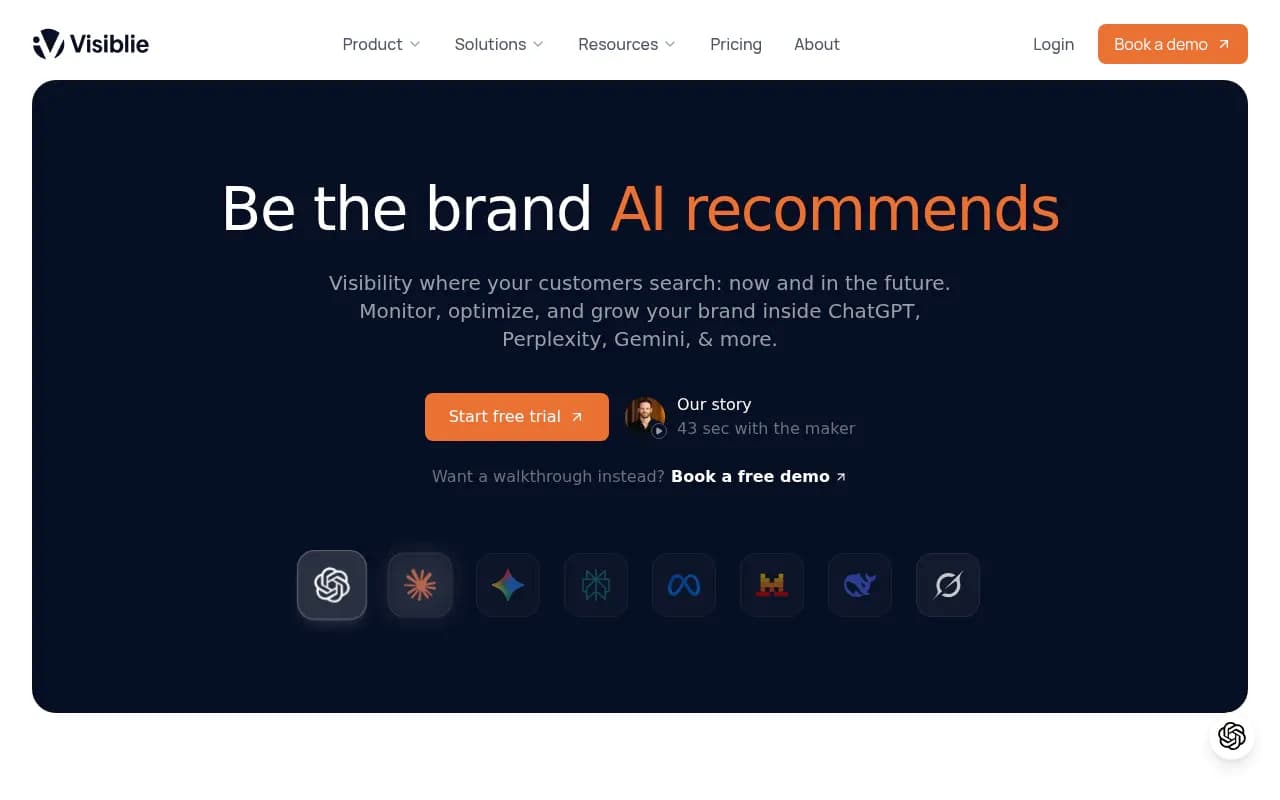
For freelancers who want a direct Peec.ai replacement at a lower price, Visiblie is the most straightforward answer.
SE Visible -- if you're already in the SE Ranking ecosystem
SE Ranking has been building out its AI visibility features under the "SE Visible" brand. If you're already paying for SE Ranking for traditional SEO tracking, adding AI visibility monitoring through the same platform makes financial sense -- you're not paying for a second tool.
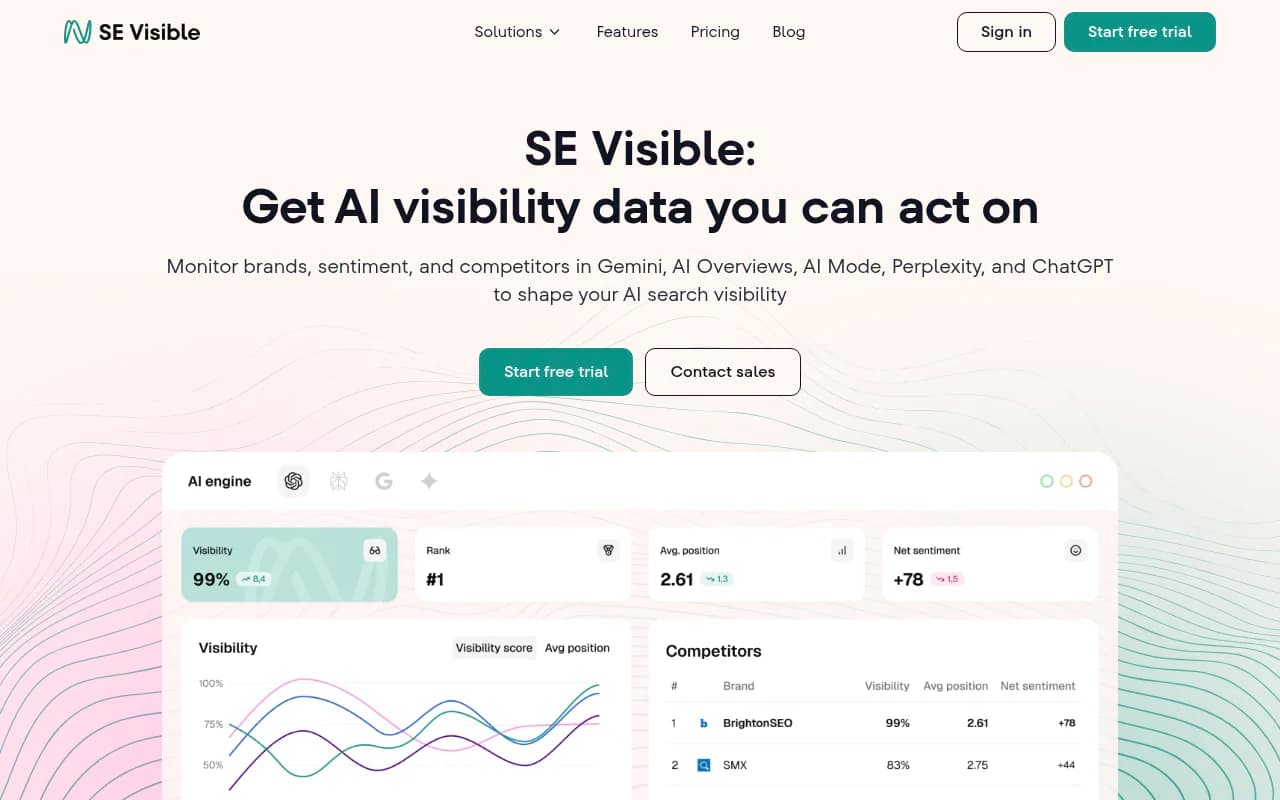
The coverage isn't as deep as dedicated AI visibility tools, but for a solo marketer who needs to show clients a combined view of traditional and AI search performance, having everything in one place has real value.
Promptwatch -- when you need to act, not just watch
This is where the conversation shifts a bit. Every tool mentioned so far is a monitoring tool: they show you data, and then you figure out what to do with it.
Promptwatch is built differently. The core idea is a loop: find the gaps in your AI visibility, generate content to fill them, then track whether that content actually gets cited.

The Answer Gap Analysis feature shows you which prompts your competitors appear for that you don't -- not as a vague "you're missing coverage here" note, but as specific prompts with visibility scores and competitor data. The built-in writing agent then generates content designed to get cited by AI models, grounded in citation data from 880M+ analyzed citations rather than generic SEO logic.
At $99/month for the Essential plan (1 site, 50 prompts, 5 articles), it's more expensive than Otterly.AI or Visiblie. But you're paying for a different category of tool. If you're a freelancer who wants to show clients measurable improvement in AI visibility -- not just a dashboard -- the content generation capability changes what you can deliver.
For solo marketers who are primarily doing content strategy work, that distinction matters.
Ranksmith -- actionable insights without the enterprise price
Ranksmith sits in a middle ground: more actionable than pure monitoring tools, but without the full content generation suite of something like Promptwatch. It focuses on surfacing specific, prioritized recommendations from AI visibility data.
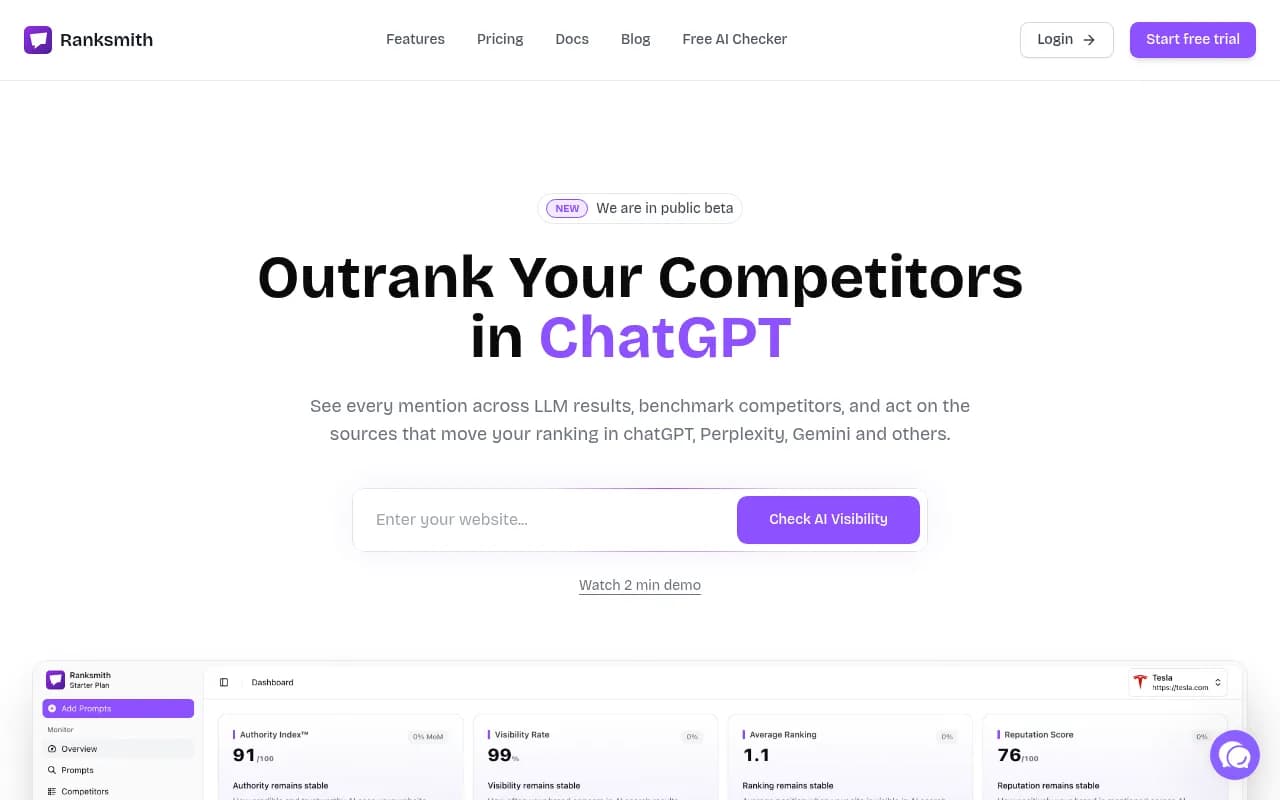
Worth evaluating if you want more than raw data but aren't ready to commit to a higher-tier platform.
Other tools worth knowing about
A few more options that come up in this space:
Peasy is a lighter-weight tracking tool that some solos use for quick visibility checks.
Airefs is specifically positioned as an affordable AI search visibility tracker -- the name is a play on Ahrefs, and the pricing reflects that budget-first positioning.
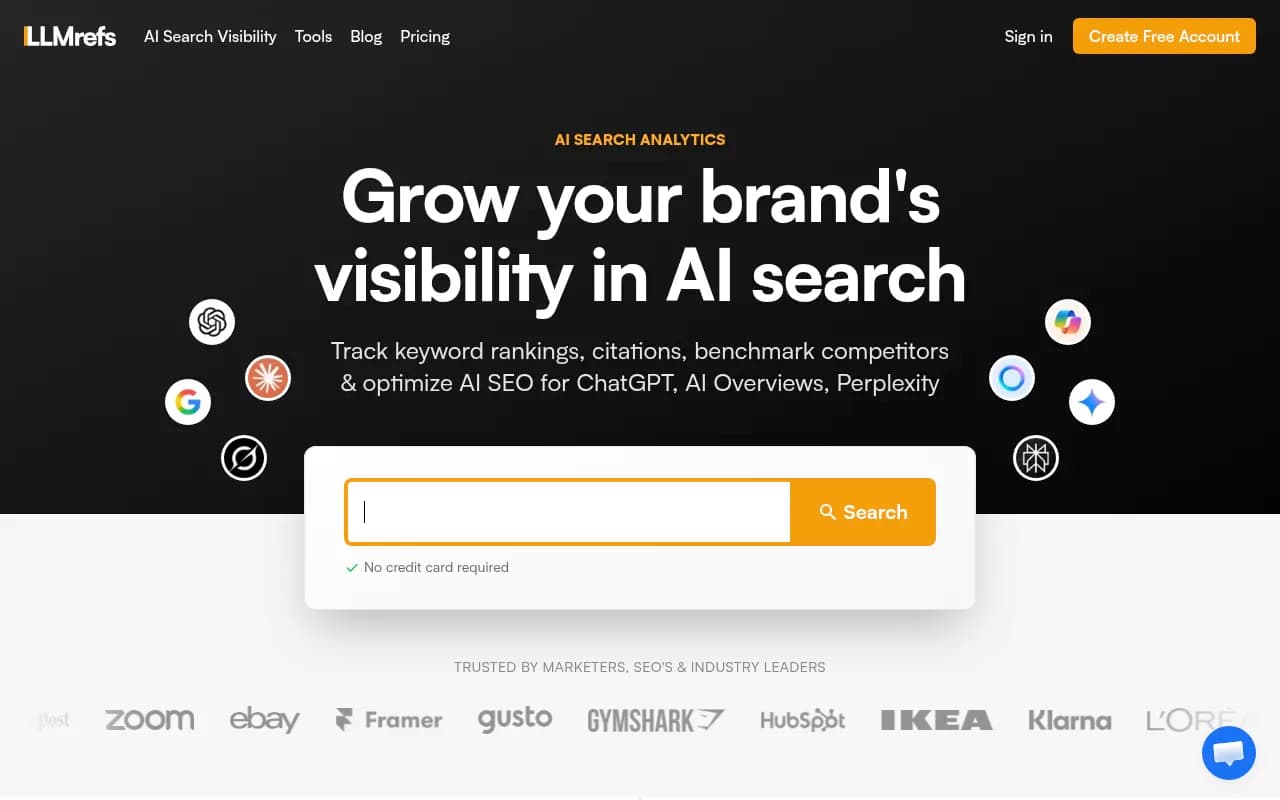
LLMrefs tracks brand visibility across ChatGPT, Perplexity, and other models with a focus on citation tracking.
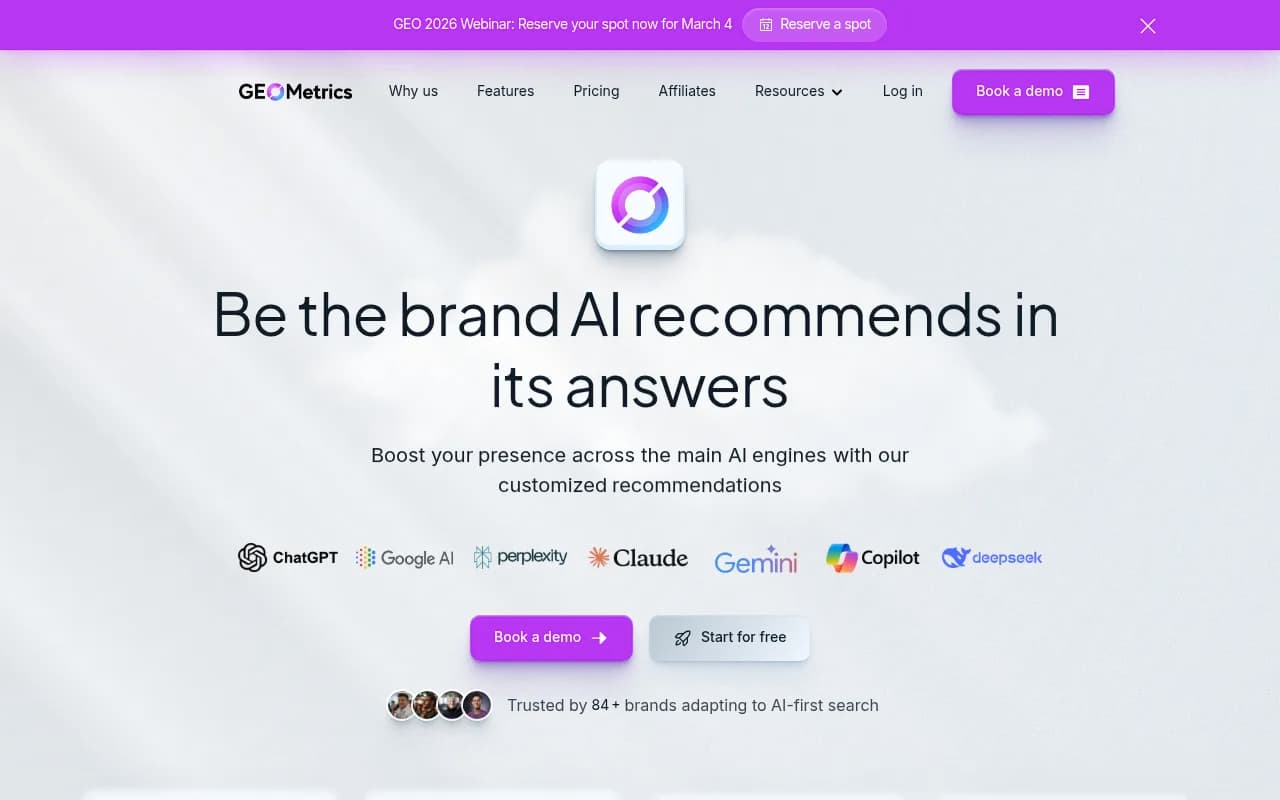
GEO Metrics covers ChatGPT, Gemini, and other AI engines with a straightforward interface that doesn't require much setup time.
What to look for when choosing
The tools above cover a real range of use cases. Here's how to think about which one fits your situation:
If you're just starting out and want to understand the space: Start with Otterly.AI at $29/month. The prompt limit is real, but it's enough to see what AI visibility data actually looks like before committing to a bigger spend.
If you want the best value vs Peec.ai specifically: Visiblie gives you more engines, more prompts, and a cleaner upgrade path at a lower price. It's the most direct swap.
If you're already paying for SE Ranking: Check SE Visible before adding another tool. You might already have access.
If you want to show clients actual improvement, not just reports: Promptwatch's content generation and gap analysis capabilities let you move from "here's where you're invisible" to "here's what we published to fix it, and here's how visibility changed." That's a different value proposition for client work.
If you're tracking a single brand with modest prompt needs: Almost any of these tools will work. Focus on which AI engines matter most to your audience -- if your clients' customers are heavy Claude or Perplexity users, make sure your tool covers those engines.
The engines question
One thing that catches people off guard: not all tools track the same AI engines, and the engine mix matters more than you might think.
Peec.ai's starter plan covers ChatGPT, Perplexity, and Gemini. Claude is a paid add-on. That's a real limitation -- Claude is increasingly used for research and recommendation queries, exactly the type of prompts where brand visibility matters.
Visiblie includes Claude from the starter plan. Promptwatch monitors 10 engines: ChatGPT, Perplexity, Google AI Overviews, Google AI Mode, Claude, Gemini, Meta/Llama, DeepSeek, Grok, and Copilot. Otterly.AI covers 4 engines on the Lite plan.
Before committing to any tool, check which engines it actually monitors and whether those match where your target audience is spending time. A B2B SaaS audience skews toward Perplexity and Claude. A consumer audience might be more concentrated in ChatGPT and Google AI Overviews. The answer isn't the same for every brand.
A note on "monitoring only" vs. optimization
Most of the tools in this guide are monitoring tools. They're genuinely useful -- you can't improve what you can't measure -- but there's a ceiling on what monitoring alone can do for a client relationship.
The shift that's happening in 2026 is that clients are starting to ask "what are you doing about it?" not just "where do we stand?" Showing a dashboard of AI visibility scores is table stakes. The more interesting work is identifying specific content gaps and filling them with material that AI models actually want to cite.
That's a harder problem, and it's why tools that combine monitoring with content generation (Promptwatch being the main example at a non-enterprise price point) are worth considering even if the monthly cost is higher. The question isn't just "what does the tool cost?" but "what can I charge for the work the tool enables?"
For a freelancer billing clients on deliverables, a tool that helps you produce AI-optimized content is more valuable than one that just produces reports.
Bottom line
Peec.ai is a solid tool, but its pricing structure creates a real gap for solo operators. The €85 → €205 jump is steep, Claude costs extra, and you're paying for infrastructure built for teams.
The alternatives are genuinely good in 2026. Otterly.AI is the cheapest way in. Visiblie is the best direct replacement. SE Visible makes sense if you're already in the SE Ranking ecosystem. And if you want to move beyond tracking into actually improving AI visibility for clients, Promptwatch's Essential plan at $99/month is the most complete option at a non-enterprise price.
The market is moving fast. Tools that were monitoring-only a year ago are adding optimization features. Prices are shifting. But the core question for any solo marketer stays the same: does this tool help me deliver something clients will pay for? Pick the one that answers yes.