Key takeaways
- Otterly.AI was one of the first AI search monitoring tools accessible to non-technical marketers, and it earned that reputation honestly.
- Its core limitation: it covers only 3 AI engines (ChatGPT, Perplexity, Gemini) and stops at monitoring -- no content generation, no crawler logs, no answer gap analysis.
- Most teams switching in 2026 aren't leaving because Otterly broke. They're leaving because monitoring alone isn't enough anymore.
- The GEO category has split into two tiers: dashboards that show you data, and platforms that help you act on it.
- If your goal is to actually improve AI visibility -- not just measure it -- you need a tool built around optimization, not observation.
How Otterly.AI got its start
When Otterly.AI launched, the pitch was simple and genuinely useful: here's a dashboard that shows you whether AI search engines are mentioning your brand. That was a real problem in 2024. Most marketing teams had no idea whether ChatGPT was recommending them, ignoring them, or actively recommending a competitor instead.
Otterly solved that problem cleanly. The UI was approachable. You didn't need an engineer to set it up. You could show the data to leadership without a 20-minute explanation. For a category that was still explaining its own existence to skeptical CMOs, that accessibility mattered.
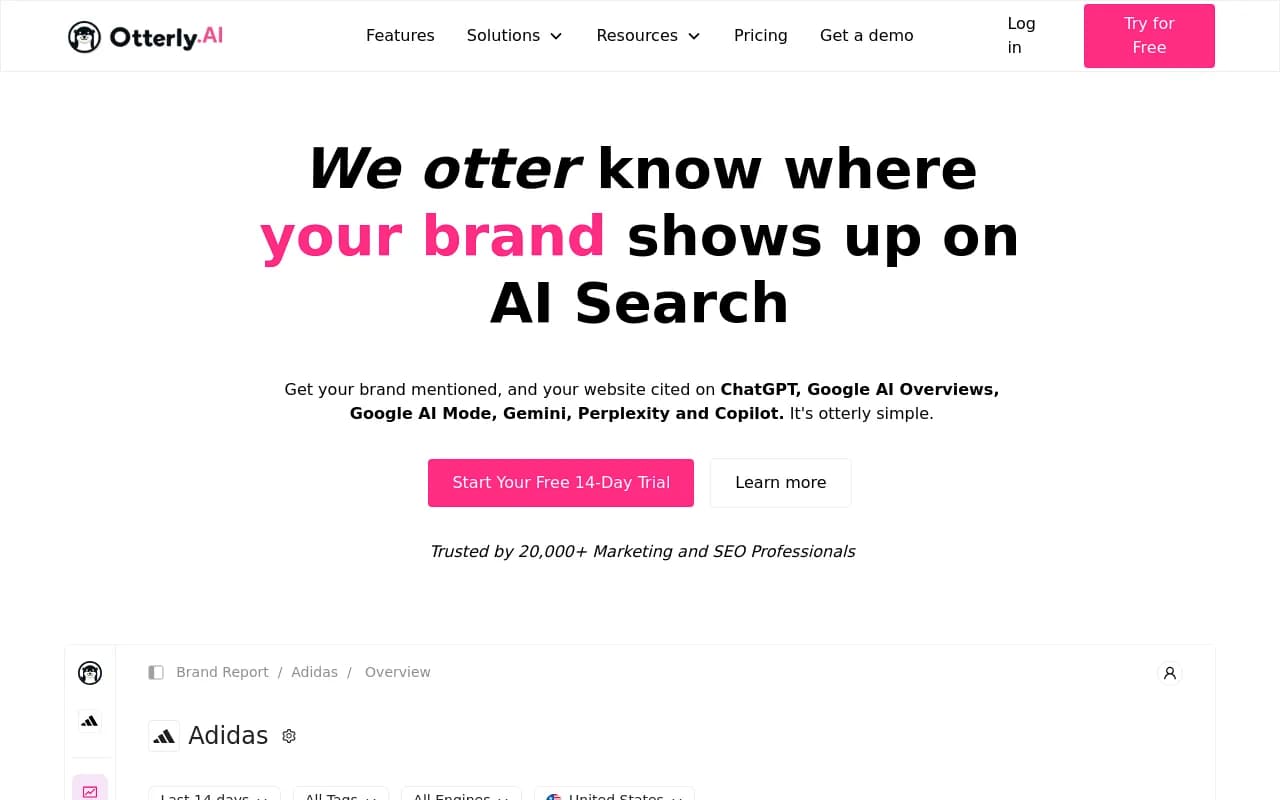
The product found a real audience: mid-market marketing teams, SEO managers who'd heard about GEO and wanted to get ahead of it, and agencies looking for something they could white-label into client reports. Otterly's blog also became a credible source of data -- their 2026 citation report analyzed over one million website citations across major AI platforms, and their research on Google AI Overviews (tracking the jump from 31% of queries in February 2025 to 48% by February 2026) got real traction.
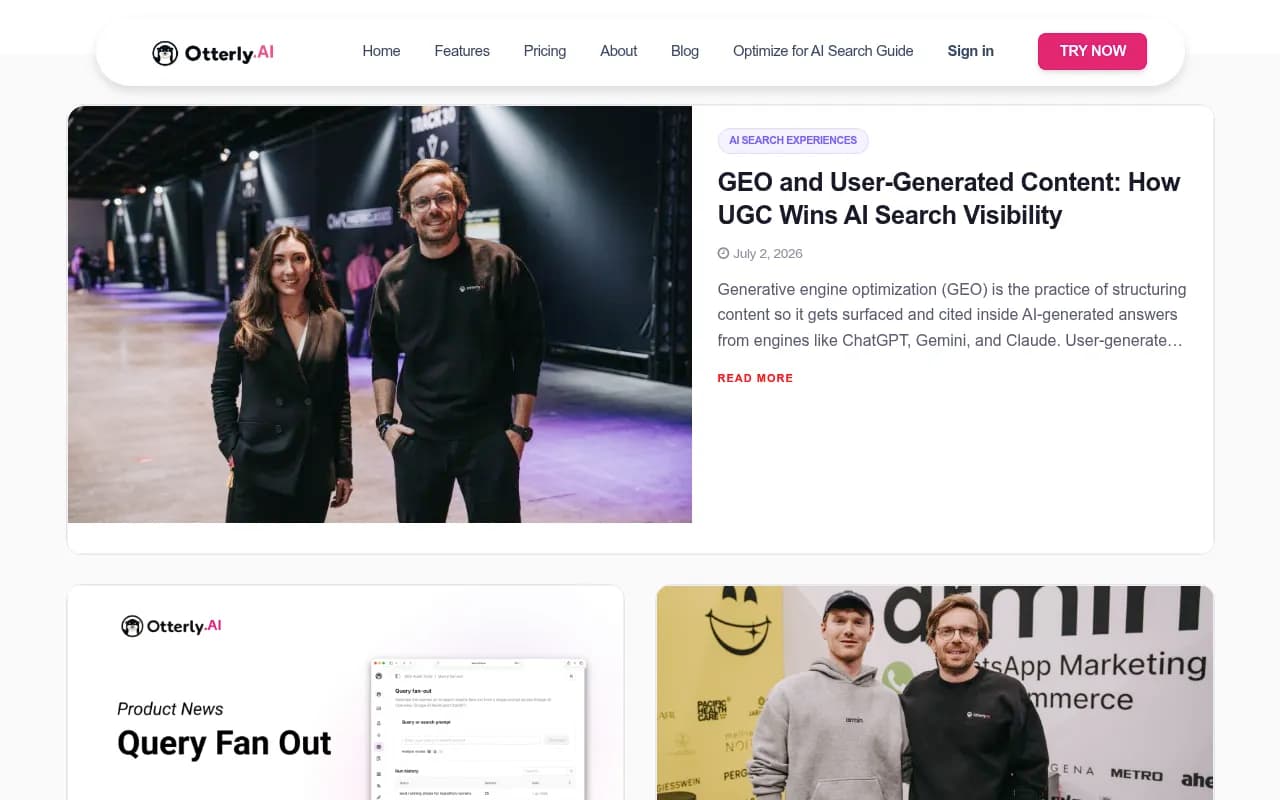
So Otterly wasn't a gimmick. It was a legitimate early product in a category that needed one.
What Otterly got right in 2025
Accessibility for non-technical teams
This is genuinely hard to do well. Most GEO tools in 2024 and early 2025 were built by engineers for engineers. Otterly made a deliberate choice to prioritize clarity over depth, and that paid off. Marketing managers could log in, understand what they were looking at, and pull a report for their boss without needing a tutorial.
Stakeholder-friendly reporting
The dashboard was designed with reporting in mind. Clean charts, shareable snapshots, the kind of output that works in a slide deck. For teams that needed to justify AI visibility investment to leadership, this was a real advantage.
Reasonable pricing entry point
At roughly $99/month for a starter plan, Otterly was priced for teams that weren't sure yet whether AI search visibility was worth a serious budget. That low barrier to entry helped a lot of teams get their first real data on AI citations.
Consistent monitoring across three engines
ChatGPT, Perplexity, and Gemini -- the three engines Otterly covers -- were the right three to start with. For most of 2024 and early 2025, those three accounted for the majority of AI search traffic. The monitoring was reliable and consistent, which matters more than it sounds when you're trying to track trends over time.
Where Otterly fell short
Engine coverage gaps
By mid-2025, Claude and Grok had grown their share of AI search meaningfully. Perplexity expanded its user base. Meta AI started showing up in more workflows. Otterly's three-engine coverage, which felt adequate in 2024, started to look like a blind spot. If a competitor was getting cited heavily on Claude and you weren't tracking Claude, you had no idea.
Monitoring without action
This is the core issue, and it's worth being direct about it. Otterly shows you what's happening. It doesn't help you change it.
You can see that a competitor is mentioned in 60% of ChatGPT responses to a query you care about, and you're mentioned in 8%. That's useful information. But Otterly doesn't tell you why, doesn't show you what content gaps are causing the disparity, doesn't help you generate content to close those gaps, and doesn't track whether your new content gets crawled and cited. You get the diagnosis without the treatment.
For 2024, when teams were still just trying to prove that AI search visibility was real and measurable, that was fine. By 2025, teams that had proven it internally were asking "okay, now what do we do?" and Otterly didn't have an answer.
No crawler log visibility
AI crawlers -- the bots that ChatGPT, Claude, Perplexity, and others send to read your website -- behave differently from Google's crawler. They visit different pages, at different frequencies, and sometimes hit errors that prevent them from reading content you've published. Without crawler log data, you can't see any of this. You don't know which pages AI engines are actually reading, which ones they're skipping, or why a piece of content you published three months ago still isn't being cited.
Otterly has no crawler log functionality.
No prompt intelligence or volume data
Not all prompts are equal. "Best project management software" gets asked far more often than "best project management software for remote teams in manufacturing." Knowing which prompts are high-volume and which are winnable given your current authority is essential for prioritization. Otterly doesn't provide prompt volume estimates or difficulty scoring, which means teams are essentially guessing about where to focus.
No Reddit or YouTube tracking
A significant portion of AI citations come from Reddit threads, YouTube videos, and third-party review sites -- not just brand websites. If a Reddit thread is driving 40% of ChatGPT's recommendations in your category, you need to know that. Otterly doesn't surface this.
Why teams are switching in 2026
The research from multiple sources tells the same story: teams aren't leaving Otterly because it stopped working. They're leaving because the category evolved and Otterly didn't evolve with it.
As one analysis put it: "Most teams that switch from Otterly do not switch because the monitoring broke. They switch because monitoring was never the problem."
The problem is that AI search visibility is now a performance channel, not just a measurement exercise. Google AI Overviews now appear on nearly half of all search queries. ChatGPT's user base has grown to the point where being invisible there has real revenue consequences. Teams that spent 2024 measuring their AI visibility are now being asked to improve it -- and that requires a different kind of tool.
The category has effectively split into two tiers:
| Tier | What it does | Examples |
|---|---|---|
| Monitoring dashboards | Track citations, show share of voice, report on brand mentions | Otterly.AI, Peec.ai, basic trackers |
| Optimization platforms | Monitor + identify gaps + generate content + track results | Promptwatch, Profound, full-stack GEO tools |
Teams that need to report on AI visibility can stay with a monitoring dashboard. Teams that need to improve it are moving to optimization platforms.
What the alternatives look like
The alternatives market has gotten crowded fast. Here's an honest look at the main options teams are considering when they leave Otterly.
For teams that want more engine coverage at a lower price
RankScope is frequently cited as a direct Otterly alternative. It covers ChatGPT, Google AI Overviews, Perplexity, and Google AI Mode, adds forensic diff tracking (showing what changed in AI responses day-over-day), and starts at $39/month. The tradeoff: it's deeper on optimization signals but the UI is less polished for stakeholder reporting -- the thing Otterly actually does well.
For teams that want share-of-voice benchmarking
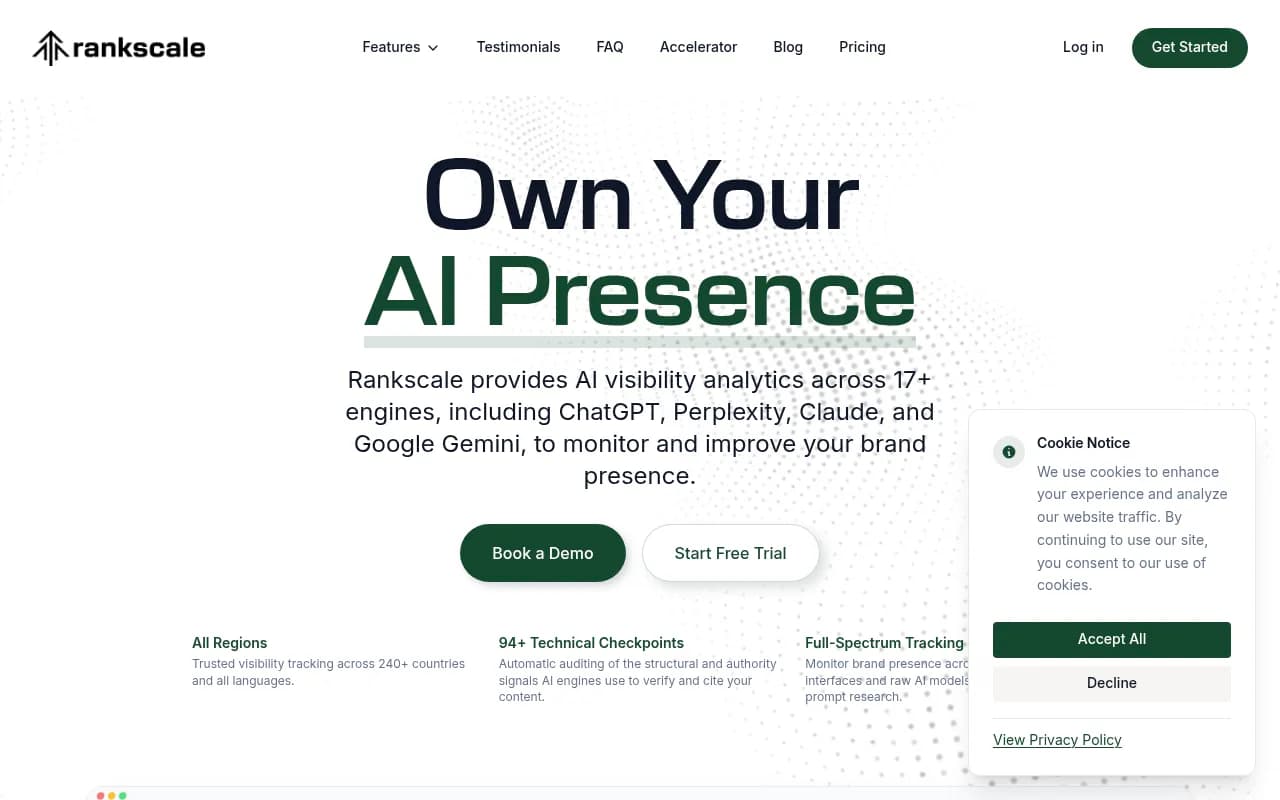
Rankscale focuses on competitive share-of-voice analysis across AI engines. Useful if your primary question is "how do we compare to competitors?" rather than "how do we fix our content?"
For enterprise teams with serious budgets
Profound is the enterprise option in this space, starting at $499/month and up. It has broader engine coverage and more sophisticated analytics, but the price point puts it out of reach for most mid-market teams.

For teams that want to actually fix the problem
This is where the conversation gets more interesting. If the goal is to close the gap between where you are and where you want to be in AI search results, you need a platform built around that workflow -- not just a better monitoring dashboard.
Promptwatch is built around what it calls an "action loop": find the prompts where competitors are visible and you're not, generate content engineered to fill those gaps, then track whether that content gets crawled and cited. The Answer Gap Analysis shows you exactly which prompts your competitors rank for that you don't, and the Content Agents generate articles and briefs grounded in real citation data and prompt volumes. It also covers 10 AI engines (including Claude, Grok, DeepSeek, and Meta AI -- the ones Otterly misses) and includes crawler log visibility so you can see how AI bots are actually interacting with your site.

It's a different category of tool. Otterly shows you a score. Promptwatch shows you a score and then helps you improve it.
Other tools worth knowing about
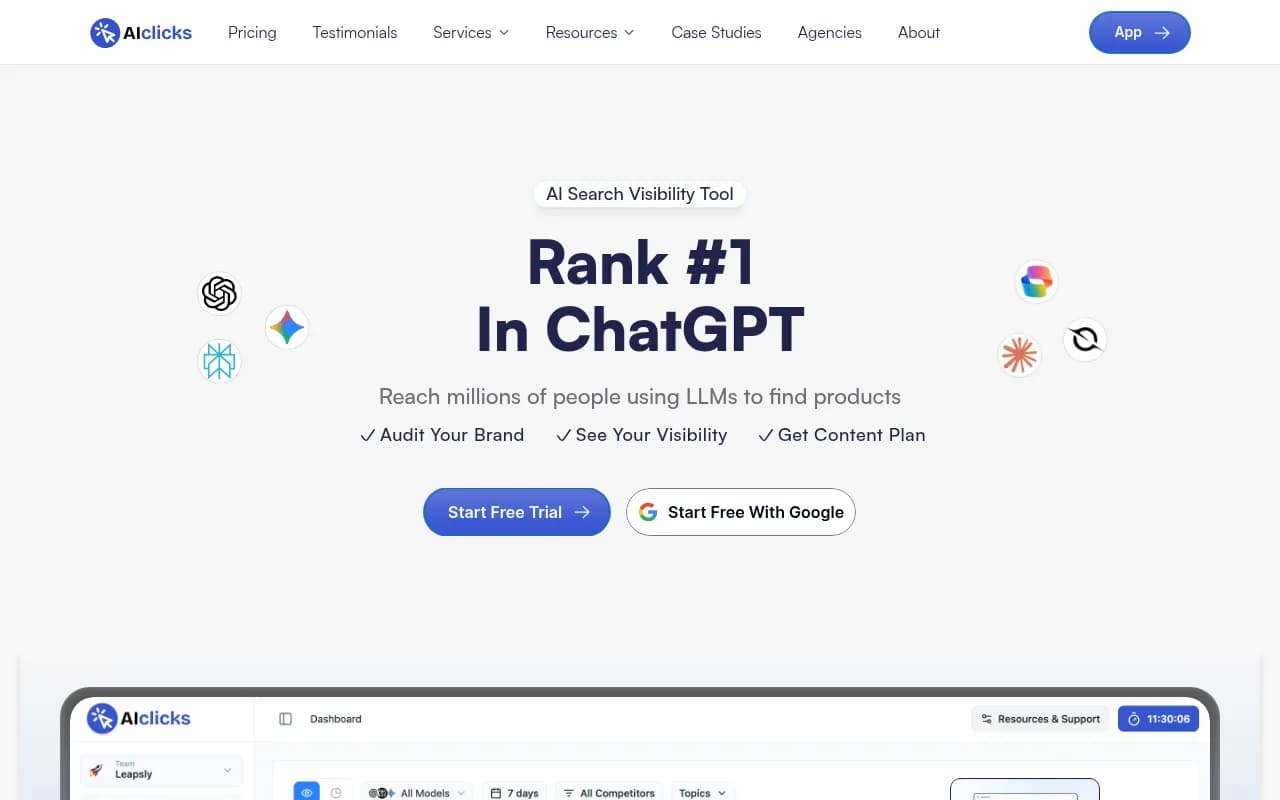
AIClicks has built a solid reputation for tracking AI visibility with a focus on actionable insights.
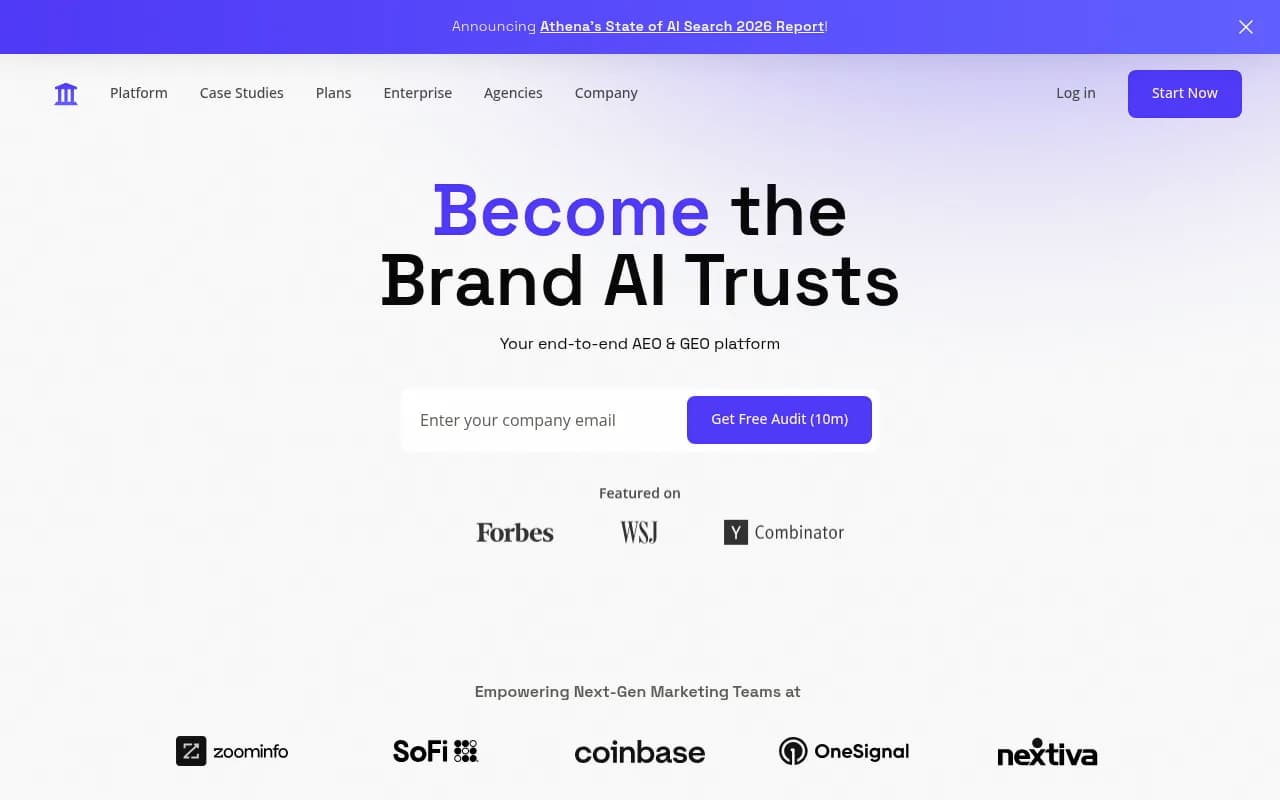
AthenaHQ covers 8+ AI engines and has strong monitoring capabilities, though it's more focused on tracking than content optimization.
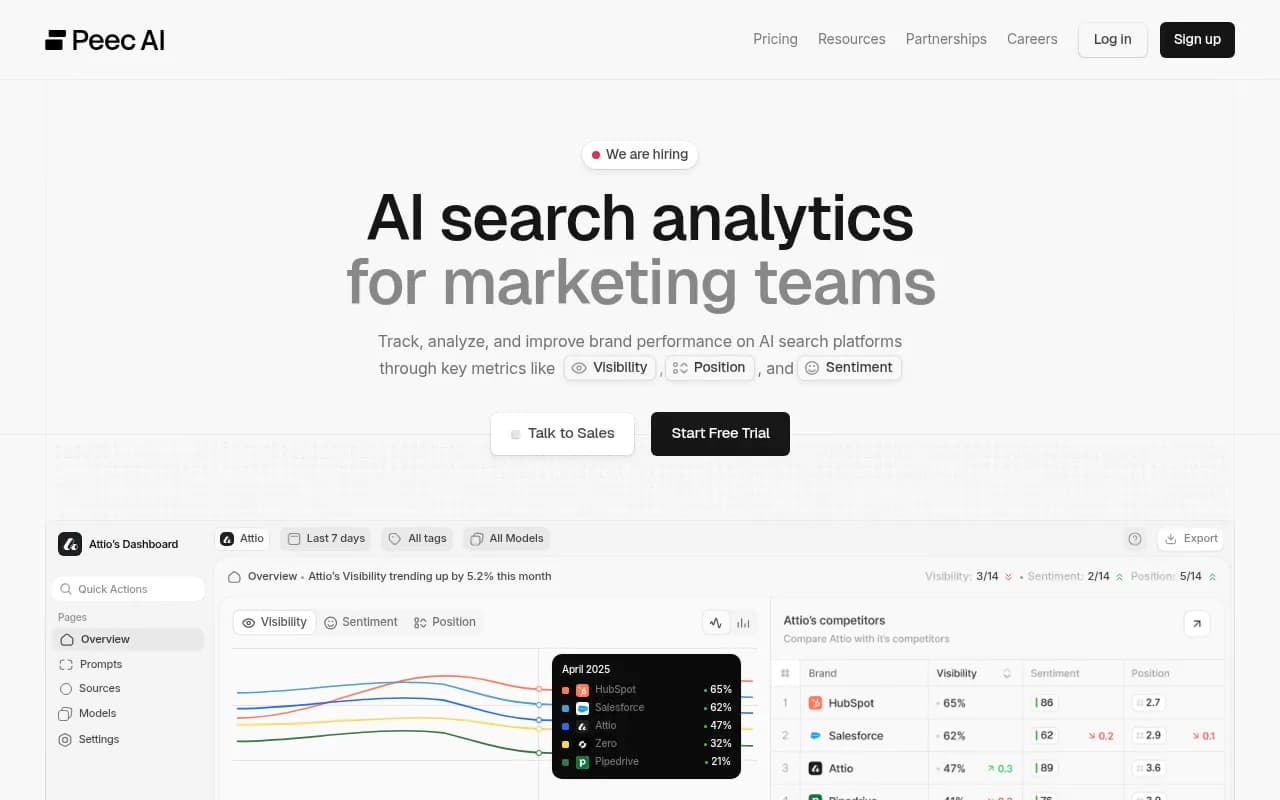
Peec AI is worth considering if multi-language tracking is a priority -- it's one of the stronger options for non-English markets.
A comparison of the main options
| Tool | AI engines covered | Content generation | Crawler logs | Prompt volume data | Starting price |
|---|---|---|---|---|---|
| Otterly.AI | 3 (ChatGPT, Perplexity, Gemini) | No | No | No | ~$99/mo |
| Promptwatch | 10 | Yes | Yes | Yes | $99/mo |
| Profound | Multiple | No | No | Limited | $499/mo+ |
| AthenaHQ | 8+ | No | No | No | Custom |
| Peec AI | Multiple | No | No | No | Varies |
| RankScope | 4 | No | No | No | $39/mo |
The table makes the tradeoffs visible. If you want the cheapest monitoring option, RankScope undercuts Otterly on price. If you want the most engine coverage with monitoring only, AthenaHQ is worth a look. If you want to actually move the needle on AI visibility, the only tool in this list with content generation, crawler logs, and prompt intelligence at a mid-market price is Promptwatch.
Should you stay on Otterly?
Honestly, it depends on what you're trying to do.
If you're in an early stage of AI visibility -- still trying to convince leadership this matters, still building a baseline, still figuring out which AI engines your audience uses -- Otterly is a reasonable starting point. It's accessible, the reporting is clean, and it'll give you the data you need to make the internal case for investing more seriously.
If you're past that stage -- if you've already proven AI search visibility matters and now you need to improve it -- Otterly's limitations will frustrate you. You'll hit the ceiling quickly. The monitoring data will tell you you're behind, but the tool won't help you catch up.
The switch most teams are making in 2026 isn't really about Otterly specifically. It's about recognizing that the GEO category has matured, and the tools that were good enough in 2024 aren't built for what the work actually requires now. Monitoring was the first problem. Optimization is the current one.
Pick the tool that's built for the problem you're actually trying to solve.