Summary
- Monitoring-only tools show you where you appear (or don't) in AI search results, but leave you stuck figuring out what to do next. They're dashboards, not solutions.
- Optimization-focused platforms close the loop: they identify content gaps, help you create AI-optimized content, and track the results. They turn visibility data into action.
- The right choice depends on your goals: if you just need awareness, monitoring works. If you want to actually improve your AI visibility, you need optimization.
- Key differentiators include content gap analysis, AI writing tools, crawler log access, and traffic attribution—features most monitoring tools lack entirely.
- Promptwatch is the only platform rated as a "Leader" across all categories in a 2026 comparison of 12 GEO tools, because it's built around taking action, not just watching.

The problem with most AI visibility tools
You sign up for an AI visibility tracker. You connect your brand. The dashboard loads. You see a score—maybe 23% visibility across ChatGPT, Perplexity, and Claude. Your competitor is at 41%. The tool shows you a list of prompts where you're invisible.
Now what?
Most tools stop here. They show you the problem but don't help you fix it. You're left staring at a gap with no clear path forward. You know you're losing to competitors in AI search, but the tool doesn't tell you why or how to fix it.
This is the core difference between monitoring-only tools and optimization-focused platforms. One gives you data. The other gives you a system to act on it.
What monitoring-only tools actually do
Monitoring tools track where your brand appears in AI-generated responses. They run prompts against ChatGPT, Perplexity, Claude, Gemini, and other LLMs, then report back:
- Which prompts mention your brand
- How often you're cited vs competitors
- Which pages AI models reference
- Visibility scores and trends over time
This is valuable. You need to know where you stand. But monitoring alone doesn't improve your position. It's like checking your bank account balance without a budget or income plan—you see the number, but you can't change it.
Common monitoring-only platforms
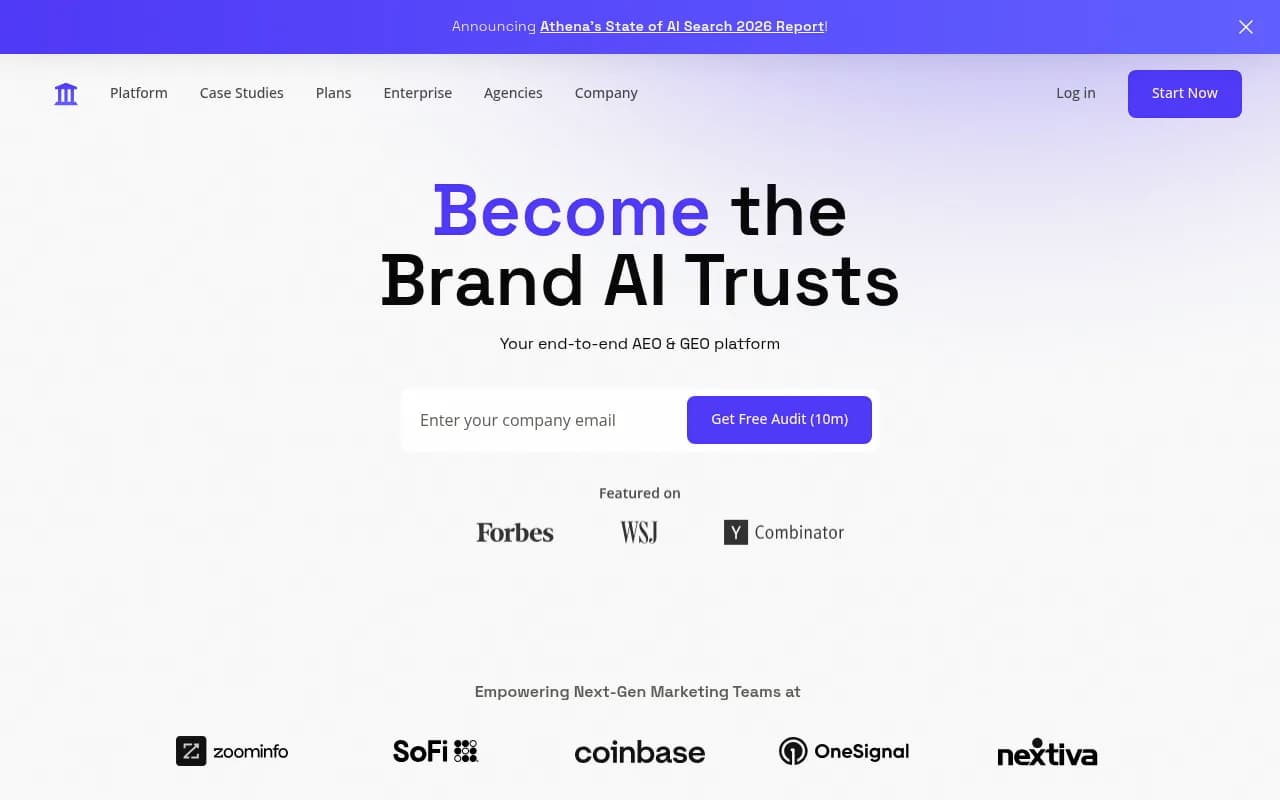
Tools like Otterly.AI, Peec.ai, and AthenaHQ fall into this category. They excel at tracking and reporting, but they don't help you create content or optimize existing pages for AI visibility. You get dashboards, charts, and competitor benchmarks. Then you're on your own.


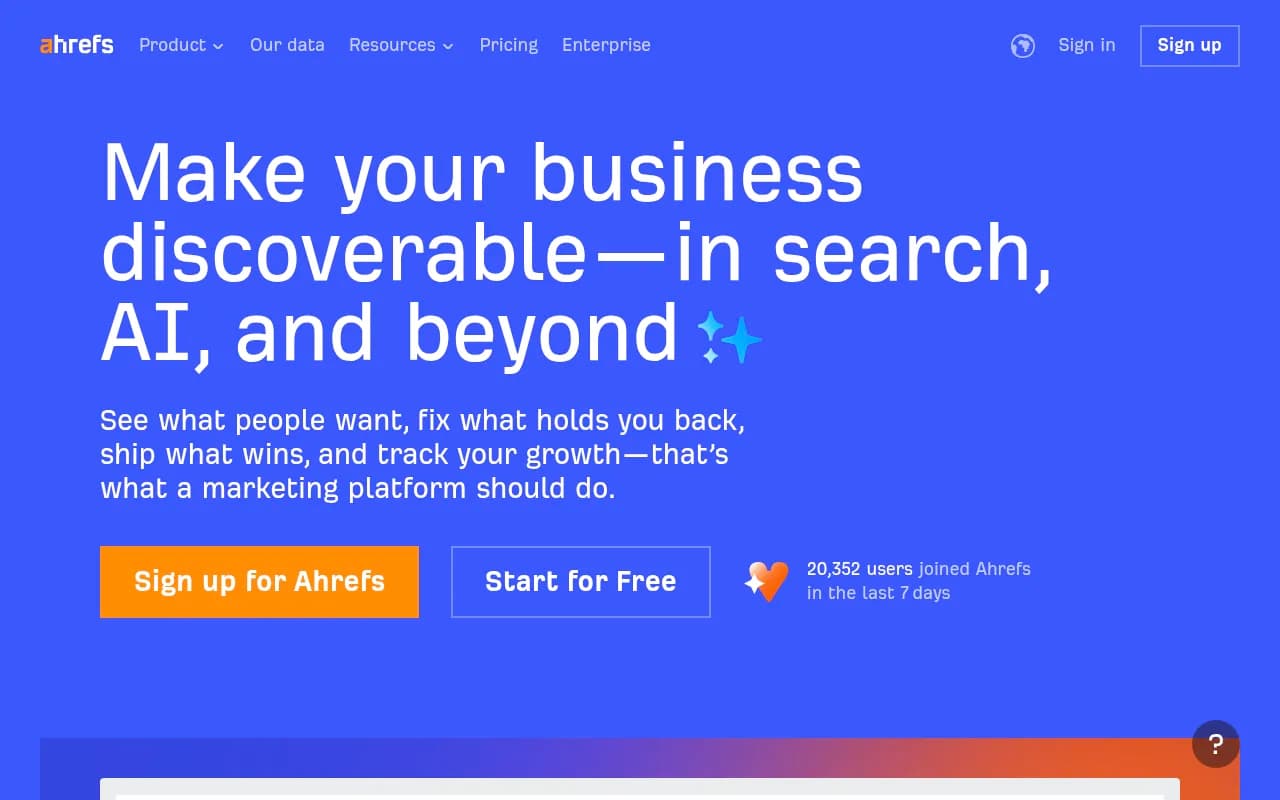
Some traditional SEO platforms (Semrush, Ahrefs Brand Radar) have added AI visibility features, but these are bolt-ons to existing SEO tools. They use fixed prompt sets and lack the depth needed to actually optimize for AI search. Semrush's AI visibility checker, for example, gives you a quick snapshot but doesn't support custom prompts, crawler log analysis, or content gap identification.
What optimization-focused platforms do differently
Optimization platforms start with monitoring, but they don't stop there. They close the action loop:
- Find the gaps: Show you exactly which prompts competitors rank for but you don't—and what content your site is missing.
- Create optimized content: Generate articles, comparisons, and listicles engineered to get cited by AI models.
- Track the results: Measure visibility improvements and connect them to actual traffic and revenue.
This cycle turns visibility data into a repeatable system for improvement.
The action loop in practice
Let's say your competitor appears in ChatGPT responses for "best project management tools for remote teams" but you don't. A monitoring tool tells you this. An optimization platform tells you why—maybe you lack a dedicated comparison page, or your existing content doesn't match the structure AI models prefer—and then helps you fix it.
Promptwatch, for example, uses Answer Gap Analysis to surface the specific topics, angles, and questions your site is missing. It then feeds this data into an AI writing agent that generates content grounded in 880M+ citations analyzed from real AI responses. This isn't generic SEO filler—it's content designed to get cited by ChatGPT, Claude, and Perplexity.
After publishing, you track page-level citations to see which new content is working. You can even connect visibility to traffic using code snippets, Google Search Console integration, or server log analysis. This closes the loop: you know what you built, you know it's getting cited, and you know it's driving results.
Key features that separate monitoring from optimization
When evaluating tools, look for these capabilities. Monitoring-only platforms typically lack most of them:
Content gap analysis
Does the tool show you which specific content your competitors have that you don't? Not just "they rank for 50 more prompts"—but the actual topics, formats, and angles you're missing. This is the foundation of optimization. Without it, you're guessing.
Promptwatch's Answer Gap Analysis does this by comparing your visibility to competitors across thousands of prompts, then surfacing the exact content gaps. Most monitoring tools (Otterly.AI, Peec.ai, AthenaHQ) don't offer this at all.
AI content generation
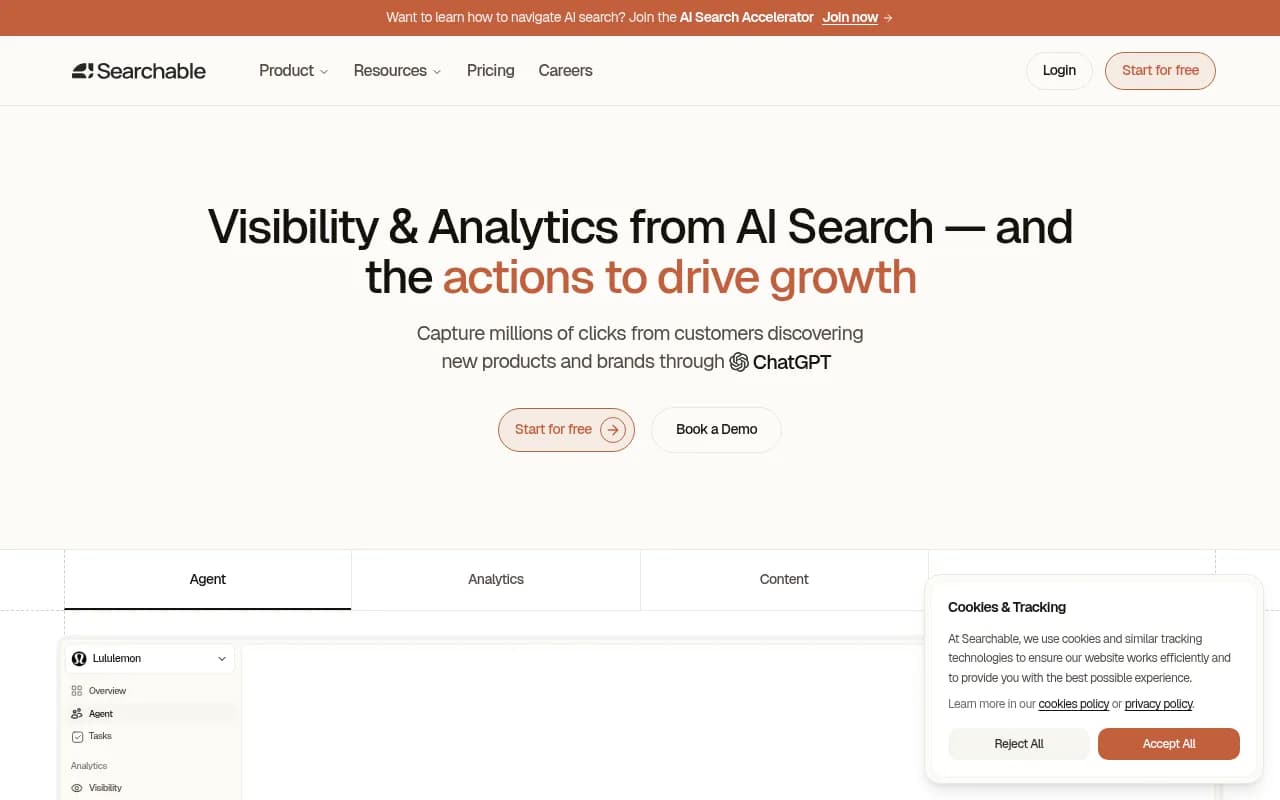
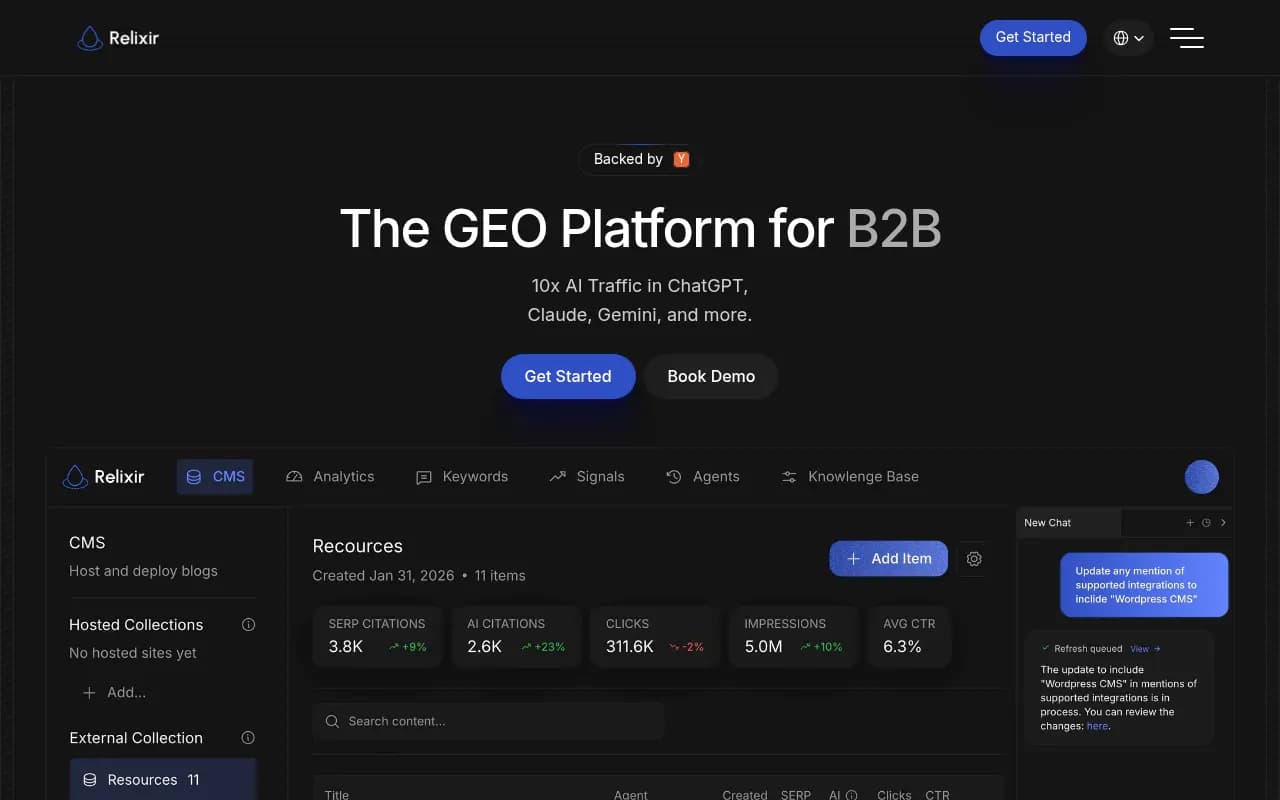
Can the tool help you create content that's optimized for AI citations? Some platforms (like Searchable and Relixir) include AI writing features, but most monitoring tools leave content creation entirely to you.
Promptwatch's AI writing agent generates articles based on citation data, prompt volumes, persona targeting, and competitor analysis. It's not a generic ChatGPT wrapper—it's trained on what actually gets cited in AI responses.
AI crawler logs
Do you know which AI models are crawling your site, which pages they're reading, and how often they return? This is critical for understanding how AI engines discover your content. If ChatGPT's crawler hits a 404 or gets blocked by robots.txt, you'll never appear in responses—no matter how good your content is.
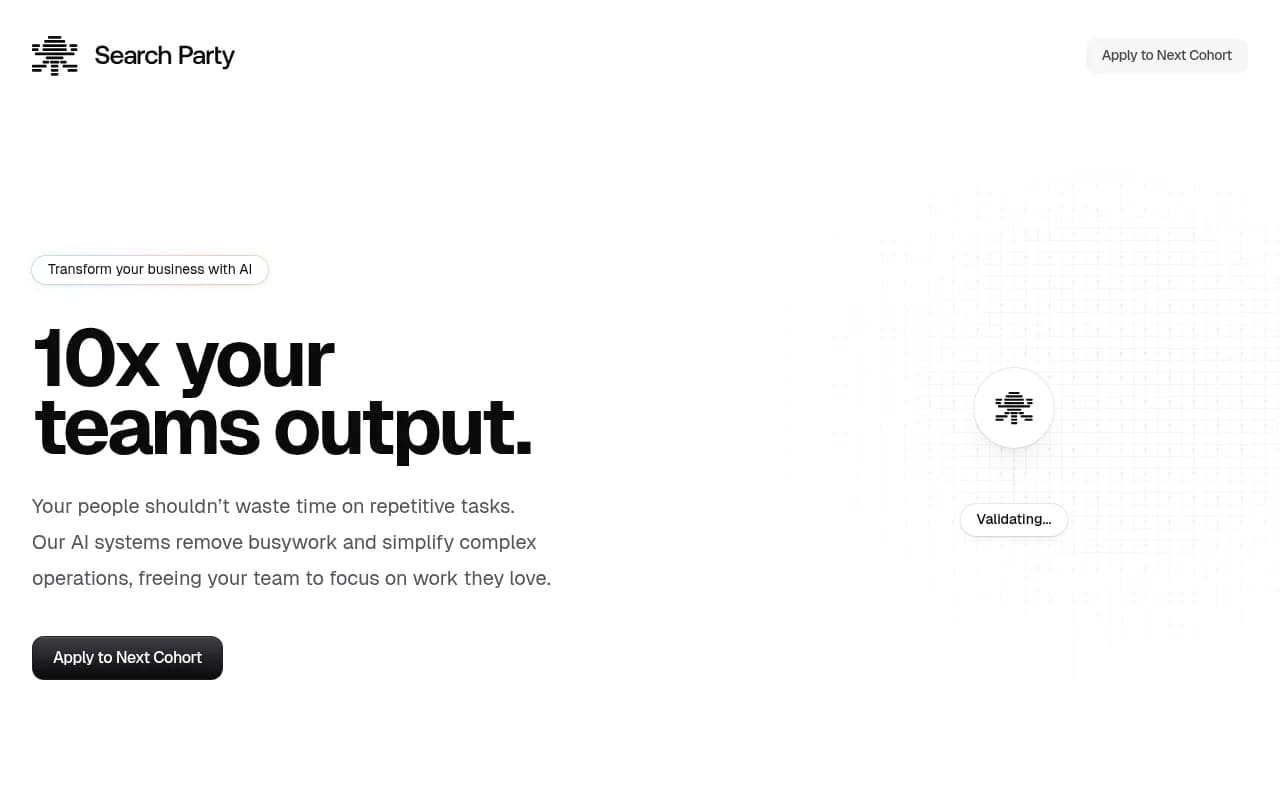
Promptwatch provides real-time crawler logs showing exactly which AI bots (ChatGPT, Claude, Perplexity, etc.) are visiting your site, which pages they access, and any errors they encounter. Most monitoring tools (Otterly.AI, Peec.ai, Search Party) don't track this at all.
Traffic attribution
Can you connect AI visibility to actual traffic and revenue? Monitoring tools show you citations, but optimization platforms help you prove ROI. Promptwatch offers code snippet integration, Google Search Console sync, and server log analysis to track visitors coming from AI engines. This turns visibility from a vanity metric into a business outcome.
Prompt intelligence
Does the tool show you which prompts are high-volume vs low-volume? Which are easy to rank for vs highly competitive? Monitoring tools often treat all prompts equally. Optimization platforms prioritize them based on volume estimates, difficulty scores, and query fan-outs (how one prompt branches into sub-queries).
This helps you focus on winnable, high-value prompts instead of wasting time on low-impact queries.
Comparison: monitoring vs optimization platforms
| Feature | Monitoring-only tools | Optimization-focused platforms |
|---|---|---|
| Track brand mentions in AI responses | Yes | Yes |
| Competitor benchmarking | Yes | Yes |
| Custom prompt sets | Sometimes | Yes |
| Content gap analysis | Rarely | Yes (core feature) |
| AI content generation | No | Yes |
| AI crawler logs | No | Yes (Promptwatch, Profound) |
| Traffic attribution | No | Yes |
| Prompt volume & difficulty scoring | No | Yes |
| Reddit/YouTube citation tracking | Rarely | Yes (Promptwatch) |
| ChatGPT Shopping tracking | No | Yes (Promptwatch) |
When monitoring-only tools make sense
Monitoring tools aren't bad—they're just limited. They make sense in a few scenarios:
- You're just starting out and need to understand the landscape before investing in optimization.
- You have a strong content team that can act on visibility data without needing built-in content tools.
- Budget is tight and you need basic tracking before committing to a full optimization platform. Tools like Otterly.AI start at $29/month, while optimization platforms like Promptwatch start at $99/month.
- You're tracking a narrow set of prompts and don't need advanced features like crawler logs or traffic attribution.
But if your goal is to actually improve your AI visibility—not just measure it—you'll outgrow monitoring-only tools quickly.
When you need an optimization platform
You need an optimization-focused platform if:
- You're losing visibility to competitors and need to close specific content gaps.
- You want to create content that ranks in AI search, not just hope your existing pages get picked up.
- You need to prove ROI by connecting AI visibility to traffic and revenue.
- You're serious about GEO (Generative Engine Optimization) as a long-term channel, not just a curiosity.
- You want to understand how AI models discover your content via crawler logs and indexing insights.
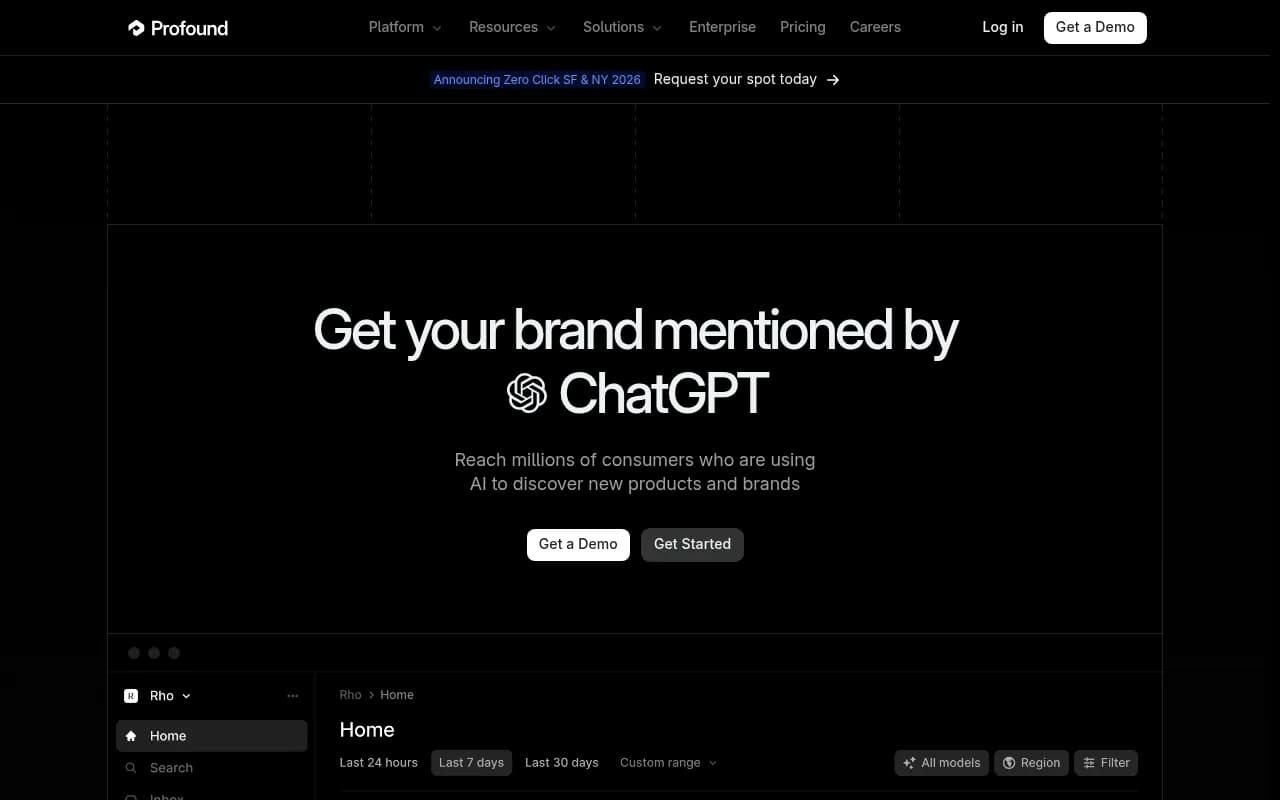
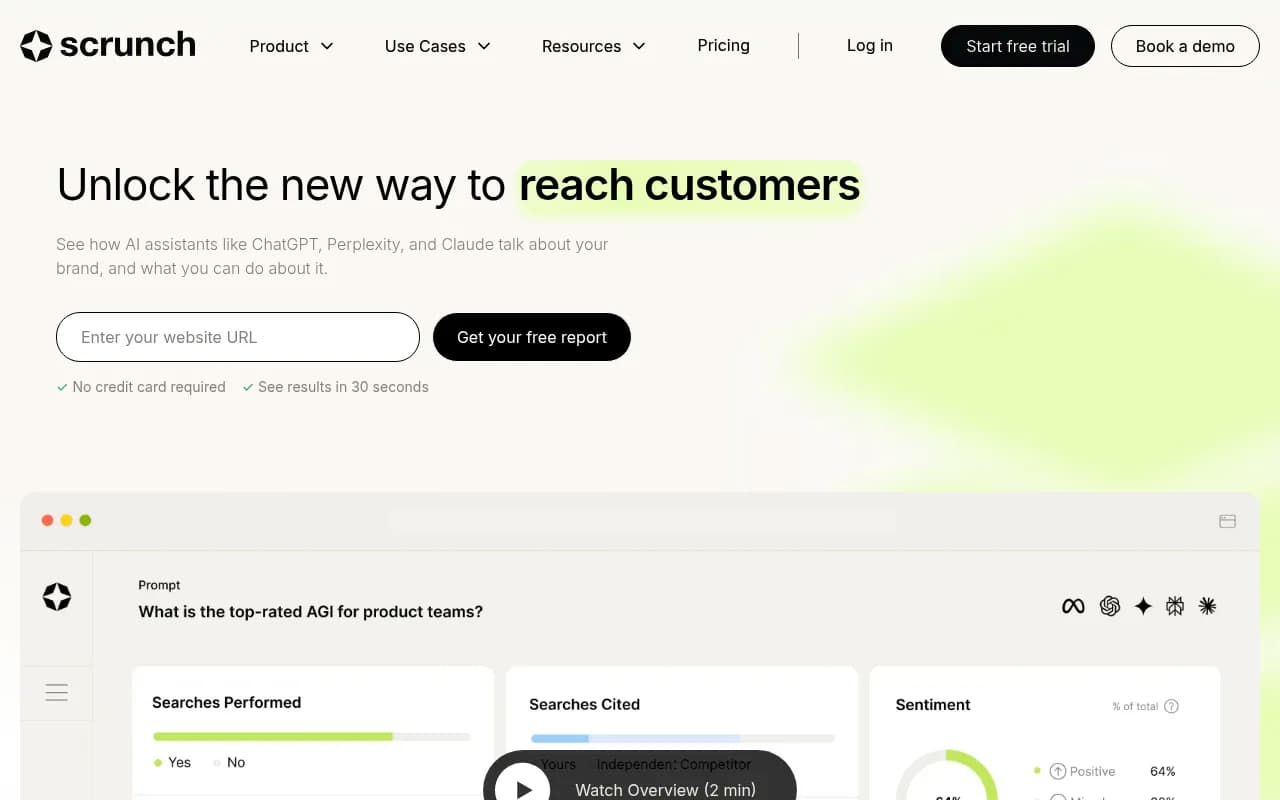
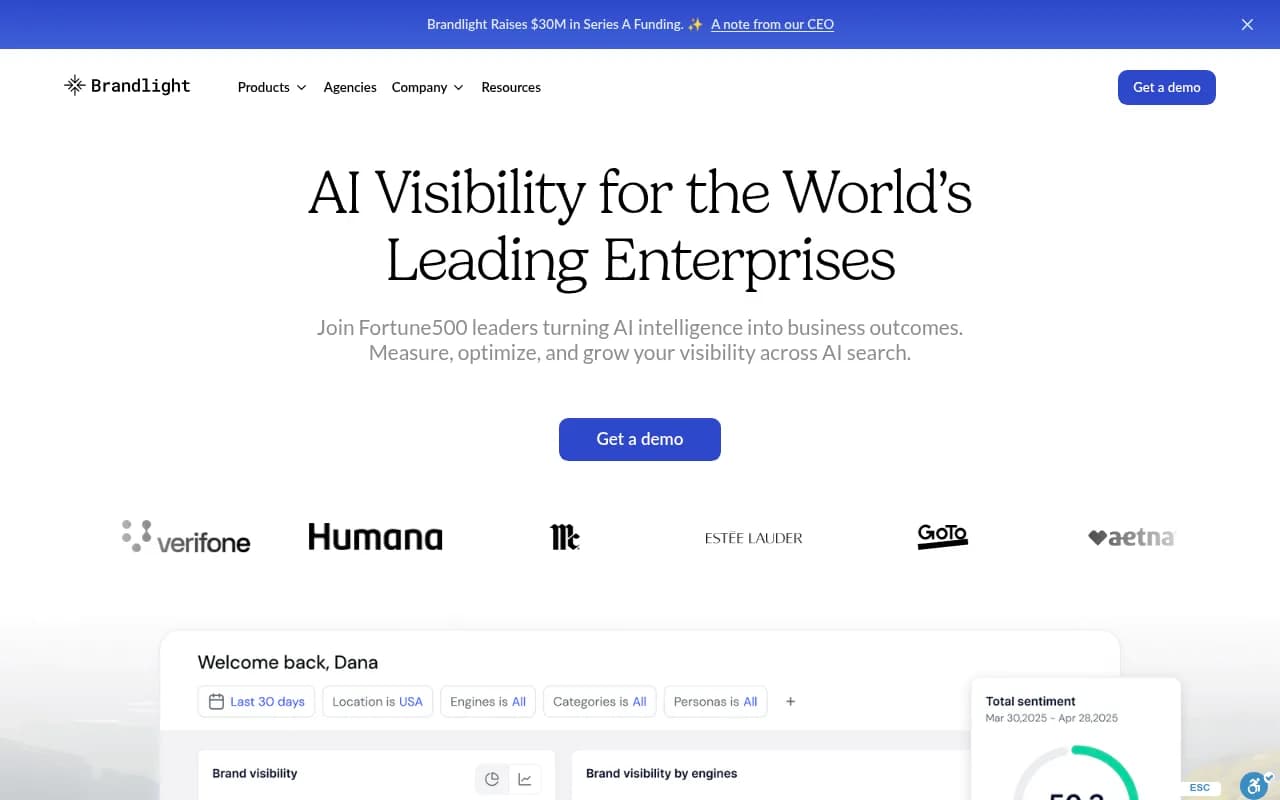
In a 2026 comparison of 12 GEO platforms (Search Party, Otterly.AI, Peec.ai, Profound, AthenaHQ, Scrunch, Brandlight.ai, Bluefish, Searchable, Semrush, Ahrefs Brand Radar), Promptwatch was the only platform rated as a "Leader" across all categories. The reason: it's the only tool built around the full action loop—find gaps, create content, track results.
Most competitors are monitoring-only dashboards that show you data but leave you stuck. Promptwatch shows you what's missing, then helps you fix it.
How to evaluate tools: a decision framework
Use this framework to assess any AI visibility tool:
1. What's your primary goal?
- Awareness: "I just need to know where I stand" → Monitoring tool is fine
- Improvement: "I need to close visibility gaps and rank higher" → Optimization platform required
2. Do you have a content team that can act on data?
- Yes, and they're experienced with GEO → Monitoring tool might work
- No, or they need guidance → Optimization platform with content generation is better
3. How many AI models do you need to track?
- 1-3 models (e.g. just ChatGPT and Perplexity) → Most tools cover this
- 5+ models including Google AI Overviews, Claude, Gemini, etc. → Check coverage carefully. Promptwatch tracks 10 models; many competitors track fewer.
4. Do you need advanced features?
- AI crawler logs: Critical for understanding indexing issues. Most monitoring tools lack this.
- Traffic attribution: Required to prove ROI. Monitoring tools rarely offer this.
- Reddit/YouTube citation tracking: Important for understanding what influences AI recommendations. Promptwatch includes this; most competitors don't.
- ChatGPT Shopping tracking: If you sell products, this matters. Promptwatch tracks it; others don't.
5. What's your budget?
- Under $100/month: Monitoring tools like Otterly.AI ($29/mo) or Airefs ($49/mo)
- $100-300/month: Optimization platforms like Promptwatch ($99-249/mo) or Profound ($99/mo+)
- $500+/month: Enterprise tools like seoClarity ($2,500+/mo) or BrightEdge (custom pricing)
Real-world example: monitoring vs optimization in action
A SaaS company selling project management software starts with Otterly.AI to track their brand in ChatGPT and Perplexity. They see they're mentioned in 18% of relevant prompts, while their main competitor appears in 42%.
Useful data. But now what?
They switch to Promptwatch and run Answer Gap Analysis. It shows them 73 specific prompts where competitors rank but they don't—things like "best project management tools for construction teams" and "Asana vs Monday.com for marketing agencies." They're missing dedicated comparison pages and industry-specific guides.
Promptwatch's AI writing agent generates 15 articles targeting these gaps, optimized based on 880M+ citations analyzed from real AI responses. They publish the content.
Three weeks later, their visibility score jumps from 18% to 31%. Page-level tracking shows exactly which new articles are getting cited. Traffic attribution (via code snippet) reveals 340 visitors coming from AI engines in the past month, with 12 converting to trial signups.
This is the difference between monitoring and optimization. One tells you the problem. The other helps you solve it.
The bottom line: what do you actually need?
If you're just dipping your toes into AI visibility tracking, a monitoring tool like Otterly.AI or Peec.ai gives you a baseline understanding without overwhelming you. You'll see where you stand, track trends, and benchmark against competitors.
But if your goal is to actually improve your AI visibility—to close content gaps, rank higher in ChatGPT and Perplexity, and connect visibility to revenue—you need an optimization platform. Monitoring alone won't get you there.
Promptwatch is the only platform that combines deep monitoring (10 AI models, crawler logs, Reddit/YouTube tracking, ChatGPT Shopping) with optimization tools (content gap analysis, AI writing agent, traffic attribution) in a single system. It's built around the action loop: find gaps, create content, track results.
Most competitors stop at step one. Promptwatch helps you finish the cycle.
How to get started
If you're ready to move beyond monitoring and actually optimize your AI visibility:
- Audit your current visibility: Use a free trial (Promptwatch, Otterly.AI, Peec.ai) to see where you stand across ChatGPT, Perplexity, Claude, and other AI engines.
- Identify content gaps: Run Answer Gap Analysis (Promptwatch) or manually compare your content to competitors who rank higher.
- Create AI-optimized content: Use an AI writing agent (Promptwatch, Searchable) or hire writers who understand GEO principles.
- Track results: Monitor page-level citations and connect visibility to traffic using attribution tools.
- Iterate: AI models update constantly. Revisit your content gaps quarterly and keep optimizing.
The brands winning in AI search in 2026 aren't just tracking their visibility—they're actively improving it. The right tool makes that possible.