Key takeaways
- Google AI Overviews now appear in over 85% of searches, but only 15% of AI Overview sources overlap with traditional top-10 organic results -- meaning your SEO wins don't automatically translate to AI visibility.
- Agencies need GEO tools with multi-brand workspaces, automated prompt monitoring, competitive share-of-voice tracking, and exportable reports -- not just personal dashboards.
- Most GEO platforms are monitoring-only. The ones worth paying for also help you identify content gaps and take action to fix them.
- Promptwatch is the only platform rated a "Leader" across all categories in a 2026 comparison of 12 GEO tools -- and uniquely combines tracking, content gap analysis, and AI content generation in one workflow.
- For agencies on tighter budgets, tools like Otterly.AI, Peec AI, and Rankscale offer solid entry-level monitoring, though they lack optimization depth.
Why GEO has become an agency problem
A year ago, most agencies could reasonably treat AI search as a "watch this space" topic. That window has closed.
Google AI Overviews now appear in the majority of searches. ChatGPT crossed 200 million weekly active users. Perplexity is growing fast enough that it's started showing up in client analytics as a referral source. The question clients are asking has shifted from "how do we rank?" to "why aren't we showing up when someone asks ChatGPT about our category?"
That's a fundamentally different question from traditional SEO, and traditional rank trackers can't answer it. A brand can sit at position #1 in Google and be completely absent from every AI-generated response for the same query. The citation logic in AI engines -- which sources they pull, which brands they mention, which pages they trust -- doesn't map cleanly onto backlink profiles or keyword rankings.
For agencies, this creates both a new service line and an operational headache. Manually checking AI responses across ChatGPT, Perplexity, Claude, Gemini, and Google AI Overviews -- for multiple clients, across dozens of prompts, every week -- is not sustainable. You need tooling.
The challenge is that the GEO tool market has exploded in the last 18 months, and most of what's out there is either a thin monitoring dashboard or a repurposed SEO tool with "AI visibility" bolted on. This guide cuts through that.
What agencies actually need from a GEO platform
Before comparing tools, it's worth being clear about what "agency-ready" means. A tool that works fine for a solo marketer tracking their own brand often falls apart at agency scale.
The non-negotiables:
- Multi-brand workspaces. You need to track multiple clients in one account, with isolated reporting per brand. Sharing a single dashboard across clients is a mess.
- Multi-engine coverage. ChatGPT, Perplexity, Google AI Overviews, Claude, and Gemini at minimum. Each uses different retrieval logic -- RAG-based, pre-training, real-time search -- so a brand's visibility can vary wildly between them.
- Automated prompt monitoring. Scheduled queries that run without someone manually prompting the AI each week. Recency matters: according to SE Ranking's 2025 research, content updated within 30 days receives 3.2x more citations than older content.
- Competitive share-of-voice. Clients want to know how they compare to named competitors, not just their own absolute score.
- Exportable, client-ready reports. PDF exports or white-label outputs that clients can read without logging into the platform.
- Content gap analysis and optimization signals. This is where most tools fall short. Knowing you're invisible is only useful if the tool also tells you why and what to do about it.
That last point is the real differentiator in 2026. Monitoring is table stakes. The tools that justify a meaningful budget are the ones that close the loop from "you're missing here" to "here's the content that will fix it."
The best GEO platforms for agencies in 2026
Promptwatch -- best for agencies that want to act, not just track
Promptwatch is the platform that comes up most consistently when agencies are evaluating the full GEO stack. It's used by 1,480+ brands and agencies, including Booking.com and Center Parcs, and it's the only tool rated a "Leader" across all categories in a 2026 comparison of 12 GEO platforms.
What separates it from the field isn't the monitoring -- it's the action loop. Most platforms show you where you're invisible. Promptwatch shows you that, then helps you fix it.
The workflow runs in three steps. Answer Gap Analysis identifies which prompts competitors are visible for but you're not, down to the specific topics and questions AI models want answers to but can't find on your site. Content Agents then generate articles, listicles, and briefs grounded in that prompt data -- not generic SEO filler, but content engineered around the actual gaps. Page-level tracking then shows which new pages get crawled, cited, and by which models, with attribution connecting visibility changes to actual traffic and revenue.
For agencies specifically, the AI Crawler Logs feature is genuinely useful. You can see in real time which AI crawlers (ChatGPT, Claude, Perplexity) are hitting a client's site, which pages they're reading, and whether those pages are moving from crawled to cited. Most competitors don't have this at all.
Coverage spans 10 AI models: ChatGPT, Perplexity, Google AI Overviews, Google AI Mode, Claude, Gemini, Meta/Llama, DeepSeek, Grok, and Copilot. Pricing starts at $99/month for the Essential plan, with the Professional plan at $249/month covering crawler logs and multi-location tracking. Agency and enterprise pricing is available on request.

Profound -- strong enterprise feature set, higher price point
Profound is one of the more established names in the GEO space and has a solid feature set for enterprise clients. It covers the major AI engines and provides competitive benchmarking, prompt tracking, and content recommendations.
Where it falls short for agencies is price -- it's positioned toward larger in-house teams rather than agencies managing multiple client accounts at different budget levels. It also lacks Reddit and YouTube tracking, which matters because AI models frequently pull from those sources when forming recommendations.

Otterly.AI -- affordable entry-level monitoring
Otterly.AI is a good starting point for agencies that are just beginning to offer GEO services and want to demonstrate value to clients without a large platform investment. It tracks brand mentions across the main AI engines and produces clean reports.
The limitation is that it stops at monitoring. There's no content gap analysis, no crawler logs, no content generation. If a client asks "what do we do about this?" Otterly.AI doesn't answer that question. It's a visibility dashboard, not an optimization platform.

Peec AI -- solid multi-language coverage
Peec AI is worth considering if you have clients with international audiences. Its multi-language tracking is more developed than most competitors, and it handles regional AI response variations reasonably well.
Like Otterly.AI, it's primarily a monitoring tool. The reporting is clean and client-presentable, but the platform doesn't offer content optimization or gap analysis. Good for agencies that want to add AI visibility reporting to an existing SEO retainer without changing their content workflow.

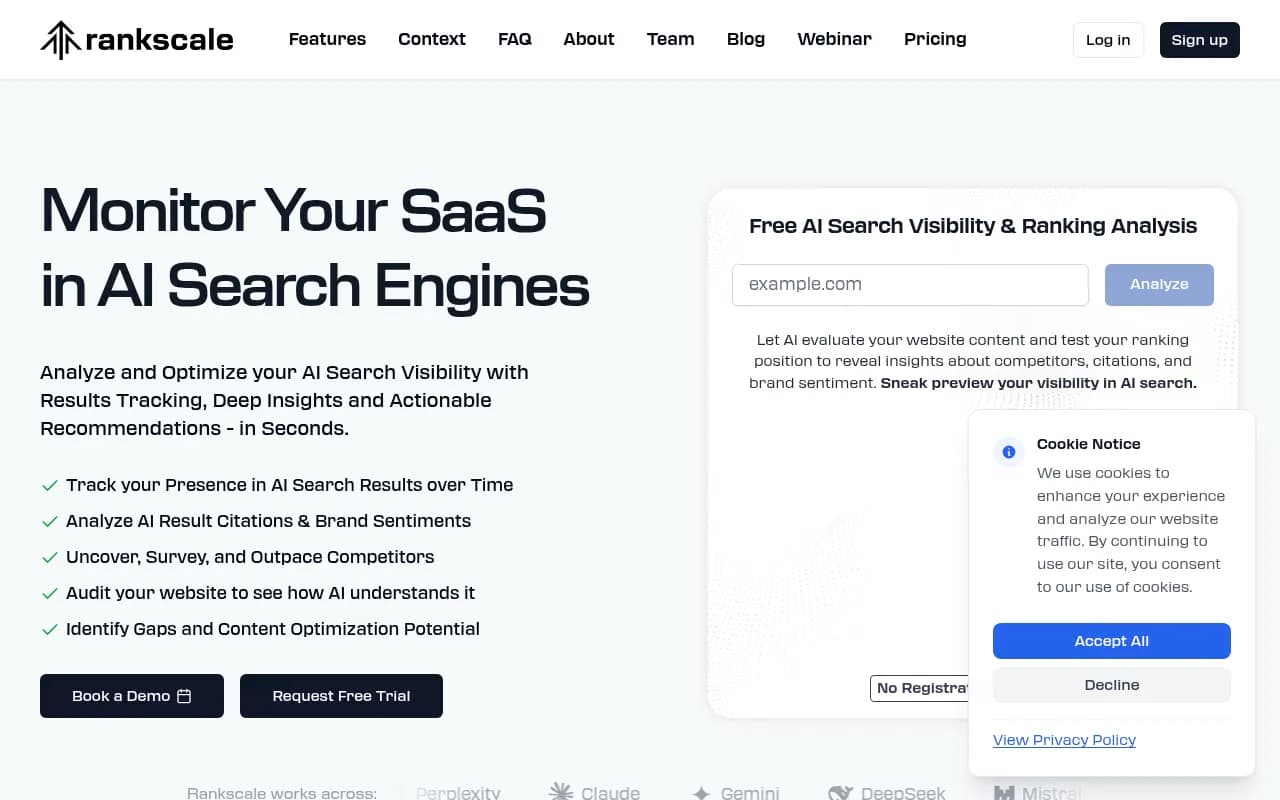
Rankscale -- prompt-level tracking with good UX
Rankscale focuses on tracking brand visibility at the individual prompt level, which gives you more granular data than tools that only report aggregate scores. The interface is clean and the onboarding is fast -- useful for agencies that need to spin up new client accounts quickly.
It doesn't have content generation or crawler log features, but the prompt-level data is genuinely useful for identifying which specific queries a client is losing and building a content brief around them manually.
AthenaHQ -- monitoring across 8+ AI engines
AthenaHQ covers a wide range of AI engines and has a reasonably strong competitive benchmarking feature. For agencies that need breadth of model coverage, it's worth evaluating.
The gap is on the optimization side. AthenaHQ is monitoring-focused and doesn't help you create content or fix the gaps it identifies. It's a solid tracker, but you'll need to pair it with a content workflow elsewhere.

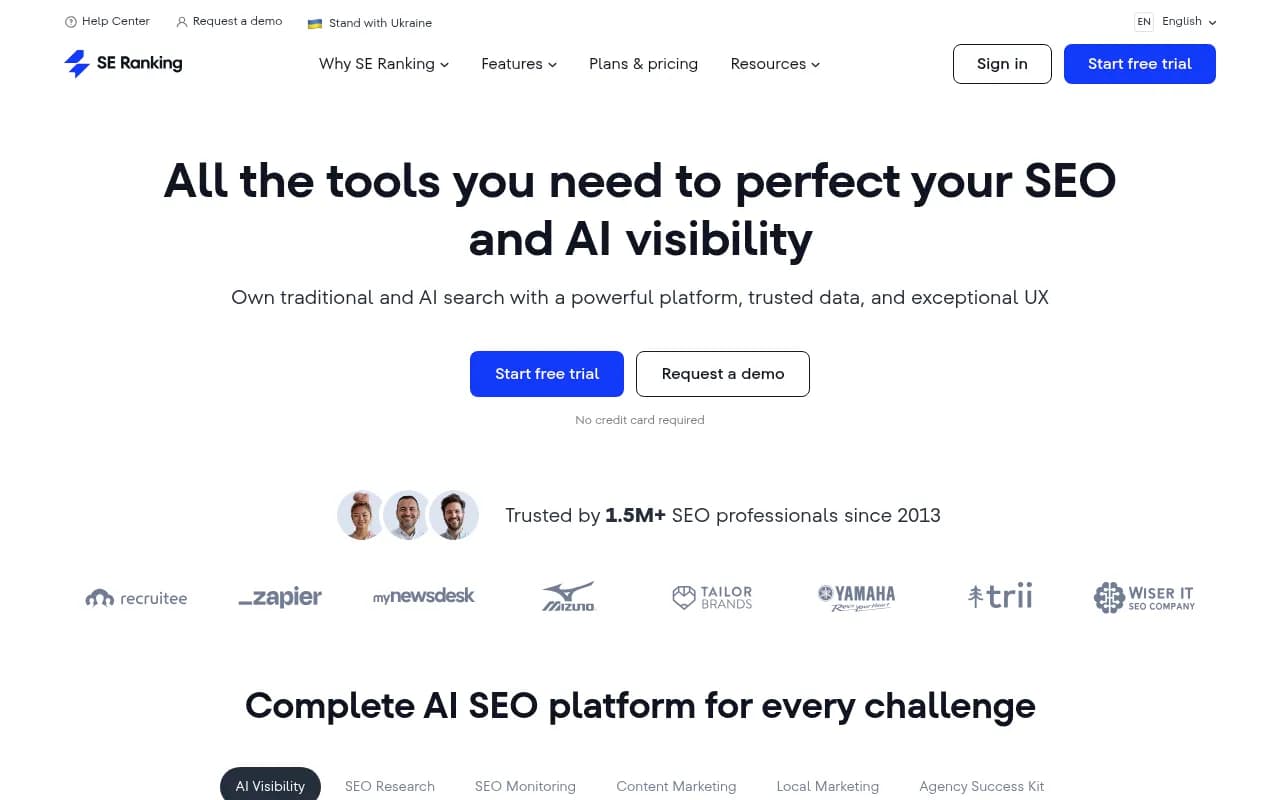
SE Ranking -- traditional SEO platform with AI visibility added
SE Ranking has been a reliable SEO platform for years, and its AI visibility toolkit is a reasonable addition for agencies that already use it for traditional rank tracking. The advantage is consolidation -- one platform for both SEO and AI visibility reporting.
The AI visibility features are less deep than dedicated GEO platforms. Prompt coverage is more limited, and there's no content gap analysis or crawler log functionality. But if you're already paying for SE Ranking and want to add basic AI visibility tracking without a separate subscription, it's a practical option.
Semrush -- broad platform, limited AI depth
Semrush has added AI visibility features, but the implementation uses fixed prompts rather than custom prompt sets, which limits how useful it is for clients in specific niches. There's no AI traffic attribution, and the AI features feel like an add-on rather than a core capability.
For agencies already deep in the Semrush ecosystem, it's worth using what's there. But it shouldn't be your primary GEO tool.
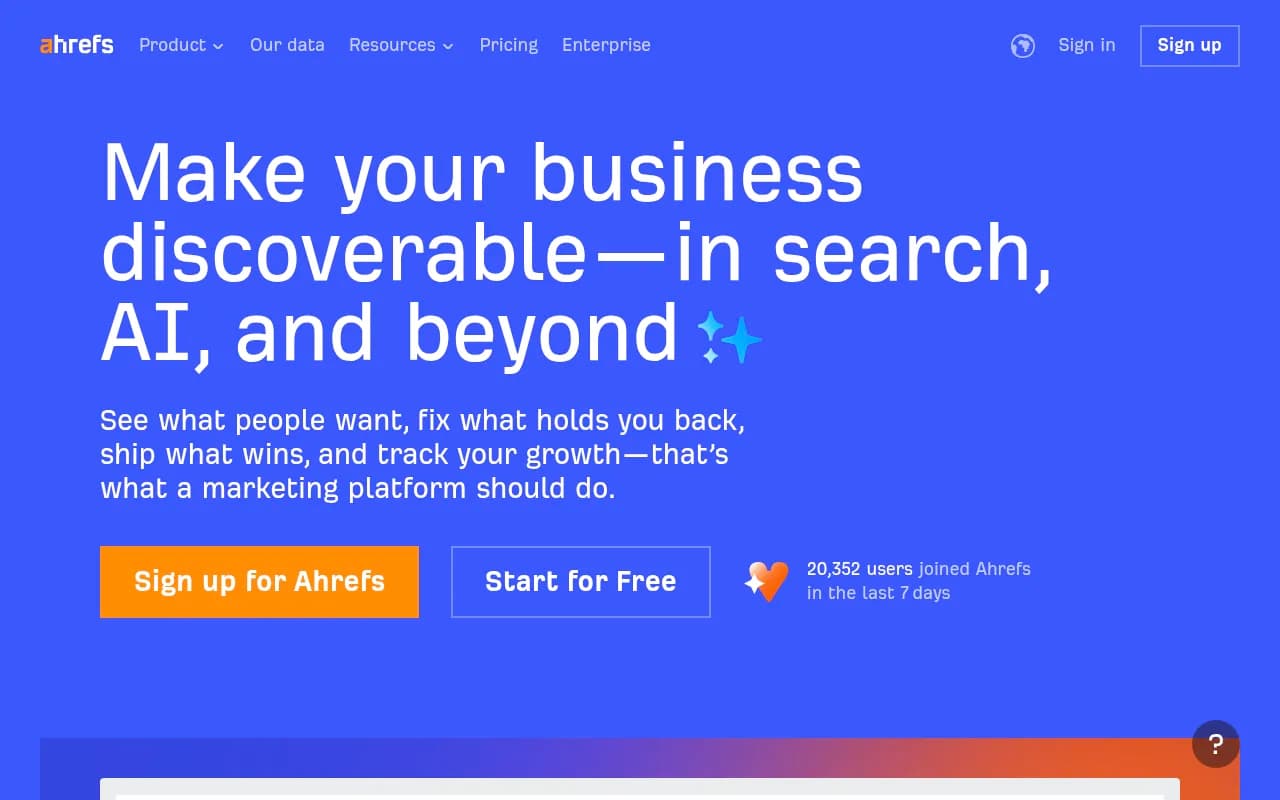
Ahrefs Brand Radar -- fixed prompts, no attribution
Ahrefs Brand Radar tracks brand mentions in AI responses, but like Semrush, it uses fixed prompts and doesn't offer AI traffic attribution. Useful for a high-level view of brand presence, but not sufficient for clients who want to understand what's driving (or not driving) AI visibility.
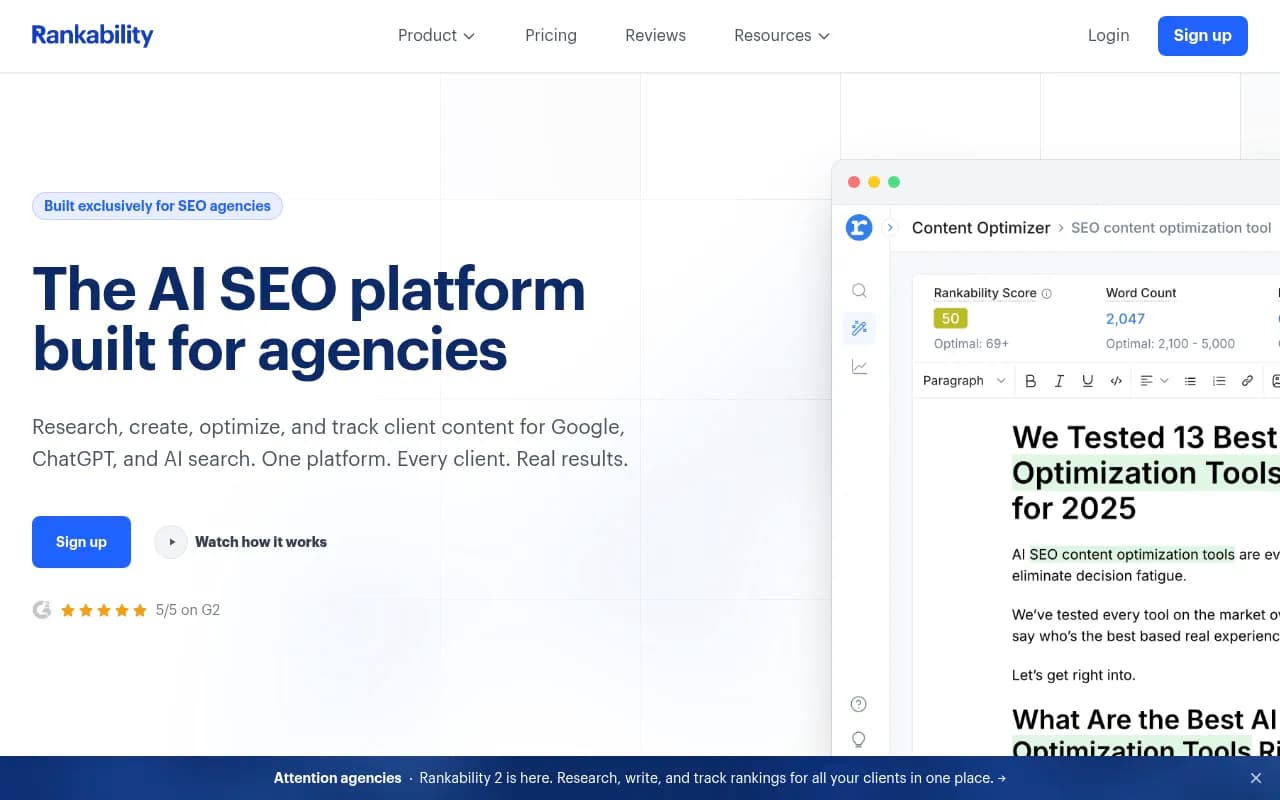
Rankability -- agency-focused analytics
Rankability is built with agency workflows in mind and has decent multi-client management. The analytics are solid and the reporting is client-presentable. Worth evaluating if you're specifically looking for a platform designed around agency account structures.
Conductor -- persona-based tracking
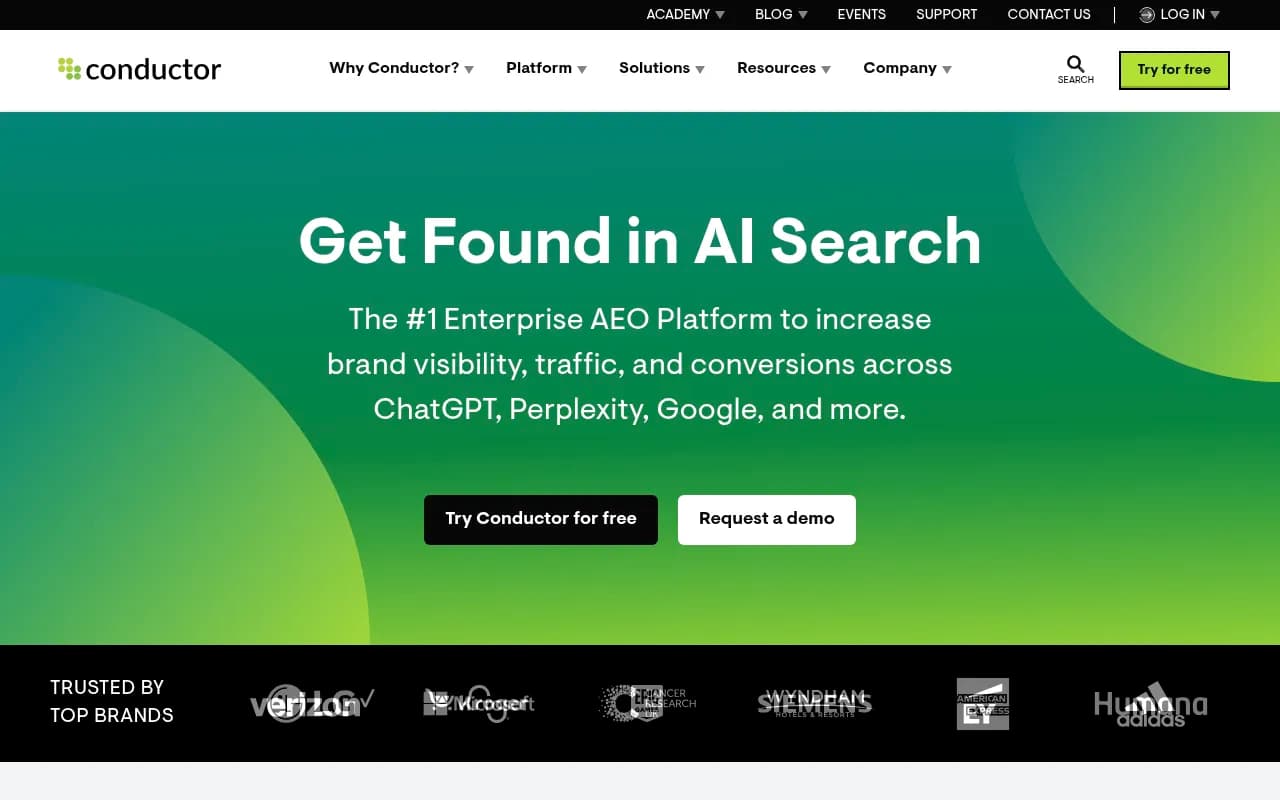
Conductor's AI visibility tracking includes persona customization, which is useful for clients whose customers prompt AI engines in different ways depending on their role or context. The persona feature lets you simulate how a CFO versus a marketing manager might ask about a product category, and track visibility across those different query patterns.
Evertune -- enterprise GEO for large brands
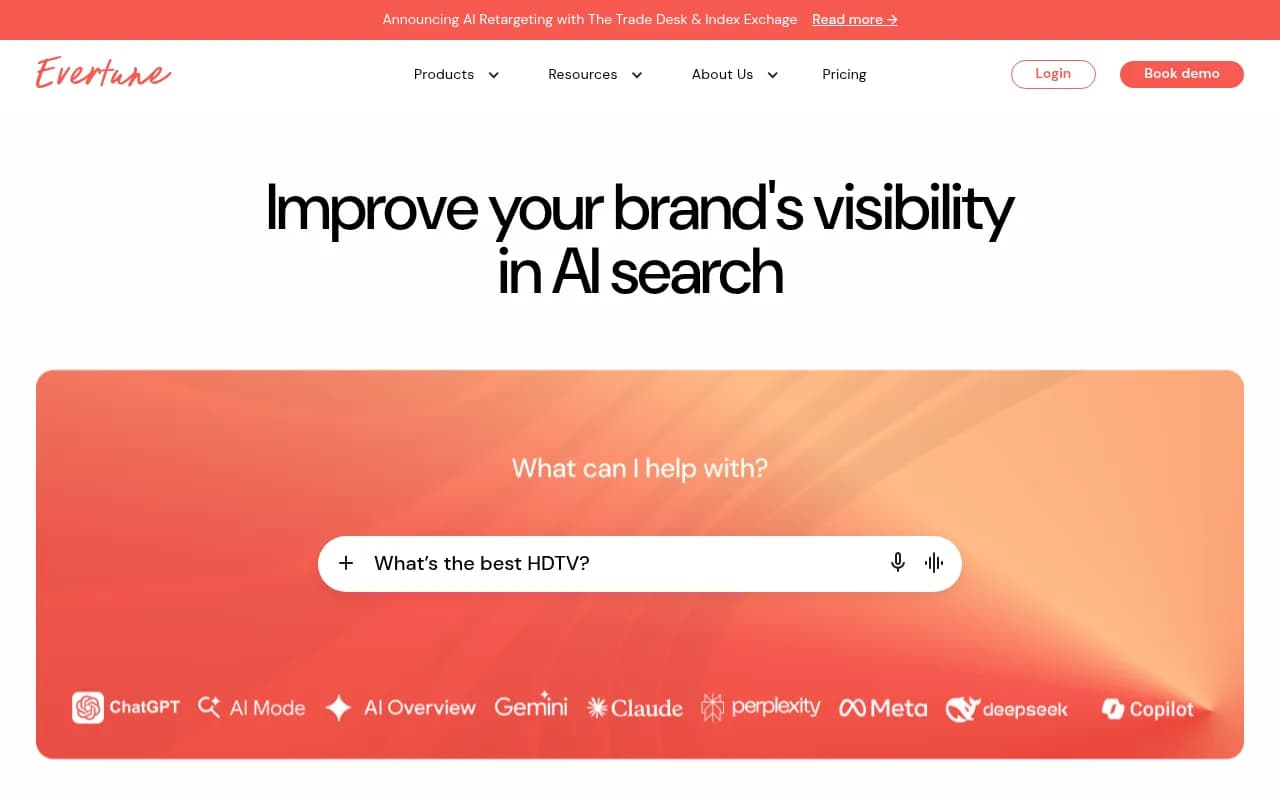
Evertune is positioned at Fortune 500 brands and has the pricing to match. For agencies with enterprise clients who need deep competitive intelligence and executive-level reporting, it's worth a look. For mid-market agency work, the cost is hard to justify.
Feature comparison: GEO tools for agencies
| Tool | Multi-brand | Content gap analysis | Content generation | Crawler logs | Reddit/YouTube tracking | Pricing (starts at) |
|---|---|---|---|---|---|---|
| Promptwatch | Yes | Yes | Yes | Yes | Yes | $99/mo |
| Profound | Yes | Partial | No | No | No | Higher |
| Otterly.AI | Limited | No | No | No | No | Lower |
| Peec AI | Yes | No | No | No | No | Lower |
| Rankscale | Yes | No | No | No | No | Mid |
| AthenaHQ | Yes | No | No | No | No | Mid |
| SE Ranking | Yes | No | No | No | No | Mid |
| Semrush | Yes | No | No | No | No | Mid-High |
| Ahrefs Brand Radar | Yes | No | No | No | No | Mid-High |
| Rankability | Yes | Partial | No | No | No | Mid |
| Conductor | Yes | No | No | No | No | Higher |
| Evertune | Yes | Partial | No | No | No | Enterprise |
How to choose the right tool for your agency
The honest answer is that the right tool depends on what you're selling.
If you're adding AI visibility as a reporting line item to existing SEO retainers -- showing clients their share-of-voice in AI responses alongside traditional rankings -- then a monitoring-only tool like Otterly.AI or Peec AI might be sufficient. The data is good enough to show progress, the price is manageable, and you're not promising to fix anything, just to track it.
If you're selling GEO as a full service -- where you're responsible for actually improving a client's AI visibility, not just measuring it -- then you need a platform that helps you identify what content to create and gives you the tools to create it. That's a much shorter list, and Promptwatch is the clearest option at a price point that works for agency economics.
The crawler log feature is worth calling out specifically for agencies. When a client asks "why isn't our new content showing up in AI responses yet?" you need to be able to answer that question. Crawler logs show you whether AI agents have even visited the page, whether they encountered errors, and how long the crawl-to-citation timeline is running. Without that data, you're guessing.
A few other practical considerations:
- White-label reporting matters more than most agencies realize until they're sending client reports. Check whether the platform supports it before committing.
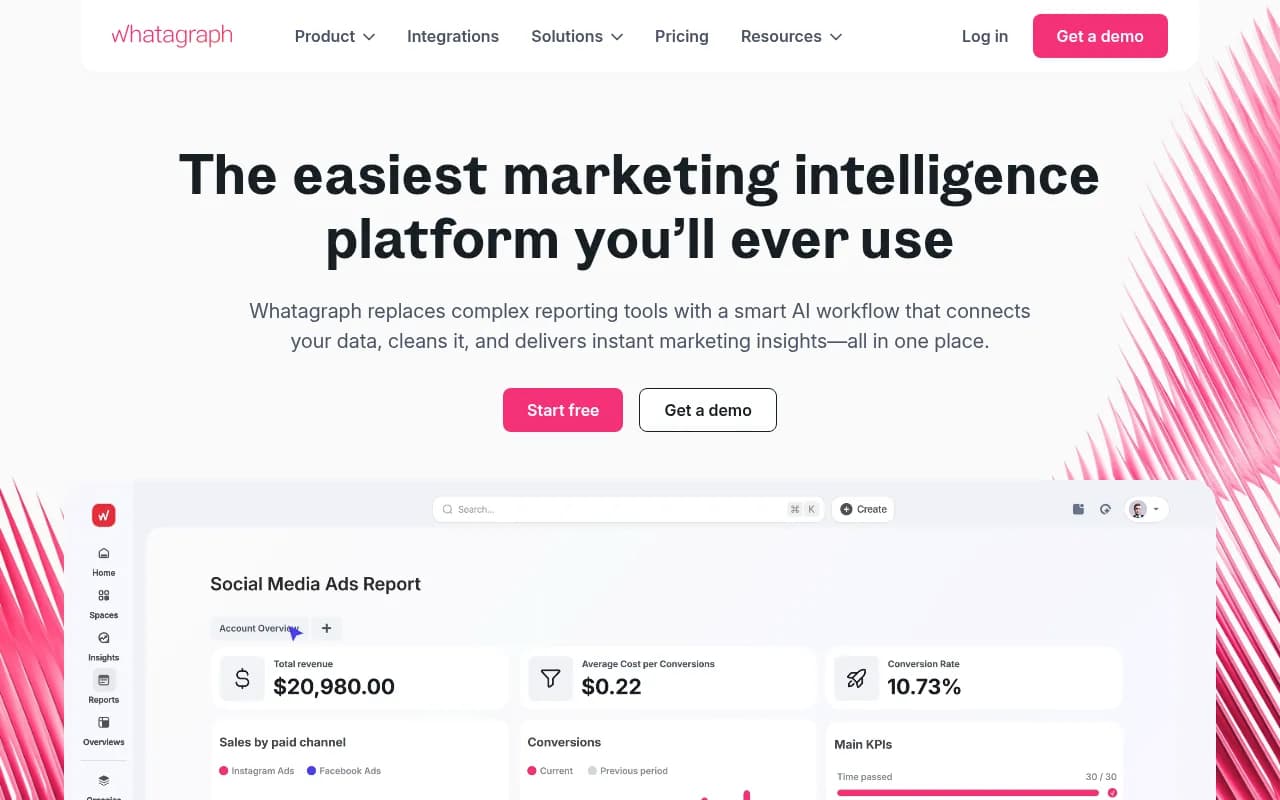
- API access is useful if you want to pull GEO data into a custom dashboard or client reporting tool like Whatagraph.
- Model coverage varies more than you'd expect. Some tools cover ChatGPT and Perplexity well but have thin coverage of Google AI Overviews or Gemini. Check which models your clients' customers actually use.
The content gap problem most agencies underestimate
One thing that comes up repeatedly when talking to agencies that have been doing GEO work for a while: the monitoring data is almost never the bottleneck. Clients understand quickly that they're not visible in AI responses. The hard part is knowing what to do about it.
This is where the gap between monitoring tools and optimization platforms really shows up. A monitoring tool tells you that a competitor is cited for "best project management software for remote teams" and you're not. An optimization platform tells you which specific content angle is missing from your site, generates a brief for it, and then tracks whether publishing that content moves the needle.
The content gap analysis in Promptwatch works by mapping your existing content against AI responses for your target prompts, then surfacing the specific topics, questions, and angles that AI models are drawing on from competitor sites but can't find on yours. That's actionable in a way that a visibility score isn't.
For agencies, this is also a cleaner story to tell clients. "Your AI visibility score went from 23 to 41" is a number. "We identified 12 prompts where competitors are cited and you're not, published content targeting 8 of them, and 5 are now generating citations in ChatGPT and Perplexity" is a result.
Setting up a GEO workflow for agency clients
Regardless of which platform you choose, the workflow structure is roughly the same:
-
Audit current visibility. Run a baseline across the client's target prompts to establish where they stand relative to competitors. This becomes the benchmark for everything else.
-
Identify high-value prompts. Not all prompts are equal. Focus on queries with meaningful volume and commercial intent -- "best [category] for [use case]" prompts that buyers actually use when evaluating options.
-
Map content gaps. For each prompt where the client isn't cited, identify what content exists on competitor sites that AI models are pulling from. What questions are being answered that the client's site doesn't address?
-
Create and publish content. Build content that directly addresses the gaps. Structure matters: clear headers, direct answers to specific questions, factual claims with sources. AI models favor content that's easy to parse and cite.
-
Monitor crawl and citation timelines. After publishing, track whether AI crawlers visit the new pages and how long it takes for citations to appear. Adjust based on what you observe.
-
Report progress against baseline. Monthly reports showing movement in citation share, prompt coverage, and competitive position relative to the baseline audit.
This is a repeatable process that scales across clients. The tools that support all six steps -- rather than just step one -- are the ones worth building an agency practice around.
Bottom line
The GEO tool market in 2026 is big enough to be confusing and still young enough that most platforms are missing significant pieces of the puzzle. For agencies, the key question is whether a tool helps you deliver results or just helps you report on them.
Monitoring-only tools have their place, particularly for agencies that are just starting to offer AI visibility services and need to demonstrate the problem before selling the solution. But if you're building a real GEO practice, you need a platform that closes the loop from gap identification to content creation to citation tracking.
Promptwatch is the most complete option at an agency-accessible price point. The combination of Answer Gap Analysis, Content Agents, and AI Crawler Logs covers the full workflow in a way that no other platform currently matches at the Professional tier ($249/month).
For agencies that want to start smaller, Rankscale and Otterly.AI are reasonable entry points. Just be clear with clients about what you're measuring versus what you're actively optimizing.