Key takeaways
- Otterly.AI collects data by querying AI platforms (ChatGPT, Perplexity, Google AI Overviews) and recording what they return -- it does not track real AI crawler visits to your website
- This "output monitoring" approach is useful for brand mention tracking but misses what happens on the input side: which pages AI bots actually read, how often, and what errors they hit
- Platforms with live crawling (via Cloudflare, server logs, or tracking snippets) give you a second, complementary data layer that output-only tools can't replicate
- Otterly.AI has published genuinely useful research -- including a 1M+ citation study -- but the platform itself is observational, with no built-in content generation or optimization tools
- If you need to go beyond monitoring and actually fix your AI visibility, you'll want a platform that closes the loop between finding gaps and creating content
If you've been evaluating AI search monitoring tools in 2026, you've probably run into Otterly.AI. It's one of the earliest dedicated platforms in this space, it has a reasonable price point, and its blog publishes some of the more interesting citation research out there. But a question keeps coming up in GEO discussions: is the data Otterly.AI shows you actually "real"?
The short answer is: it depends on what you mean by real. Otterly.AI does query live AI platforms and record what they return. That's real data. But it only captures one side of the picture -- what AI engines say about you, not what they actually do when they visit your site. Those are two very different things, and the gap between them matters more than most people realize.
This guide breaks down exactly how Otterly.AI collects its data, where that approach works well, and where platforms with live AI crawler tracking give you something Otterly.AI simply can't.
How Otterly.AI actually collects its data
Otterly.AI works by sending prompts to AI platforms -- ChatGPT, Perplexity, and Google AI Overviews -- and parsing the responses. When you set up a prompt like "best project management tools for remote teams," Otterly.AI runs that query, records whether your brand appears, captures any citations or links, and logs sentiment. It does this on a scheduled basis so you can track changes over time.
This is called output monitoring. You're watching what AI engines produce, not what they consume.

The approach has real value. You can see:
- Whether your brand is mentioned in AI-generated answers
- Which competitors appear when you don't
- How citation frequency changes after you publish new content
- Which prompts trigger your brand vs. which ones don't
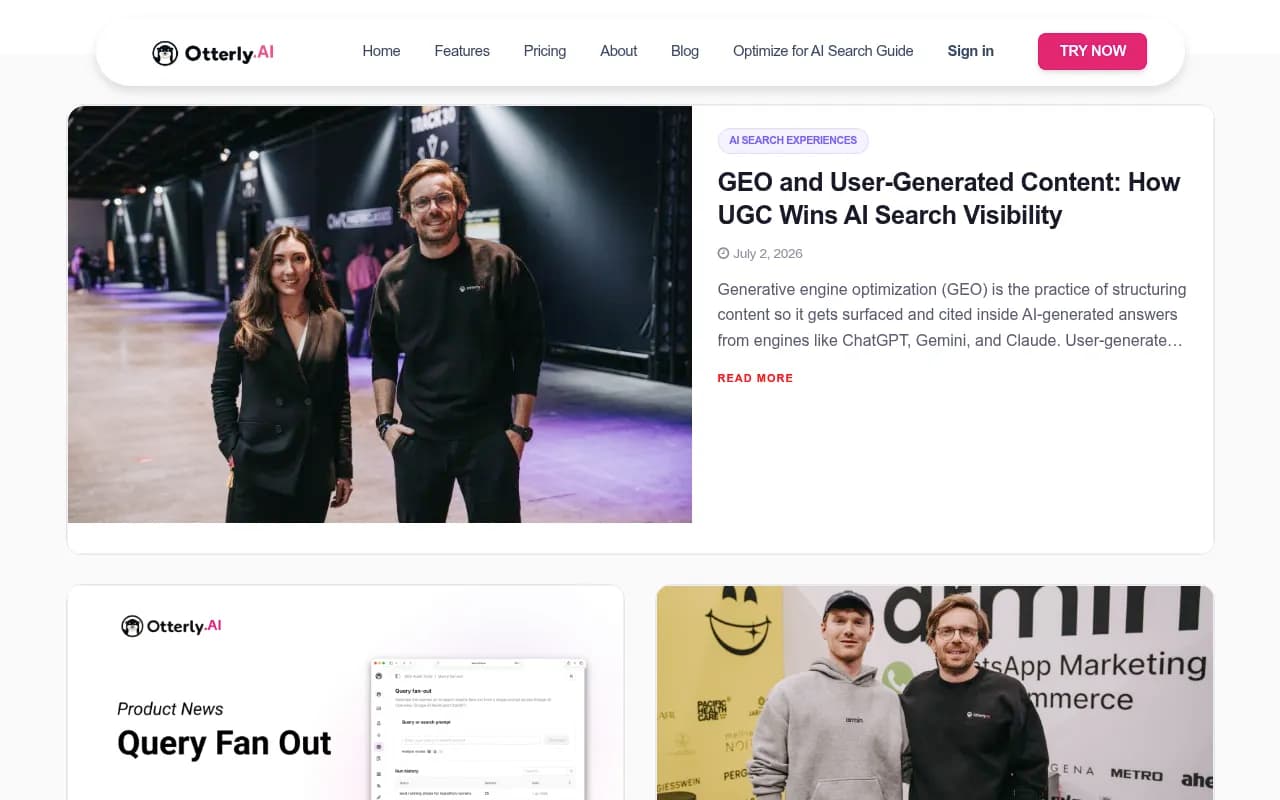
Otterly.AI has also published some credible research using this methodology. Their 2026 citation study analyzed over 1 million citations across ChatGPT, Perplexity, and Google AI Overviews, finding that community platforms like Reddit and Quora capture 52.5% of citations vs. 47.5% for brand domains. They've also tracked 8,000+ Reddit citations across 126 subreddits to understand how UGC influences AI answers.
That's legitimate data. The methodology is consistent with how most output-monitoring platforms work, and the findings align with what other researchers have observed about AI citation patterns.
But here's the thing: output monitoring tells you what AI said. It doesn't tell you what AI read.
The input side: what output monitoring misses
When an AI engine like ChatGPT or Perplexity prepares to answer a query, it doesn't just pull from its training data. It also sends crawlers out to index and re-index web content. Those crawlers visit specific pages, read specific content, and sometimes hit errors -- 404s, robots.txt blocks, JavaScript rendering failures -- that prevent them from accessing your content at all.
Otterly.AI's 1M+ citation study actually surfaced a striking finding here: 73% of websites have technical barriers blocking AI crawler access. That's a massive number. But Otterly.AI's own platform can't tell you whether your site is one of them, because it only monitors outputs, not inputs.
This is where live crawling data becomes important. Platforms that integrate with Cloudflare, Fastly, server logs, or a tracking snippet can show you:
- Which AI crawlers (GPTBot, ClaudeBot, PerplexityBot, etc.) are visiting your site
- Which specific pages they're reading
- How frequently they return
- Whether they're hitting errors or being blocked
- The timeline from crawl to citation -- when a page gets crawled and when it starts appearing in AI answers
Without this, you're flying partially blind. You might see that you're not being cited for a particular prompt, but you won't know if that's because your content is weak, because AI crawlers can't access it, or because they've never visited that page at all.
Output monitoring vs. live crawling: a direct comparison
| Capability | Output monitoring (Otterly.AI) | Live crawling platforms |
|---|---|---|
| Brand mention tracking | Yes | Yes |
| Citation frequency | Yes | Yes |
| Competitor visibility | Yes | Yes |
| Which AI bots visit your site | No | Yes |
| Which pages AI crawlers read | No | Yes |
| Crawler errors and blocks | No | Yes |
| Crawl-to-citation timeline | No | Yes |
| robots.txt / CDN blocking detection | No | Yes |
| Content gap analysis | Limited | Yes (on some platforms) |
| Content generation | No | Yes (on some platforms) |
The table above isn't meant to make Otterly.AI look bad -- it's meant to clarify what each approach actually does. Output monitoring and live crawling answer different questions. The problem is that most teams buying an output-monitoring tool think they're getting the full picture.
Where Otterly.AI genuinely works well
To be fair, Otterly.AI does a solid job at what it's designed to do. For teams that are just starting to think about AI search visibility, it's a reasonable entry point. The pricing is accessible -- starting at $29/month for the Lite tier -- and the setup is straightforward.
The Brand Visibility Index gives you a quick read on how often your brand appears across AI platforms. The Link Citations Analysis shows which pages are being cited. The GEO Audit with SWOT analysis is a useful framing tool for teams that need to present AI visibility to stakeholders who aren't deep in the weeds.
The research output is also worth noting. The 1M+ citation study is one of the more rigorous pieces of public data on AI citation behavior, and Otterly.AI's blog regularly publishes findings on topics like query fan-out, UGC in AI search, and platform-specific citation patterns. If you're trying to understand the landscape, that content is genuinely useful.
What Otterly.AI is not is an optimization platform. Multiple independent reviews have described it as "observational" -- it shows you what's happening but doesn't help you change it. There's no built-in content generation, no content brief creation, no crawler log analysis. You get the data; you figure out what to do with it yourself.
Platforms that go further
If you need more than output monitoring, several platforms take different approaches worth knowing about.
Promptwatch is the most complete option in this category. It covers both output monitoring (brand mentions, citation tracking, competitor heatmaps across 10 AI models) and input-side data (AI crawler logs via Cloudflare, Fastly, Vercel, server logs, or a tracking snippet). Beyond tracking, it has a built-in content loop: Answer Gap Analysis shows you which prompts competitors are visible for but you're not, Content Agents generate articles and briefs grounded in real prompt data, and page-level tracking shows you when new content moves from crawl to citation. It's the only platform in the 2026 GEO landscape rated as a leader across all categories in a 12-platform comparison.

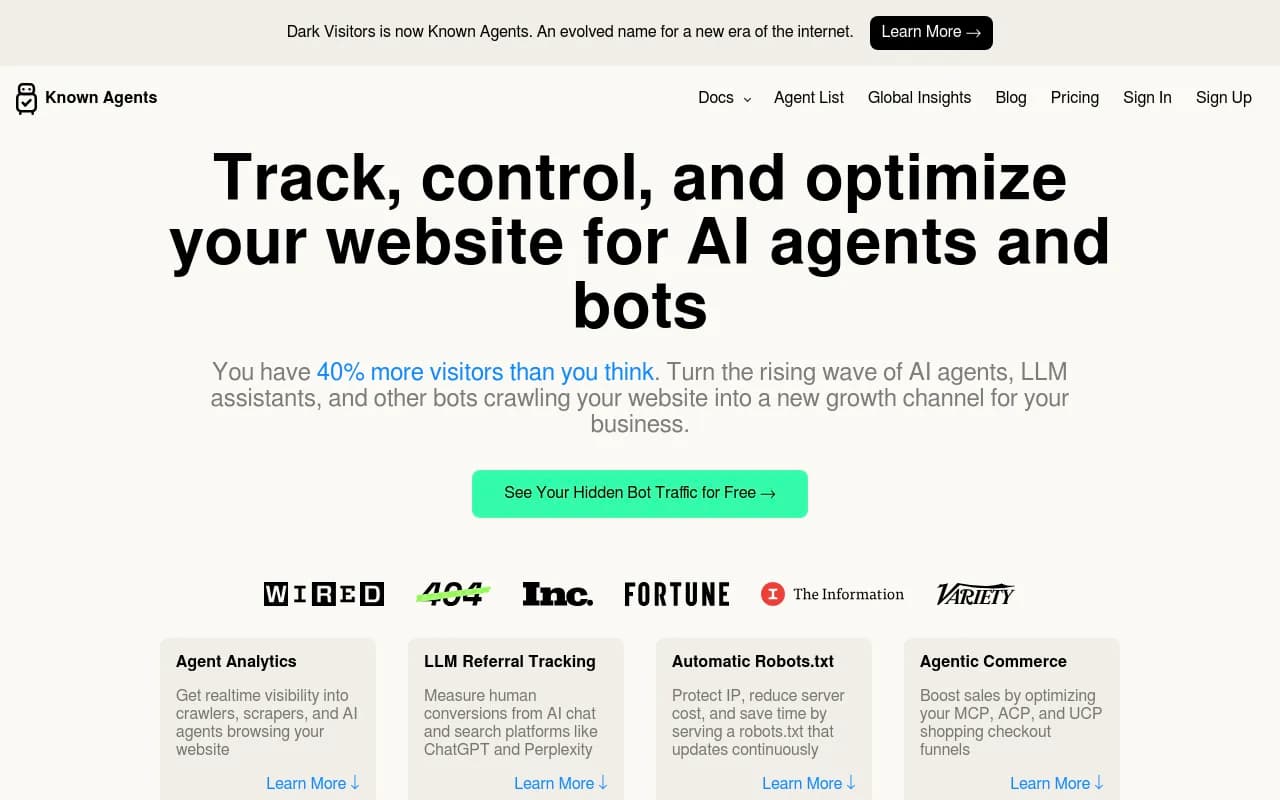
For teams focused specifically on understanding AI crawler behavior, DarkVisitors is worth a look -- it tracks AI agents and bots visiting your site and helps you manage access policies.
Profound has a strong feature set for brand monitoring across AI search engines, with good competitor benchmarking capabilities.

AthenaHQ covers 8+ AI search engines and is solid for monitoring, though like Otterly.AI it's primarily an observation tool without content optimization built in.

Peec AI is worth considering if you're working across multiple languages and regions -- it has strong multi-language support for AI visibility tracking.

The crawlability problem is bigger than most teams realize
One finding from Otterly.AI's own research deserves more attention: 73% of sites have technical barriers blocking AI crawler access. That includes robots.txt rules that were written for traditional search bots and accidentally block AI crawlers, CDN configurations that rate-limit or block bot traffic, and JavaScript-heavy pages that AI crawlers can't render.
If your site is in that 73%, no amount of output monitoring will help you fix it. You need input-side data -- actual logs of which crawlers are hitting your site, what they're seeing, and where they're failing.
This is a concrete example of where the distinction between output monitoring and live crawling stops being theoretical and starts costing you visibility. You could spend months optimizing your content based on Otterly.AI's citation data and never realize that GPTBot is being blocked at the CDN level and can't read any of it.
What "real" data means in practice
So, back to the original question: does Otterly.AI use real AI search data?
Yes -- it queries live AI platforms and records real outputs. The citation counts, mention frequencies, and competitor comparisons reflect what AI engines are actually saying at the time of the query.
But "real" in the context of AI search visibility has two dimensions:
- What AI engines say about you (outputs)
- What AI engines do when they visit your site (inputs)
Otterly.AI covers dimension one. It doesn't cover dimension two. For teams that only need brand mention tracking and competitive benchmarking, that's fine. For teams that want to understand why they're not being cited -- and actually fix it -- output monitoring alone isn't enough.
The most effective GEO workflows in 2026 combine both: output monitoring to track what AI engines say, and crawler log analysis to understand what they read. Then you need a way to act on the gaps, whether that's fixing technical crawlability issues or creating content that answers the specific questions AI models are looking for.
Choosing the right tool for your situation
Here's a practical framework for deciding what you actually need:
If you're just starting out and want to understand whether your brand appears in AI search results, Otterly.AI is a reasonable starting point. The price is low, the setup is fast, and the data is real enough to give you a baseline.
If you're running a serious GEO program and need to understand both what AI engines say and what they read, you need a platform with live crawler tracking. Promptwatch covers both sides and adds content generation on top.
If your primary concern is technical -- making sure AI crawlers can actually access your site -- start with your server logs or a tool like DarkVisitors to understand what's hitting your site before you invest in output monitoring.
If you're an agency managing multiple clients, look for platforms with multi-site support, white-label reporting, and API access. Most entry-level tools including Otterly.AI get expensive or limited quickly at agency scale.
The data collection method matters because it determines what questions you can answer. Output monitoring answers "what are AI engines saying?" Live crawling answers "what are AI engines reading?" Content optimization answers "what should I create next?" The best platforms in 2026 answer all three.