Key takeaways
- Profound AI is a capable GEO platform, but its $499+/month price and sales-demo-only access make it a poor fit for most B2B SaaS teams
- The biggest gap most alternatives leave is niche, low-volume prompts — the specific, technical queries your buyers actually type into ChatGPT or Perplexity
- Monitoring-only tools (Otterly, Peec AI, AthenaHQ) show you where you're invisible but don't help you fix it
- Platforms with content generation and prompt intelligence built in — like Promptwatch — close the loop from gap detection to actual ranking improvement
- Price ranges vary enormously: from ~$39/month for lightweight tools to $579/month for full-featured platforms, with Profound sitting well above both
Why B2B SaaS teams specifically struggle with Profound
Profound built its reputation on tracking brand share of voice in AI-generated answers. It monitors ChatGPT, Gemini, Claude, and Perplexity responses, surfaces prompt-level analytics, and backs it all up with a database of 400M+ prompts. For a Fortune 500 brand asking "how often does ChatGPT mention us?", that's genuinely useful.
But B2B SaaS companies have a different problem.
Your buyers aren't typing "best CRM software" into ChatGPT. They're typing things like "how do I automate contract renewal reminders in Salesforce" or "what's the best tool for tracking NPS across multiple product lines." These are low-volume, high-intent prompts — the kind that Profound's broad enterprise dashboard wasn't really designed to surface or prioritize.
On top of that, Profound requires a sales demo just to see pricing. That alone filters out most growth-stage SaaS teams. When you're a 15-person marketing team trying to figure out why your competitor keeps getting cited in AI answers and you're not, you need a tool you can sign up for today, not one that requires three discovery calls.
So what actually works for B2B SaaS in 2026?
What to look for in a Profound alternative (for B2B SaaS)
Before jumping to the list, it's worth being clear about what actually matters here:
- Prompt-level specificity: Can the tool track niche, technical queries — not just broad category terms?
- Content gap analysis: Does it show you which prompts your competitors rank for that you don't?
- Content generation: Can it help you create content that fills those gaps, or does it just show you the problem?
- Traffic attribution: Can you connect AI visibility to actual website visits and pipeline?
- Pricing transparency: Can you sign up without a sales call?
Most tools in this space pass two or three of these. Very few pass all five.
The best Profound alternatives for B2B SaaS in 2026
Promptwatch — best for teams that want to act, not just monitor
Promptwatch is the most complete option here, and the one I'd recommend first for B2B SaaS teams that are serious about AI search visibility.
The core difference from Profound and most other alternatives: Promptwatch doesn't just show you where you're invisible. It helps you fix it. The Answer Gap Analysis surfaces exactly which prompts your competitors appear for and you don't — down to the specific questions and angles AI models want answered. From there, the built-in AI writing agent generates content engineered to get cited, grounded in 880M+ citations analyzed across 10 AI models.
For B2B SaaS specifically, the prompt intelligence features matter a lot. You get volume estimates and difficulty scores per prompt, plus query fan-outs that show how one prompt branches into sub-queries. That's how you find the niche, low-volume prompts your buyers actually use — and prioritize the winnable ones instead of chasing high-volume terms dominated by review aggregators.
It also tracks AI crawler activity on your site in real time, which is something most competitors don't offer at all. If ChatGPT's crawler is hitting your pricing page but ignoring your use case pages, you'll see that.
Pricing starts at $99/month (Essential), $249/month (Professional), and $579/month (Business). Free trial available, no sales demo required.

AthenaHQ — closest feature match to Profound at a lower price
AthenaHQ is the most direct feature comparison to Profound. It tracks brand share of voice inside LLM outputs, provides prompt-level analytics, and surfaces content gaps where competitors are being cited instead of you. The UI is clean and the data quality is solid.
The catch: AthenaHQ is primarily a monitoring platform. It shows you the gaps but doesn't generate content to fill them. For a team with dedicated content resources, that's fine. For a lean SaaS marketing team wearing multiple hats, you'll hit a wall quickly.
Pricing starts around $295/month.

Peec AI — simple dashboards, good for getting started
Peec AI is a lighter-weight option that works well for teams just getting started with AI visibility tracking. The dashboards are clean, the setup is fast, and the prompt-level data gives you a reasonable view of where your brand appears across ChatGPT, Perplexity, and Google AI Overviews.
It's genuinely good for what it is. But "what it is" is a monitoring tool. There's no content gap analysis, no content generation, no crawler logs. If you want to understand your current state, Peec AI works. If you want to improve it, you'll need something else alongside it.
Starts around $99/month.

Otterly.AI — affordable monitoring for brand and PR teams
Otterly is one of the more affordable options in the space and has built a following among brand and PR teams who care about sentiment and alerts more than deep prompt analytics. It monitors brand mentions across AI answers and sends alerts when something changes.
For B2B SaaS teams focused on competitive positioning in AI search, Otterly is probably too lightweight. It doesn't have prompt difficulty scoring, content gap analysis, or any content generation capabilities. But if your primary goal is "tell me when a competitor is being recommended instead of us," it does that job at a reasonable price.

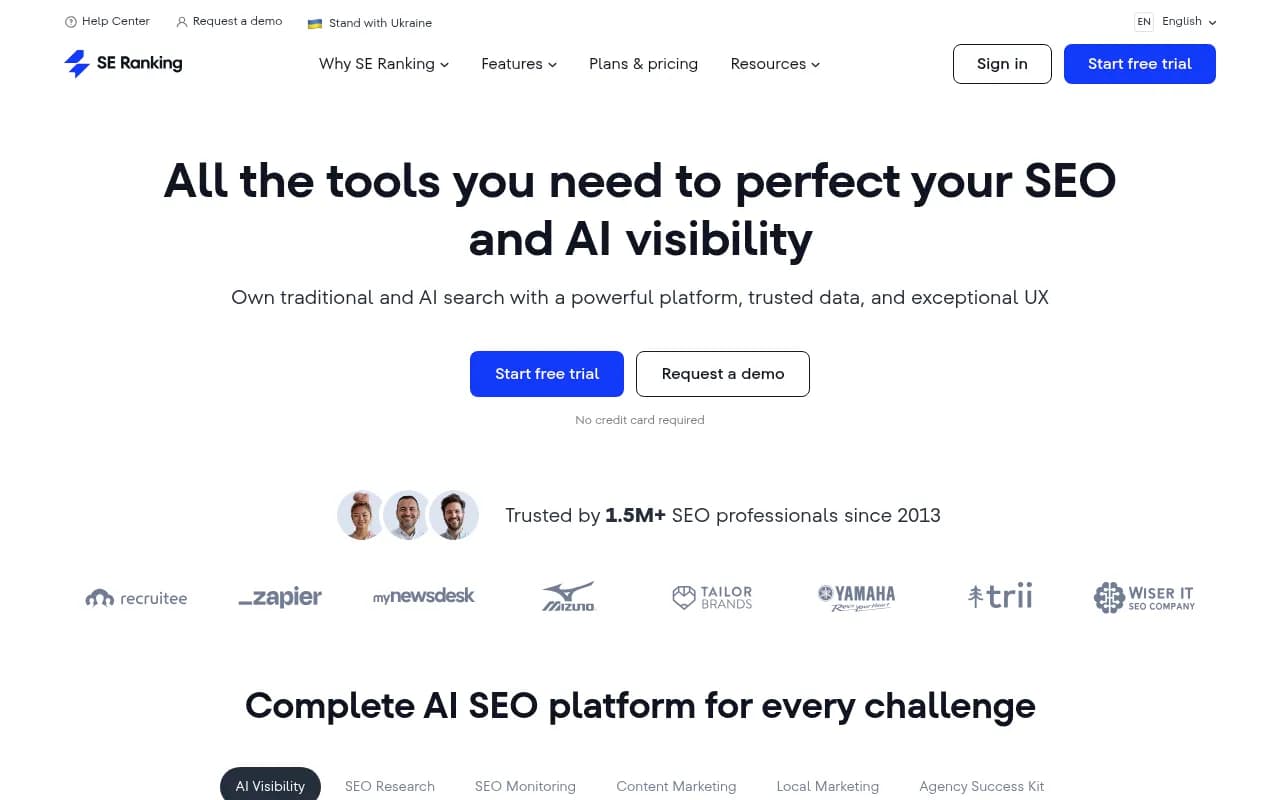
SE Ranking — best for teams already in the SE Ranking ecosystem
SE Ranking added AI search tracking to its existing SEO suite, which makes it a natural choice for teams already using it for traditional SEO. The AI Overviews tracker is particularly useful for Google-first teams, and the all-in-one pricing means you're not paying for a separate tool.
The AI visibility features are less deep than dedicated GEO platforms — you won't get the same prompt intelligence or content gap analysis you'd get from Promptwatch or AthenaHQ. But if you're a B2B SaaS team that needs solid SEO fundamentals plus basic AI visibility tracking in one place, SE Ranking is worth considering.
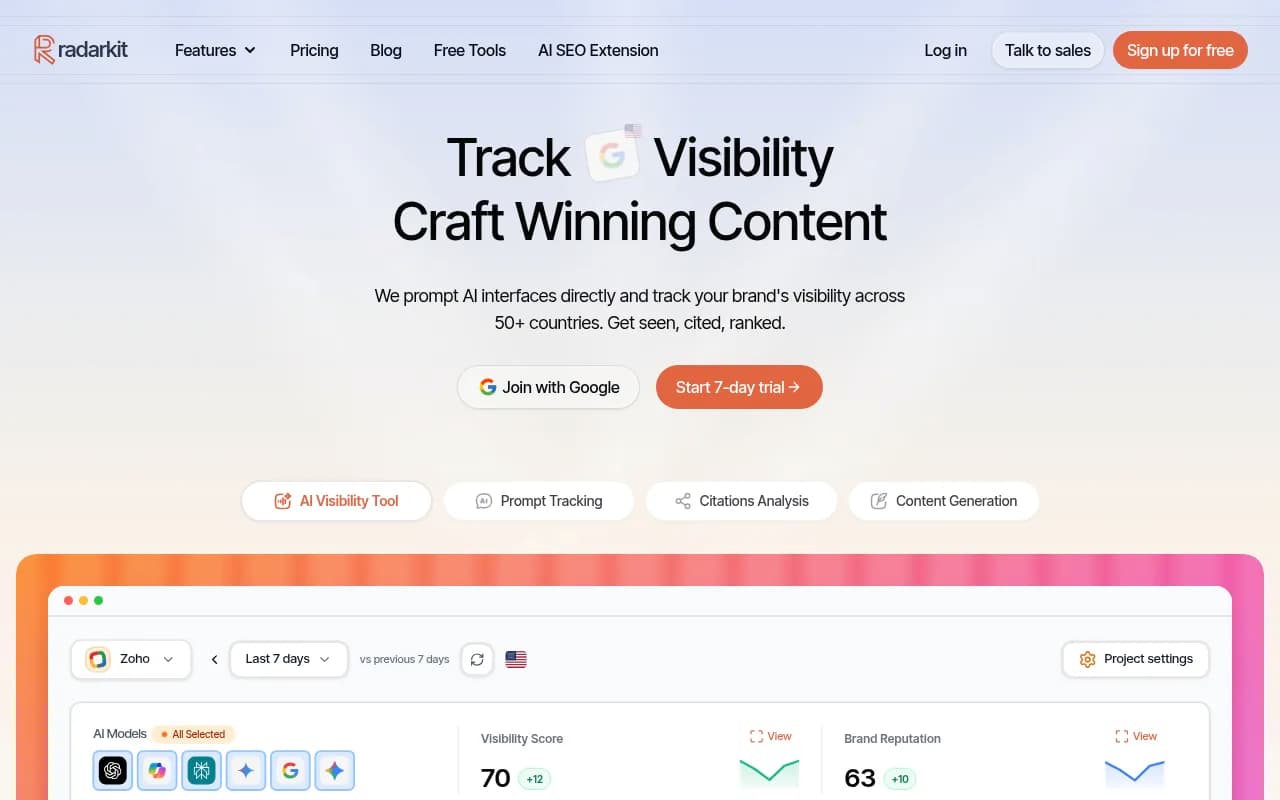
Radarkit — solid option for agencies managing multiple SaaS clients
Radarkit positions itself as an agency-focused alternative, and it shows. The multi-client management features are well-built, and the AI visibility tracking covers the major models. For B2B SaaS teams working with an agency, or for agencies managing multiple SaaS accounts, it's a practical choice.
The prompt-level analytics are decent but not as granular as Promptwatch's query fan-out analysis. Content generation isn't built in.
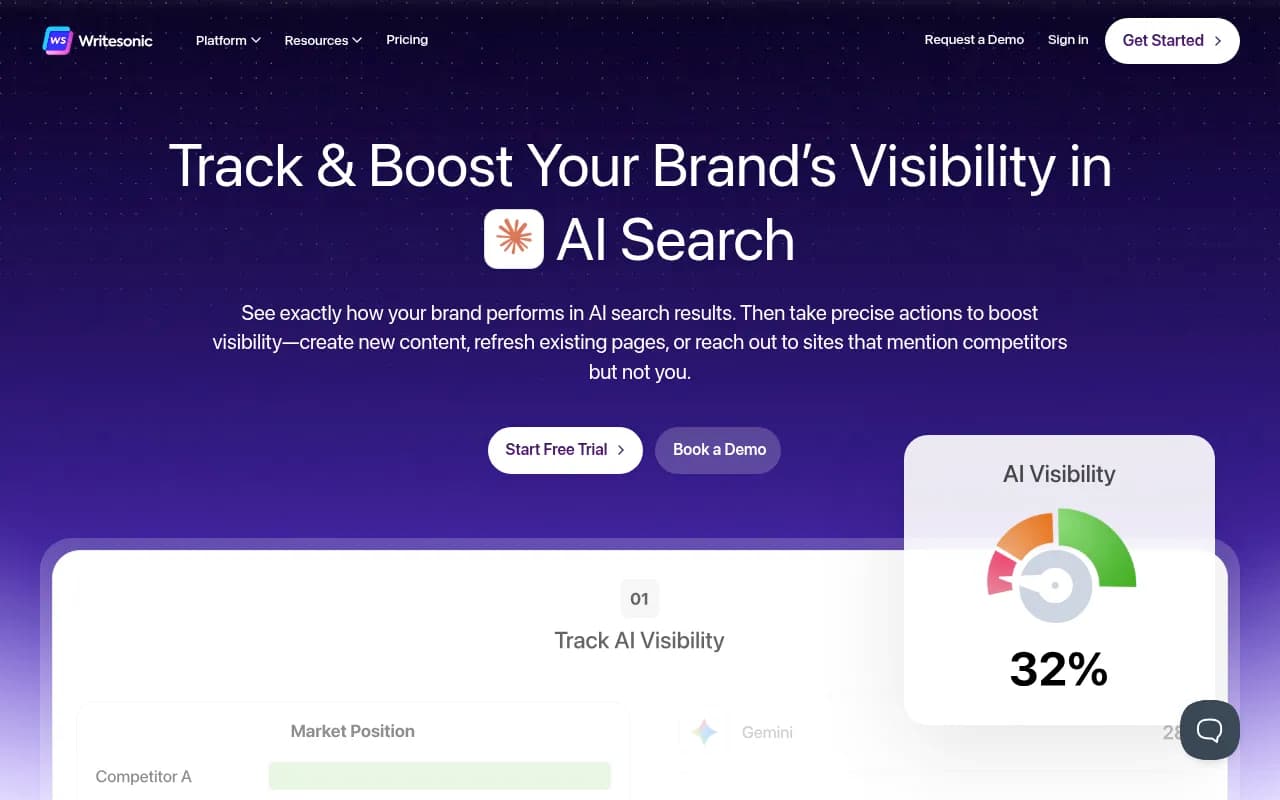
Writesonic — content creation with AI tracking bolted on
Writesonic started as a content generation tool and has added AI search visibility tracking. For B2B SaaS teams that primarily need content output and want basic visibility data alongside it, the combination is convenient.
The tracking features are less mature than dedicated GEO platforms, and the prompt intelligence is fairly surface-level. But the content generation quality is high, and the pricing (starting around $20/month) makes it accessible for smaller teams.
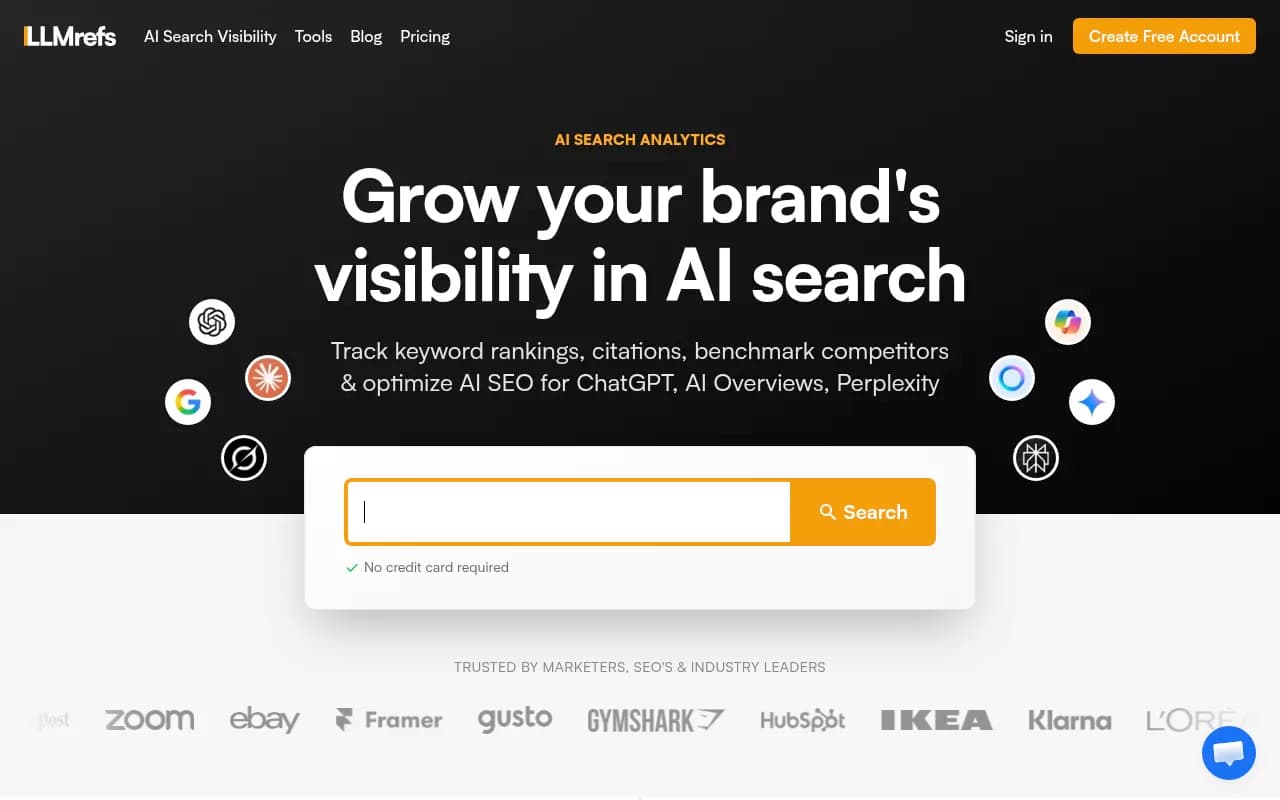
LLMrefs — keyword-style tracking for AI search
LLMrefs takes a familiar approach: it works like traditional rank tracking but for AI search. If your team is comfortable with keyword rank tracking and wants to apply the same mental model to ChatGPT and Perplexity visibility, LLMrefs is intuitive to pick up.
The limitation for B2B SaaS is that the "keyword" framing doesn't map perfectly to how buyers prompt AI tools. Niche, conversational queries don't behave like search keywords, and LLMrefs doesn't have the query fan-out analysis that helps you find those prompts in the first place.
Head-to-head comparison
| Tool | Prompt intelligence | Content gap analysis | Content generation | Crawler logs | Starting price | Free trial |
|---|---|---|---|---|---|---|
| Promptwatch | Yes (volume, difficulty, fan-outs) | Yes | Yes (AI writing agent) | Yes | $99/mo | Yes |
| Profound | Yes | Yes | No | No | $499+/mo | No (demo only) |
| AthenaHQ | Yes | Yes | No | No | ~$295/mo | No |
| Peec AI | Basic | No | No | No | ~$99/mo | No |
| Otterly.AI | No | No | No | No | ~$49/mo | Limited |
| SE Ranking | Basic | No | No | No | ~$65/mo | Yes |
| Radarkit | Moderate | No | No | No | Custom | Yes |
| Writesonic | No | No | Yes | No | ~$20/mo | Yes |
| LLMrefs | Basic | No | No | No | ~$29/mo | Yes |
The niche prompt problem, explained
Here's the thing most GEO tools don't address well: in B2B SaaS, the prompts that matter most are the ones with the lowest volume.
A prompt like "best project management software" gets asked millions of times. It's also dominated by G2, Capterra, and a handful of well-funded review sites that have been optimizing for AI citations for years. Your chances of breaking through there are slim.
But "how do I track billable hours across multiple client projects without switching tools" — that's a prompt your actual buyer types. It has low volume, low competition, and if you answer it well, you can own it.
The problem is that most AI visibility platforms are built around high-volume prompts. They show you share of voice for broad category terms, which looks impressive in a dashboard but doesn't tell you much about whether your actual buyers are finding you.
Promptwatch's query fan-out feature is one of the few tools that addresses this directly. It shows how a single prompt branches into sub-queries — which is how you discover the specific, niche variants your buyers use. Pair that with difficulty scoring and you can build a list of winnable, high-intent prompts that most of your competitors haven't even thought to target.
What "monitoring only" actually costs you
A lot of teams pick a monitoring-only tool because it's cheaper and easier to justify. That's understandable. But there's a real cost to stopping at monitoring.
If you know that ChatGPT recommends your competitor for "automated invoice reconciliation tools" and not you, what do you do with that? You need to create content that answers that question better than your competitor does. You need to publish it in a format AI models want to cite. You need to track whether it's working.
Monitoring-only tools give you step one of that process. The rest is manual, slow, and often doesn't happen because the team moves on to the next priority.
The platforms that close the full loop — find the gap, generate the content, track the result — are the ones that actually move the needle on AI visibility. That's the case for Promptwatch over Profound, and it's the case for any monitoring-only alternative you might be considering.
Which tool should you actually pick?
It depends on where you are right now:
If you're starting from zero and want the most complete platform: Promptwatch. The combination of prompt intelligence, gap analysis, content generation, and crawler logs is hard to match at the price point.
If you have a dedicated content team and just need data: AthenaHQ gives you the most Profound-like experience at a lower price. You'll do the content work yourself.
If you're already in the SE Ranking ecosystem: stick with SE Ranking and add AI tracking to your existing workflow. Not the deepest feature set, but the integration value is real.
If budget is the primary constraint: Peec AI or LLMrefs get you started with basic visibility data. Expect to outgrow them.
If you're an agency managing multiple B2B SaaS clients: Radarkit's multi-client features are worth the look.
The one scenario where Profound itself makes sense: you're at a mid-market or enterprise company, you have a dedicated GEO function, and you need the depth of a 400M+ prompt database with institutional-quality reporting. For everyone else, the alternatives above do the job at a fraction of the cost.