Key takeaways
- Most AI visibility tools are monitoring dashboards -- they show you where you're invisible but don't help you fix it
- The tools worth paying for in 2026 fall into distinct categories: trackers, analyzers, optimizers, and end-to-end platforms
- Promptwatch is the only platform rated "Leader" across all categories in a 2026 comparison of 12 GEO tools, largely because it closes the loop from gap detection to content creation to traffic attribution
- Enterprise teams (Profound, Evertune) get deep data but pay for it; budget-conscious teams have solid options in Otterly.AI, Peec AI, and SE Ranking
- Picking the right tool depends on what you actually need to do -- not which platform has the longest feature list
AI search is no longer a trend worth watching. It's the channel your customers are already using. ChatGPT has hundreds of millions of weekly active users. Google AI Overviews appear in roughly half of all searches. Perplexity is growing fast. And when someone asks any of these tools a question about your industry, your brand either shows up or it doesn't.
That's the core problem AI visibility tools are trying to solve. But here's the thing: the category has exploded so fast that "AI visibility tool" now covers everything from a $29/month dashboard that pings three LLMs to a full enterprise platform with content generation, crawler logs, and revenue attribution. They're not the same thing, and buying the wrong one is an expensive mistake.
This guide ranks the tools by what they actually help you accomplish -- not by marketing copy or feature count.
What "AI visibility" actually means (and why it's harder than it sounds)
When an AI model answers a question, it doesn't run a live search. It draws on training data, retrieval-augmented generation, and real-time web access depending on the model. What gets cited depends on what the model has indexed, what it trusts, and what content it finds most relevant to the query.
That means traditional SEO metrics -- rankings, impressions, clicks -- tell you almost nothing about AI visibility. You need to actually run prompts against the models and see what comes back. Then you need to do it at scale, across multiple models, with enough consistency to spot trends.
That's the baseline. Any tool that doesn't do this isn't really an AI visibility tool.
Beyond the baseline, the more interesting question is: what do you do with the data? This is where most tools fall short. They show you a visibility score, maybe a competitor comparison, and leave you to figure out the rest. The better tools tell you which specific content gaps are causing you to lose mentions, and the best ones help you create the content to fill those gaps.
How we're categorizing these tools
Rather than ranking by price or popularity, here's a framework based on what each tool actually lets you do:
- Track only: Monitor brand mentions across AI models, basic sentiment
- Track + analyze: Monitoring plus competitor benchmarking, prompt-level data
- Track + analyze + optimize: Full loop -- gap analysis, content recommendations, content creation, traffic attribution
Most tools in 2026 sit in the first two buckets. A small number have built into the third.
The full comparison
| Tool | Monitoring | Competitor analysis | Content gap analysis | Content generation | AI crawler logs | Traffic attribution | Best for |
|---|---|---|---|---|---|---|---|
| Promptwatch | Yes | Yes | Yes | Yes | Yes | Yes | Teams that want the full loop |
| Profound | Yes | Yes | Partial | No | No | No | Enterprise data depth |
| Evertune | Yes | Yes | Partial | No | No | No | Fortune 500 brand tracking |
| Otterly.AI | Yes | Basic | No | No | No | No | Budget monitoring |
| Peec AI | Yes | Yes | Basic | No | No | No | Multi-language tracking |
| AthenaHQ | Yes | Yes | No | No | No | No | Monitoring-focused teams |
| SE Ranking | Yes | Yes | No | No | No | No | SEO teams adding GEO |
| Semrush | Yes | Yes | No | No | No | No | Existing Semrush users |
| Ahrefs Brand Radar | Yes | Basic | No | No | No | No | Ahrefs users |
| ZipTie | Yes | Yes | Partial | No | No | No | Deep reporting |
| Search Party | Yes | Basic | No | No | No | No | Agencies |
The tools worth knowing about
Promptwatch -- the full optimization loop
Promptwatch is the tool that's hardest to categorize as just a tracker, because it's genuinely trying to do something different. The core idea is that knowing you're invisible isn't enough -- you need to know why, and then you need to be able to fix it.
The Answer Gap Analysis feature shows you exactly which prompts your competitors are getting cited for that you're not. Not vague topic clusters -- specific prompts, with volume estimates and difficulty scores. From there, the built-in AI writing agent generates content engineered to get cited: articles, listicles, comparisons, all grounded in 880M+ citations analyzed across 10 AI models.
The other thing that sets it apart is AI Crawler Logs. You can see in real time which AI crawlers (ChatGPT, Claude, Perplexity, etc.) are hitting your site, which pages they're reading, and whether they're encountering errors. Most competitors don't have this at all.
Traffic attribution closes the loop: connect AI visibility to actual revenue via a code snippet, Google Search Console integration, or server log analysis.
Pricing starts at $99/month for the Essential plan (1 site, 50 prompts, 5 articles). Professional is $249/month. Business is $579/month.

Profound -- enterprise-grade data depth
Profound is one of the more mature platforms in the space. It tracks 10+ AI engines, has processed 400M+ prompt insights, and holds SOC 2 Type II certification -- which matters if you're in a regulated industry or need to pass procurement reviews.
The data is genuinely deep. You get share-of-voice breakdowns by model, prompt-level citation tracking, and solid competitor benchmarking. Where it falls short is on the action side: Profound shows you the data but doesn't help you create content to improve it. It's a strong choice for enterprise teams that have a content team ready to act on the insights.

Evertune -- Fortune 500 positioning
Evertune positions itself as the enterprise GEO platform for large brands. The feature set is comprehensive for monitoring and analysis -- citation tracking across models, competitor comparisons, brand sentiment analysis. It's built for teams with dedicated analysts who can turn data into strategy.
Like Profound, it's monitoring-heavy. The optimization layer is limited compared to what Promptwatch offers. But if you're a large brand that primarily needs to understand what's happening before deciding what to do, Evertune is a credible option.
AthenaHQ -- clean monitoring for growing teams
AthenaHQ tracks visibility across 8+ AI search engines with a clean interface that's easier to navigate than some of the enterprise tools. It's a solid monitoring platform -- you can track brand mentions, run competitor comparisons, and see how your visibility changes over time.
The gap is on the optimization side. AthenaHQ doesn't offer content gap analysis or content generation. It's a good fit for teams that are just getting started with AI visibility tracking and want something approachable before committing to a more complex platform.

Otterly.AI -- the budget-friendly entry point
Otterly.AI is the tool Zapier recommends for affordability, and that's a fair characterization. It covers the basics: brand mention tracking across major AI models, basic competitor monitoring, sentiment flagging. The interface is clean and the setup is fast.
What you're giving up is depth. No crawler logs, no content gap analysis, no traffic attribution. If you're a small team that just wants to know whether you're showing up in ChatGPT and Perplexity, Otterly.AI does that job without a complicated onboarding process.

Peec AI -- multi-language tracking with smart suggestions
Peec AI stands out for multi-language support, which matters more than most tools acknowledge. AI search behavior varies significantly by language and region -- a brand that's well-cited in English prompts might be invisible in French or German queries. Peec AI tracks this and surfaces basic optimization suggestions.
It's not a full optimization platform, but the suggestions feature gives it an edge over pure monitoring tools. Good choice for brands with international audiences.

SE Ranking -- for SEO teams adding GEO to their workflow
SE Ranking is primarily an SEO platform that has added AI visibility tracking. If your team already lives in SE Ranking for keyword tracking, site audits, and rank monitoring, the AI visibility module is a natural extension rather than a new tool to learn.
The AI visibility features are solid but not best-in-class. You won't get content gap analysis or crawler logs. But the integration with traditional SEO data is genuinely useful -- you can see how your AI visibility correlates with your organic rankings, which tells a more complete story.
ZipTie -- deep analysis and reporting
ZipTie is built for teams that need detailed reports. The analysis layer is more granular than most tools -- you can dig into specific prompt performance, model-by-model breakdowns, and competitive positioning with more depth than Otterly.AI or Peec AI.
It's a good fit for agencies that need to show clients detailed AI visibility reports, or in-house teams that have to present data to leadership. The reporting interface is one of the better ones in the category.
Semrush -- for existing users who want GEO added on
Semrush added AI visibility features to its platform, and for existing users, it's worth knowing about. The limitation is that Semrush uses fixed prompts rather than letting you define your own, which means you're tracking visibility for generic queries rather than the specific questions your customers actually ask.
If you're already paying for Semrush and want a basic read on your AI visibility without adding another tool, the built-in features are fine. If AI visibility is a serious priority, you'll outgrow it quickly.
Ahrefs Brand Radar -- basic AI monitoring for Ahrefs users
Similar story to Semrush: Ahrefs added Brand Radar as an AI monitoring feature for existing users. Fixed prompts, no AI traffic attribution, limited customization. It's a starting point, not a destination.
Specialized tools worth knowing about
Beyond the main platforms, a few specialized tools are worth mentioning for specific use cases.
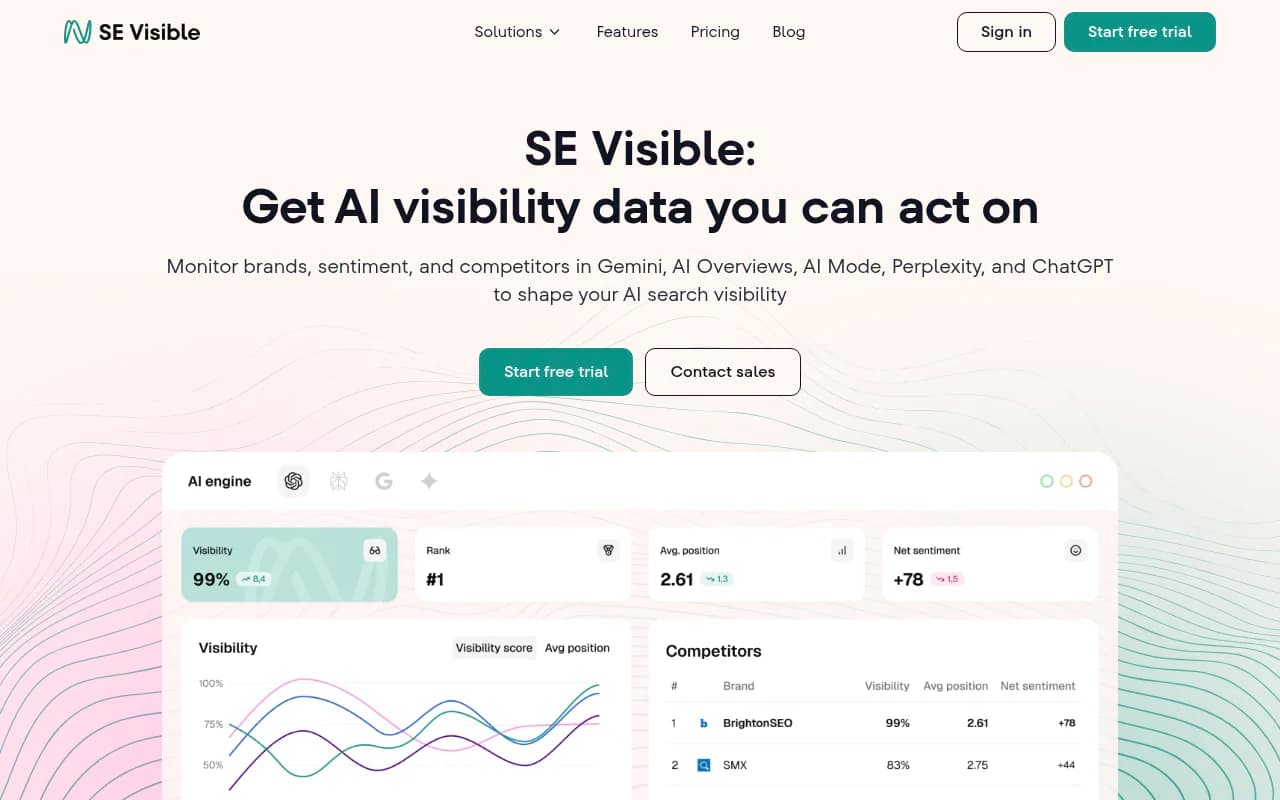
SE Visible (from SE Ranking) offers a standalone AI visibility tracking interface that's more accessible for teams that don't need the full SE Ranking suite.
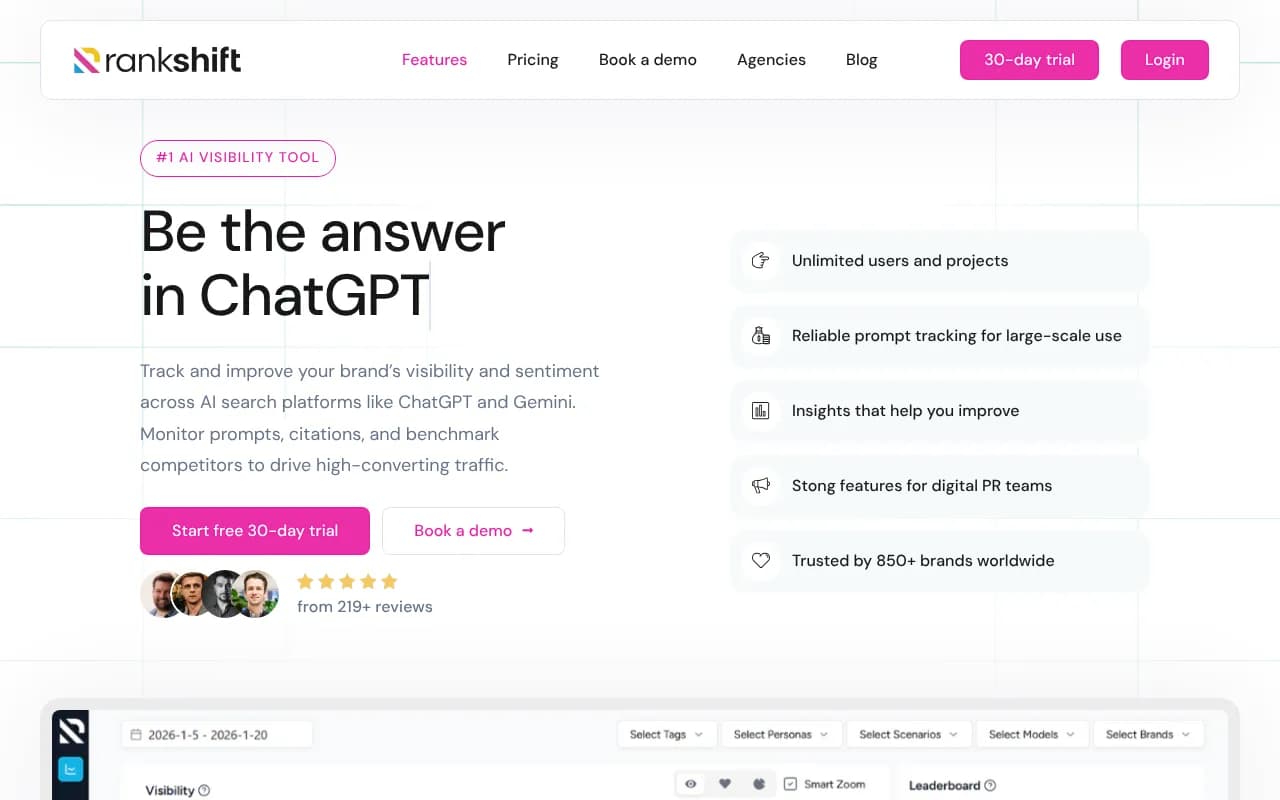
Rankshift is a newer entrant focused specifically on LLM tracking with a clean interface for GEO monitoring.
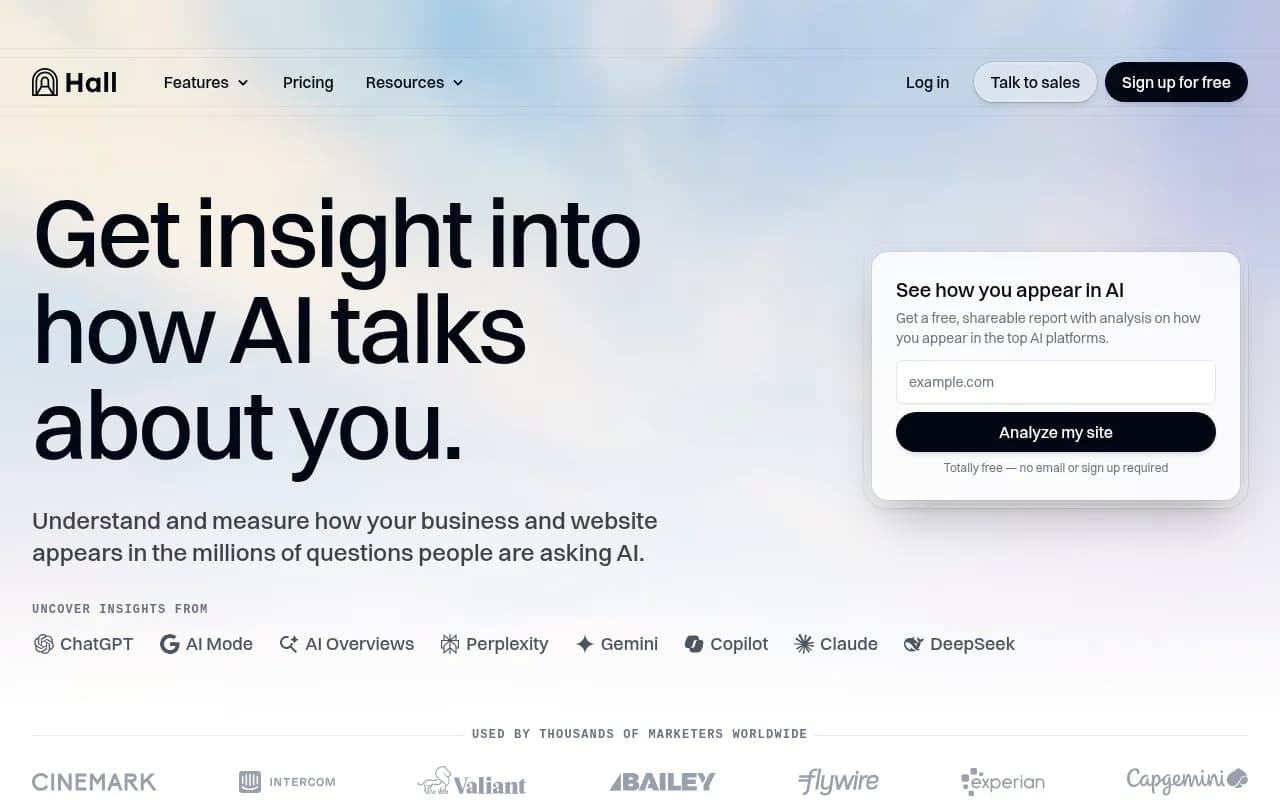
Hall AI focuses specifically on how AI platforms cite and describe your brand -- useful if brand sentiment in AI responses is your primary concern.
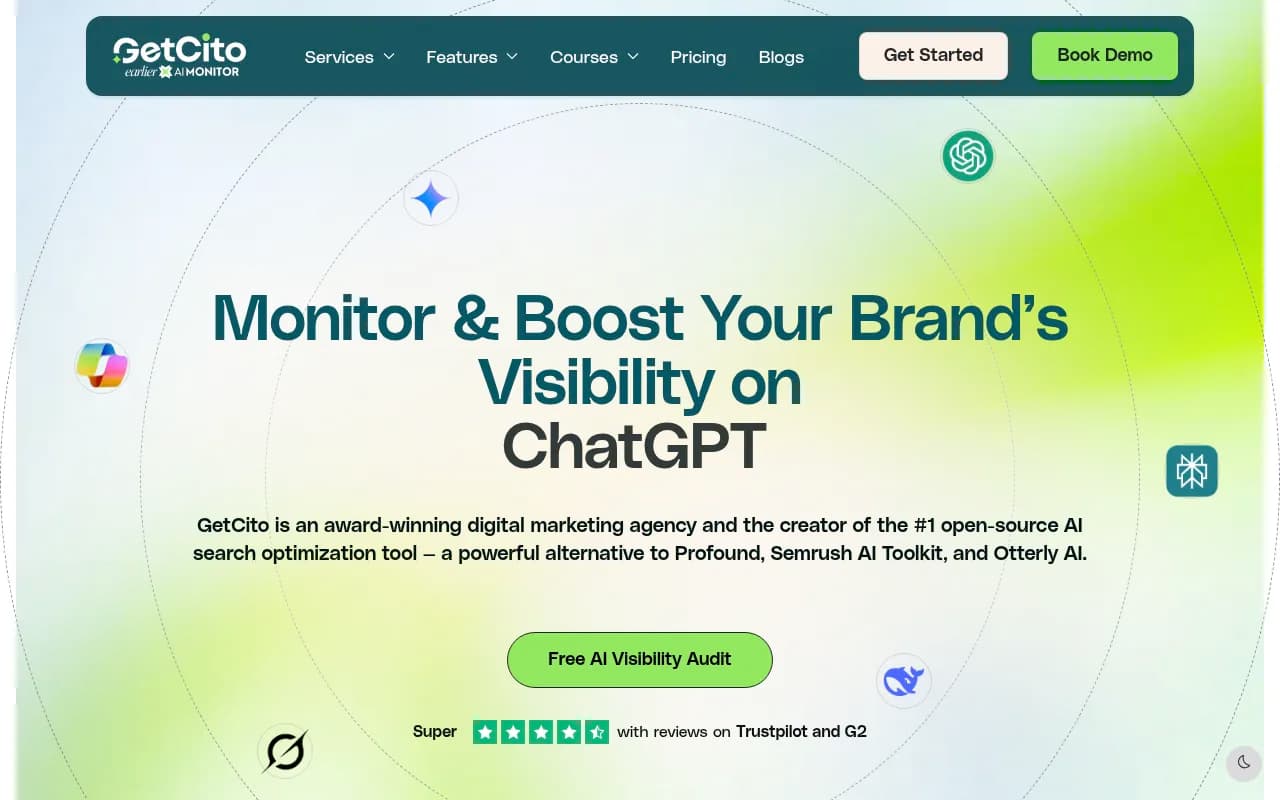
GetCito combines AI visibility tracking with optimization suggestions in a more affordable package than the enterprise platforms.
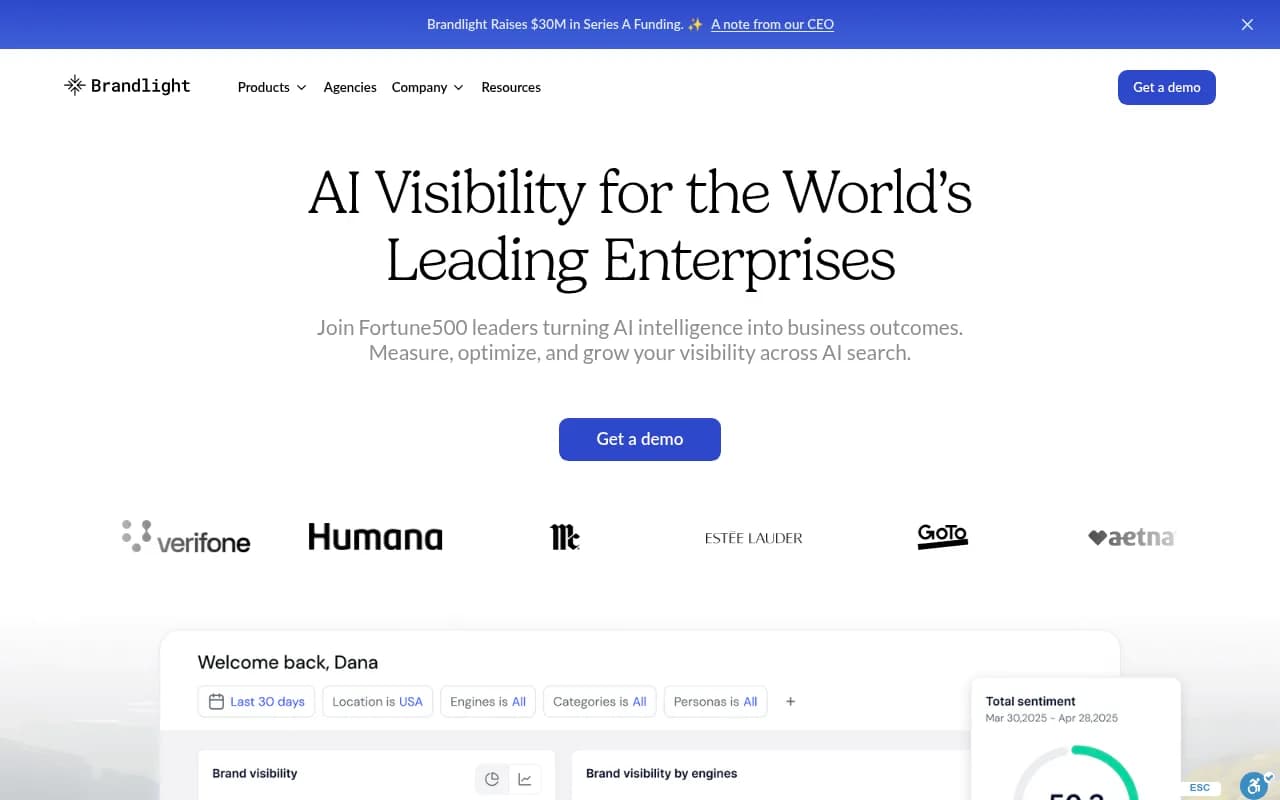
Brandlight tracks AI-powered brand visibility with a focus on reputation management alongside visibility metrics.
How to actually choose
The honest answer is that the right tool depends on where you are in your AI visibility journey and what you're trying to accomplish.
If you're just starting out and want to understand whether you're showing up in AI responses at all, Otterly.AI or Peec AI will get you there without a big investment. They're monitoring tools, but monitoring is the right first step.
If you're past the "are we visible?" question and into "why aren't we visible and what do we do about it?", you need a platform with content gap analysis. That's where the field narrows significantly. Most tools don't have it. Promptwatch does, and it's the most complete implementation in the market right now -- gap analysis, content generation, and traffic attribution in one platform.
If you're an enterprise team with a dedicated content team and a need for deep data and compliance certifications, Profound or Evertune are worth evaluating seriously. You'll get more data than you know what to do with, but you'll need internal resources to act on it.
If you're an SEO team that wants to add AI visibility to your existing workflow without switching platforms, SE Ranking or Semrush are the path of least resistance -- just go in with realistic expectations about depth.
One thing worth saying clearly: the category is moving fast. Tools that were monitoring-only six months ago are adding optimization features. Pricing is shifting. New entrants keep appearing. Whatever you pick, treat it as a 6-month commitment rather than a permanent decision, and revisit when your needs change.
The brands that figure this out early -- tracking their AI visibility, understanding their gaps, and creating content that actually gets cited -- are building a compounding advantage. The ones waiting for the category to "mature" are just giving competitors more time to get cited instead of them.