Key takeaways
- AEO tools built for individual brands often break down at agency scale -- multi-client dashboards, white-label exports, and team permissions are non-negotiable features to vet before committing
- The best agency AEO stacks combine a core tracking platform (for visibility data across ChatGPT, Perplexity, Gemini, etc.) with a content workflow layer that can act on the gaps found
- Monitoring-only tools leave agencies stuck: you can show clients a visibility score, but you can't show them what to do about it
- Promptwatch is the only platform rated "Leader" across all GEO/AEO categories in a 2026 comparison of 12 platforms, largely because it closes the loop from gap detection to content creation to traffic attribution
- Pricing across the category ranges from ~$39/month for basic trackers to $579+/month for full-featured platforms -- the right tier depends on how many client sites and prompts you need to manage
Why AEO has become an agency deliverable
A year ago, most agency clients hadn't heard of answer engine optimization. Today, the question "are we showing up in ChatGPT?" is as common in quarterly reviews as "where are we ranking on Google?" That shift happened fast, and it's created a real gap between what agencies are being asked to deliver and what their existing toolkits can actually produce.
Traditional SEO platforms -- even the big ones like Semrush and Ahrefs -- weren't built to answer these questions. They track blue-link rankings, not AI citations. They don't tell you whether Perplexity is recommending a competitor instead of your client, or which pages on your client's site are actually being read by AI crawlers.
The AEO tool category emerged to fill that gap. But here's the thing: most of the tools that launched in 2024-2025 were built for single-brand use. They're fine if you're an in-house marketer tracking one domain. For agencies managing 5, 10, or 20 clients simultaneously, the requirements are completely different.
This guide is specifically for agency teams. We'll cover what to look for, which tools hold up at scale, and how to think about building a stack that can actually produce results -- not just dashboards.
What agencies need that solo tools don't offer
Before diving into specific tools, it's worth being explicit about the requirements that separate an "agency-grade" AEO tool from a basic tracker.
Multi-client management. You need to switch between client workspaces without logging in and out, see a portfolio-level view of which clients are improving or slipping, and set different prompt sets per client.
White-label reporting. Clients don't want to see your tool's branding. They want a clean PDF or live dashboard with their own logo and your agency's name. This sounds like a nice-to-have but it's a real differentiator when you're presenting to a CMO.
Team permissions and collaboration. Multiple team members working on different client accounts, with appropriate access controls.
API access. For agencies building custom reporting in Looker Studio, Data Studio, or their own client portals, API access is essential. Without it, you're manually exporting CSVs.
Content workflow integration. This is the one most agencies underestimate. Tracking visibility is step one. The deliverable clients actually pay for is improved visibility -- which means you need a workflow for identifying what content to create and then creating it. Tools that stop at monitoring leave you doing that work manually.
Prompt volume and difficulty data. Not all prompts are worth chasing. Agencies need to prioritize which gaps to close first, which means you need volume estimates and some sense of how competitive each prompt is.
The core tools worth knowing
Promptwatch: the full-loop platform
Promptwatch is the platform that comes up most often when agencies are evaluating the category seriously. It monitors 10 AI models (ChatGPT, Perplexity, Claude, Gemini, Google AI Overviews, Grok, DeepSeek, Copilot, Meta AI, and Mistral), and it's one of the few platforms that goes beyond monitoring into actual optimization.

The feature that makes it genuinely useful for agencies is the Answer Gap Analysis. It shows you exactly which prompts competitors are visible for that your client isn't -- not as a vague "you're missing coverage here" message, but as a specific list of prompts with volume estimates and difficulty scores. That's the brief for your content team.
From there, the built-in AI writing agent generates articles, listicles, and comparisons grounded in citation data from over 880 million citations analyzed. This isn't generic content -- it's engineered around what AI models actually cite. For agencies, this collapses the gap between "we found a visibility problem" and "we shipped content to fix it."
The crawler logs feature is something most competitors don't have at all. You can see in real time which AI crawlers (ChatGPT-bot, ClaudeBot, PerplexityBot) are hitting each client's site, which pages they're reading, and what errors they're encountering. That's genuinely useful for technical AEO audits.
Pricing: Essential at $99/month (1 site, 50 prompts), Professional at $249/month (2 sites, 150 prompts, crawler logs), Business at $579/month (5 sites, 350 prompts). Agency and enterprise pricing is available on request. There's a free trial.
Rankability: unified visibility scoring
Rankability takes a different approach -- it builds a single "SPI score" that combines traditional search, local, AI, citation, and video visibility into one number. For agencies that need to show a client a single metric that captures their overall search presence, that's appealing.
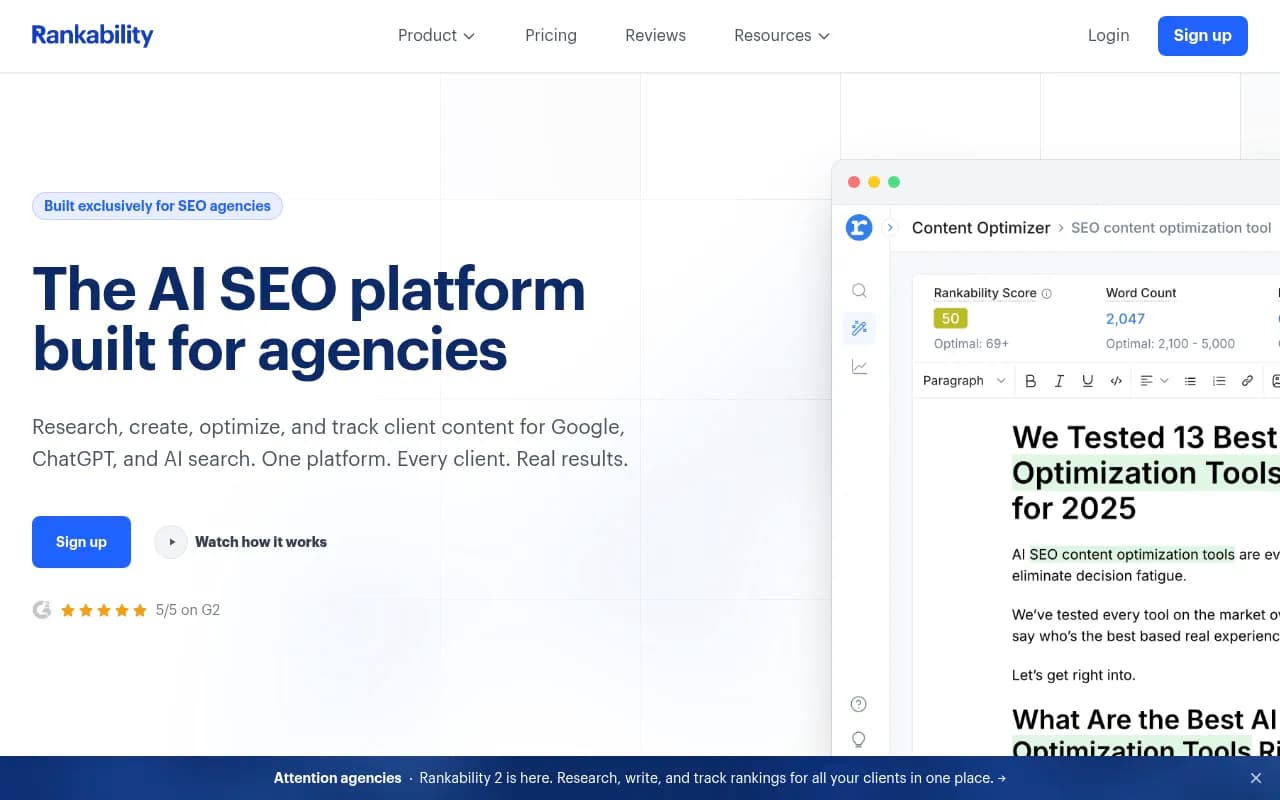
It's particularly strong for agencies that want one platform to handle both traditional SEO and AI visibility, rather than running separate tools for each. The workflow connects research, writing, and optimization, which reduces the tool-switching overhead that kills agency efficiency.
Nightwatch: multi-client tracking with local depth
Nightwatch is worth knowing if your agency does a lot of local SEO alongside AI visibility work. It tracks ChatGPT, Google AI Overviews, Bing Copilot, Perplexity, and Claude, and it has zip-code-level tracking that most AEO tools don't offer.
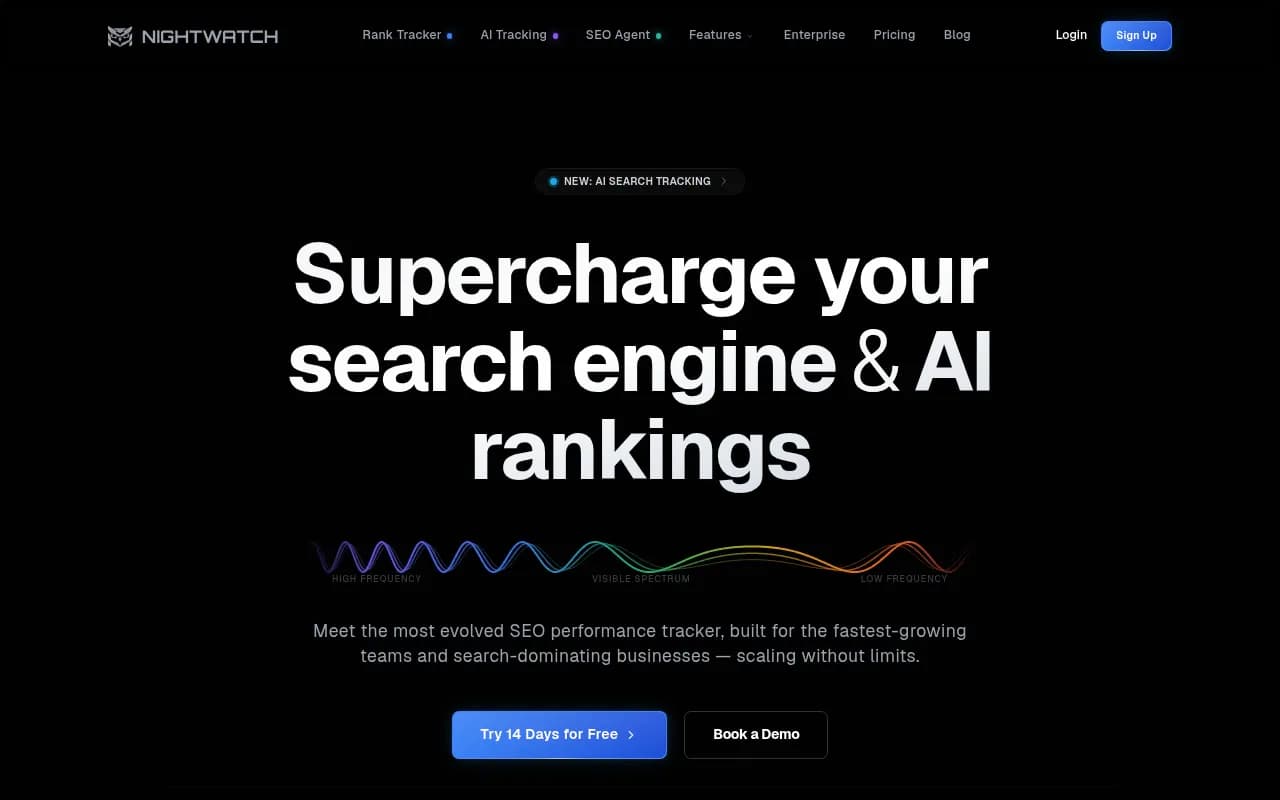
The base plan starts at $39/month, with an AI add-on at $99/month. For smaller agencies or those just starting to add AEO services, that entry price is meaningful. The multi-client dashboard is genuinely built for agency use -- it was one of the tools specifically noted in the SE Ranking research as "ideal for agencies that manage multiple client portfolios."
SE Visible: strategic brand intelligence
SE Visible (from SE Ranking) covers AI Overviews, AI Mode, Gemini, ChatGPT, and Perplexity. It's positioned more toward CMOs and brand specialists than pure SEO teams, with a strong focus on competitor share of voice and sentiment scoring.
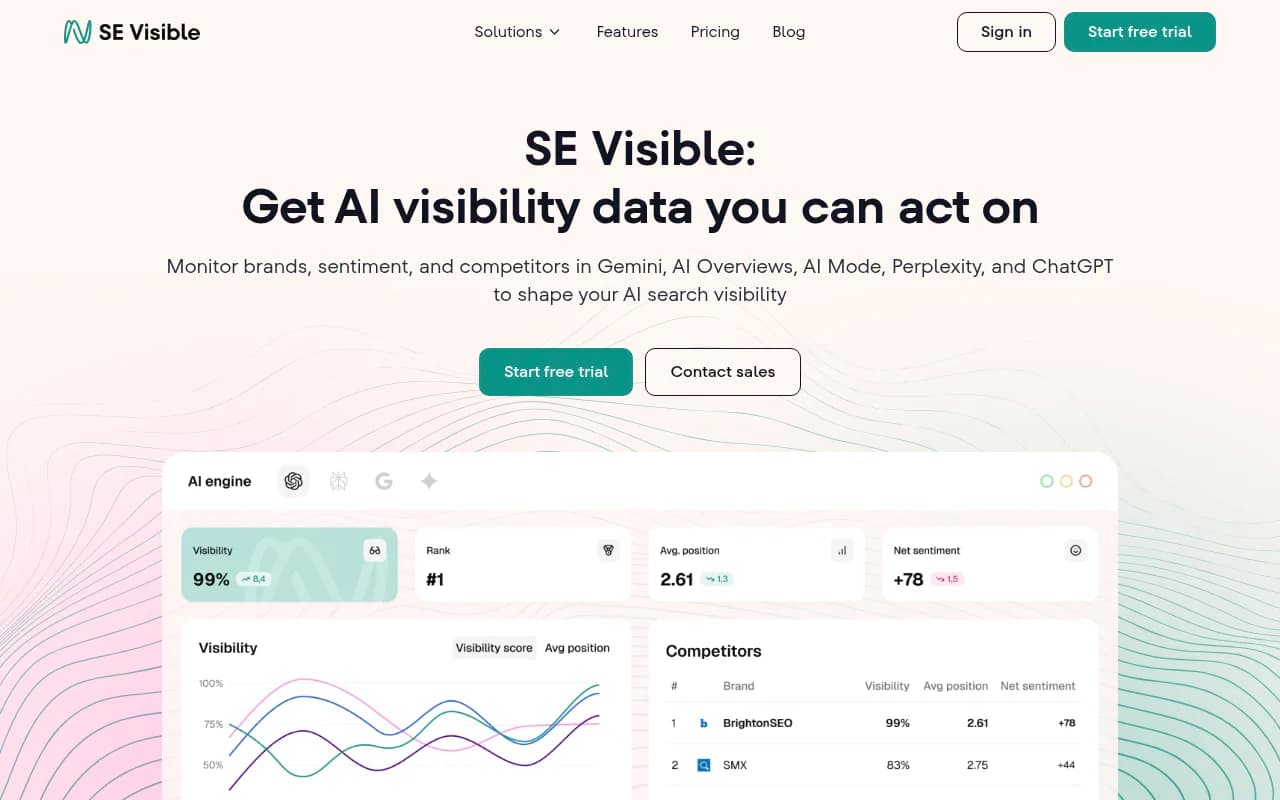
At $99/month, it's competitively priced for what it offers. The sentiment monitoring is useful for agencies managing brands where reputation matters -- not just "are we cited?" but "how are we described when we are cited?"
Profound: enterprise monitoring depth
Profound is one of the more established platforms in the category and is often mentioned alongside Promptwatch when enterprises are evaluating options. It has strong monitoring depth and is a solid choice for larger agency clients with complex tracking needs.

The main limitation is that it's primarily a monitoring platform. Like most competitors in the category, it shows you the data but doesn't have built-in tools to act on it. For agencies that have their own content production workflows, that's fine. For agencies that want the whole loop in one tool, it's a gap.
Peec AI: multi-language tracking
If your agency works with international clients, Peec AI is worth evaluating specifically for its multi-language support. Most AEO tools default to English-only tracking, which is a real problem if you're managing brands in European or APAC markets.

Cairrot: built specifically for agencies
Cairrot is one of the few tools in the category that was designed from the ground up for marketing agencies rather than in-house teams. It focuses on LLM visibility tracking with multi-client management as a first-class feature.
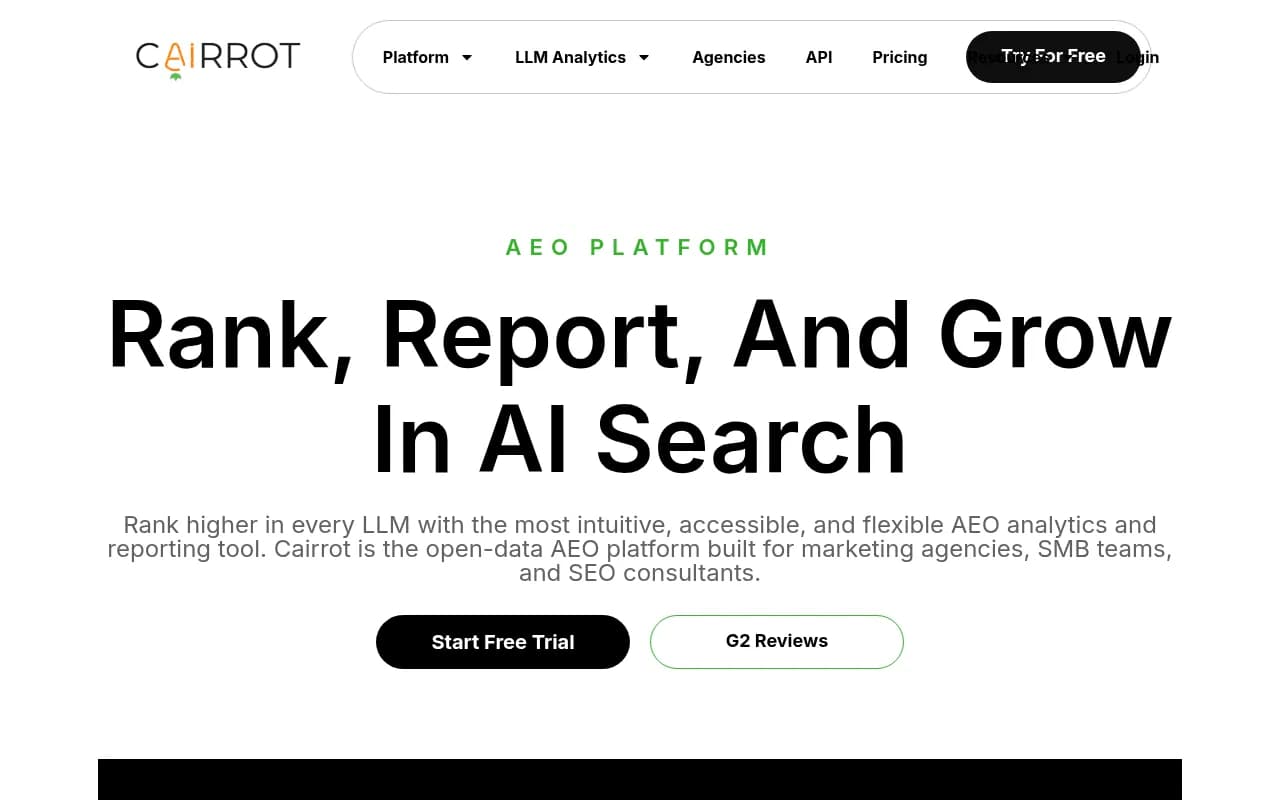
It's a newer entrant, so the feature set is still maturing, but for agencies that want a tool that thinks about their workflow rather than adapting a single-brand product, it's worth a look.
Writesonic: visibility tracking plus content
Writesonic has evolved from a content generation tool into something closer to a full GEO platform. It now covers ChatGPT, Google AI Mode, AI Overviews, Gemini, Perplexity, and Claude, and it combines visibility tracking with in-platform content optimization.
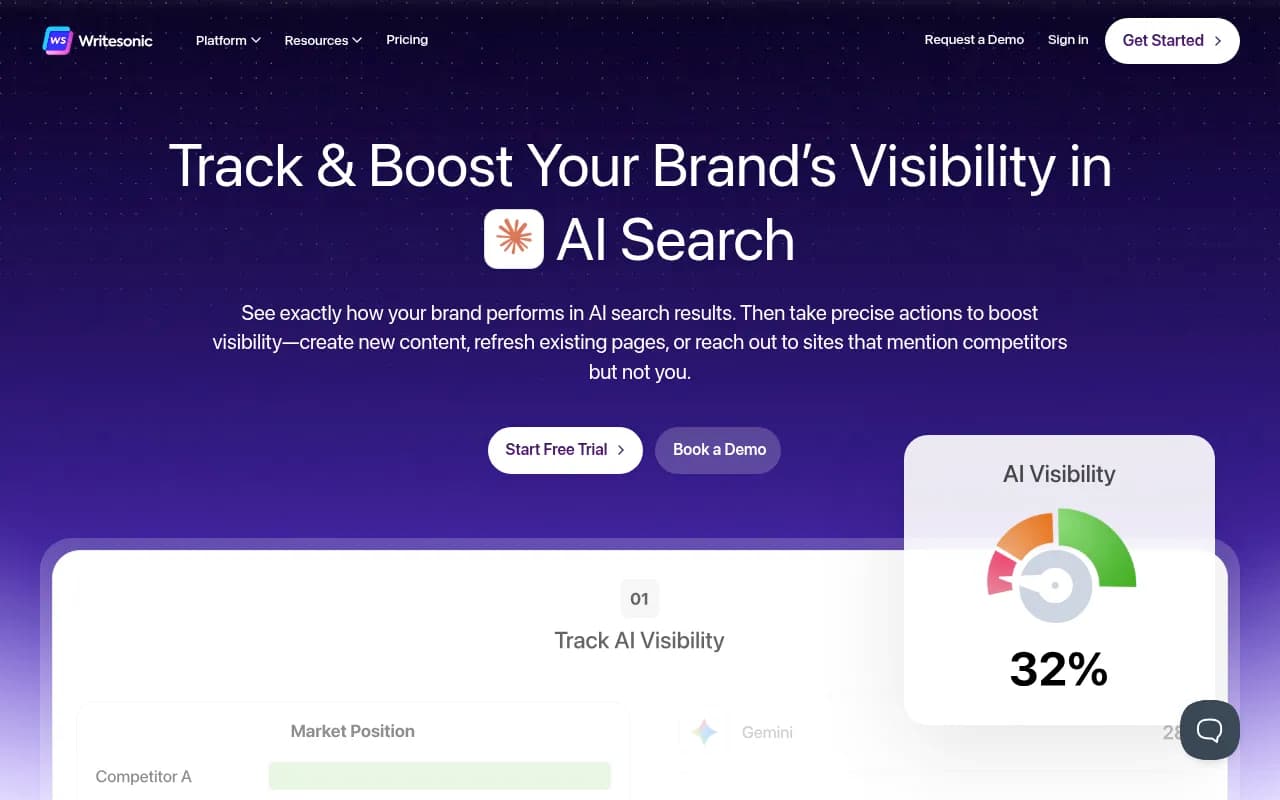
At $199/month, it sits in the mid-range. For agencies that are already using Writesonic for content and want to add AI visibility tracking without switching platforms, it makes sense. For agencies starting fresh, the tracking depth isn't quite at the level of dedicated platforms.
AthenaHQ: clean monitoring across 8+ engines
AthenaHQ tracks 8+ AI search engines and has a clean interface. It's a solid monitoring tool, though like most competitors, it doesn't have content generation or gap analysis built in.

Scrunch AI: brand-focused monitoring
Scrunch AI focuses on how brands are represented in AI responses, with particular attention to sentiment and brand narrative consistency.
Comparison table: agency AEO tools at a glance
| Tool | AI models tracked | Multi-client | White-label | Content generation | Crawler logs | Starting price |
|---|---|---|---|---|---|---|
| Promptwatch | 10 (ChatGPT, Perplexity, Claude, Gemini, Grok, DeepSeek, Copilot, Meta AI, Mistral, Google AI) | Yes | Yes (API + Looker Studio) | Yes (built-in AI writer) | Yes | $99/mo |
| Rankability | Multiple | Yes | Yes | Yes | No | Contact |
| Nightwatch | 5 (ChatGPT, AI Overviews, Copilot, Perplexity, Claude) | Yes | Yes | No | No | $39/mo + $99 AI add-on |
| SE Visible | 5 (AIOs, AI Mode, Gemini, ChatGPT, Perplexity) | Yes | Limited | No | No | $99/mo |
| Profound | Multiple | Yes | Limited | No | No | Custom |
| Peec AI | Multiple | Yes | Yes | No | No | Custom |
| Cairrot | Multiple | Yes (agency-first) | Yes | No | No | Custom |
| Writesonic | 6 (ChatGPT, AI Mode, AIOs, Gemini, Perplexity, Claude) | Limited | No | Yes | No | $199/mo |
| AthenaHQ | 8+ | Yes | Limited | No | No | Custom |
How to build an agency AEO stack
The mistake most agencies make is treating AEO as a monitoring problem. They pick a tracking tool, set up dashboards, and then wonder why clients aren't renewing. Visibility scores going up is nice, but it's not a business outcome. The agencies that are building durable AEO practices are the ones that have closed the loop between data and deliverables.
Here's a practical framework:
Step 1: establish baseline visibility
Before you can show improvement, you need a baseline. Run your client's top 50-100 purchase-intent prompts through your tracking tool and document where they appear (or don't) across the major AI engines. This becomes the "before" state for your reporting.
Step 2: identify gaps with competitor context
A visibility score in isolation doesn't tell you much. What matters is whether competitors are appearing for prompts your client isn't. Answer gap analysis -- showing exactly which prompts competitors own that your client doesn't -- is the most compelling deliverable you can bring to a client meeting. It makes the problem concrete and the opportunity specific.
Step 3: prioritize by volume and winnability
Not all gaps are worth closing. A prompt that gets asked 10 times a month is less valuable than one asked 10,000 times. And some prompts are so dominated by established sources that breaking in is genuinely difficult. Prompt volume estimates and difficulty scoring let you build a prioritized roadmap instead of just a list of everything that's missing.
Step 4: create content engineered for AI citation
This is where most agencies hit a wall. Traditional SEO content briefs don't translate directly to AEO. AI models cite content for different reasons than Google ranks it -- they're looking for clear, authoritative answers to specific questions, structured in ways they can extract and quote. Content that's engineered around citation data from actual AI responses performs significantly better than content written to traditional SEO specs.
Step 5: track the results and connect to revenue
Page-level tracking that shows which specific pages are being cited, by which AI models, and how often -- that's the data you need for client reporting. And if you can connect AI visibility to actual traffic and revenue (through a code snippet, GSC integration, or server log analysis), you've got a story that justifies the retainer.
White-label reporting: what to actually look for
"White-label reporting" means different things in different tools. Before you commit to a platform, get specific answers to these questions:
- Can you add your agency's logo and remove the tool's branding from exported reports?
- Is there a live client-facing dashboard, or just PDF exports?
- Can you connect the data to Looker Studio or Data Studio for custom visualizations?
- Is there an API, and what data does it expose?
- Can you set up automated report delivery on a schedule?
Promptwatch offers Looker Studio integration and API access, which is the most flexible option for agencies building custom reporting. Nightwatch has white-label PDF reports. Several tools in the category have "white-label" features that turn out to be just logo replacement on a PDF -- useful, but limited.
If you're building a premium AEO service offering, the ability to give clients a live dashboard with their own branding is a meaningful differentiator. It signals that you're running a professional operation, not just screenshotting a SaaS tool.
Pricing reality check
The AEO tool market is still maturing, and pricing is all over the place. Here's an honest read:
Entry-level trackers ($39-99/month) are fine for agencies just starting to add AEO to their service offering. They'll give you enough data to have the conversation with clients and build a basic reporting cadence. The limitation is that they're monitoring-only -- you'll need separate tools for content production.
Mid-range platforms ($99-249/month) start to include more features: more AI models tracked, better competitor data, some content optimization features. This is where most agencies doing serious AEO work will land.
Full-featured platforms ($249-579/month) are for agencies where AEO is a core service line. At this level, you're getting content generation, crawler logs, prompt intelligence, and the kind of attribution data that lets you prove ROI to clients. The cost is justified if you're billing AEO as a premium service.
One thing worth noting: most platforms price per site or per prompt set. If you're managing 10 clients, the per-site costs add up fast. Always ask about agency pricing or volume discounts before assuming the listed price applies to your use case.
The monitoring-only trap
This is worth saying directly because it's the most common mistake agencies make when evaluating AEO tools.
A lot of the tools in this category are dashboards. They show you visibility scores, citation counts, and competitor comparisons. That data is genuinely useful. But it's not a deliverable. You can't hand a client a dashboard and call it AEO services.
The agencies that are winning in this space are the ones that have figured out the content side. They're using visibility data to identify gaps, then shipping content that closes those gaps, then tracking whether AI models start citing the new content. That cycle -- find gaps, create content, measure results -- is what produces the visibility improvements that justify the retainer.
Most tools in the category help with step one. A few help with step three. Very few help with step two, which is ironically the hardest and most valuable part.
When you're evaluating platforms, ask specifically: "If I find a gap, what does this tool help me do about it?" The answer will tell you a lot about whether you're buying a monitoring tool or an optimization platform.
Final recommendation
For agencies that are serious about building AEO as a service line, the stack that makes the most sense in 2026 is:
A full-loop platform (Promptwatch is the strongest option here) that handles tracking, gap analysis, content generation, and attribution in one place. Supplement with Nightwatch if you have clients with strong local SEO needs, or Peec AI if you're working in non-English markets.
For agencies just starting out, Nightwatch's entry pricing makes it a reasonable first step. You'll outgrow the monitoring-only approach, but it's a low-risk way to start having the AEO conversation with clients before committing to a full platform.
The one thing to avoid: building a stack of five monitoring tools that all show you the same visibility data in slightly different formats. More dashboards don't produce better results. A single platform with a clear workflow from insight to action is worth more than a portfolio of trackers.