Key takeaways
- Jasper leads on brand voice consistency and marketer-friendly UX, but it's primarily a writing tool, not a GEO optimization system.
- AirOps wins on workflow automation and programmatic content scale, and has started talking about AI search visibility -- but it wasn't built for citation tracking.
- Writer is the strongest choice for enterprise governance: compliance controls, knowledge graphs, and hallucination reduction make it popular with regulated industries.
- Narrato is the most affordable full-stack option for content teams that want briefs, writing, and project management in one place, but it lacks depth on AI search readiness.
- None of these four platforms natively track whether your content is being cited by AI engines. For that, you need a dedicated GEO layer on top.
The conversation around enterprise AI writing tools shifted noticeably in 2026. A year ago, teams were asking "which tool writes the best blog post?" Now the question is more pointed: "which tool produces content that actually gets cited in ChatGPT, Perplexity, and Google AI Overviews?"
That's a harder question to answer, because most AI writing platforms weren't designed with Generative Engine Optimization in mind. They were built to help humans write faster. GEO output quality -- meaning how well the content performs inside AI search engines -- is a different problem entirely.
This guide compares AirOps, Writer, Jasper, and Narrato across the dimensions that matter for enterprise teams in 2026: content quality, brand governance, workflow automation, GEO readiness, and pricing.
What "GEO output quality" actually means
Before comparing tools, it's worth being specific about what we mean by GEO output quality. It's not just readability or SEO score. It's whether the content you produce ends up being cited as a source when someone asks ChatGPT or Perplexity a question in your category.
AI models tend to cite content that:
- Directly and specifically answers a question (not just mentions the topic)
- Is structured in a way that's easy to extract (clear headers, definitions, lists)
- Comes from a domain that AI crawlers have indexed and trust
- Covers topics that AI models are actively being asked about
None of the four platforms in this comparison were built primarily to optimize for these factors. But some are closer than others -- and the gap between "good AI writing tool" and "content that ranks in AI search" is real.
Platform overviews
AirOps
AirOps started as a workflow automation layer for content and SEO teams. Its core strength is building multi-step pipelines: pull data from a spreadsheet, run it through a prompt, publish to a CMS, repeat at scale. For programmatic SEO and high-volume content operations, it's genuinely powerful.
In 2026, AirOps has started positioning itself around AI search visibility -- tracking brand sentiment in AI-generated answers, scoring tone and citation frequency. That's a meaningful evolution. But the platform's roots are in content production automation, not citation analysis, and the GEO features feel newer and less mature than the workflow tooling.
Writer
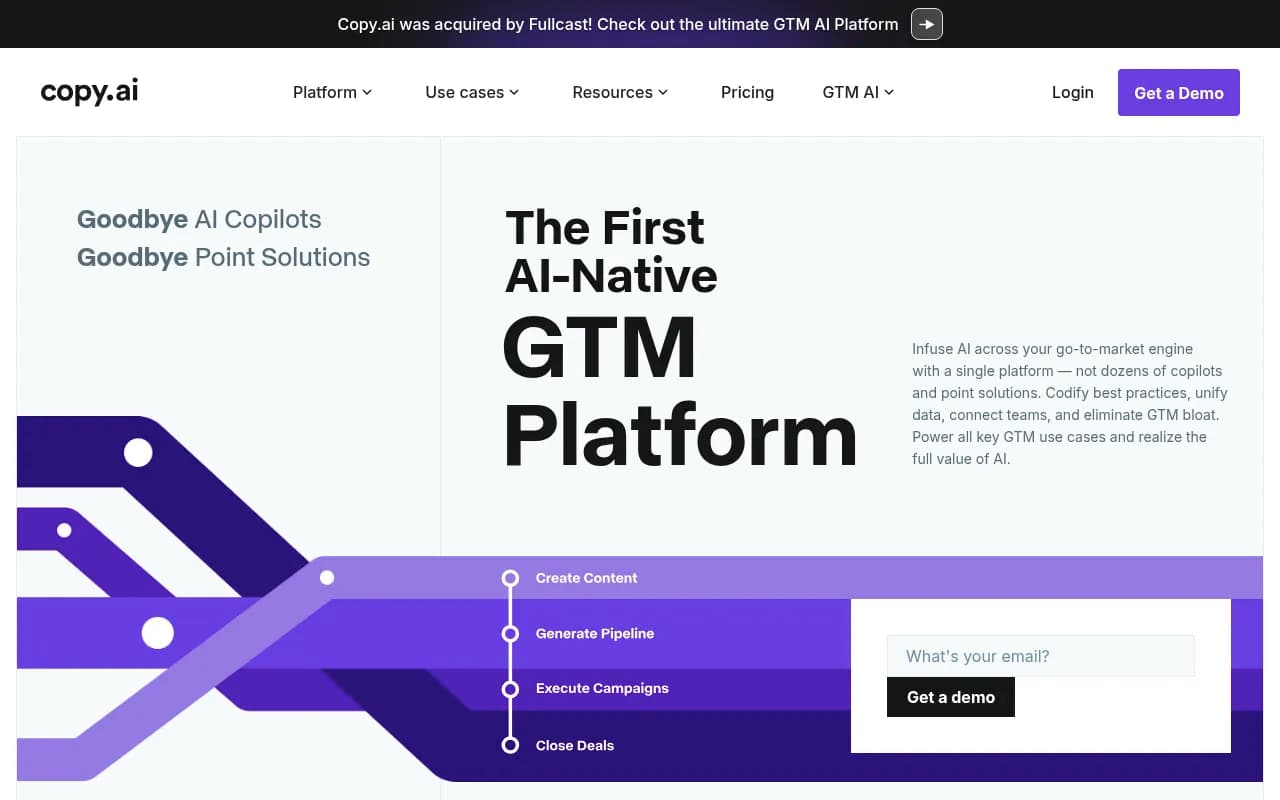
Writer is the most enterprise-grade option in this comparison. It's built around a proprietary knowledge graph that ingests your company's documents, style guides, and terminology, then uses that context to generate content that stays on-brand and factually grounded. The hallucination reduction is genuinely better than generic LLM outputs -- Writer's models are fine-tuned on your data, not just prompted.
For regulated industries (finance, healthcare, legal), Writer's compliance controls and audit trails make it the obvious choice. The tradeoff is setup time and cost -- it's not a tool you spin up in an afternoon.
Jasper
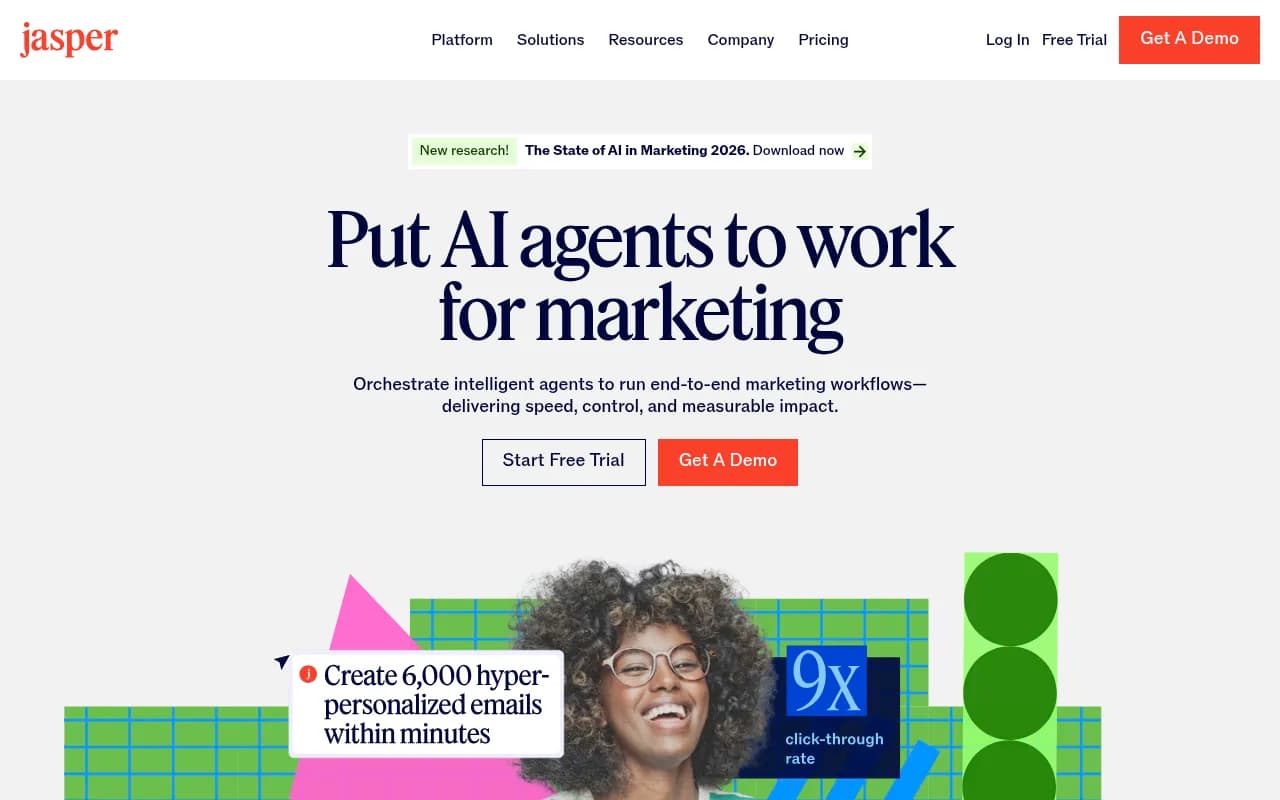
Jasper is the most widely used AI writing platform in marketing. Its brand voice feature lets you train the system on your existing content, and the output quality for marketing copy -- ads, emails, landing pages, social -- is consistently good. The interface is marketer-friendly, and time-to-first-draft is fast.
Where Jasper falls short is depth. It's a writing assistant, not a content operations system. There's no real workflow automation, limited integrations compared to AirOps, and the SEO features are surface-level. On GEO specifically, Jasper remains marketing-execution focused -- it doesn't track citations, doesn't analyze prompt data, and doesn't tell you which content gaps are costing you AI visibility.
Narrato
Narrato is the least well-known of the four, but it punches above its weight for mid-market content teams. It combines AI writing with content briefs, project management, and a content calendar -- making it a genuine all-in-one for teams that don't want to stitch together multiple tools. The AI writing quality is solid, the briefs pull in SEO data, and the workflow features (assignments, approvals, publishing) are more mature than you'd expect at this price point.
The limitation is that Narrato doesn't have the enterprise governance of Writer, the automation depth of AirOps, or the brand voice sophistication of Jasper. And like the others, it has no native GEO tracking.
Feature comparison
| Feature | AirOps | Writer | Jasper | Narrato |
|---|---|---|---|---|
| Primary use case | Workflow automation, programmatic SEO | Enterprise content governance | Marketing copy, brand voice | Content ops, project management |
| Brand voice training | Moderate | Strong (knowledge graph) | Strong | Basic |
| Hallucination control | Moderate | Strong (fine-tuned models) | Moderate | Moderate |
| Workflow automation | Strong | Moderate | Weak | Moderate |
| CMS integrations | Strong | Moderate | Moderate | Moderate |
| SEO features | Moderate | Basic | Basic | Moderate |
| GEO / AI search readiness | Emerging | Weak | Weak | Weak |
| Compliance / governance | Weak | Strong | Moderate | Weak |
| Content briefs | Basic | Moderate | Basic | Strong |
| Project management | Weak | Weak | Weak | Strong |
| Ease of setup | Moderate | Complex | Easy | Easy |
| Best for | SEO/growth teams, content ops | Enterprise, regulated industries | Marketing teams | Mid-market content teams |
| Starting price (approx.) | Custom | Custom | ~$59/seat/mo | ~$48/mo |
GEO readiness: where each platform actually stands
This is the dimension that matters most if your team is measured on AI search visibility, and it's where all four platforms have real gaps.
AirOps
The most GEO-aware of the four. AirOps has added brand sentiment scoring in AI-generated answers and some citation frequency tracking. If you're running large-scale content programs and want to connect output volume to AI visibility signals, AirOps is the closest thing to a GEO-aware writing platform in this group. But it's still primarily a production tool -- the GEO layer is thin.
Writer
Writer's knowledge graph approach is actually well-suited to producing content that AI models trust: it's grounded in real company data, reduces hallucinations, and produces structured, factual output. But Writer doesn't track whether that content is being cited. There's no prompt analysis, no citation monitoring, no gap analysis. It produces good content; it doesn't tell you if that content is working in AI search.
Jasper
Jasper has no meaningful GEO features. It's a fast, brand-consistent writing tool, and it does that job well. But if your KPI is "appear in ChatGPT's answer when someone asks about [your category]," Jasper won't help you measure or improve that.
Narrato
Same story as Jasper. Narrato's SEO features are oriented toward traditional search -- keyword density, readability scores, basic on-page optimization. There's no AI search visibility layer.
The honest conclusion
If GEO output quality is your primary concern, none of these four platforms is sufficient on its own. You'll need a dedicated AI visibility platform running alongside whichever writing tool you choose. That's where platforms like Promptwatch come in -- they track which prompts your competitors are visible for, show you the content gaps, and let you measure whether the content you publish actually starts getting cited.

Workflow and automation depth
For teams running content at scale, workflow automation is as important as output quality. Here the gap between AirOps and the others is significant.
AirOps is built around pipelines. You can pull keyword lists from a spreadsheet, generate briefs, write drafts, run quality checks, and push to a CMS -- all in a single automated workflow. For programmatic SEO at hundreds or thousands of pages, this is genuinely useful. The tradeoff is setup complexity: you need someone on the team who can design and maintain these workflows.
Jasper has basic automation features but nothing close to AirOps' depth. It's more "write this piece faster" than "run this content operation at scale."
Writer sits in the middle. Its enterprise focus means it has approval workflows, role-based access, and audit trails -- but these are governance features, not production automation features. You're not building multi-step content pipelines in Writer.
Narrato has the best project management features of the four: content calendars, task assignments, approval stages, client portals. For agencies or content teams managing multiple contributors, this is genuinely valuable. But it's project management, not automation.
Brand voice and governance
Jasper
Jasper's brand voice feature is the most marketer-accessible. You paste in examples of your existing content, Jasper analyzes the style, and subsequent outputs try to match it. It works reasonably well for tone and vocabulary. It doesn't work as well for factual accuracy or complex brand guidelines.
Writer
Writer's approach is more rigorous. You upload style guides, terminology lists, product documentation, and past content. The system builds a knowledge graph from this material and uses it to ground every output. The result is content that's more factually consistent and less likely to contradict your brand's actual positions. For companies with complex product lines or strict compliance requirements, this is a meaningful advantage.
AirOps
AirOps handles brand voice through prompt engineering -- you build system prompts that encode your brand guidelines, then those prompts run across your content workflows. It's flexible but requires more manual setup than Jasper or Writer's dedicated brand voice features.
Narrato
Narrato has basic style guide features but nothing as sophisticated as Jasper or Writer. For teams with simple brand guidelines, it's fine. For enterprise brand governance, it's not the right tool.
Pricing reality
Pricing in this category is genuinely hard to compare because most enterprise tiers are custom-quoted and the published prices don't reflect actual costs at scale.
Jasper's published pricing starts around $59/seat/month billed annually, which is the most accessible entry point. But at enterprise scale with multiple seats and advanced features, costs climb quickly.
AirOps doesn't publish pricing for its main platform -- you need to talk to sales. The workflow automation depth justifies a higher price point for teams that will actually use it, but it's not a tool you buy to occasionally write a blog post.
Writer is similarly custom-priced at enterprise level. The setup investment (time and cost) is higher than the others, which is why it tends to land in larger organizations with dedicated content operations teams.
Narrato is the most affordable, with plans starting around $48/month for small teams. For mid-market content teams, the price-to-feature ratio is strong.
Which platform is right for your team?
The honest answer is that the right choice depends on what problem you're actually solving.
If your team's primary bottleneck is brand voice consistency and fast marketing copy output, Jasper is the easiest win. It's not the deepest tool, but it's the fastest to value for marketing teams.
If you're in a regulated industry or have complex enterprise governance requirements, Writer is the clear choice. The setup investment pays off in content that's factually grounded and compliance-ready.
If you're running programmatic SEO at scale and need workflow automation across hundreds of pages, AirOps is the right fit -- assuming you have the technical maturity to build and maintain the pipelines.
If you're a mid-market content team that wants briefs, writing, project management, and publishing in one place without enterprise pricing, Narrato is worth a serious look.
And if your actual goal is improving AI search visibility -- getting cited in ChatGPT, Perplexity, Google AI Overviews -- then you need to layer a dedicated GEO platform on top of whichever writing tool you choose. The writing tools produce content; the GEO platform tells you which content to produce and whether it's working.
The GEO layer: what to add on top
The research is consistent across multiple 2026 comparisons: none of the major AI writing platforms were built to optimize for AI search citations. They optimize for human readers, SEO scores, and brand consistency. GEO requires a different data layer -- one that tracks actual AI model behavior, identifies which prompts your competitors are winning, and measures citation frequency over time.
For teams serious about AI search visibility, the workflow looks something like this:
- Use a GEO platform to identify which prompts and topics are driving citations in your category
- Use your AI writing tool to produce content that addresses those gaps
- Track whether the new content starts getting cited, and iterate
Promptwatch is built specifically for steps 1 and 3 -- it tracks prompt volumes, runs answer gap analysis to show which topics competitors are visible for but you're not, and monitors citation changes after you publish. The content generation in step 2 can happen in any of the four tools above.
The platforms that try to do everything -- write content AND track AI citations -- tend to do neither particularly well. The more productive approach is picking the best writing tool for your team's workflow, then adding a dedicated GEO layer to measure and improve AI search performance.
Bottom line
AirOps, Writer, Jasper, and Narrato are all legitimate tools with real strengths. The mistake is expecting any of them to solve your GEO problem on their own.
Jasper is the best pure writing tool for marketing teams. Writer is the best for enterprise governance. AirOps is the best for content operations at scale. Narrato is the best value for mid-market teams. But none of them will tell you which AI prompts you're invisible for, which competitors are getting cited instead of you, or whether your new content is moving the needle in AI search. That's a separate problem requiring a separate tool.
The teams winning at GEO in 2026 aren't using one magic platform. They're combining a solid content production workflow with dedicated AI visibility measurement -- and iterating based on actual citation data rather than guessing.