Key takeaways
- Fintech brands are mostly invisible in their own category. Only 11.4% of citations in AI answers for fintech queries point to brand-owned domains; the rest go to NerdWallet, Bankrate, Investopedia and similar publishers.
- Compliance is the variable that makes fintech GEO different from every other vertical. Any AI-visibility fix touching APR, fees, eligibility, or disclosures needs a compliance sign-off before it ships.
- You don't need NerdWallet-level domain authority to get cited. Promptwatch's own citation data shows mid-authority domains (DR 46-75) earn almost half of all ChatGPT citations, while top-tier DR 91-100 sites have been losing share since August 2026.
- Reddit is an unreliable GEO channel right now. ChatGPT's Reddit citation share fell from roughly 3.8% to 0.5% in a single week in mid-August 2026 -- don't build a fintech content strategy around subreddit engagement alone.
- Pick a tracking tool based on whether it covers comparison-site visibility, regulated-content monitoring, and geographic/licensing-regime tracking -- not just "does it track ChatGPT."
Why fintech is the hardest category in AI search
Ask ChatGPT "what's the best high-yield savings account" and you're not really competing with other banks. You're competing with Bankrate's rate table, NerdWallet's roundup, and Investopedia's explainer. According to 5WPR's Banking AI Visibility Index, which ran 31,500 prompts across 75 major U.S. banks over five months, three publishers alone -- Bankrate, Investopedia, and Wikipedia -- supply 68% of all banking-related AI citations. Bankrate takes 17.8% on its own; NerdWallet adds another 9.6%. JPMorgan was the highest-ranked bank brand in the whole study, and most regional banks barely register.
That pattern holds across the industry. A separate analysis from Foundation Inc./AirOps found that only 11.4% of sources cited in AI answers to fintech queries are brand-owned, with the remainder going to the same handful of comparison sites. A third study cited by Clairon.ai put the publisher share even higher, over 60% of finance citations across 109,000 analyzed answers, split between consumer fintech publishers (NerdWallet, Bankrate) and B2B fintech publishers (TechCrunch, Y Combinator, G2, Stratechery).
So the first job of any fintech AI search strategy is not "get ChatGPT to cite us instead of Bankrate." It's figuring out which slice of queries you can realistically win directly, and which ones you win by showing up accurately inside Bankrate's and NerdWallet's content instead.
The compliance problem nobody else in GEO has to deal with
This is the part generic GEO advice skips. If you run a lending, payments, or banking product and an AI engine misstates your APR, your fee schedule, or your licensing status, that's not a minor SEO miss, it's a potential regulatory and reputational problem. Research cited by Clairon.ai (attributed to BrightEdge) estimates 43% of Google AI summaries on finance queries contain inaccurate or misleading information. Combine that with AI Overview coverage on financial queries hitting 52% in Q1 2026 per Presenc AI's research, and you have a situation where more than half of consumer financial searches are now mediated by a system with a close to coin-flip accuracy rate on your numbers.
Practically, this means any fintech GEO workflow needs a step that generic SaaS or e-commerce workflows don't: routing content changes that touch rates, fees, eligibility, or disclosures through legal/compliance review before publishing. It also means monitoring isn't optional -- you need to know what AI is saying about your product today, not find out from a customer complaint.
What actually gets cited: the data fintech teams should plan around
A few patterns from Promptwatch's own citation data are directly useful for fintech content planning:
- Product pages are still the single most-cited content type on ChatGPT (28.7% in August 2026), but their share has been slipping since Aug 22. How-to content more than doubled over the same month, from about 4% to 9-10% of citations, now roughly even with listicles. If your content calendar is 90% rate pages and comparison tables, add "how ACH transfers settle" and "how APR is calculated" style explainers -- they're the fastest-growing format.
- You don't need to out-rank Bankrate's domain authority to get cited. Promptwatch's citation share by domain rank report shows mid-authority domains (DR 46-75) earned roughly 46% of all ChatGPT citations in August 2026, while top-tier DR 91-100 sites fell from 7% to about 3% of citations over the same period. A well-structured fintech site with clean rate pages has a real shot.
- Citation inventory per response varies a lot by engine. Promptwatch's average sources per response data shows ChatGPT typically cites around 5 sources, a scarce slot count, while Google AI Overviews and Perplexity both cite closer to 10. Copilot is wildly inconsistent, swinging between under 2 and nearly 17 sources per response. If you're going to fight for a scarce ChatGPT slot, your odds improve on AI Overviews and Perplexity first.
- Reddit is not the reliable GEO lever it was in July. Promptwatch's Reddit citation drop data shows ChatGPT's citation share of reddit.com fell from about 3.8% to 0.5% during the week of August 14, 2026, an 86% relative collapse in days. Google AI Overviews and AI Mode only declined gradually over the same window. If r/personalfinance engagement is part of your plan, treat it as one channel among several, not the whole strategy, and lean more on YouTube for Google and Perplexity surfaces per Promptwatch's social citations by AI model report.
- For B2B fintech specifically, LinkedIn matters differently depending on the engine. Promptwatch's LinkedIn citation page types report shows ChatGPT leans on LinkedIn Company pages to verify who you are (33.68% of its LinkedIn citations), while Google AI Mode and AI Overviews lean on Pulse articles (around 34.5%), and Perplexity favors ordinary feed posts. Keep your company page complete, publish Pulse articles for Google visibility, and post in-feed regularly if Perplexity matters to your buyers.
- Check your robots.txt and WAF rules. Many finance and banking sites run aggressive bot-blocking for fraud prevention, which can accidentally block legitimate AI crawlers like OAI-SearchBot, ChatGPT-User, ClaudeBot, PerplexityBot, and Meta's new web indexer. Meta-WebIndexer alone jumped from about 2% to nearly 38% of all tracked AI crawler requests between mid-July and early August 2026, per Promptwatch's crawler traffic research. If your WAF is blocking it, you're invisible to a crawler that's rapidly becoming a major share of AI traffic.
A fintech-specific checklist before choosing a tool
According to Presenc AI's research on AI visibility tools for fintech, a tool worth paying for needs to do more than generic brand tracking. It should:
- Track comparison-engine and review-site presence specifically (NerdWallet, Bankrate, ValuePenguin, Forbes Advisor, Investopedia), since these out-cite most fintech brand sites directly.
- Support regulated-content monitoring, flagging AI descriptions that misstate APR, fees, eligibility, or disclosures, and route them to a compliance workflow.
- Separate consumer fintech prompt sets ("best credit card for travel") from B2B fintech prompt sets ("best treasury management platform"), since the citation ecosystems are completely different -- G2 and analyst reports matter for B2B, comparison sites dominate consumer.
- Support geographic and licensing-regime tracking, given how local fintech compliance is.
- Track trust signals like deposit insurance, licensing status, and third-party review platforms (Trustpilot, BBB), since AI models cite these heavily when forming financial answers.
Comparing the tools
Here's how a handful of the more relevant platforms stack up for a fintech buyer specifically. Pricing below is self-reported by each vendor as of late 2026.
| Tool | Starting price | Engines covered (entry tier) | Fintech-relevant strength | Weak spot |
|---|---|---|---|---|
| Promptwatch | $95/mo (Essential) | All 9 tracked engines, no add-on fees | Crawler logs to catch AI-bot blocking, content gap analysis, compliance-friendly content review inbox, country/state/city tracking | Newer brand than legacy SEO suites |
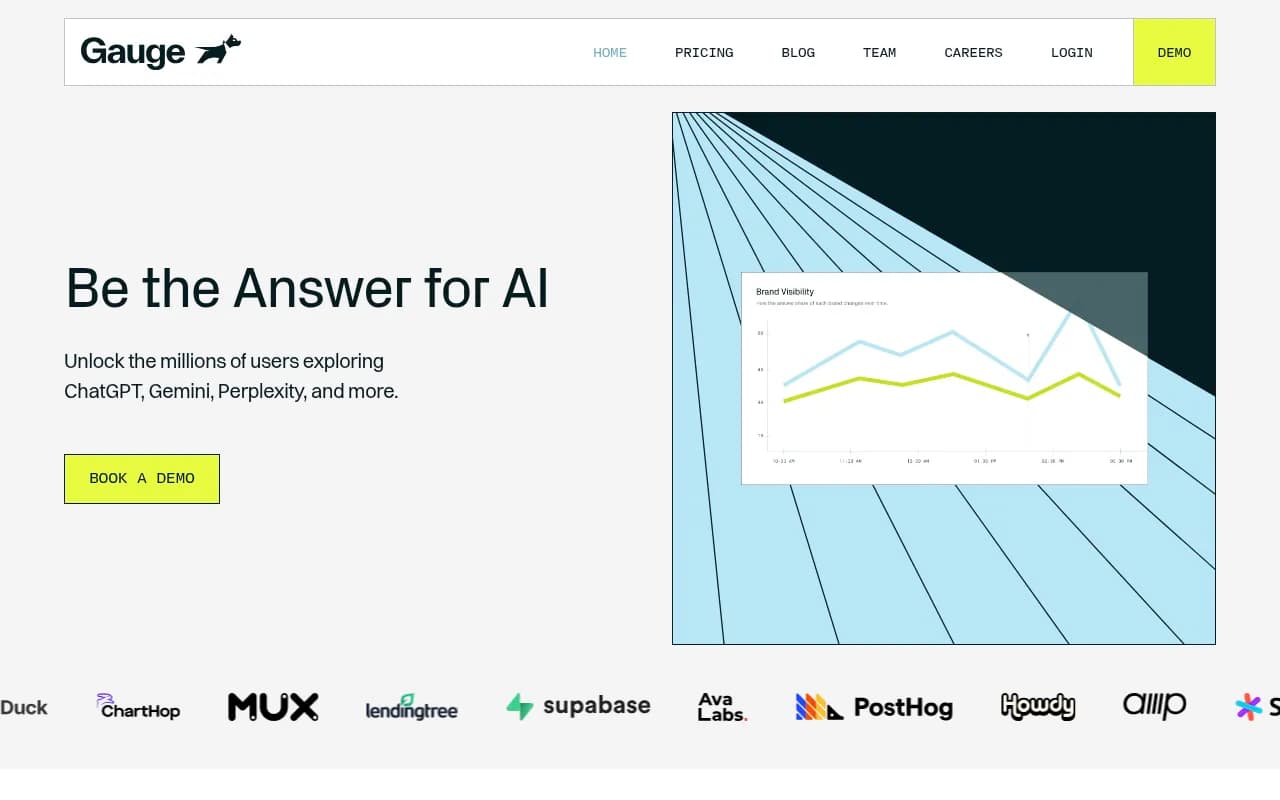
| Gauge | $599/mo (Growth) | 6 platforms, 600 prompts/day | Positions itself as fintech-specific, cites LendingTree as a customer | Expensive for early-stage teams |
| Peec AI | ~$95/mo (Starter) | 3 engines of choice | Strong multi-country tracking, useful for multi-jurisdiction fintechs | Extra AI models cost extra on every tier |
| Profound | Custom (Enterprise only) | Up to 9 engines | SOC 2 Type II, HIPAA, SSO -- compliance signals banks care about | Self-serve plans reportedly removed in 2026, enterprise sales cycle required |
| Otterly.AI | $29/mo (Lite) | 4 engines base | Cheap entry point, 50+ country support | Steep jump from $29 to $189/mo, several engines gated behind add-ons |
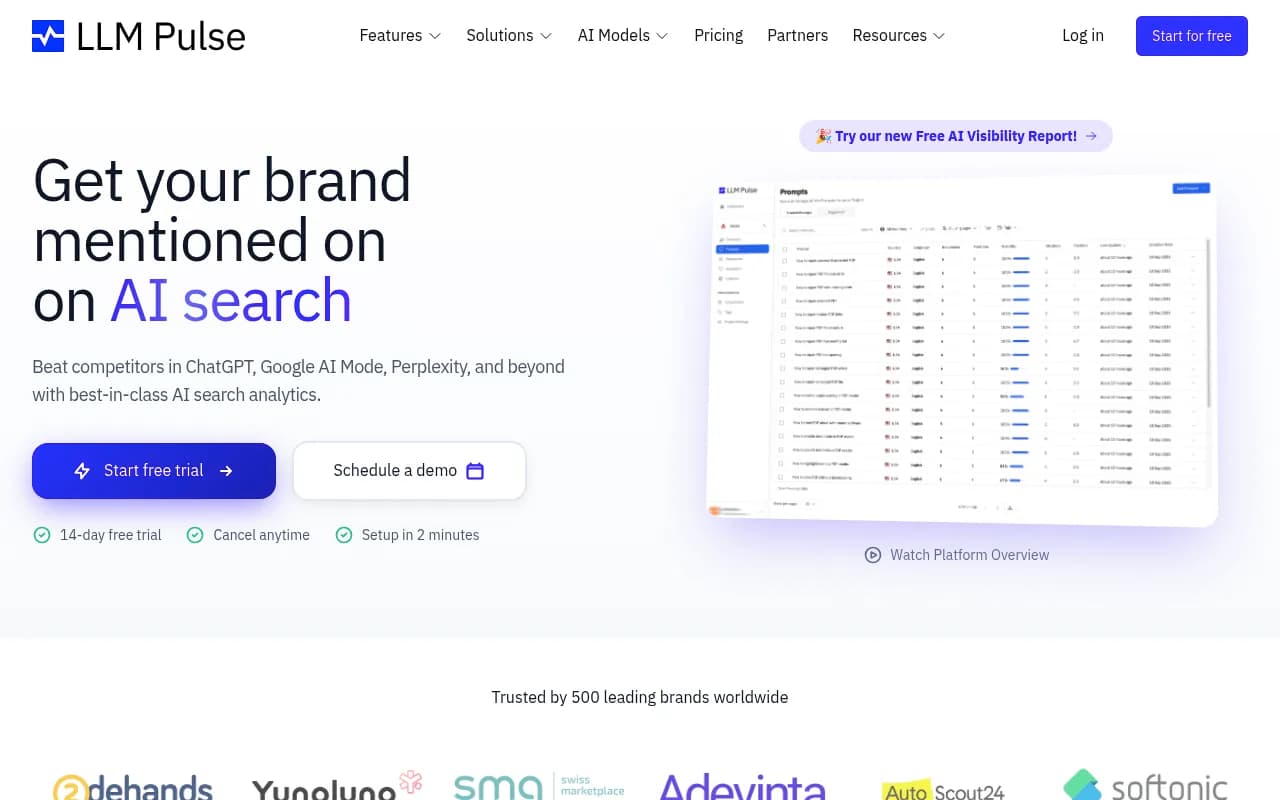
| LLM Pulse | ~$49/mo (EUR) | Multiple engines | Cheapest comparable volume in the market | Thinner feature set than full GEO platforms |

For most fintech teams, Promptwatch and Gauge. Gauge's fintech positioning is explicit, down to naming LendingTree as a customer and building its "Ask Gauge" agent around GA4/GSC/DataForSEO data. But Promptwatch's crawler-log-to-citation matching is the feature that solves the robots.txt/WAF blocking problem above, which is a real and underexamined risk for banks running aggressive bot defenses. Promptwatch also includes all AI engines at every tier rather than charging extra per model, which matters once you're tracking ChatGPT, Gemini, AI Overviews, Perplexity, and Copilot simultaneously, since fintech buyers genuinely split across all of them.
If budget is the constraint, Otterly.AI and LLM Pulse are the cheapest entry points, but both require add-ons to cover the full engine set a fintech brand actually needs to watch.

Agencies and enterprise compliance teams that need SSO and SOC 2 documentation might still land on Profound despite the price, since those certifications matter in vendor security reviews common at banks.


What budget to actually set
Presenc AI's research gives a rough benchmark worth sanity-checking against: early-stage fintechs tend to spend $18K-$36K a year on GEO, Series B to growth-stage consumer or B2B fintech $36K-$180K, and public fintechs or major financial brands $200K-$800K annually. That range includes tooling, content production, and agency support where applicable, not just software licenses.
Quick wins worth doing this quarter
A few steps from Clairon.ai's fintech GEO research, with compliance review layered on top where relevant:
- Check your robots.txt and WAF against the current AI crawler list (OAI-SearchBot, ChatGPT-User, ClaudeBot, PerplexityBot, Google-Extended, Meta's indexer). This is a 15-minute fix that's often ignored at banks running strict bot policies for fraud reasons.
- Validate your product pages with Google's Rich Results Test and add FinancialProduct schema with dated APY/APR/fee fields. Public benchmarks like Mercury and Chime are cited as examples worth studying.
- Build direct comparison pages against your top 2-3 competitors. Citation share on comparison prompts reportedly lifts within about 14 days of publishing, per Clairon.ai's analysis, though schema and trust-page fixes in general seem to move citation share over a 14-30 day window.
- Engage factually (and with compliance sign-off on any rate or product claims) in relevant communities -- r/personalfinance for consumer fintech, developer-facing channels like G2 and Indie Hackers for B2B -- while remembering Reddit's ChatGPT citation weight dropped sharply in mid-August 2026, so this is a supplement, not a core strategy.
- If your audience includes developers evaluating your API, note that Claude reportedly has a higher owned-domain citation rate than other engines for B2B fintech developer queries, attributed to its larger context window, according to Clairon.ai's single-source analysis. Treat that as a reason to make sure your API docs are clean and crawlable, not as a guaranteed outcome.
Where to go from here
If you want to browse more AI visibility tools beyond the ones covered here, the GEO software directory at bestgeosoftware.com lists a broader set of platforms by category, and agenticseotools.com is worth checking if you're specifically looking for tools that go beyond monitoring into automated content fixes. For fintech teams working with an agency rather than building this in-house, 1001 SEO Media runs technical SEO, content, and GEO programs with the kind of compliance-aware workflow this category needs, though the right move for most fintech teams is to start with a tracking tool, see where the gaps actually are, and bring in outside help once you know what you're fixing.