Key takeaways
- Profound's Starter plan covers only ChatGPT at $99/month; Growth jumps to $399/month for 3 platforms, with no free trial at any tier.
- Most Profound alternatives are also monitoring-only dashboards -- they show you data but don't help you act on it.
- The tools that stand out in 2026 combine citation tracking with content gap analysis and actual content generation in one workflow.
- Promptwatch is the only platform rated a "Leader" across all three categories in a 2026 comparison of 12 GEO platforms.
- Pricing ranges from $29/month (entry-level trackers) to enterprise contracts -- there's a realistic option for every team size.
Profound raised $96 million (Fortune, February 2026) and built a genuinely strong enterprise product. Its Prompt Volumes panel is one of the few tools that measures actual AI search demand by topic. Its customer list -- Ramp, MongoDB, Figma, Docusign -- tells you exactly who it's built for: large companies with procurement processes, SOC 2 requirements, and budgets to match.
If that's you, Profound probably works fine. But if you're a marketing team, an agency, or a growth-stage brand that wants to do more than watch a dashboard, you'll hit its limits fast. Profound Starter covers only ChatGPT. Growth covers 3 platforms. Neither tier offers a free trial. And neither helps you create the content that would actually improve your visibility scores.
That's the gap this guide addresses. The 10 tools below are ranked specifically on three dimensions that matter most in 2026: content generation (can the tool help you create content that ranks in AI?), gap analysis (does it show you what you're missing vs. competitors?), and citation tracking (does it tell you which pages are being cited, by which models, and how often?).
Why these three dimensions matter more than "monitoring"
Most AI visibility tools are built around the same core loop: run prompts, count mentions, show a chart. That's useful for awareness, but it doesn't move the needle.
The teams actually improving their AI visibility in 2026 are doing three things. They're finding the specific prompts where competitors appear and they don't. They're creating content that directly answers those prompts. And they're tracking whether that content gets cited after it's published.
A tool that only does step one -- monitoring -- leaves you with a list of problems and no path to fixing them. That's why content generation and gap analysis have become the real differentiators in this category.
The 10 best Profound alternatives in 2026
1. Promptwatch
Promptwatch is the most complete platform in this comparison. It covers all three dimensions -- gap analysis, content generation, and citation tracking -- and it's the only tool in a 2026 comparison of 12 GEO platforms rated as a "Leader" across every category.
The core workflow is built around what Promptwatch calls the Action Loop. Answer Gap Analysis shows you exactly which prompts competitors rank for that you don't, down to the specific content your site is missing. Content Agents then generate articles, listicles, and comparisons grounded in real prompt data, citation data, and competitor analysis -- not generic filler. After publishing, page-level tracking shows which pages are being cited, by which AI models, and how often. Agent Analytics logs when AI crawlers visit your pages and when those visits convert to citations.
It monitors 10 AI models: ChatGPT, Perplexity, Google AI Overviews, Google AI Mode, Claude, Gemini, Meta/Llama, DeepSeek, Grok, and Mistral. Pricing starts at $99/month (Essential: 1 site, 50 prompts, 5 articles), $249/month (Professional: crawler logs, 150 prompts, 15 articles), and $579/month (Business: 5 sites, 350 prompts, 30 articles). A free trial is available.
For teams that want to actually improve their AI visibility rather than just measure it, Promptwatch is the clearest choice in 2026.

2. Scrunch AI
Scrunch AI focuses on AI search visibility monitoring with a clean interface and solid multi-model coverage. It tracks brand mentions across ChatGPT, Perplexity, Claude, and Gemini, and gives you share-of-voice data against competitors.
Where Scrunch falls short is the same place most monitoring tools do: it shows you the problem but doesn't help you fix it. There's no content generation, and gap analysis is limited compared to platforms built around the full optimization workflow. That said, for teams that already have a content operation and just need reliable citation data, Scrunch is a solid choice at a lower price point than Profound.
3. SE Ranking
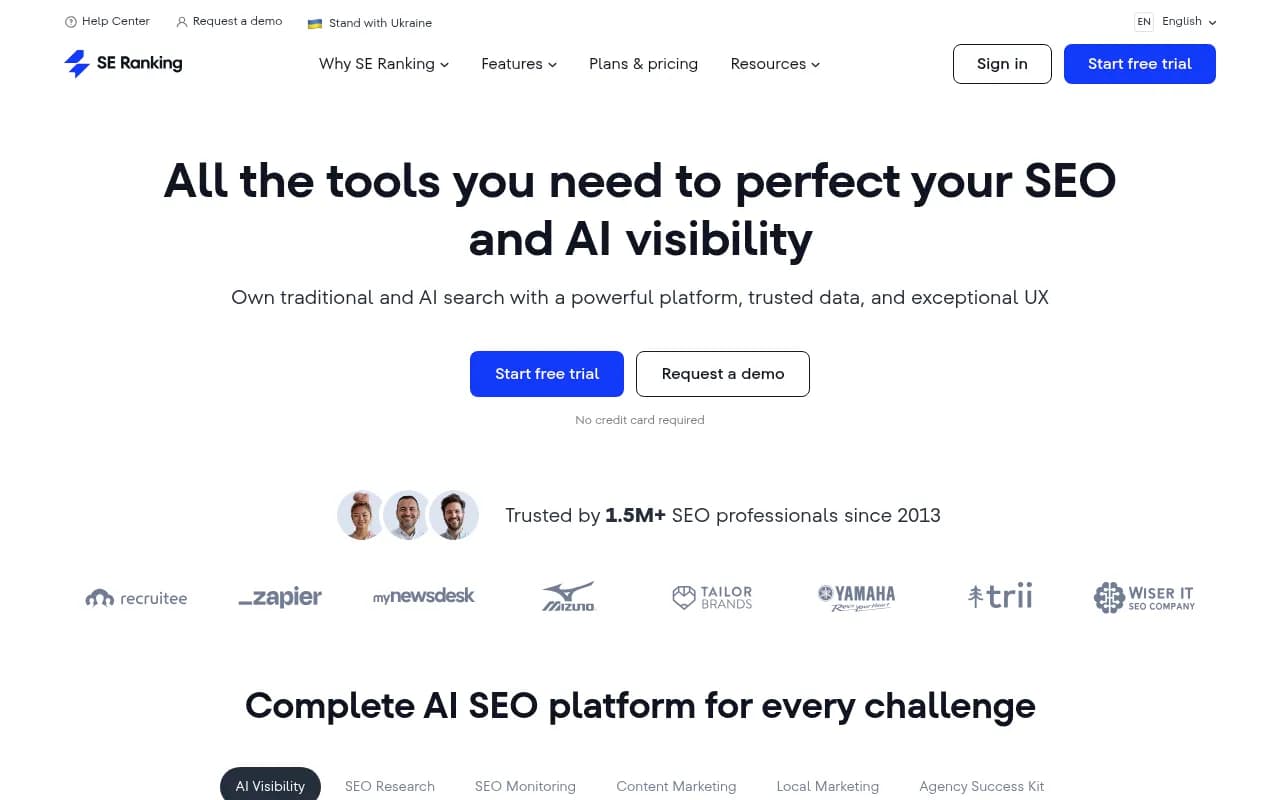
SE Ranking is an all-in-one SEO platform that added AI visibility tracking as a meaningful feature, not an afterthought. Its AI visibility toolkit connects traditional keyword rankings to AI citation data, which is genuinely useful for teams that want to understand how their SEO performance translates (or doesn't) into AI search visibility.
It's the best option in this list if your primary goal is connecting AI visibility to real SEO performance. The content optimization tools are solid, though the AI-specific content generation features don't go as deep as Promptwatch's Content Agents. Pricing is competitive, and the breadth of the platform means you're not paying for a separate SEO tool on top.
4. Otterly.AI
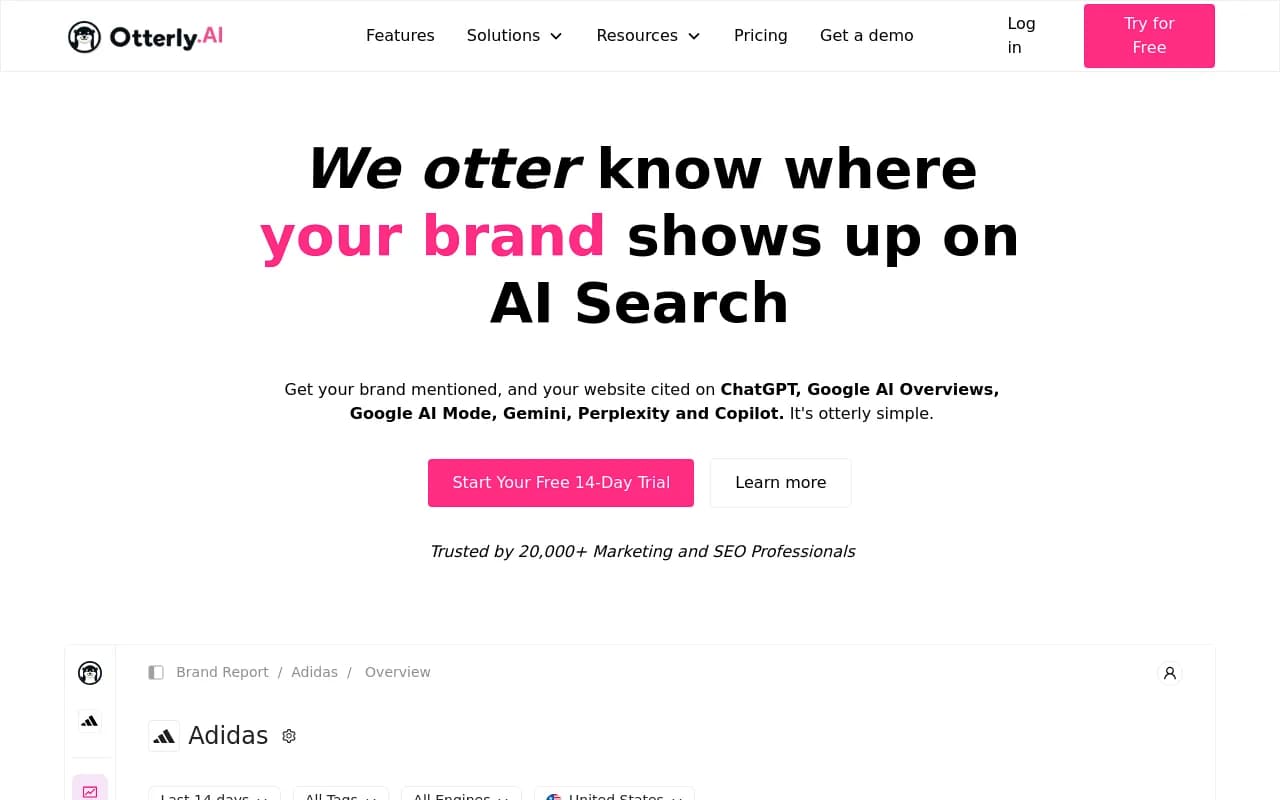
Otterly.AI sits at the affordable end of this category. It tracks brand mentions across the major AI platforms, gives you basic sentiment analysis, and exports data in formats that work well for reporting. The interface is clean and the setup is fast -- you can be tracking within minutes.
The honest limitation: Otterly is a monitoring tool. No content generation, no crawler logs, no gap analysis that shows you what to create. For solo marketers or small teams that want a low-cost way to stay aware of their AI visibility without committing to a full GEO platform, it works. For teams that want to act on the data, you'll need something else alongside it.
5. Peec AI
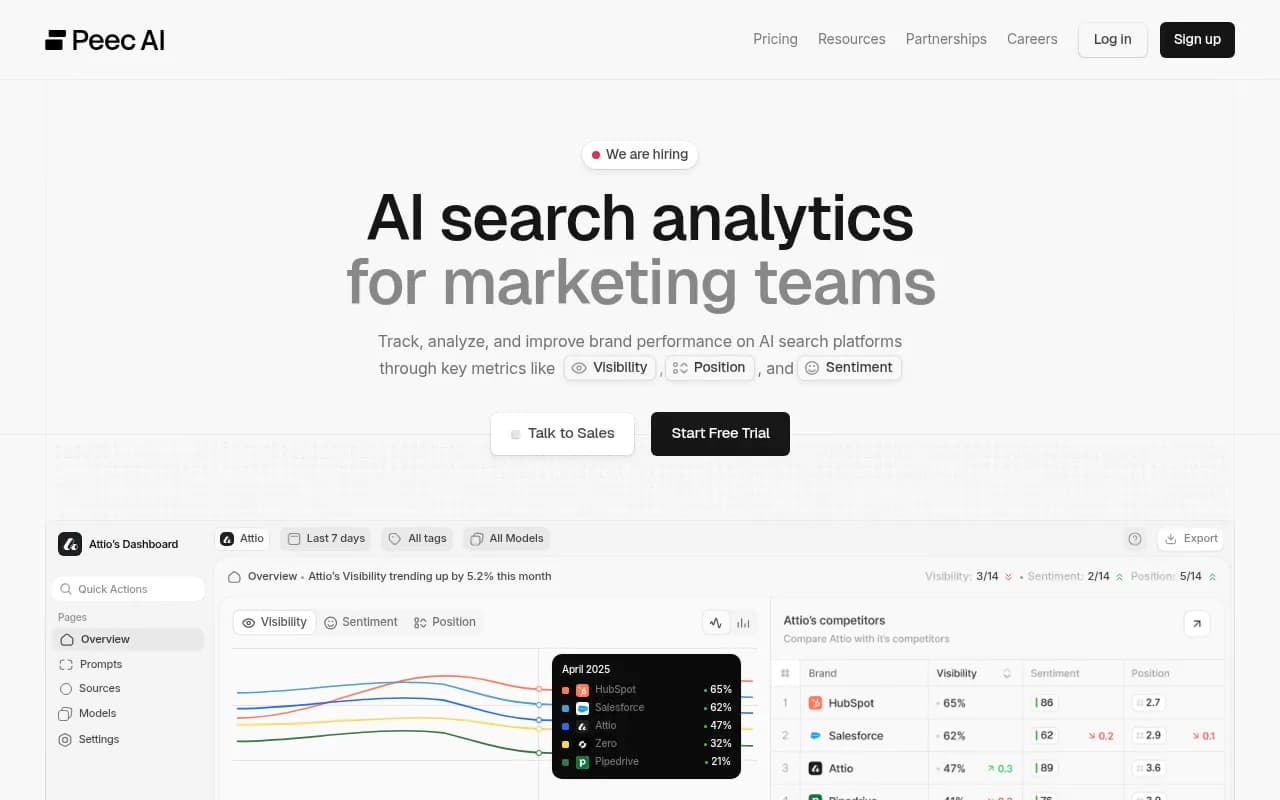
Peec AI is built specifically for prompt-level analytics. It gives you detailed data on which prompts are driving AI citations, how your brand appears in responses, and how that compares to competitors. The multi-language support is genuinely strong -- one of the better options if you're tracking AI visibility across multiple markets.
Gap analysis exists but is more focused on prompt coverage than content recommendations. There's no content generation. For marketing teams that need granular prompt-level data and operate in multiple languages, Peec AI is worth a close look.
6. AthenaHQ
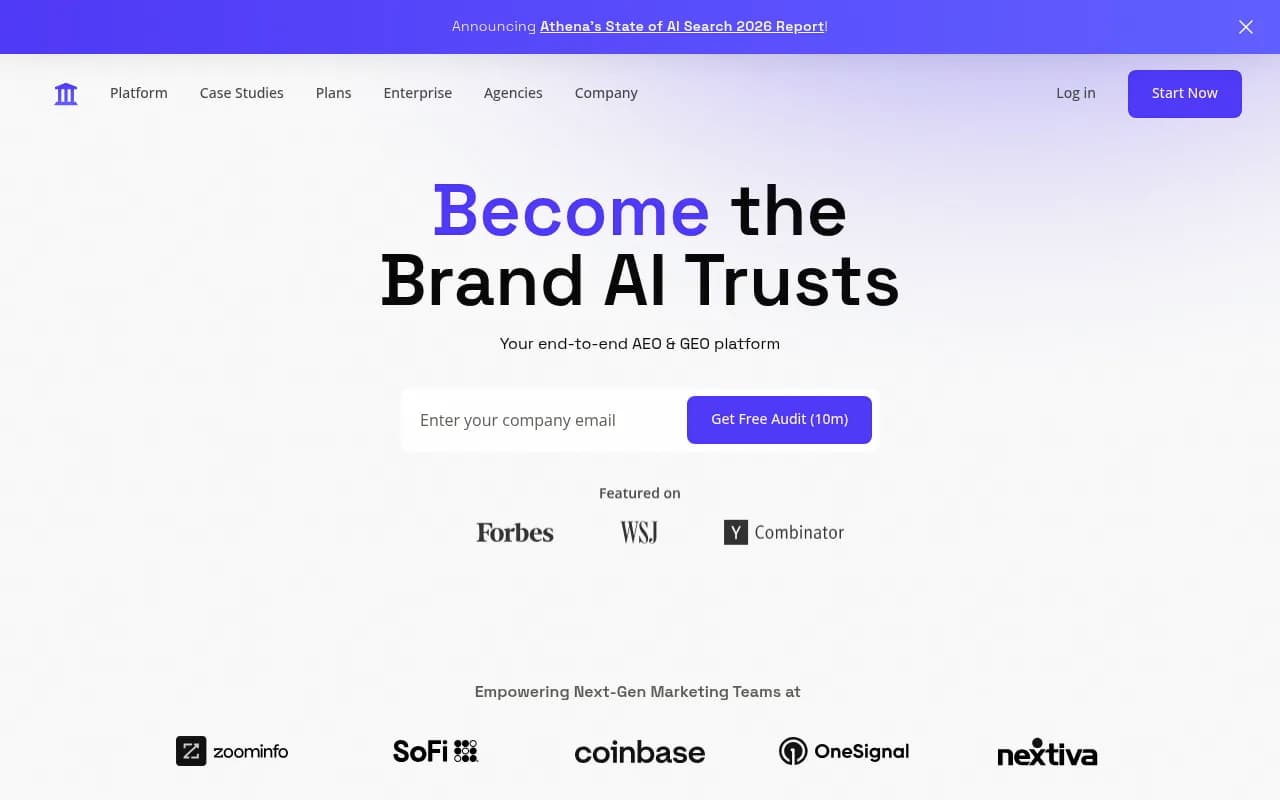
AthenaHQ covers 8+ AI search engines and gives you structured visibility data across models. The interface is well-designed and the competitive comparison features are useful for understanding where you stand relative to specific competitors on specific topics.
It's a monitoring-focused platform. The gap analysis shows you where you're not appearing, but the path from "here's the gap" to "here's the content that fills it" requires you to leave the platform and do that work elsewhere. For teams comfortable with that workflow, AthenaHQ is a capable tracker.
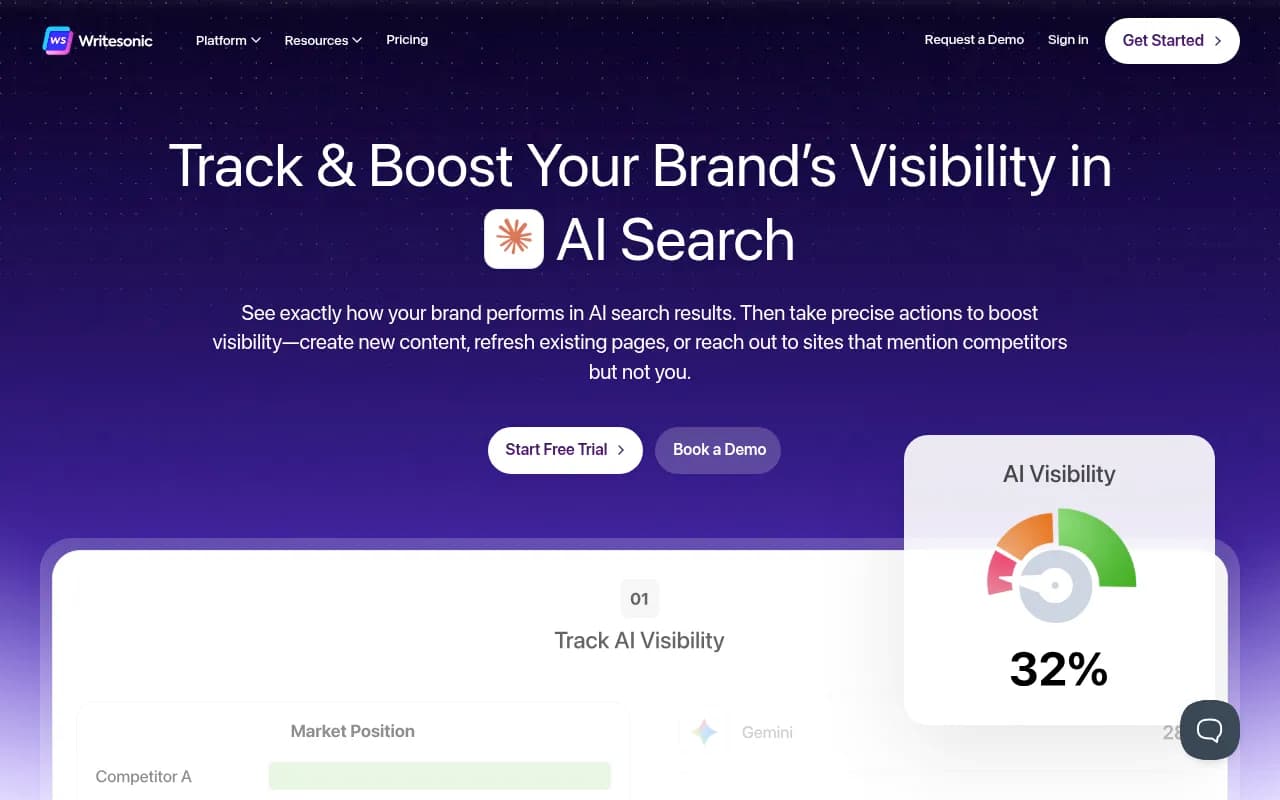
7. Writesonic
Writesonic is primarily a content generation platform that added AI search visibility tracking. That's the reverse of most tools on this list, and it creates an interesting profile: the content generation is genuinely strong (it's what Writesonic was built for), but the tracking and citation analysis are shallower than dedicated GEO platforms.
If your main bottleneck is creating content and you want some visibility data alongside it, Writesonic makes sense. If you need deep citation tracking or competitor gap analysis, it's not the right fit.
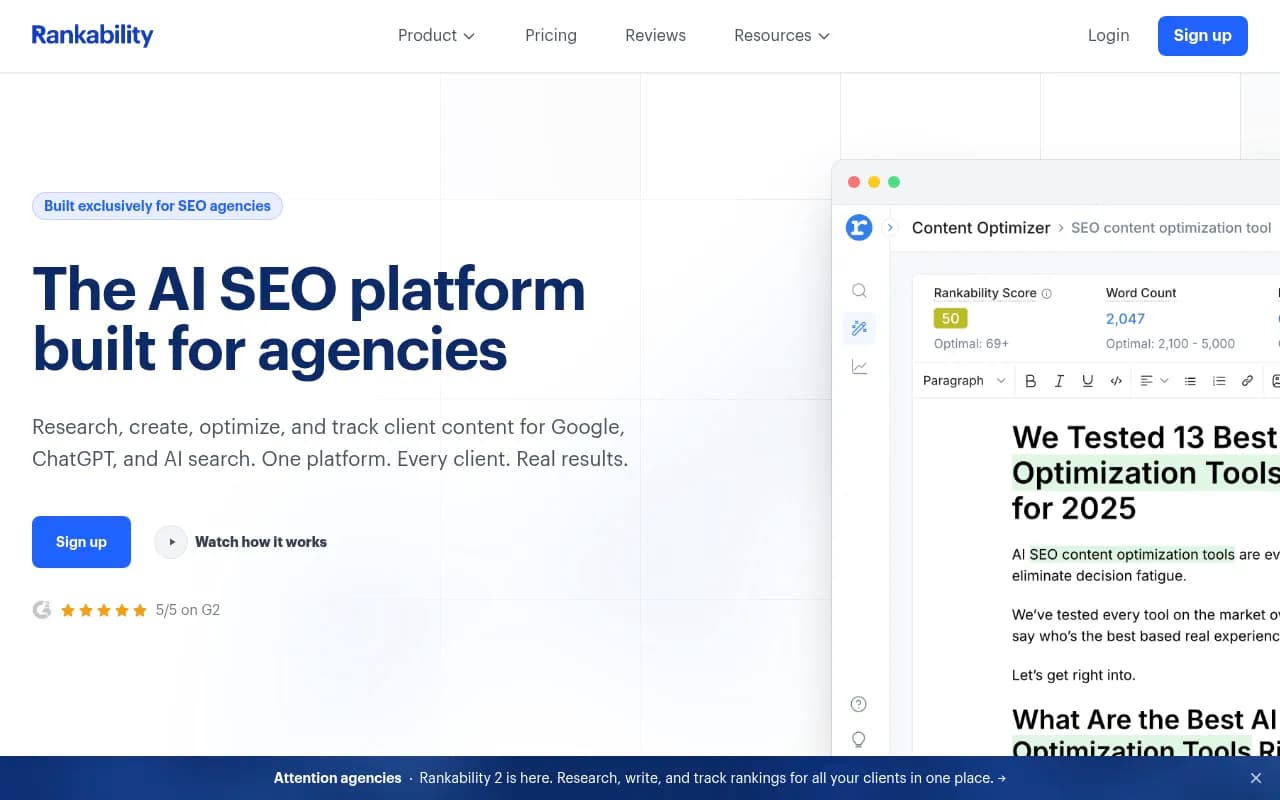
8. Rankability
Rankability is agency-focused, with reporting features and client management tools built into the platform. It tracks AI visibility across the major models and gives agencies a way to show clients their citation performance over time.
The analytics are solid. Content generation is limited. For agencies that need a clean way to report on AI visibility without building custom dashboards, Rankability covers that use case well.
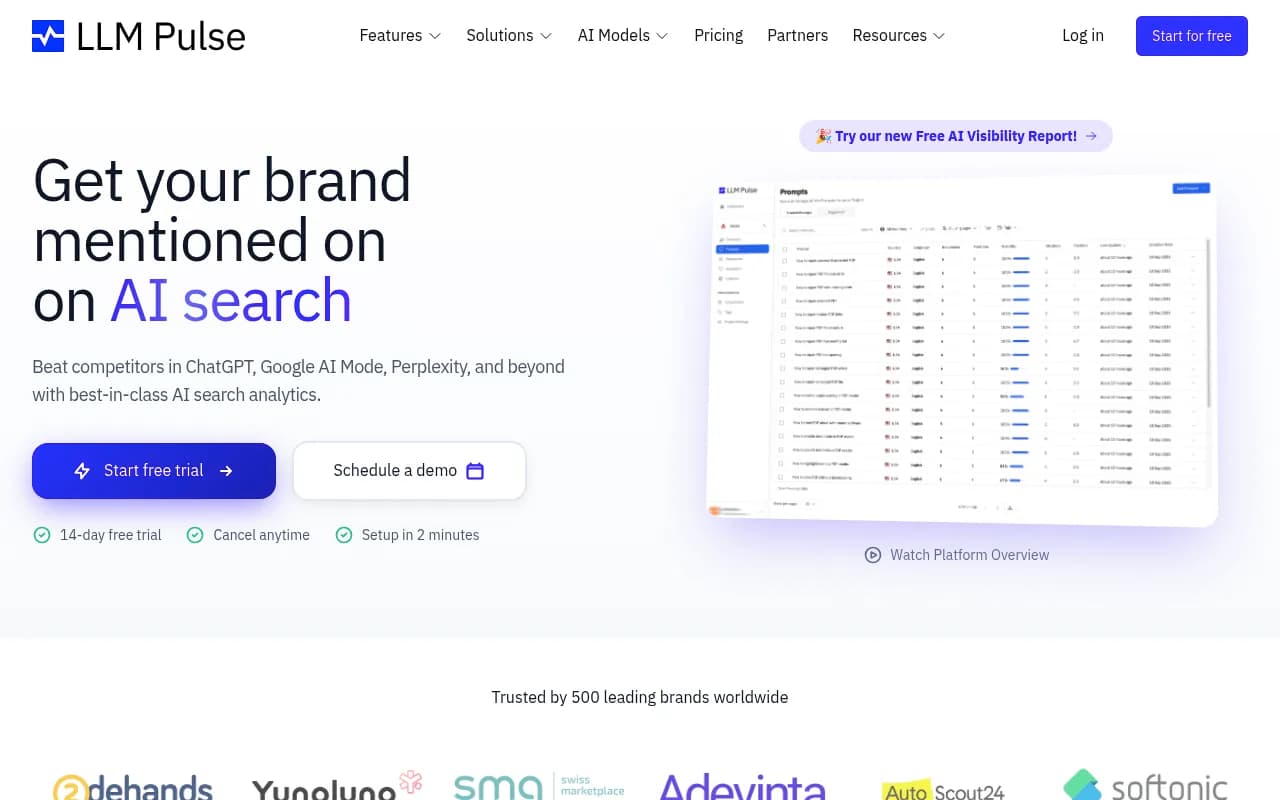
9. LLM Pulse
LLM Pulse focuses on tracking how LLMs respond to prompts related to your brand and category. It's particularly useful for understanding response patterns -- how AI models describe your brand, what language they use, and how that changes over time.
The citation tracking is functional, and the monitoring covers the main models. Gap analysis and content generation aren't core features. For teams doing brand research and wanting to understand AI perception rather than optimize for it, LLM Pulse is a reasonable choice.
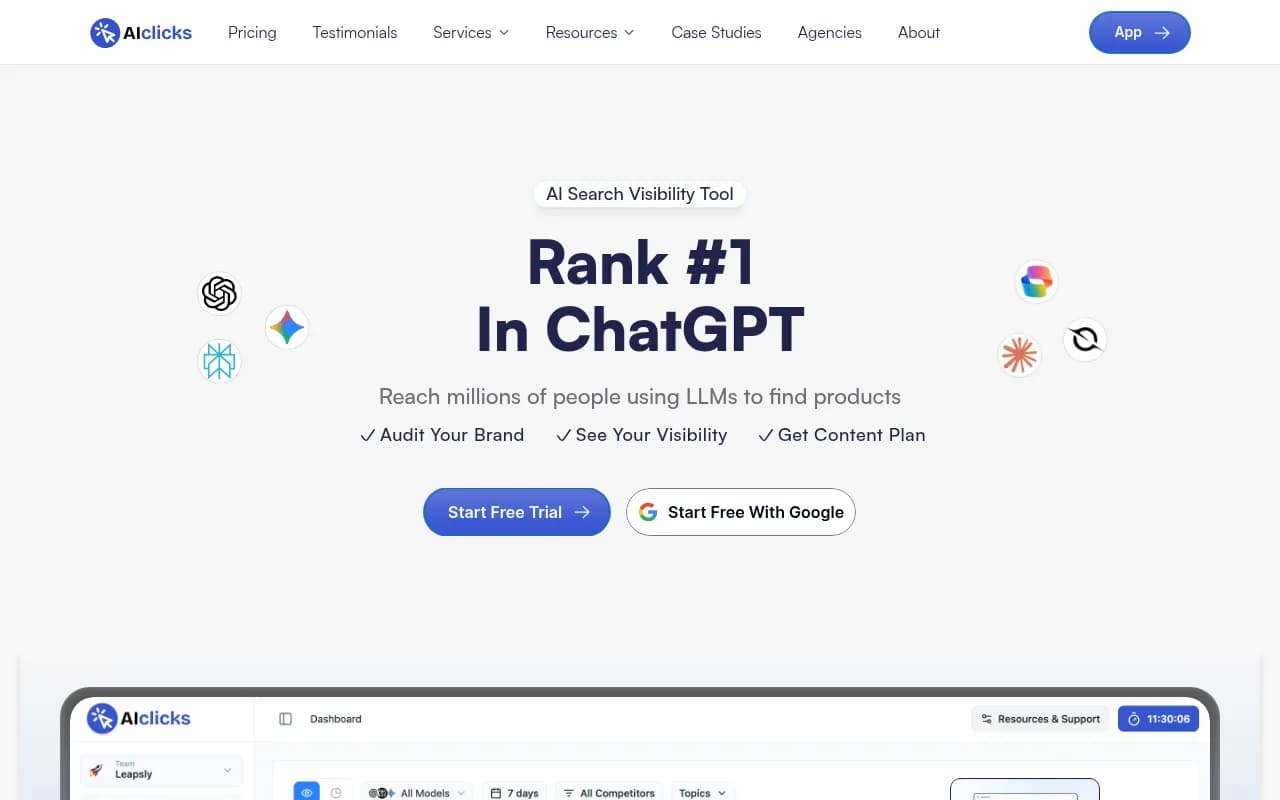
10. AIClicks
AIClicks rounds out this list as a solid entry-level option for tracking and optimizing AI search visibility. It covers the major platforms, gives you citation data, and includes some content optimization guidance. The pricing is accessible, and the feature set is broad enough to be useful without being overwhelming.
It doesn't go deep on any single dimension -- gap analysis, content generation, and citation tracking are all present but not best-in-class. For teams just starting with AI visibility and wanting one tool to get oriented, AIClicks is a reasonable starting point.
How these tools compare
| Tool | Content generation | Gap analysis | Citation tracking | AI models covered | Starting price |
|---|---|---|---|---|---|
| Promptwatch | Yes (Content Agents) | Yes (Answer Gap Analysis) | Yes (page-level + crawler logs) | 10 | $99/mo |
| Scrunch AI | No | Limited | Yes | 4+ | Custom |
| SE Ranking | Partial | Partial | Yes | 5+ | ~$65/mo |
| Otterly.AI | No | No | Basic | 4+ | ~$29/mo |
| Peec AI | No | Prompt-level | Yes | 5+ | Custom |
| AthenaHQ | No | Yes (monitoring) | Yes | 8+ | Custom |
| Writesonic | Yes (content-first) | No | Basic | 3+ | ~$99/mo |
| Rankability | No | Limited | Yes | 4+ | Custom |
| LLM Pulse | No | No | Yes | 4+ | Custom |
| AIClicks | Partial | Partial | Yes | 4+ | ~$49/mo |
What Profound actually does well (and where it falls short)
It's worth being specific about Profound's genuine strengths, because the alternatives above aren't all better -- they're different.
Profound's Prompt Volumes panel is legitimately useful. It's one of the few tools that tries to measure actual AI search demand by topic, not just track whether your brand appears. For enterprise teams building a long-term AI search strategy, that data is valuable.
The enterprise integrations, SOC 2 compliance, and dedicated support also matter if you're in a large organization with security requirements. Profound was built for that buyer.
Where it falls short for most teams: the price-to-coverage ratio at lower tiers is hard to justify. $99/month for ChatGPT only is a lot when competitors cover 8-10 models at similar or lower prices. And there's no free trial, which makes it hard to evaluate before committing. More importantly, Profound is a monitoring platform. It tells you what's happening but doesn't help you change it.
How to choose the right tool for your situation
The decision comes down to what you're actually trying to do.
If you want to improve your AI visibility (not just measure it), you need a platform with content generation and gap analysis. Promptwatch is the only tool in this list that does all three well -- find gaps, create content, track results -- in a single workflow. That's what makes it different from monitoring-only tools.
If you're an agency that needs client reporting, Rankability or SE Ranking give you the reporting infrastructure without requiring you to build it yourself.
If budget is the primary constraint and you just want to know where you stand, Otterly.AI or AIClicks get you started without a large commitment.
If you're operating across multiple languages and markets, Peec AI's multi-language support is worth the trade-off on content generation features.
If you're connecting AI visibility to traditional SEO performance, SE Ranking's integrated approach is the most practical option.
One thing to watch out for: several tools in this category market themselves as "optimization platforms" but are functionally monitoring dashboards. The test is simple -- ask whether the tool helps you create content based on the gaps it finds. If the answer is no, you're buying a tracker, not an optimizer.
The gap most teams miss
The biggest mistake teams make when evaluating Profound alternatives is optimizing for the wrong thing. They compare monitoring features, model coverage, and dashboard design -- and end up with a tool that shows them a detailed picture of a problem they still can't fix.
The teams seeing real movement in AI visibility in 2026 are treating it like a content problem, not a tracking problem. They're identifying the specific prompts where competitors appear and they don't, creating content that directly answers those prompts, and measuring whether that content gets cited. That's a workflow, not a dashboard.
The tools that support that workflow -- Promptwatch most completely, with others covering pieces of it -- are the ones worth your time. Everything else is just a more expensive way to watch your competitors win.