Key takeaways
- Searchable collects data by sending queries to AI models and recording responses -- it does not crawl AI engines the way a web crawler indexes pages
- "Real data" in the GEO context means querying live AI models in real user-facing interfaces, not just API calls, which can produce different answers
- Most monitoring-only platforms (including Searchable) show you visibility scores but stop short of helping you act on the gaps they find
- Platforms with live crawler log integration go further: they show you when AI agents actually visit your site, which pages they read, and whether those visits lead to citations
- If you need to move from tracking to fixing, the data collection method matters as much as the dashboard
AI search visibility tools are multiplying fast, and the marketing around them has gotten slippery. Every platform claims to track "real AI data." But what does that actually mean? And does it matter which method a tool uses?
This guide focuses on Searchable specifically -- what its data collection approach looks like, where it fits in the broader landscape, and how it compares to platforms that go deeper with live crawling and citation tracking.
What "real AI search data" actually means
Before comparing tools, it helps to be clear on what the phrase even means. There are a few distinct things a platform could be doing when it says it tracks AI search data:
Querying AI models via API. The platform sends a prompt to an AI model's API and records the response. Fast, scalable, and consistent -- but API responses sometimes differ from what users actually see in the product interface. ChatGPT's web-browsing mode, for instance, can surface different citations than a raw API call.
Querying live user-facing interfaces. The platform simulates real user sessions in the actual product (ChatGPT.com, Perplexity.ai, etc.) and captures what a real user would see. This is more expensive and slower, but it reflects ground truth.
Monitoring AI crawler activity on your own site. Some platforms integrate with your web server or CDN to capture when AI crawlers (GPTBot, ClaudeBot, PerplexityBot, etc.) actually visit your pages. This is a completely different data source -- it shows you the supply side of AI citations, not just the demand side.
Analyzing citation patterns at scale. Platforms that have processed hundreds of millions of prompts and citations can identify which sources AI models consistently prefer, which content structures get cited, and which topics have gaps.
Most tools do the first. Fewer do the second. Almost none do all four.
How Searchable collects its data
Searchable is an AI search visibility platform that tracks how brands appear across AI engines like ChatGPT, Perplexity, and Google AI Overviews. Its core approach involves sending structured queries to AI models and recording whether your brand appears in the response, how prominently, and in what context.
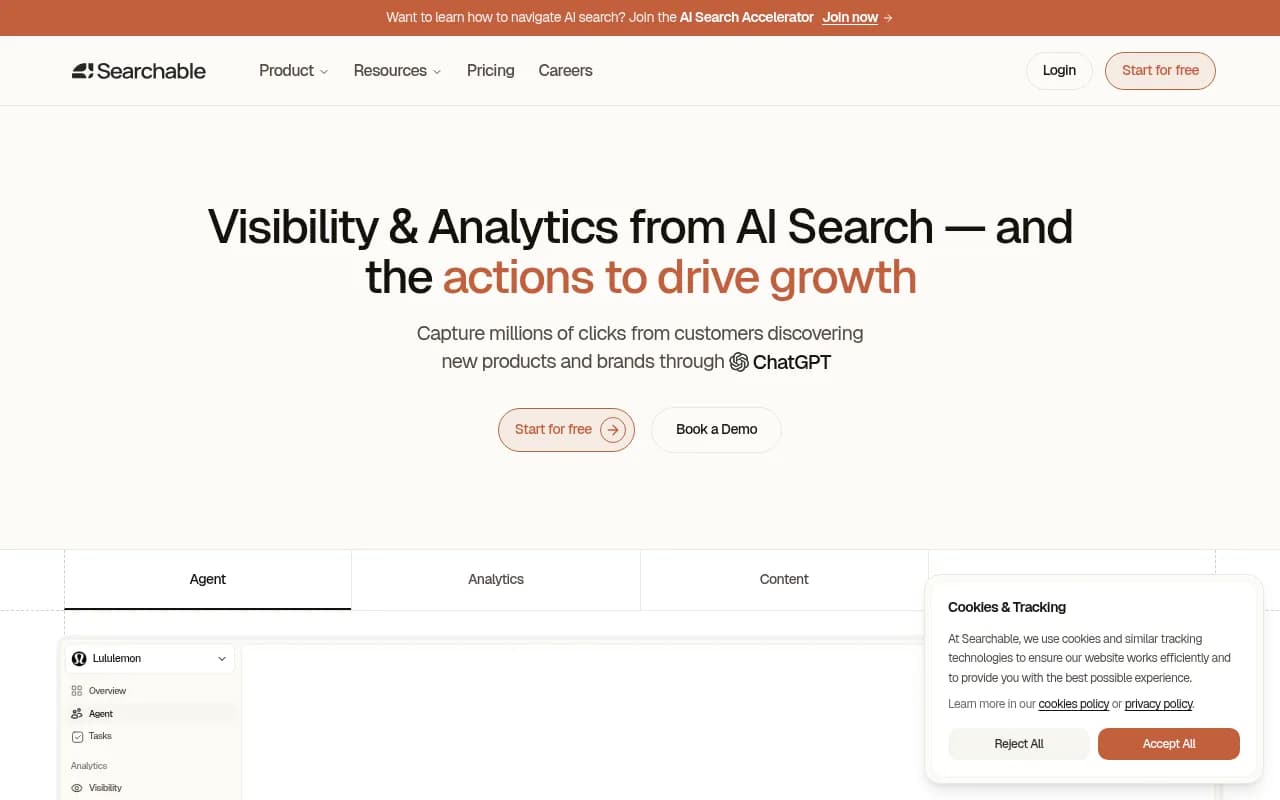
The platform publishes its own research -- including a roundup of 26 AI SEO statistics that cited a 4.4x conversion lift from AI search referrals and noted that business sites capture roughly 50% of AI citations. That data comes from aggregating query results across a large prompt set, which is a legitimate methodology.
What Searchable does well:
- Monitoring brand mentions across multiple AI engines
- Tracking share of voice against competitors
- Surfacing which prompts your brand appears in (and which it doesn't)
- Reporting on sentiment and citation frequency over time
Where the picture gets murkier is around the depth of that data. Searchable, like most monitoring-focused platforms, queries AI models and records outputs. It does not, as far as publicly documented, integrate with your web server to capture actual AI crawler visits. That distinction matters more than it might seem.
Why live crawling data changes the picture
Here's the gap that most people don't think about: there's a difference between knowing that ChatGPT cited a competitor for a given prompt, and knowing that ChatGPT's crawler visited your site last Tuesday, read three pages, hit a crawl error on a fourth, and never came back.
The first tells you where you stand. The second tells you why -- and what to fix.
Platforms with AI crawler log integration (sometimes called agent analytics or crawler intelligence) capture real HTTP requests from AI bots hitting your domain. You can see:
- Which pages GPTBot, ClaudeBot, or PerplexityBot actually read
- How often they return
- Which pages return errors or get blocked
- The timeline from crawl to citation -- when a page gets read and when it starts showing up in AI responses
This is the supply-side view of AI visibility. Without it, you're only watching the scoreboard. You can't see what's happening on the field.
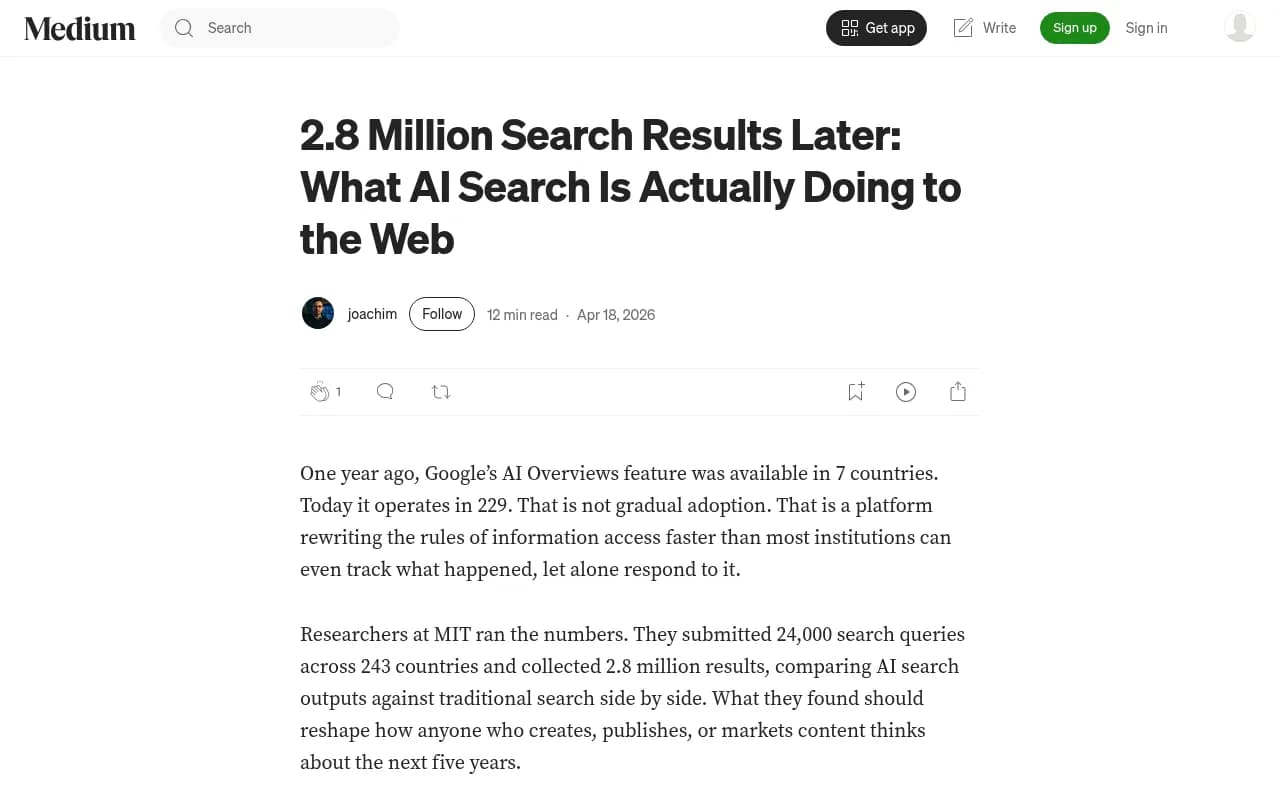
The MIT research referenced in a Medium analysis of 2.8 million AI search results found significant variation in which sources AI engines cite across different query types and countries. That kind of variance is hard to explain without understanding the crawl behavior underneath -- which pages AI engines are actually indexing, and how frequently.
Comparing data collection approaches across platforms
Here's how the major approaches stack up across the tools in this space:
| Platform | Live UI queries | API queries | Crawler log integration | Citation gap analysis | Content generation |
|---|---|---|---|---|---|
| Searchable | Yes | Yes | Not documented | Basic | Limited |
| Promptwatch | Yes | Yes | Yes (Cloudflare, Fastly, Vercel, server logs) | Yes | Yes (Content Agents) |
| Otterly.AI | Yes | Yes | No | No | No |
| Peec.ai | Yes | Yes | No | No | No |
| AthenaHQ | Yes | Yes | No | Limited | No |
| Profound | Yes | Yes | No | Limited | No |
| Ahrefs Brand Radar | Limited | Yes | No | No | No |
| Semrush | Limited | Yes | No | No | No |
The table makes the split obvious. Most platforms are doing some version of the same thing: querying AI models and reporting back. The differentiator is what happens after the query -- can the platform tell you why you're not being cited, and can it help you fix it?
The monitoring-only problem
This is the core issue with most AI visibility tools right now, including Searchable. They're dashboards. Good dashboards, in some cases -- but dashboards that show you a problem without giving you a path to solving it.
Exposure Ninja's CEO Charlie Marchant made this point in a March 2026 webinar: the buyer journey has shifted to AI-first, and the brands winning in AI search are the ones creating content that directly answers the questions AI models are trying to answer. Knowing your visibility score is step one. Knowing which content gaps are causing it, and then actually filling those gaps, is where the work happens.

Promptwatch is one of the few platforms that closes this loop. Its Answer Gap Analysis shows exactly which prompts competitors rank for that you don't -- down to the specific content your site is missing. Its Content Agents then generate articles, listicles, and briefs grounded in that gap data. And its crawler log integration shows you when AI bots visit the new content and when it starts generating citations.
That's a meaningfully different product category than a monitoring dashboard.
What to look for when evaluating data quality
If you're comparing GEO platforms and trying to figure out whose data is "real," here are the questions worth asking:
Does it query live user interfaces or just APIs? The gap between API responses and real user-facing answers can be significant, especially for models with web browsing enabled.
How many prompts does it track, and how are they selected? Fixed prompt sets miss the long tail. Platforms that let you define custom prompts, or that surface prompt volume estimates, give you a more accurate picture of where your brand actually stands.
Does it capture AI crawler activity on your site? If not, you're missing half the story. You can see that you're not being cited, but you can't see whether AI bots are even visiting your content.
Does it show citation sources, not just mention counts? Knowing that ChatGPT cited you is less useful than knowing which specific page it cited, how often, and whether that page is being crawled regularly.
Can it tell you what content to create? A platform that identifies gaps but can't help you fill them is a research tool, not an optimization tool.
Other platforms worth knowing
A few other tools in this space are worth mentioning for specific use cases:
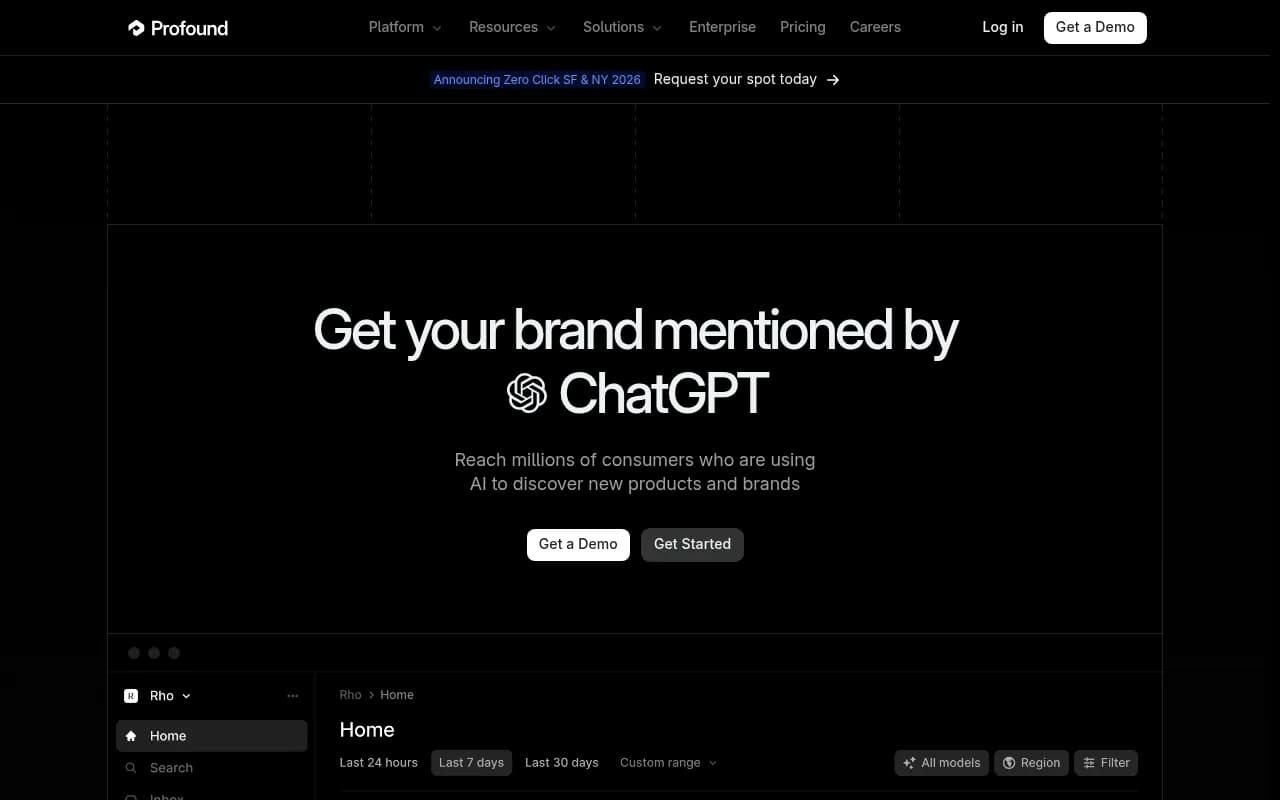
Profound has a strong feature set for enterprise teams and does solid prompt tracking, though it sits at a higher price point and doesn't include Reddit tracking or ChatGPT Shopping monitoring.

AthenaHQ covers 8+ AI engines and does good monitoring work, but like most competitors, it's focused on the tracking side rather than the content optimization side.

Otterly.AI is one of the more affordable entry points for basic AI visibility monitoring. Good for teams that just want to know where they stand before investing in a full platform.

Peec.ai has solid multi-language support, which matters if you're tracking AI visibility across different markets. Less useful if you need content generation or crawler data.
So does Searchable use real data?
Yes, in the sense that it queries actual AI models and records real responses. It's not fabricating data or using static snapshots.
But "real data" is a spectrum. Searchable sits in the monitoring tier -- it tells you what's happening in AI search results. It doesn't tell you what's happening when AI crawlers visit your site, and it doesn't generate content to fix the gaps it finds.
Whether that's enough depends on what you need. If you're in early-stage monitoring mode -- just trying to understand your baseline visibility across ChatGPT, Perplexity, and Google AI Overviews -- Searchable covers that ground. If you're ready to move from observation to action, you'll hit its ceiling fairly quickly.
The platforms that go further are the ones that treat AI visibility as an optimization problem, not a reporting problem. That means live crawler data, content gap analysis, and the ability to generate and track new content through the full cycle from publish to citation.
That's the standard worth holding any platform to in 2026.