Key takeaways
- Ceyo AI is a lightweight brand monitor that tracks mentions across ChatGPT, Perplexity, Claude, and Gemini -- solid for teams who want a simple dashboard without enterprise pricing
- Promptwatch covers 10+ AI models and goes beyond monitoring into content gap analysis, AI-powered content generation, and traffic attribution
- The core difference: Ceyo AI tells you where you stand; Promptwatch tells you where you stand and helps you improve it
- For teams with a serious GEO mandate -- agencies, in-house SEO leads, brands actively trying to grow AI visibility -- Promptwatch's action loop is hard to match
- If you're just starting out and want to understand AI visibility before committing to a full platform, Ceyo AI is a reasonable entry point
The AI visibility tool market has gone from a handful of experimental trackers to dozens of options in under two years. Most of them do roughly the same thing: run prompts, parse responses, count mentions. The differences show up when you ask "what do I do with this data?"
That's the question this comparison is really about. Ceyo AI and Promptwatch sit at different points on the monitoring-to-optimization spectrum. One is a clean, focused brand tracker. The other is a full GEO platform built around closing the loop between visibility gaps and actual content fixes.
Let's go through the specifics.
What Ceyo AI actually does
Ceyo AI (ceyo.ai) is a brand monitoring tool that tracks how your brand appears in responses from ChatGPT, Perplexity, Claude, and Gemini. You set up your brand, define a set of prompts relevant to your category, and the platform runs those prompts on a schedule and surfaces the results.
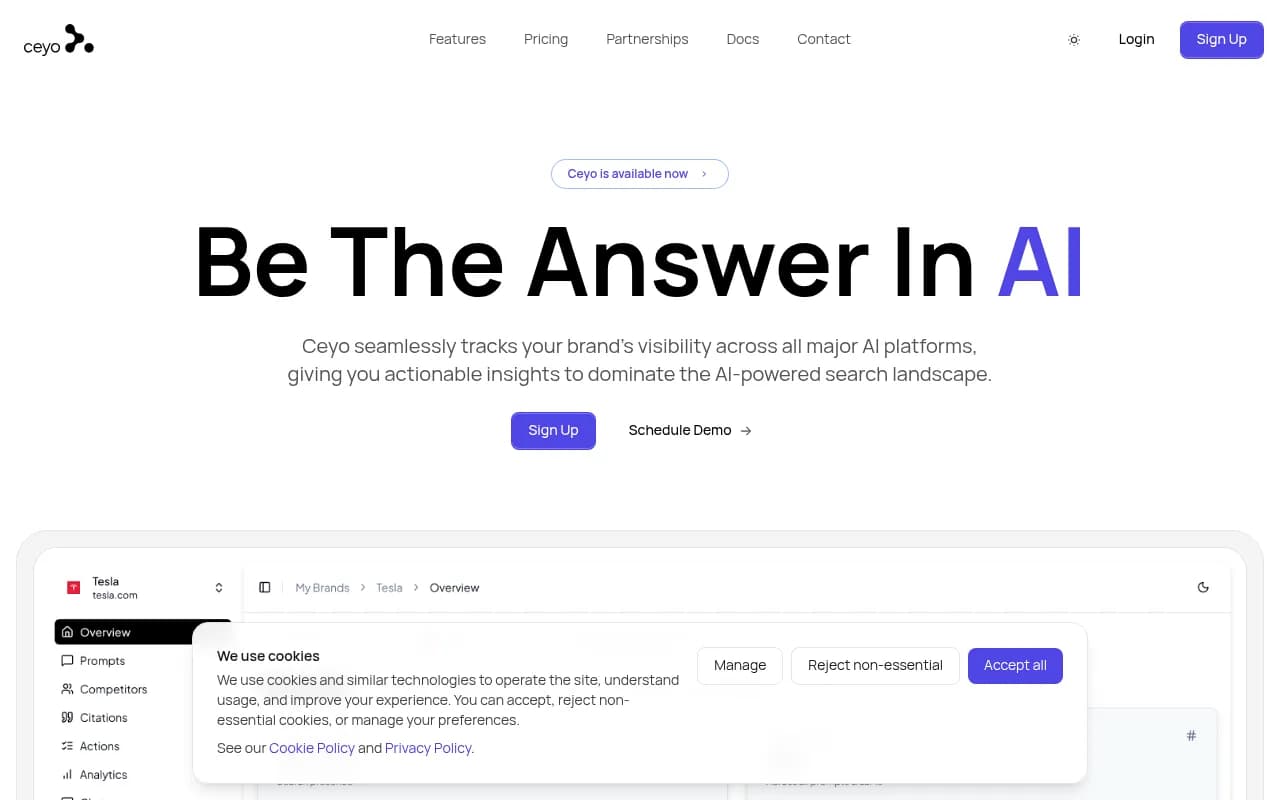
The pitch is simplicity. Onboarding is fast. The dashboard is readable. You can see sentiment, mention frequency, and how your brand compares to competitors across the four major AI models it covers.
For teams that are new to AI visibility and want to understand the basics without committing to a complex platform, Ceyo AI does the job. It answers the question "is my brand showing up?" reasonably well.
What it doesn't do is tell you why you're not showing up, what content you're missing, or how to fix it. That's not a knock -- it's just the scope of the product. Ceyo AI is a monitoring tool, and it's honest about that.
What Promptwatch actually does
Promptwatch is built around a different idea: monitoring is only useful if it leads to action.

The platform tracks brand visibility across 10 AI models -- ChatGPT, Claude, Perplexity, Gemini, Google AI Overviews, Google AI Mode, Grok, DeepSeek, Meta/Llama, Mistral, and Copilot. That's broader coverage than most tools in this space, and it matters because different AI models cite different sources and behave differently for the same query.
But the monitoring layer is just the starting point. What makes Promptwatch different is what happens after you see the data:
- Answer Gap Analysis shows you which prompts your competitors rank for that you don't. You see the specific topics and questions where AI models are finding answers from other sites but not yours.
- AI content generation uses that gap data to produce articles, listicles, and comparisons grounded in 880M+ real citation data points. The output is designed to get cited by AI models, not just rank in Google.
- Traffic attribution connects AI visibility back to actual site visits and revenue, via a code snippet, GSC integration, or server log analysis.
- AI Crawler Logs show you which AI crawlers (ChatGPT, Claude, Perplexity, etc.) are hitting your site, which pages they're reading, and what errors they're encountering.
That full cycle -- find gaps, generate content, track results -- is what Promptwatch calls its action loop. Most competitors, including Ceyo AI, stop at step one.
Feature comparison
Here's how the two platforms stack up across the features that matter most to AI visibility teams:
| Feature | Ceyo AI | Promptwatch |
|---|---|---|
| AI models tracked | 4 (ChatGPT, Perplexity, Claude, Gemini) | 10+ (ChatGPT, Claude, Perplexity, Gemini, Google AI Overviews, Google AI Mode, Grok, DeepSeek, Meta/Llama, Mistral, Copilot) |
| Brand mention tracking | Yes | Yes |
| Sentiment analysis | Yes | Yes |
| Competitor comparison | Basic | Competitor heatmaps across all LLMs |
| Answer Gap Analysis | No | Yes |
| AI content generation | No | Yes (articles, listicles, comparisons) |
| Prompt volume & difficulty scoring | No | Yes |
| Query fan-outs | No | Yes |
| AI Crawler Logs | No | Yes |
| Traffic attribution | No | Yes (code snippet, GSC, server logs) |
| Reddit & YouTube citation tracking | No | Yes |
| ChatGPT Shopping tracking | No | Yes |
| Page-level citation tracking | No | Yes |
| Multi-language / multi-region | Limited | Yes |
| Looker Studio integration | No | Yes |
| API access | No | Yes |
| Entry-level pricing | ~$0-$49/mo (estimated) | $99/mo (Essential) |
| Free trial | Yes | Yes |
The gap in feature depth is significant. Ceyo AI covers the basics. Promptwatch covers the basics and builds an optimization workflow on top of them.
Pricing
Ceyo AI doesn't publish detailed pricing publicly, but based on its positioning as a lightweight entry-level tool, it sits in the $0-$99/month range depending on usage tier.
Promptwatch has three main tiers:
- Essential: $99/mo -- 1 site, 50 prompts, 5 articles/month
- Professional: $249/mo -- 2 sites, 150 prompts, 15 articles/month, crawler logs, city/state tracking
- Business: $579/mo -- 5 sites, 350 prompts, 30 articles/month
- Agency/Enterprise: Custom pricing
Annual billing brings the per-month cost down. A free trial is available.
If you're purely comparing sticker prices, Ceyo AI may look cheaper. But the relevant question is cost per outcome. If Promptwatch's content generation and gap analysis help you actually improve AI visibility -- and you'd otherwise be paying a content writer or agency to do that work -- the math changes.
Who should use Ceyo AI
Ceyo AI makes sense for:
- Solo marketers or small teams who want a simple way to check whether their brand appears in AI responses
- Companies early in their AI visibility journey who want to understand the landscape before investing in a full platform
- Teams with a limited budget who need basic monitoring and aren't yet running active GEO campaigns
It's a reasonable starting point. The risk is that you outgrow it quickly. Once you know you have a visibility problem, you'll want tools to fix it -- and Ceyo AI doesn't offer that.
Who should use Promptwatch
Promptwatch is built for teams that treat AI visibility as a real marketing discipline, not just a metric to watch:
- In-house SEO and content teams actively trying to grow their share of AI-generated recommendations
- Digital agencies managing AI visibility for multiple clients (the Business and Agency tiers are designed for this)
- Brands in competitive categories where AI model citations directly influence purchase decisions
- Teams that want to connect AI visibility data to revenue, not just impressions
The 6,700+ brands using Promptwatch include Booking.com and Center Parcs -- companies where AI search visibility has real commercial stakes.
The monitoring-only problem
It's worth stepping back to name the broader pattern here. Ceyo AI is one of many tools in 2026 that do monitoring well but stop there. The same is true of tools like Otterly.AI, Peec.ai, and AthenaHQ -- they'll show you a dashboard, but they won't help you move the needle.



This is fine if monitoring is genuinely all you need. But for most marketing teams, visibility data without an action path is frustrating. You know you're not showing up for a key prompt. Now what?
That's the gap Promptwatch is designed to fill. The Answer Gap Analysis tells you exactly which prompts to target. The content generation tool produces the articles that address those gaps. The tracker shows you whether the new content starts getting cited. It's a closed loop, not just a report.
How they handle competitor intelligence
Both tools let you track competitors, but the depth is different.
Ceyo AI shows you basic competitor mention data -- whether your competitors appear in AI responses for the same prompts you're tracking. That's useful context.
Promptwatch's competitor heatmaps go further: you can see which AI models are citing your competitors, for which specific prompts, and how your visibility compares across the full model landscape. Combined with the Answer Gap Analysis, you can see exactly which prompts a competitor is winning that you're not, then generate content to close that gap.
For teams doing serious competitive GEO work, that depth matters.
A note on AI crawler visibility
One feature Ceyo AI doesn't have that's worth calling out specifically: AI Crawler Logs.
Promptwatch's crawler log feature shows you in real time which AI crawlers are visiting your site -- ChatGPT's GPTBot, Claude's ClaudeBot, Perplexity's PerplexityBot -- which pages they're reading, how often they return, and what errors they encounter. This is genuinely useful for diagnosing why certain pages aren't getting cited. If GPTBot is hitting your homepage but never crawling your product pages, that's an indexing problem you can fix.
Most monitoring-only tools, including Ceyo AI, have no visibility into this layer at all.
Verdict
If you're choosing between Ceyo AI and Promptwatch, the decision comes down to what you want to do with the data.
Ceyo AI is a clean, accessible monitoring tool. It tells you where your brand stands across four major AI models. For teams just getting started with AI visibility, or those with limited budgets and modest needs, it's a reasonable choice.
Promptwatch is for teams that want to actually improve their AI visibility, not just measure it. The monitoring layer is comparable or better (10+ models vs 4), and everything built on top of it -- gap analysis, content generation, crawler logs, traffic attribution -- is designed to turn visibility data into content that gets cited.
For AI visibility teams with real GEO objectives in 2026, Promptwatch is the more complete platform. Ceyo AI is a starting point. Promptwatch is where you go when you're ready to do something about what you find.
Other tools worth knowing
If you're evaluating the broader landscape, a few other tools are worth a look depending on your specific needs:

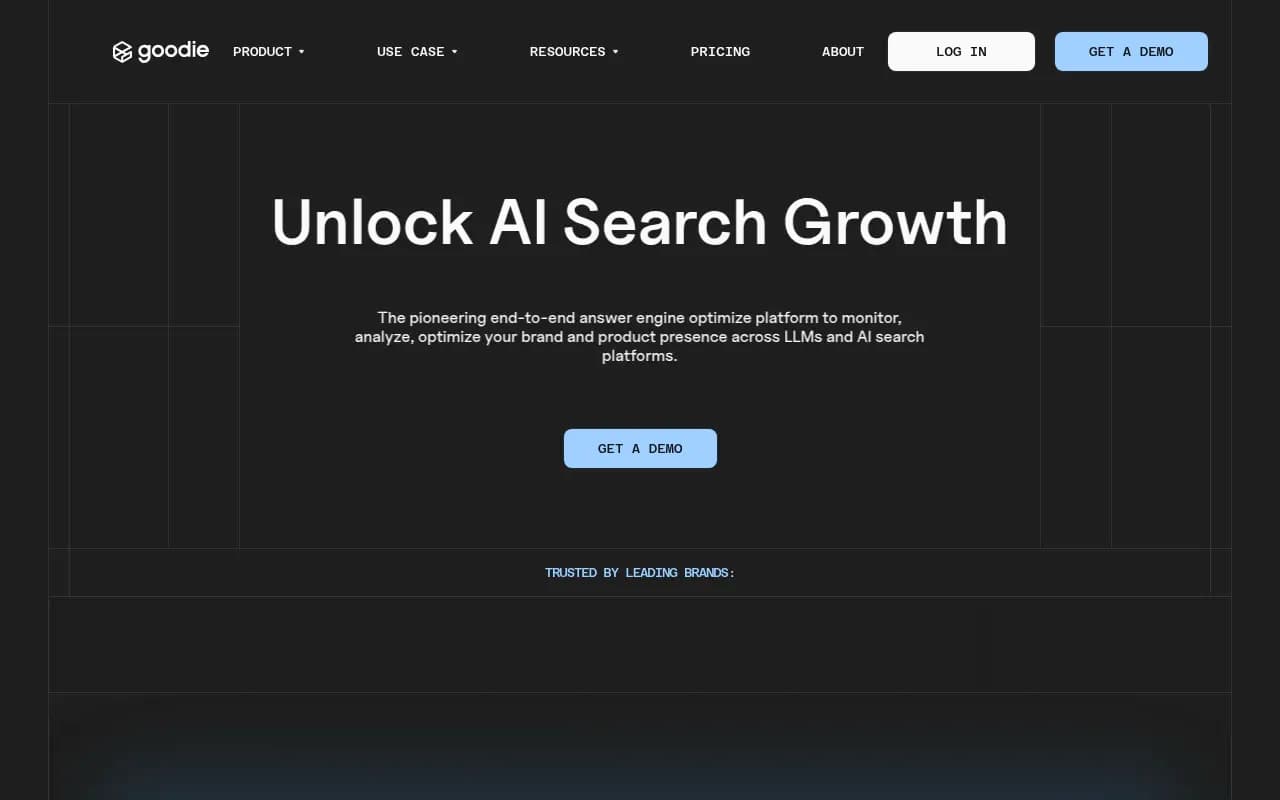

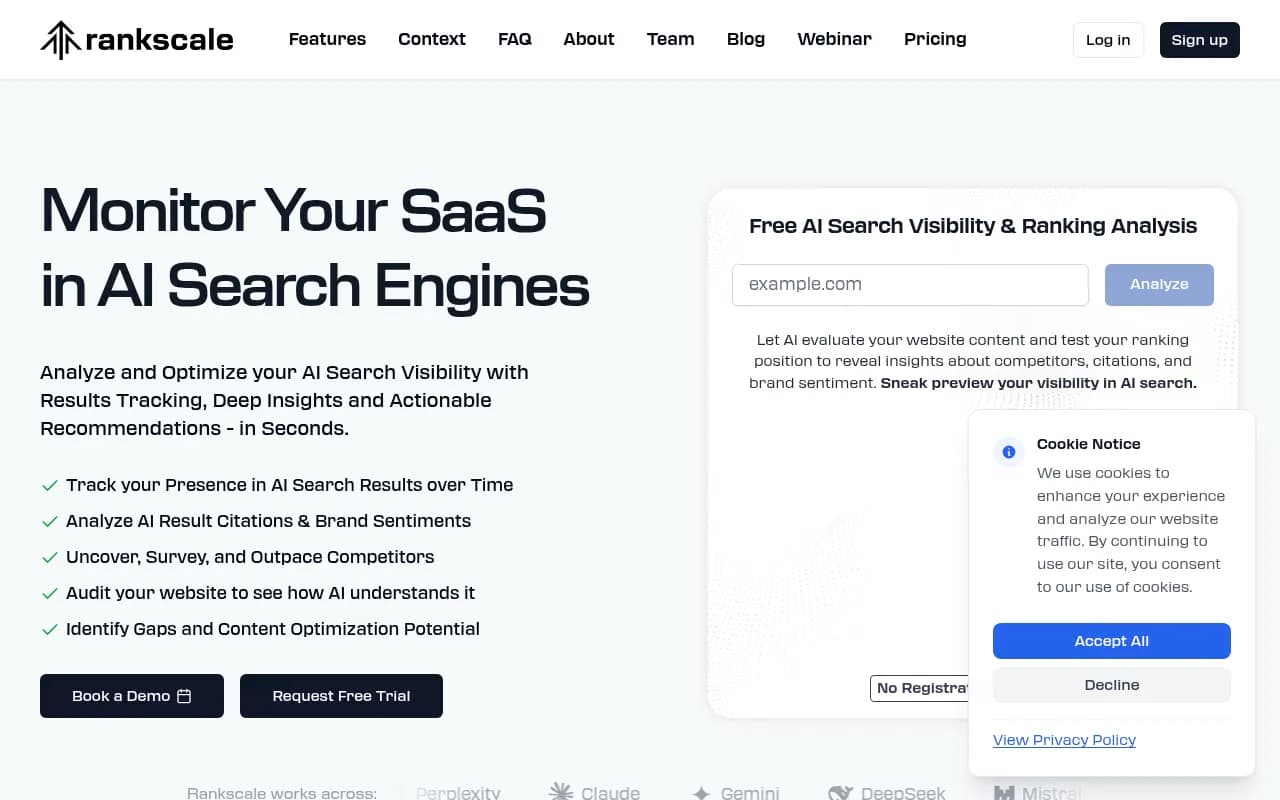
Hall AI has strong citation-tracking UI for lightweight use cases. Profound is a solid enterprise-tier option with good feature depth. Rankscale covers AI search ranking with a clean interface. Goodie is another entry-level option with fast onboarding, similar to Ceyo AI in scope.
None of them combine the monitoring, gap analysis, content generation, and traffic attribution that Promptwatch does in a single platform -- but depending on your stack and budget, one of them might be the right fit.