Key takeaways
- Most AI visibility tools are monitoring dashboards -- they show you data but don't help you act on it. The gap between "tracker" and "optimization platform" is wide.
- The real problem isn't just invisibility -- it's inaccuracy. ChatGPT and Perplexity regularly hallucinate pricing, features, and use cases. Most tools don't detect this.
- The best platforms in 2026 close a full loop: find content gaps, generate content that gets cited, and track whether it worked.
- Different tools suit different needs -- agencies, enterprise brands, SaaS companies, and solo marketers each have better and worse options.
- Promptwatch is the only platform rated "Leader" across all categories in a 2026 comparison of 12 GEO platforms, largely because it combines monitoring, content gap analysis, and AI content generation in one place.
There's a moment every marketer eventually hits with AI search. You type your brand name into ChatGPT or Perplexity, and either your brand doesn't appear at all -- or it does, but with completely wrong information. Wrong pricing. Wrong features. A competitor's differentiators attributed to you.
That moment is why this category exists.
The AI visibility platform market has exploded since 2024. There are now dozens of tools claiming to solve this problem, and they range from genuinely useful to glorified vanity metric dashboards. This guide cuts through the noise.
I'm not going to pretend every tool here is equally good. Some are excellent. Some are fine for specific use cases. Some are monitoring-only tools that will show you a problem but leave you completely stuck on what to do next.
Let's get into it.
Why "AI visibility" is harder than it sounds
Before diving into tools, it's worth understanding what you're actually trying to measure -- because it's more complex than traditional SEO rank tracking.
When someone searches on Google, there's a clear signal: your page either ranks in position 1-10 or it doesn't. With AI search, the response is generated fresh each time, varies by prompt phrasing, differs across models (ChatGPT vs. Claude vs. Perplexity vs. Gemini), and changes based on who's asking and from where.
A researcher at LLMClicks.ai spent four months testing 11 platforms and found something that stuck with me: out of 18 brand mentions detected across ChatGPT and Perplexity, 4 had outdated pricing, 3 confused features with a competitor's product, 2 recommended the brand for use cases it doesn't support, and 1 hallucinated an integration that doesn't exist. Most tools counted all 18 as "wins."
That's the core problem. Visibility without accuracy is noise. And optimization without a feedback loop is guesswork.
The tools that actually matter in 2026 do at least one of these things well:
- Track where and how your brand appears across AI models
- Detect inaccurate or hallucinated content about your brand
- Identify content gaps (prompts where competitors appear but you don't)
- Help you create content that gets cited
- Attribute AI-driven traffic back to revenue
The full landscape: what's out there
Here's a quick orientation before we go deep on the standout platforms.
| Platform | Best for | Monitoring | Content gaps | Content generation | AI traffic attribution | Pricing (from) |
|---|---|---|---|---|---|---|
| Promptwatch | All-in-one optimization | Yes | Yes | Yes | Yes | $99/mo |
| Profound | Enterprise / agencies | Yes | Partial | No | No | Custom |
| AthenaHQ | Mid-market monitoring | Yes | Partial | No | No | Custom |
| Otterly.AI | Budget monitoring | Yes | No | No | No | ~$49/mo |
| Peec AI | Citation analysis | Yes | No | No | No | Freemium |
| Hall AI | Referral traffic tracking | Yes | No | No | Yes | Free / $199/mo |
| Scrunch AI | GEO insights | Yes | Partial | No | No | Custom |
| SE Ranking | SEO + AI combo | Yes | No | No | No | $65/mo |
| Semrush | Traditional SEO + AI | Partial | No | No | No | $139/mo |
| Ahrefs Brand Radar | Brand monitoring | Yes | No | No | No | Included in Ahrefs |
| LLM Clicks | Citation + hallucination | Yes | No | No | No | Custom |
| Conductor | Holistic search | Yes | No | No | No | Enterprise |
The platforms worth your time
Promptwatch -- best for teams that want to actually fix things
Promptwatch is the platform I keep coming back to when someone asks "which tool should I actually use?" It's not just because it monitors more AI models than most (10, including ChatGPT, Claude, Gemini, Perplexity, Grok, DeepSeek, Copilot, Meta AI, Mistral, and Google AI Overviews). It's because it's built around a loop that most competitors skip entirely.
The loop works like this: Answer Gap Analysis shows you the specific prompts where competitors are visible but you aren't. Then the built-in AI writing agent generates content -- articles, listicles, comparisons -- grounded in real citation data from over 880 million citations analyzed. Then page-level tracking shows whether that content is actually getting cited, and by which models. Traffic attribution (via code snippet, Google Search Console integration, or server log analysis) connects it back to revenue.
Most competitors stop after step one. Promptwatch runs all three.
A few things that stand out beyond the core loop: AI Crawler Logs show you in real time which AI crawlers (ChatGPT, Claude, Perplexity) are hitting your site, which pages they're reading, and what errors they're encountering. Prompt Intelligence gives volume estimates and difficulty scores for each prompt, plus query fan-outs that show how one prompt branches into sub-queries. Reddit and YouTube tracking surfaces discussions that directly influence AI recommendations -- a channel most tools ignore entirely.
Pricing starts at $99/month for one site and 50 prompts, which is reasonable for individual brands. Agencies and enterprises get custom pricing with multi-site support.

Profound -- strong for agencies managing multiple brands
Profound has built a solid reputation in the agency space. Its Agency mode includes brand configurations, pitch environments, and white-label reporting that makes it easier to manage multiple clients. The data quality is generally good, and it tracks a wide range of AI engines.
Where it falls short: there's no content generation built in, and the pricing reflects its enterprise positioning -- it's not a tool you'd casually spin up for a single brand. If you're an agency that already has content production handled and just needs robust monitoring and reporting, Profound is worth evaluating. If you need the full optimization loop, you'll be stitching together multiple tools.

AthenaHQ -- clean monitoring, limited action
AthenaHQ tracks your brand's visibility across 8+ AI search engines and presents the data cleanly. The interface is good, the setup is straightforward, and it covers the major models. What it doesn't do is help you act on what you find. There's no content gap analysis, no generation capability, and no traffic attribution. It's a monitoring tool, and a decent one, but that's where it stops.

Otterly.AI -- affordable entry point
If you're just getting started with AI visibility and want to understand the basics without a big commitment, Otterly.AI is one of the more accessible options. It's priced lower than most competitors and covers the fundamentals of brand mention tracking across AI models. The tradeoff is feature depth -- no crawler logs, no visitor analytics, no content generation. Think of it as a starting point, not a long-term solution for a serious marketing team.

Peec AI -- citation analysis done well
Peec AI has a clean dashboard and a straightforward setup process, and it does citation analysis particularly well. Multi-language support makes it useful for brands operating across markets. It's not trying to be an all-in-one platform -- it focuses on showing you where you're cited and how, which it does competently. The freemium model makes it easy to test before committing.

Hall AI -- the referral traffic angle
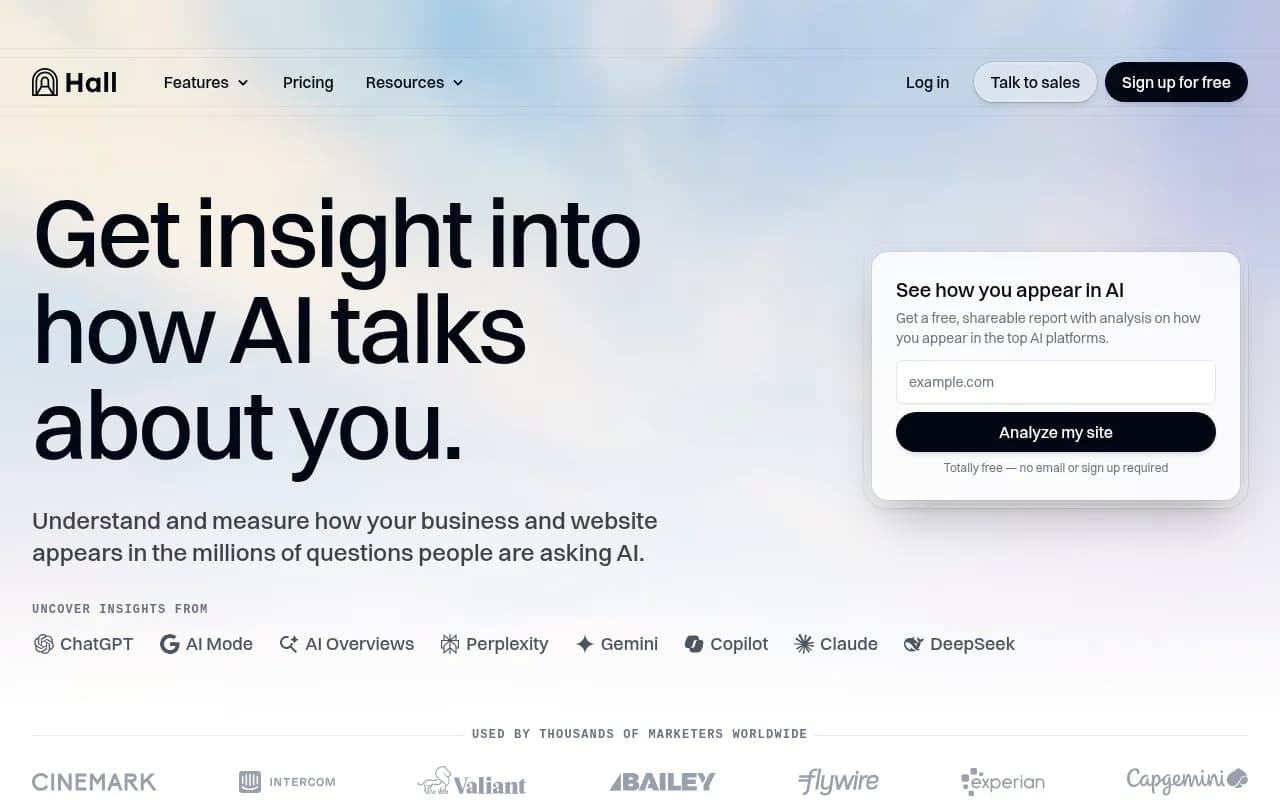
Hall AI takes a different approach from most tools in this list. Instead of focusing purely on AI model responses, it tracks AI referral traffic -- actual clicks coming from ChatGPT, Perplexity, and similar platforms to your website. The free plan is generous, and the weekly update cadence works well for brands that don't need real-time data. If traffic attribution is your primary concern and you're not yet ready to invest in a full GEO platform, Hall AI is worth trying.
Scrunch AI -- actionable GEO insights
Scrunch AI positions itself around actionable insights rather than raw data dumps. It's been noted for giving clearer guidance on what to do with visibility data, which puts it a step above pure monitoring tools. That said, it doesn't have built-in content generation, so "actionable" still means "here's what you should do" rather than "here, we did it for you."
SE Ranking -- for teams already invested in traditional SEO
SE Ranking is primarily an SEO platform that has added AI visibility tracking. If your team already uses it for keyword tracking, site audits, and rank monitoring, the AI visibility toolkit is a natural extension. It's not the deepest AI visibility tool on the market, but the integration with existing SEO workflows is genuinely useful. For teams that don't want to manage a separate tool for AI search, this is a reasonable compromise.
LLM Clicks -- the hallucination detection angle
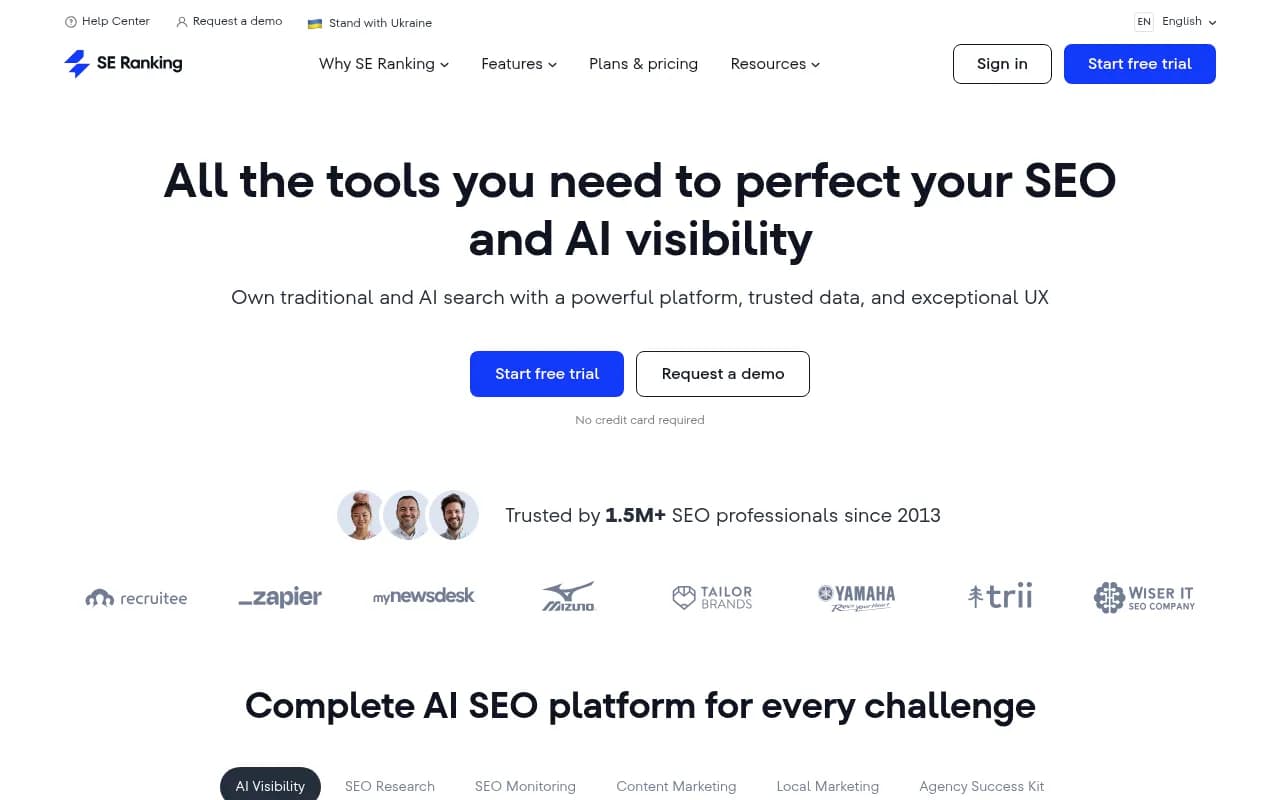
LLM Clicks was built specifically because its founder discovered ChatGPT was giving prospects wrong pricing information. The platform focuses on detecting when AI models are saying inaccurate things about your brand -- not just whether you're mentioned. This is a real and underserved problem. If brand accuracy in AI responses is your primary concern (common in SaaS, where pricing and feature claims matter a lot), LLM Clicks addresses something most tools ignore.
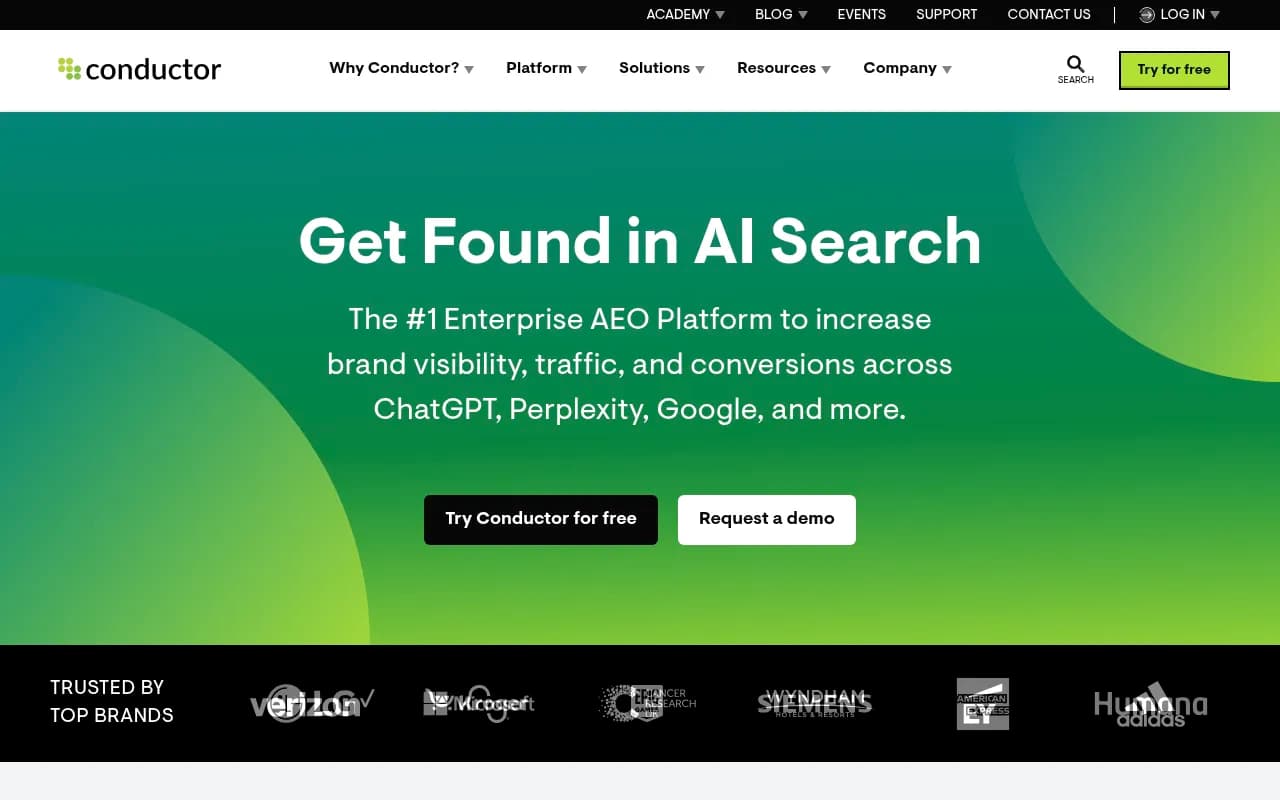
Conductor -- for enterprise teams with complex search programs
Conductor is a holistic search monitoring platform that has added AI visibility to an existing enterprise SEO suite. It's best suited to large organizations that are already running sophisticated search programs and want AI visibility integrated into a broader reporting structure. The persona customization is a genuine differentiator. The price point and complexity make it overkill for most mid-market brands.
The tools that didn't make the cut (and why)
A few platforms get mentioned frequently in roundups but deserve some skepticism.
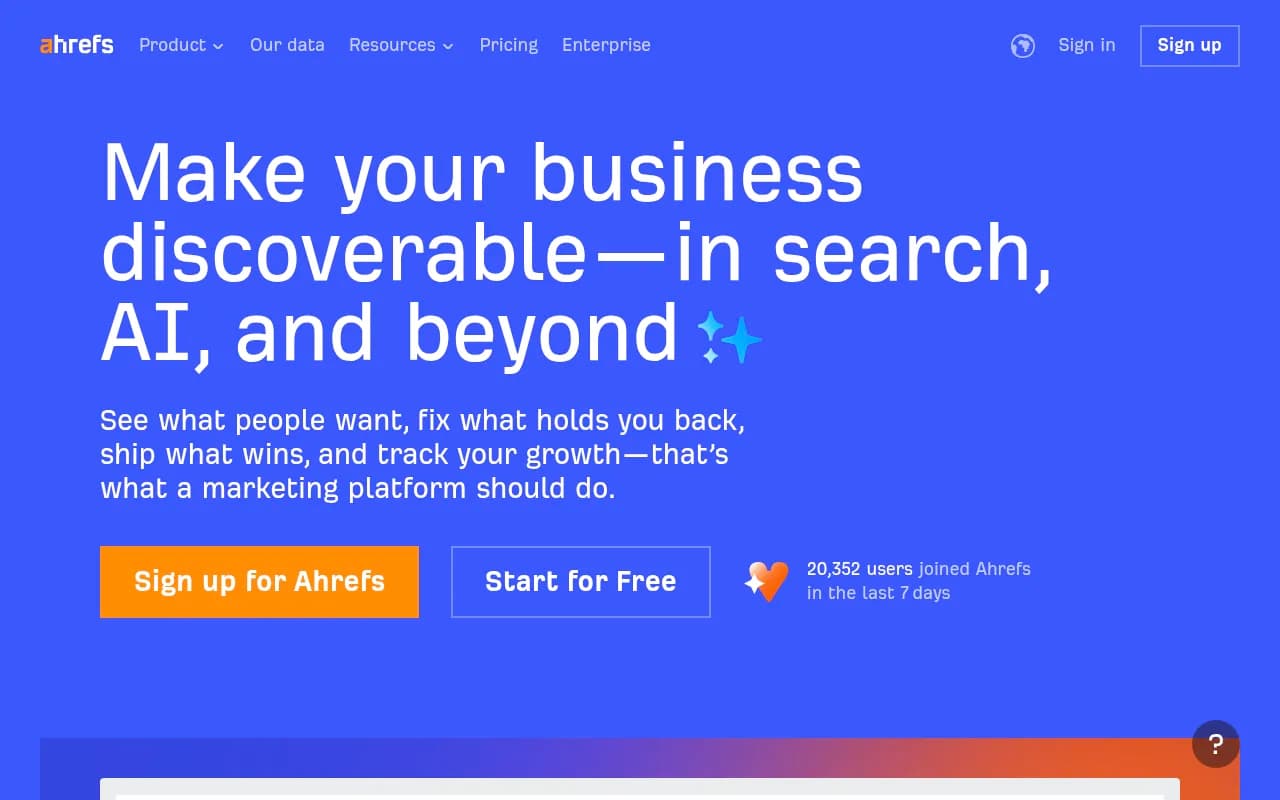
Semrush and Ahrefs Brand Radar are traditional SEO tools that have bolted on AI visibility features. Semrush uses fixed prompts rather than letting you define your own, which limits how useful the data is. Ahrefs Brand Radar has fixed prompts and no AI traffic attribution. Both are fine if you're already paying for these platforms and want a basic signal -- but neither is a serious GEO tool.
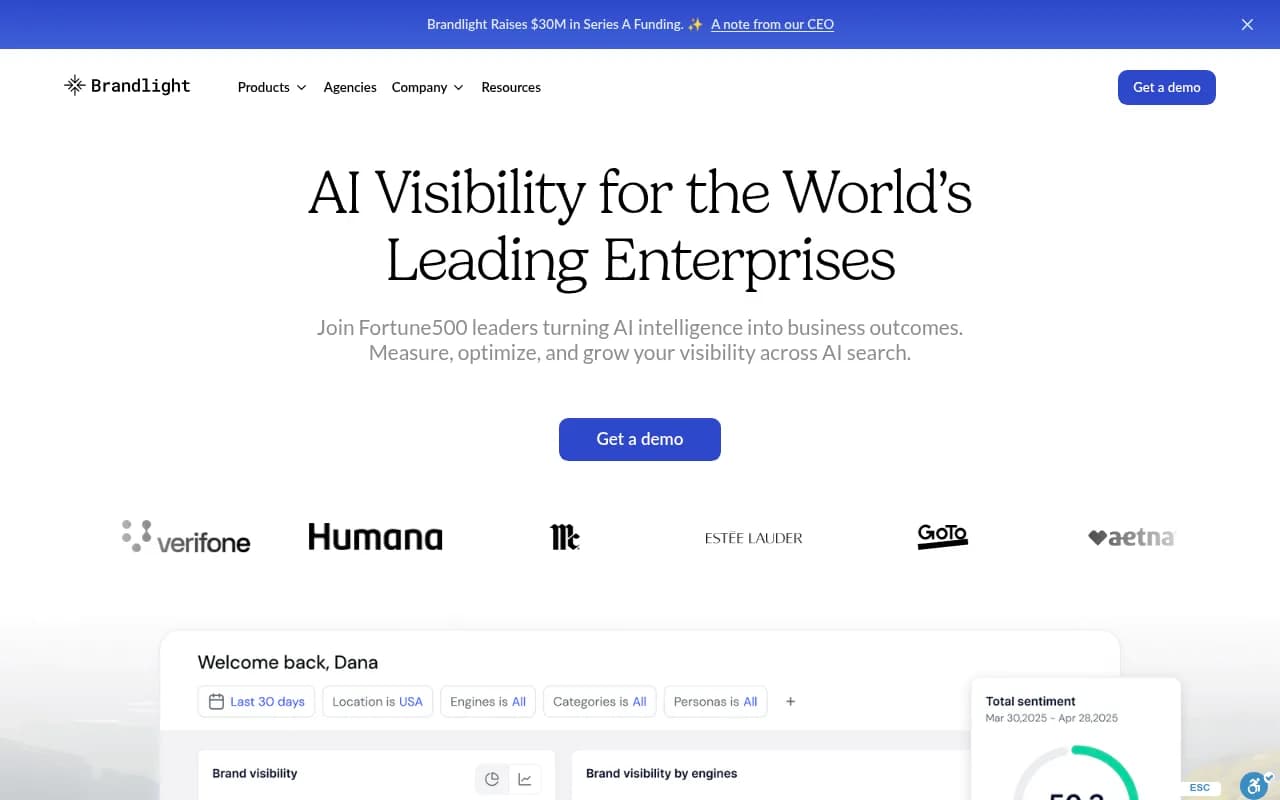
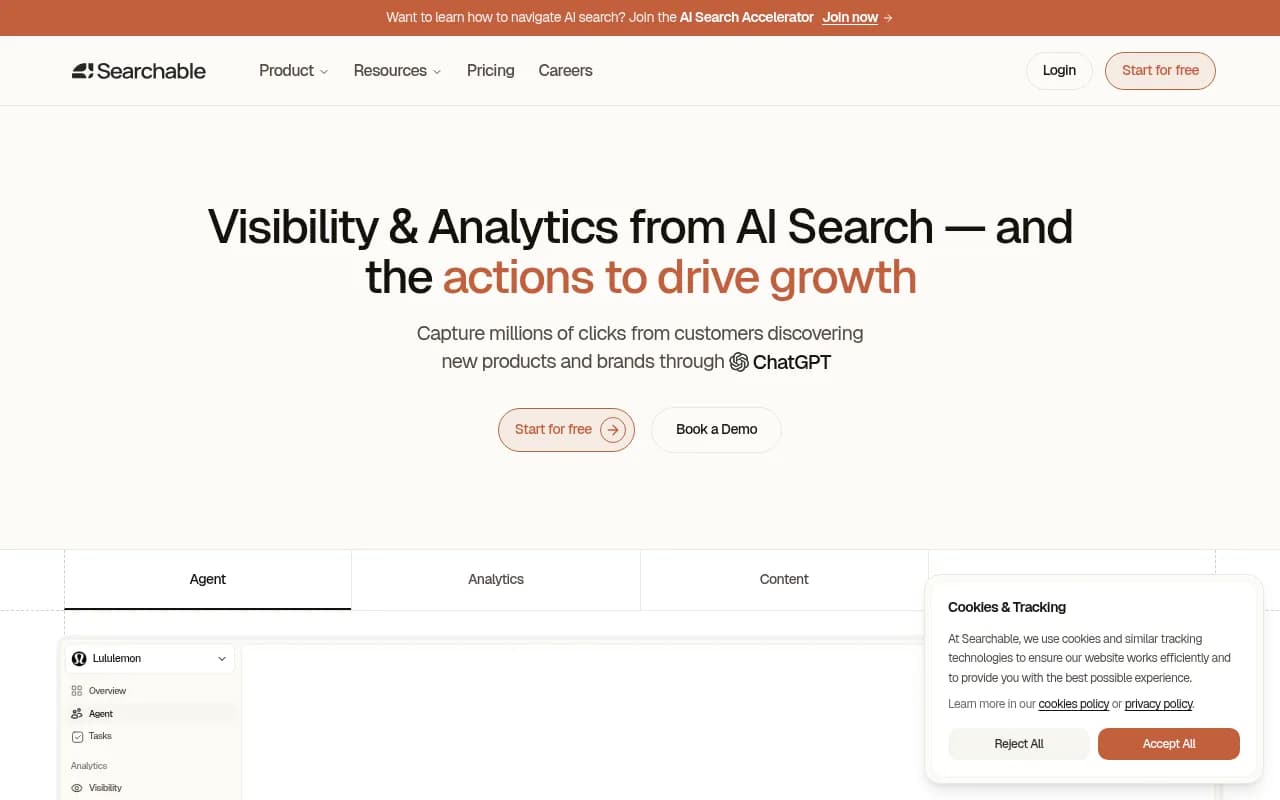
Brandlight.ai, Bluefish, and Searchable are niche players that cover some of the basics but are missing enough core capabilities that they're hard to recommend over more complete platforms.
How to choose the right tool for your situation
The honest answer is that it depends on what you're trying to solve.
If you're a solo marketer or small team just trying to understand your AI visibility baseline, start with something accessible like Otterly.AI or Peec AI. Get a sense of where you stand before investing in a more complex platform.
If you're a marketing or SEO team at a mid-market or enterprise brand that wants to actually improve AI visibility -- not just measure it -- you need a platform with content gap analysis and some form of content optimization. Promptwatch is the clearest option here. The combination of gap analysis, AI content generation grounded in citation data, and traffic attribution is something no other platform in this category currently matches end-to-end.
If you're an agency managing multiple client brands, Profound's agency mode is worth evaluating alongside Promptwatch's agency/enterprise tier. The right choice depends on whether you need more reporting infrastructure (Profound) or more optimization capability (Promptwatch).
If hallucination detection is your primary concern -- particularly relevant for SaaS companies where AI models might be spreading wrong pricing or feature information -- LLM Clicks addresses this more directly than most.
What good AI visibility work actually looks like
Here's something worth saying plainly: tracking your AI visibility score going up is not the goal. Revenue is the goal.
The platforms that matter in 2026 are the ones that connect AI visibility to business outcomes. That means knowing which prompts drive traffic, which pages are being cited, and whether that traffic converts. It means identifying content gaps and filling them with content that AI models actually want to cite -- not generic SEO filler, but specific, well-sourced answers to questions your customers are asking.
The category is maturing fast. A year ago, most tools were basic mention counters. Now the better platforms are building full optimization loops. The gap between a monitoring dashboard and an optimization platform is the most important distinction to understand when evaluating your options.
Most tools will show you that you're invisible. The useful ones will help you fix it.
Final recommendations by use case
- Starting out / low budget: Otterly.AI or Peec AI
- Citation and hallucination tracking: LLM Clicks or Hall AI
- Agency with multiple clients: Profound or Promptwatch (agency tier)
- Mid-market brand wanting full optimization: Promptwatch
- Enterprise with existing SEO stack: Conductor or Promptwatch (business/enterprise tier)
- Traditional SEO team adding AI monitoring: SE Ranking
The market will keep consolidating. Tools that only monitor will either add optimization features or get replaced by platforms that already have them. The brands that win in AI search in 2026 are the ones treating it as an optimization problem, not a reporting problem.