Key takeaways
- Profound is a solid AI visibility tracker, but it's monitoring-only -- it won't help you create content to close the gaps it finds.
- Crawler log monitoring (seeing which AI bots visit your site and when) is a feature most tools skip entirely -- only a handful support it.
- Built-in content generation is the other missing piece: tools that can write AI-optimized articles based on citation data save teams hours every week.
- Promptwatch is the only platform in this comparison rated as a "Leader" across all GEO categories -- it covers crawler logs, content generation, and tracking in one place.
- Budget-conscious teams have strong options (Otterly.AI, Peec AI) but should expect to give up crawler logs and content tools at lower price points.
Profound was one of the first serious platforms for AI search visibility. It tracks brand mentions across ChatGPT, Perplexity, and Google AI Overviews, and the data quality is genuinely good. But two problems keep coming up in conversations with teams who've evaluated it.
First, the price. Profound's Starter plan tracks only ChatGPT for $99/month. The Growth plan jumps to $399. Enterprise lands in the mid-four figures. That's a steep climb for what is, at its core, a monitoring dashboard.
Second -- and this is the bigger issue -- Profound is monitoring-only. It shows you where you're invisible. It doesn't help you do anything about it. There's no crawler log monitoring to understand how AI bots interact with your site, and no content generation to fix the gaps it surfaces. You're left exporting data and figuring out the rest yourself.
For teams that need the full loop -- find gaps, fix them, track results -- that's a real limitation. This guide covers the 9 best alternatives, with particular attention to which ones actually support crawler log monitoring and content generation.
What to look for in a Profound alternative
Before jumping into the list, it's worth being clear about what separates a monitoring tool from an optimization platform.
Crawler log monitoring means the platform shows you real-time logs of AI crawlers (ChatGPT's GPTBot, ClaudeBot, PerplexityBot, etc.) hitting your website. You see which pages they read, how often they return, and any errors they encounter. This tells you whether AI engines can even find and process your content -- which is a prerequisite for being cited. Most tools don't offer this at all.
Content generation means the platform can actually write articles, comparisons, or listicles based on citation data and gap analysis. Not generic AI writing -- content specifically engineered to get cited by AI models, grounded in real prompt volumes and competitor data.
Gap analysis is the starting point: which prompts are your competitors visible for that you're not? Without this, you're optimizing blind.
Everything else -- prompt tracking, citation analysis, competitor heatmaps, traffic attribution -- matters too, but crawler logs and content generation are the two features that separate tools that help you act from tools that just show you data.
Comparison table
| Tool | Crawler log monitoring | Content generation | AI engines tracked | Starting price |
|---|---|---|---|---|
| Promptwatch | Yes | Yes (AI writing agent) | 10+ | $99/mo |
| Profound | No | No | 3 (Starter) | $99/mo |
| Otterly.AI | No | No | 5+ | ~$49/mo |
| Peec AI | No | No | 5+ | ~$49/mo |
| AthenaHQ | No | Limited | 8+ | Custom |
| Scrunch AI | No | No | 5+ | Custom |
| Semrush | No | Via ContentShake | 3+ | $139/mo |
| Ahrefs Brand Radar | No | No | 4+ | Included in Ahrefs |
| Writesonic GEO | No | Yes | 4+ | ~$49/mo |
| ContentMonk | No | Yes | 4+ | ~$99/mo |
1. Promptwatch -- best overall for crawler logs, content generation, and full-loop optimization
If the two things you're missing from Profound are crawler log monitoring and content generation, Promptwatch is the direct answer. It's the only platform in this space that covers both -- and wraps them into a coherent workflow rather than bolting them on as afterthoughts.
Promptwatch is used by 6,700+ brands and agencies including Booking.com and Center Parcs. It monitors 10 AI models: ChatGPT, Perplexity, Claude, Gemini, Google AI Overviews, Google AI Mode, Grok, DeepSeek, Copilot, and Meta AI. That's broader coverage than Profound's Starter plan by a significant margin.

The crawler log feature is genuinely useful in a way that most teams haven't experienced before. You get real-time logs of GPTBot, ClaudeBot, PerplexityBot, and others hitting your site -- which pages they read, how often they return, and any crawl errors. If AI engines can't access your content, no amount of optimization will help. This is the diagnostic layer that tells you whether you have a fundamental indexing problem before you spend time on content.
The content generation side is built around real citation data. Promptwatch has analyzed 880M+ citations, so when the AI writing agent generates an article, it's not producing generic SEO filler -- it's producing content shaped by what AI models actually cite, at what prompt volumes, and for which competitor gaps. The Answer Gap Analysis shows you exactly which prompts competitors rank for that you don't, then the writing agent can produce the article to close that gap.
Traffic attribution closes the loop. You can connect AI visibility to actual revenue via a code snippet, Google Search Console integration, or server log analysis. Most competitors stop at visibility scores. Promptwatch connects those scores to business outcomes.
Pricing: Essential at $99/mo (1 site, 50 prompts, 5 articles), Professional at $249/mo (2 sites, 150 prompts, 15 articles, crawler logs), Business at $579/mo (5 sites, 350 prompts, 30 articles). Free trial available.
The one honest caveat: crawler logs are on the Professional plan and above. If you're on Essential, you get the monitoring and content generation but not the crawler data. Worth factoring into your plan choice.
2. Otterly.AI -- best for budget-conscious teams that just need monitoring
Otterly.AI is the go-to recommendation for teams that want basic AI visibility tracking without a large budget. It's clean, easy to use, and covers the core use case: tracking brand mentions across AI engines and getting alerts when something changes.

What it doesn't do: crawler log monitoring, content generation, or deep gap analysis. It's a monitoring dashboard, full stop. If Profound feels like too much tool for your needs, Otterly is a reasonable step down. If you need to actually fix your AI visibility, you'll hit its ceiling quickly.
3. Peec AI -- best for prompt-level analytics at a competitive price
Peec AI sits in a similar tier to Otterly but with stronger prompt-level analytics. You get more granularity on which specific prompts are driving visibility, and the interface is genuinely intuitive. Unlimited seats on most plans is a real differentiator for agencies managing multiple clients.

The limitation is the same as Otterly: no crawler logs, no content generation. Peec AI is a monitoring tool with better analytics than most in its price range. It's a solid Profound alternative if price is the primary driver and you don't need the optimization layer.
4. AthenaHQ -- best for enterprise teams that need a full GEO platform
AthenaHQ is one of the more capable platforms in the GEO space, with strong tracking across 8+ AI engines and solid automation features. Enterprise teams that need detailed reporting and revenue attribution will find a lot here.

The gap is content generation. AthenaHQ is primarily a monitoring and analytics platform -- it surfaces insights but doesn't write the content to act on them. Crawler log monitoring is also absent. For large teams with dedicated content resources, that might be fine. For teams that want the whole loop in one tool, it falls short.
5. Scrunch AI -- best for brands focused on influencing AI crawlers
Scrunch AI takes an interesting angle: rather than just tracking what AI models say about you, it focuses on optimizing how AI crawlers interact with your site. That's closer to the crawler log use case than most tools get, though it's more about influencing crawl behavior than logging it in real time.
It's worth evaluating if your primary concern is technical AI crawlability rather than content gap analysis. For teams that want both the technical layer and the content layer, it's still a partial solution.
6. Semrush -- best for teams already in the Semrush ecosystem
Semrush has added AI visibility features to its platform, and if you're already paying for Semrush, it's worth exploring before adding another tool. The AI Overviews tracking is functional, and ContentShake AI handles content generation separately.
The honest assessment: Semrush's AI visibility features use fixed prompts, which limits flexibility. There's no crawler log monitoring. ContentShake is a separate product. You're stitching together multiple tools rather than working in an integrated platform. For teams already deep in the Semrush ecosystem, that trade-off might be acceptable. For teams evaluating from scratch, it's not the strongest choice for this specific use case.
7. Ahrefs Brand Radar -- best for Ahrefs users who want AI monitoring in the same ecosystem
Similar logic to Semrush: if you're an Ahrefs user, Brand Radar adds AI visibility tracking without requiring a new vendor relationship. The data quality is solid and it integrates naturally with your existing keyword and backlink workflows.
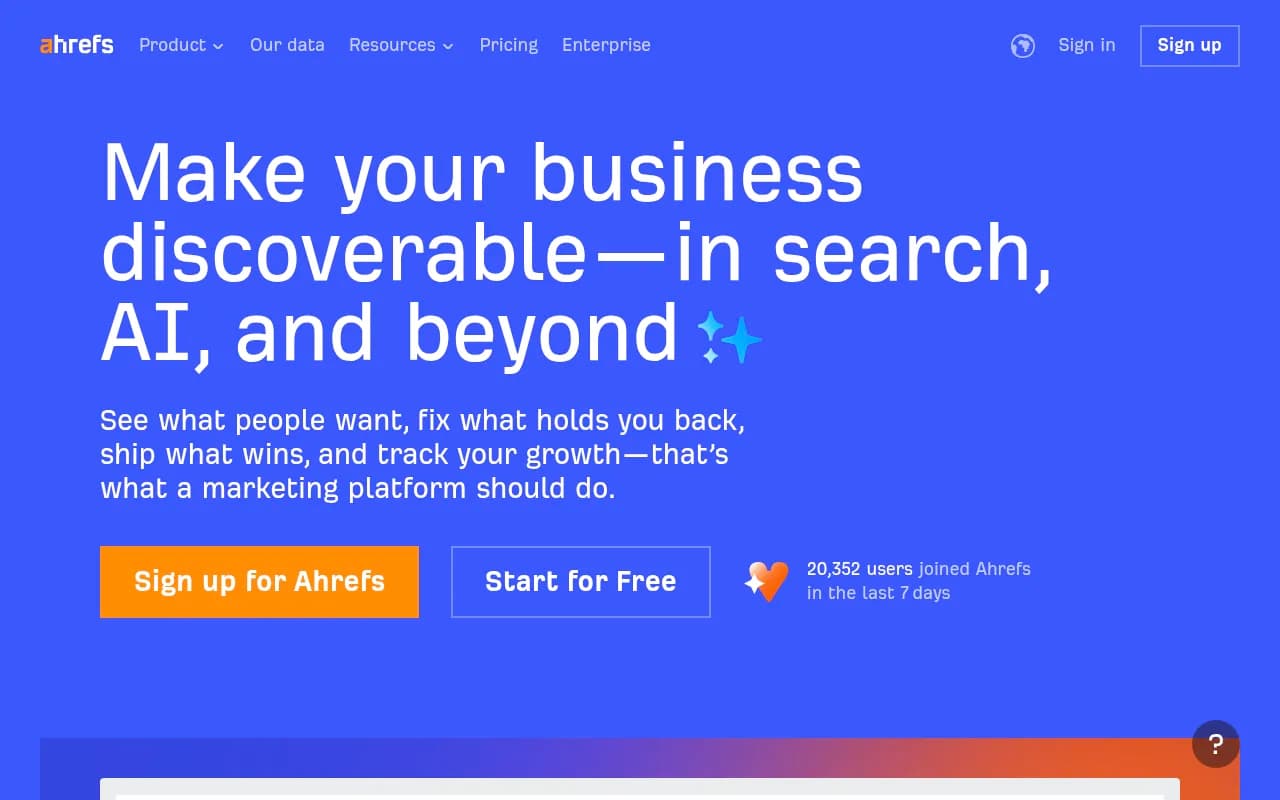
The limitations are real, though. Fixed prompts mean you can't customize what you're tracking. No AI traffic attribution. No content generation. No crawler logs. It's a monitoring add-on, not a standalone GEO platform. Useful as a complement to your existing Ahrefs workflow, not as a replacement for a dedicated AI visibility tool.
8. Writesonic GEO -- best for content-first teams that want AI visibility tied to writing
Writesonic has built GEO features into its content platform, which makes it an interesting option for teams where content creation is the primary workflow. You get AI visibility tracking alongside the writing tools you're already using, and the integration between "what AI models are saying" and "what content to create" is more natural than in pure-monitoring tools.
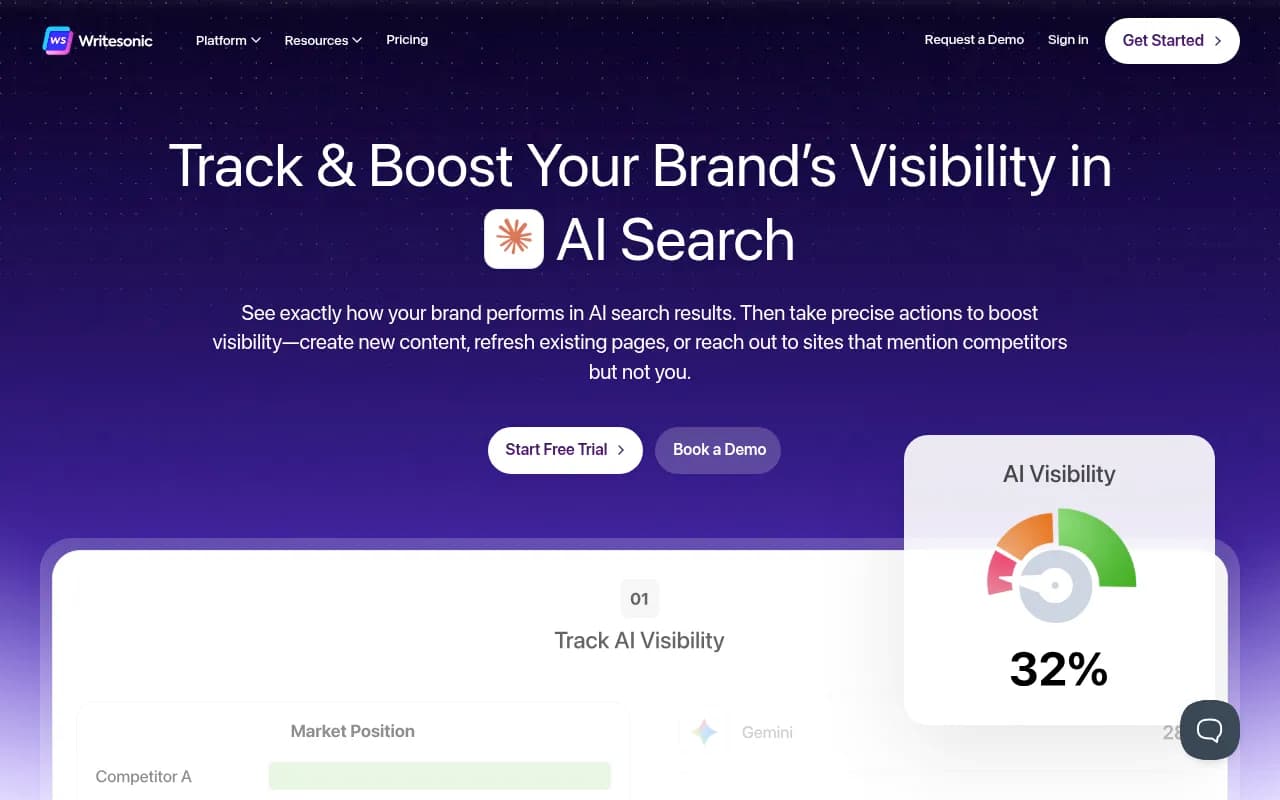
Crawler log monitoring isn't there, and the tracking depth doesn't match dedicated GEO platforms. But if your team's primary job is producing content and you want AI visibility baked into that workflow rather than living in a separate tool, Writesonic GEO is worth a look.
9. ContentMonk -- best for teams that want AEO-focused content creation with monitoring
ContentMonk positions itself specifically at the intersection of AI visibility monitoring and content creation for AEO (Answer Engine Optimization). The platform tracks where you're missing from AI answers and then helps you write the content to fill those gaps.
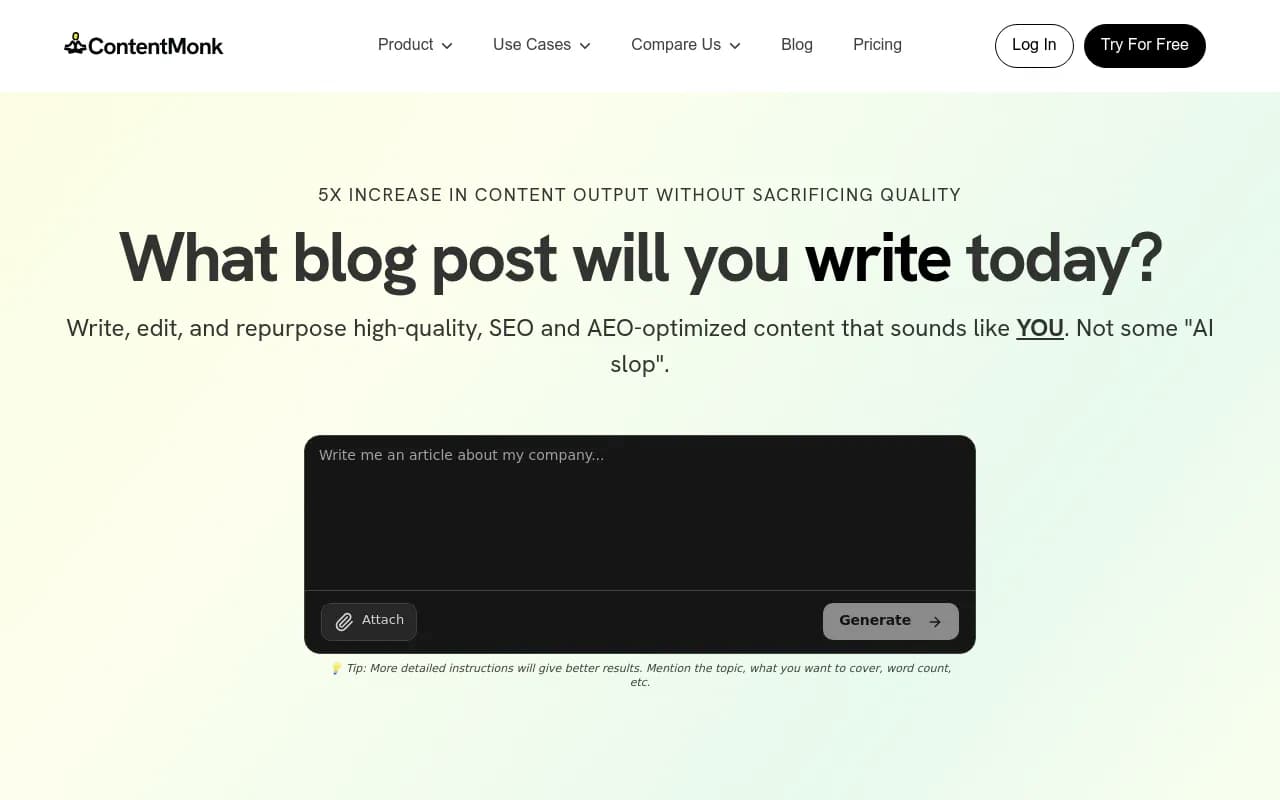
It's a more focused tool than Promptwatch -- narrower engine coverage, no crawler logs -- but the content creation workflow is well-designed for teams whose primary output is written content. If you want a lighter-weight tool that still closes the gap between "we found a problem" and "we published something to fix it," ContentMonk is a reasonable option.
How to choose
The right tool depends on what you actually need from it.
If crawler log monitoring is a hard requirement, the list gets short fast. Promptwatch is the only tool in this comparison that offers real-time AI crawler logs as a native feature. Everything else is monitoring without that diagnostic layer.
If content generation is the priority, you have more options: Promptwatch, Writesonic GEO, and ContentMonk all generate content. The difference is what that content is grounded in. Promptwatch uses 880M+ citations and prompt volume data. Writesonic and ContentMonk are solid but don't have that citation depth.
If you need both crawler logs and content generation, Promptwatch is the only answer in this list.
If price is the primary constraint and you just need basic monitoring, Otterly.AI and Peec AI are the sensible choices. You won't get the optimization layer, but you'll get visibility data at a fraction of Profound's cost.
If you're already in the Semrush or Ahrefs ecosystem, their AI features are worth exploring before adding a new tool -- but go in with realistic expectations about what they cover.
The core problem with monitoring-only tools
It's worth being direct about why this matters. The GEO tools market has grown fast, and most of the platforms that launched in 2024-2025 are fundamentally dashboards. They show you a visibility score, a list of prompts where you appear or don't appear, and maybe a competitor comparison. That's useful data. But it doesn't tell you what to do next, and it doesn't help you do it.
The teams getting real results from GEO in 2026 are the ones that have closed the loop: they know which prompts matter, they know what content is missing, they publish that content, and they track whether it worked. That cycle requires more than a monitoring dashboard.
Profound is a good monitoring dashboard. The alternatives on this list range from "also just a monitoring dashboard, but cheaper" to "actually helps you do something about what you find." Know which category you need before you sign up for a free trial.
Final recommendation
For teams that specifically need crawler log monitoring and content generation -- the two things Profound doesn't offer -- Promptwatch is the clear choice. It's the only platform that covers both, and it wraps them into a workflow that connects visibility gaps to published content to traffic attribution. The Professional plan at $249/mo is where crawler logs unlock, which is worth factoring into your budget.
For teams that just need monitoring at a lower price, Otterly.AI or Peec AI will serve you well. For content-first teams, Writesonic GEO or ContentMonk are worth evaluating. For enterprise teams with dedicated content resources, AthenaHQ is worth a look.
But if you've been frustrated by Profound's "here's the problem, good luck fixing it" approach, the answer is a platform that was built around the full optimization loop from the start.