Key takeaways
- Profound raised a $35M Series B from Sequoia and is genuinely strong at the top of the market, but its pricing and complexity exclude most mid-market brands and agencies
- The best alternatives split into two camps: monitoring-only tools (cheaper, simpler) and full optimization platforms (more expensive, but actually help you fix visibility gaps)
- For enterprise brands that need scale, the platforms worth serious evaluation are Promptwatch, AthenaHQ, Scrunch AI, and BrightEdge AI Catalyst
- If you're an agency or smaller team, Peec AI, Otterly.AI, SE Visible, and LLM Pulse offer solid entry points without the enterprise overhead
- The single biggest differentiator in 2026 is whether a platform helps you create content that gets cited, or just shows you a dashboard of where you're missing
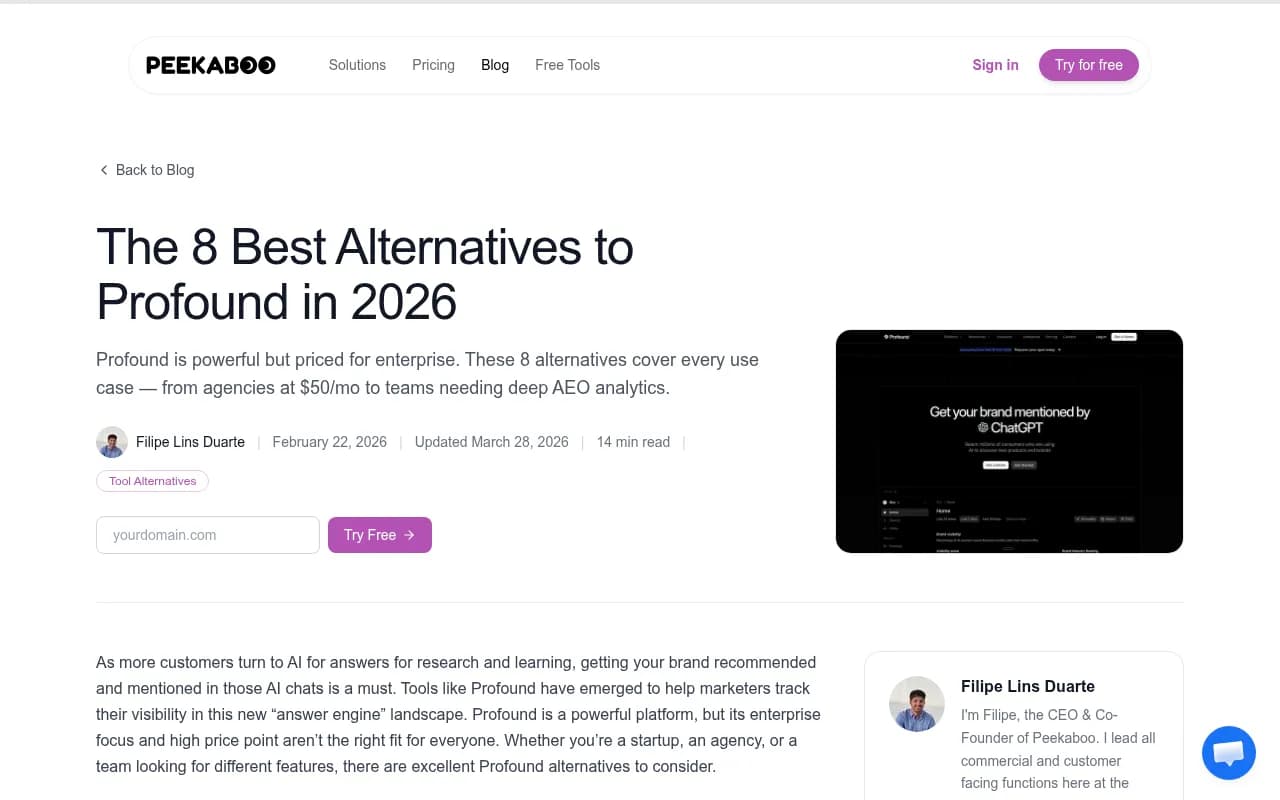
Profound has done something genuinely hard: it built a credible enterprise platform for AI search visibility before most of the market knew that category existed. The $35M Sequoia round in 2025 validated that bet. For a Fortune 500 brand with a dedicated team and a big budget, it works well.
But "works well for Fortune 500" covers maybe a few thousand companies globally. The rest of the market -- agencies managing 20 clients, mid-market brands with a two-person SEO team, startups trying to understand why ChatGPT recommends a competitor -- needs something different. Either more affordable, more focused, or more actionable.
This guide covers the 8 most credible alternatives, with honest assessments of where each one fits.
What to actually look for in a Profound alternative
Before getting into the tools, it's worth being clear about what "enterprise scale" means in this context. It's not just about tracking more prompts. The real questions are:
- Does it cover the AI models your customers actually use (ChatGPT, Perplexity, Gemini, Claude, at minimum)?
- Can it handle multiple brands, regions, or languages without the pricing becoming absurd?
- Does it give you something to do with the data, or just a report?
- How does it handle AI crawler logs and traffic attribution -- the stuff that connects visibility to actual revenue?
Most tools in this space are monitoring dashboards. They show you a score. They don't tell you what to write or why a competitor is getting cited instead of you. That gap matters more as the category matures.
The 8 best Profound alternatives in 2026
1. Promptwatch
Promptwatch is the platform that most directly competes with Profound on the "full optimization loop" dimension -- and it's the one that most consistently gets recommended when teams want to move beyond monitoring.
The core difference from most competitors: Promptwatch doesn't stop at showing you where you're invisible. It has a built-in Answer Gap Analysis that identifies exactly which prompts competitors rank for that you don't, then a content generation agent that writes articles, listicles, and comparisons specifically engineered to get cited by AI models. That combination -- find the gap, create the content, track the result -- is what separates it from tools that just show you a dashboard.
On the data side, it monitors 10 AI models (ChatGPT, Perplexity, Claude, Gemini, Google AI Overviews, Google AI Mode, Grok, DeepSeek, Copilot, Meta AI), has processed over 1.1 billion citations, and includes real-time AI crawler logs that show which pages ChatGPT or Perplexity are actually reading on your site. Most competitors don't have crawler logs at all.
For enterprise teams specifically, the multi-site support, Looker Studio integration, API access, and ChatGPT Shopping tracking are worth noting. Pricing starts at $99/month (Essential) up to $579/month (Business), with agency and enterprise plans available.

2. AthenaHQ
AthenaHQ is the other platform that positions itself as a full GEO suite rather than just a tracker. It covers 8+ AI models on all plans, offers unlimited seats (which matters for enterprise teams), and has GA4 integration for revenue attribution.
Starting at $295/month, it's priced closer to Profound than to the budget tools. The tradeoff is that it can feel complex for teams that just want to get started quickly. But for data-driven marketing teams that want deep analytics and don't mind the setup time, it's a serious option.

3. Scrunch AI
Scrunch takes a more technical angle than most. Its Agent Experience Platform (AXP) includes what it calls "shadow site" technology -- essentially a separate layer that helps AI crawlers better understand and index your content. If your team includes a CTO or technical SEO lead who wants to go deep on how AI engines discover and process your site, Scrunch is worth evaluating.
Starting at $250/month, it's not cheap, but it covers capabilities that most monitoring tools don't touch. The tradeoff is fewer LLMs on the core plan and a steeper learning curve.
4. BrightEdge AI Catalyst
BrightEdge has been an enterprise SEO platform for years, and its AI Catalyst product extends that into AI search visibility. For large organizations already using BrightEdge for traditional SEO, adding AI Catalyst is a natural extension rather than a new tool to manage.
The strength here is the integration with existing SEO workflows and the enterprise support infrastructure. The weakness is that it's built for very large teams and budgets -- it's not the right choice if you're looking to get started quickly or if you don't already have a BrightEdge relationship.
5. SE Visible
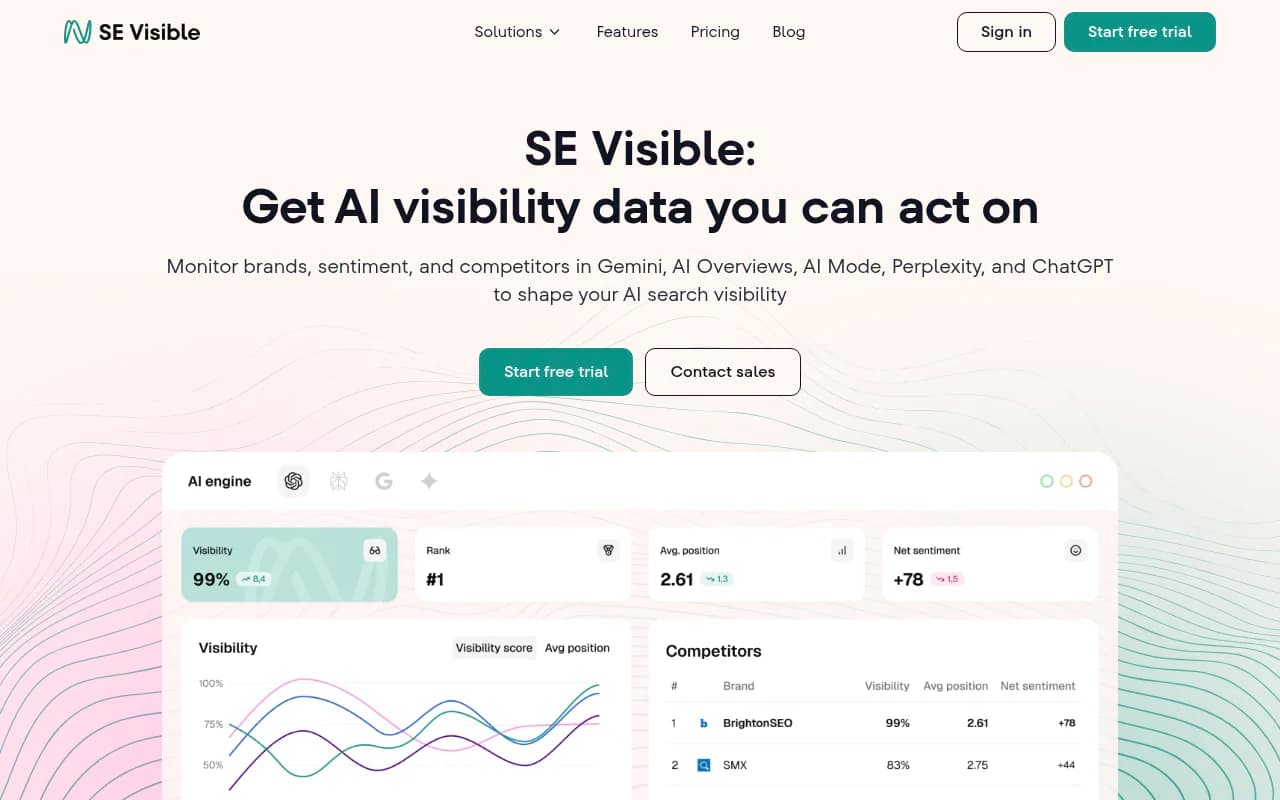
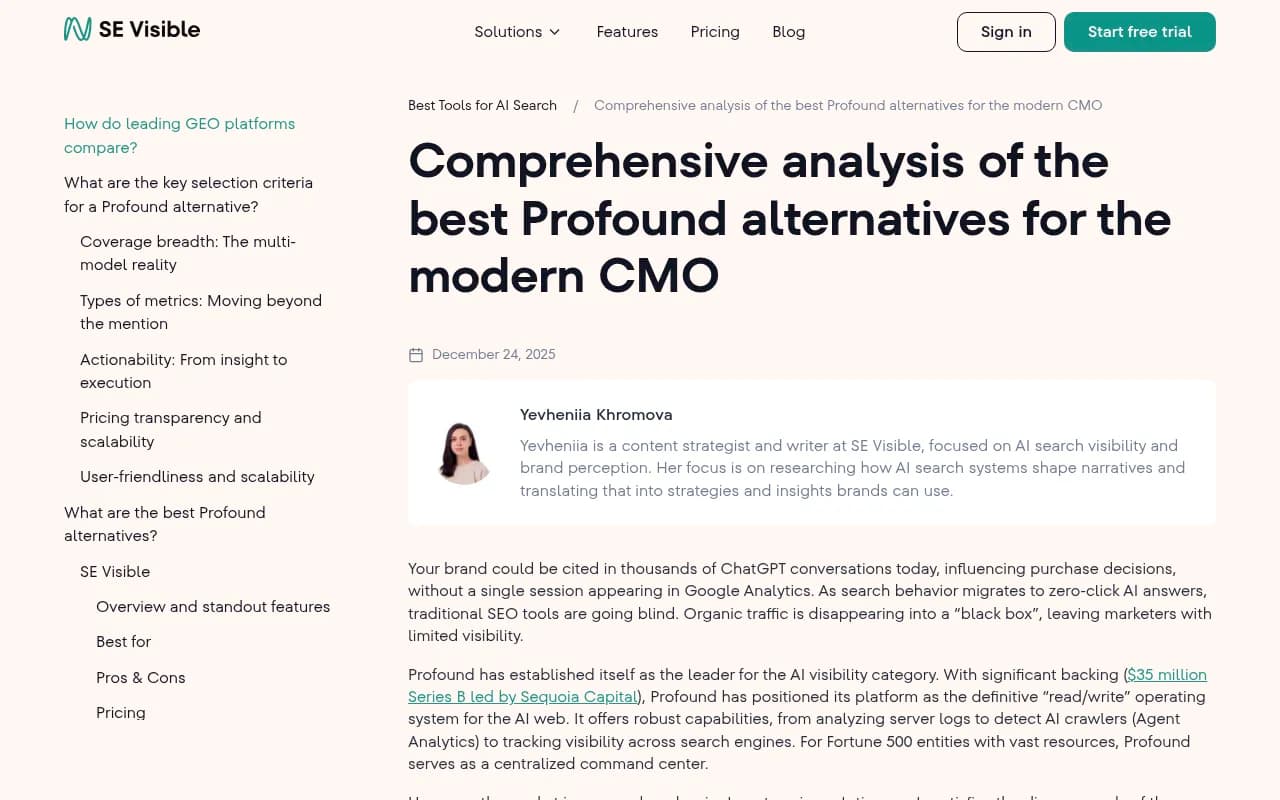
SE Visible (from SE Ranking) is the most practical option for SEO agencies that are transitioning from traditional SEO into AI visibility work. It fuses SEO data with AI search tracking, which means you're not managing two separate toolsets.
The source detection feature is particularly useful -- it shows which domains and pages AI models are pulling from when they answer queries in your category. That's actionable intelligence for a content strategy. Pricing is structured as an add-on to SE Ranking subscriptions, which makes it affordable if you're already in that ecosystem.
6. Peec AI
Peec AI is the clearest "start here" option for teams that want AI visibility monitoring without enterprise complexity or pricing. It's user-friendly, supports unlimited seats, and has an "Actions" feature that gives GEO recommendations -- a step beyond pure monitoring.
At €85/month for brands and €205/month for agencies, it's accessible. The limitations are real: fewer AI models than the enterprise tools, and less depth on the analytics side. But for a startup or mid-market brand getting their first real look at AI search visibility, it's a solid starting point.

7. Otterly.AI
Otterly.AI sits at the affordable end of the market -- $29/month entry point -- and is genuinely useful for solo marketers and small teams that want to monitor brand mentions across AI models without a big budget commitment.
The catch is that core AI models are add-ons, so the real cost is higher than the headline price suggests. It's also monitoring-only; there's no content generation or gap analysis. But for a small team that just wants to know when ChatGPT mentions (or doesn't mention) their brand, it does the job.

8. LLM Pulse
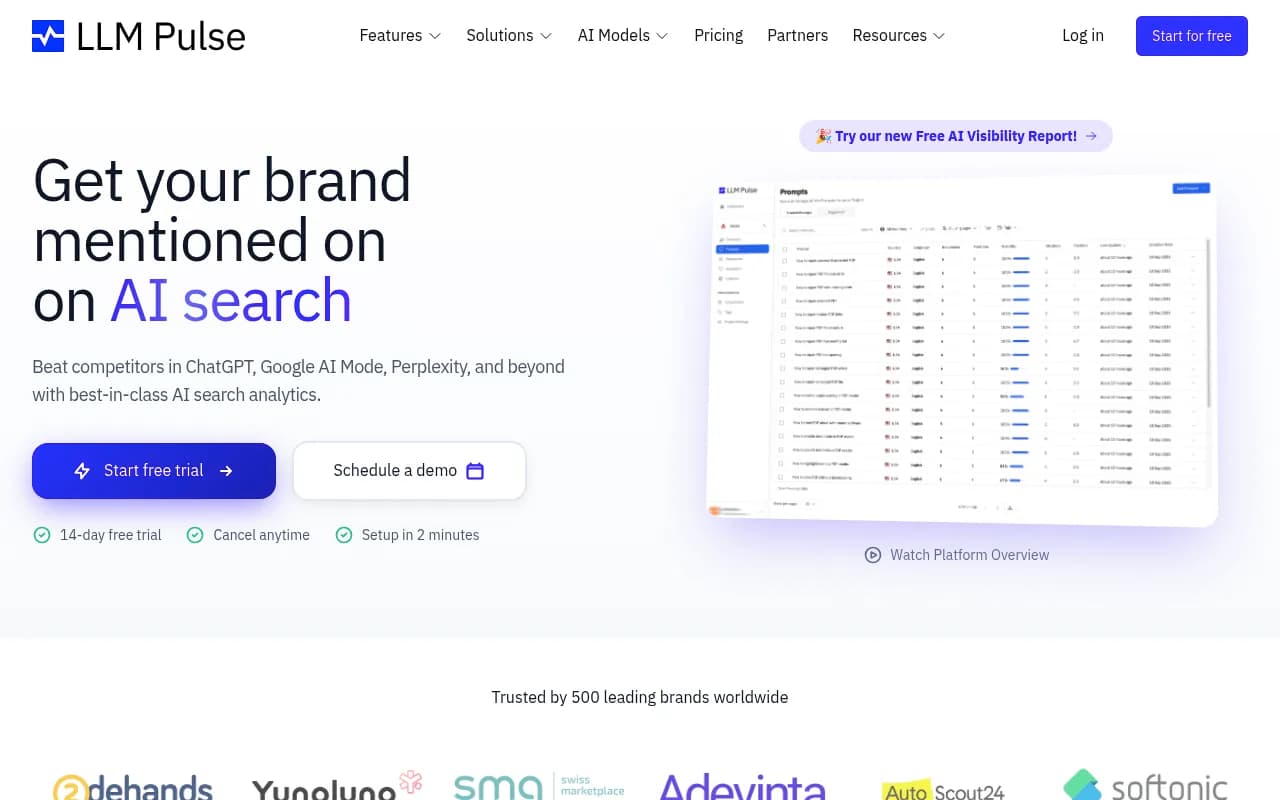
LLM Pulse covers 5 AI models on all plans with weekly tracking and a 14-day trial. At €49/month, it's one of the more affordable options for in-house marketing teams that want regular visibility reports without the complexity of an enterprise platform.
It's not going to replace Profound for a Fortune 500 brand, but for a mid-size company with a small marketing team that wants consistent AI visibility data, it's a practical choice.
How these platforms compare
| Platform | Starting price | AI models covered | Content generation | Crawler logs | Best for |
|---|---|---|---|---|---|
| Promptwatch | $99/mo | 10 | Yes (built-in agent) | Yes | Brands wanting full optimization loop |
| AthenaHQ | $295/mo | 8+ | Limited | No | Data-driven enterprise teams |
| Scrunch AI | $250/mo | Varies by plan | No | Yes (AXP) | Technical SEO / CTOs |
| BrightEdge AI Catalyst | Enterprise | Multiple | No | No | Existing BrightEdge customers |
| SE Visible | Add-on | Multiple | No | No | SEO agencies in SE Ranking ecosystem |
| Peec AI | €85/mo | Fewer than enterprise | Recommendations only | No | Startups, SMBs |
| Otterly.AI | $29/mo | Core models (add-ons) | No | No | Solo marketers, small teams |
| LLM Pulse | €49/mo | 5 | No | No | In-house teams, mid-market |
| Profound | Enterprise | Multiple | No | Yes (Agent Analytics) | Fortune 500 brands |
The monitoring-only problem
One thing worth saying directly: most of the tools in this list, and most of the tools in this category generally, are monitoring dashboards. They show you a score. They show you which prompts your competitors appear in. They send you an alert when your brand sentiment changes.
That's useful information. But it doesn't tell you what to write, which topics to cover, or why a competitor is getting cited instead of you. And in a category where the whole point is to influence what AI models say, knowing you have a problem without knowing how to fix it is a frustrating place to be.
The platforms that have moved beyond monitoring -- Promptwatch with its Answer Gap Analysis and content generation, AthenaHQ with its automation features -- are the ones worth prioritizing if you're serious about improving visibility rather than just measuring it.
Which platform should you actually choose?
The honest answer depends on where you are:
If you're an enterprise brand that needs the full optimization loop -- tracking, gap analysis, content generation, crawler logs, traffic attribution -- Promptwatch is the most complete option at a price point that doesn't require a Fortune 500 budget. AthenaHQ is the alternative if you need deeper analytics and have the team to use them.
If you're a technical team that wants to go deep on how AI crawlers interact with your site, Scrunch AI is worth a look. If you're already a BrightEdge customer, AI Catalyst is the path of least resistance.
If you're an agency or smaller team just getting started, SE Visible (if you're in the SE Ranking ecosystem), Peec AI, or Otterly.AI give you a real starting point without overcommitting on budget.
The one thing to avoid: picking a tool purely on price and ending up with a monitoring dashboard that shows you the problem but gives you nothing to do about it. The whole point of tracking AI visibility is to improve it.