Key takeaways
- Semrush has the most developed AI visibility features of the three, but they're add-ons layered onto a traditional SEO platform -- not purpose-built for GEO.
- SE Ranking offers a surprisingly capable AI visibility toolkit at a lower price point, making it the best value option if you're already paying for an all-in-one SEO suite.
- Moz Pro lags the furthest behind on AI search tracking; its strength remains traditional metrics like Domain Authority and backlink analysis.
- None of the three platforms offer the full action loop (gap analysis + content generation + traffic attribution) that dedicated GEO platforms provide.
- If AI visibility is a core priority -- not just a nice-to-have -- you'll likely need a specialist tool alongside whichever SEO platform you choose.
The question used to be simple: Semrush or Ahrefs? Maybe Moz if you cared about Domain Authority. Now there's a new dimension to evaluate: how well does your SEO platform actually track your brand's visibility inside ChatGPT, Perplexity, Google AI Overviews, and the rest of the AI search ecosystem?
All three of the major traditional SEO platforms -- Semrush, SE Ranking, and Moz Pro -- have made moves in this direction. But "made moves" covers a lot of ground. There's a big difference between bolting on a basic AI Overview tracker and building a genuine GEO (Generative Engine Optimization) workflow. This guide breaks down exactly where each platform stands, what you actually get, and whether any of them are enough on their own.
How each platform approaches AI visibility
Semrush
Semrush has been the most aggressive of the three in expanding toward AI search. Its Position Tracking tool now includes Google AI Overviews monitoring, showing you when your pages appear in AI-generated summaries. The ContentShake AI tool helps with content creation, and there's a broader push toward AI-assisted workflows across the platform.
That said, the AI visibility features in Semrush are still primarily Google-centric. You can track AI Overviews appearances, but coverage of other AI engines -- ChatGPT, Perplexity, Claude, Gemini as a standalone answer engine -- is limited compared to what dedicated GEO platforms offer. The fixed prompt structure (you define keywords, it checks them) means you're not getting the kind of broad prompt landscape analysis that shows you what you're missing.
ContentShake AI is genuinely useful for content drafting, but it's not grounded in citation data from AI models. It's AI-assisted writing for SEO, not content engineered to get cited by LLMs. That's a meaningful distinction.
Pricing context: Semrush's core plans start around $139/month (Pro), with AI features spread across different tools and add-ons. The full picture can get expensive fast.
SE Ranking
SE Ranking has quietly built one of the more complete AI visibility toolkits among traditional SEO platforms. Its dedicated AI Visibility section -- accessible via the SE Visible product -- tracks brand mentions and citations across multiple AI engines, not just Google AI Overviews.
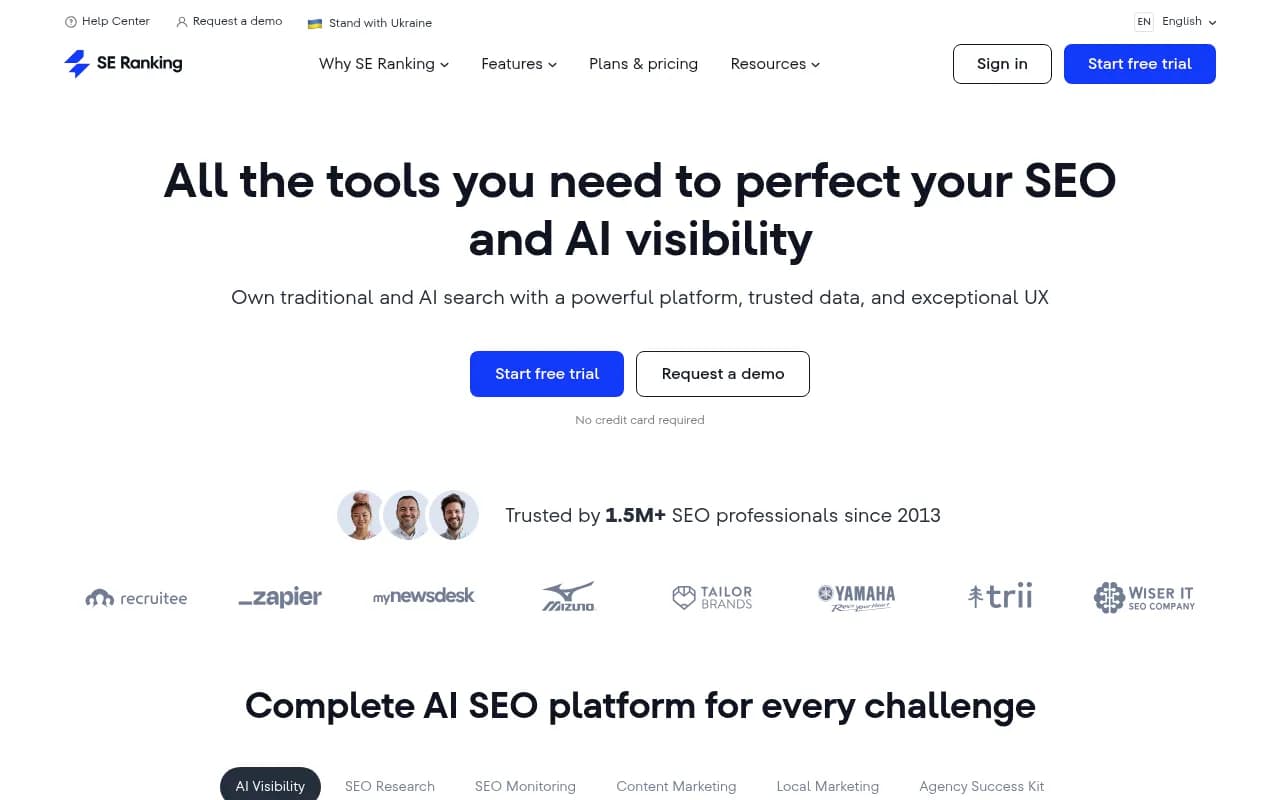
What's notable about SE Ranking is the price-to-feature ratio. You get rank tracking, site audits, backlink analysis, and a meaningful AI visibility layer for considerably less than Semrush. For teams that need a single platform and can't justify two separate subscriptions, SE Ranking is the most pragmatic choice.
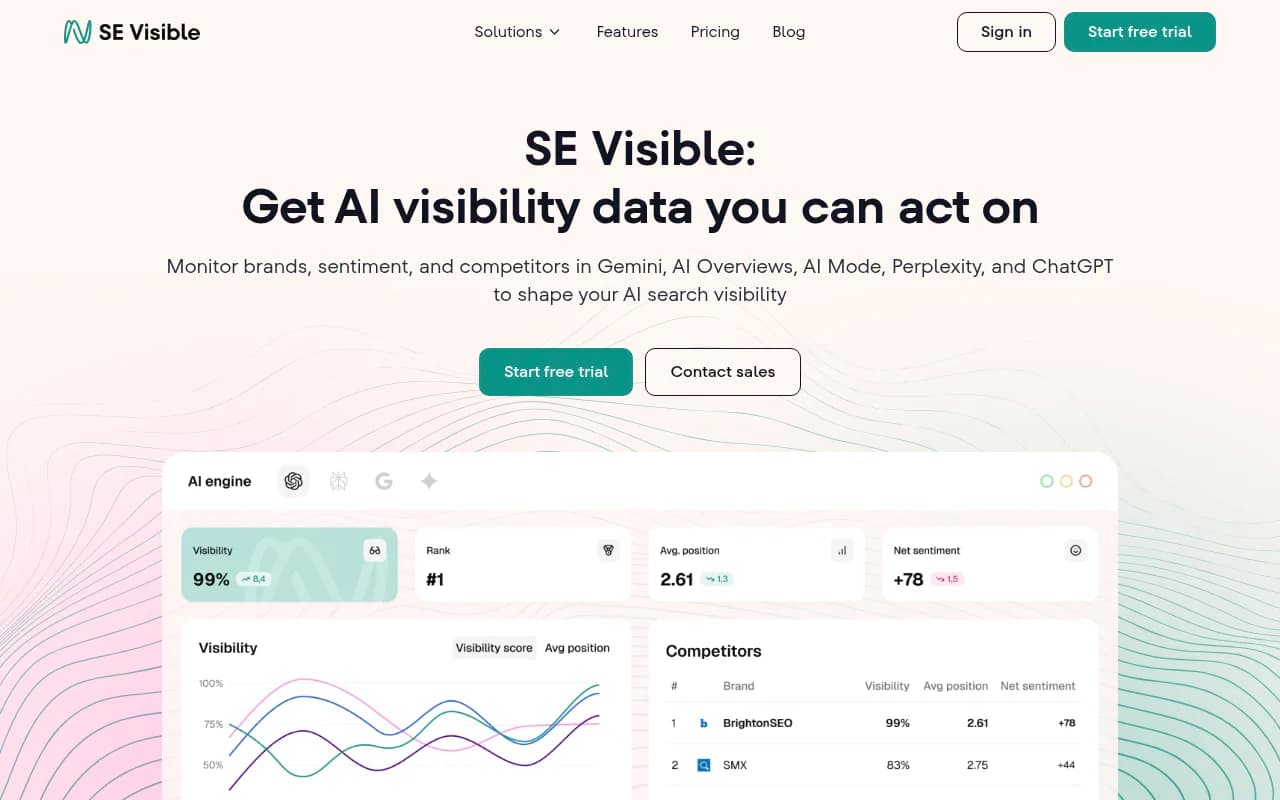
The limitations are real, though. SE Ranking's AI visibility data is thinner than what you'd get from a specialist tool -- fewer prompts tracked, less granular citation analysis, no crawler log data showing how AI bots are actually crawling your site. It's a solid starting point, not a complete solution.
Moz Pro
Moz Pro is the most honest case study in what happens when a platform's core identity doesn't align with a new paradigm. Moz built its reputation on Domain Authority, link analysis, and a clean interface that made SEO approachable. Those strengths are still real.
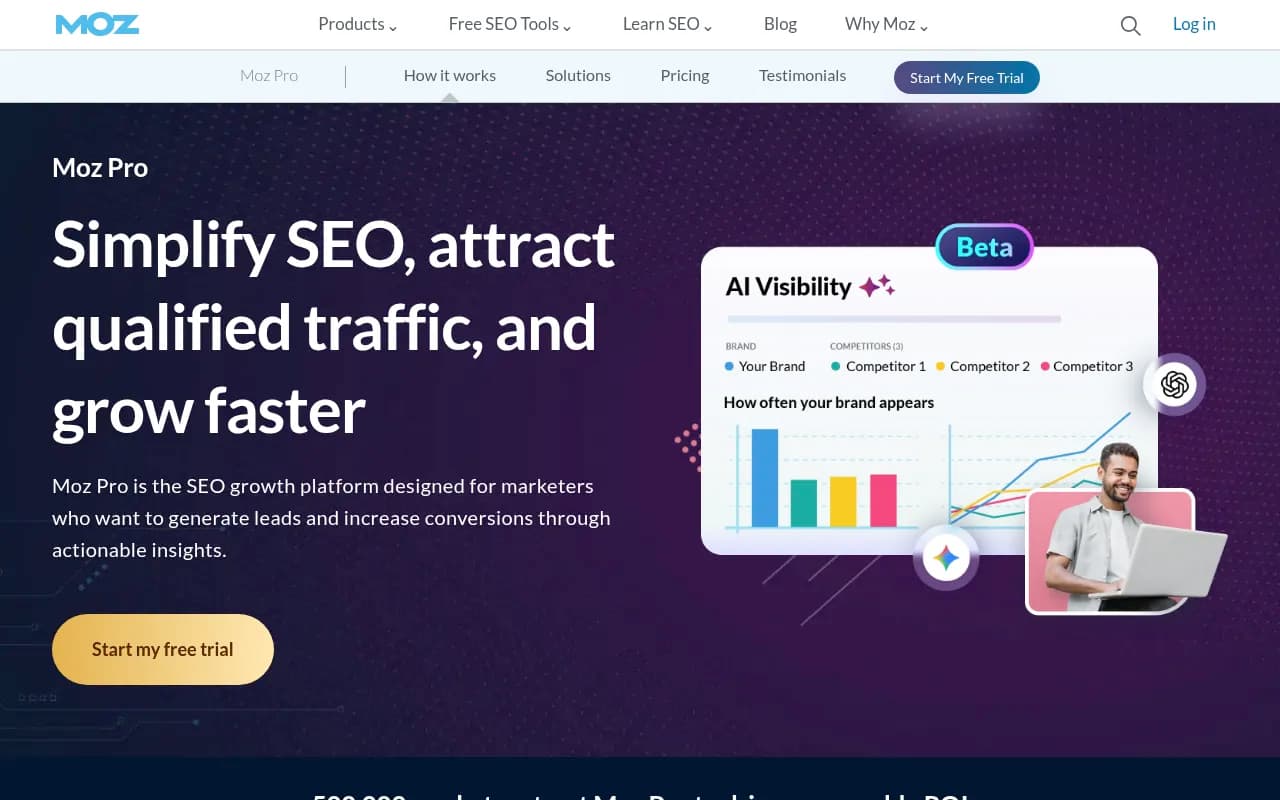
But on AI visibility, Moz is behind. There's no meaningful tracking of LLM citations, no AI Overview monitoring comparable to Semrush's, and no content optimization workflow aimed at generative search. The platform has added some AI-assisted features (keyword suggestions, content briefs), but these are AI tools for SEO, not tools for AI search visibility. The distinction matters.
If you're evaluating Moz Pro specifically for its AI search capabilities, the honest answer is: look elsewhere. Moz remains a solid choice for traditional SEO, particularly for teams that value its link metrics and straightforward reporting. Just don't expect it to tell you why ChatGPT isn't recommending your brand.
Feature comparison
| Feature | Semrush | SE Ranking | Moz Pro |
|---|---|---|---|
| Google AI Overviews tracking | Yes | Yes | Limited |
| ChatGPT / Perplexity / Claude monitoring | Limited | Partial (SE Visible) | No |
| AI content generation | Yes (ContentShake) | Basic | Basic |
| Prompt gap analysis | No | No | No |
| Citation source analysis | No | No | No |
| AI crawler logs | No | No | No |
| Traffic attribution from AI search | No | No | No |
| Traditional SEO depth | Excellent | Good | Good |
| Backlink analysis | Excellent | Good | Good |
| Starting price | ~$139/mo | ~$52/mo | ~$99/mo |
| Dedicated GEO workflow | No | No | No |
The table tells the story pretty clearly. All three platforms have gaps in the AI visibility column that matter -- particularly around prompt gap analysis, citation tracking, and AI traffic attribution. These aren't minor omissions; they're the core of what makes GEO actionable rather than just informational.
The fundamental problem with add-on AI visibility
Here's the thing about all three platforms: their AI visibility features were designed to extend existing SEO workflows, not to replace them or build something new. That makes sense from a product perspective -- you're not going to rebuild your entire platform around a new paradigm overnight. But it creates a real gap for teams that need to actually do something with their AI visibility data.
Knowing that your brand appeared in 23% of AI Overview responses for a keyword is useful. But it doesn't tell you:
- Which prompts your competitors are winning that you're not
- What content you'd need to create to close those gaps
- Whether AI crawlers are actually reading your new pages
- Whether your improved AI visibility is driving real traffic and revenue
That full loop -- find gaps, create content, track results -- is what separates a monitoring dashboard from an optimization platform. None of the three traditional SEO tools have built it yet.
When each platform makes sense
Choose Semrush if...
You're already a Semrush user and want to add AI Overview tracking without switching platforms. The integration with your existing keyword data is genuinely convenient, and ContentShake AI is useful for teams that need to produce content at volume. Just be clear-eyed that you're getting AI visibility as a secondary feature, not a primary one.
Choose SE Ranking if...
Budget is a real constraint and you need a single platform that covers traditional SEO and gives you a reasonable starting point on AI visibility. SE Ranking's pricing is significantly lower than Semrush, and the AI visibility layer is more developed than Moz's. For smaller teams or agencies managing multiple clients on tight margins, this is a defensible choice.
Choose Moz Pro if...
You specifically value Domain Authority as a metric, you're doing a lot of link-building work, or you're in an industry where traditional SERP rankings still dominate. Don't choose Moz for AI visibility -- it's not the right tool for that job.
What you're missing without a dedicated GEO platform
The research is consistent on this point: traditional SEO platforms are adding AI visibility features, but they're not purpose-built for the problem. A few specific gaps worth naming:
Prompt landscape coverage. Semrush and SE Ranking track the prompts you tell them to track. A dedicated GEO platform maps the full landscape of prompts in your category -- including ones you haven't thought of -- and shows you where competitors are visible and you're not.
Citation analysis. When ChatGPT recommends a product or service, it's drawing on specific sources: web pages, Reddit threads, YouTube videos, review sites. Knowing which sources AI models actually cite in your category tells you where to publish and what to optimize. Traditional SEO tools don't surface this.
AI crawler logs. Understanding how often ChatGPT's crawler visits your site, which pages it reads, and whether it's encountering errors is genuinely useful for diagnosing why certain content isn't getting cited. This data exists -- it's in your server logs -- but you need a tool that interprets it.
Content generation grounded in citation data. There's a difference between AI-assisted writing (what Semrush and SE Ranking offer) and content engineered to get cited by LLMs based on analysis of 880M+ real citations. The latter requires a dataset that traditional SEO platforms don't have.
Promptwatch is built specifically around this problem -- tracking AI visibility across 10 models, identifying prompt gaps, generating content grounded in citation data, and attributing traffic back to AI search. It's a different category of tool than the three platforms discussed here.

That's not a knock on Semrush, SE Ranking, or Moz -- they're solving a different problem. But if AI visibility is genuinely strategic for your business, you'll likely end up running a dedicated GEO platform alongside your traditional SEO tool, not instead of it.
Other specialist tools worth knowing about
If you're evaluating the dedicated GEO space, a few tools worth looking at:




Each of these focuses specifically on AI search visibility rather than trying to be an all-in-one SEO platform. The tradeoff is that you lose the traditional SEO functionality -- keyword research, backlink analysis, site audits -- so most teams end up pairing one with their existing SEO platform.
The practical recommendation
For most teams in 2026, the answer isn't "pick one platform and be done." It's:
- Keep your traditional SEO platform (whichever of the three fits your workflow and budget)
- Add a dedicated AI visibility tool if AI search is driving meaningful traffic in your category
The second step is increasingly non-optional. AI search referrals are growing, and the teams that understand where they're visible -- and where they're not -- have a real advantage over those flying blind.
SE Ranking is the best of the three for teams that want maximum coverage from a single subscription. Semrush is the best for teams already embedded in its ecosystem. Moz Pro is the right choice only if AI visibility isn't a current priority.
But if you're serious about GEO, none of the three is enough on its own.