Key takeaways
- Otterly.AI is the cheapest entry point at $29/month and works well for basic brand mention monitoring across a handful of AI models
- Airefs offers solid multi-model tracking at a low price point, making it a reasonable step up from Otterly without a big budget jump
- Rankscale focuses on AI search rank tracking with a clean interface, but its feature depth is limited compared to mid-market tools
- Peec.ai is the most capable of the four, with multi-language support, structured reporting, and daily tracking — but it costs more than the others
- All four tools are monitoring-only: they show you data but don't help you act on it. If you need content gap analysis or AI-optimized content generation, you'll need a more complete platform
Budget constraints are real. Not every team can drop $500/month on an AI visibility platform, especially when the category is still relatively new and you're trying to justify the spend internally.
The good news: there are legitimate tools in the $20-$100/month range that give you meaningful visibility data. The honest caveat: you get what you pay for, and "monitoring" is not the same as "optimization." More on that distinction later.
This guide focuses on four tools that consistently come up when people search for affordable AI visibility options: Peec.ai, Rankscale, Airefs, and Otterly.AI. I've looked at what each one actually does, where it falls short, and who it's genuinely right for.
What these tools actually do (and don't do)
Before comparing them, it's worth being clear about what "AI visibility monitoring" means at this price tier.
These tools work by sending predefined prompts to AI models (ChatGPT, Perplexity, Gemini, Claude, etc.) and recording whether your brand appears in the responses. They track mention frequency, sentiment, and sometimes which competitors appear alongside you. Most give you a dashboard with trends over time.
What they generally don't do: tell you why you're not appearing, identify which content gaps are costing you visibility, generate content to fix those gaps, or show you which pages on your site AI crawlers are actually reading. That's a different category of tool.
If you're starting from zero and just want to know "is my brand showing up in AI answers?", these tools are a reasonable place to start. If you already know you have a visibility problem and need to fix it, you'll outgrow them quickly.
The four tools, broken down
Otterly.AI
Otterly is the most accessible tool in this comparison. At $29/month for the entry plan, it's often the first AI visibility tool people try. The interface is clean, setup takes minutes, and you can start seeing brand mentions across ChatGPT, Perplexity, and a few other models almost immediately.

The appeal is simplicity. You enter your brand name, add a few competitor names, and Otterly starts tracking how often each appears in AI responses to relevant prompts. The reporting is straightforward — you get mention counts, share of voice comparisons, and basic sentiment.
The limitations are just as straightforward. Prompt coverage is limited on the entry plan, model coverage is narrower than mid-market tools, and there's no content optimization layer. You can see that a competitor is getting more mentions than you; you can't do much about it from within Otterly.
That said, for a solo marketer or small team that just wants a sanity check on AI brand presence, $29/month is hard to argue with.
Airefs
Airefs sits in a similar price bracket to Otterly but leans slightly more toward structured tracking. It monitors brand visibility across multiple AI models and gives you citation data — meaning it tries to surface which sources AI models are citing when they mention (or don't mention) your brand.
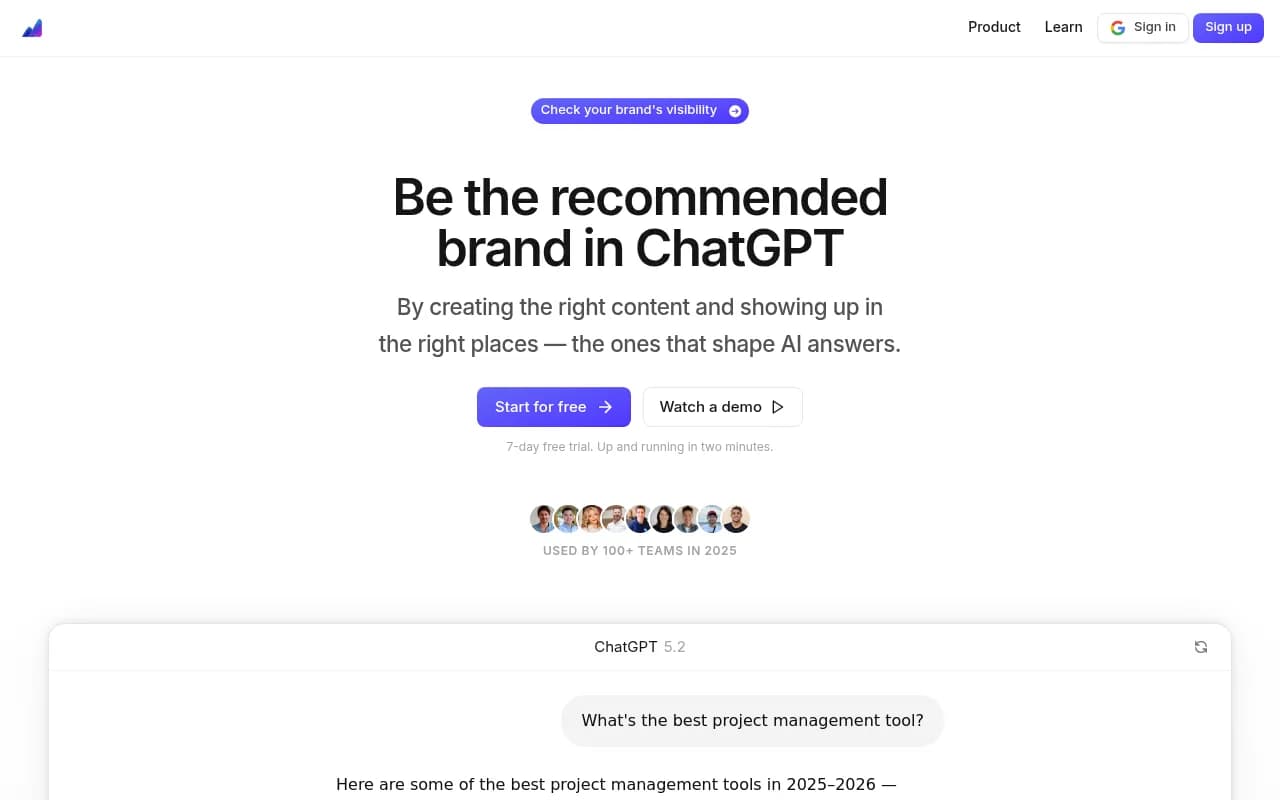
The citation angle is genuinely useful. Knowing that Perplexity keeps citing a competitor's blog post over yours gives you something to act on, even if Airefs itself doesn't help you act on it. The interface is functional without being polished, and the data updates regularly.
Where Airefs struggles is depth. The prompt library is limited, and the tool doesn't offer much in the way of competitive analysis beyond basic share-of-voice comparisons. It's a solid tracker, but "solid tracker" is about the ceiling.
Rankscale
Rankscale takes a slightly different approach, framing itself around "AI search ranking" rather than brand monitoring. The idea is that just as you'd track Google keyword rankings, you can track how your brand ranks in AI responses to specific queries.
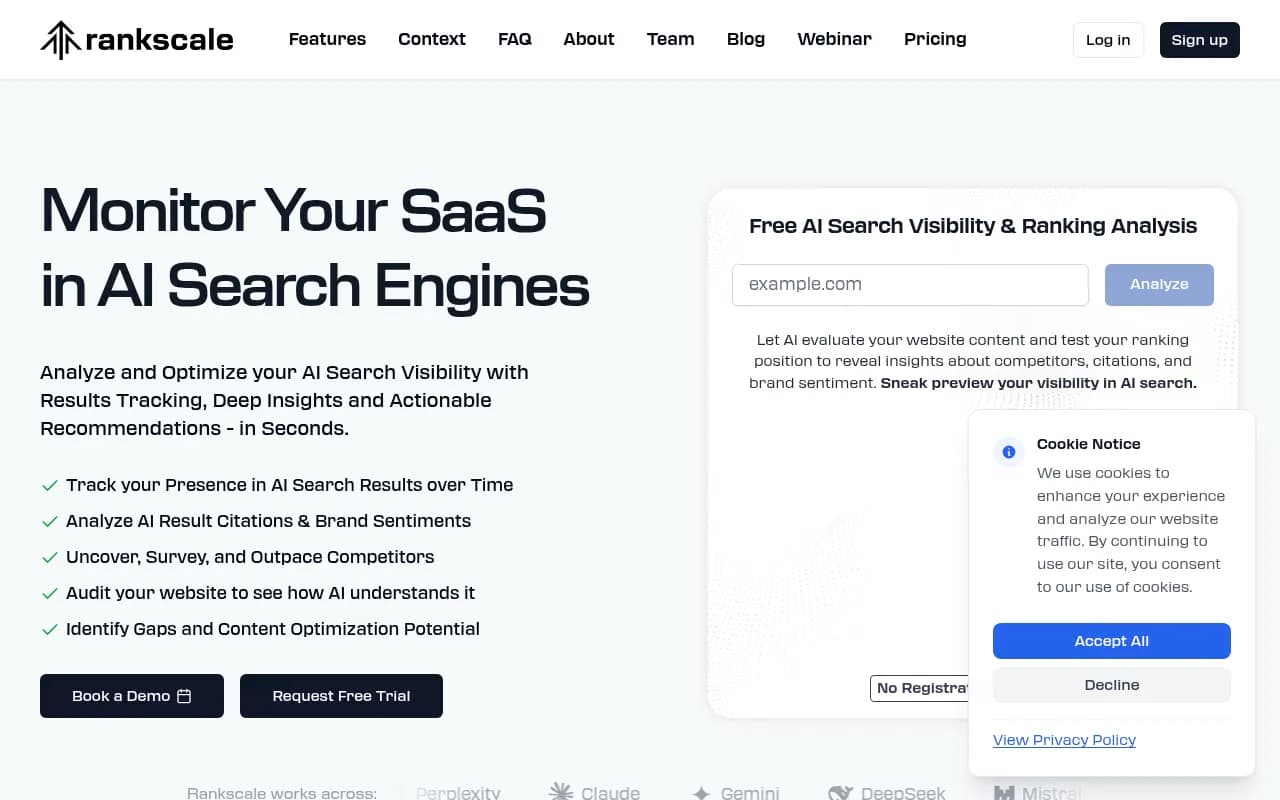
The ranking metaphor makes sense conceptually, and Rankscale's interface reflects it — you see your brand's position in AI responses across a set of tracked prompts, with trend lines over time. For teams already comfortable with traditional rank tracking, the mental model clicks quickly.
The issue is that AI responses don't work like search rankings. Position 1 vs position 3 in a ChatGPT answer matters less than whether you're cited at all, and the nuance of why you appear (or don't) gets lost in the ranking framing. It's a useful snapshot tool, but the metaphor can mislead you into thinking the problem is simpler than it is.
Peec.ai
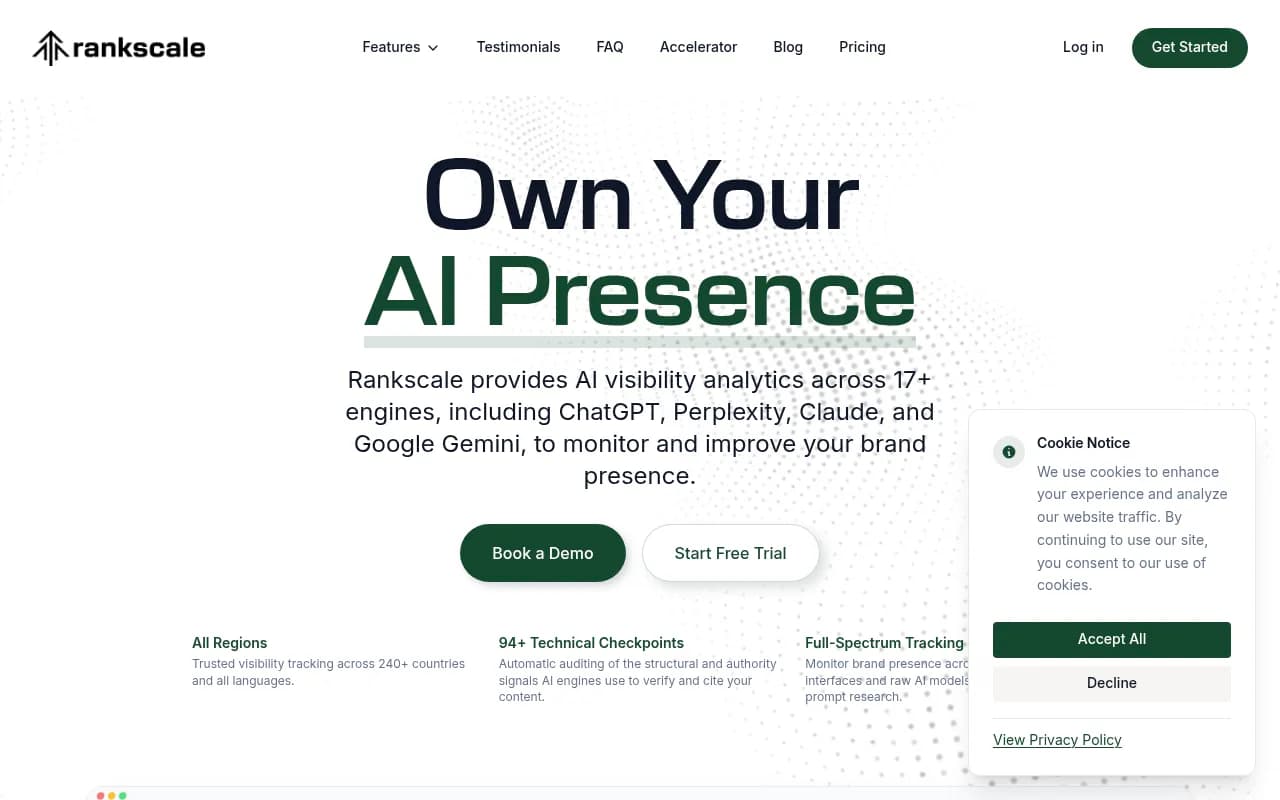
Peec.ai is the most feature-complete of the four. According to Surmado's 2026 comparison, it raised $29M and hit $4M+ ARR in ten months, which suggests it's resonating with a real market. The platform offers daily tracking, multi-language support, structured reporting, and coverage across more AI models than the other three tools here.

The multi-language capability is genuinely best-in-class at this price tier. If you're a brand operating in multiple markets, Peec.ai is the only tool in this comparison that handles non-English tracking without requiring a separate enterprise contract. The reporting is also more polished than Otterly or Airefs, with cleaner segmentation by model, prompt type, and competitor.
The trade-off is price. Peec.ai costs more than Otterly and Airefs, and while it's still affordable relative to enterprise platforms, it's a bigger commitment for a team that's just starting to explore AI visibility. It's also still a monitoring tool — you get better data than the others, but you're still left to figure out what to do with it yourself.
Feature comparison
| Feature | Otterly.AI | Airefs | Rankscale | Peec.ai |
|---|---|---|---|---|
| Starting price | ~$29/mo | Low tier | Low tier | Mid tier |
| AI models tracked | 3-5 | Multiple | Multiple | 5+ |
| Multi-language support | Limited | Limited | Limited | Yes |
| Citation tracking | Basic | Yes | Limited | Yes |
| Competitor tracking | Yes | Yes | Yes | Yes |
| Content gap analysis | No | No | No | No |
| Content generation | No | No | No | No |
| AI crawler logs | No | No | No | No |
| Prompt volume data | No | No | No | No |
| Daily tracking | Limited | Yes | Yes | Yes |
| Ease of setup | Very easy | Easy | Easy | Easy |
| Best for | Beginners | Citation-curious teams | Rank-tracker mindset | Multi-market teams |
The honest trade-off at this price tier
Here's the thing that doesn't get said enough in these comparisons: monitoring is the easy part. The hard part is knowing what to do with the data.
All four tools will tell you that your brand appears in 12% of relevant AI responses while your top competitor appears in 34%. What none of them will tell you is which specific content gaps are causing that difference, which prompts you're losing on and why, or what you should write to close the gap.
That's not a knock on these tools specifically. It's a structural limitation of the monitoring-only category. If you're using any of these tools and finding yourself stuck at "okay, so what now?", that's the natural ceiling.
Platforms like Promptwatch are built around closing that loop — finding the gaps, generating content to fill them, and tracking whether visibility actually improves. It's a different price point, but it's doing a fundamentally different job.

For teams that are just getting started and want to understand the landscape before committing to a full optimization platform, starting with one of these four tools is a reasonable approach. Just go in knowing what you're buying.
Who should use which tool
The right choice depends less on features and more on where you are in your AI visibility journey.
If you've never tracked AI visibility before and want to see what the data looks like without spending much, Otterly.AI is the right starting point. It's cheap, fast to set up, and gives you a real sense of whether your brand is showing up. Don't overthink it.
If you're specifically interested in understanding which sources AI models are citing in your category, Airefs gives you more of that citation-level data than Otterly. It's a small step up in complexity for a meaningful step up in insight.
If your team already thinks in terms of rank tracking and you want AI visibility to fit that mental model, Rankscale will feel familiar. Just be aware that the ranking framing is an approximation, not a precise measurement.
If you're operating in multiple languages or markets and need structured reporting you can actually share with stakeholders, Peec.ai is worth the higher price. The multi-language support alone separates it from the others for international teams.
A note on what's missing from all of them
The research from Surmado's 2026 comparison is worth quoting directly: AI search visitors convert at 4 to 5 times the rate of traditional search visitors. That's not a small difference. It means that if your brand is invisible in AI answers, you're not just missing impressions — you're missing high-intent buyers.
Monitoring tools tell you the score. They don't help you win the game.
The tools that are actually moving the needle for brands in 2026 are the ones that combine tracking with action: content gap analysis that shows exactly which prompts competitors are winning on, content generation grounded in real citation data, and page-level tracking that connects new content to visibility improvements.
That's a longer conversation than this guide covers, but it's worth knowing the distinction exists before you commit to a tool and assume the job is done once the dashboard is set up.
Bottom line
For pure affordability, Otterly.AI wins. For citation depth, Airefs is worth a look. For teams that want rank-style tracking, Rankscale fits the mental model. For multi-language and structured reporting, Peec.ai is the best of the four.
None of them will tell you what to do next. If that matters to you — and it probably should — factor that into your decision before signing up.