Key takeaways
- Ceyo AI, Otterly.AI, and Peec.ai are solid monitoring tools for tracking brand mentions across LLMs -- but they largely stop there.
- Promptwatch is the only platform in this comparison that closes the full loop: find visibility gaps, generate content to fix them, then track the results.
- Otterly.AI is the most affordable entry point ($29/mo) and works well for teams that just want to get started quickly.
- Peec.ai suits B2B and SaaS teams that need multi-language tracking and clean competitive benchmarks.
- Ceyo AI is a lightweight option for monitoring ChatGPT, Perplexity, Claude, and Gemini without a steep learning curve.
- If you're serious about growing your AI search visibility -- not just watching it -- Promptwatch is the only tool here built for that.
AI search has changed faster than most marketing teams expected. A year ago, tracking your brand in ChatGPT felt optional. Now, with Google AI Mode showing brands in 90% of responses (compared to 43% in traditional AI Overviews, per Search Engine Land), it's a real channel -- and one that most analytics setups are completely blind to.
The result is a crowded market of AI brand tracking tools, each promising to tell you where you stand. But "where you stand" is only useful if you can do something about it. That's the gap most tools fall into.
This comparison looks at four tools you've probably come across: Ceyo AI, Promptwatch, Otterly.AI, and Peec.ai. They're all in the same general category, but they're solving meaningfully different problems. Here's what actually separates them.
What these tools are trying to do
Before getting into specifics, it helps to understand the job. AI brand tracking tools monitor how AI models -- ChatGPT, Claude, Perplexity, Gemini, and others -- respond to prompts related to your industry, product, or competitors. They tell you:
- Whether your brand gets mentioned
- How often, and in what context
- Which competitors are getting cited instead of you
- Which AI models are more or less favorable to your brand
That's the monitoring layer. Some tools stop there. Others go further and help you understand why you're invisible and what to do about it.
The four tools in this comparison sit at different points on that spectrum.
Ceyo AI
Ceyo AI is a lightweight brand monitoring tool focused on the four most-used consumer AI platforms: ChatGPT, Perplexity, Claude, and Gemini. The pitch is simplicity -- set up your brand, define some prompts, and see where you show up.
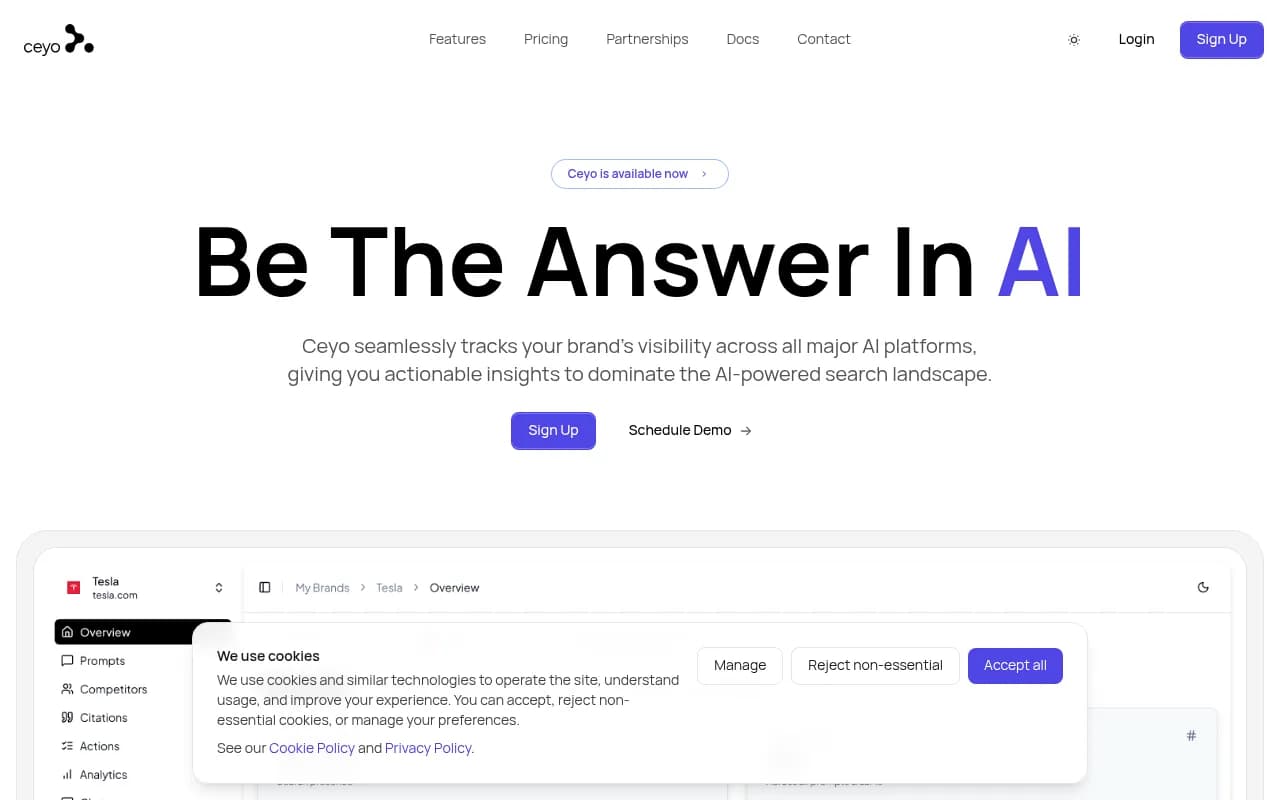
It's genuinely easy to use. You don't need a technical background to get started, and the dashboard gives you a clear picture of brand mention frequency across those four models. For a small business or solo marketer who just wants to know "does ChatGPT mention us?", Ceyo AI answers that question without much friction.
The limitations show up when you want to go deeper. Ceyo AI doesn't offer content gap analysis, so you can't see which prompts your competitors are winning that you're missing. There's no built-in content generation, no crawler logs, and no traffic attribution. It's a monitoring window, not an optimization engine.
That said, it's a reasonable starting point if you're new to AI visibility and want to understand the basics before committing to a more complex platform.
Otterly.AI
Otterly.AI has built a reputation as the accessible, no-fuss option in this space. At $29/month, it's the cheapest serious AI visibility tool available, and Zapier noted in their roundup that "the value of using a tool like Otterly.AI is that it's affordable and straightforward enough to just get started."

That framing is accurate. Otterly.AI covers prompt-based tracking, GEO audits, and automated prompt testing. You can monitor how your brand appears across multiple AI models, run competitive comparisons, and get a basic sense of your share of voice.
Where it falls short is depth. There are no crawler logs, no visitor analytics, no content generation, and no traffic attribution. The prompt metrics are basic -- you get presence data, but not volume estimates or difficulty scoring that would help you prioritize which prompts to target. Reddit and YouTube tracking, which matter because AI models frequently cite those sources, aren't covered.
For teams that want to dip their toes in without a big budget commitment, Otterly.AI is a fair choice. For teams that want to actually move the needle on their AI visibility, it runs out of road quickly.
Peec.ai
Peec.ai positions itself toward B2B, SaaS, and e-commerce teams that need clean competitive benchmarking across AI models. The interface is tidy, the competitive dashboards are well-designed, and multi-language support makes it a reasonable option for brands operating across multiple markets.

A Reddit thread on AI search visibility tools from late 2025 described Peec.ai as the right choice for "deep research and agency-style reporting," which is a fair characterization. The reporting outputs are polished enough to share with clients or stakeholders.
The gap is the same as Otterly.AI: Peec.ai is a monitoring platform. It doesn't help you figure out what content to create, doesn't generate that content, and doesn't connect your AI visibility back to actual traffic or revenue. You get a good picture of where you stand. You don't get a path to improving it.
At €89/month (roughly $95), it's priced above Otterly.AI but below the more full-featured platforms. That's a reasonable trade-off if competitive benchmarking and reporting are your primary needs.
Promptwatch
Promptwatch is the outlier in this comparison. It monitors AI visibility across 10 models -- ChatGPT, Claude, Perplexity, Gemini, Google AI Overviews, Google AI Mode, Meta/Llama, DeepSeek, Grok, and Mistral -- but the monitoring is almost secondary to what comes after it.

The core difference is what Promptwatch calls the action loop: find the gaps, create content to fill them, track the results.
The "find the gaps" part is Answer Gap Analysis. It shows you the specific prompts where competitors are getting cited and you're not -- not just "you're missing from this topic" but the exact questions AI models are answering without referencing your content. That's a level of specificity the other three tools in this comparison don't offer.
The "create content" part is a built-in AI writing agent that generates articles, listicles, and comparisons grounded in citation data from over 880 million citations analyzed. It's not generic content -- it's engineered around what AI models actually cite, which prompts have volume, and what competitors are doing. This is where Promptwatch separates from every other tool in this comparison. Ceyo AI, Otterly.AI, and Peec.ai show you data. Promptwatch helps you act on it.
The "track the results" part closes the loop with page-level tracking (which specific pages are being cited, by which models, how often) and traffic attribution through a code snippet, Google Search Console integration, or server log analysis. You can connect AI visibility directly to revenue.
A few other capabilities worth mentioning: AI Crawler Logs show you in real time which AI crawlers are hitting your site and what errors they're encountering -- most competitors don't offer this at all. Prompt Intelligence gives you volume estimates and difficulty scores for each prompt, so you can prioritize high-value, winnable targets instead of guessing. Reddit and YouTube tracking surfaces the discussions that directly influence AI recommendations, a channel the other three tools ignore entirely. ChatGPT Shopping tracking monitors when your brand appears in product recommendations and shopping carousels.
Pricing starts at $99/month for the Essential plan (1 site, 50 prompts, 5 articles), $249/month for Professional (2 sites, 150 prompts, 15 articles, crawler logs), and $579/month for Business (5 sites, 350 prompts, 30 articles). A free trial is available.
Side-by-side comparison
| Feature | Ceyo AI | Otterly.AI | Peec.ai | Promptwatch |
|---|---|---|---|---|
| AI models monitored | 4 (ChatGPT, Claude, Perplexity, Gemini) | Multiple | Multiple | 10 (incl. Grok, DeepSeek, Mistral, AI Mode) |
| Brand mention tracking | Yes | Yes | Yes | Yes |
| Competitive benchmarking | Basic | Basic | Strong | Strong |
| Answer gap analysis | No | No | No | Yes |
| Content generation | No | No | No | Yes (AI writing agent) |
| AI crawler logs | No | No | No | Yes |
| Prompt volume & difficulty | No | No | No | Yes |
| Reddit & YouTube tracking | No | No | No | Yes |
| ChatGPT Shopping tracking | No | No | No | Yes |
| Traffic attribution | No | No | No | Yes |
| Multi-language support | Limited | Limited | Yes | Yes |
| Starting price | N/A (check site) | $29/mo | ~$95/mo | $99/mo |
| Free trial | Check site | 7 days | 7 days | Yes |
Who should use what
The honest answer depends on what problem you're actually trying to solve.
If you're just starting out and want to understand whether AI models mention your brand at all, Ceyo AI or Otterly.AI will get you there without much friction or cost. Otterly.AI has slightly more depth and a well-established user base, so it's probably the better default for beginners.
If you're a B2B or SaaS brand that needs clean competitive reports to share with stakeholders, Peec.ai is worth a look. The reporting is polished and the multi-language support is a genuine differentiator for international teams.
If you want to actually improve your AI visibility -- not just watch it -- Promptwatch is the only tool here that does that. The combination of gap analysis, content generation grounded in real citation data, and traffic attribution creates a workflow that the other three tools can't replicate. You're not just getting a dashboard; you're getting a system for growing your presence in AI search.
The price difference between Promptwatch's entry plan ($99/mo) and Otterly.AI ($29/mo) is real, but so is the gap in what you can do with each. If AI search is a meaningful channel for your business -- and in 2026, it increasingly is -- the question isn't whether you can afford Promptwatch. It's whether you can afford to just monitor without acting.
A note on the broader market
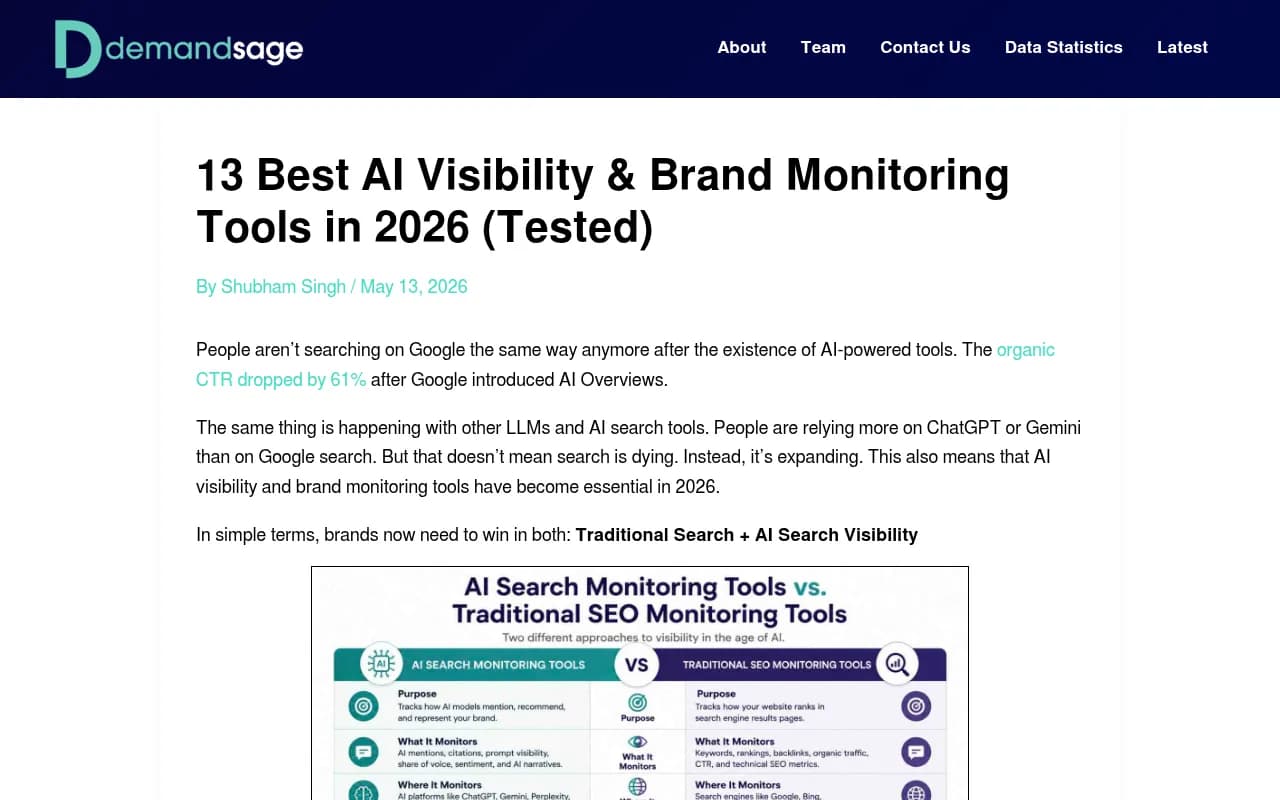
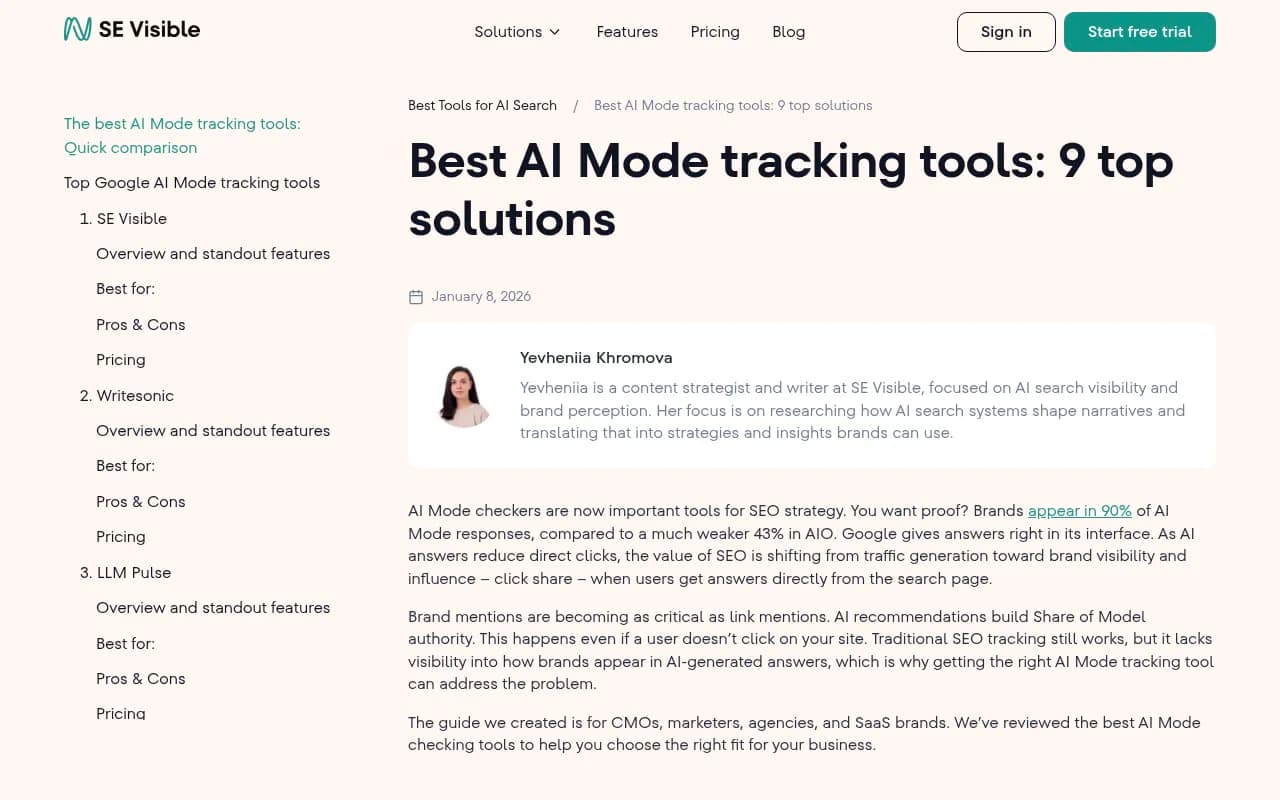
These four tools represent a slice of a much larger field. The research from DemandSage's roundup of 13 AI visibility tools and SE Ranking's guide to AI Mode tracking tools both show how quickly this space has grown. There are now platforms at every price point and complexity level, from $29/month monitoring tools to enterprise platforms at $2,500+/month.
What most of them share is a monitoring-first design. They were built when "knowing where you stand" was the hard part. That problem is largely solved now. The harder problem -- and the more valuable one -- is figuring out what to do about it. That's the gap Promptwatch is designed to fill, and it's why it stands apart from the other three tools in this comparison.
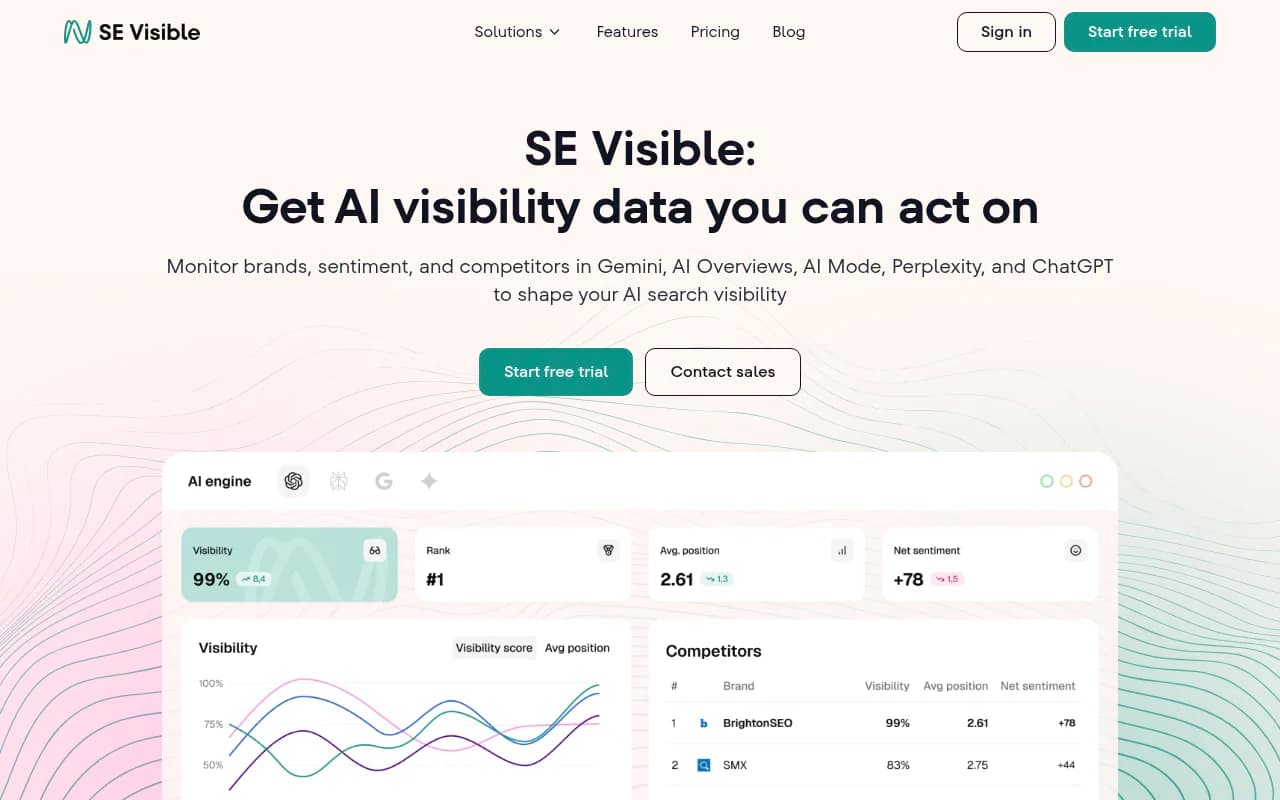
If you're evaluating other options beyond these four, tools like Profound and AthenaHQ are worth considering at the enterprise end, while SE Visible and Nightwatch offer interesting hybrid approaches that combine traditional SEO tracking with AI visibility.


But for most marketing teams choosing between these four specific tools, the decision comes down to this: monitoring only, or monitoring plus action. The first three tools do the former well. Promptwatch does both.