Key takeaways
- AI-driven referral traffic to e-commerce sites grew 302% in 2025, and 58% of consumers now use generative AI for product discovery instead of traditional search.
- Most AI visibility platforms were built for content marketers and SEO teams -- not e-commerce brands. The gap between "tracking" and "optimization" matters enormously when you're selling products.
- Promptwatch is the only platform in this comparison that closes the full loop: find gaps, generate content that gets cited, track the results, and attribute traffic to revenue.
- ChatGPT Shopping tracking is a specific, underserved capability -- only a handful of platforms support it at all.
- Choosing the right tool depends on whether you need product-layer optimization, brand mention monitoring, or a full GEO action platform.
If you're running an e-commerce brand in 2026, here's the uncomfortable reality: a customer can ask ChatGPT "what's the best running shoe under $150?" and get a confident, detailed answer -- complete with product recommendations -- without ever seeing a search results page. If your brand isn't in that answer, you don't exist for that customer.
AI-driven referral traffic to e-commerce sites grew 302% in 2025 alone, according to Euromonitor data. AI language models now influence over $595 billion in retail e-commerce. That's not a trend to watch. It's a shift that's already happened.
The software category that's emerged to address this -- AI visibility platforms -- is growing fast but fragmented. Some tools track brand mentions. Some optimize product listings. Some monitor share-of-voice across LLMs. And a few, like Promptwatch, try to close the entire loop from gap analysis to content creation to traffic attribution.
This guide breaks down how the major platforms compare for e-commerce use cases specifically, with a focus on who actually tracked ChatGPT Shopping, who just monitors, and who helps you do something about it.
Why e-commerce AI visibility is different from regular GEO
Most AI visibility tools were designed with content marketers in mind. They track whether your brand name appears when someone asks ChatGPT about your industry. That's useful, but it's a different problem from what e-commerce brands actually face.
E-commerce brands need to know:
- Are my specific products being recommended in AI shopping responses?
- When ChatGPT shows a shopping carousel, do my products appear?
- Which product pages are being cited by Perplexity or Google AI Overviews?
- Can I connect AI visibility to actual revenue, not just mention counts?
Generic brand monitoring doesn't answer any of those questions. The three criteria that actually matter for e-commerce are SKU-level product tracking, revenue attribution, and integration with your actual commerce stack.
Keep those filters in mind as we go through the platforms.
 A 2026 ranking of AI visibility tools evaluated specifically on e-commerce criteria: SKU tracking, revenue attribution, and store integration.
The platforms: what they actually do
Promptwatch: the full-loop GEO platform
Promptwatch is the most complete platform in this comparison for brands that want to move beyond monitoring. It tracks visibility across 10 AI models -- ChatGPT, Perplexity, Claude, Gemini, Google AI Overviews, Google AI Mode, Grok, DeepSeek, Copilot, and Mistral -- and it's one of the few platforms that specifically tracks ChatGPT Shopping carousels.
What separates it from most competitors is the action loop. Promptwatch's Answer Gap Analysis shows you exactly which prompts competitors rank for that you don't -- the specific questions AI models are answering without citing your content. Then the built-in AI writing agent generates content engineered to get cited, grounded in 880M+ citations analyzed. Then page-level tracking shows whether that new content is actually getting picked up.
For e-commerce, the crawler logs feature is particularly useful. You can see exactly which AI crawlers (ChatGPT's GPTBot, Perplexity's PerplexityBot, etc.) are visiting your product pages, how often, and whether they're hitting errors. Most platforms have no equivalent.

The pricing is $99/month for the Essential plan (1 site, 50 prompts), $249/month for Professional (2 sites, 150 prompts, crawler logs), and $579/month for Business (5 sites, 350 prompts). There's a free trial available.
Profound: strong brand tracking, enterprise-oriented
Profound tracks how brands appear in AI-generated search responses across Perplexity, ChatGPT, and Google AI Overview. It's a solid monitoring platform with good reporting depth and a clean interface.
The limitation for e-commerce is that Profound is primarily a brand-level tracker. It tells you how often your brand name appears and in what context -- but it doesn't go deep on individual product visibility or SKU-level tracking. It's better suited to B2B brands and enterprise marketing teams who want to understand their share-of-voice in AI answers.
Profound also doesn't have the content generation capabilities that Promptwatch does. You get the data; you figure out what to do with it.

Otterly.AI: affordable monitoring for smaller teams
Otterly.AI is a Gartner Cool Vendor that tracks brand citations across six AI platforms: ChatGPT, Perplexity, Google AI Overviews, AI Mode, and a few others. It's genuinely affordable and easy to set up -- no-code, prompt-based configuration.
The honest limitation: Otterly is a monitoring tool. There's no content gap analysis, no AI writing agent, no crawler logs, no traffic attribution. For a small e-commerce brand that just wants to know whether it's appearing in AI answers, it's a reasonable starting point. For anyone who wants to actually improve their visibility, it stops short.

Peec AI: multi-language tracking
Peec AI focuses on multi-language AI visibility tracking, which makes it genuinely useful for e-commerce brands with international audiences. It monitors brand mentions across major LLMs and supports tracking in multiple languages and regions.
Like Otterly, it's primarily a monitoring platform. The multi-language capability is a real differentiator, but if your main concern is improving visibility rather than just measuring it, you'll hit the same wall.

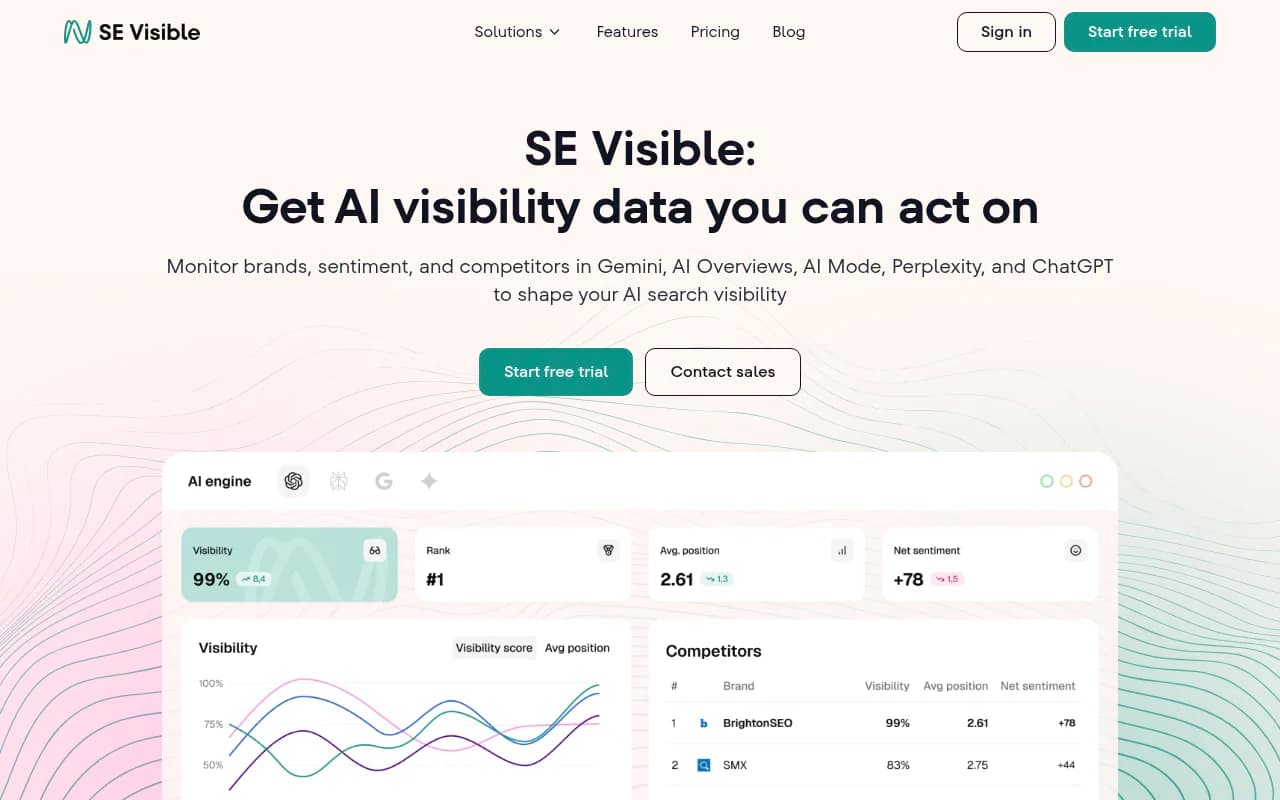
SE Visible (SE Ranking): for teams already in SE Ranking
SE Ranking's AI visibility module, SE Visible, is a reasonable add-on for teams already using SE Ranking for traditional SEO. It tracks AI Overview appearances and LLM citations without requiring a separate tool subscription.
The trade-off is depth. SE Visible covers the basics but lacks the specialized e-commerce features, content generation, and crawler log capabilities of dedicated GEO platforms.
AthenaHQ: monitoring across 8+ AI engines
AthenaHQ tracks brand visibility across 8+ AI search engines with a clean, well-designed interface. It's monitoring-focused -- good for understanding where you stand, less useful for changing it.

Who actually tracked ChatGPT Shopping?
ChatGPT's shopping feature -- where the model surfaces product carousels with pricing, images, and links -- is one of the most commercially significant AI visibility surfaces for e-commerce brands. It's also one of the least-tracked.
As of 2026, only a small number of platforms specifically monitor ChatGPT Shopping appearances:
- Promptwatch tracks when your brand appears in ChatGPT's product recommendations and shopping carousels. This is a named feature, not a workaround.
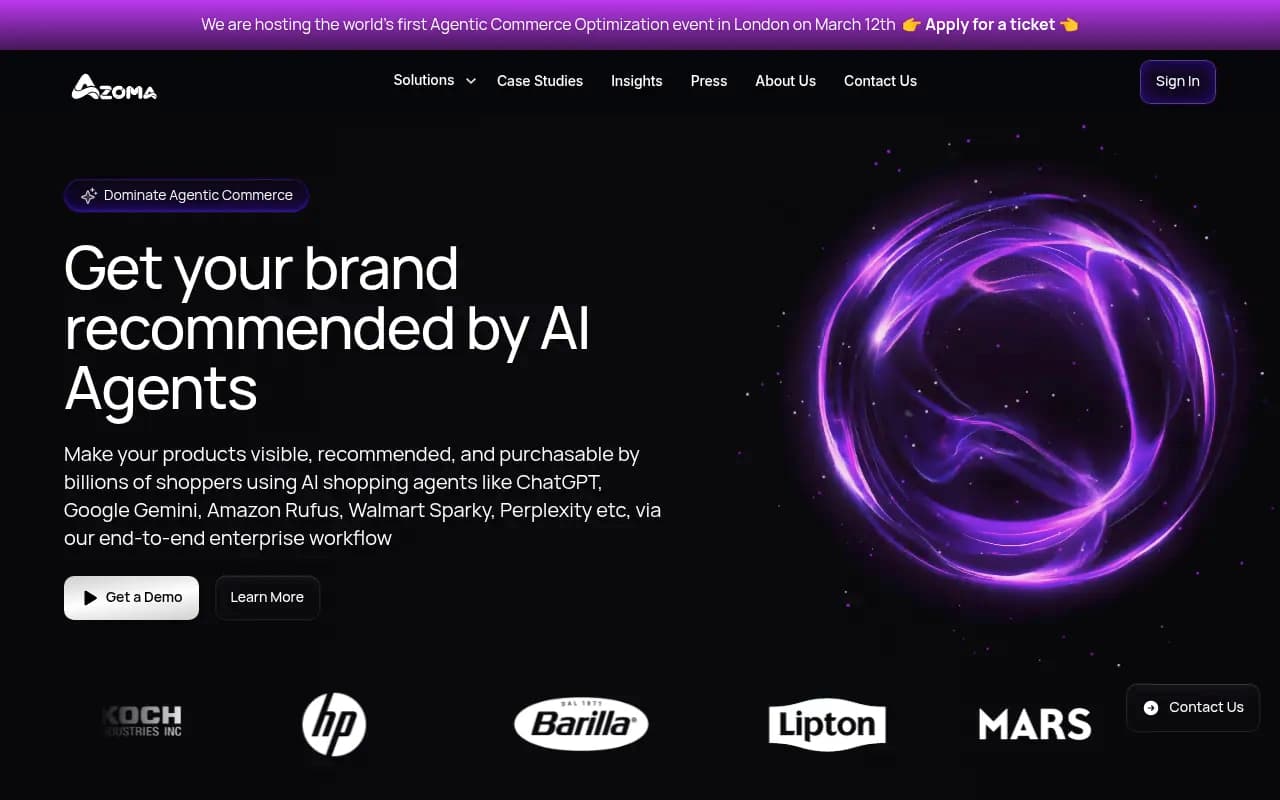
- Azoma focuses specifically on AI shopping optimization for ChatGPT, Amazon Rufus, and similar AI-powered retail surfaces.
- Most other platforms (Profound, Otterly, Peec AI, AthenaHQ) track conversational AI responses but don't distinguish between a text mention and a shopping carousel appearance.
The distinction matters. A text mention in a ChatGPT response and a product card in a shopping carousel are very different commercial outcomes. If you're an e-commerce brand, you want to know about both -- separately.
Feature comparison table
| Platform | ChatGPT Shopping tracking | Content generation | Crawler logs | Revenue attribution | SKU-level tracking | Starting price |
|---|---|---|---|---|---|---|
| Promptwatch | Yes | Yes (AI writing agent) | Yes | Yes (GSC, snippet, logs) | Partial (page-level) | $99/mo |
| Profound | No | No | No | No | No | ~$200/mo |
| Otterly.AI | No | No | No | No | No | ~$49/mo |
| Peec AI | No | No | No | No | No | ~$49/mo |
| AthenaHQ | No | No | No | No | No | ~$99/mo |
| SE Visible | No | No | No | No | No | Add-on |
| Azoma | Yes (core feature) | No | No | Partial | Yes | Custom |
How to choose: three scenarios
You want to understand where you stand right now
If you're starting from zero and just want a baseline picture of your AI visibility, Otterly.AI or Peec AI are low-friction entry points. They're affordable, quick to set up, and give you a reasonable read on brand mention frequency across the main LLMs.
The caveat: don't mistake monitoring for a strategy. Knowing you appear in 12% of relevant ChatGPT responses doesn't tell you how to get to 40%.
You're an e-commerce brand that sells products online
This is where the tool selection gets more specific. You need to know whether your actual products are being recommended, not just your brand name. Promptwatch's ChatGPT Shopping tracking and page-level citation data are directly relevant here. The Answer Gap Analysis will show you which product-related prompts competitors are winning that you're not -- and the content agent can help you create the pages that fill those gaps.
For brands on Shopify with a heavy focus on product-layer optimization (attribute completeness, variant structuring, AI shopping eligibility), Azoma is worth evaluating as a complement.
You're an agency managing multiple brands
Promptwatch's agency and enterprise plans support multiple sites with custom prompt sets, white-label reporting, Looker Studio integration, and API access. The multi-site, multi-region, multi-language capabilities make it practical for managing a portfolio of clients.
Search Party is another agency-oriented option, though it's more focused on workflow automation than deep GEO analytics.
The monitoring-only trap
There's a pattern worth naming directly. Most AI visibility platforms in 2026 are monitoring dashboards. They show you data. They generate reports. They tell you your visibility score went up or down. And then they stop.
That's fine if you have a dedicated team who can take that data and translate it into content strategy, production, and optimization. Most marketing teams don't. They need the loop closed: here's the gap, here's the content that fills it, here's whether it worked.
 A breakdown of AI visibility tool feature categories -- from LLM answer tracking to content optimization -- showing how platforms differ in scope.
The difference between a monitoring tool and an optimization platform is the difference between a thermometer and a thermostat. One tells you the temperature. The other changes it.
Promptwatch is the only platform in this comparison that functions as a thermostat -- it identifies gaps, generates content engineered to fill them, and tracks whether that content is actually getting cited. That's not a sales pitch; it's just what the feature set does.
What to watch in the second half of 2026
A few developments worth tracking:
ChatGPT Shopping is expanding. OpenAI has been steadily growing the product discovery surface within ChatGPT. As it becomes a more significant referral channel for e-commerce, the platforms that specifically track shopping carousel appearances will become more valuable.
AI crawler behavior is getting more sophisticated. Platforms like Promptwatch that log actual AI crawler visits to your site are surfacing a new category of technical SEO data -- which pages AI bots read, how often they return, what errors they encounter. This is going to matter more as AI models update their training and retrieval more frequently.
Revenue attribution is the next frontier. Right now, most platforms measure visibility. The ones that can connect a ChatGPT citation to an actual conversion -- through server log analysis, GSC integration, or first-party tracking -- will have a significant advantage. This is still early, but it's the direction the category is moving.
Bottom line
The AI visibility platform market has a lot of tools that do roughly the same thing: run queries against LLMs and report back on how often your brand appears. That's useful baseline information, but it's not a strategy.
For e-commerce brands specifically, the questions that matter are more specific: Are my products showing up in ChatGPT Shopping? Which product pages are being cited by Perplexity? What content am I missing that would get me cited for high-intent shopping prompts?
Promptwatch answers those questions and then helps you act on them. Profound and Otterly are solid monitoring tools for teams that want data without the optimization layer. Azoma fills a specific niche for product-level AI shopping optimization.
The right choice depends on where you are. But if you're an e-commerce brand that wants to actually improve your AI visibility rather than just measure it, the action loop matters.