Key takeaways
- Share of voice in AI search measures how often your brand appears in AI-generated answers compared to competitors -- it's become a core metric for marketing teams in 2026.
- Most tools in this space are monitoring dashboards that show you data but stop there. The meaningful difference is whether a tool helps you act on what it finds.
- Promptwatch is the only platform in this comparison rated as a "Leader" across all GEO categories, with built-in content generation, crawler logs, and traffic attribution.
- Profound is the strongest pure-monitoring alternative for enterprise teams that want deep prompt volume data without needing the full optimization loop.
- Gauge, Omnia, and Rankability each serve specific niches -- Gauge for competitive intelligence, Omnia for share-of-voice analytics, and Rankability for agency workflows.
Why share of voice in AI search actually matters now
A year ago, most marketing teams were still treating AI search as a curiosity. Something to watch. Now it's a channel that drives real buyer decisions. When someone asks ChatGPT "what's the best project management tool for remote teams" or asks Perplexity "which CRM do agencies use," the brands that appear in those answers have a measurable advantage. The ones that don't might as well not exist for that query.
That's share of voice in AI search: what percentage of relevant AI-generated answers mention your brand, versus your competitors. It's not a ranking position in the traditional sense. There's no page one. But there is a clear winner in every AI response, and tracking who wins -- and why -- is now a legitimate marketing discipline.
The tools that help you do this have multiplied fast. Some are solid. Some are thin dashboards dressed up with impressive-sounding metrics. This guide focuses on five that are actually worth your time in 2026: Promptwatch, Profound, Gauge, Omnia, and Rankability.
How we evaluated these tools
Share of voice tracking sounds simple but the implementation varies enormously. We looked at:
- Which AI models are covered (ChatGPT, Perplexity, Claude, Gemini, Google AI Overviews, etc.)
- Whether the tool goes beyond monitoring to help you improve visibility
- Prompt volume and difficulty data -- knowing a prompt exists is less useful than knowing how often people ask it
- Citation and source analysis -- which pages are being cited, and why
- Traffic attribution -- can you connect AI visibility to actual website visits and revenue
- Pricing relative to what you actually get
The tools, ranked
1. Promptwatch -- best overall for teams that want to act, not just watch
Promptwatch is the platform most teams should start with if they're serious about AI search visibility. It monitors 10 AI models -- ChatGPT, Perplexity, Claude, Gemini, Google AI Overviews, Google AI Mode, Grok, DeepSeek, Copilot, and Meta AI -- and tracks share of voice across all of them.

What separates it from most competitors isn't the monitoring. It's what happens after. The Answer Gap Analysis shows you exactly which prompts your competitors are appearing for that you're not. Not in a vague "you're missing coverage in this topic cluster" way -- it shows you the specific questions, who's winning them, and what content those AI models are citing when they answer.
From there, the built-in AI writing agent generates content engineered to get cited: articles, listicles, comparisons, grounded in 880M+ citations analyzed across the platform's dataset. This isn't generic SEO content. It's built around what AI models actually cite when answering prompts in your category.
The crawler logs are genuinely useful and rare among competitors. You can see which AI crawlers (ChatGPT's GPTBot, Claude's ClaudeBot, Perplexity's bot) are hitting your site, which pages they're reading, and whether they're running into errors. Most tools have no visibility into this at all.
Traffic attribution closes the loop. You can connect AI visibility to actual visits via a code snippet, Google Search Console integration, or server log analysis -- so you're not just watching share of voice go up, you're watching revenue follow.
Pricing starts at $99/month for the Essential plan (1 site, 50 prompts, 5 articles). Professional is $249/month (2 sites, 150 prompts, crawler logs, state/city tracking). Business is $579/month for 5 sites and 350 prompts. Agency and enterprise pricing is custom.
The one honest caveat: if you genuinely only need to monitor and have no interest in content creation or optimization, you're paying for capabilities you won't use. But for most teams, the action loop -- find gaps, create content, track results -- is exactly what they need.
2. Profound -- best for enterprise monitoring with strong prompt data
Profound covers 10+ AI platforms and has built a reputation for solid data quality, particularly around prompt volume estimates. If you're an enterprise team that needs to understand which prompts drive the most AI search activity in your category, Profound's data is genuinely useful.

The platform handles competitive benchmarking well. You can see how your brand's citation rate compares to competitors across different AI models, which is useful for board-level reporting and quarterly reviews.
Where it falls short relative to Promptwatch is on the action side. Profound doesn't have built-in content generation, no crawler log visibility, and no direct traffic attribution. It's a monitoring and analysis platform, and a good one -- but after it tells you what's wrong, you're on your own to fix it.
Pricing starts at $99/month, which puts it in direct competition with Promptwatch's entry tier. At that price point, the lack of content tools is a meaningful gap.
Best for: Large brands with dedicated content teams who want rich monitoring data and will handle optimization separately.
3. Gauge -- best for competitive intelligence and strategic positioning
Gauge describes itself as a "marketing agent built around AI visibility data," and that framing is reasonably accurate. It tracks prompts daily across ChatGPT, Google AI Overviews, Gemini, and Perplexity, with a focus on competitive intelligence rather than raw share-of-voice metrics.
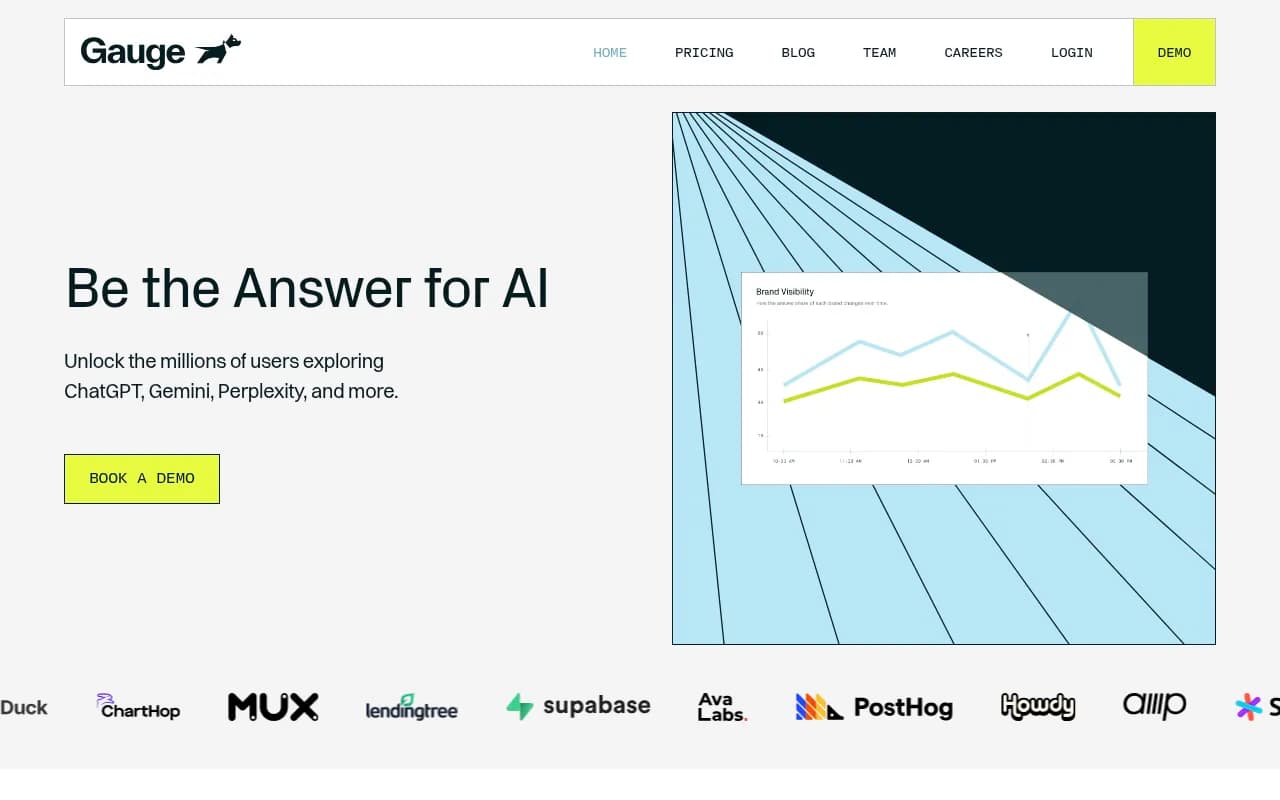
The competitive angle is where Gauge earns its place. It's built for teams that want to understand the strategic landscape -- which competitors are gaining visibility, which prompts they're winning, and how the AI search landscape in a category is shifting over time. The daily tracking cadence is useful for catching changes quickly.
What it doesn't do well: content optimization, crawler visibility, and traffic attribution are all absent or limited. It's more of a strategic intelligence layer than an end-to-end optimization platform.
Pricing isn't publicly listed in detail, which is a minor frustration when evaluating it against tools with transparent tiers.
Best for: Marketing strategists and competitive intelligence teams who want to understand the AI search landscape in their category.
4. Omnia -- best for share-of-voice analytics and reporting
Omnia is purpose-built around AI-powered share of voice analytics. If share of voice is the specific metric your team reports on -- to clients, to leadership, to a board -- Omnia's reporting layer is cleaner and more presentation-ready than most alternatives.
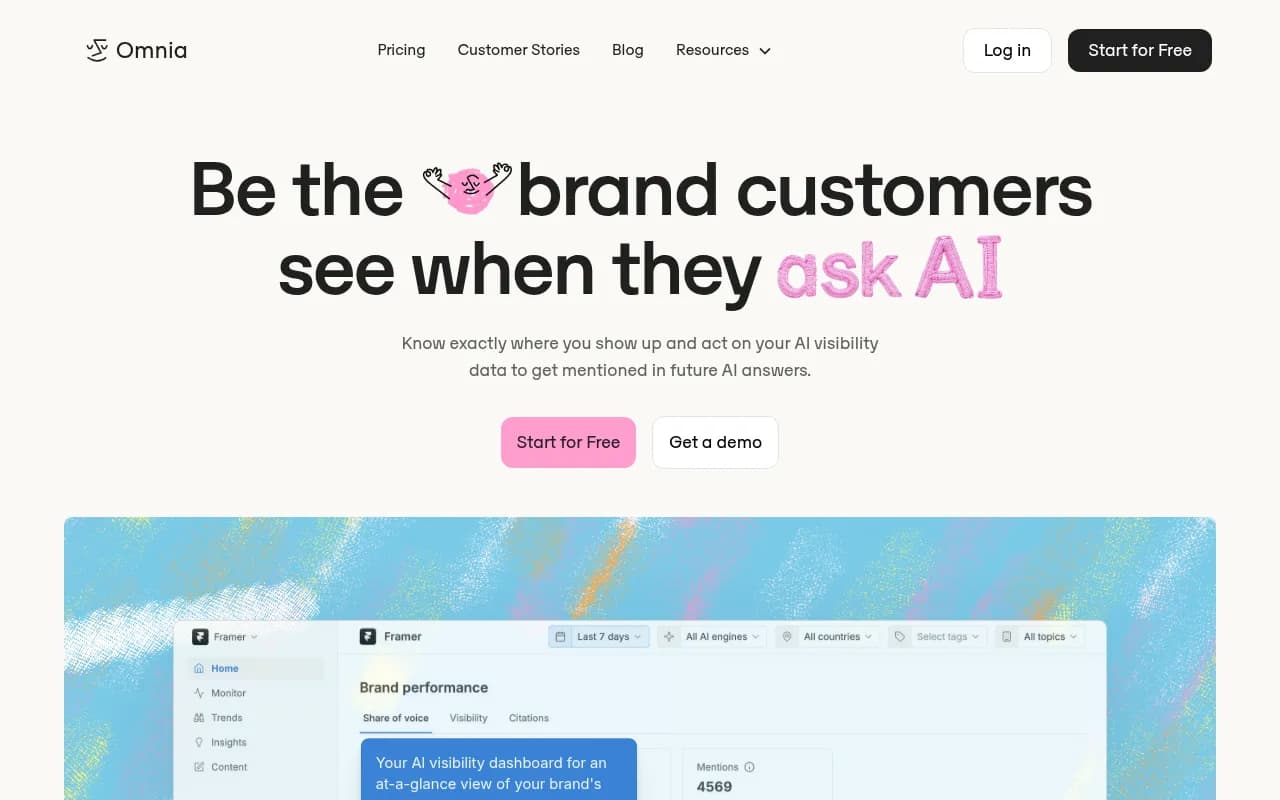
The platform tracks brand mentions and citations across AI models and surfaces them in a way that's easy to turn into a slide deck or client report. For agencies managing multiple brands, that's genuinely valuable.
The tradeoff is depth. Omnia doesn't go deep on prompt volume data, crawler logs, or content optimization. It's a visibility analytics tool, and it does that specific job well. But if you need to understand why your share of voice is where it is, or what to do about it, you'll need to supplement it with other tools.
Best for: Agencies and marketing teams that need clean, reportable share-of-voice data for client or stakeholder reporting.
5. Rankability -- best for agency workflows
Rankability is positioned as an agency-focused AI visibility analytics platform. It handles multi-client management reasonably well and has reporting features built around the agency workflow -- white-label options, client dashboards, and the ability to track multiple brands simultaneously.
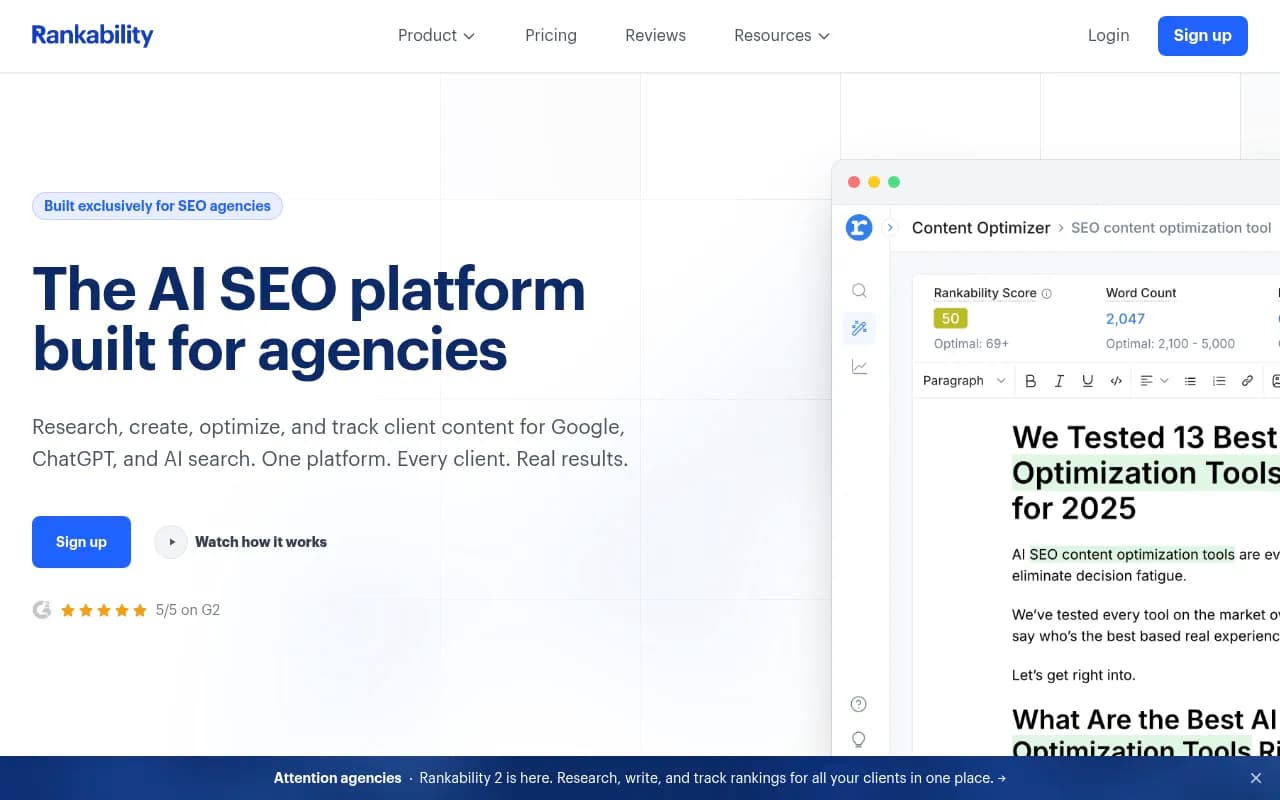
For agencies that need to show clients their AI search visibility without building custom reporting infrastructure, Rankability reduces that friction. The platform covers the major AI models and produces share-of-voice data that's easy to present.
The limitations are similar to Omnia: strong on reporting, lighter on the optimization and content side. It's a tool for showing clients what's happening, not necessarily for fixing it.
Best for: Digital agencies managing AI visibility reporting for multiple clients.
Side-by-side comparison
| Tool | AI models covered | Share of voice tracking | Content generation | Crawler logs | Traffic attribution | Starting price |
|---|---|---|---|---|---|---|
| Promptwatch | 10 (ChatGPT, Perplexity, Claude, Gemini, Grok, DeepSeek, Copilot, Meta AI, Google AIO, AI Mode) | Yes | Yes (built-in AI writer) | Yes | Yes (GSC, snippet, logs) | $99/mo |
| Profound | 10+ | Yes | No | No | No | $99/mo |
| Gauge | 4 (ChatGPT, Gemini, Perplexity, Google AIO) | Yes | No | No | No | Not public |
| Omnia | Multiple | Yes (analytics focus) | No | No | No | Not public |
| Rankability | Multiple | Yes (agency reporting) | No | No | No | Not public |
What to look for when choosing
If you're a brand or in-house marketing team, the most important question is whether the tool helps you improve visibility or just measure it. Monitoring without optimization is like a fitness tracker that tells you you're out of shape but doesn't suggest what to do about it. Promptwatch is the only tool in this list that closes that loop end-to-end.
If you're an agency, client reporting matters as much as data depth. Rankability and Omnia are built with that workflow in mind. But if you want to actually move the needle for clients -- not just report on where they stand -- you'll want a platform with content optimization built in.
If you're an enterprise with a large content team, Profound's data quality and prompt volume estimates are worth considering. The assumption is that your team handles content strategy separately and just needs reliable monitoring data to inform it.
If competitive intelligence is your primary use case, Gauge's daily tracking and competitive framing makes it a reasonable choice, though the limited model coverage (4 platforms vs. 10 for Promptwatch) is a real constraint as AI search diversifies.
The model coverage question
One thing worth flagging: the AI search landscape in 2026 isn't just ChatGPT and Google. Perplexity is growing fast. Claude is increasingly used for research queries. Grok has a large user base through X. DeepSeek has significant adoption in certain markets.
A tool that only tracks 3-4 models is giving you an incomplete picture. If a competitor is winning share of voice on Perplexity but not ChatGPT, and your tool only tracks ChatGPT, you'll miss it entirely. Promptwatch's 10-model coverage is the most comprehensive in this comparison. Profound also covers 10+. Gauge's 4-model coverage is the most limited.
The content gap is the real opportunity
Here's what most teams are missing: share of voice in AI search isn't primarily a monitoring problem. It's a content problem. AI models cite sources. If your website doesn't have content that answers the questions your potential customers are asking, you won't appear in those answers -- regardless of how good your monitoring dashboard is.
The tools that help you find those content gaps and fill them are the ones that actually move the needle. That's why the Answer Gap Analysis in Promptwatch is more valuable than a prettier share-of-voice chart. Knowing you're invisible for "best [your category] tool for enterprise teams" is only useful if you know what content to create to fix it.
Bottom line
For most teams in 2026, the right choice is Promptwatch. It covers the most AI models, has the deepest data (880M+ citations analyzed), and is the only platform in this comparison that takes you from "here's where you're invisible" to "here's the content that will fix it" to "here's the traffic that resulted." That's a complete workflow, not just a dashboard.
Profound is a solid second choice if you're an enterprise team with dedicated content resources and just need reliable monitoring data. Gauge, Omnia, and Rankability each serve specific use cases -- competitive intelligence, analytics reporting, and agency workflows respectively -- but none of them help you actually improve your AI search visibility.
The market for these tools is moving fast. Platforms that were monitoring-only a year ago are adding optimization features. But right now, the gap between "we track your visibility" and "we help you improve it" is still significant, and that gap is where the real value lives.