Key takeaways
- Most AI visibility platforms are monitoring dashboards — they show you data but don't help you act on it. Only a handful close the loop from gap detection to content creation to traffic attribution.
- Promptwatch is the only platform in our review rated as a "Leader" across all evaluation categories, largely because it combines tracking with built-in content generation and crawler log analysis.
- Profound is the strongest pure-enterprise option if you need deep prompt volume data and don't mind the price jump.
- Peec.ai and Otterly.AI are solid entry points for teams that just need basic monitoring — but both hit a ceiling fast.
- The tier list below is organized by what platforms actually deliver, not by marketing claims or pricing.
The AI visibility tool market exploded in 2024 and has been sorting itself out ever since. What started as a handful of scrappy trackers has become a crowded field of 30+ platforms, each claiming to be the definitive way to know whether ChatGPT, Perplexity, or Gemini is recommending your brand.
The problem: most of them do roughly the same thing. They run your prompts against a few AI models, show you a mention rate, and call it a day. That's useful for about two weeks — right up until you ask "okay, now what do I do about it?" and the platform shrugs.
This tier list cuts through that. We evaluated 12 platforms across four criteria: AI model coverage, content optimization capabilities (not just monitoring), prompt intelligence depth, and pricing transparency. The tiers reflect what each platform actually delivers in 2026.
How we built the tiers
Before getting into the rankings, it's worth being clear about what separates the tiers.
The core question is: does this platform help you improve your AI visibility, or does it just measure it? A dashboard that shows you a 12% mention rate across ChatGPT and Perplexity is interesting. A platform that shows you the 40 prompts your competitors rank for that you don't, generates the content to close those gaps, and then tracks whether that content gets cited — that's a different category of tool entirely.
We also weighted AI model coverage heavily. Platforms that only track ChatGPT and Perplexity are missing a significant share of where AI search is happening. Google AI Overviews alone accounts for billions of queries. Claude, Gemini, Grok, and DeepSeek are all growing fast.
Finally, we looked at whether platforms surface actionable prompt intelligence — volume estimates, difficulty scores, competitor heatmaps — or just raw mention counts.
S-Tier: Full-stack optimization platforms
These platforms don't just tell you where you stand. They help you change it.
Promptwatch
Promptwatch is the clearest example of what a full-stack AI visibility platform looks like. The core loop is: find the gaps, create content that fills them, track whether it works.
The Answer Gap Analysis is the most practically useful feature in this entire category. It shows you the specific prompts your competitors are visible for that you aren't — not vague topic clusters, but the actual questions AI models are answering with your competitor's content instead of yours. That's immediately actionable in a way that a mention rate dashboard isn't.
From there, the built-in AI writing agent generates content grounded in citation data from 880M+ analyzed citations. It's not generic content — it's engineered around what AI models actually cite, which prompts drive volume, and what angle your competitors are taking. The output is articles, listicles, and comparisons designed to get cited by ChatGPT, Claude, and Perplexity.
The crawler logs feature is something most competitors don't have at all. You get real-time logs of AI crawlers hitting your site — which pages they read, how often they return, what errors they encounter. That's the kind of technical visibility that lets you fix indexing problems before they become visibility problems.
Coverage spans 10 AI models: ChatGPT, Perplexity, Google AI Overviews, Google AI Mode, Claude, Gemini, Meta/Llama, DeepSeek, Grok, Mistral, and Copilot. Reddit and YouTube tracking surface the discussions that actually influence AI recommendations — a channel most platforms ignore entirely. ChatGPT Shopping tracking monitors product recommendation carousels specifically.
Pricing starts at $99/month (Essential: 1 site, 50 prompts, 5 articles), $249/month for Professional (2 sites, 150 prompts, 15 articles, crawler logs), and $579/month for Business (5 sites, 350 prompts, 30 articles). A free trial is available.

A-Tier: Enterprise-grade monitoring with strong data depth
These platforms have serious data depth and enterprise credibility. The gap vs. S-Tier is that they're primarily monitoring tools — the action layer is thinner or missing.
Profound
Profound is the enterprise choice for teams that need deep prompt volume data and are willing to pay for it. Coverage spans 10+ AI models including ChatGPT, Perplexity, Claude, Gemini, Grok, Copilot, Meta AI, DeepSeek, and Google AI Overviews. The prompt volume data is genuinely useful for prioritization — knowing which prompts drive real query volume before you invest in content for them is a meaningful advantage.
Where Profound falls short relative to S-Tier is the content optimization layer. It's a strong measurement platform, but the workflow for actually improving your visibility requires more manual work. Pricing starts at $499/month, which positions it firmly in the enterprise bracket.

AthenaHQ
AthenaHQ covers 8 AI models and has built a reputation for strong case studies and measurable results. It's YC-backed, which brings credibility, and the UX is cleaner than most competitors. The monitoring capabilities are solid. Like Profound, the gap is on the optimization side — AthenaHQ is primarily a tracking platform. Starts at $95/month (annual billing).

Brandlight
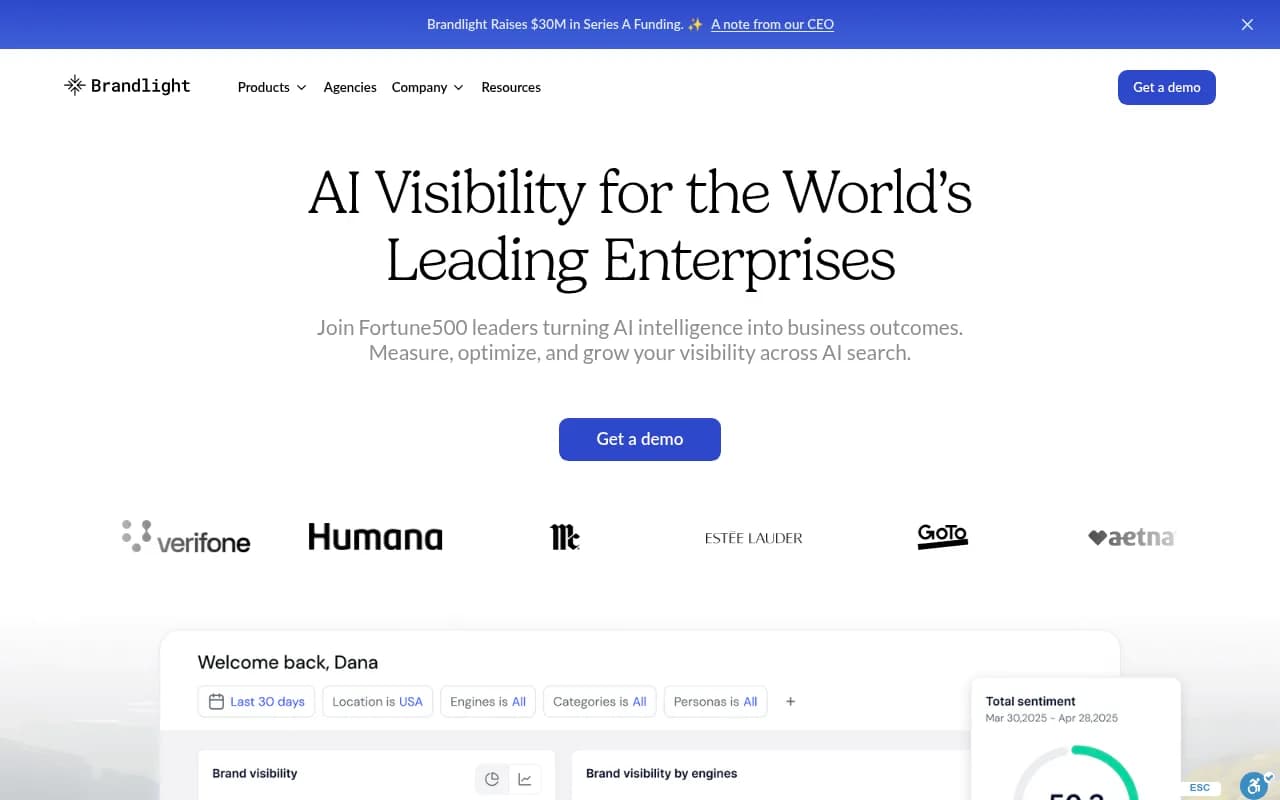
Brandlight covers 11+ AI models and platforms, including some that others miss (AI Mode, agentic commerce contexts). It's positioned as an enterprise solution with custom pricing, which means it's not a realistic option for most marketing teams. CB Insights ranked it #1 in its category, which carries weight. But the custom pricing and enterprise focus make it hard to evaluate against mid-market alternatives.
B-Tier: Solid monitoring, limited optimization
These platforms do what they say — track your brand mentions across AI models, show you share of voice, give you competitor comparisons. They're genuinely useful for teams that are just getting started with AI visibility. The ceiling is that they don't help you act on the data.
Peec.ai
Peec.ai has a reputation for accuracy, which matters more than it sounds. Some platforms in this space show wildly inconsistent mention rates depending on when you run the same prompt. Peec.ai's consistency is a real differentiator. Coverage includes ChatGPT, Perplexity, and Google AI Overviews by default, with additional models available at extra cost ($30-$140/month depending on tier). Starts at $85/month.
The limitation is that Peec.ai is a monitoring platform. There's no content generation, no crawler logs, no gap analysis that tells you what to do next. For a team that already has a content operation and just needs reliable data to feed it, that's fine. For a team that needs the full loop, it's not enough.

Otterly.AI
Otterly.AI is the most accessible entry point in this category — affordable pricing, clean interface, and enough coverage to get started. It tracks ChatGPT and Google AI Overviews at minimum, with some additional model support. The platform is genuinely useful for solo marketers or small teams that want to check whether they're showing up in AI answers without committing to a full enterprise platform.
The honest limitation: Otterly.AI is a dashboard. It shows you numbers. What you do with those numbers is entirely up to you. No content generation, no crawler logs, no gap analysis. For teams that need to move from "we know we're invisible" to "we fixed it," Otterly.AI is a starting point, not a destination.

Scrunch AI
Scrunch AI has a reasonable feature set for mid-market teams. It covers the major AI models and provides share of voice data and competitor comparisons. Like most B-Tier platforms, it's monitoring-first. The content optimization layer is limited.
C-Tier: Niche or limited-feature players
These tools serve specific use cases or have meaningful gaps in coverage or capability.
Airefs
Airefs is interesting as an affordable entry point ($24/month) with a focus on source-level citation discovery and Reddit monitoring. For teams that want to understand where AI models are pulling their citations from — which specific pages, Reddit threads, and domains — Airefs surfaces that data at a price point that's hard to argue with. The limitation is coverage depth: ChatGPT by default, with other models available on request. Not a full-stack platform, but useful for specific research tasks.
SE Visible
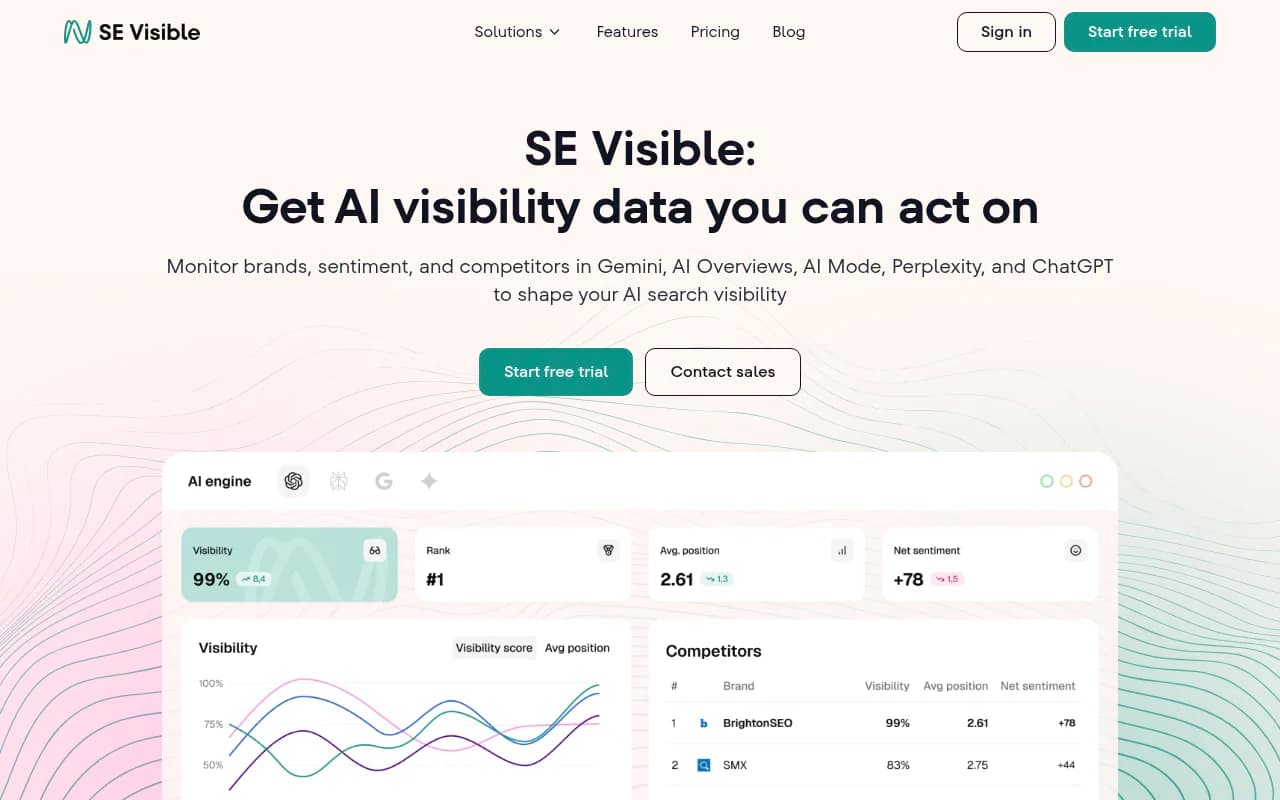
SE Visible (from SE Ranking) benefits from being part of a larger SEO platform ecosystem. If you're already a SE Ranking customer, the AI visibility module is a reasonable add-on. As a standalone AI visibility platform, it's less compelling — the feature depth doesn't match dedicated players.
Semrush and Ahrefs Brand Radar
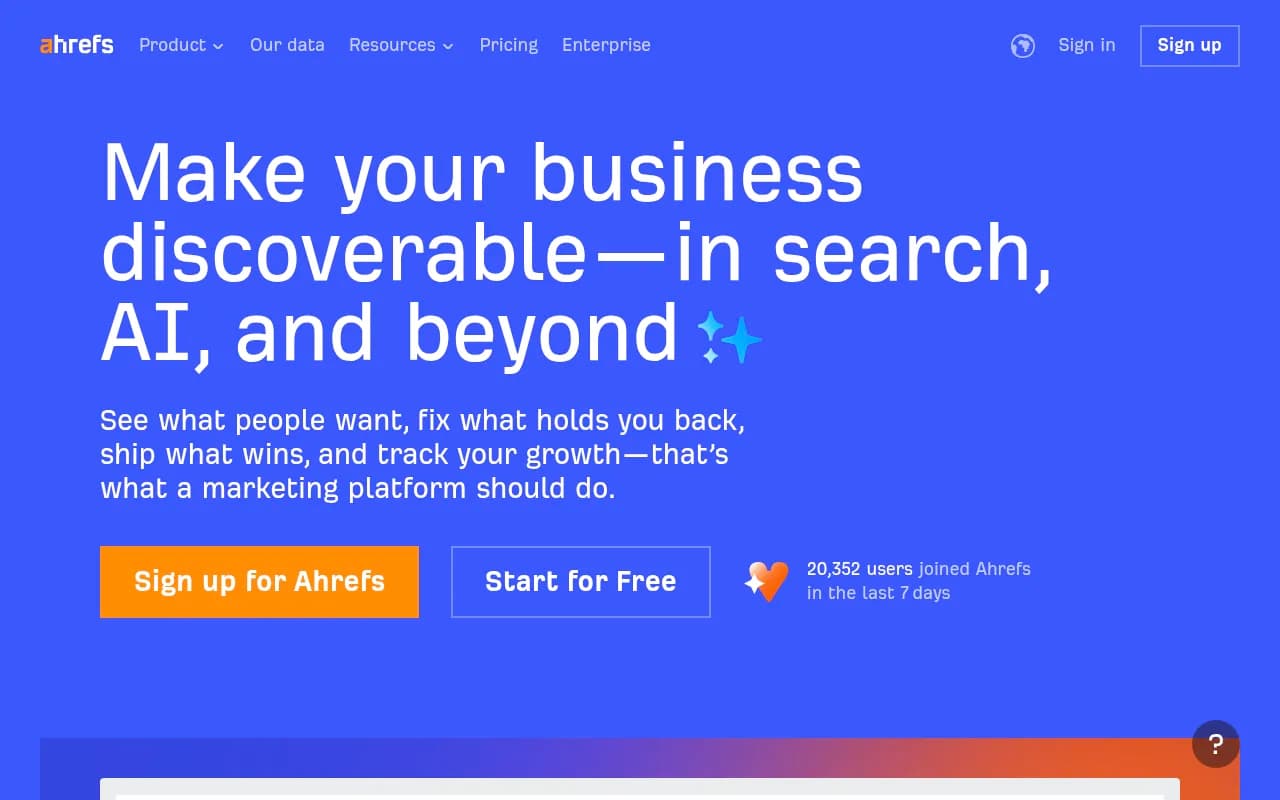
Both Semrush and Ahrefs have added AI visibility features to their existing platforms. The honest assessment: these are traditional SEO tools that have bolted on AI monitoring, not platforms built for it from the ground up. Semrush uses fixed prompts, which limits how well it captures your specific competitive landscape. Ahrefs Brand Radar has fixed prompts and no AI traffic attribution. Useful if you're already paying for these platforms and want a basic read on AI visibility. Not a substitute for a dedicated platform.
Full comparison table
| Platform | AI models covered | Content generation | Crawler logs | Prompt intelligence | Reddit/YouTube tracking | Starting price |
|---|---|---|---|---|---|---|
| Promptwatch | 10 (ChatGPT, Perplexity, Claude, Gemini, Grok, DeepSeek, Copilot, Mistral, Meta AI, AI Overviews) | Yes (built-in AI writing agent) | Yes | Volume + difficulty scores, query fan-outs | Yes | $99/mo |
| Profound | 10+ | No | No | Prompt volume data | No | $499/mo |
| AthenaHQ | 8 | No | No | Limited | No | $95/mo (annual) |
| Brandlight | 11+ | No | No | Limited | No | Custom |
| Peec.ai | 3 default (+ more at extra cost) | No | No | Basic | No | $85/mo |
| Otterly.AI | 2-3 | No | No | Basic | No | Low |
| Scrunch AI | Multiple | No | No | Basic | No | Mid |
| Airefs | 1 default (+ more on request) | No | No | Source-level citations | Reddit only | $24/mo |
| SE Visible | Multiple | No | No | Basic | No | Add-on |
| Semrush | Limited (fixed prompts) | No | No | None | No | Add-on |
| Ahrefs Brand Radar | Limited (fixed prompts) | No | No | None | No | Add-on |
What the tiers actually tell you
The pattern here is pretty clear. Almost every platform in the B and C tiers is doing the same thing: running prompts against AI models, counting mentions, showing you a percentage. That's a commodity feature at this point. The differentiation is entirely in what happens after you see the data.
The S-Tier and A-Tier platforms are distinguished by data depth — prompt volumes, competitor heatmaps, source-level citation analysis. But even within A-Tier, the gap to S-Tier is the action layer. Profound gives you excellent data. Promptwatch gives you excellent data and tells you what to write, generates the content, and tracks whether it worked.
For most marketing teams, the honest question isn't "which platform has the best dashboard?" It's "which platform will actually move my AI visibility score in the next 90 days?" That question points pretty clearly toward platforms that close the full loop.
Who should use what
If you're a solo marketer or small team just getting started: Otterly.AI or Peec.ai give you enough to understand your baseline without a major budget commitment. Expect to outgrow them.
If you're a mid-market marketing or SEO team that needs to actually improve visibility, not just measure it: Promptwatch is the clearest choice. The content generation and gap analysis features are what separate "we know we have a problem" from "we fixed it."
If you're an enterprise team with a dedicated analyst and existing content operations: Profound's data depth is worth the price premium. You'll need to bring your own content workflow.
If you're an agency managing multiple clients: Promptwatch's agency/enterprise tier and multi-site support are worth evaluating. The Looker Studio integration and API make it workable for custom reporting setups.
The platforms worth watching
A few tools didn't make the main tiers but are worth keeping an eye on:
Search Party is agency-oriented and has some interesting automation features, though prompt metrics and content gap analysis are limited compared to the leaders.
Bluefish targets Fortune 500 brands with an enterprise-heavy feature set but is missing several capabilities that mid-market teams expect.
Searchable has monitoring and some content tools but hasn't differentiated clearly enough from the established players yet.
The broader market is still consolidating. Several B-Tier platforms will either add optimization capabilities or get absorbed by larger players. The monitoring-only model is becoming harder to justify as the S-Tier platforms demonstrate what the full stack looks like.
The real question for any team evaluating these tools in 2026 is whether they want a dashboard or a system. The platforms that answer "system" are pulling ahead.