Key takeaways
- Most AI visibility tools track ChatGPT and Google AI Overviews well, but coverage of Perplexity, Grok, and DeepSeek varies significantly across platforms.
- There's a real difference between tools that monitor your visibility and tools that help you improve it -- the latter are far more valuable.
- Promptwatch, Profound, and Brandlight offer the broadest multi-model coverage including all three platforms (Perplexity, Grok, DeepSeek).
- Pricing ranges from ~$89/month for entry-level trackers to custom enterprise contracts, so there's a workable option at most budget levels.
- If you're only tracking ChatGPT and Google AI Overviews, you're missing a growing share of AI-driven discovery.
Why Perplexity, Grok, and DeepSeek actually matter now
For most of 2024, the AI search conversation was basically a two-horse race: ChatGPT and Google AI Overviews. Understandable -- those two platforms have the biggest user bases, and most visibility tools were built around them.
But 2025 changed things. Perplexity crossed 15 million daily active users and became the default search tool for a meaningful slice of technically-minded buyers. Grok (built into X/Twitter) started surfacing in product and brand conversations in ways that matter for B2C and media brands. DeepSeek's R1 model went viral in January 2025 and now has a search interface that's gaining traction, especially in Asia-Pacific markets.
The practical problem: if you're only monitoring ChatGPT and Google AI Overviews, you have a blind spot. A competitor could be dominating Perplexity recommendations in your category and you'd have no idea.
That's why platform coverage is the first thing to check when evaluating any AI visibility tool in 2026. Below are the six tools that actually cover all three -- along with what makes each one worth (or not worth) your time.
How we evaluated these tools
Coverage alone isn't enough. We looked at four things:
- Which AI models are tracked (specifically Perplexity, Grok, DeepSeek)
- Whether the tool helps you act on what it finds, or just shows you data
- Prompt intelligence -- volume estimates, difficulty scores, competitor gaps
- Price-to-value at realistic team sizes
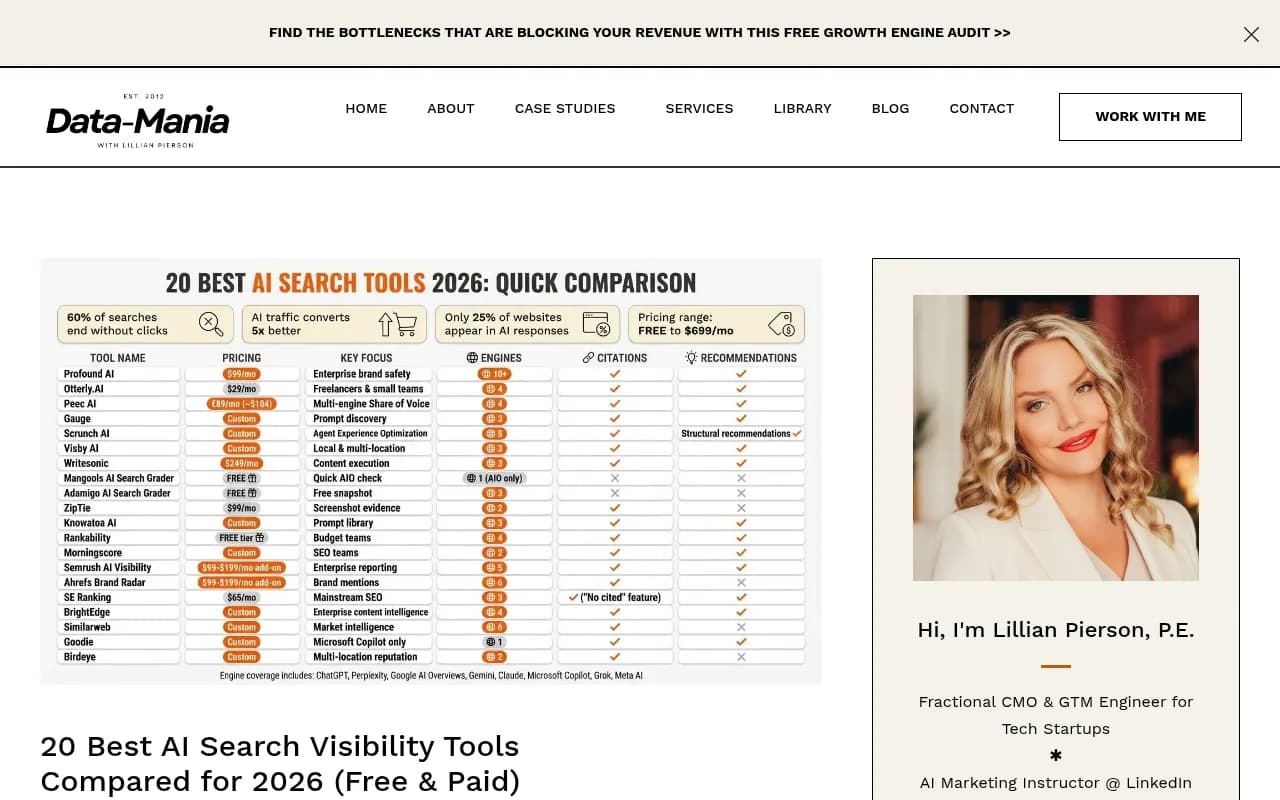
The 6 tools compared
Here's a quick overview before we go deeper:
| Tool | Perplexity | Grok | DeepSeek | Content generation | Starting price |
|---|---|---|---|---|---|
| Promptwatch | Yes | Yes | Yes | Yes (built-in AI writer) | $99/mo |
| Profound | Yes | Yes | Yes | No | $99/mo |
| Brandlight | Yes | Yes | Yes | No | Custom |
| AthenaHQ | Yes | Yes | No | No | $95/mo (annual) |
| Peec AI | Yes | No | No | No | $89/mo |
| Otterly.AI | Yes | No | No | No | ~$49/mo |
1. Promptwatch
Promptwatch is the most complete option on this list, and the one that goes furthest beyond pure monitoring. It tracks 10 AI models including Perplexity, Grok, DeepSeek, ChatGPT, Claude, Gemini, Google AI Overviews, Meta/Llama, Mistral, and Copilot -- which is about as comprehensive as it gets right now.

What separates it from the others is the action loop. Most tools show you where you're invisible and leave you to figure out what to do. Promptwatch shows you which prompts competitors are being cited for that you're not (Answer Gap Analysis), then gives you a built-in AI writing agent to create content engineered to get cited -- grounded in 880M+ real citations analyzed across all those models. Then you track whether your new content actually moves the needle.
A few things worth calling out specifically:
- AI Crawler Logs show you which pages ChatGPT, Perplexity, and other crawlers are actually reading on your site -- and which ones they're ignoring or hitting errors on. Most competitors don't have this at all.
- Prompt Intelligence includes volume estimates and difficulty scores, so you can prioritize prompts that are actually winnable rather than chasing high-volume queries you have no shot at.
- Reddit and YouTube tracking surfaces discussions that influence AI recommendations -- a channel that's easy to overlook but genuinely affects what models cite.
- ChatGPT Shopping tracking monitors when your brand appears in product recommendation carousels, which matters a lot for e-commerce brands.
Pricing: Essential at $99/mo (1 site, 50 prompts), Professional at $249/mo (2 sites, 150 prompts, crawler logs), Business at $579/mo (5 sites, 350 prompts). Free trial available.
The honest caveat: if you genuinely only need a lightweight monitoring dashboard and have no interest in content optimization, Promptwatch has more capability than you'll use. But for any team that wants to actually improve their AI visibility -- not just measure it -- it's the strongest option here.
2. Profound
Profound is a serious enterprise-grade platform with strong coverage across 10+ AI models including Perplexity, Grok, DeepSeek, ChatGPT, Claude, Gemini, Copilot, Meta AI, and Google AI Overviews.

Where it shines is analytics depth. Profound gives you near real-time monitoring, raw data exports, and API access -- which makes it a good fit for analyst-driven teams that want to build custom workflows on top of the data. The prompt volume data is genuinely useful for prioritization.
Where it falls short is on the action side. Profound is primarily a monitoring and analytics platform. It doesn't generate content or provide specific optimization recommendations the way Promptwatch does. If you have a content team that can take the data and run with it, that's fine. If you need the tool to help you figure out what to do next, you'll hit a wall.
Starting price is $99/mo, but enterprise features push costs higher. Worth evaluating if you're a larger organization with dedicated analytics resources.
3. Brandlight
Brandlight tracks 11+ AI platforms including Perplexity, Grok, DeepSeek, ChatGPT, Claude, Gemini, Copilot, Llama, Google AI Overviews, and Google AI Mode. CB Insights ranked it #1 in the AI brand monitoring category, which is a meaningful data point.
The platform is built around enterprise use cases -- agentic commerce tracking, multi-brand management, deep competitive intelligence. If you're a large brand that needs to understand AI visibility across multiple product lines and regions, Brandlight is worth a serious look.
The catch is pricing. Brandlight is custom-only, which typically means it's out of reach for most mid-market teams. There's no published starting price, and based on what's publicly known, it's positioned at the higher end of the market. If budget is a constraint, you'll likely find better value elsewhere.
4. AthenaHQ
AthenaHQ tracks 8 AI platforms: ChatGPT, Perplexity, Google AI Overviews, Google AI Mode, Gemini, Claude, Copilot, and Grok. No DeepSeek coverage yet, which is a gap worth noting if that market matters to you.

It's YC-backed and has published some genuinely strong case studies showing measurable visibility improvements for customers. The interface is clean and the setup is relatively fast. Starting price is $95/mo on annual billing.
The limitation is that AthenaHQ is monitoring-focused. It tells you where you stand and how you compare to competitors, but doesn't help you close the gaps with content. For teams that want a solid tracker with good Perplexity and Grok coverage and don't need built-in content tools, it's a reasonable choice.
5. Peec AI
Peec AI covers ChatGPT, Perplexity, and Google AI Overviews in its base plan, with Claude, Gemini, and others available as add-ons at extra cost. No Grok or DeepSeek coverage currently.

Its reputation is for accuracy -- the platform is careful about how it queries AI models and reports results, which matters more than it sounds. Some cheaper tools produce misleading visibility scores because of how they sample prompts. Peec AI's methodology is more rigorous.
Starting at $89/mo, it's one of the more affordable options with decent Perplexity coverage. Good for small teams or agencies that want a reliable baseline tracker. The add-on model for additional platforms can get expensive quickly if you need broad coverage.
6. Otterly.AI
Otterly.AI tracks six platforms: ChatGPT, Google AI Overviews, Perplexity, Google AI Mode, Gemini, and Microsoft Copilot. No Grok or DeepSeek.

It comes up frequently in community discussions (Reddit threads, Slack groups) as the go-to for lightweight monitoring. The setup is fast, the interface is simple, and the alerts are useful for teams that just want to know when something changes. Starting price is around $49/mo.
The honest assessment: Otterly.AI is a monitoring tool, full stop. It shows you data and sends you alerts. It doesn't help you understand why your visibility is what it is, and it doesn't help you improve it. For teams just getting started with AI visibility tracking, it's a reasonable entry point. For teams that want to actually compete in AI search, you'll outgrow it quickly.
What the coverage gap actually looks like
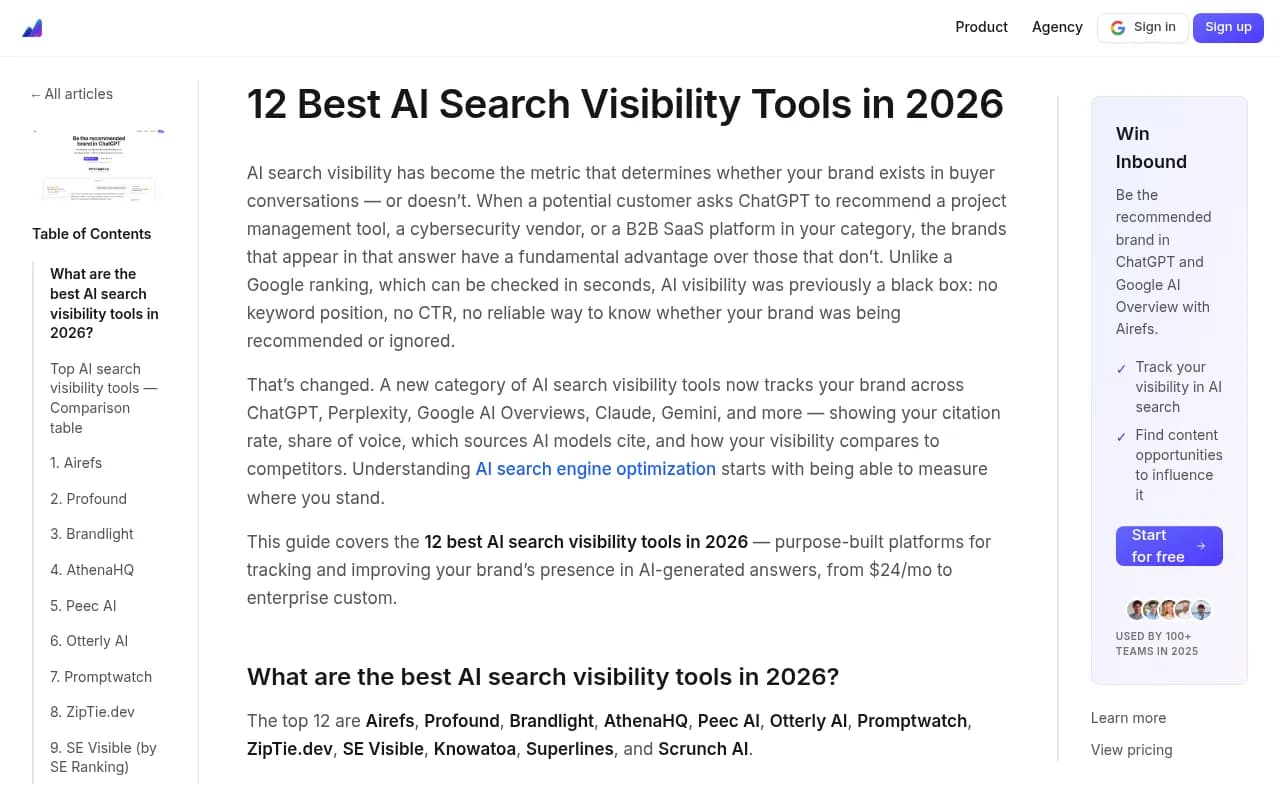
The table above makes the coverage gap concrete. Most tools in this space were built when ChatGPT and Google AI Overviews were the only AI search platforms worth tracking. That's no longer true.
Perplexity is the most widely covered of the three -- most serious tools have added it. Grok coverage is patchier. DeepSeek coverage is still limited to a handful of platforms, which is a real blind spot given its growth trajectory.
If your audience skews technical, international, or younger, the probability that they're using Perplexity or DeepSeek (and getting recommendations from those platforms) is higher than most marketers assume.
Monitoring vs. optimization: the real dividing line
After looking at all six tools, the most important distinction isn't coverage -- it's what you can do with the data.
Tools like Otterly.AI, Peec AI, and AthenaHQ are monitoring dashboards. They tell you your visibility score, show you competitor comparisons, and alert you to changes. That's useful, but it's the beginning of the work, not the end.
Tools like Promptwatch are optimization platforms. They show you the gaps, help you create content to fill them, and track whether that content actually improves your visibility. The feedback loop is closed.
For teams that are serious about AI search visibility -- not just curious about it -- the monitoring-only tools will eventually feel like a dead end. You'll know exactly how invisible you are without knowing what to do about it.
The right choice depends on where you are. If you're just starting to understand your AI visibility, a lighter tool like Otterly.AI or Peec AI is a reasonable place to begin. If you're ready to treat AI search as a real acquisition channel and invest in improving your position, the platforms with built-in optimization capabilities will get you further.
Bottom line
Perplexity, Grok, and DeepSeek are no longer edge cases. They're real platforms with real users making real purchasing decisions based on AI-generated recommendations. If your visibility strategy ignores them, you're working with incomplete information.
Of the six tools here, only Promptwatch, Profound, and Brandlight cover all three. And of those three, only Promptwatch combines that coverage with content gap analysis, AI-powered content generation, and traffic attribution -- the full loop from "where am I invisible" to "here's what I did about it" to "here's the traffic it drove."
That's not the right fit for every team. But it's the honest picture of what's available.